Tag: Kosal Malladi

  • Branded content is the new blockbuster, but marketers demand proof beyond the pitch

    Branded content is the new blockbuster, but marketers demand proof beyond the pitch

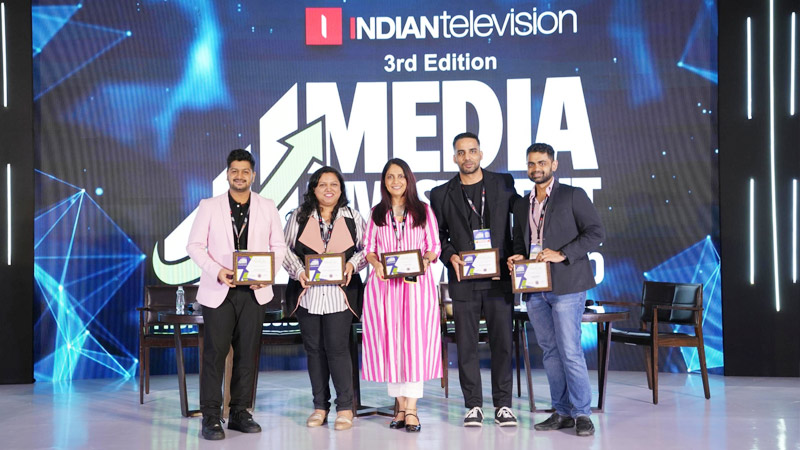
    MUMBAI: Some ideas are made in boardrooms. Others, like the “dream room experiment”, are made in hotels. At Indiantelevision.com’s Media Investment Summit 2025, a session titled ‘The Rise of Branded Content and Its Future in India’ sparked both nostalgia and next-gen debate, as industry leaders unpacked what content means in today’s fragmented, ad-skipping world.

    Moderated by Madison Loop VP Kosal Malladi the panel featured Suruchi Mahatpurkar Kore (Bajaj Group), Bhavin Devpuria (Triumph International), Megha Desai (Connect NXT), and Shetanshu Dikshit (Pernod Ricard India). Together, they questioned the currency of content and who, in this AI-powered era, really wears the crown.

    “Content is currently about Rs 10,000 crore, while the entire advertising ecosystem is valued at Rs 100,000 crore. That’s 10 per cent—and growing at 15 per cent YoY”, Malladi opened, drawing parallels to the early days of digital marketing. “We’re at the same inflection point. Questions around effectiveness, measurement, and relatability are piling up”.

    Relatable or forgettable? The definition war continues

    Each speaker was asked how they define content. Mahatpurkar Kore anchored it in emotional resonance. “It’s ultimately about being relatable. In an age where users skip ads, content needs to integrate into real life”.

    Desai added, “Content is anything that feels like daily conversation—whether it’s on a 55-inch screen or a six inch one. Instagram’s endless scroll is today’s biggest content binge”.

    For Dikshit, content had a clear distinction, “An ad is transactional. Content is emotional. Ads sell; content touches the heart. That’s the difference”.

    Devpuria referenced thumb-stoppers: short content formats designed to halt the scroll reflex. “Our thumbs travel 600 metres a day—content must work hard to make them stop”, he said, citing a five second content brief that forced creativity within constraints.

    Desai warned against oversimplification, “Good content isn’t always subtle. The Samay Raina campaign from Zomato worked because it was shock value wrapped in narrative. That punch leaves a dent”.

    Panelists discussed the thorny issue of content measurement. Kore highlighted a project with a rural brand targeting farmers, “We used AI to translate content into nine languages, focusing on emotional connect. The brand wasn’t chasing a big spike—it wanted long-term trust”.

    Desai offered a pragmatic breakdown. “If it’s a media reach film, I’ll measure it on impressions. If it’s a drama-driven story, I’ll pay the premium, push through creators, and measure shares—not cost-per-view”.

    For Devpuria, campaign objectives determine platforms. “B2B on Instagram isn’t bizarre anymore. Discovery and intent matter more than category stereotypes”.

    The panel agreed that AI plays a role—but not a starring one. “We’ve experimented with AI for content generation”, said Dikshit. “But for commercialisation, it still lacks originality and rights clarity”.

    Desai found value in AI’s efficiency. “It enhances personalisation, especially for language localisation and cost optimisation”.

    Despite the flood of reels and short videos, Devpuria noted, “Content fatigue is real. I can’t remember what I watched yesterday. But Cadbury’s ‘Kuch Khaas Hai’ still lingers”.

    The panel concluded that branded content cannot be boiled down to either subtle integrations or shocking reveals. It’s about creating moments of ‘serendipitous recognition’—where the audience doesn’t expect a brand, but welcomes it when it appears.

    Dikshit summed it up, “The story has to stay intact. Whether the hero is a farmer, a food delivery boy, or a wine bottle—don’t break the narrative for a logo”.

    As branded content muscles into the advertising spotlight, marketers are building the case for substance, not just style. The verdict? Storytelling sells—but only when it sticks.


  • Ravindra Jadeja represents Caltex® lubricants in its new TVC created by Madison Loop

    Ravindra Jadeja represents Caltex® lubricants in its new TVC created by Madison Loop

    Mumbai: Caltex® Lubricants is an industry leader and pioneer in the lubrication industry, providing a comprehensive range of high-quality lubricants, backed by cutting-edge technology and innovation for the past eight decades. This legacy was mirrored in their latest television commercial (TVC), ‘Caltex Yaani Commitment’, featuring the versatile cricket superstar, Ravindra Jadeja. Conceptualised and executed by Madison Loop, the TVC aims to unlock the full potential of the Indian market by strategically selecting Jadeja as the face for the brand.

    The TVC opens with a key moment in a match where Jadeja needs to make a winning shot. As the anticipation builds, the viewers are taken into a brief flashback that showcases Jadeja’s commitment and dedication to honing his skills. The TVC seamlessly draws comparisons between Jadeja’s abilities, and the comprehensive range of high-quality lubricants offered by Caltex, each with its own unique attributes and performance characteristics. The transitions between Jadeja’s cricket skills and the Caltex products’ unique selling points are seamless, emphasizing the brand’s commitment to delivering consistent and reliable performance, just as Jadeja does on the cricket field.

    Madison Media Alpha has taken a 360-degree approach to develop an impactful media plan to maximize reach.

    “Creating this TVC for Caltex has been a remarkable journey for us. We worked closely with Caltex and HPCL while scripting the TVC – marrying Jadeja’s all-rounder appeal with the all-rounder nature of products in Caltex’s stable. This TVC reflects our commitment to delivering a powerful and impactful campaign that resonates with the brand’s core values and the needs of its customers.” said Madison Loop VP Kosal Malladi.

    Sharing his experience, Madison Loop creative director Siddhartha Bose said, “Working on this TVC has been a fantastic experience. Team Caltex worked with us every step of the way, and really enabled us to capture, and bring to life, the spirit of commitment shared by Caltex and Ravindra Jadeja.”

    Chevron International products (IP), general manager, marketing and sales support Marc Bouchebl comments on the launch the new TVC, “We are thrilled to go live with a television commercial in collaboration with Ravindra Jadeja, our Caltex brand ambassador in India. His passion, dedication to the game and success story align seamlessly with the values of the Caltex brand. With his support, we aim to reach a wider audience across India and reinforce Caltex’s position as the all-rounded lubricants provider for our customers.”

    Hindi Version:

    English Version:

  • With Madison Loop’s creative expertise, Amara Raja Group’s brand film stirs emotions

    With Madison Loop’s creative expertise, Amara Raja Group’s brand film stirs emotions

    Mumbai: Amara Raja Group, a leading business enterprise in India, that operates in diverse sectors like energy, mobility, advanced cell technology and power infrastructure among others, recently unveiled a captivating brand film. Primarily known for its lead-acid battery business, the brand film, which was conceptualized and executed by Madison Loop, aims to bring out how Amara Raja is present in every aspect of our lives (beyond just batteries) through a relatable, emotional narrative. This was possible because of the in-depth brand understanding that Madison Loop has developed over years of association with the Amara Raja Group.

    Through the eyes of 10-year-old Raghu, the film holds the viewer’s interest and gives a glimpse into Amara Raja’s role in the fabric of daily life. As Raghu navigates his typical school day, subtle touchpoints of the company’s presence emerge – from the automotive batteries that power our rides to the EV charging stations that symbolize the Group’s commitment to sustainable mobility. Amara Raja’s positive impact is woven seamlessly throughout Raghu’s everyday experiences, showing how the company’s innovative spirit and forward-thinking ethos have become a natural part of the community’s everyday lives. To ensure that the narrative authentically captured the Group’s ethos, the Madison Loop team meticulously worked alongside the client team to refine the script and deliver the envisioned concept.

    Speaking about the brand film and its idea, Amara Raja Group head corporate communications Brijesh Menon said, “I think we are yet to see a rendition of the messaging ‘we are a part of your life’ that has been conveyed through such a warm and wholesome narrative. Looking at what we do with wonder and curiosity, through a school boy’s POV works beautifully for an organisation like Amara Raja that is a part of many people’s daily lives, without their even knowing it”.

    Sharing his thoughts, Madison Loop VP Kosal Malladi also commented, “This film showcases the collaborative spirit of both Madison Loop and Amara Raja Group that went into its creation. From scripting and strategizing to conceptualization, the team ensured it effectively highlights Amara Raja’s remarkable scale, diverse capabilities, and ambitious aspirations.” He further adds, “The hope is that the film will resonate with a wider audience, essentially communicating Amara Raja’s vision for the future”.

    Longer Version –

    Shorter Version –

  • Madison Digital announces it new creative & social media unit ‘Madison Loop’

    Madison Digital announces it new creative & social media unit ‘Madison Loop’

    Mumbai: Madison World’s digital arm has announced the launch of its creative unit, Madison Loop, to offer social media management, digital creative & solutions, SEO, ASO, website development, technology solutions, influencer management, and content collaborations.

    Madison Loop will be led by Madison Digital vice president Kosal Malladi, who will continue to report to Madison Digital and Madison Media Alpha CEO Vishal Chinchankar.

    The unit has already developed a portfolio of work for clients including McDonald’s, Vicco, Joy Cosmetics, Raymonds, Pidilite, ePay Later, Godrej Properties, Bandhan Bank, Asian Paints, Zee5, Glide Invest, and Zee Bangla, among others.

    Commenting on the development, Madison Media and OOH group CEO Vikram Sakhuja said, “For any creative idea to be successful, it needs to be adapted to the syntax of the platform. In digital, the creative idea needs to be expressed across platforms as varied as in-stream video, break bumpers, display, social media posts, microsites, social messaging, influencers, content, etc. Under Malladi’s leadership, we are very excited to launch Madison Loop, which will not only create a platform for the relevant expression of a creative, but also link it to outcomes using data and tech.”

    “We need creativity now more than ever. This digital multiverse finally allows us to have a dedicated division to cater to all our clients’ creative needs under one roof. The new expansion of Madison Digital under Malladi’s leadership will be a great step forward for the company,” commented Vishal Chinchankar.

    Madison Digital is a part of Madison World, which also has specialist units in advertising, business analytics, out-of-home, PR, mobile, retail, sports, and entertainment, employing over 1,000 communication professionals across India.

    Speaking about his expanded role, Malladi said, “I have been a part of Madison since 2014. I have seen digital evolve from a ‘good to have’ to an ‘absolute must have.’ Today, digital cannot be limited to a single video or banner. Media and creativity need to work hand in hand to tap into the digital consumer. Madison Loop’s focus is on solving business problems by layering creative magic with ‘data and technology’ solutions.”

    “Madison Connect and Madison Automate are tools that have been built by Loop to scale influencer management and creative automation, respectively. I am really excited to scale Madison Loop,” he added.

    Madison Digital has grown 10x in terms of billing in the last three years, to become a 200+ employees’ strong outfit with capabilities in branding, performance & creative solutions.

    Madison Digital has built its own proprietary cloud marketing and automation tools and is one of the few agencies with its own data & tech solutions. Madison Digital was declared the Best Digital & Social Media Agency of the Year 2020 at IDMA 2020. The digital arm of Madison World was also voted Agency of the Year at the Digies Digital Awards 2019 and Mobile Media Agency of the Year at the IDMA Digital Awards 2019, in addition to winning over 150 awards since January 2020.

  • A human appeal + a priced blue tick verification: Elon Musk’s evolving Twitter strategy

    A human appeal + a priced blue tick verification: Elon Musk’s evolving Twitter strategy

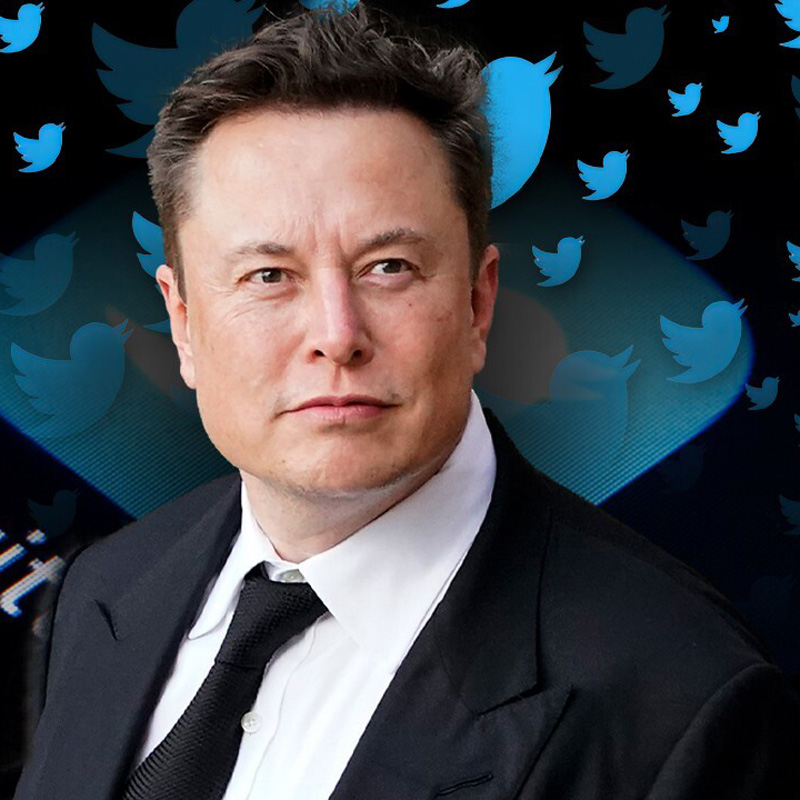
    Mumbai: Business baron Elon Musk has caught the world in a frenzy with the daily evolution of his Twitter strategy.

    From entering the social media company’s headquarters with a sink in his hand, his human appeal to advertisers on Twitter, him firing senior executives from the company since day one of his takeover, forming a content moderation council for Twitter, suggesting to charge a $20 fee for verification to becoming the sole director at Twitter after firing the board of directors and finally proposing a price tag of $8 for a blue tick verification on the social media portal – Musk has changed the face of Twitter drastically within the last week.

    One could only wonder what else the social media company has to go through under Musk’s reign. In a confab with industry veterans, I set out to explore the nitty gritty of Musk’s appeal to advertisers, wherein he claims that he wants to use the social media platform for the betterment of humanity, and also the blue-tick verification priced at eight dollars, which has led to a storm of reviews across the advertising fraternity.

    Discussing the human plea that Musk has made to advertisers, it’s an obvious point to ponder what could be going on in the minds of the several advertisers/brands that take to Twitter for their publicity purposes. Madison World vice president Kosal Malladi understands that Musk is a businessman at the end of the day. “He has said all the right things, but the intention is clear. How will he show better ads unless he collects more data? And collecting more data will mean more control over what people say. And this will mean having the power to veer conversations either towards the right or left basis of your agenda,” he brings out.

    Tonic Worldwide CEO Chetan Asher emphasises, “Advertisers are watching the developments at Twitter with keen interest. But it is too early for them to react to his appeal. His actions in the next few days in making Twitter advertiser-friendly will matter more than any appeal.”

    Thought Blurb Communications founder and chief creative officer Vinod Kunj seconds Asher’s opinion, he thinks that the overall sentiment among advertisers is “wait and watch.” He points out, “Musk’s public statements of purpose and actual actions seem to be surprisingly at odds with each other. The troubles of social media have always been about self-editing or the lack of it, quite unlike professional media. Freedom of speech is all very well as long as it is regulated by a mature journalistic authority. That is flagrantly absent in social media, hence the series of crises attributed to these platforms over the years.”

    Restricted brand opinion/advertising or not?

    Needless to say, the natural question pops up in the mind: Would this human appeal restrict a brand’s opinion or a brand’s advertising in any way?

    Malladi refutes that this could impact a brand’s advertising in any way. “In today’s world, a brand is always very careful about the opinion it puts out. At this stage, human appeal will in no way change the way we advertise. A brand will continue to be careful until such a time where opinions do not have a direct and immediate negative repercussion on its sales,” he clarifies.

    Asher feels otherwise. “While he assured the advertisers in his note that Twitter cannot become a “free-for-all hellscape,” brands will take a cautious approach as it’s not clear what his plans for moderation are. The fact that he has hinted at tweaking the advertising model on the platform also adds to the confusion,” he points out.

    Kunj feels that it puts the onus of caution on the brand. He says, “With one sweeping stroke, advertisers will have lost the ability to control the quality of discourse in the conversation. On one hand, brands actively seek out reviews, opinions, and experiences from customers. Twitter allows us to respond to issues in real-time.”

    “But there have always been issues that Twitter has been able to clamp down on. Fashion brands can face the brunt of sexist comments, and lifestyle brands have come under heated fire from conservative thinking. And then there is always the incipient fear that customers will turn on each other with opinion clashes leading to personal attacks,” he adds.

    Sensible step or not?

    Also, as part of this discussion, is this human appeal a sensible step taken by Musk with the thought of helping advertisers not get off the platform and to avoid any kind of extremist views on it?

    Malladi thinks that the problem Twitter has been facing due to its “lack of control” is that advertisers have started seeing it as a negative platform. Two factors will play an important role in attracting advertisers. One, is the overall “negativity” going down on Twitter? And second, is there enough of your audience on Twitter?

    “Point number one is under Musk’s control. But in the process, he needs to ensure that people do not leave the platform. In fact, he needs to figure out a way to grow the base. If that happens, brands will advertise. Sensible step or not, only time will tell,” he specifies.

    Kunj chooses to give in to cautious optimism. He elucidates, “I don’t imagine this allows advertisers to be more or less free. Advertising communication will always cater to the centre of the mean. It doesn’t help to cater to the fringe. If and when the fringe becomes the norm, things might change.”

    The human appeal – good or not?

    Speaking about whether he is in favour of human appeal or not, Malladi is of the opinion that, as a business, Musk needs to change the narrative of Twitter. So he has taken the logical step. Further, he says, “We can find loopholes in his appeal, see through his appeal, but the intention is clear. And he will need to make a few more such statements and eventually show some real change for brands to start getting really comfortable.”

    Giving a thumbs up to the human plea, Asher is of the view that Musk recognises that advertising is the fuel that is vital for Twitter, and hence the outreach to allay the fears, and was a move in the right direction.

    Kunj explains, “Advertising has always tried to push boundaries. Sometimes we get it right, but not always. The further we stretch the band, the greater the chance for it to snap. It’s like advertising underwear. There is a thin line between flirty-sexy and downright obscene. It’s that notional thin line that we never cross. Musk’s appeal may be to persuade advertisers to go ahead and cross it anyway.”

    Blue tick verification at $8

    The blue tick verification has been priced at eight dollars, and this fee applies only to USA-based Twitter users. Musk stated that the membership fee would vary in different countries according to the respective nations’ purchasing power parity. What does this entail for advertisers/brands, content providers, and obviously the users of Twitter? Malladi fathoms that it makes it much easier for anyone to get a blue-tick verification now. “These users/brands get additional benefits. In a way, blue tick seems to be a subscription model, hence an additional revenue stream for Twitter. Brands will also get even more audience understanding, and hence the ability to target better,” he describes.

    On the contrary, Kunj of Thought Blurb Communications feels that this makes absolutely no sense. This is like a bank charging you for KYC every month. Or the government charging you a monthly fee on your passport to accept that you are a citizen. There is no call for it. “Either I am who I claim to be, or I am not. This doesn’t change by the month. Unless Musk intends to make Twitter subscription a tradeable commodity, which might be a whole different bag of beans,” he suggests.

    Blue tick verification at $8 – yay or nay?

    In the whole scheme of things that is taking place, what could be the advantages and repercussions of pricing the blue-tick verification at eight dollars? Malladi senses that people will get an opportunity to easily flaunt the tick, until the point it no longer has a flaunt value. “Musk said that he wants to break the loads and peasants system where only lords get the blue tick. I am not so sure if that is his real motivation. Audience segmentation will be a real benefit for Twitter,” he cites.

    Asher elaborates, “Blue tick will obviously help in reducing spam on the platform and will also allow advertisers to do qualitative advertising to users who are invested in the platform. Musk has also talked about reducing the number of ads for users and this ties in with advertisers getting the opportunity to target small but qualitative users.”

    Kunj feels the opposite and imagines that a lot of celebrities and personalities will walk off immediately. That makes Twitter a platform for commercial and showbiz personalities only. “I don’t imagine a brilliant thinker, serious journalist, or upcoming artist using this platform as it was originally meant to be. There is no reason for anybody to pay every month for the pleasure of being authenticated,” he says, making his point.

  • Madison Digital promotes Chintan Soni and Kosal Malladi to VPs

    Madison Digital promotes Chintan Soni and Kosal Malladi to VPs

    New Delhi: Madison Digital on Friday announced the promotions of Chintan Soni and Kosal Malladi to vice presidents.

    Soni joined the organisation in September 2013, while Malladi joined in 2018, and both have played an instrumental role in the growth and success of Madison Digital, the organisation said in a statement.

    “Chintan and Kosal have been a great asset to the Madison Digital team, with the same vision of growing the vertical and taking business to greater heights. Year on year, they have been delivering exceptional results and we couldn’t be happier to give them the much-needed promotion they deserve,” said Madison Digital CEO Vishal Chinchankar.

    Soni has an overall experience of 16 years, and has played an integral role in building the digital products and the performance and data division. “Being a part of Madison Digital has been a thrilling experience. It’s exciting to build digital products which solve gruelling challenges faced in performance/brand marketing. Our focus will be to keep strengthening our proprietary products,” he said.

    Malladi comes with over 15 years of experience, and returned to Madison Digital in 2018, and has been a mentor in the Madison Digital team. “Madison Digital is growing and I’m happy to be a part of a team that’s creating waves in the digital space. With the support of the entire Madison team and our clients, we intend to grow business and do some exceptional work,” said Malladi.