
Tag: Korea

  • ‘Challenge in the digital world is to make content that lasts longer’ : Turner Entertainment Interactive Media executive director Benjamin Grubbs

    ‘Challenge in the digital world is to make content that lasts longer’ : Turner Entertainment Interactive Media executive director Benjamin Grubbs

    As new media usage grows, broadcasters are trying to find ways to leverage it. Turner is no exception and has been creating tools like games for kids. The idea is to use new media as a brand extension for Cartoon Network and Pogo.


    New media is not just a marketing tool but a place where kids spend a serious amount of time engaging with their favourite characters and shows mainly through gaming. The challenge in the digital world is to make content that becomes stronger and lasts longer.


    As Turner has worked aggressively on new media to ensure that it co-exists strongly with the traditional media, it has kept a firm eye on maintaining scale for such products across markets.


    Turner has also created facilities that develop local content for new media in places like Japan, Korea, China and Southeast Asia. The R&D team in Mumbai, for instance, creates products for the Indian platforms. The aim is to develop the local market and also make product innovations that can be exported.


    In an interview with Indiantelevision.com’s Ashwin Pinto, Turner Entertainment Interactive Media executive director Benjamin Grubbs talks about how the media conglomerate has used new media to hook kids and build their content brands.


    Excerpts:


    How does Turner approach new media?

    New media and traditional media complement one another; they co-exist in the market. The consumption of TV content increases as digital media usage increases. Consumers have an affinity for those brands that we create and they consume them across platforms. They watch an episode of a TV show; online they play a game involving a character from that show. Then at retail they buy a toy or a T-shirt.


    There is a three-pronged approach of the Turner interactive business – Create, Play and Edu-tain


    -Create: Games like Toon Creator let kids create their own cartoons. Toon Creator has over 469,000 animations developed by kids and 5.6 million views. Another example is Game Creator where kids can create their own games. It has 402,000 kids making games, there are 1.6 million games developed by kids and 429 million games have been
    played.


    – Play: Cricket Club is an excellent example. There are estimated 10 million game plays in 2011


    – Edu-tain: Cartoon Network partnered with Prudential Asia to launch Cha-Ching, an initiative that encouraged kids to learn money management skills by a simple four-part process – ‘Earn, Save, Spend and Donate’. An interactive website hosting games, music videos, applications, etc. was created.


    How does the business model work?

    For broadcasters, there could be different business models. At Turner we package content on channels and sell them to cable companies who pay us a fee. We sell advertising on our channel and websites. We have consumer products and also do live events.


    In the pay-TV market, there is more demand for compelling content that continues to do well. In the digital economy, new revenue streams are emerging. It has only been in the last couple of years where we have seen smart phone usage. The method of monetisation is not just advertising but also buying products like a game. You can buy a game on the phone or buy items within a game. It is not transferring one business model to another. You open up business models that are complementary to your core business.


    How much revenue do you get from new media?

    We don’t break down the percentage of revenue that comes from different business segments. But the digital business growth rates are high.


    Which are your top properties that have been monetised through new media?

    The Ben 10 franchise is a good example. This is content that started with television. Then it became a successful global consumer product IP. We license it out. Then in the digital space we have developed online games and mobile products. There is also video content available online. We have monetised it in different ways.


    ‘We have a R&D team in Mumbai that develops products for the Indian platforms. The aim is to develop the local market and also make product innovations that can be exported’


    You have done online gaming for properties like Ben 10. How effective has it been as a brand extension tool?

    What we are seeing in some markets is that people who do not have cable television at home just consume our content through digital media. In some markets across the Asia Pacific, the cable market penetration may not be as high as what it is in India. We see a percentage of people who only consume content on digital. Digital has been a positive development for Turner over the last five to 10 years.


    Have you done research to show how kids in India and Asia perceive and use new media?

    There is similarity in terms of how Indian kids and other kids use new media. They look for games first when they go online. We launched Cricket Club here on Pogo. We then took it to Australia. We will take it to every cricket nation.


    For the last 10 years, we have been running a New Generation study. Many kids become more active consumers of technology than their parents; they get initiated at a very young age. The time spent on our site is 25-30 minutes per visit. It is a very engaged audience and they come back quite often. This results in high affinity for the brand. It is not a matter of them spending a couple of minutes online.


    They spend as much time in an online visit as they do on a TV episode.


    How is new media impacting the way kids consume traditional television?

    Like I said, it is complementary. It is not a zero sum game where because you grow digitally, the traditional media consumption goes down. The data we are seeing is that both grow in parallel.


    Interestingly, girls are heavier gamers than boys.


    An estimated 25-30 million kids are online. There were approximately 12.1 million users in 2011 across www.cartoonnetworkindia.com and pogo.tv. 79 per cent of kids (ages 4-14 years) are mobile phone users.


    The number of Indian kids who own their own mobile phone is growing.


    Are costs rising in creating content for digital media?

    Yes! On television you make content by spending a year to two years developing a series. In the digital world you could spend the same amount of time developing a game. The investments going into doing some of the larger online games are rising and is almost the same as making a TV show.


    The challenge lies in extracting the right returns. In the digital space when we put content out we immediately get feedback. So the team makes conscious decisions about adapting and evolving content. For us it has been a big learning as you have larger investments around digital content. A game has people registering profiles and creating profiles. They have an online identity. Friends come into this environment and they communicate and share content.


    What is the challenge in making digital content?

    The challenge is to make an offering that will stick with the consumer. The challenge in the digital world has become more apparent over the past couple of years – as you put out games and get active users, there is an immense amount of data that you start collecting. You need to look at what data is relevant and use it to optimise and enhance the platform.


    The big effort is not making the content but what happens after you launch it. This is how it becomes better, stronger and lasts for a longer period of time. The online and mobile games that we make now we expect to be in the market for several years. Our aim is not for the product to be in the market for two weeks. These are not campaigns which go away after a couple of months. We want the products to last for two years and we want to see continual growth in that product over a period of time. This is the guideline.


    How does the process of creating new media applications work?

    This starts with consumer insights. It is about conversations we have with consumers and through our focus groups or through a survey. We blend that data with what we see on our own platform. Then we see trends and try to predict where things are going. If it takes a year to develop a game, we have to think about what is going to resonate with consumers a year down the line.


    You have tablets and smart phones. We don’t just make content for the PC or Internet. The consumer has to be able to access the content across multiple devices and platforms. This informs the decisions that we make and the technologies that we invest in. When things become multiplatform, you have an extension of the brand experience. Then you look at genres, the market in terms of if there is wide open space that we can go and play into. We also look at how a product can get scale across markets.


    Could you give me an example of an innovative project recently done?

    We worked on something last year. It started with deep consumer insights. We looked at the market and found that there was nothing that addressed an insight that we stumbled upon. So we decided to develop a product.


    A guy in my team wrote a 16-page background story and dreamed up characters and plotline. This was for an online game. It was similar to someone writing a treatment and background explaining what a film is all about. He had visualised the game platform and how it would grow over time. We looked at it in order to visualise the creative

    concept. We had to then step back and make a calculated bet as there is no guarantee of success.


    We also recently came out with an online racing game. What we are seeing is that there is great adoption of multiplayer racing games among youth. While there were compelling games already present, they were larger console titles or larger massive multiplayer online games that target an older segment. There was an open space for a younger age segment. We developed it for Asia at a studio in China. We talked it out with our counterparts in Europe, Latin America and the US.


    They were excited and wanted to co invest. We got scale from our investment and the product will launch this quarter in the US first. Then it will go all over. It started in Asia and found it resonating everywhere. We want to do more of this. If you boil it down to some of the building blocks and basics, products are not so different from one market to another. We also allow for some scope to localise but the main core of it should be similar across regions. It allows for better ROI.


    Ben 10 is huge among boys. Storylines for digital products are evolving. We made a storyline for Ben 10 that was not told on TV. We hired the writers from L.A. to give us a story arc. The crux of this story is coming out in a movie that premieres in March. Things have come full circle.


    How much R&D goes into creating new media services?

    We have a team in Mumbai that develops products for the Indian platforms. Cricket Club was developed here. The aim is to develop the local market and also make product innovations that can be exported.


    We do research all the time. A lot of data is collected that informs our decisions. We have facilities that develop local content for new media in Japan, Korea, China and Southeast Asia.


    Is allowing kids to create their own content becoming more important?

    Yes! The platforms we develop have been successful. This has surpassed all expectations. Game Creator has been the biggest one. Kids can create their own games. We have different versions of Game Creator. It is about brand engagement.


    What are the ways in which content owners can work with advertisers online to produce results?

    In some cases we sit down and have a conversation. The advertiser can show a business challenge and we find an addressable opportunity. On the other end of the spectrum, we talk about complete custom creation of a new product or service that is done with an advertiser. We have found that 63 per cent of car purchases in India are influenced by kids. Half of the shampoo purchases are also influenced by kids.


    Is the lack of an effective measurement system a challenge?

    There are third party research tools from parties like Nielsen and comscore that advertisers, agencies and publishers like ourselves subscribe to. Turner also has its own research systems and tools. We develop content that we market to the market. We also want transparency in data. We can see what the response rate is from consumers. ROI comes from things like registration, an online purchase and filling out an online form. We can track this user funnel so that we can better optimise it.


    There is a continuous dialogue that happens. The digital space moves fast. A couple of years ago we weren’t talking about smart phones. We want to have dialogue with other marketers so that we can evolve.


    What role do social networks play in reaching kids?

    The reality is that people are on social networks. Facebook is a way for us to distribute content. When people are on Facebook, that is where their experience lives. But for us leveraging Facebook means staying on the platform; it is not about providing marketing messages that take users off Facebook. It is about providing content within that platform. This is where our investments have been going. Among social networks that kids use Facebook dominates.


    Is the economic slowdown having an impact on broadcasters pursuing aggressively their new media plans?

    No! It is accelerating growth. What I mean by this is that during a fiscal crunch you might want to look at ways to do things that are more effective and efficient. In the digital world things change at a very fast pace. There is a need for constant dialogue to stay on top of changes. In new media with barriers falling, it might make more financial sense to do something now compared to earlier.

  • ‘As there is no clear No. 2 sport in India, NBA has an opportunity to take that spot’ : Emilio Collins – NBA senior VP international development & partnerships

    ‘As there is no clear No. 2 sport in India, NBA has an opportunity to take that spot’ : Emilio Collins – NBA senior VP international development & partnerships

    Cracking the Chinese wall, the National Basketball Association (NBA) plans to break into the Indian market and become the No. 2 sporting power within five years.


    Last week the NBA inaugurated a dedicated basketball court at Nagpada in Mumbai, the first in a series of courts that it plans to develop in line with its long term commitment to grow the sport in India.


    For the first time, the NBA also opened up its live matches to the online viewers in India.


    In an interview with Indiantelevision.com’s Ashwin Pinto, NBA senior VP international development and partnerships Emilio Collins talks about the other plans that the company has to grow the market for basketball in India.


    Excerpts:

    Could you talk about the strategy NBA has employed to grow its reach globally over the last couple of years?
    Our strategy starts with media. This means getting television reach and forming partnerships with other digital outlets to grow the reach of the NBA brand. Post this, we focus on building the sport out. This is done by creating more basketball opportunities. We aim at providing more access to the game like infrastructure development.

    Which are your top five markets outside the US and where does Asia fit in this?
    China is our biggest market. It represents 40 per cent of our international business. Over the last six years, there has been substantial growth in that market. Philippines, Korea and Japan are the other key Asian markets where the basketball population is very high.


    In Europe there is tremendous relevance in Turkey, Spain, Italy, the UK and Russia. A lot of our international players come from Europe and so the relevance is very high. Latin America is a big priority for us, especially Mexico and Brazil. We have recently started to look at the Middle East.

    Did the NBA see good revenue growth last year?
    The NBA is growing at a significant clip at 20 per cent a year. I cannot talk about numbers, though. Asia contributes a little over 50 per cent while Europe accounts for 35 per cent. Latin America makes up the rest.

    How much do television license fees contribute?
    Media license fees contribute 50 per cent. This is followed by sponsorship and consumer products.

    Why didn’t you push NBA into the Indian market earlier and how big a market opportunity do you see here now?
    The biggest challenge that we face at the NBA as far as our international business is concerned is how to size up opportunities simultaneously. We wanted to ensure first that we managed China correctly. A lot of resources went there.


    India is one of our focus markets now, along with the Middle East and Latin America. The emerging middle class provides a big opportunity for us here. Basketball can play a big role in the development of sports infrastructure. The appetite for sports and entertainment is growing which has been proven with the success of the IPL. The NBA also fuses sports and entertainment. The IPL has successfully tapped into this combination.

    How do Indians perceive the NBA as a brand?
    The brand value is very high. We are in the unique position where the best basketball players from around the world play in the NBA. So if you grow up and get exposed to basketball, you automatically aspire to be a part of the NBA. Our players are global icons and by the sheer nature of the presentation of our game, players become larger than life personalities and figures; they are fused into the world of pop culture and entertainment. This has enhanced the status of the NBA brand.


    How tough is India as a market for the NBA to grow, particularly since it is a one-sport nation?
    This, in fact, marks an opportunity for us as we want to be number two. In a market where there is no clear number two, there is an opportunity for growth side by side with the number one sport that is cricket.


    Our strategy revolves firstly around building the sport. We want to provide more access to the sport through infrastructure development. Then we want to get involved with the community and develop activities around it with our local partners. We can use basketball as a means to contribute to the community. Thirdly, we plan to expand the reach of NBA Lifestyle and offer opportunities to fans to experience the NBA. This can be done through basketball competitions, interaction with players and most importantly through broader media distribution.


    Where do you see the NBA in India five years down the line?
    The NBA has a long-term development plan for India. Our goal is to make basketball the No. 2 sport in India in the next five years.

    Outside the US, China is our biggest market. It represents 40% of our international biz. Philippines, Korea and Japan are the other key Asian markets where the basketball population is very high. India is one of our focus markets now

    You have successfully grown the NBA in countries like China and Japan. Are there any learnings from that brand building process which you would want to apply to India?
    We have learnt the most from China. It all starts with spreading the NBA brand through television. This is then followed up with on-ground activities mixed with community initiatives. To make a court for the Nagpada neighbourhood and make this the epicenter of social and physical activities for them would make a difference to the community. This is critical to all the markets where we operate.


    Secondly, we want to introduce the sport to new audiences. This means going into schools and teaching basketball fundamentals through a Junior NBA initiative. We also want to create participation. We can use the Nagpada court to have tournaments there.


    We bring the NBA Lifestyle experience to the market. In the USA, we will be going into malls over the summer and bringing the experience to fans like slam dunk on a small court. One can play NBA videogames. You can meet NBA players and really feel the NBA experience.


    Finally, we want to bring the NBA competition to India. We will bring NBA teams to compete in an exhibition game. But before doing this, the infrastructure in India has to develop at a faster pace.

    How is the deal with Star Sports working out?
    They have partnered with us for many years – in fact, since 1993. In addition to showing our games live on Fridays and Saturdays, they are also increasingly showing repeats during primetime. This is very important in terms of broadening the awareness of the NBA. We go beyond this by offering highlights and condensed programming that allow fans to connect.


    Then there is behind the scenes programming. We focus on what our players are doing in the community and on what our teams are doing day in and day out. We look at contributions teams make in their key markets. It is about capturing what the NBA brand is about in different markets across the US.


    Is there interest from other Indian and Asian television broadcasters as well for the NBA content?
    There is significant interest from other Indian and Asian television broadcasters for NBA content. We are in discussions with various local Indian media outlets to distribute our content in different ways to appeal to Indian fans.


    Does the NBA do a lot of tie ins for film and TV shows?
    The NBA works with a variety of TV broadcasters and film studios to tie in the League’s content – from product placement to guest appearances by NBA players, etc. The NBA brand and its players are a significant part of pop-culture and films and TV shows leverage the League as a platform to reach its target audiences.


    Would this avenue be explored in India?
    Integrating NBA content within TV and film is an important component in creating local relevance for our brand in India. We are developing strong relationships with broadcasters and film studios in India to showcase the lifestyle and pop-culture appeal of our League, teams and players. We have already begun to integrate with Bollywood. This past November, the NBA hosted two Bollywood stars – Lara Dutta and Dino Morea – for an all-access VIP weekend in L.A. NBA Entertainment documented their experience and produced a 30 minute program which aired on ESPN in India on Christmas Day last year.


    Are you looking at specials which can serve as value adds?
    In a game played by LA Lakers, Dino Morea and Lara Dutta took part in many activities around the Staples Centre. We produced a half-hour special with ESPN Star Sports. We will do more activities like this down the road. It helps if that many Bollywood celebrities are fans of basketball. We can create shows on the experiences of Bollywood celebrities with the NBA.


    In addition, there are opportunities for reality-based content. There could be a talent search contest about finding the next great Indian basketball player. We are talking with ESPN Star Sports in this regard as well as with other platforms.

    What kind of content does NBA offer on the mobile?
    It is crucial in India as there are hundreds of millions of subscribers in India. We need our content using this platform. Photos, ringtones, wallpaper and then as 3G comes in, we would offer highlights. This will all be in addition to standard scores and statistics.

  • ‘Shows that are optimistic, hopeful, aspirational resonate well with viewers’ : Todd Miller – SPTI Asia executive VP, MD

    ‘Shows that are optimistic, hopeful, aspirational resonate well with viewers’ : Todd Miller – SPTI Asia executive VP, MD

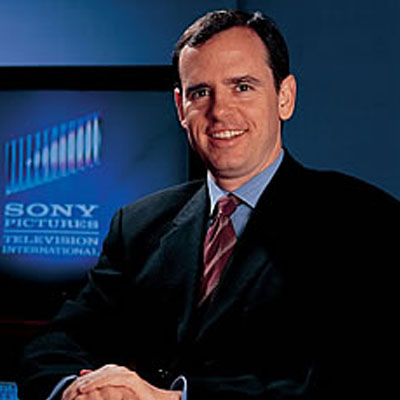
     Last year Sony Pictures Television International (SPTI) set up an office in India. The aim was to get more closely involved with the market and help it grow by offering content in the form of formats. SPTI is also looking at developing more local content from India which can travel overseas. Indiantelevision.com’s Ashwin Pinto caught up with SPTI Asia executive VP, MD Todd Miller to find out more.


    Excerpts:

    When you say that SPTI is the Asian Hollywood Studio what does it mean?
    We are by ownership an Asian company. We pride ourselves that our business combines the best of US and Asian content. As a distribution company we offer locally relevant content and global content.


    SPTI has distribution, a networks segment and a production business. We are the most active of the US studios in terms of producing and distributing Asian content across Asia. So it positions us in a unique way from the others who only focus on US content. Asia is the fastest growing region for us. Korea, China, East Asia and India are key for us.

    Could you talk about the partnerships SPTI has with local Asian players in terms of co-producing with them and distributing their content overseas?
    We make and distribute content. On the film front we have been active making films like Crouching Tiger, Hidden Dragon. Recently we started to make Indian films. Sawaariya was our first film. We also distribute content on behalf of key Asian partners. With CJ Media in Korea we distribute films and shows.


    We distribute it not just in Asia but also outside. This enables our partners to access a wider market for Asian content. So we add value for our business partners. We have also worked with CCTV in China to distribute their show The Stories of Han Dynasty.

    How has SPTI boosted its production facilities and distribution network over the last couple of years?
    We have a strong distribution practice as there is great content to sell. On the distribution side to get closer to clients we set two offices last year – one in India in October and the other in Korea. We want to have a local presence and develop relationships on the ground. We already have offices in Tokyo, Beijing, Hong Kong and Singapore.


    So from a footprint perspective we have Asia well covered from a distribution point of view. On the production front we did a lot of work in South East Asia for formats last year. This year we will focus on India.

    How important is India and what is the gameplan to grow the business here?
    This year we will sell formats to India. Power of 10 is one show. It is a primetime game show and airs on CBS in the US. We are also planning to a local version of Ripley’s Believe It Or Not. We also have a lot of scripted formats as well like telenovellas from Latin America. Our dubbed films area is also growing. We were one of the first studios to offer local dubbing of films to channels.


    A year from now I can give you examples of how the formats are being developed. Emerging platforms will open up more business avenues. We recently did a deal with Dish TV for pay per view films.

    Are you also looking to create IP as well?
    Through films we are already doing this. Sony is also doing this with its Hindi channel. With AXN we are looking to create original shows that can travel. One of these will be a magic show.

    Have you formed any deals with Indian companies besides the Sony companies in terms of long term partnerships?
    We are talking with parties. One of the things that we pride ourselves on is that we develop relationships with major players across the TV spectrum. These are broadcasters, new media clients.


    We sell content to many players beyond just the Sony channels. India is a top five market for us in Asia. As new delivery platforms emerge we support them. As we continue to beef up our distribution infrastructure I would hope that one would see Sony content consumed across all the digital platforms.

    Are you also looking at co-productions in India?
    Our focus is on growing the format business. Once this area is up and running then we will look at other areas.


    We recognise the potential in India. We have been doing business for well over a decade in this country. Our management looks to India to be a major driver. One of the advantages we have is that we have different assets (channels, film division, the electronics business) that are already present. We have interesting pieces that often work together.

    We want to have a local presence and develop relationships on the ground

    What have the learnings been in terms of what works and what does not across the region?
    Great content from the US sells. But we also recognise the power of locally produced content and its connection with viewers of each country and even each state. In general though shows that are optimistic, hopeful, aspirational tend to resonate well with viewers across the board.

    A lot of your content comes from the US. What impact will the WGA strike have on this?
    It is having a big impact in terms of scripted shows. We are hopeful that the issue will be resolved soon.

    Viva Laughlin was cancelled by CBS after just two episodes. Do you feel that such an unusual format would have worked better on a cable network like USA Network where there is not so much pressure on ratings?
    It is quite possible that it might have done well there. Truly original shows sometimes do need time to find an audience.


    US networks are impatient and they have to be as they are ratings focussed. They do not have the luxury to wait for numbers to grow.

    Besides Damages what are the other high profile shows from Sony US that will debut in India?
    We are looking forward to Cashmere Mafia. It stars Lucy Liu. It is about a group of successful, powerful women friends living and working in New York. The show will come to AXN soon.

    SPTI also tailors content of shows for the mobile in Asia. From a production point of view what are the challenges?
    Our strategy is to make content for mobile and various digital platforms. Taking a multi platform approach allows us to spend more money on our content which results in better production values. At the same time we are not too dependent on any one platform from a revenue standpoint. So a show like Afterworld is a good example of how we are creating content for multiple platforms.


    Last year we acquired all television, Internet, digital sell-through, gaming and mobile rights to Afterworld, which is a futuristic 2.5D animated episodic property. This marked SPTI’s first-ever acquisition of a project for exploitation across all of these platforms.


    At the same time we also have a catalogue which we can and have repurposed for the mobile. This is what we call ‘minisodes’ which are edited versions of full length episodes of famous TV series Like Charlies Angels. It is a short but complete burst of entertainment. In some parts of Asia where 3G has a high penetration like Korea we are getting really good feedback on our mobile video content. We are also expanding our linear channels into the mobile space. We have created a mobile extension of AXN and Animax.

    When will these services come to India?
    Our mobile content is already available on all key carrier platforms in India through local partners such as Hungama Mobile. Hungama Mobile won the first Meffy (Mobile Entertainment Forum Award) awarded to an Asian company for their campaign on our Casino Royale mobile content.

    Digitisation offers the opportunity to launch more channels. Does SPTI have plans in this regard?
    Yes! We are extremely bullish on India and the region. AXN recently launched a new channel AXN Beyond in East Asia. It is a supernatural, sci fi channel that complements AXN.


    It also showcases out of the ordinary shows such as The Dresden Files, a mystery/fantasy series based on the books by Jim Butcher and has actor Nicolas Cage as one of the executive producers. The lead character, Harry Dresden, is a professional wizard and reluctant hero who often helps the police with cases involving ‘unusual’ circumstances.


    Another highlight is a sci-fi series called PainKiller Jane which is based on the cult comic book series of the same name. It stars Kristanna Loken as Jane Vasco, a.k.a. PainKiller Jane, she is recruited to contain the threat of Neuros – individuals with superhuman neurological powers. However, she soon discovers that she has a super power herself – that she cannot be killed, but she can still feel the pain.

  • CII moots 5% customs duty on imported STBs in bid to boost local manufacture


    NEW DELHI: While demanding various reductions and exemptions of taxes and duties that would be beneficial for the media and broadcasting industry in general, the Confederation of Indian Industry (CII) has demanded a hike in customs duty on STBs from the present nil to 5 per cent.

    The CII has demanded exemptions and tax burden relief on capital goods import and other issues, especially those meant for infrastructure development, creation of intellectual property and import of colour TV and picture tubes.

    Yet, so far as STBs are concerned, the CII says that whereas in the present situation, import of STBs do not attract any customs duty, this should be raised to five per cent in the budget for 2007.


    The CII, in its document “Pre-Budget Memorandum” gives its own arguments on that count.

    It says: “Excise Duty on STBs was exempted on 24th June 2003 to facilitate introduction of Conditional Access System in the country. In the budget 2006, the exemption on excise duty was withdrawn but customs duty was reduced from 15 per cent to Nil. However, there was no corresponding reduction of customs duty on inputs used in the manufacturing of STBs. This has resulted into another case of inverted customs duty structure.

    “The correction of the anomaly can be achieved either the by reduction of customs duty on inputs required for manufacturing of STBs to Nil, or increasing of customs duty on the import of STBs from Nil to 5 per cent, and also allowing import of inputs at five per cent.”

    A senior tax consultant told indiantelevision.com that the measure would benefit local manufacture of STBs, as the customs duty on import of boxes and import of input components would be the same, whereas previously, there was no customs duty on import to STBs.


    Currently, MSOs are importing STBs mainly from China and Korea.

    “This is a pro-local manufacturing and necessary corrective measure from an earlier skewed customs regime so far as STBs are concerned,” he explained.

    The CII recommendation says that the second option is preferable.

    It says also: “In case it is felt that it would increase the price of imported STBs, then excise duty can be reduced from 16 per cent to 12 per cent on STBs as well as its major imported inputs.

    Meanwhile, there are many general recommendations of the CII that would benefit the industry.

    It has specifically suggested that the customs duty on glass parts of the colour picture tubes for TV sets should be reduced from 12.5 per cent to five per cent.

    It has argued here that the Free Trade Agreement between India and Thailand has a list of goods covered by the Early Harvest Scheme and includes CTV and colour picture tubes.

    “Consequently, customs duty on CTV (8528 12) and CPT (8540 11) imported from Thailand was reduced to 12 per cent on September 2004, and to 6.25 per cent on September 1, 2005. The impact of (this) reduction has resulted in tremendous increase of imports (from Thailand).

    On the telecom sector the CII has recommended that there should be a reduction of customs duty to five per cent on capital goods required for manufacture of telecommunication equipment covered by the IT agreement.

    It also wants to extend the present “Nil” customs concession to inputs for the manufacture of components / sub assemblies duty under serial number 239 of customs notification 21/2002.

    Across the board, CII has recommended measures that will benefit industry as a whole and consequently the media and broadcasting industry. It has, for instance, recommended reduction of CENVAT rate of 16 per cent to 14 per cent in the budget 2007, and has also said that the service tax of 12 per cent must not be increased.

    On the issue of infrastructure development CII has suggested that the government may consider more loans from international institutions.

    “Gross Capital Formation in infrastructure must be progressively raised from 4.5 per cent of GDP to 11 per cent,” the report of CII says.

    In general, all companies and employees may stand to benefit also if the CII recommendation of abolishing of Fringe Benefit Tax (FBT), in consonance with the desires of business as a whole, ever since the tax was slapped vide the Finance Act 2005.

    It outlines the alternative thus:

    “Either the tax should be abolished or the choice be given to tax paying firms to pay one per cent additional corporate tax on its total income in lieu of FBT. Otherwise the corporate could chose to remain under FBT. If this is not possible, the CII proposes levy of FBT only on elements of personal benefit to employees, and exclusion of deeming provision of treating a portion of pure business expenses as personal expenses.”

    The CII recommendation on depreciation would also benefit the media and broadcasting industry.

    Stating that it is well known that technology is changing fast, “and unless we are able to replace our assets fast, we cannot match with other countries in terms of productivity, CII has recommended that depreciation rate be raised from 15 per cent to 25 per cent, as was the case earlier, provided the rate charged under Income Tax is the same or higher than charged under the Companies Act.

    Development of infrastructure would also benefit from the industry body recommendation that the Minimum Alternative Tax is abolished. If it is not, CII feels, it should at least be removed for infrastructure companies in order to promote development and to motivate the private investor to come into this sector.

  • ‘An outlook towards the future of Television’

    In this article, penned for Indiantelevision.com, Media e2e chief evangelist Atul Phadnis is of the view that the media landscape is changing rapidly and new distribution technologies would alter business models.

    As 2006 comes to an end, some of us, who had embarked on a new journey of creating a new thought within our industry, feel vindicated. The key changes that we had envisaged, envisioned and expected are taking place rapidly within our media & entertainment (M&E) environment. These changes are in terms of distribution platforms, newer business models, interactivity, new content formats and experimentation. This piece looks at the change catalysts and an outlook on how things would continue to develop within our space.

    End of distribution platform insulation

    Before we look at the current and future, a quick glance at the past. The history of TVs popularity among consumers can be gauged from the amount of advertising on satellite TV chasing consumers. As veteran industry folk would recall, the early 90s was all about DD when only experimental advertising monies would come onto satellite channels. In the mid-90s substantial chunks of budgets were diverted into satellite channels. By the late 90s and early 2000s, the satellite TV environment had reached a level of stability and maturity. Here’s where the story takes an interesting u-turn. The legislation changed and allowed newer distribution technologies on the scene. These new technologies ended the technology insulation that persisted in India vis-?-vis other Asian markets like Hong Kong, Korea and Japan.

    Distribution: set to change the ground rules

    Globally, whenever distribution channels explode, it sets off a chain reaction in terms of market segmentation, newer revenue opportunities, newer pricing models. The hectic activities since early 2000 to present day on laying cables, dishes, optical fibre, upgrading cable facilities, are today creating competition among satellite TV platforms such as DTH, HITS, IPTV, CAS, and even traditional cable.


    Creating the ‘Long Tail’

    For those who have read Chris Anderson’s book The Long Tail: Why the Future of Business is Selling Less of More (2006) would immediately associate that phenomenon with what’s happening with our television today. The Long Tail phenomenon occurs when distribution platforms become very large helping the smaller products collectively gain market share rivaling that of market leaders!

    The TV business has been growing a long tail as niche content offerings are getting acceptance in small pockets. Take the example of television news. Already, the kids channels are going the same way as the news channels. Animated, non-animated, teens, tweens, pre-teens! The good news – each of the niche segments that have been launched has shown Viewership.

    If the current trend continues and if distribution platforms get more and more addressable, one can imagine channels aimed at extremely niche communities. Surgeon’s channel, lawyers channel, chartered accountants channel to weather news channel, celeb news channel to even a Mumbai traffic channel! Considering that some of these formats exist in other economies expecting that in our environment seems fairly reasonable.

    Specialization to Segmentation

    The specialization in this industry is already segmenting the market. Groups of consumers who are watching specialist programming are extending the long tail of content. The specialist content has an impact on TV programmers and the TV production houses as resistance to experimentation could lead to certain death or marginalization. This impact should mostly be felt immediately post the universe adjustments of the TV ratings panels to latest estimates.

    Applications, on-demand

    Our environment is also critically poised to propel demand for applications that satiate this new consumer thirst for content which is typically instant and on-demand. Considering that for a bulk of Indian consumers, TV-watching emerges in the Top-5 daily activities, it’s not impossible to imagine the lengths to which consumers could go to better that experience. Gadgets like Digital Video Recorders (DVRs), Video on Demand (VoD), Personal Video Recorders (PVRs) can do exactly this if the pricing gets it right.

    Content mobility, malleability

    The consumer need for on-demand content in other Asian markets has made content both mobile and malleable. Content mobility is to do with being able to record and transfer content off television onto your phone, laptop or desktop. The last few months I have been an amazed, animated user of Bluetooth and the possibilities that emerge from being able to transfer data, music, and video from one device to another. Content malleability is something that TV, music and film companies would have to learn else the consumer is going to teach them a thing or two!

    Newer contact points via localization

    The newspaper business in the last 3 years has been growing faster on ad revenues than television. It’s done so on the back of distribution changes and reform that has resulted into micro editions. That has in turn propelled localized advertising through a slew of first time advertisers on print. The same is bound to happen to television. The only question is the timeframe. Local pizza stores, restaurants, banks, grocery and electronic retail, multiplexes would all jump in if micro-reach was possible via TV. It’s not as if all that is not possible today via local cable and regional stations. It’s possible and it’s happening. But while regional channels still score, there are questions on quality and popularity of local cable advertising.

    Branded Entertainment : winds blow stronger

    The Branded Entertainment Awards 2006 held in Mumbai have demonstrated a new industry-wide vision in this space. The promise that this specialist stream holds is that in a perpetually fragmenting media scene, TV could be used via innovation, integration and multimedia support. Activation is the powerful new word in this area and it’s expected to be initiated by regional channels. Activation would derive tremendous strength either from channels promising micro-reach or distribution platforms undertaking sampling/ contact programs. One of my recent favorites is a DTH company distributing sample set-top boxes to school children preloaded with education channels!

    Distant possibilities

    What seems to be now distant in our market but is very prevalent in the West and some parts of Asia is CGM or Consumer Generated Media (such as Blogs, and home or personal videos). This is a current rage even in the US if one is to see the popularity of sites such as YouTube. Low penetration of capture devices in India would typically see this as fairly futuristic. Having said that we are seeing news channels in India currently test this through Viewer reported stories.



    Finally in conclusion – expect key changes in television that’s bound to affect all stakeholders. These changes are expected to alter business models, revenue models as well as content formats.

    And the creatures aren’t too far away from us now. Stop! I hear the door creaking open. Wait! I can hear them growl…

  • FremantleMedia sells shows to Asian channels at ATF

    FremantleMedia sells shows to Asian channels at ATF

    MUMBAI: Following its attendance at the recently concluded Asia Television Forum (ATF), television format creator and distributor FremantleMedia Enterprises (FME) has announced a number of deals concluded at the recent market in Korea, Singapore, Malaysia and the Philippines.

    In the Philippines celebrity chef Jamie Oliver’s shows were sold. Jamie’s Kitchen, Jamie’s Great Italian Escape and Oliver’s Twist were sold to ABS-CBN’s Lifestyle Network, marking the first time that Jamie will appear on a Filipino network. Jamie’s shows form part of a larger lifestyle package sold to ABS-CBN, which includes a range of other programmes from FremantleMedia Enterprises’ star-studded line up.

    FME VP, sales, Asia Pacific Paul Ridley tied up a deal seeing a package of entertainment, factual, reality and drama programming going to Onmedia a pay TV operator in Korea. The package includes American Idol, Project Runway, Jamie At Home, Jamie’s Return to School Dinners, The Apprentice, Martha, How Clean Is Your House, Property Ladder, Falcon Beach, The Janice Dickinson Modelling Agency.

    In Malaysia the focus was on reality, where broadcaster Media Prima acquired some of the biggest US ratings hits including American Idol, The Apprentice, Project Runway and American Inventor.

    Tying up the deals concluded at the ATF is the raft of programming on its way to Mediacorp TV in Singapore, which acquired a mix of reality and factual programmes, with programmes such as Project Runway, American Idol, The Apprentice, Prehistoric Park, Bills Food, and Jamie at Home heading to Singaporean screens.

    FME CEO David Ellender commented, “Such an impressive list of sales is a credit to both Paul and Ganesh, whose commitment to building and fostering key relationships in the Asia Pacific region is reapinggreat benefits for FME, both in terms of sales and development. After such a successful ATF, we now look forward to continuing that momentum as we look towards Natpe and beyond into 2007.”

  • Korea expects 21 million mobile TV users by 2012

    Korea expects 21 million mobile TV users by 2012

    MUMBAI: South Korea expects to have 21 million users of mobile TV by 2012, based mostly on free-to-air terrestrial DMB, followed by a slowly growing base of satellite DMB users.

    TU Media chief executive Young-kil Suh said, “That’s the government’s estimate, but we think this is a very conservative estimate now.” TU Media is the sole provider of satellite DMB services in South Korea.

    “There are 2.5 million users of mobile TV in South Korea today. TU started its service in May 2005, and will have 1 million users by the end of 2006. It expects to hit 2.2 million users by the end of 2007, at which point it expects to break even,” added Suh.

    TU believes it can hit 6.6 million users by 2010 and generate $1.1 billion in revenue. That breaks down to about $14 per month in average revenue per user.

    Research firm Parks Associates recently estimated the United States would have more than 15 million users of mobile TV by 2010, generating $1.6 billion in revenue.

  • MTV Intl is showcaing Jay-Z in series of specials

    MTV Intl is showcaing Jay-Z in series of specials

    MUMBAI: MTV’s music channels across the globe are presenting a special series of programming featuring hip-hop mogul Jay-Z in support of his highly anticipated new album Kingdom Come, which was recently released worldwide on Universal Music.

    MTV Live: Jay-Z and Diary Of Jay-Z is airing across MTV’s channels globally. The raft of programming gives MTV viewers access to the hip-hop exponent to celebrate his return to the stage.

    To promote the launch of Kingdom Come, MTV is featuring music videos and long form programming dedicated to Jay-Z including an exclusive 30minute or 60minute MTV Live performance from Milan featuring hit tracks Encore and 99 Problems.

    Additionally, a Diary of Jay-Z shot by MTV International on the artist’s African, European and Asian tour dates featuring the hip-hop icon on safari and meeting Nelson Mandela in South Africa and being dressed up by local tribes in Tanzania and Lagos. The diary also features footage of Jay-Z’s Royal Albert Hall performance in London; the first by a hip-hop artist at the venue.

    A documentary special, Jay-Z: Water For Life, filmed by MTV US in which Jay-Z partners with MTV and the United Nations to visit several regions around the globe that have been most devastatingly hit by the world water crisis will also air across selected MTV channels globally.

    MTV International senior VP talent and music, Jamie Caring says, “It’s a rare privilege to see a hip hop legend like Jay-Z doing such a big tour outside the US. Creating a host of must-see live music and diary specials to document Jay-Z’s travels and phenomenal live shows is a great example of the highly collaborative partnerships we do with A list artists these days. It’ll allow our TV and online audiences to connect with him like never before across multiple music brands and platforms’

    The programming complements the recent Jay-Z tour partnerships of MTV channels in France, Germany, Poland and Eastern Europe, Holland, UK, Australia, Africa, Korea, Thailand and Taiwan as well as dedicated broadband content and ticket competitions enabling fans to experience the ultimate thrill of Jay-Z’s recent comeback tour via their TV, PC or up close and personal.

    MTV.com in the US recently unveiled a Jay-Z fan site at jay-z.mtv.com. This Jay-Z ‘Video Vault Experience’ offers users a comprehensive timeline of his career through footage from MTV’s archives including all of Jay-Z’s music videos, dozens of live performances, every MTV interview, including never-before-seen interviews, and more.

    In addition, US fans can enter the The Jay-Z Platinum Experience contest at www.mtvjay-zplatinumexperience.com for a chance to live like a hip-hop superstar including a private helicopter trip to NYC, a private tour of the Island Def Jam offices, a personalised JAY-Z platinum album and NJ Nets tickets. The contest closes on 9 December, 2006.

  • Damian Grammaticas new South Asia correspondent for BBC News

    Damian Grammaticas new South Asia correspondent for BBC News

    MUMBAI: BBC News has appointed Damian Grammaticas to the post of South Asia correspondent, based in the BBC’s hub bureau in Delhi. A well-known journalist with over a decade’s experience reporting for the BBC from various parts of the world, Grammaticas will be reporting on news stories from South Asia across BBC World television, BBC World Service radio and the BBC News website, according to an official statement.

    BBC south Asia bureau editor Paul Danahar says: “At a time when India, and indeed South Asia, is holding focus on the global stage, the BBC is committed to its role, as the world’s leading broadcaster, to report on the developments in the region to the rest of the world. Damian is an experienced journalist. His sensitivity and understanding of local perspectives has always reflected in his reportage. I am very pleased that he is joining the South Asia bureau. His insightful reporting will add to the BBC’s newsgathering strengths in this region.”

    Damian Grammaticas adds: “This is an exciting time to be reporting on South Asia. Some of the most important stories of our day are concentrated here – be it India’s rise as a future global giant, or the struggle to control international terrorism, or the enormous changes brought by the region’s economic development. Reflecting the intricacies of these events, and the millions of individual, human stories they entail, is my challenge. It’s my privilege to be a witness to such important times.”

    In his previous assignment as the BBC’s Moscow correspondent, he has reported extensively from the countries of the former Soviet Union. He fronted the BBC’s coverage of the important news events such as the ‘Orange’ revolutions in Ukraine and Georgia, the conflict in Chechnya, the resurgence of Russia under president Putin, the lasting effects of the Chernobyl nuclear disaster, and the tragic Beslan school siege.

    Prior to that, he was the BBC’s Hong Kong correspondent, when he covered stories from Hong Kong, China, Taiwan, Korea, Japan, Thailand, Australia and the Philippines, including the Philippines revolution that overthrew president Joseph Estrada, the deposing of president Abdurrahman Wahid in Indonesia, the Bali bombings, and the brewing crisis over North Korea’s nuclear programme.

    He was also involved in the BBC’s reportage of the war in Afghanistan, including the battle at Tora Bora in 2001, and the US-led invasion of Iraq in 2003. He has also done short stints of reporting from Israel and Washington, informs the release.

  • Airtel offers roaming on 3G handsets in Japan, Korea

    Airtel offers roaming on 3G handsets in Japan, Korea

    MUMBAI: Mobile service provider Airtel today announced ‘seamless roaming services’ on 3G networks across the world, including Japan and Korea. This latest initiative is set to benefit more than 25.65 million Airtel mobile customers while roaming to any of the 3G networks worldwide.

    This is particularly a boon for customers visiting Japan and Korea who so far had to change their handsets upon landing in these two countries in order to stay connected. Now with a 3G handset they can use International GSM roaming services.

    Korea and Japan have 3G networks based on WCDMA technology which allows GSM subscribers to connect to their networks on roaming.

    Airtel has been the first to seize this opportunity and has carried out extensive network testing in Korea and Japan to ensure seamless connectivity. As a result, Airtel customers traveling to these countries will be the first to benefit from this initiative. Any Airtel customer on 3G compatible handset will be able to experience seamless connectivity whether on voice or data, while on roaming on WCDMA network and this includes Korea and Japan. Presently Airtel offers roaming facilities on more than 365 mobile networks across 154 countries.

    Announcing the availability of international roaming services also on WCDMA networks, Sanjay Kapoor, joint president – Bharti Airtel Limited, said, “An increasing number of our customers travel overseas and our roaming facility on international networks therefore becomes very important. This latest initiative will undoubtedly add a lot of convenience especially to those Airtel customers who travel to Korea and Japan. We are happy that our innovative services & products provide our customers with supreme convenience and ease wherever in the world they travel.”