Tag: Kolkata

  • TRAI warns Kolkata MSOs to meet the 23 August deadline

    TRAI warns Kolkata MSOs to meet the 23 August deadline

    NEW DELHI: The Telecom Regulatory Authority of India (TRAI) has expressed serious concern over the slow progress in filling up of consumer details in Kolkata despite a deadline of 23 August for subscriber application forms (CAF).

    After a meeting in Kolkata with multi-system operators who are required to update their subscriber management system for supplying signals to cable operators, TRAI said only around 30 per cent of the subscriber information was available with the MSOs. The meeting was addressed by N Parameswaram, Principal Advisor (Broadcasting) in TRAI.

    ‘This situation is totally unacceptable and alarming’, a press note signed by Parameswaram said, adding that all MSOs have been asked to initiate immediate steps to remedy the situation.

    He said TRAI may be forced to take penal action against MSOs/ local cable operators in case the deadline is not met.

    While requesting subscribers to cooperate, he said that MSOs would have no option but to switch off signals to those subscribers who have not given complete CAFs by 23 August.

    Furthermore, he said MSOs who do not switch off the signals to offending subscribers would be in breach of the law.

  • BARC meets industry in Kolkata; suggests third vendor

    BARC meets industry in Kolkata; suggests third vendor

    KOLKATA: The Broadcast Audience Research Council (BARC) has clarified that its technical committee’s evaluation panel plans to appoint three vendors (read three, not two as reported by us on 7 August (Evaluation of RFPs for BARC to be held from 14 August). The first is the technical partner, the second is the panel management partner and the third will conduct the establishment study for the proposed new television ratings system. BARC has announced that the new TV ratings systems should start spewing out viewership ratings by May or June of 2014. The committee, as reported earlier by indiantelevision.com, had earlier accepted applications from 27 organisations, of the 32 RFP responses that it had received.


    Once the new TV ratings system is in place, the industry body will also float another tender for a fourth vendor for taking up quality and analytics studies.


    BARC TechComm member Paritosh Joshi made this clarification at the third of its open houses held in Kolkata on Thursday.


    20 professionals representing broadcasters, advertisers and agencies attended the meet hosted in which BARC shared the progress it has made so far. Zee Entertainment Enterprises, Havas Media, Zee Media, BPN India and TV Today were amongst the media companies that turned up in the Kolkata leg of BARC’s national city roadshow exercise to connect with industry. BARC CEO Partho Dasgupta and vice president Mubin Khan were also present to interact with industry.


    “The priority for now is getting the best and biggest vendors. We are currently ensuring that metering, establishment and technology contracts are well managed,” says Dasgupta.


    The fourth vendor for quality and analysis will take time and Joshi said BARC might get into the selection process in November.


    Havas Media senior general manger Raj Dutta, who was a part of the roadshow says, “I was expecting something new. Things were presented in a sketchy format. There is not much clarity about the rural audience. However with different organisations engaged in the measurement system, there would be complete transparency.”


    BPN India executive vice president Mahesh Motwani added, “Given the technological advances, the time was right for this initiative. It will map the diverse and rapidly changing Indian media landscape and provide a deeper connect and understanding of the consumer to Indian television.”


    Regional broadcasters have for long been pushing for an independent audience measurement system. “This will help them improve their bottom-line, going forward,” say media analysts. “With robust measurement and data, all genres and languages can expect a boost as far as media planners understanding of consumption of their content is concerned.”

  • MMPL in talks to sell Kolkata assets for Rs 40 crore

    MMPL in talks to sell Kolkata assets for Rs 40 crore

    KOLKATA: Mahuaa Media Private Limited (MMPL), which closed two regional channels namely Mahuaa Bangla, (a Bengali general entertainment channel) and Mahua Khabor, (a 24-hour Bengali news channel) last year in Kolkata, is in talks with investors to sell off its assets.


    Industry insiders on the condition of anonymity told indiantelevision on Thursday: “A party has negotiated a deal with Mahuaa Media which is around Rs 35 crore-Rs 40 crore. The assets mainly include big studio and equipments and camera.”


    “People those who were appointed for Kolkata bureau and operations are no more associated with the company. The discussions are on with the top honchos of the company only,” he said hinting that the chairman and managing director of MMPL PK Tewari might be negotiating the deal with the prospective buyers.


    Tewari and Mahuaa Bangla chief executive officer, Yuvaraj Bhattacharya and other senior journalists who were roped in for Kolkata operations could not be contacted.


    In the beginning of the year 2012, Mahuaa Bangla shut its operations in Kolkata. Insiders added that the company has not yet paid the public relations agency the retainership fee which amounted to Rs one lakh a month.


    Unlike other general entertainment channels, Mahua Bangla offered a wide variety of programmes, including popular shows like Kaun Banega Crorepati, a Kolkata based media manager said.


    A regional media employee remembers that Mahuaa Bangla started with a bang and the slogan of the channel was Jomiye Din Saradin. It created history by starting as a sports reality show. “It started a reality show titled The Match. The main attraction was the inclusion of Brazilian football players Branco and Romario in the show,” he recounts.

  • AFs: Mumbai switch offs begin; Kolkata quo vadis?

    AFs: Mumbai switch offs begin; Kolkata quo vadis?

    MUMBAI: With Delhi under control now, the Telecom Regulatory Authority of India (TRAI) is focusing increasingly on the other two metros to ensure that all the consumer application forms (CAFs) come in to the MSOs.

    Following a meeting held on 2 August with MSOs operating in Mumbai and Kolkata, a decision has been taken that the time for carrots is over, now one needs to use the stick to get customers to get moving on their CAFs. And that stick is like Delhi is switching off their cable TV service, if the CAF is not yet in.

    “There will be no further extensions like in the past,” says a senior TRAI official. “In fact, the switch offs have already begun from 3 August. The process for switching off the set top boxes will take at least four to five days because we are talking about a huge number.”

    Hathway Cable & Datacom MD and CEO Jagdish Kumar agrees that his network has started switching off subscribers who are being tardy from 3 August. “But the process will be tedious,” he says. “So far, we have managed to collect 80 per cent of the forms duly filled.”

    Indiantelevision.com spoke to another three MSOs operating in the financial capital and all of them stated that CAF collection was between 70 and 80 per cent. Going by that yardstick, it appears as if cable TV subscribers don’t seem to be too disturbed about the stick, as the numbers mentioned by MSOs to indiantelevision.com even a month ago were in that range. Could they be opting for a DTH connection? We do not know, but a media observer, says that it could be a possibility.

    The TRAI official says that Kolkata should not expect to be treated with kid’s gloves. “When Delhi can meet the deadline why not Kolkata?” he questions. “We are sure that Kolkata will be able to meet the 23 August deadline as it does not have any other option.”

    Well cable TV operators and subscribers in Kolkata, that’s as ominous a warning as you can get!

  • TRAI warns MSOs and LCOs in Kolkata to get their act together

    TRAI warns MSOs and LCOs in Kolkata to get their act together

    MUMBAI: The Telecom Regulatory Authority of India (TRAI) held a meeting with the leading Multi System Operators (MSOs) in Kolkata to review the progress of implementation of Digital Addressable Cable TV Systems (DAS).

    The regulator has brought up the fact that though sufficient time has elapsed since 1 November 2012 the Subscriber Management System (SMS) of DAS has not been effectively operationalised by the MSOs, providing cable TV service in Kolkata. The SMS is to have complete details of the subscribers including their choice of channels. Unless this is done the full benefit of digitisation cannot be extended to all the stakeholders including the subscribers. This will also help the subscribers to budget their bills.

    In an effort to educate and sensitise the subscribers, TRAI has been issuing public notices from time to time. The broadcasters and the cable TV service providers have also been running scrolls in the TV channels and TV advertisement for the last few months requesting the subscribers to submit the duly filled-in Consumer Application Forms (CAFs). Through these public notices, scrolls and TV advertisements the subscribers were also alerted about deactivation of cable TV services, in case of non-submission of the forms.

    The reason for this was that, in terms of Digital Addressable Cable TV Systems Regulations 2012, MSOs can transmit digital signals and activate the Set Top Box (STB) only after receiving the CAF from the consumer with his/her preference and entering all the details in its SMS. If there is no form, the MSOs are obliged under law not to transmit the signal and deactivate the cable TV services.

    TRAI expressed its serious concern to the fact that only 20 per cent of the subscriber‘s details and their choices are available in the subscriber management system in Kolkata. Whereas this figure is more than 80 per cent in other metro cities and that the inaction on the part of MSOs and LCOs in implementation of DAS will not be tolerated.

    Accordingly the MSOs have been directed to take immediate steps to ensure that the subscribers details and their choice of channels/bouquets/services are entered into the SMS. The regulatory body would be keeping a close watch on the progress in this regard and would take all possible actions, including penal action as per the TRAI Act to ensure compliance of its regulatory framework.

    Cable TV subscribers have been requested to cooperate and submit the CAFs complete in all respect, to the respective LCO/MSO at the earliest, to enjoy the full benefit of digitisation. In event of failure to do so MSOs will have no option but to switch off the signal to those consumers who have not submitted their CAFs otherwise such MSOs would be in breach of the law.

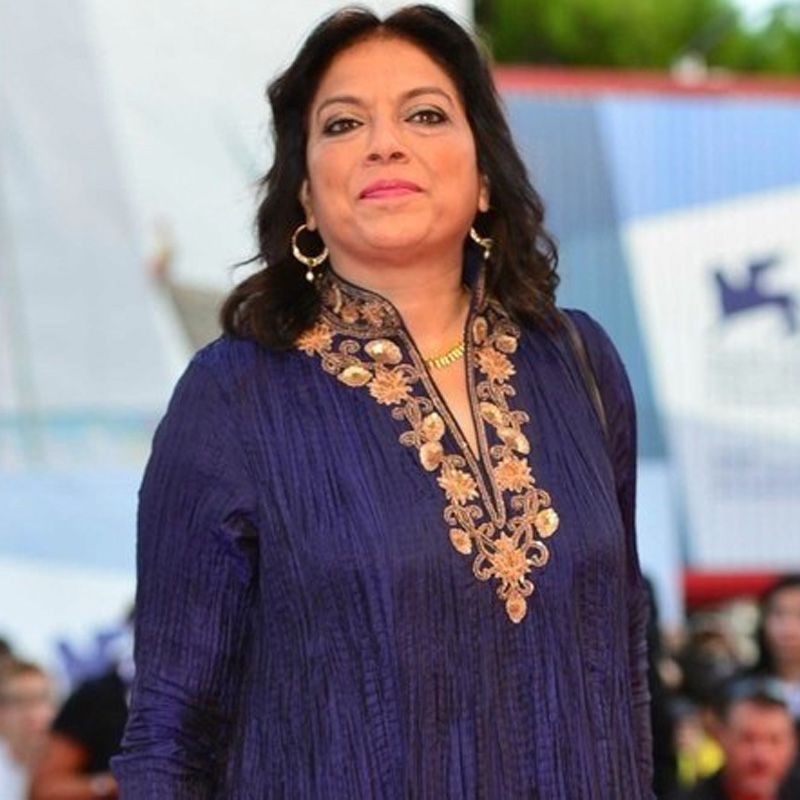
  • PVR Director’s Rare to re-release Mira Nair’s Salaam Bombay on 22 March

    PVR Director’s Rare to re-release Mira Nair’s Salaam Bombay on 22 March

    MUMBAI: PVR Director‘s Rare is all set to re-release Mira Nair‘s multiple awards winning film, Salaam Bombay on 22 March in its zest to commemorate twenty five years of the film that brought innumerable accolades to India.

    Speaking on the re-release, PVR Ltd JMD Sanjeev Kumar Bijli said, "I am immensely pleased to announce the re-release of Salaam Bombay through PVR Director‘s Rare. The movie is a stunning chronicle that opened doors for Indian cinema globally. Through our platform PVR Director‘s Rare, it is an excellent opportunity to revive Salaam Bombay for today‘s audiences. Mira Nair has effectively captured the struggle of the street children and the true essence of a city like Mumbai. We hope to continue bringing such meaningful cinema to our patrons in the future too."

    Salaam Bombay is a gritty tale set in the red light district in Mumbai and chronicles the day-to-day life of street children, drug-pushers, pimps & prostitutes. It follows the life of a young kid Krishna who has come to the big city to earn Rs. 500 and is nurturing the dream of going back to his mother someday. The actors in the movie were real prostitutes and the street kids of the city.

    It won the National Award for Best Film and 25 international awards, including two at Cannes- the Camera D‘Or and the Prix Publique (the most popular film in the festival). It was selected as one of the best 1,000 movies ever made by a leading publication in New York. It was also nominated for the Academy Award for best foreign language film.

    The film will release on 22 March in PVR Cinemas and Cinemax at Delhi, Mumbai, Kolkata, Chennai, Ahmedabad, Bangalore, Pune and Gurgaon through the PVR Director‘s Rare banner.

  • Kolkata could go completely digital by 1 February

    Kolkata could go completely digital by 1 February

    MUMBAI: Kolkata could go completely digital by 1 February with the Information and Broadcasting (I&B) ministry, the broadcasters and most of the multi-system operators (MSOs) pressing for a blackout of analogue delivery of television channels.

    The MSOs met the West Bengal state government minister to get the support for an effective implementation.

    Though technically Kolkata has gone digital along with the four other metros since 1 November, analogue signals have continued amid seeding of digital set-top boxes (STBs) as the Mamata Banerjee government has refused to support a total blackout.

    "The state government of West Bengal has given an unofficial nod to MSOs in Kolkata to switch-off analogue cable completely beginning 1 February," the CEO of a MSO who attended the meeting said on condition of anonymity.
    There is one big MSO in Kolkata who is still waiting for digital set-top boxes (STBs) to arrive and is continuing with analogue transmission. Some cable operators are also saying that STB shortage is still there in some pockets of the city.

    In the backdrop of this, the support of the state government is crucial. "The state government is fine with the analogue switch-off as long as there is no law and order problem," a senior executive representing a MSO said on condition that his identity not be revealed.

    In any case, most of the MSOs have switched off most of the channels except the Bengali entertainment and news channels. The city was expected to go digital from 28 December after initial hiccups. However, an unrelenting state government had warned MSOs against complete switch off.

    The MSOs had begun the process of switching off analogue signals from 16 December with English entertainment channels.

    The Bengali channels were the last to be swtiched off from 27 December but the Information & broadcasting ministry‘s efforts to implement complete digitisation came to a nought due to state government‘s tough posturing.

    "Kolkata should be able to go totally digital by 1 February. We have also been told by the I&B ministry verbally that they will take action if we do not switch off analogue signals," said Manthan director Gurmeet Singh.

  • IAA announces ‘Gender Sensitisation Drive’

    IAA announces ‘Gender Sensitisation Drive’

    MUMBAI: India Chapter of the International Advertising Association (IAA) has announced “IAA Gender Sensitisation Drive” the components of which seek to fundamentally change the deep routed bias against women.

    The initiative has an acronym “VOW” standing for “Violence on Women” which we seek to stop consciously doing our bit and taking a vow to get rid of this bane in our society.

    The initiative consists of two segments. Gender sensitisation Seminars for content creators: The first part of the drive would be to hold a series of Seminars across India to sensitise content writers in film and TV industry, story writers (in print media) and in advertising, to guard against typifying women and on other gender nuances, and create focused awareness about the right way to project women across media.

    The Seminars would be addressed by experts in the field and also people of the communications industry.

    The first one is scheduled in Mumbai on 16 February. IAA is hoping to have Union Minister of Women and Child Development Krishna Tirath to inaugurate it.

    Seminars are also being planned in Delhi, Kolkata, Hyderabad and Pune in the next few months.

    The second segment is multi-media advertising campaign against ‘eve teasing‘: The initiative is a national advertising campaign that will use the creative resources of the communications industry and the strength of media linkages to use creative communications to try and change behavioral patterns in a manner that would benefit women. Eve Teasing has been identified as the critical issue that needs to be addressed.

    IAA president Srinivasan K Swamy said, “eve teasing is seen as the mother of most evils affecting women. Today‘s eve teaser is tomorrow‘s molester, and could be a future rapist. It is necessary to nip this in the bud itself. Research and experience of experts in the field like UNFPA and leading NGO‘s like Laadli have also suggested this subject as the critical one to address.”

    A national contest would be run inviting entries from creative people all over the country on how to tackle this issue through effective communication.

    The entries for this Contest would be judged by the best creative minds in the communications industry and short list some good campaigns; and a jury consisting of leaders from a cross section of society and NGOs would then select the winning campaign.

    The IAA would fund the production of this winning entry and use its media linkages to run the campaign on all newspapers and TV channels across the country.

  • Govt may mandate local sourcing of a percentage of STBs: I&B secretary

    Govt may mandate local sourcing of a percentage of STBs: I&B secretary

    NEW DELHI: The government could consider making it mandatory for procurement of certain percentage of locally-made set-top boxes (STBs) if domestic manufacturers priced them competitively.

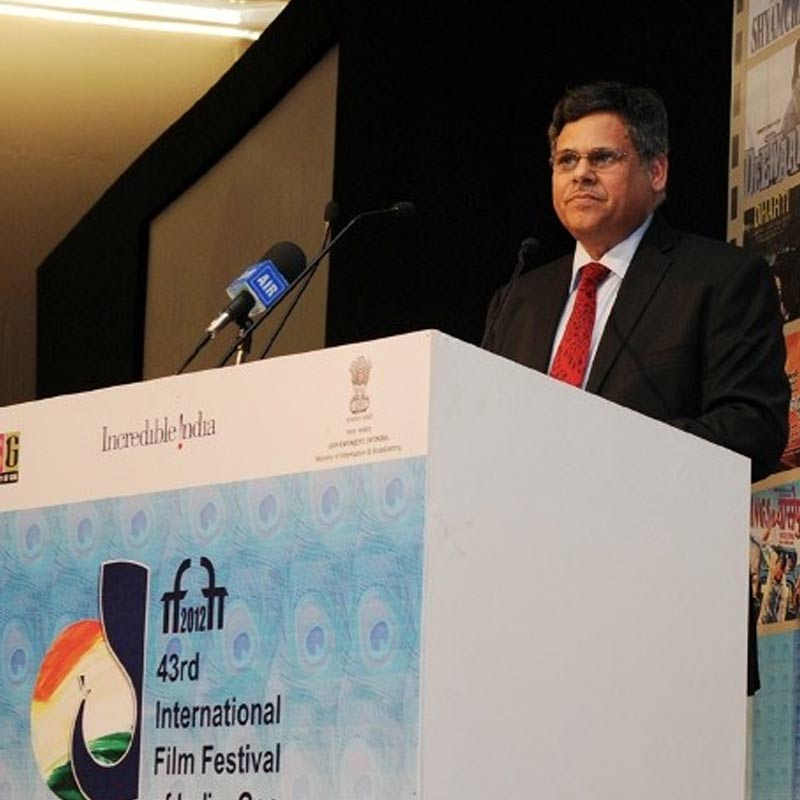
    Information and Broadcasting (I&B) secretary Uday Kumar Varma said most of the STBs at present are being imported and the share of the domestic manufacturers is negligible, mainly on account of cost disadvantage.

    He said with the government embarking upon a massive drive to switch over to digital delivery of television channels to households, there is a huge demand for STBs.

    If domestic manufacturers are able to price their products competitively, I&B Ministry may even mandate a certain percentage of STBs to be procured domestically, he added.

    Varma also said the I&B Ministry has written to the finance ministry over the issue of locally manufactured STBs attracting higher rate of value-added tax (VAT), while imported STBs are subjected to a lower rate of service tax as it is considered a service offered by cable operators.

    The I&B Ministry has asked the finance ministry to remove the tax anomaly and create a level playing field for domestic STB manufacturers.

    He said the government is confident of meeting the 31 March deadline for digitisation in 38 cities (with one million plus population) across the country in the second phase of digitisation.

    Varma said, �It is estimated that 16 million STBs would be required to digitise the 38 cities, excluding the four metros. But a study conducted by the ministry has revealed that already six million TV sets in these cities are already digitised."

    Cities like Ludhiana and Amritsar are already 90 per cent digital, according to Varma. The level of digitisation is high even in Bangalore and Hyderabad.

    The four metros – Mumbai, Delhi, Kolkata and Chennai — were part of the first phase of digitisation effective 1 November.

    Varma expressed satisfaction over the implementation of the first phase of digitisation. He said the exercise was "more or less completely successful" in Mumbai and Delhi. He added that even Kolkata, which initially had reservations about digital conversion, has come on board with a conversion rate nearing 90 per cent.

    It is held up in Chennai because of a petition by cable operators in the Madras High Court challenging the digitisation notification itself.

    Varma said the I&B Ministry has been reviewing the progress on a continuous basis and nodal officers have been appointed in every state to oversee the conversion process.

    He said the first phase of digitisation was a learning and the government was working to refine the process in the second phase. The feedback from the newly-converted digital homes has been mostly favourable and added that the move is bringing in a more transparent cable TV regime in the country.

  • Inter-ministerial group to study Trai recommendations

    Inter-ministerial group to study Trai recommendations

    MUMBAI: An inter-ministerial group headed by J S Mathur, additional secretary in the Information and Broadcasting (I&B) Ministry, will examine the Telecom Regulatory Authority of India‘s (Trai) recommendation against allowing government or government entities in television broadcasting and distribution.

    The I&B Ministry has already cleared a proposal for the setting up of an inter-ministerial group, which would in fact function as an institutional mechanism to study all the recommendations made by Trai.

    The I&B Ministry will take a view on the recommendations of Trai after the inter-ministerial group gives its views. This could mean a decision on the application by The Tamil Nadu Arasu Cable TV Corporation for a digital addressable system (DAS) licence for Chennai would be delayed.

    Any prolonged delay in deciding on Arasu‘s application, which was submitted in July, could also have an implication for implementation of digitisation in Chennai.

    Mumbai and Delhi have already switched over to digital delivery of television channels, while Kolkata is almost through.

    The I&B Ministry had in November made a reference to Trai to re-examine its 2008 recommendations which said government, government entities and government-owned companies should not be allowed in television broadcasting and distribution. Trai stuck to its 2008 views and also reiterated that any government entity allowed in television distribution should be allowed an exit route.

    Apart from central government ministries, the governments of Andhra Pradesh, Gujarat and Punjab also have expressed intentions of launching their own television channels.