Tag: Kolkata Knight Riders

  • The Indian ‘Paisa’ League

    The Indian ‘Paisa’ League

    What began as a fledgling franchise in 2008 is today a world-renowned property with brand value pegged at $3.03 billion in 2013 and the highest at $4.13 billion in 2010.


    The Indian Premier League (IPL) – the fallout of an altercation between the board of control for cricket in India (BCCI) and the now-defunct Indian Cricket League (ICL) – has transformed cricket into an enterprise.


    An American Appraisal India report – based on a survey of 300 key participants of the IPL ecosystem including team managements, sponsors, advertisers, advertising agencies and broadcasters – found 57 per cent of the respondents saying that their advertising budgets towards IPL had either risen or remained constant over the last five years. Whereas only 14 per cent of the respondents said they had actually cut their ad spends on IPL over the past five years. Over 52 per cent of the respondents also said that franchise-led sponsorships could be between Rs 15 crore to Rs 75 crore per season.


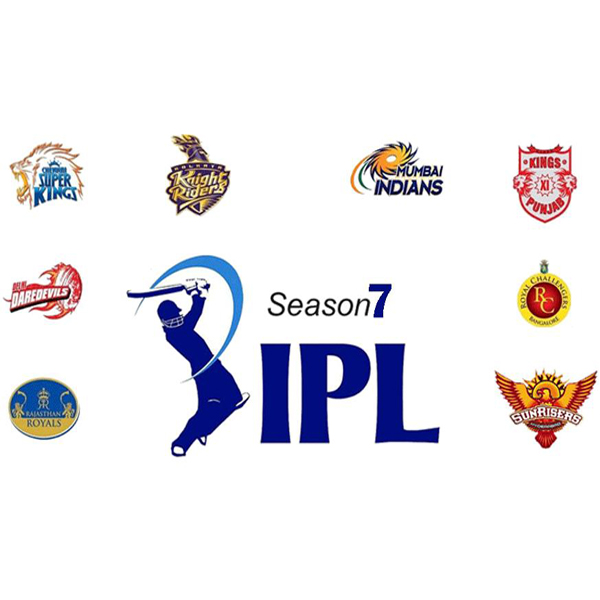
    According to the report, Chennai Super Kings and Mumbai Indians have emerged as the most powerful brands valued at $72 million each, followed by Kolkata Knight Riders ($69 million), and Royal Challengers Bangalore ($51 million). Rajasthan Royals ($45 million) and Delhi Daredevils ($40 million) are somewhere in the middle, with Kings XI Punjab ($32 million) and Sunrisers Hyderabad ($25 million) at the bottom of the pile.


    While each team is trying to claw its way back with operational improvements, trust flows with stakeholders will eventually determine the health of IPL’s long-term liquidity and profitability. For the current eight teams to sustain, their short-term operational movements need to be aligned with their strategic plans for the tourney.


    Further, the report estimates the merchandising valuation of IPL at $40 million, as compared to $2 billion for Spain’s La Liga. Despite having a population which is 25 times larger and an economy which is at least 25 per cent larger than that of Spain, India’s IPL is only two per cent of Spain’s La Liga in terms of merchandising. The reason is piracy and the availability of counterfeit products apart from the fact that the prices of original IPL merchandise are quite high from an Indian point of view.


    While there is a huge potential for the merchandising market to grow, the report also predicts it will grow ten-fold by 2020 – from $40 million to $400 million.


    Coming to broadcasters in the IPL universe, the tourney is currently in its seventh edition and will continue its long-standing association with Multi Screen Media (MSM), the official broadcaster of IPL, after Sony coughed up nearly $1 billion for a period of 10 years in 2008. Between 2008 and 2012, DLF was the sponsoring partner ($50 million) while from 2013 to 2017; Pepsi won the title sponsorship for a bid of nearly $66.5 million, beating its closest rival in Airtel.


    For the seventh edition, MSM’s two channels – Sony Max and Sony Six – have already started their Pepsi IPL campaign. The network is reportedly hiking its ad rates by 15-20 per cent and expects the revenue generated to be anywhere between Rs 900 – Rs 950 crore, despite the reduction in the number of matches played from 76 to 60. The broadcaster is learnt to have floated rates in the range of Rs 4.75- Rs 5 lakh per 10-second spots, and expects to increase them as the tourney gathers momentum.


    As far as viewers go, IPL’s reach was pegged at over 200 million viewers in 2013, as against about 163 million viewers in 2012. The total viewership in 2013 has been 2.6 per cent, up from the 2.2 per cent in 2012. Correspondingly, MSM earned Rs 750 crore in ad revenues in 2012 and upped it to Rs 950 crore in 2013, according to FICCI KPMG 2014.
  • IPL Governing Council releases schedule for first 20 matches

    IPL Governing Council releases schedule for first 20 matches

    MUMBAI: After days of speculation and curiosity around the schedule for Pepsi IPL 2014, the IPL Governing Council in a meeting held in Chennai today has confirmed the first phase of matches being played in the UAE.


    The first leg of the tournament will be contested from16 April to 30 April. A total of 20 matches will be played in three stadiums — the Sheikh Zayed Stadium, Abu Dhabi; the Sharjah Cricket Association Stadium, Sharjah; and the Dubai International Cricket Stadium, Dubai.


    The opening match on Wednesday, 16 April, will be played in Abu Dhabi, and contested between 2013 winners – Mumbai Indians and the 2012 IPL champions – Kolkata Knight Riders.


    Pursuant to the initiative taken by the Ministry of Home Affairs, Government of India, many State Governments have indicated that IPL matches can be conducted in their respective states. Based on the responses received so far, the BCCI believes that the Pepsi IPL 2014 can be conducted in India from the first week of May.


    The schedule for the remaining 40 matches will be announced in due course.


    Indiantelevision.com will keep you posted on further updates.

  • SRK relives the KKR moments with a documentary

    SRK relives the KKR moments with a documentary

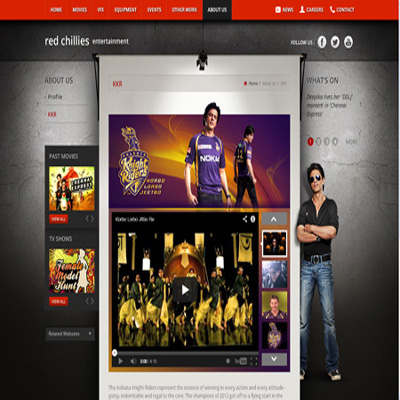
    MUMBAI: When failure struck him while handling his Indian Premiere League (IPL) team – Kolkata Knight Riders (KKR) – he took it in his stride. Except for few times, the king Khan always came across as an encouraging team leader, who did everything needed to gear up “his boys”. In the last six editions of the IPL, the team has seen many ups and downs.


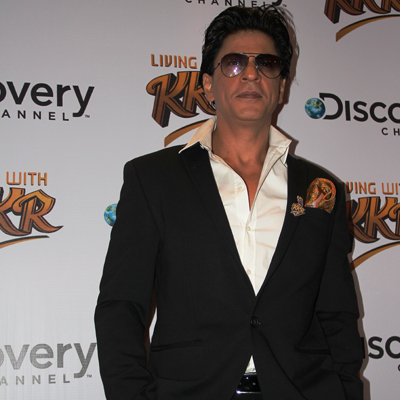
    Shah Rukh Khan finds his team’s story to be an “incredibly compelling one” from start to finish and thus as the IPL is set to enter its seventh edition, Discovery Channel will present the riveting story of the team’s transformation – from a group of struggling players in the early years to their emergence as formidable champion of the league – in a four-part series, titled Living with KKR from 24 February to 27 February at 8 pm.


    “When you’ve won once, and you see yourself on the verge of loss, just overcome your difficulties. I may sound materialistic, but forget emotions, and go ahead and bloody well win, or else you wouldn’t have your own documentary!” quipped Shah Rukh while launching the series on Friday at Taj Lands End.


    When asked if he has a say in the management and functioning of the team? “Well, there is no creative input from my side in cricket as compared to films, where I do have a say.”


    And like always, he was at his witty best when asked if being a Bollywood superstar has helped in making the team more popular. “Nobody remembers the excellent captaincy of Gautam Gambhir during that last match, where the ball went out the boundary, but people remember me picking up my daughter. So, yes, being popular has its own advantages,” he cheekily remarked.


    Not just that, when a question was raised on the much talked about “superstition” surrounding the decisions being taken regarding the team, he had few interesting anecdotes to share. “When people don’t have anything to blame, they blame superstition. There were moments when people said, ‘kale ko neela kardo, jeet jaaoge’, and in fact, Juhi (Chawla) felt quite strongly about the colour! Also, when our team used to bat first, I used to leave late from the hotel thinking if we lose wickets early it is difficult to smile and cheer in front of people. And during that last match when Gautam Gambhir was out, I prayed, and there haven’t been a lot of time where I’ve had to pray because I know, whenever I pray, it comes true, or damn close to it.”


    Khan also remarked that the IPL matches have been the most watched program on Indian television in the last five years, making it one of the most successful ventures of his career. During this year’s IPL auctions, KKR lost three of its veteran ball players – Laxmi Ratan Shukla, Mohammed Shami and Manoj Tiwary – but Khan remains undeterred, “We hope all the very best for Laxmi, Shami and Manoj. I do hope they flourish in their respective teams, and hope they can make it for our matches.” He continued, “And we have quite a good team on our hands now with younger Bengali players. We have a strong team town with Gautam Gambhir heading it.”

  • SRK plans a documentary on KKR

    SRK plans a documentary on KKR

    MUMBAI: The New Year is a start of many things new for the Badshah of Bollywood Shah Rukh Khan. So while the poster of his new film Happy New Year was revealed yesterday, there’s news now about a documentary that SRK is making on the journey of his Indian Premiere League – Kolkata Knight Riders.

    In the previous years, the actor has ensured that the team becomes a name to reckon with and now with the film he is just taking a step ahead.

    The team has had its share of success and failure. After disappointments in many season, in 2012 the team rose from the ashes and claimed the trophy from Chennai Super Kings on their home turf in Chennai. The team’s theme Korbo, Lorbo, Jeetbo Re (We will do, We will Fight, We will Win) seemed so apt at that time.

    In 2013, the team didn’t do any wonders and ended up being at the seventh position. However, it seems SRK is all kicked about the 2014 edition. The documentary is going to be released with much fanfare with a well-planned TV premiere. Reportedly, SRK will do the voiceover and talk about the journey and how the team emerged a winner after a shaky start.

  • Nickelodeon partners UBQool to launch cricket contest

    MUMBAI: Nickelodeon has partnered education portal for children UBQool to launch ‘UBQool.com Cricket Mania‘ on Nickelodeon and Sonic channels. The winners of the contest will get an opportunity to greet and meet their favorite cricket stars from the Kolkata Knight Riders Team and catch all the action by watching them play live.

    An on-air contest that is on till May 10, 2013 will select fifty kids across 9 cities along with their moms to meet the Kolkata Knight Riders team and will give fifty more kids, VIP passes to watch the match live.

    All that viewers have to do is to watch their favorite channels Nick and Sonic everyday between 6 pm – 7pm and 2pm – 4pm respectively, spot simple questions and log on to Ubqool.com to answer the questions.

    In addition to the meet and greet cricket stars and passes to watch live cricket matches, few lucky winners will also receive T-Shirts hand autographed from their favourite cricketers.

    Viacom18 EVP and Business Head, Kids Cluster Nina Elavia Jaipuria says, “Cricket is nothing less than a religion for kids in this country. We have always delivered the best of entertainment and engagement to our audiences and this summer we take it a step further to give them a chance to be a part of the biggest craze that has hit the nation. We are happy to partner with UBQool to give kids an experience of a lifetime that allows kids not just to witness a KKR match, but also an opportunity to meet the KKR team.”

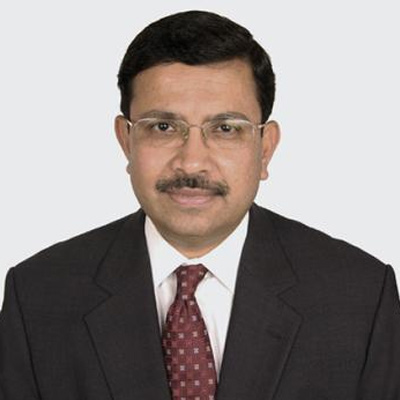
  • ‘There are no plans to sell stake’ :KKR CEO Venky Mysore

    ‘There are no plans to sell stake’ :KKR CEO Venky Mysore

     Having won the previous edition of the IPL, Kolkata Knight Riders (KKR) is gung ho about defending the title. On the business side, the franchise is protected from the economic slowdown having done three-year deals with sponsors that will only expire at the end of this season.


    KKR CEO Venky Mysore has focused on making sure that KKR functions like a corporate. That means putting in systems and processes both on the revenue side and on the player front.


    Indiantelevision.com‘s Ashwin Pinto caught up with Mysore to get his take on the franchise‘s progress. Contrary to media reports, he maintains that the franchise currently doesn‘t have any plans to dilute stake.


    Excerpts:


    Q. Reports indicate that KKR might bring in a strategic investor?

    A: There is no truth to that at all. It does not make any sense whatsoever. There are no plans to sell stake.


    Q. Were there challenges early on in the first few seasons in terms of brand building and perception with KKR not doing well on the field?

    A: It is a fact that we were not performing at our potential. After three seasons we were the worst performing team. Over the last two years, the journey is something that we are quite proud of. A transformation took place. We changed the entire team. For the first time we qualified for the playoffs and Champions League Twenty20. Then of course, we won the event last season. The brand has also grown as a result.


    Q. With your appointment KKR‘s aim was to corporatise things. Is the franchise being run more professionally now?

    A: That is what we have aimed to do. We have looked at KKR as a business. Sports entertainment is our product. Behind the scenes, the aim has been to run it as a team and as a genuine business. The franchise model of the IPL is exciting and fascinating.


    There is a huge opportunity to leverage the brand we have built. We also want to continue building on our foundation which is the fan base. On both counts we worked hard, put a lot of new initiatives in place to build fan base and extend our brand so that sponsors who associate with us have the opportunity to benefit from the brand.


    When we do this, new revenue streams are generated. It has to be run as a team business as governance requirements are quite significant these days. We have to pay attention to that. We are proud of what we have done across the board but there is still work to be done.


    Q. I believe that after coming in, you overhauled systems and processes to an extent on the business side. Could you shed light on that?

    A. A big chunk of revenue comes from sponsorship. The key was to create a portfolio of brands that we associate with. In an ideal world you want brands that have synergies with each other and not just with KKR. You build a common platform on which each of the brands can jump on.


    You can run events and activities that are common to brands like a meet and greet and press conferences. We have the largest number of brands among the IPL franchises – 22 that we work with. This has helped us not only generate new revenue but also leverage and activate our brand that the association with each brand has been strong.


    ‘I do not know about other franchises, but our revenue generation through sponsorship and ticket sales is significantly higher than central revenue’


    Q. How is having Shah Rukh Khan as an owner helping? Is he hands on in terms of operations?

    A. If he wanted to be hands on, he would not have brought in somebody like me. We have to do our job, but having him is a fantastic experience.


    Q. Are sponsors still coming on the back of Shah Rukh Khan?

    A. Shah Rukh is Shah Rukh. You cannot take anything away from that. We have the association and strength that comes from him being in the background. But our endeavour was to make sure that we bring in sponsors on the strength of KKR. We have succeeded largely in that area.


    Q. Does the fact that you do not have a big corporate house backing you mean that you have to be prudent in spending?

    A. Of course! You run it like a business. There has to be a lot of discipline. One just has to manage it like any other business and work through budgets and keep going.


    Q. Your aim is have revenue growth of 25 per cent. What is the gameplan to achieve this?

    A. It has to be a combination of efforts. One is to increase the existing revenue streams. Another is with ticketing. There are new opportunities for packaging and improving the fan experience further. On the other hand, it is also about looking at new streams of revenue like merchandising and licensing.


    Q. Where does the franchise stand in terms of sponsorships?

    A. We are fortunate that when we did deals in 2011, it was for three years. Therefore there are no new sponsorship deals other than Pepsi which came in this year. After this season we will figure out what happens. Most of our sponsors are likely to continue. Other companies have expressed interest.


    Q. How do you cut through clutter?

    A. There is no clutter. Each brand that is with us has its own target markets and strategy. It is the association with us that takes this to another level.


    Q. Could you talk about how the Nokia association has benefited both?

    A. Nokia has been with us from day one. Nokia has said that the KKR association has been hugely beneficial. We have also benefited greatly because of the manner in which Nokia activates the brand.


    Q. In terms of local revenue, is your ticket revenue more compared to other franchises as the stadium is bigger?

    A. I do not know about other franchises, but our revenue generation through sponsorship and ticket sales is significantly higher than central revenue.


    Q. Could you talk about developing licensing and merchandising?

    A. It is an on-going process. First, you build your fan base and your brand. It is only on the basis of this that licensing and merchandising will pick up. We have a range of products. We have a KKR store online. There is a tremendous potential for growth.


    Q. How did the new slogan ‘One Team. One Pledge’ came about’?

    A. It is about a marketing strategy. Last year we had ‘New Don New Knights’ which was a new theme. Now the emphasis is on the team and how we take it to the next level. The alignment of the team being one pledge means it will go out and give its best. That is the whole thought process behind it.


  • Reebok launches IPL merchandise

    Reebok launches IPL merchandise

    MUMBAI: Reebok, which is the official apparel sponsor of Indian Premier League (IPL) franchises Chennai Super Kings, Royal Challenger Bangalore and Kolkata Knight Riders, has launched merchandise as well as accessories for the teams such as caps and wristbands.

    The merchandise available for the three teams include Fangear Polos, CSK No.7 Polo and CSK Champ Polo in addition to team jerseys and the team premium jerseys.

    In the RCB, KKR and CSK collection, the Fangear polo has the team badge on the upper left side of the shirt and a Reebok symbol on the right, with the pellets being gold in the RCB and KKR collection respectively. The premium jersey available for all the three teams are the jerseys worn by the team players themselves. The premium jerseys are available for boys as well.

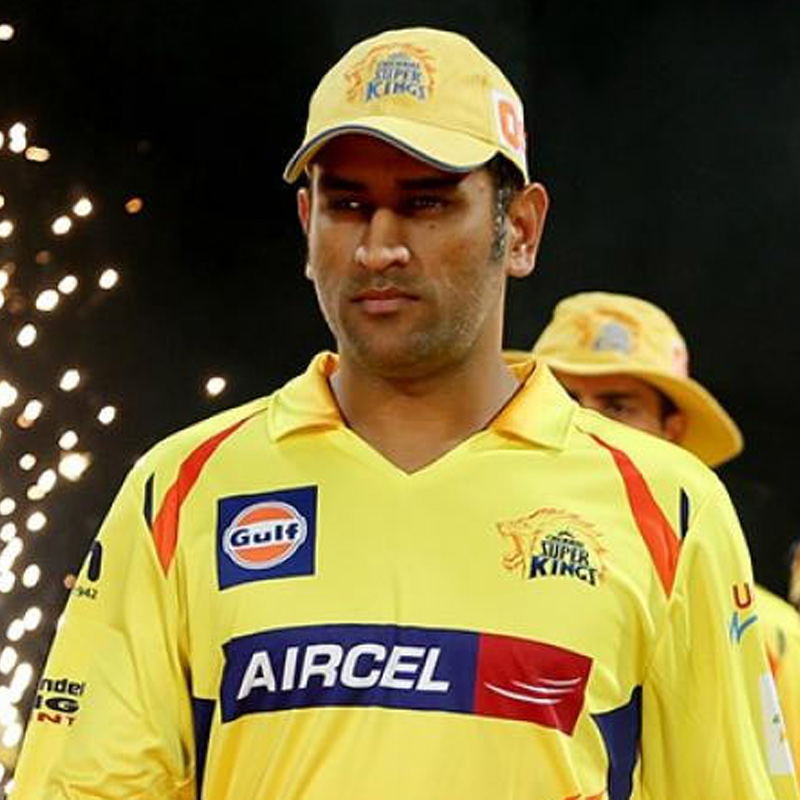
    Reebok has churned out two special CSK Polos. For Dhoni, Reebok has created a special CSK No.7 Polo in navy and white which sports Dhoni’s jersey number. Along with this, Reebok has made a ‘Triple Champion Polo’ in red and black with the number ‘3’ on the upper left side to commemorate the winning streak of CSK. This Polo was specially made keeping in mind that Chennai Super Kings have won the IPL series twice and the Champions League once.

  • Brands need to constantly engage with consumers

    Brands need to constantly engage with consumers

    MUMBAI: Brands need to hold on to consumers through a constant engagement process. Digital conversations are important but not many brands are using it enough.

    A panel discussion at The Mindshare Brand Equity Compass looked at strategies and trends for marketing through brand involvement.

    For finance, there is an attempt at consumer involvement but penetration is low. The category, especially insurance, should try to market itself throughout the year to engage consumers continuously and not only appear at the end of the financial year where people invest for the purpose of tax saving; it should convey to the consumer that it cares about their health in good and bad times.

    Prozone Enterprises president Vishal Mirchandani gave the example of Shoppers Stop which built consumer involvement through a loyalty club. The retail chain even involved customers in product launches; it used focused group discussions to change logos.

    Many Indians are open to brands engaging with them. The young consumer is impatient but willing to spend. Experiential marking can help like Axe does with dance parties.

    The digital medium can allow brands to build a powerful continuous relationship with the consumer. However not many brands are being built around digital or are using digital as a significant part of their strategy. There is an opportunity to learn, explore and propagate in the digital space.

    Nokia India head – activation, media and online marketing Viral Oza spoke about how Nokia did an initiative with Kolkata Knight Riders and their fans on the mobile. It asked fans to send in their advice on how the team could improve the team’s performance. While 180,000 fans registered, the initiative got six million responses.

    Nokia, Oza said, uses Twitter and Facebook to have a continuous dialogue with consumers. The company realised that online care issues had to be managed;it would help if marketers looked at themselves as consumers also.

    Aditya Birla Financial Services Group CMO Ajay Kakar said that his company did not make the mistake of treating cricketers like demi gods. In the spots, they spoke about their real life situations. “It is about using the celebrity in a relevant manner,” he added.


  • A case for disruptive innovations

    A case for disruptive innovations

    MUMBAI: Disruptive innovations like the Indian Premier League (IPL) can break through a cluttered market, several experts said.

    Kolkata Knight Riders CEO Venky Mysore noted that the IPL was about challenging the norm. “Viewership has leapt sixfold and the reach has gone beyond traditional cricket lovers. From a business perspective, it was about creating a platform to reach out to a passionate public. The IPL was packaged to catch the people’s attention,” he said.

    Particpating in a panel discussion at The Mindshare Brand Equity Compass, LinkedIn India country manager Hari V Krishnan noted that Linkedin created a disruptive innovation in the talent economy. The traditional ways of employment did not give transparency. “We extract insight from data. We are not just about helping somebody find a job but also helping them become more productive in their jobs,” he elaborated.

    Disruptive innovations can be fought by rival companies by moving into another arena to strike. This is what Cirque Du Soleil did in the circus arena. Microsoft joint MD Hemant Sachdev said that innovation is what makes a company tick as it impacts the consumer experience. “Going forward, the Natural User Interface will be important like Xbox. It is a community that is real and experiential. Telecom is another example of disruptive innovation which gives real value not just to businesses but also to consumers.”

    Leaders must provide fertile ground for innovations to grow. Companies, in the process, must be more open to failures and take the risk of adopting disruptive trends so that they break patterns. The interesting thing is that while 95 per cent of ideas fail, innovation is still the only way to succeed.

  • ‘All IPL teams should be able to break even by 2011’ : Hiren Pandit – GroupM ESP managing partner

    ‘All IPL teams should be able to break even by 2011’ : Hiren Pandit – GroupM ESP managing partner

    The Indian Premier League (IPL) promises huge space for revenue growth. The team franchises will have to focus on building the brand consistently, project a healthy personality and take the sponsorship value to a different level.


    It is not wise to draw sponsors just on the back of winning and losing. Performance is a factor, but it is not the only thing.


    In an interview with Indiantelevision.com’s Ashwin Pinto, GroupM ESP managing partner Hiren Pandit says there is value in T20, but warns that it should not be at the cost of the other formats.


    Excerpts:

    How have the franchises fared financially in the second edition of the IPL?
    Our assumption is that there are two who have not made a profit – Deccan Chargers (Hyderabad) and Royal Challengers (Bangalore). They had their own brands on their T-shirts, which could be looked at as an investment rather than a loss. The others have broken even at the operational level. This was due to the rise in television rights fees. The question is whether they have wiped out the losses of last year. I expect everybody to break even by 2011.


    In terms of sponsorship revenues between the team and central revenues, the IPL got Rs 3 billion. Last year it would not have been more than Rs 2.5 billion. Kolkata Knight Riders (KKR), Chennai Super Kings (CSK) and Delhi Daredevils have got the most in terms of local sponsorships, followed by Mumbai Indians, Kings XI Punjab Rajasthan Royals (RR).

    And what about sponsorships?
    CSK and KKR did a particularly good job. But you would have a team like Royal Challengers (RC) which is not interested in outside sponsorships. That franchisee put its own brands on display.

    How about defending champions Rajasthan Royals?

    RR has broken even because their payout to the BCCI is much less as compared to the others. They only shell out $6.5 million each year. Having said that, I am not so sure that finishing number one necessarily translates into higher sponsorship revenue.

    Then what matters?
    You need to look at what a team stands for. Is its branding consistent? Does it show on the ground? Does the team overall project a strong and a healthy personality? Are there characteristics in the team that can take sponsorship value to a different level?


    If an IPL team draws sponsors on the back of winning and losing, then you have a problem. Performance is a factor, but it can’t be the only thing.


    While KKR did well in terms of getting in sponsors, somewhere down the line they or the brands associated with it made the mistake of going down the performance route. That is a dangerous platform to walk on. The amount of bad press it got did not help the franchisee nor the brands that were associated with it.


    On the other side, Idea did an outstanding job with the Mumbai Indians. Their activation platform was brilliant and had nothing to do with winning or losing. It gave fans the opportunity to aspire to talk with their favourite players. Even though Mumbai Indians lost on the field, the aspirational value is still there.

    What was Group M’s role in this IPL?
    We did a few deals with some clients for having their logos appear on T-shirts. We lost out big time, though, as the IPL moved out of India. We had a smaller role to play compared with last year. We are now not involved with the Deccan Chargers.

    Revenue growth will come from local sponsorships. If you are heavily relying on the central pool, then the franchise has not built itself properly. Building up local sponsorships and fan base will be key

    Do you see yourself playing a bigger role going forward?
    Yes! We have knowledge on brand activation around the IPL. We have got a good understanding of this space and the valuation process. We can give clients a fair idea of what they should pay for a logo, depending on the position they take. We are also open to associating with teams.

    The IPL is looking at doing another event each year abroad, possibly a smaller one. Is this the best way forward?
    The aim appears to be to develop cricket in smaller, non cricket markets. Is there a window available? Are players available? These issues have to be addressed.

    Where does KKR go from here?
    They have to relook at what they have got. They are not a bad team per se. They have a high profile owner and they need to look at the relationship between owner and team.


    Secondly, they had too many people like Buchanan and Ganguly trying to become high profile. The bigger you are, the harder you fall and that is what has happened.


    Kolkata’s sponsorship is on the back of Shah Rukh Khan and not because of the team. They could rejig what their brand stands for – and then sponsors will come in for the team’s values. That is a call that they will have to take. What you will find is that franchisees will move away from performance as a platform for brand activation.


    Going forward, the growth of revenues will come from local sponsorships – and not so much from the central pool. If you are heavily relying on the central pool, then the franchise has not built itself properly. Building up local sponsorships and fan base will be key.

    How would this happen?
    The IPL will move away from being just a 45-day event. Franchisees will do activities over a longer period of time to build a fan base. They would do things like promotions, interactions and meets.

    There is talk that with the IPL the focus is shifting away from individual player sponsors and more towards team sponsorship. Are players like Dhoni going to lose out on lucrative deals going forward?
    When a team association is done, three to four players are used. Even if you are associated with CSK, you can only use Dhoni as far as IPL is concerned. This makes sense when the IPL is on or just about to start. But in December if the team endorses a brand, what will a viewer take out of it? The viewers are not stupid. If people believe that they are getting a Dhoni for free by associating with his IPL franchise, then they have a short term approach to the business.


    You could associate with a team to get national reach. If you associate with a player, it would be due to his characteristics. It is not necessary that the characteristics of the franchisees will be the same.

    When the IPL adds more teams in 2011, what would be the likely cities?
    Gujarat and UP have opportunities. You could see another team from Maharasthra – perhaps Pune or Nagpur. Kerala also has a chance if some NRI is interested. The payout could cross $200 million. But the interested party will have to work his maths out properly. Otherwise, it will be difficult to recoup your investments. The parties that shelled out the most for a franchisee the last time around are just about making it. The lower end of the payout table are more comfortable.


    Also keep in mind the fact that after 2010 all player contracts are up for grabs. The whole scenario will be reworked and changed. There should again be a cap on money that can be spent or there will be teams that will be far stronger than the rest. The IPL could then turn into a two or a three horse race which will take away from its appeal. Some deals, though, might be done outside the bidding. We will see more performance-related deals. Player loyalties and disloyalties will also come into the equation.

    Next year England starts P20. In 2011 South Africa, Australia and New Zealand start a joint league along the lines of the IPL. How do you see this affecting international cricket?
    The question is with so many leagues happening, what happens to Tests and one-dayers. Is there enough of a window for this to happen? There was a league that started in the West Indies, which subsequently got killed.


    Can the other leagues generate the kind of money that the IPL gets? I don’t know if Kevin Pietersen will get $1.5 million a year in those leagues.


    Then you must look at it from a player’s perspective. He plays around 35 ODIs, 15 Tests, 20 T20 games a year. Does he have time to play anything else? Remember also that T20 is successful in India as it is a country sport first. Then it is a club sport.

    Could we see players bypassing the international grind and just focusing on league cricket which is lucrative?
    The question is whether a player wants to play cricket for a living or does he want to represent his country and make money. You cannot have somebody only focus on the T20 format. This is something that this edition of the IPL brilliantly showed.


    The players who did well like Kumble, Gilchrist and Hayden are seasoned campaigners who have excelled in the other formats as well. T20 is not a wham bam affair. It is about playing proper cricket. If a cricketer chooses league cricket over his country, then he might be asking for trouble. Most of the IPL players got there as they made a statement by playing for their country. Then there are youngsters who did well in the IPL and are now playing for their country. I do not think that it is a choice of one versus the other.

    What impact will India’s exit in the T20 World Cup have on ESPN Star Sports?
    Ratings will take a hit. Already we are seeing that clients are not getting enough of a return when India does not play.
    How do you see the Champions T20 League faring?
    You need to let it happen once. Some players play for two teams and so will have to decide where their loyalties lie when this event starts.
    Would playing at night help Test cricket?
    This is not a bad idea. What has happened is that T20 has had a positive impact on the other formats. The run scoring in Test matches is quicker which is forcing results. This is desirable. Each format lives off the other in some form or the other.
    There will be lots of T20 cricket happening. Are you concerned that the overdose might kill the format?
    It could lose its flavour. You cannot have too much of one format. There is value in T20, but it should not be at the cost of the other formats.
    What challenges does the economic downturn pose for Group M ESP?
    We need to work harder. We need to give more value to clients. It is a partnership in good times and bad. We need to find better opportunities for clients but it is not as though we need to think differently.
    What progress has Group M ESP made in the celebrity endorsement and management space?
    We have moved away from this. Keeping in mind the Indian mindset towards celebrities, we did not believe that it was a scalable model. We focus, among other areas, on branded content in film and television. The strike affected us but hopefully the films have only been shifted and not cancelled. We have done regional tie ups with brands.