Tag: KKR

  • KKR to invest Rs 5,500 crore in Reliance Retail Ventures

    KKR to invest Rs 5,500 crore in Reliance Retail Ventures

    Mumbai: Reliance Industries Limited (“Reliance Industries”) and Reliance Retail Ventures Limited (“RRVL”) announced that global investment firm KKR will invest Rs 5,550 crore into RRVL, a subsidiary of Reliance Industries. This investment values Reliance Retail at a pre-money equity value of Rs 4.21 lakh crore. KKR’s investment will translate into a 1.28 per cent equity stake in RRVL on a fully diluted basis.

    This marks the second investment by KKR in a subsidiary of Reliance Industries, following a Rs 11,367 crore investment in Jio Platforms announced earlier this year.

    Reliance Retail Limited, a subsidiary of RRVL, operates India's largest, fastest growing and most profitable retail business serving close to 640 million footfalls across its 12,000 stores nationwide. Reliance Retail’s vision is to galvanize the Indian retail sector through an inclusive strategy serving millions of customers by empowering millions of farmers and micro, small and medium enterprises (MSMEs) and working closely with global and domestic companies as a preferred partner, to deliver immense benefits to Indian society, while protecting and generating employment for millions of Indians. Reliance Retail, through its new commerce strategy, has started a transformational digitalization of small and unorganised merchants and is committed to expanding the network to over 20 million of these merchants. This will enable the merchants to use technology tools and an efficient supply chain infrastructure to deliver a superior value proposition to their own customers.

    Read more news on Reliance Industries

    Founded in 1976, KKR has 222 billion dollars in assets under management as of June 30, 2020 and a long history of building leading global enterprises, including many companies at the forefront of technology and digital transformation including in areas of consumer retail and eCommerce, such as investments in Epic Games, OutSystems, Internet Brands, Go-jek and Voyager Innovations. KKR established its first of eight Asia offices in 2005 and the firm currently has approximately 5.1 billion dollars in private equity investments across more than 15 Indian companies, including Jio Platforms, JB Chemicals, Max Healthcare, Eurokids International and Ramky Enviro Engineers.

    Reliance Industries chairman and MD Mukesh Ambani said, “I am pleased to welcome KKR as an investor in Reliance Retail Ventures as we continue our onward march to growing and transforming the Indian Retail ecosystem for the benefit of all Indians. KKR has a proven track record of being a valuable partner to industry-leading franchises and has been committed to India for many years. We look forward to working with KKR’s global platform, industry knowledge and operational expertise across our digital services and retail businesses.”

    KKR co-CEO & co-founder Henry Kravis said, “We are pleased to deepen our relationship with Reliance Industries through this investment in Reliance Retail Ventures, which is empowering merchants of all sizes and fundamentally changing the retail experience for Indian consumers. Reliance Retail’s new commerce platform is filling an important need for both consumers and small businesses as more Indian consumers move to shopping online and the company offers tools for Kiranas to be a critical part of the value chain. We are thrilled to support Reliance Retail in its mission to become India’s leading omnichannel retailer and ultimately to build a more inclusive Indian retail economy.”

    KKR is making its investment from its Asia private equity funds. The transaction is subject to regulatory and other customary approvals.

    Morgan Stanley acted as financial advisor to Reliance Retail and Cyril Amarchand Mangaldas and Davis Polk & Wardwell acted as legal counsels. Deloitte Touche Tohmatsu India LLP acted as financial advisor to KKR. Shardul Amarchand Mangaldas & Co. and Simpson Thacher & Bartlett LLP acted as legal counsel to KKR.

  • Mobile Premier League (MPL) signed as principal sponsor of both KKR & TKR

    Mobile Premier League (MPL) signed as principal sponsor of both KKR & TKR

    NEW DELHI: The Knight Riders and Mobile Premier League (MPL), India’s largest esports and mobile gaming platform, announced today that MPL will become the principal sponsor for both the Knight Riders Franchises in IPL & CPL – Kolkata Knight Riders (KKR) and Trinbago Knight Riders (TKR).

    Knight Riders CEO & MD Venky Mysore said, “We are very excited to partner with MPL, which is a vibrant Indian start-up company promoted and run by a group of young and innovative people, in Esports and Gaming, that is bound to grow significantly. Our partnership across KKR in IPL and TKR in CPL, will create new opportunities to socialise and activate our partnership.

    MPL VP, growth and marketing Abhishek Madhavan said, “We are excited to be the principal sponsors for Kolkata Knight Riders. The team has been a household name right from the start and have won the prestigious IPL championship twice. They have some stellar players and the team competes to win, which is what MPL is all about as well, so it is the perfect marriage that will help us take our brand to more users. With Trinbago Knight Riders, one of the strongest teams, having won the CPL Championship three times, as its sister franchise, this association will help us take MPL to the international sports arena.”

    CPL is scheduled to start on 18 August 2020 and conclude on 10 September 2020 in Trinidad, which will feature three-time champions Trinbago Knight Riders (TKR) and five other teams.

    IPL is scheduled to start on 19 September 2020 in UAE and conclude on 10 November 2020, which will feature two-time champions Kolkata Knight Riders (KKR) and seven other teams.

  • IPL 2020 auction: Pat Cummins, Glen Maxwell top overseas buys; Piyush Chawla biggest Indian buy

    IPL 2020 auction: Pat Cummins, Glen Maxwell top overseas buys; Piyush Chawla biggest Indian buy

    MUMBAI: It was a day of records at the Indian Premier League (IPL) 2020 auctions in Kolkata on 19 December. When the hammer went down on the acquisition of Australian pacer Pat Cummins at Rs 15.5 crore by Kolkata Knight Riders (KKR), it announced a record for the highest price paid for a player in the league’s history. Compatriot Glen Maxwell was bought for Rs 10.75 crore by Kings XI Punjab (KXIP). The two were amongst the top foreign buys, while Indians player Piyush Chawla was picked by Chennai Super Kings (CSK) for Rs 6.75 crore.

    In the thirteenth season of IPL, 332 cricketers went under the hammer. The eight franchisees bagged players with an aim to balance their sides.

    The spotlight was on the English players- Jason Roy, Chris Woakes and Sam Curran and Eoin Morgan, South Africans player Chris Morris, Indians players- Piyush Chawla, Robin Uthappa and Jaydev Unadkat, Australian players- Alex Carrey, Glen Maxwell, Pat Cummins, Chris Lynn, Nathan Coulter Nile and Aaron Finch and Windies player Sheldon Cottrell.

    Here is the list of the players bought by the teams.

    Delhi Capitals

    Players bought: Jason Roy (Rs 1.5 crore), Chris Woakes (Rs 1.5 crore), Alex Carrey (Rs2.4 crore)

    Players retained: Shikhar Dhawan, Ajinkya Rahane, Prithvi Shaw, Shreyas Iyer, Rishabh Pant (wk), Axar Patel, Harshal Patel, R Ashwin, Amit Mishra, Sandeep Lamichhane, Kagiso Rabada, Ishant Sharma, Keemo Paul, Avesh Khan

    Total players in the squad: 17. No of open players slot:8 (6 domestic, 2 overseas). Purse left: Rs 22.45 crore.


    Chennai Super Kings (CSK)

    Players bought: Sam Curran (Rs 5.5 crore), Piyush Chawla (Rs 6.75 crore).

    Players retained: Shane Watson, Ambati Rayudu, Faf du Plessis, Suresh Raina, N Jagadeesan, M Vijay, Rituraj Gaikwad, MS Dhoni (wk), Dwayne Bravo, Ravindra Jadeja, Mitchell Santner, Monu Singh, Harbhajan Singh, Imran Tahir, Karn Sharma, Lungi Ngidi, Deepak Chahar, Shardul Thakur, KM Asif.

    Total players in the squad: 21. No of open players slot: 3 (2 domestic, 1 overseas). Purse left: Rs 2.35 crore.


    Kings XI Punjab

    Players bought: Glen Maxwell (Rs 10.75 crore), Sheldon Cottrell (Rs 8.5 crore), Deepak Hooda (Rs 50 lakh), Ishan Porel (Rs 20 lakh), Ravi Bishnoi (Rs 2 crore)

    Players retained: KL Rahul (wk), Chris Gayle, Mayank Agarwal, Karun Nair, Mandeep Singh, Nicholas Pooran (wk), Sarfaraz Khan, Murugan Ashwin, Mujeeb-ur-Rahman, K. Gowtham, J. Suchith, Harpreet Brar, Mohammed Shami, Hardus Viljoen, Arshdeep Singh, Darshan Nalkande.

    Total players in the squad: 21. No of open players slot: 6 (3 domestic, 3 overseas). Purse left: Rs 22.95 crore.


    Kolkata Knight Riders

    Players bought: Eoin Morgan (Rs 5.25 crore), Pat Cummins (Rs 15.5 crore), Rahul Tripathi (Rs 60 lakh), Varun Chakravarthy (Rs 4 crore).

    Players retained: Shubman Gill, Siddesh Lad, Andre Russell, Dinesh Karthik (wk), Rinku Singh, Nitish Rana, Sunil Narine, Kuldeep Yadav, Harry Gurney, Lockie Ferguson, Kamlesh Nagarkoti, Shivam Mavi, Prasidh Krishna, Sandeep Warrier.

    Total players in the squad: 18. No of open players slot: 7 (5 domestic, 2 overseas). Purse left: Rs 10.90 crore.


    Mumbai Indians

    Players bought: Chris Lynn (Rs 2 crore), Nathan Coulter Nile ( Rs 8 crore).

    Players retained: Rohit Sharma, Suryakumar Yadav, Quinton de Kock (wk), Aditya Tare (wk), Anmolpreet Singh, Kieron Pollard, Ishan Kishan (wk), Sherfane Rutherford, Hardik Pandya, Krunal Pandya, Rahul Chahar, Jayant Yadav, Anukul Roy, Jasprit Bumrah, Lasith Malinga, Trent Boult, Dhawal Kulkarni, Mitchell McClenaghan.

    Total players in the squad: 20. No of open players slot: 5 (5 domestic). Purse left: Rs 3.05 crore.


    Rajasthan Royals

    Players bought: Robin Uthappa (Rs 3 crore), Jaydev Unadkat (3 crore), Yasashvi Jaiswal (Rs 2.40 crore), Anuj Rawat (Rs 80 lakh), Kartik Tyagi (Rs 1.3 crore).

    Players retained: Jos Buttler (wk), Steve Smith, Sanju Samson (wk), Manan Vohra, Riyan Parag, Ben Stokes, Mahipal Lomror, Shashank Singh, Shreyas Gopal, Rahul Tewatia, Mayank Markande, Jofra Archer, Ankit Rajpoot, Varun Aaron.

    Total players in the squad: 19. No of open players slot: 7 (3 domestic, 4 overseas). Purse left: Rs 18.40 crore.


    Royal Challengers Bangalore

    Players bought: Aaron Finch ( Rs 4.40 crore), Chris Morris (Rs 10 crore)

    Players retained: Virat Kohli, AB de Villiers, Devdutt Padikkal, Parthiv Patel (wk), Gurkeerat Singh Mann, Moeen Ali, Shivam Dube, Yuzvendra Chahal, Washington Sundar, Pawan Negi, Umesh Yadav, Navdeep Saini, Mohammed Siraj.

    Total players in the squad: 15. No of open players slot: 10 (6 domestic, 4 overseas). Purse left: Rs 13.50 crore.


    Sunrisers Hyderabad

    Player sold: Virat Singh (Rs 1.9 crore), Priyam Garg (Rs 1.9 crore).

    Players retained: David Warner, Kane Williamson, Jonny Bairstow (wk), Manish Pandey, Sreevats Goswami (wk), Wriddhiman Saha (wk), Vijay Shankar, Mohammad Nabi, Abhishek Sharma, Rashid Khan, Shahbaz Nadeem, Bhuvneshwar Kumar, Siddarth Kaul, Khaleel Ahmed, Sandeep Sharma, Basil Thampi, T. Natarajan, Billy Stanlake.

    Total players in the squad: 20. No of open players slot: 5 (3 domestic, 2 overseas). Purse left: Rs 13.2 crore.

  • IPL brand valuation hits $6.3 bn in 2018

    IPL brand valuation hits $6.3 bn in 2018

    MUMBAI: The year 2008 was the beginning of a new era for sports in India with the launch of the Indian Premier League (IPL). Statistics show that 93 per cent of all sports viewers in 2018 watched cricket content and a report by Duff & Phelps pegged the brand valuation of IPL in 2018 at $ 6.3 billion.

    The report traces the evolution of each IPL team brand from the year 2014 to 2018. Mumbai Indians has maintained its top spot with its 2018 value at $113 million. It is followed by Kolkata Knight Riders at the second spot with $104 million in brand value. Royal Challengers Bangalore, Chennai Super Kings, Sun Risers Hyderabad, Delhi Dare Devils, Kings XI Punjab and Rajasthan Royals trailed with $98 million, $98 million, $70 million, $52 million, $52 million and $43 million respectively.

    According to a Broadcast Audience Research Council of India report, the top two most-watched ODI matches between 2016 and 2018 were played between India and Pakistan. It clocked 12.3 billion impressions in 2018 despite the absence of international tournaments in the year. It also stated that cricket programming was up by 79 per cent in 2018 as against the year 2016, with over 89,000 hours. Talking about the ads, it observed a growth of 14 per cent across all cricket content from 2016 to 2018.

    In 2016, viewership was dominated by T20 matches, whereas in 2017, One Day match dominated. Also, sports viewership year-on-year has gone up in the 2016-2018 period. From 43 billion impressions in 2016 the viewership has gone up to 51 billion impressions, growing at a CAGR of nine per cent. Additionally, the last three years have seen a steady increase in cricket content on sports channels.

    Women viewers make up 48 per cent of all cricket viewers, up from 295 million in 2016 to 342 million in 2018. The Women’s World Cup final between India and England had a viewership of 39 million impressions. Considering the overall scenario, 50 per cent of IPL viewers is less than 30 years of age and youth (15-30-year olds) still dominate cricket viewership with 35 per cent of live cricket viewership coming from this audience.

    Furthermore, in 2019, IPL clocked in 1.53 billion impressions minus the final match viewership. According to BARC data, the first three games of IPL 2019 witnessed a 31 per cent surge in viewership as compared to the last year. So when it comes to India, the wave for regional languages is expected to grow. Last year, Star India aired the IPL final in eight languages across 17 channels.

    According to the BARC data analysed by Insidesport.co, 22 per cent of the viewership for IPL has come from regional language feeds.

  • Consumption & disruption: The Emerald Media mantra

    Consumption & disruption: The Emerald Media mantra

    MUMBAI: When Rajesh Kamat makes a move, you take notice. His decision to set foot in the private equity world in 2011 with The Chernin Group’s CA Media after a blistering three-year run as Viacom18 COO and Colors CEO left India’s media and entertainment ecosystem intrigued. Cut to 2018, Kamat is staying true to form – making plays that continue to invoke as much curiosity, surprise and awe. Now of course he’s teamed up with global private equity giant KKR to make pan-Asia media tech investments as part of a $300 million fund that was set up in 2016. In a sense, he will have a say in how the existing and future media and entertainment landscape takes shape.

    The fund – Emerald Media – has Kamat and former Star Group CEO Paul Aiello as managing directors based out of Singapore. The original thesis behind setting up Emerald was to help companies scale, take their business global, open up new doors for them and transform them from start-ups to organisations.

    Typically, Emerald invests at an early growth stage in companies with proven business models that generate around $8-10 million in revenues. The objective is to pump in $20-$75 million in each asset, picking up larger stakes if not a controlling stake.

    Since inception, they’ve invested in four businesses in India (Yupp TV, Amagi, Cosmos-Maya, Global Sports Commerce) and one in Thailand (aCommerce). There is a fundamental hypothesis the team follows for all their investments. In a sense, it can be described as the Emerald Media mantra, wherein bets are made based on where the consumption (B2C) and disruption (B2B) is bound to take place.

    “It’s a niche area they are helping to build rather than entering high-end categories like GEC or sports. They are helping turn around companies with high potential. Their current strategy seems to be content driven and they are supporting underdogs in the industry who need the most support,” says an analyst from a top management consultancy firm.

    Team Emerald also manages CA Media’s assets, which include the likes of Endemol Shine India, Graphic India, Fluence among others. However, there is a key distinction in the investment philosophy between the two funds. The investments made by CA Media weren’t restricted to a particular ticket size. Also, the fund collaborated with mostly IP-based content companies. Emerald on the other hand has invested in mostly media tech businesses barring the exception of Cosmos-Maya.

    “Our involvement in all assets is somewhere between day-to-day management and just being board members. We neither restrict ourselves to quarterly updates nor believe in intruding on a daily basis. We are far more involved because there are lots of areas where we can add value, which promoters of rapidly growing companies appreciate,” says Kamat’s man in India Emerlad Media executive director & investment head Vivek Raicha.

    He is responsible for deal scouring – through his proprietary network or bankers – negotiation, execution and overall supervision of the asset, which includes its monitoring but more importantly value creation.

    It is needless to say there is tremendous synergy between Emerald’s integrated basket of assets, almost as if by design Kamat & Co have created a network of organisations. Perhaps it is the by-product of seeking comfort under the umbrella of a common shareholder. What makes the nature of Emerald’s investment solid and sensible is the fact that all these platforms are part of a digital content value chain. 

    For instance, Yupp TV is focused on the diaspora audience, while Cosmos-Maya is a kids’ animation company, which services broadcasters and streaming players. So, when Cosmos makes content, it gives exploitation rights to its broadcast partners for the India territory while retaining international rights. In Yupp TV, there is a platform, which caters to an outside of India audience. 

    Emerald got Cosmos to create three linear channels for Wow Kidz, their own brand, and launch it on Yupp TV on a subscription basis, handing them ready access to the latter’s customer base across the world in one fell stroke.

    In return, Yupp TV got content that they'd have paid a lot of money for or may not have had in the first place. Such an arrangement enabled them to offer the likes of Motu Patlu to an audience outside India.

    Another example of such symbiosis is Yupp TV and Amagi. Yupp’s live channels and catch-up content contain ads that are of no use to the diaspora audience. Inserting ads on an OTT platform is tricky business.  The option of doing a pre-roll exists but it is fairly complex to put a mid-roll or replace an ad.

    Amagi has the technology to do this job, a bit like geo-targeting. So Yupp TV uses Amagi's technology to substitute the Indian ads with those that are locally relevant.

    Similarly, Global Sports Commerce (GSC) and YuppTV can jointly acquire sports rights. The possibilities are endless.

    So how does Emerald invest in assets?

    That boils down to the nature of the deal. In some cases it has invested the entire capital in one go, while in others it has resorted to a tranche-based funding. Injection of funds into a company depends on the requirement, with no thumb rule at play.

    However, multiple boxes need to be ticked before a target company is zeroed in on as an investment option. The most important thing is the person who's running that business. “People make businesses, businesses don't make people,” Raicha quips.

    Given that the investor is bound to exit at some stage, it is imperative that there has to be a meeting of minds with the promoters and management with regards to the journey and vision.

    Apart from a company’s year-on-year growth, the Emerald execs also factor in how the company has insulated itself from risk – competition and general ecosystem changes that take place.

    Risk assessment takes both internal and external factors into account. Return and risk go hand in hand, which is why Emerald conducts an exhaustive analysis before putting pen to paper.

    Their objective is to invest as much capital as the company requires to break-even. That's the amount of capital that goes in primary. If that primary capital does not get them the desired stake, and then they approach the existing investors, some of whom are willing to sell. And that’s how a ticket size is arrived at.

     “Content is a good place to be right now. So companies that create, distribute and monetize content are all going important stakeholders in the future of media,” media and entertainment advisory services partner Ernst & Young Ashish Pherwani.

    On an average, Emerald looks at 500 companies a year across Asia, ultimately plonking its cash in couple of them. 

    “You have to add value. Return only comes from value creation,” Raicha adds.

    From devising strategy to unlocking global opportunities, Emerald has walked the talk when it comes to creating value for its investees. Ushering in a consolidation strategy for Yupp TV, creating a winning culture at Cosmo-Maya, introducing GSC to business prospects across the world, and being instrumental in bringing Colors on board for Amagi are some examples.

    Raicha believes mobile-based online gaming will witness the next consumption wave. He rues the dearth of Indian gaming companies of scale at this point in time. While digital content remains an area of focus, Emerald hasn’t yet been being able to pick the right collaborator to go with. Another space that excites them is B2B tech.

    The telco, media and tech convergence has served as a catalyst in private equity funds looking more closely at media and entertainment companies, a departure from the previous years. TPG Growth’s $100 million bet on BookMyShow is a case in point.

    Having invested $200 million, Emerald has more $100 million in the bank.

    A challenge on hand is exiting from his earlier investments through CA Media. Talks are on with Indian and international megacorps. Kamat, Aiello and Raicha are quite sanguine that they will get the right valuations and will post a healthy return on the fund. 

    Even as all this is going on, the team has already got its eyes on another fund, thanks to the stellar rep they have acquired over the past decade. 

    Very few understand the media and entertainment business like Kamat. So, the nature of his next moves could signal a larger industry trend. And when that happens, it is bound to invoke as much curiosity, surprise and awe from his peers as always.

  • Zee Anmol, Sun TV push IPL channel to third spot in across genres

    Zee Anmol, Sun TV push IPL channel to third spot in across genres

    BENGALURU: Zee Entertainment Enterprises Ltd (Zeel) free to air (FTA) Hindi GEC Zee Anmol retained pole position in Broadcast Audience Research Council’s (BARC) list of top 10 television channels in week 21 of 2018 (Saturday, 19 May 2018 to Friday, 25 May 2018). The Sun TV Network’s flagship Tamil GEC pushed its way to second place in the list. Star India’s Hindi Sports channel Star Sports 1 Hindi, which was one of the 10 Star India channels that  aired the world’s richest cricket league, was relegated to the third place in the penultimate week of this year’s edition of the Indian Premier League or IPL 11. Since week 20, Zee Anmol has breached and occupied a realm that was normally ruled by Sun TV or one of the Hindi channels that aired IPL in the past.

    Five Hindi GECs, two Hindi movies channels and one channel each from the sports, Tamil and Telugu genres made up BARC’s weekly list of top 10 channels across genres in week 21 of 2018. From the network’s perspective, three channels each from Sony Pictures Network India (SPN) and Star India, two channels from Zeel and one channel each from the Sun TV Network and Viacom18 made it to the top channels across genres list in week 21 of 2018.

    Driven by viewership in the rural Hindi speaking markets or HSM (R), Zee Anmol topped BARC’s list of top 10 channels across genres with ratings of 893.536 million weekly impressions in week 21 as compared to 915.486 million weekly impressions in week 20 of 2018. Zee Anmol also topped BARC’s combined HSM urban and rural – HSM (U+R) and HSM (R) lists of top 10 Hindi GEC channels in week 21 of 2017. Two of its programmes – the Balaji Telefilms-produced Kumkum Bhagya and Mahek were among BARC’s list of top five Hindi GEC programmes with ranking based on average rating across all original airings in week 21 of 2018 in HSM (U+R) and HSM (R). Another programme, Ganga, that was aired on Zee Anmol was also among the top five Hindi GEC programmes in HSM (R).

    Sun TV was ranked second in BARC’s weekly across genres list in week 21 of 2018 with 842.114 million weekly impressions as compared to 872.540 million weekly impressions in week 20. Sun TV also topped BARC’s list of top five Tamil channels in the Puducherry and Tamil Nadu markets, and all the top five Tamil programmes based on average rating across all airings (original and repeat) in week 21 of 2018 were aired on Sun TV.

    At third rank was Star Sports 1 Hindi with 768.688 million weekly impressions in week 21 of 2018 as compared to 886.309 million weekly impressions in week 20. The channel topped BARC’s weekly list of top five sports channels in week 21 of 2018. All the top five programmes in BARC’s weekly list of top five sports programmes based on average rating across all airings (original and repeat) in week 21 of 2018 were aired on Star Sports 1 Hindi, with the IPL fixture between SunRisers Hyderabad (SRH) and Kolkata Knight Riders (KKR) being the most watched programme.

    At fourth rank (same as in week 20) in BARC’s list of top 10 channels across genres in week 21 of 2018 was Viacom18’s FTA Hindi GEC Rishtey with 691.066 million weekly impressions as compared to 685.441 million weekly impressions in the previous week. Rishtey was also ranked second in BARC’s list of top 10 Hindi GECs’ in HSM (U+R) and HSM (R) in week 21 of 2018.

    Zeel’s flagship Hindi GEC Zee TV climbed up two ranks from seventh rank in week 20 to fifth rank in week 21 of 2018. Zee TV garnered 612.352 million weekly impressions in week 21 as compared to 542.782 million weekly impressions in week 20 of 2018. Zee TV was ranked fourth in BARC’s weekly lists of top 10 Hindi GECs in HSM (U+R), ranked first in HSM (U) and was ranked sixth in HSM (R). Kumkum Bhagya and its spinoff Kundali Bhagya and Ishq Subhan Allah on Zee TV were among BARC’s top five Hindi GEC programmes based on average rating across all original airings in the week in HSM (U+R) and HSM (U). Kundali Bhagya on Zee TV was also among BARC’s top five Hindi GEC programmes in HSM (R).

    SPN’s women-focused FTA Hindi GEC Sony Pal dropped down by a rank to sixth place in week 21 of 2018 from the previous week’s fifth rank. The channel scored 605.098 million weekly impressions in week 21 of 2018 as compared to 574.575 million weekly impressions in week 20. Sony Pal was ranked third in BARC’s weekly lists of top 10 Hindi GECs in HSM (U+R) and HSM (R). The sitcom Tarak Mehta ka Ooltah Chashmah that was aired on Sony Pal was among the top five Hindi GEC programmes in HSM (R).

    Star India’s FTA Hindi GEC Star Bharat was ranked seventh in week 21 of 2018 as compared to sixth rank in week 20. The channel had 568.156 million weekly impressions in week 21, which was slightly higher than the previous week’s 559.506 million weekly impressions. Star Bharat was ranked fifth in BARC’s weekly lists of top 10 Hindi GECs in HSM (U+R), HSM (U) and HSM (R).

    SPN’s Hindi movies channel Sony Max was ranked eighth in week 21 of 2018 the same rank as in the previous week. The channel score slightly higher ratings of 541.020 million weekly impressions in week 21 as compared to 524.681 million weekly impressions in week 20 of 2018. Sony Max was ranked first in BARC’s lists of top five Hindi movies in HSM (U+R) and HSM (U) and was ranked fifth in HSM (R). One of the movies aired on the channel was ranked second in BARC’s list of top five Hindi movies programmes based on average rating across all airings (original and repeat) in the week in HSM (U+R) and all the top five Hindi movies programmes in HSM (U) were aired on the channel.

    Star India’s flagship Telugu GEC Star Maa retained its previous week’s ninth rank in week 21 of 2018. The channel scored 509.836 million weekly impressions in week 21 as compared to 490.339 million weekly impressions in week 20 of 2018. Star Maa also topped BARC’s weekly list of top five Telugu channels in the week and three of its programmes were amongst BARC’s top five Telugu programmes weekly list based on average rating across all airings (original and repeat) in the week in the Andhra Pradesh and Telangana markets.

    Re-entering the list after a hiatus was another SPN Hindi movies channel Sony Wah at tenth rank. Sony Wah was ranked second in BARC’s weekly list of top five Hindi movies channels in HSM (U+R), ranked first in HSM (R) and ranked fifth in HSM (U) in week 21 of 2018. One of the movies aired on Sony Wah was ranked first in BARC’s list of top five Hindi movies channels based on average rating across all airings (original and repeat) in the week in HSM (U+R) while two of its programmes were present in BARC’s top five Hindi movies programmes in HSM (R).

  • Arnab Goswami to lead IPL finale debate on Star Sports

    Arnab Goswami to lead IPL finale debate on Star Sports

    MUMBAI: Prior to the IPL finale, viewers will witness an interesting debate led by Republic World co-founder, MD and editor-in-chief and TV most prolific face Arnab Goswami. The theme of the debate is who will win the world’s toughest finals? The show will see cricket experts led by team Dean Jones, Kumar Sangakkara, Darren Sammy against team Scotty Styris, Brett Lee and Anil Kumble to predict the winner of Vivo IPL 2018. Jones and Styris will play against each other in aT20 format and collaborate with Republic TV.

    It will be a one hour show that will go be aired on Star Sports 1/HD, Star Sports 2/HD, Star Sports Select 1 (HD), Hotstar as well as on Republic TV.  

    Speaking on this debate, Jones said “Kumar Sangakkara and Darren Sammy are both extremely professional individuals. We are going to debate and prove why my team is going to win in this season of Vivo IPL. We will spend time going through analytics and the Red Book in detail. Kumar Sangakkara is a lawyer and Daren Sammy won two T20 world cup championships and is one of the best players of all time. So we are going to WIN THIS for sure!”

    Commenting on that, Styris responded, “The debate is going to be awesome! Dean Jones is going to lead one team and I am going to lead another with my team-mates Anil Kumble and Brett Lee, with the idea being that we debate all sections of the game – the powerplay, the middle overs and in the death. We will try and break it down into three experts in each time with the idea to prove why our team will win the Vivo IPL. I’ve got Anil Kumble and Brett Lee on my team who are the most knowledgeable cricketers I have met and I look forward to taking on Dean Jones’s team – who know nothing!”

    Select Dugout has a completely new concept for intense cricket fans. It highlights the what, why and how of the playing teams and players and their strategies that go into winning a match.

  • Mohit Burman willing to look at cricketing leagues globally

    Mohit Burman willing to look at cricketing leagues globally

    MUMBAI: They had never won the Indian Premier League (IPL) title in 10 seasons but that didn’t stop Kings XI Punjab (KXIP) from investing in big names for the eleventh edition. Chris Gayle, Aaron Finch, Yuvraj Singh and KL Rahul are names associated with this team.

    Since the commencement of the league, the ownership of KXIP has remained unchanged with Dabur India director Mohit Burma holding the majority stake and the rest being distributed among actress Preity Zinta, businessman Ness Wadia and Apeejay Surrendra Group’s Karan Paul.

    This season, the IPL has introduced a novel concept of allowing mid-season transfer of players. While some team owners believe that it won’t be used much, Burman thinks the opposite. Speaking to Indiantelevision.com, he says, “It is a great move by IPL. It helps the team realign its strategy keeping in mind the kind of position it is in at that particular moment. The players who haven’t received enough opportunity to play for the team will get a chance to play for some other team.”

    The first seven seasons were loss-making with KXIP losing Rs 70 crore but the team stuck to it and managed to turnaround things in the next three seasons. Burman is set on cricket and isn’t keen on investing in other sports but will look at other cricketing leagues globally.

    Burman may have taken a lesson from his investment in the team Dabur Mumbai Magicians in the Mumbai Hockey India League (HIL) from 2012 to 2014. The team is now owned by DoIT Sports Management. But he still owns the Pune team of the Indian Badminton League.

    Financially, this was the best pre-tournament time for KXIP’s history. “For the first time in history, we closed all our sponsorships one month before. This year, we changed our strategy to sell out sponsorships by approaching the companies that generally don’t advertise on cricket. In terms of sponsorship revenue, we grew by 20-25 per cent compared to last year. The average title sponsorship for all the teams is between Rs 10 crore and Rs 20 crore. The top teams for selling sponsorships are Mumbai Indians and Kolkata Knight Riders,” Burman adds.

    KXIP sponsors for season 11 include Kent RO, Lotus Herbals, Jio, Fena, Royal Stag, Finolex, Manyavar, Tecno, Surya LED, Kingfisher, Tic-tac and Coca-Cola.

    He lauds the investment by Star India to ensure the IPL reaches out to regional crowds this season onwards. “Star has put it a lot of work because of the amount they have paid for broadcasting it. IPL viewership has gone up in the south because they are showing it in different languages like Telugu, Tamil and Kannada,” he says.

    The team that failed to qualify for the knockouts in the previous season, surprised everyone by deciding to release star performers Glenn Maxwell and David Miller with the former going to Delhi Daredevils and the latter being retained using the right to match option. The side that ended in the fifth position of the table decided to retain only the bowling all-rounder option Axar Patel this year.

    As of today, KXIP stands fourth in the IPL ranking chart trailing Sunrisers Hyderabad, Chennai Super Kings and Kolkata Knight Riders. The team will have to buck up if it wants to defeat champions and become champion for season 11.

  • DDB Mudra Group creates a new rally cry for team KKR

    DDB Mudra Group creates a new rally cry for team KKR

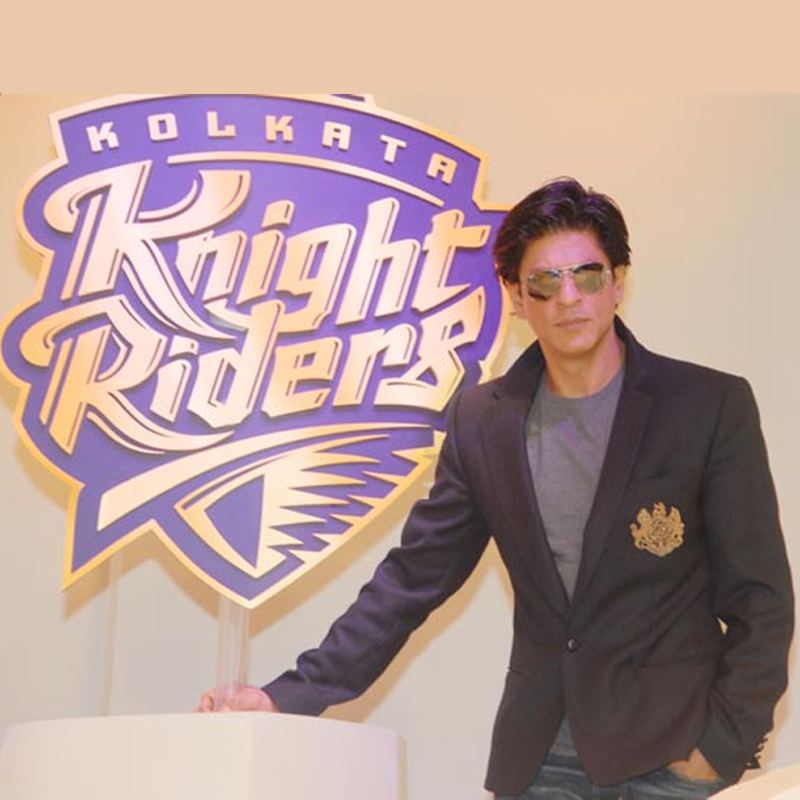
    MUMBAI: The Kolkata Knight Riders (KKR) is a franchise cricket team representing the city of Kolkata (West Bengal) in the Indian Premier League (IPL). The team, defined by its ‘Korbo, lorbo, jeetbo’ (Play, Fight, Win) spirit has won the championship trophy twice. At the IPL 2018, the team has already drawn first blood in its match against Royal Challenger Bangalore (RCB) and then against Delhi Daredevils (DD).

    Created by the DDB Mudra Group, KKR’s latest anthem #KKRHaiTaiyaar (KKR is ready) shows the city and its die-hard fans gearing up for the 2018 IPL season. Featuring Bollywood celebrity and team owner Shahrukh Khan, the anthem has been crafted to give KKR and its fan-base a distinct, symbolic action in the form of a fist pump, which has the potential to become a ritual during every KKR match. The lyrics give the team’s decade-long war cry – ‘Karbo, lorbo, jeetbo’ a new spin, resulting in an anthem that fans – both old and new, can connect with. 

    Kolkata Knight Riders MD and CEO Venky Mysore says, “Every year our marketing embarks on a research and insight-backed exercise that aims to find the pulse of our fans to arrive at a tagline that rings most true to KKR. This year, along with the creative team at the DDB Mudra Group, the team has come up with #KKRHaiTaiyaar; which truly signifies the mood at our camp.”

    The anthem boldly challenges KKR’s opponents to watch out as the team sets out to destroy every challenge in its path to becoming champions again. The visual representation and the music composition of the anthem captures the pride and passion that drives everyone associated with KKR  – right from the players, to the coaching staff, the groundskeeper, the bat-maker , etc., along with the millions of supporters that live and breathe for the team.

    DDB Mudra Group national creative director Rahul Mathew adds, “KKR has always prided itself on being more than just a team. KKR is an attitude. And you see this attitude in every aspect of their game; be it the auction, the training, the selection, the strategy, the execution of it, their victories and even their losses. Which is why, the KKR fan base spills far and wide outside of Kolkata. Because while Kolkata maybe in the name, the spirit of the Knight Riders is something everyone relates to. It’s this very spirit and attitude that we’ve captured in the work and in our call to arms #KKRHaiTaiyaar.”

    Backed by a strong media strategy, the campaign is being showcased across television channels, radio, digital and print. In the print campaign, the players are shown coming out of moulds, to emphasise their readiness. On the digital medium, the anthem has more than 1.9 million views and 21K shares on the brand’s Facebook page alone, since its launch on 6 April 2018.

  • Kolkata Knight Riders, Nokia reunite after 3 years for IPL

    Kolkata Knight Riders, Nokia reunite after 3 years for IPL

    MUMBAI: Nokia is back after an absence of three seasons at the Indian Premier League (IPL) and has reunited with former partner Kolkata Knight Riders (KKR) for the next two seasons.

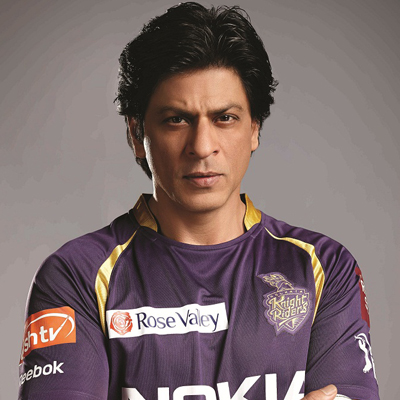
    Nokia is the principal sponsor of the Shah Rukh Khan-owned KKR in the IPL.The duo unveiled the new official team jersey for the 2018 season sporting the Nokia logo.

    HMD Global VP and country head India Ajey Mehta said, “Nokia brand and KKR have a history together and we are delighted to reunite the two again. KKR is amongst the most successful IPL franchisees and teams on the IPL circuit and like Nokia brand enjoys a pan India appeal.” 

    Nokia was the principal sponsor of KKR from 2008 till 2014.

    Meanwhile, KKR has revealed all nine sponsors and six commercial partners for the IPL 2018 season. In addition to the title sponsors Nokia, it has signed on board Jio Digital Life, LuxCozi, Excide batteries, SRMB TMT, Royal Stag, Greenply, Khadim’s and JBL Harman as official sponsors.

    IPL 2018 commences on 7 April and the first KKR match is scheduled on 8 April with the Royal Challengers Bangalore. Dinesh Karthik will be captaining KKR.

    Also Read:

    IPL 2018: Team sponsorship deals may see an uptick

    Mumbai Indians gets Goibibo as principal sponsor for IPL 2018

    IPL gets 34 major brands on board this season