Tag: Kirthiga Reddy

  • Dhruv Chadha Bids Farewell to Meta After 13.5 Years

    Dhruv Chadha Bids Farewell to Meta After 13.5 Years

    MUMBAI:  What do you say about an executive who has spent his entire working career with one company and has seen it grow from a $5 billion venture to $100 billion?

    Well, you say salaam Dhruv Chadha! 

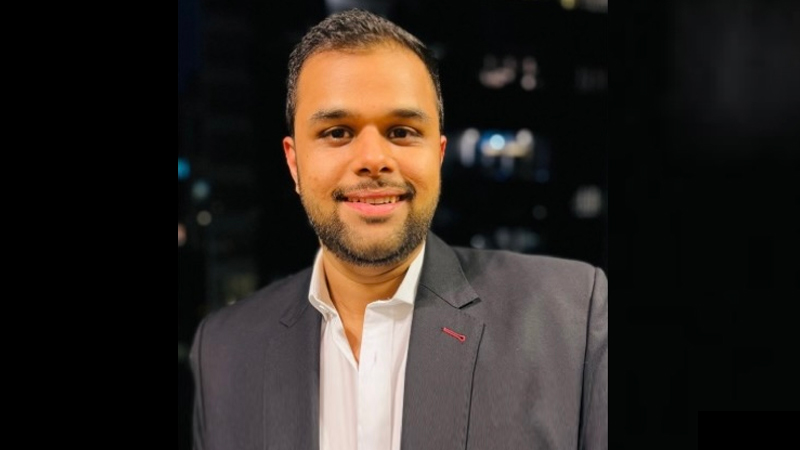
    The senior regional business leader at Meta, has finally decided to say ta-ta to Meta after almost 14 years (13.5 years to be precise)  of service. Based in Singapore, his last day at the company will be 31 January 2025.

    During his tenure, Chadha played a pivotal role in driving Meta’s growth across emerging markets in Asia through strategic sales and innovative go-to-market strategies. He worked extensively on delivering industry-first solutions and guiding key industry clients to navigate the evolving digital landscape.

    Reflecting on his journey, Chadha expressed gratitude for the opportunities offered by Meta’s leadership and highlighted the company’s exponential revenue growth from $5 billion in 2011 to over $100 billion within a decade. “It’s been a journey of a lifetime, collaborating to solve unique challenges—from reaching customers in the deepest parts of emerging Asia through feature phones to enabling digital-first businesses to build purchase journeys on WhatsApp,” he shared.

    Chadha also credited mentors and colleagues, including Kirthiga Reddy, Reynold D’Silva, and Jordi Fornies, for their support throughout his journey.

    Looking ahead, Chadha indicated plans to explore the tech and advertising industry from a new perspective, promising further updates soon.

    In addition to his role at Meta, Chadha has served as an early-stage investor in Nanoclean Global, a startup recognised by the South Korean government as one of the top 25 technical startups globally and awarded India’s President’s Startup of the Year. Nanoclean’s affordable air filtration technology aims to make clean air accessible to all.

  • Ex-Meta and Viacom officials launch web3 start-up; acquire $8 mn seed funding

    Ex-Meta and Viacom officials launch web3 start-up; acquire $8 mn seed funding

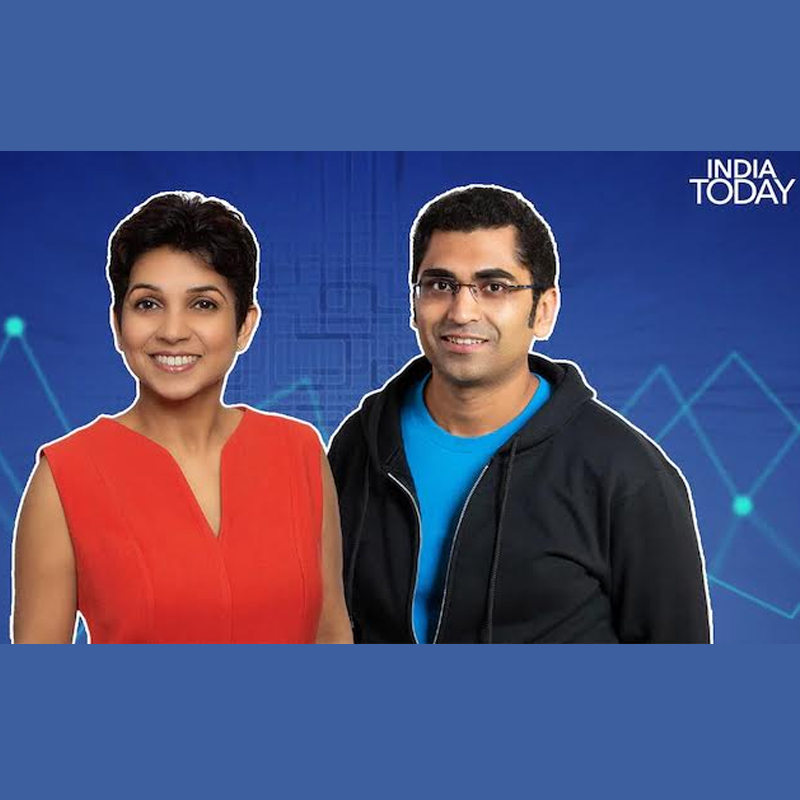
    Mumbai: Kirthiga Reddy and Saurabh Doshi have co-founded Virtualness, a mobile-first platform designed to help creators and brands navigate the complex world of web3, and have secured over $8 million in seed funding.

    Facebook India & South Asia employee #1 and former managing director, Softbank Investment Advisors’ former investment partner Reddy, Meta Asia-Pacific’s former head for entertainment, emerging markets, & greater China region for creators, Viacom Group’s former vice president, and Star India’s Doshi, will leverage their decades of global entrepreneurial experience partnering with creators, media, brands, and tech platforms.

    The fundraise was led by Blockchange Ventures and joined by Polygon Ventures, Micron Ventures, Better Ventures, FalconX, Neythri Futures Fund, Carolyn Everson, Randi Zuckerberg, Nusier Yassin (Nas Daily), Anjali Bansal, Ashwini Asokan, Harsh Jain, Sandeep Singhal, Stacy Brown-Philpot, Vani Kola, and other thought leaders.

    Zuckerberg and Yassin serve as advisors for the company, along with Curious Addys chief technology officer (CTO) Ben Yu; VidCon former general manager Jim Louderback; Curious Addys CEO Mai Akiyoshi; and OpenSea vice president of products Shiva Rajaraman. They have been at the forefront of creator economy trends and bring extensive expertise across diverse fields, including media, art, entertainment, blockchain, and web3. Their guidance has been instrumental in taking Virtualness from concept to reality and will continue to help shape the global vision.

    Virtualness will roll out core capabilities for creators and brands when the platform launches in 2023.

    There are more than 300 million creators worldwide, with half of them joining the creator economy in the last two years. Despite this extraordinary migration, these creators lack even the most basic tools to scale their businesses and easily capture the value-creation opportunities that blockchain and web3 represent. Centred on the ethos of “empathy at the core,” Virtualness puts creators first and is building the playbook for easy design, efficient sharing, and seamless digital commerce.

    Upon launch in early 2023, authenticated creators and brands will use the platform to design, mint, and showcase branded digital collectibles; easily share across their social media channels; directly interact with their fans and community; enable unique experiences; and unlock new channels for monetisation. Education, personalisation, discovery, integration with web2 and web3 platforms, and a mobile-first experience are core to the platform.

    “Creators are the ultimate entrepreneurs. We’ve been at the heart of the web2 ecosystem building and onboarding creators and brands, and we’re on our journey to do it again for web3. People are spending more and more time in various digital worlds and have the desire for customised experiences, individual identities, expressions and personalised commerce,” said Reddy and Doshi, in media reports.

    They added, “We’re excited to see how creators and brands mimic various physical experiences in digital forms and in newer ways. This is about building a new economy, unlocked by branded digital collectibles that deliver unique experiences, capabilities, and value. Our belief is that everything that can move from a physical form to digital will move.”

    Reddy and Doshi are working closely with creators to inform how they build their products. Nusier Yassin (Nas Daily), a famed creator with more than 50 million followers across social media platforms and an investor in Virtualness, is one of the tech-forward creators helping shape the product from the concept stage.

    “Reddy and Doshi lead with hustle, heart, and vision. I have had a ringside view of how they shepherded the transition to a digital and mobile world and onboarded a range of global creators and brands to web2. The depth of their relationships with creators, brands, and the entire ecosystem is unparalleled. Their shared experiences and impact over the last decade give me absolute conviction that they will do the same as they unlock the power of web3 for creators and brands,” said Yassin in the media report.

    “Typically, countries outside of the US and Europe get access to features much later. I am confident that this team will unlock opportunities for creators and their fans, no matter where they live. Reddy and Doshi have the rare experience of scaling innovative, user-friendly technology globally with a focus on creator monetization,” added Yassin.

    With a core engineering team with a successful track record of collaboration on prior start-ups, Virtualness has bootstrapped a proof of concept on the Polygon chain. The company will use this first round of funding to support a number of key areas, including new hires in engineering, product, and design in the United States, India, Singapore, Dubai, and other parts of the world, helping the company to innovate, expand platform support to additional blockchains, integrate with offline and online experiences — including metaverse platforms — and launch its offerings.

    “This is a time of great transformation in the future of work, economic opportunity, and drivers of social change,” said Blockchange Ventures GP Cailleach De Weingart-Ryan.

    “Blockchain will have a tremendous impact on businesses and society and we believe Virtualness will be a leader in the next chapter of the generational technology shift the blockchain represents. Reddy and Doshi’s experiences are custom-built to help those who want to tap into web3 but don’t know how. Their ability to navigate cross-cultural differences, expertise on the utility of the blockchain and creator-obsessed approach to building products, is the triple-threat needed to accelerate adoption in web3 at a global scale. As early investors in all aspects of the blockchain revolution, we look forward to partnering with Reddy and Doshi and amplifying their efforts to democratise and unlock value-creation for creators and brands of any size and stage.”

  • Facebook appoints Umang Bedi as managing director India

    Facebook appoints Umang Bedi as managing director India

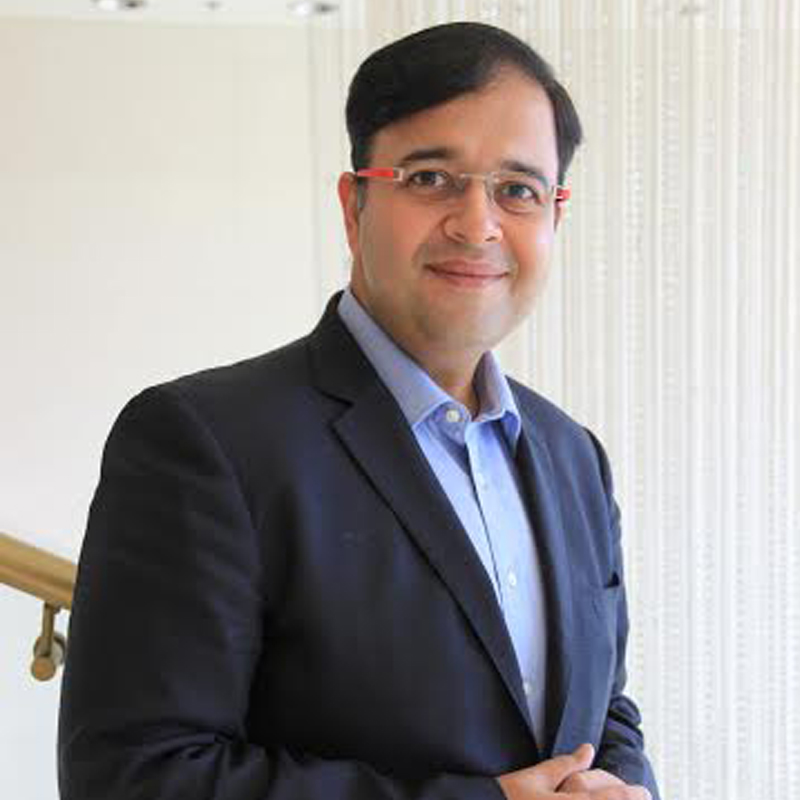
    MUMBAI: Facebook has appointed Umang Bedi as Managing Director, India, where he will lead in building and maintaining strategic relationships with top clients and regional agencies in the country. He will take over from Kirthiga Reddy, who will be returning to United States to take on a new role at the company’s headquarters at Menlo Park.

    “I am thrilled to join Facebook and am looking forward to working with the talented teams in India, to help brands and agencies grow their business on our platform. For me it’s a promising opportunity to participate in India’s digital growth, and I can’t think of a better place to be at.” said Bedi on her new appointment.

    Umang comes to Facebook with close to two decades of leadership experience covering sales, marketing and partnerships where he successfully built teams and grew businesses for multinational companies. Prior to joining Facebook, Umang was the Managing Director of the South Asia region at Adobe. He was responsible for growing their business in India and helping India grow to amongst the leading markets for Adobe in the APAC and global regions.

    Umang is an engineering graduate from University of Pune, an alumni of Harvard Business School and the recipient of the prestigious ‘40 Under Forty: India’s Hottest Business Leaders Award 2014’ given by The Economic Times and Spencer Stuart in 2014.

    On the other hand, Kirthiga Reddy, who was the face of Facebook in India, is set to join the Global Accounts team at Menlo Park, CA where she will manage a set of global brands and also lead the emerging markets efforts globally for the Global Accounts team, which manages Facebook’s relationships with the world’s largest global advertisers.

    “After six years in India building our operations and business, it’s hard to leave a team I now call family. The good news is that we will continue to work together. As I look ahead, I am excited about how well positioned our business is, to grow from strength to strength with Umang’s leadership, and with my next opportunity to shape and drive our emerging markets strategy across some of the world’s biggest brands,” Reddy shared.

    Umang will officially start at Facebook in July 2016. Kirthiga will start her new role in August 2016.

    “India is known for its great talent pool and we are really pleased to have Umang Bedi, a proven business executive to lead our business in India. I also want to wish Kirthiga the very best in her new global role. Kirthiga has played a huge and key role in building our India business from scratch, and I know she will continue to deliver the same impact in the US,” said Facebook Asia Pacific VP Dan Neary.

    He further added, “Facebook is where people and businesses connect on mobile and with close to 150 million monthly active people in India, we see significant opportunities to help Indian business – large and small – deliver against their business objectives in the mobile world.”

    Facebook works with more than 85% of the top 100 advertisers in India identified by Kantar. 100% of those advertisers use video within their Facebook campaigns in India.

  • Facebook appoints Umang Bedi as managing director India

    Facebook appoints Umang Bedi as managing director India

    MUMBAI: Facebook has appointed Umang Bedi as Managing Director, India, where he will lead in building and maintaining strategic relationships with top clients and regional agencies in the country. He will take over from Kirthiga Reddy, who will be returning to United States to take on a new role at the company’s headquarters at Menlo Park.

    “I am thrilled to join Facebook and am looking forward to working with the talented teams in India, to help brands and agencies grow their business on our platform. For me it’s a promising opportunity to participate in India’s digital growth, and I can’t think of a better place to be at.” said Bedi on her new appointment.

    Umang comes to Facebook with close to two decades of leadership experience covering sales, marketing and partnerships where he successfully built teams and grew businesses for multinational companies. Prior to joining Facebook, Umang was the Managing Director of the South Asia region at Adobe. He was responsible for growing their business in India and helping India grow to amongst the leading markets for Adobe in the APAC and global regions.

    Umang is an engineering graduate from University of Pune, an alumni of Harvard Business School and the recipient of the prestigious ‘40 Under Forty: India’s Hottest Business Leaders Award 2014’ given by The Economic Times and Spencer Stuart in 2014.

    On the other hand, Kirthiga Reddy, who was the face of Facebook in India, is set to join the Global Accounts team at Menlo Park, CA where she will manage a set of global brands and also lead the emerging markets efforts globally for the Global Accounts team, which manages Facebook’s relationships with the world’s largest global advertisers.

    “After six years in India building our operations and business, it’s hard to leave a team I now call family. The good news is that we will continue to work together. As I look ahead, I am excited about how well positioned our business is, to grow from strength to strength with Umang’s leadership, and with my next opportunity to shape and drive our emerging markets strategy across some of the world’s biggest brands,” Reddy shared.

    Umang will officially start at Facebook in July 2016. Kirthiga will start her new role in August 2016.

    “India is known for its great talent pool and we are really pleased to have Umang Bedi, a proven business executive to lead our business in India. I also want to wish Kirthiga the very best in her new global role. Kirthiga has played a huge and key role in building our India business from scratch, and I know she will continue to deliver the same impact in the US,” said Facebook Asia Pacific VP Dan Neary.

    He further added, “Facebook is where people and businesses connect on mobile and with close to 150 million monthly active people in India, we see significant opportunities to help Indian business – large and small – deliver against their business objectives in the mobile world.”

    Facebook works with more than 85% of the top 100 advertisers in India identified by Kantar. 100% of those advertisers use video within their Facebook campaigns in India.

  • People access Facebook 2.4 times more than Twitter and 2.0 times more than YouTube: Kirthiga Reddy

    People access Facebook 2.4 times more than Twitter and 2.0 times more than YouTube: Kirthiga Reddy

    MUMBAI: It’s very easy to overlook a fundamental fact about brands: people bring brands to life – not companies. Brands aren’t to be found in the factory or in the studio and much less in the balance sheets, but in the minds of consumers, employees, suppliers and other stakeholders. In a sense a brand is a public object – and the strongest brands are those whose consumers feel a real sense of ownership: ‘That’s My Brand’. In other words, a brand exists only in people’s mind. So today what is driving people’s mind? Who is moving people? Where is it they go before they make a decision?

    How often today do we hear in our day to day conversation that ‘On my Facebook account I read this.’ Is it really one’s Facebook account, does anybody really own it? It’s just a successful evolution of a brand that someone feels her or his Facebook account is her or his?

    People today are driven by a small screen which moves along, supplies content on demand and reacts as per the personality of its owner. A personalised interactive medium called ‘Mobile’. “The world is not going mobile, it has gone mobile” says Facebook India MD Kirthiga Reddy. She shares some verified data, “More than 142 million people access Facebook every month in India through any of the access points of which 133 million log in via mobile devices. More than 69 million people get on Facebook every day, 64 million of them through mobile.”

    So there is a humongous amount of interaction which happens daily and it happens all across India. “The diversity of Facebook is also an important factor. The data confirms that Facebook has a very strong pan India reach and this perception that Facebook is only an urban Smartphone product is not true. What we found is for every urban user there are two from other parts of India which shows a very strong distribution of people,” asserts Reddy.

    Facebook in association with IMRB has done a study which shows, “63 per cent people on Facebook use 3G connections and 37 per cent use a 2G connection to access Facebook. 70 per cent people on Facebook own a Smartphone; 88 per cent use a prepaid connection.” Despite having such high numbers which are real by nature and not sampled or extrapolated, the investment on mobile, social media and digital is far from premium. Digitally born entrepreneur The Viral Fever founder Arunabh Kumar paints the scenario in the best possible way. He says, “The ad spend on a digital video which reaches to at least 15 times more number of people when compared to TV actually is equal to one meal catering spend of a television commercial (TVC) shoot.”

    Kirthiga Reddy also echoes same sentiments, but she speaks in terms of time investment of brands. “There is a big delta when it comes to how much time brands are spending on mobile and how much time people are spending on mobile” she says. As a frontrunner of the digital wave, Facebook has taken on multiple responsibilities of educating the ecosystem and the study is one of them, “Our intention through this study is to educate people about what people are doing on Facebook, on mobile, and how this information can help them move the business fast and bridge the gap between how much time people are spending on mobile and how time the brands are investing on mobile. We invest heavily on education as this new platform needs some educating. Late last year we rolled out a multi module educating program Blueprint in association with our partners,” she further adds.

    Blueprint is a new education program that trains agencies, partners and marketers on how to use Facebook, so they can create better campaigns that drive business results. Combining online courses, in-person training and certification Blueprint offers training from campaign optimisation, how to use video on Facebook, to effective ad measurement solutions. The Blueprint program features 34 online courses under various categories such as Facebook pages, targeting, buying and managing your ads, campaign optimisation, insight and Instagram. “Since March 2015, more than 175,000 people have taken more than 500,000 course enrolments. India ranks as the second largest country signing onto Blueprint. The top five countries include the US, India, Egypt, Brazil and the UK,” informs the Facebook India team.

    Platforms such as Facebook are also used to target people in TV dark areas, informs Reddy. She cites a case study on Nestle Everyday Whitener. “Nestle wanted to target people from media (traditional media) dark areas of the northeast. One creative was created for smartphones and another one was created for feature phones. The creatives drove that brand association and emotion to the end consumer, which later translated to positive results. This is an example of brands leveraging benefits of Facebook’s pan India presence.”

    The brand interaction with this disrupting social media platform is also happening in India  feels Reddy, “Three years back,if we were having this conversation, I would have only spoken about global case studies. I did not have a single India example to share,” says she. “But today we have so many examples across all the verticals, so the explosion is already happening. In the past also we saw when TV came in and print was there, it took its time,” she informs further.

    As per the FICCI – KPMG 2016 report, TV witnessed ad spends of Rs 542.2 billion (Rs 54,220 crore) which means a 14.2 per cent growth from the previous year. Whereas the growth rate of digital advertising which witnessed a spend of Rs 60.1 billion (Rs 6,010 crore) is an overwhelming 38.2 per cent. The same report projects a 15.1 per cent growth of television despite all the digital disruption and OTT emergence. The projected spend is believed to reach Rs 617.0 billion (Rs 61,700 crore). Digital is set to see a Rs 20 billion (Rs 2,000 crore) more spends as the projected figure for 2016 is Rs 81.1 billion (Rs 8,110 crore) which means a 33.5 per cent growth.

    So is it TV versus mobile? “We say it’s TV plus mobile,” says the Facebook India MD. But, at the same time she believes mobile has an upper hand, “Mobile is a screen kept close to you while TV is kept far with many distractions in between. A study shows that mobile has 82 per cent higher retention rate and 79 per cent lower distraction rate than any other screen,” she asserts. On TV there is a fight amongst brands to buy a prime time slot which shoots the 10 second ad rate sky high. “People are on Facebook throughout the day which means the brands no longer need to wait for the evening prime time to connect with people they can connect throughout the day,” says Reddy. “There are definitely key advantages when it comes to mobile. Mobile is a medium of discovery, mobile is a medium of personalisation it is a one screen one person platform which allows you to target individually, send the right message to the right person. You are seeing the kind of businesses that you can get, it gives you many opportunities which TV doesn’t, be it a whole day phenomenon or targeting,” she further sheds light on the advantages of mobile.

    Facebook has a strong ethos when it comes to value for money or return on investment or ROI, “We believe whenever a client pays a rupee to Facebook, he could have paid the same for either a TV ad or print or any-other medium. So what we promise is that a one rupee spend on Facebook is the most effective rupee spent by the client, that is what we want to strive for,” informs Reddy.

    Facebook is currently working with more than 85 per cent of Kantar’s reported top 100 advertisers in India, which includes Unilever, P&G, PepsiCo, Coca-Cola, Amazon, Nestle, Reckitt Benckiser, Mondelez, and L’Oreal.  This also includes companies headquartered in India like Tata and ICICI Bank, India’s largest private bank, eCommerce companies like Snapdeal, Flipkart, Ola, and new companies like Craftsvilla.com. In 2014 Facebook established the Facebook Client Council to learn more and develop better ad solutions.

    The study had a few proud findings for Facebook and Reddy throws light on them, “People access Facebook 2.4 times more than Twitter and 2.0 times more than YouTube,” says she while sharing India statistics.

    Facebook is focusing on videos too, as there is no India data available when it comes to video consumption Reddy shares global figures, “Everyday there are more than 8 billion (800 crore) video views on Facebook, and more than 45 per cent of video viewing happens on mobile.”

    “We are seeing a trend, where communication is going visual and with that Facebook is evolving in terms of being a visual storytelling platform” she concludes.


  • People access Facebook 2.4 times more than Twitter and 2.0 times more than YouTube: Kirthiga Reddy

    People access Facebook 2.4 times more than Twitter and 2.0 times more than YouTube: Kirthiga Reddy

    MUMBAI: It’s very easy to overlook a fundamental fact about brands: people bring brands to life – not companies. Brands aren’t to be found in the factory or in the studio and much less in the balance sheets, but in the minds of consumers, employees, suppliers and other stakeholders. In a sense a brand is a public object – and the strongest brands are those whose consumers feel a real sense of ownership: ‘That’s My Brand’. In other words, a brand exists only in people’s mind. So today what is driving people’s mind? Who is moving people? Where is it they go before they make a decision?

    How often today do we hear in our day to day conversation that ‘On my Facebook account I read this.’ Is it really one’s Facebook account, does anybody really own it? It’s just a successful evolution of a brand that someone feels her or his Facebook account is her or his?

    People today are driven by a small screen which moves along, supplies content on demand and reacts as per the personality of its owner. A personalised interactive medium called ‘Mobile’. “The world is not going mobile, it has gone mobile” says Facebook India MD Kirthiga Reddy. She shares some verified data, “More than 142 million people access Facebook every month in India through any of the access points of which 133 million log in via mobile devices. More than 69 million people get on Facebook every day, 64 million of them through mobile.”

    So there is a humongous amount of interaction which happens daily and it happens all across India. “The diversity of Facebook is also an important factor. The data confirms that Facebook has a very strong pan India reach and this perception that Facebook is only an urban Smartphone product is not true. What we found is for every urban user there are two from other parts of India which shows a very strong distribution of people,” asserts Reddy.

    Facebook in association with IMRB has done a study which shows, “63 per cent people on Facebook use 3G connections and 37 per cent use a 2G connection to access Facebook. 70 per cent people on Facebook own a Smartphone; 88 per cent use a prepaid connection.” Despite having such high numbers which are real by nature and not sampled or extrapolated, the investment on mobile, social media and digital is far from premium. Digitally born entrepreneur The Viral Fever founder Arunabh Kumar paints the scenario in the best possible way. He says, “The ad spend on a digital video which reaches to at least 15 times more number of people when compared to TV actually is equal to one meal catering spend of a television commercial (TVC) shoot.”

    Kirthiga Reddy also echoes same sentiments, but she speaks in terms of time investment of brands. “There is a big delta when it comes to how much time brands are spending on mobile and how much time people are spending on mobile” she says. As a frontrunner of the digital wave, Facebook has taken on multiple responsibilities of educating the ecosystem and the study is one of them, “Our intention through this study is to educate people about what people are doing on Facebook, on mobile, and how this information can help them move the business fast and bridge the gap between how much time people are spending on mobile and how time the brands are investing on mobile. We invest heavily on education as this new platform needs some educating. Late last year we rolled out a multi module educating program Blueprint in association with our partners,” she further adds.

    Blueprint is a new education program that trains agencies, partners and marketers on how to use Facebook, so they can create better campaigns that drive business results. Combining online courses, in-person training and certification Blueprint offers training from campaign optimisation, how to use video on Facebook, to effective ad measurement solutions. The Blueprint program features 34 online courses under various categories such as Facebook pages, targeting, buying and managing your ads, campaign optimisation, insight and Instagram. “Since March 2015, more than 175,000 people have taken more than 500,000 course enrolments. India ranks as the second largest country signing onto Blueprint. The top five countries include the US, India, Egypt, Brazil and the UK,” informs the Facebook India team.

    Platforms such as Facebook are also used to target people in TV dark areas, informs Reddy. She cites a case study on Nestle Everyday Whitener. “Nestle wanted to target people from media (traditional media) dark areas of the northeast. One creative was created for smartphones and another one was created for feature phones. The creatives drove that brand association and emotion to the end consumer, which later translated to positive results. This is an example of brands leveraging benefits of Facebook’s pan India presence.”

    The brand interaction with this disrupting social media platform is also happening in India  feels Reddy, “Three years back,if we were having this conversation, I would have only spoken about global case studies. I did not have a single India example to share,” says she. “But today we have so many examples across all the verticals, so the explosion is already happening. In the past also we saw when TV came in and print was there, it took its time,” she informs further.

    As per the FICCI – KPMG 2016 report, TV witnessed ad spends of Rs 542.2 billion (Rs 54,220 crore) which means a 14.2 per cent growth from the previous year. Whereas the growth rate of digital advertising which witnessed a spend of Rs 60.1 billion (Rs 6,010 crore) is an overwhelming 38.2 per cent. The same report projects a 15.1 per cent growth of television despite all the digital disruption and OTT emergence. The projected spend is believed to reach Rs 617.0 billion (Rs 61,700 crore). Digital is set to see a Rs 20 billion (Rs 2,000 crore) more spends as the projected figure for 2016 is Rs 81.1 billion (Rs 8,110 crore) which means a 33.5 per cent growth.

    So is it TV versus mobile? “We say it’s TV plus mobile,” says the Facebook India MD. But, at the same time she believes mobile has an upper hand, “Mobile is a screen kept close to you while TV is kept far with many distractions in between. A study shows that mobile has 82 per cent higher retention rate and 79 per cent lower distraction rate than any other screen,” she asserts. On TV there is a fight amongst brands to buy a prime time slot which shoots the 10 second ad rate sky high. “People are on Facebook throughout the day which means the brands no longer need to wait for the evening prime time to connect with people they can connect throughout the day,” says Reddy. “There are definitely key advantages when it comes to mobile. Mobile is a medium of discovery, mobile is a medium of personalisation it is a one screen one person platform which allows you to target individually, send the right message to the right person. You are seeing the kind of businesses that you can get, it gives you many opportunities which TV doesn’t, be it a whole day phenomenon or targeting,” she further sheds light on the advantages of mobile.

    Facebook has a strong ethos when it comes to value for money or return on investment or ROI, “We believe whenever a client pays a rupee to Facebook, he could have paid the same for either a TV ad or print or any-other medium. So what we promise is that a one rupee spend on Facebook is the most effective rupee spent by the client, that is what we want to strive for,” informs Reddy.

    Facebook is currently working with more than 85 per cent of Kantar’s reported top 100 advertisers in India, which includes Unilever, P&G, PepsiCo, Coca-Cola, Amazon, Nestle, Reckitt Benckiser, Mondelez, and L’Oreal.  This also includes companies headquartered in India like Tata and ICICI Bank, India’s largest private bank, eCommerce companies like Snapdeal, Flipkart, Ola, and new companies like Craftsvilla.com. In 2014 Facebook established the Facebook Client Council to learn more and develop better ad solutions.

    The study had a few proud findings for Facebook and Reddy throws light on them, “People access Facebook 2.4 times more than Twitter and 2.0 times more than YouTube,” says she while sharing India statistics.

    Facebook is focusing on videos too, as there is no India data available when it comes to video consumption Reddy shares global figures, “Everyday there are more than 8 billion (800 crore) video views on Facebook, and more than 45 per cent of video viewing happens on mobile.”

    “We are seeing a trend, where communication is going visual and with that Facebook is evolving in terms of being a visual storytelling platform” she concludes.


  • Publicis & Facebook to host forum for financial services brands

    Publicis & Facebook to host forum for financial services brands

    MUMBAI: Publicis Groupe and Facebook have come together to host an event that addresses brands in the banking, financial services and insurance categories (BFSI).


    The event named, ‘Financial Services Forum,’ will address the key trends in the industry, share consumer insights, challenges and solutions, case studies and recent progress in the measurement area. 


    The event will be held on 4 November, 2015 at the Trident, Bandra Kurla Complex in Mumbai.


    Zenith Optimedia Group chief executive officer Anupriya Acharya said, “These are exciting times for both the BFSI sector and digital media! The Indian government’s push on added licenses for banking to promote financial inclusion and the call for a Digital India provides the perfect setting for a forum like this. Our digital marketing brands have an extensive experience in the BFSI segment and have in fact made much progress on even testing out how platforms like Facebook can make a difference to this segment, which has not been very intuitive so far. I keenly look forward to some interesting learnings being shared at this forum.”


    “The Financial Services Sector in India was amongst the first industries to adopt digital. The consumer’s shift from desktop to mobile requires a paradigm shift. This forum is the coming together of experts from across the spectrum – marketers, media and creative agencies, technology partners, and publishers – to leverage the power of personalised marketing at scale to drive awareness of new and existing services, grow businesses and deliver extraordinary customer service for banks, insurers, credit card issuers or any other part of the financial services ecosystem,” added Facebook India managing director Kirthiga Reddy.


    Starcom MediaVest Group chairman Hanley King said, “Driving real world business and marketing deliverables today has to be driven by large and complex consumer data sets. Facebook is at helm of this form of marketing. We have been able to leverage its user data and its ability to customise marketing efforts through custom audiences and website integration to drive tangible sales uplift and build deeper consumer relationships to improve lifetime value of customers. The direction that we are seeing Facebook taking by introducing audience data based solutions such as Atlas is inline and core to our principle of driving precision marketing at scale. We hope through this event we help our clients in the BFSI space to move further down the path of precision marketing and get excited about the possibilities the platform has to offer.”

  • Facebook signs first agency deal in India with GroupM

    Facebook signs first agency deal in India with GroupM

    MUMBAI: During her recent visit, Facebook COO Sheryl Sandberg, signed the company’s first agency deal in India with WPP’s integrated media and marketing company, GroupM.


    “Our partnership with GroupM will benefit clients to reach over 100 million people in India, 84 million on mobile — both smartphone and feature phone —  and custom audiences within the 100 million in urban and rural India.” said Facebook India head Kirthiga Reddy. “We’re excited about this wide-ranging collaboration which combines the strength of the world’s best global advertising platform with GroupM’s market-leading position to deliver personalised marketing at scale.”


    GroupM has been creating cutting edge digital solutions for clients and given its access to data and research and has been integrating digital with traditional media for its clients. GroupM south Asia CEO CVL Srinivas said, “We are delighted with the Facebook partnership that can help unlock even greater value for our clients. We work closely with Facebook globally, regionally and locally. India is projected to be the largest country for Facebook by people very soon and we see exciting possibilities for our clients. This partnership adds to the set of enablers we have created over the years that can help drive digital adoption in our market.”


    For Nokia Lumia, GroupM pioneered the deployment of Facebook’s outcome measurement and leveraged Facebook’s sophisticated targeting capabilities to deliver a 54x return on Facebook ad spend.


    Once again, leveraging Facebook’s sharp targeting capability, GroupM delivered outstanding results for Arrow, a premium apparel brand. Arrow was running an end of season sale and wanted to drive a special discount promotion to an audience between 18 to 35 years old residing in metro cities. Arrow was able to deliver a 30x return on Facebook ad spend and a significant redemption rate from this exclusive Facebook campaign.


    To add to its digital offerings, last year GroupM India launched Mash Up, a digital content unit which has been creating engaging digital content solutions for brands, the most recent being the digital video campaign with Kapil Sharma for Honda Mobilio. GroupM also manages a specialist mobile advertising company, Madhouse, bringing brands together with mobile media publishers to unleash the power of mobile. Its full service digital marketing agencies Quasar and Blazar include end to end digital solutions for advertising across the web, social media, search, analytics and creative services. As part of the renewed focus on digital, GroupM in the past year has evolved its practices in content, movie activation, experiential marketing and analytics.

  • Rajan Anandan takes over as new IAMAI chairman

    Rajan Anandan takes over as new IAMAI chairman

    MUMBAI: Google India MD Rajan Anandan has to take over as the new chairman of the Internet and Mobile Association of India (IAMAI). He replaces InfoEdge MD and CEO Hitesh Oberoi, who was at the helm of IAMAI‘s affairs since April 2011.

    Facebook director online operations and head of office India Kirthiga Reddy has replaced Yatra co-founder and CEO Dhruv Shringi as the vice-chairman replacing of the mobile and internet body.
     
    On his new role, Anandan said, “I am excited to take over this responsibility at a time, when the industry is going through an exciting transition. The digital industry has reached an inflection point and is growing steadily. IAMAI, which has been working persistently towards the growth of the medium, is also growing. We plan to engage and interact more closely with the government to ensure that the online industry registers a balanced growth in the years to come and the internet user base widens.”