Tag: Kiran Joneja

  • ‘My intelligence has not been cashed upon to its potential by people I have worked with’ : Chitraarth

    ‘My intelligence has not been cashed upon to its potential by people I have worked with’ : Chitraarth

    Chitraarth is one of the first directors to have patronized television in India way back in 1985.

    His Wah Janab, which launched Shekhar Suman and Kiran Joneja, was a roaring success back in the days when Doordarshan ruled the airwaves. Over the years, Chitraarth has carved out several successful family dramas and sitcoms-like Daane Anaar Ke, Badalte Rishtey and Tanhaiyaan. Two of his movies, Chand Pardesi (Punjabi) and Shaheed Udham Singh (Punjabi, dubbed in Hindi) won National Awards. Chitraarth strikes one as an intelligent, thinking director, who nonetheless feels that his intelligence has not been cashed fully by his producers. The veteran director is currently scripting a movie based on the Indian freedom struggle in the latter part of the nineteenth century.

    Chitraarth feels this movie will finally allow him to come to terms with the kind of work he has always wanted to do. Excerpts of an interview with indiantelevision.com’s correspondent, Amar.

    How did you get into film direction?
    I have been fascinated by the art right from my childhood. I come from a family that would critically analyse movies and plays among us quite often. Even at the age of six, I had the basic understanding that it’s the director who creates good cinema and was aware of personalities like Bimal Roy and Guru Dutt. I guess I always wanted to be a director.

    How did you get initiated into the profession – did you train under somebody?
    I learnt direction at FTII Pune, from where I graduated in 1975. I assisted Lekh Tandonji on several movies, including the super-hit Dulhan Wahi Jo Piya Man Bhaye.

    I have young executive producers telling me to squeeze an episode in a day, saying one master and eight-nine close-up shots is all you need to can one episode.

    Which elements did you imbibe from Lekh Tandon?
    I feel his handling of actors is the single most admirable quality in Lekhji. I have always admired the way he explains to an actor what is required of him or her in a scene. His reasoning is so comprehensive yet lucid that I feel there is no way an actor can get a scene wrong after that. I have imbibed this quality from him.

    What are the essential pre-requisites of a successful director?
    A director needs to have very keen observation and an analytical mind. He needs to have a good understanding of human behaviour and emotions. Then, of course, he needs to get along well with people, should be able to coax and cajole people into getting quality work from them. I feel a good understanding of literature/ theatre/cinema is very useful for a person aspiring to get into direction.

    Which subjects hold the most appeal for you?
    I have enjoyed doing both family dramas and sitcoms. Actually it’s difficult to select a subject and say that I find it more appealing than others. What really is important is the gut feel that one is going to thoroughly enjoy directing a given project and that is what really matters for me.

    How is directing a serial different today compared to the Wah Janab days?
    Actually everything has changed since then. In those days, TV was a new medium and there was a lot of excitement and freshness involved. I would say it was a new idiom that we were in the process of discovering. We were always probing things, learning new methods and applying the trial and error method. In the end, a good episode gave enormous satisfaction that one cannot have today.

    In those days, I would shoot an episode in three-four days. Today, if a director cannot can an episode in one and half shifts, he is out of the job. The thrust is so much on cost-reduction that creativity has gone for a toss. That explains why nobody today wants to take up a novel concept like Buniyaad or Tamas. I have young executive producers telling me to squeeze an episode in a day, saying one master and eight-nine close-up shots is all you need to can one episode. But I find it very difficult to reconcile myself to this style of shooting because that undoes what I have learnt and understood of cinema both at FTII and in my early years of directing.

    I am planning to concentrate on my movies and am avoiding taking up new TV assignments. But there are times when you have to do things for your daal-roti.

    Mir Muneer has said in an interview that story telling is virtually non-existent today and that serials are just a conglomeration of scenes? Do you agree?
    Absolutely. Today what matters is how exciting you can make the 20 odd minutes of the current episode. It hardly matters how and whether what you see today relates with the central idea of the story.

    Who is to blame for the dearth of effective scriptwriters?
    I would blame it on the audience. See, this situation can be equated with a child being addicted to chocolates. Even though it can be harmful for him, he is least bothered. If the audiences didn’t like these inane soaps, they would not be churned out the way they’re today.

    Who are your favourite writers?
    I have particularly enjoyed working with Sharad Joshi, who wrote Wah Janab and Daane Anaar Ke, Subhash Sharma who wrote Badalte Rishtey and Brij Katyal, who wrote Tanhaiyaan.

    How do you instruct actors – do you personally enact the scenes?
    I do it only if it is needed- if the actor is inexperienced and needs to be shown the way. I can do it because I have acted in college plays. I did it in the case of Madhavan and believe me, the performance he gave after that exceeded all my expectations.

    Many directors complain that TV is a very limiting medium. Your comments?
    I totally agree. The whole attitude of people on TV today is to get things over with as quickly as possible and to reduce costs as much as one can. This approach was not there ten years ago and is very damaging. I am myself planning to concentrate on my movies and am avoiding taking up new TV assignments. But there are times when you have to do things for your daily daal-roti. So you never know, I might just do serials.


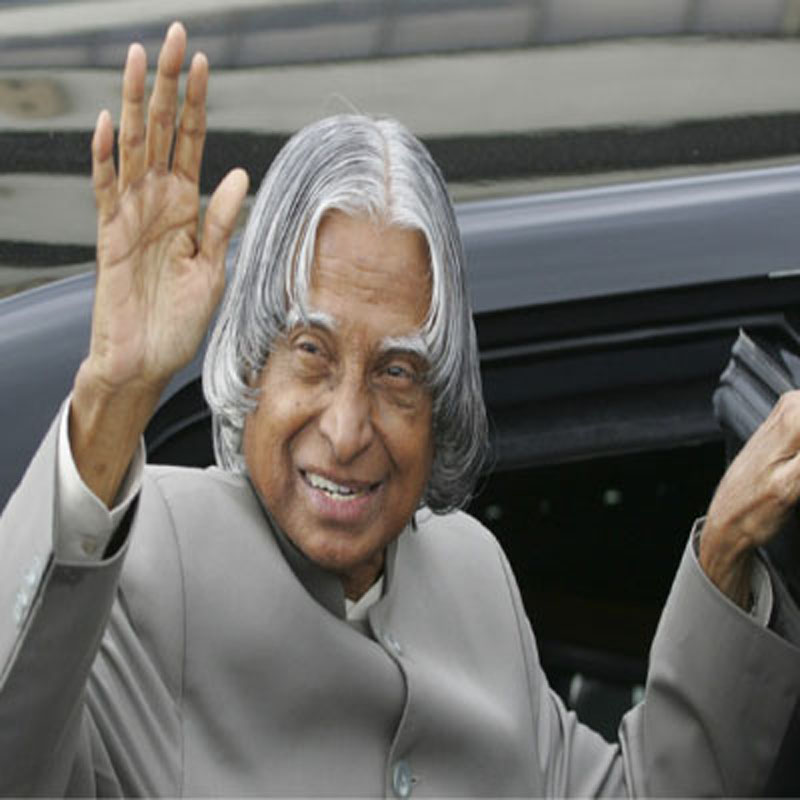
    Chitraarth receiving the National award from president K R Narayanan
    If the audiences didn’t like these inane soaps, they would not be churned out the way they’re today.
    _________

    How much of a writer does a director have to be?
    It is very important for the director to have a good script sense. I have written the screenplay of two movies – Apradhi and Sangeet, so I know basically what scriptwriting is all about and how a written scene would translate on screen. I have mainly worked with veteran writers who I respect a lot and whose judgement I trust. But at the same time, I feel it is well within the directors’ rights to make changes in the script at the time of the shoot if he feels these changes would better a scene.

    How important is the producer’s involvement in your projects to you?
    It is very important for the producer to fully understand the nuances of actually shooting a serial and to ensure that all hurdles are taken care of. Creative freedom, however, should only be the prerogative of the director. Luckily, I have worked with producers like Manish Goswami and Amit Khanna, who have shown complete faith in me.

    On hindsight, do you feel the FTII course has been helpful to you?
    Yes. Whatever I learnt at FTII may not have practical applications everywhere but has helped me learn my own self as a director. See, somewhere in my subconscious mind, the theories that I’ve learnt do come into play in varied situations, even though I may not quite be aware of it.

    Are you satisfied with your innings as director?
    There have been achievements that have given me immense satisfaction but at the same time, I do feel sometimes that my intelligence has not been cashed upon to its potential by people who I have worked with. So, now I am more determined than ever to do what I really want to – at present, it’s this movie that I’m scripting.

    Which has been the happiest moment of your career?
    The two national awards have, no doubt been very euphoric moments. But more than that I feel that an actor exceeding all your expectations and giving an absolutely incredible performance is something I really cherish. It’s happened so often- with Madhavan, Mohan Bhandari, Gauri Kaarnik. These moments have personally been very gladdening.

  • QALAM 2001 SIGNS OFF WITH A FLOURISH

    QALAM 2001 SIGNS OFF WITH A FLOURISH

    The second and concluding day of Qalam 2001 saw a variety of well known film and television personalities holding forth on a variety of issues related to the art and commerce of scriptwriting in Mumbai’s western suburb of Andheri, the venue of the first ever TV scriptwriters’ workshop in India.

    The day started with film magazine Screen editor Bhavna Somaya and Screen TV section editor Piroj Wadia speaking on media and scriptwriting. Journalists, Wadia pointed out, were uniquely blessed with daily interactions with a variety of personalities who can be effectively used as script characters. In a comment that soothed budding scriptwriters in the audience, Somaya noted that even established writers have to face several hurdles before their work is approved.

    TV talk show hostess Kiran Joneja, who followed, spoke about the exhaustive applied and selective research that goes on behind the success of chat shows. “The director, writer and the anchor all have an equal responsibility of making the show a success”, she said. Unfortunately, talk shows are still treated as fillers in India and not accorded the importance they are in the West, she noted. An admirer of the Oprah Winfrey Show, Joneja said tight budgets often hampered the making of truly quality serials in the country.

    Veteran scriptwriter Sandhya Divecha followed with an interesting interactive session on scriptwriting a docudrama with participants pitching in with storylines, plots and scenes and shot possibilities. “It is important to know the different points of view, characters’ backgrounds and focus of the story before fleshing out the script”, she said.

    Well known actor turned producer Soni Razdan held forth on the producer’s perspective towards scriptwriting. Reiterating that the key to a serial’s success lay with the producers, writers as well as directors, Razdan maintained that every scriptwriter should approach the producer with a kitty of possible storylines, do their research beforehand, think up a USP for the script and finally, be flexible to possible changes in the script. “The only way to succeed is to be open to feedback constantly”, she added. It was also necessary that writers be paid development money for the time that the serial is under production so that he does not suffer financially, she noted, a suggestion taken up enthusiastically by other speakers.

    Dr Achla Nagar, a scriptwriter with a vast radio, film and TV background, spoke on the necessity of respecting Indian sensibilities while scripting serials for an Indian audience. “One has to experience emotions oneself in order to convey them to viewers”, she said, adding that writers should keep their eyes open to changes in society and adapt themselves constantly. “Mumbai is not the whole of India”, she pointed out, maintaining that writers should write for the vast multitudes who live in small towns and villages too.

    Scriptwriter Sridhar Raghavan, who spoke on developing thrillers as a genre, regaled audiences with his experiences in the field, and also gave some guidelines to budding writers. “Check your ideas thoroughly, try and innovate within existing structures, do variations of story outlines and counter criticism constructively”, he said. Stressing on the importance of research, he said a writer has to think about practical aspects involved in the actual making of a serial while visualizing scenes. Tools specific to the thriller genre include timing your script well, increasing the pace to create the necessary drama, creating false drama to keep up the suspense within a scene, using hooks and teasers like dramatic opening sequences and keeping twists and turns for the ad breaks all go to make good thriller serials, he said.

    A writer, he said, needs to ‘boil a scene’, meaning keeping a scene at simmering point just enough to hold viewer interest by extracting the maximum dramatic potential out of a scene.

    Director Vivek Agnihotri who spoke after Raghavan, said that often the best source of stories is newspapers, history, myths and legends, family and childhood stories and travel. Dreams too are a rich source of potential stories, he said. “A well crafted plot should have a series of rising and falling action, tensions and climaxes … a good suspense plot is a roller coaster ride”, he said.

  • Qualam 2001 : Kiran Joneja

    Qualam 2001 : Kiran Joneja

    The Creative Behind Talk Shows

    Kiran Joneja, who hosted her own talk show on Star Plus a few years ago, spoke about the exhaustive applied and selective research that goes on behind the success of chat shows.

    “The director, writer and the anchor all have an equal responsibility of making the show a success”, she said. Unfortunately, talk shows are still treated as fillers in India and not accorded the importance they are in the West, she noted. An admirer of the Oprah Winfrey Show, Joneja said tight budgets often hampered the making of truly quality serials in the country. “It is the responsibility of talk shows to change the perspective of people watching them and to create awareness”, she said.

    The anchor person has the dual role of being aware of the topic being discussed as well having the presence of mind to handle panelists with conflicting interests, she noted. Joneja, however, rued that most channels in India are still ‘serial focused’ and talk shows are not considered as important, she added.