Tag: Kingfisher

  • Competing with consumer activities not brands: Kingfisher’s Sheikhawat

    Competing with consumer activities not brands: Kingfisher’s Sheikhawat

    MUMBAI: The liquor market is witnessing major upheavals with umpteen number of alcohol brands battling it out for a slice of the market. The fight is tough since consumers can choose from a wide variety of beer brands – Tuborg, Kingfisher, Bira and Heineken among other local beer brands. 

    Craft beers and microbreweries are niche concepts in India but have been growing rapidly for the past few years. The trend is certainly attracting middle-class Indians, particularly the ones from urban areas who do not mind spending a few extra bucks for a smooth beer. The craft beer market in India is currently pegged at Rs 280 crore and is expected to grow to Rs 4400 crore by 2020. 

    Today, India is the third-largest liquor market in the world with an overall retail market size of USD 35 billion per annum. The annual consumption rate has been increasing steadily over the past six years and stood at 8.9 per cent in 2017. 

    Beer in India is dominated by the off-trade channel (wine-shops), which accounts for 79 per cent of volume sales. Companies, however, are now increasingly focusing on sales through the on-trade channel by associating with music festivals and sponsoring other events. 

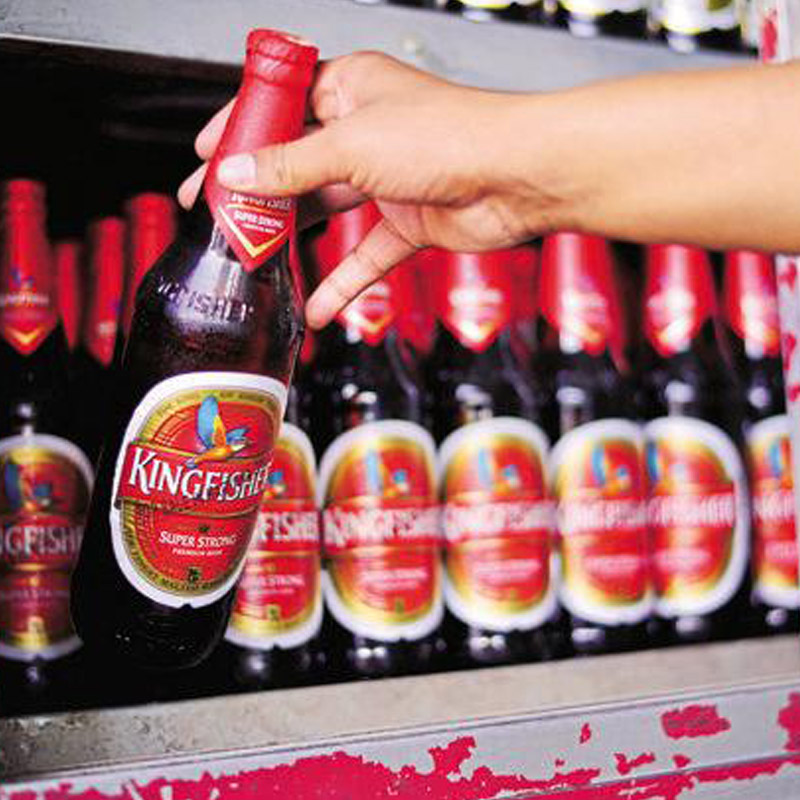
    United Breweries (UB), which manufactures India’s most-loved Kingfisher beer, controls 60 per cent of the total manufacturing capacity for beer in India and is the market leader with the national market share in excess of 50 per cent. This explains the company’s major investments and association with various events, sports and other entities. The brand has been associated with the Indian Premier League for over 10 years and continues to engage fans and customers via various on-ground and other marketing initiatives. The company refreshes the labels of all its products every three to four years in order to provide a fillip to the product’s image. 

    Typically, consumers always evolve faster than brands and, hence, brands have to keep up with consumers’ them. Today, India has the world’s most popular beer brands available in the market.

    UB spends 20 per cent of its marketing budget on television and a mere 10 per cent on digital but that is changing, and the company now has a separate team assigned for digital along with a separate digital agency on board. The company leverages all social media and digital platforms while also creating user-generated content. “The audience today is not interested in brand advertising or brand stories but are only interested in stories that suit their line of thinking, and are looking for content and narratives that involve them,” says UB CMO Samar Singh Sheikhawat. 

    Kingfisher beer is manufactured across 31 breweries in India, which means the time between brewery to market is extremely less resulting in fresher and chilled beers for consumers to sip after a tiring day at work.

    While the beer brand’s market share has been dropping over the last two quarters due to microbreweries, craft beers and other new entrants in the market, Sheikhawat is optimistic about Kingfisher’s legitimate consumers who still vouch for the product’s peculiar taste and flavour. “We are not competing with any other beer brand but are competing with anything a consumer wants to do. We are competing with a consumer wanting to go watch a movie or go out partying because, at the end of the day, there are multiple beer occasions. We should ideally be available in cinema halls but in India, you are not allowed to sell inside the cinema hall. Hence, we should be available at all major restaurants near cinema halls.”

    UB launched Kingfisher Storm in May last year. Targeted at the stylish, urban, confident, independent consumer with swag, the beer comes in an electrifying blue colour bottle with ring pull cap. The alcohol content in Storm is slightly low as compared to other Kingfisher products. “A huge base of our consumers still prefers the taste of Kingfisher Strong but the urban audience is looking for a change. We wanted to launch a new product for consumers who love the brand but given an occasion, want to try something different,” says Sheikhawat. 

    Currently available in Karnataka, West Bengal, Maharashtra and Orissa, Storm will soon be available nationally over the next 18 months.

    UB also launched a new brand under malt-based ready-to-drink beverage called Kingfisher Buzz in 2016 which has only 4.8 per cent alcohol content. Available only in two flavours – Berry and Lychee, Kingfisher Buzz competes directly with Bacardi Breezer, which is a market leader in this segment. Although the original idea for Kingfisher Buzz was conceived 10 years back, it was launched only in 2016. Sheikhawat says, “Buzz is a small brand and we expected it to be a small brand that is targeted at young adults who don’t like the taste of beer but want to consume something.”

    Out of the total portfolio of UB, the company has 20 per cent of its revenue from non Kingfisher brands that are regional or power brands including London Pilsner, Kalyani, UB Export, Bullet, Zingaro and Cannon 1000.

    United Breweries has also begun exporting its products to other countries where Kingfisher Strong and Premium have been the star performers for the brand. Though UB Global is a small business, it is growing rapidly as the company exports to 70 countries including US, UK, New Zealand, Germany, Middle East, South East Asia and Singapore. 

    Also Read :

    Surrogate liquor advertising: Time for change?

    Why do we lack animated ads despite their popularity

    Cinema advertising begins to take centre stage

    Digital takes centre stage on tepid Valentine’s Day for brands
  • Malkani joins Law & Kenneth Saatchi & Saatchi

    Malkani joins Law & Kenneth Saatchi & Saatchi

    MUMBAI: Rohit Malkani has joined Law & Kenneth Saatchi & Saatchi from Minority Brand Creation and Management. He has over 22 years of experience in agencies such as Rediffusion DY&R, Planetasia.com, JWT, Grey Worldwide, Publicis Ambience Advertising, Bates 141, Publicis Singapore. He will be based out of the Mumbai office of the agency.

    He has worked on brands such as Van Heusen, Unilever, Kingfisher, Sony Music, P&G, Reliance Telecom, Killer Jeans, Parle, ICICI Bank, Citibank, Virgin Mobile, Legrand and Siemens.

    Law & Kenneth Saatchi & Saatchi CEO & managing partner Anil S Nair says, “Rohit’s expertise and energy will be a great asset for Law & Kenneth Saatchi & Saatchi clients.”

    Malkani says, “Law & Kenneth Saatchi & Saatchi is at yet another inflection point with an agenda that promises one heck of a ride. We have brands that would make any agency envious, a team that is hungry, a vision that is inspiring and audacious and the ammunition to fire us into the next level. To me it was an irresistible.”

  • Malkani joins Law & Kenneth Saatchi & Saatchi

    Malkani joins Law & Kenneth Saatchi & Saatchi

    MUMBAI: Rohit Malkani has joined Law & Kenneth Saatchi & Saatchi from Minority Brand Creation and Management. He has over 22 years of experience in agencies such as Rediffusion DY&R, Planetasia.com, JWT, Grey Worldwide, Publicis Ambience Advertising, Bates 141, Publicis Singapore. He will be based out of the Mumbai office of the agency.

    He has worked on brands such as Van Heusen, Unilever, Kingfisher, Sony Music, P&G, Reliance Telecom, Killer Jeans, Parle, ICICI Bank, Citibank, Virgin Mobile, Legrand and Siemens.

    Law & Kenneth Saatchi & Saatchi CEO & managing partner Anil S Nair says, “Rohit’s expertise and energy will be a great asset for Law & Kenneth Saatchi & Saatchi clients.”

    Malkani says, “Law & Kenneth Saatchi & Saatchi is at yet another inflection point with an agenda that promises one heck of a ride. We have brands that would make any agency envious, a team that is hungry, a vision that is inspiring and audacious and the ammunition to fire us into the next level. To me it was an irresistible.”

  • Kingfisher bets on VR marketing with ‘KF 360 cities’

    Kingfisher bets on VR marketing with ‘KF 360 cities’

    MUMBAI: With Facebook and Youtube going full throttle to maximise the reach of VR by encouraging 360 degree content on its platforms, it’s no surprise that several Indian brands are looking to make the most of it.

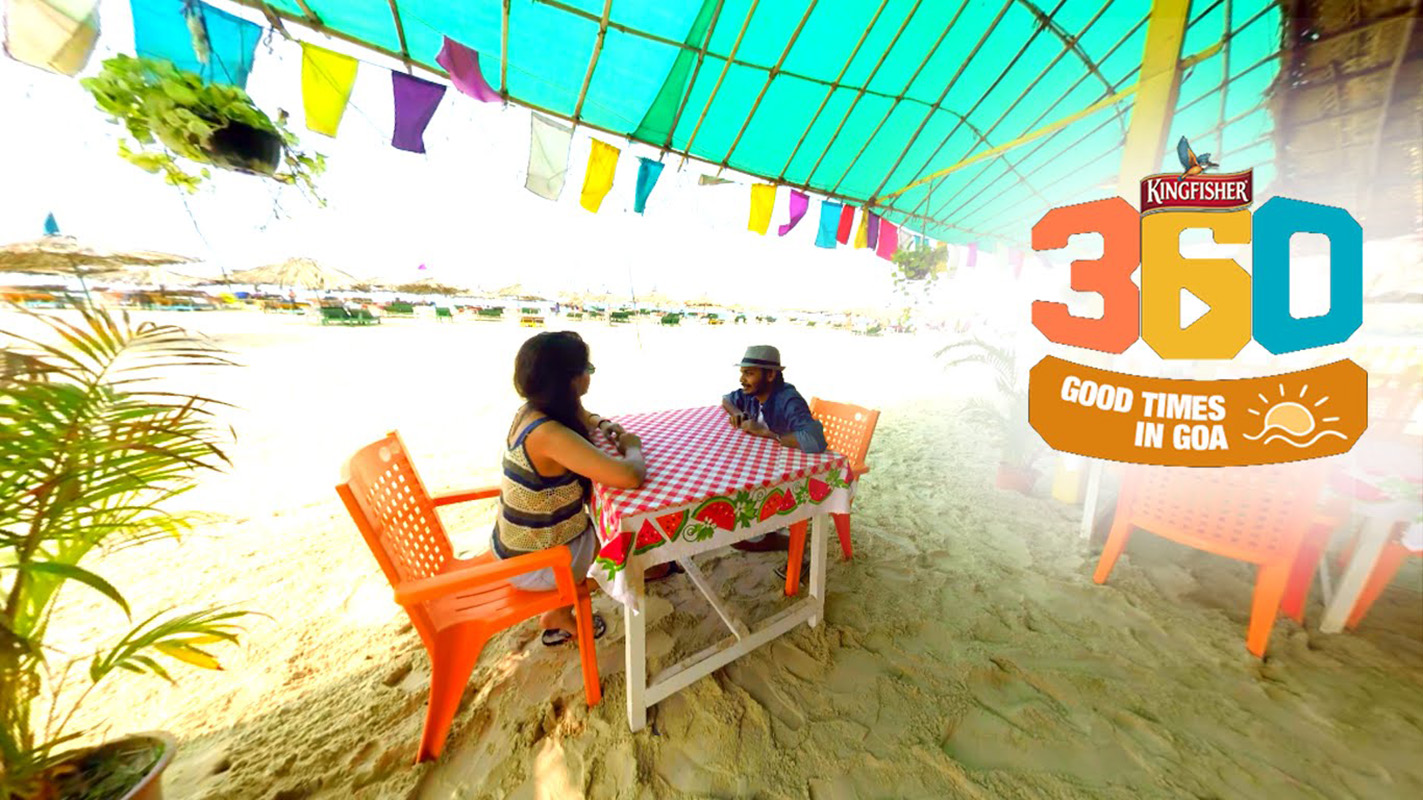
    After Tata Motors, it’s now alco-bev giant Kingfisher’s turn to give a taste of Virtual Reality to its consumers with its latest campaign ‘KF 360 cities’ that allows users to have an immersive tour of major Indian cities. Apart from Samsung Gear and Google cardboard, one can experience the same by simply tilting their mobile phones while enjoying the 360 degree video on Youtube or Facebook.

    “The ‘KF 360 cities’ campaign is the perfect opportunity to bring destinations to people instead of the other way around. Forget maps and GPS, and explore India like you’ve never done before. Whether it’s the backwaters of Kerala, the sand dunes of Jaisalmer or the beaches of Goa, Kingfisher will truly show you how to have a Good Time,” shared an excited United Breweries Limited marketing SVP Samar Singh Sheikhawat.

    With a larger goal of showcasing how a fun time is incomplete without Kingfisher in any city, . Kingfisher has created this virtual reality campaign in association with Spectra VR, leveraging the growing popularity of VR headsets. While currently the VR experience is available for selected cities, Sheikhawat assured that over a period of time the brand will cover 30 to 40 cities through this campaign.

    “We have been dabbling in VR at a smaller scale in varied so but now we are gathering steam and momentum when it comes to using VR technology in our marketing strategy,” informed Sheikhawat.

    The brand’s previous campaigns in VR include Kingfisher Super Chasers VR Game, during the IPL season where the brand used VR gear to transport users into a virtual cricket stadium, giving them an immersive gaming experience. The game created a lot of fan frenzy during theKingfisher on-ground activations across the country, with even cricketers trying their hand at the game.

    When asked if the limited accessibility of VR headgear would limit the reach of the campaign, Sheikhawat clarified saying, “That’s true of any new technology that comes in. And we believe that with spectrum and bandwidth increasing in the country, and technology companies like Samsung pushing the VR evolution from their end, it will only get better from here. It’s advantageous for the brand to be one of the early adopters of this really cool proposition in marketing. We are betting on it for sure.”

    Sheikhawat admitted that there is a marginal difference between a regular and VR campaign when it comes to the initial investment, but that depends completely on the quality of the content, and the experience the brand offers, as same campaign could be enjoyed by using an expensive Samsung headgear or a free Youtube plugin.

    While it is too early to say if the marketing predictors and marketing mojos are right about the the impending VR explosions in marketing, but for the time being brands such as Kingfisher are looking at it in a big way.

  • Kingfisher bets on VR marketing with ‘KF 360 cities’

    Kingfisher bets on VR marketing with ‘KF 360 cities’

    MUMBAI: With Facebook and Youtube going full throttle to maximise the reach of VR by encouraging 360 degree content on its platforms, it’s no surprise that several Indian brands are looking to make the most of it.

    After Tata Motors, it’s now alco-bev giant Kingfisher’s turn to give a taste of Virtual Reality to its consumers with its latest campaign ‘KF 360 cities’ that allows users to have an immersive tour of major Indian cities. Apart from Samsung Gear and Google cardboard, one can experience the same by simply tilting their mobile phones while enjoying the 360 degree video on Youtube or Facebook.

    “The ‘KF 360 cities’ campaign is the perfect opportunity to bring destinations to people instead of the other way around. Forget maps and GPS, and explore India like you’ve never done before. Whether it’s the backwaters of Kerala, the sand dunes of Jaisalmer or the beaches of Goa, Kingfisher will truly show you how to have a Good Time,” shared an excited United Breweries Limited marketing SVP Samar Singh Sheikhawat.

    With a larger goal of showcasing how a fun time is incomplete without Kingfisher in any city, . Kingfisher has created this virtual reality campaign in association with Spectra VR, leveraging the growing popularity of VR headsets. While currently the VR experience is available for selected cities, Sheikhawat assured that over a period of time the brand will cover 30 to 40 cities through this campaign.

    “We have been dabbling in VR at a smaller scale in varied so but now we are gathering steam and momentum when it comes to using VR technology in our marketing strategy,” informed Sheikhawat.

    The brand’s previous campaigns in VR include Kingfisher Super Chasers VR Game, during the IPL season where the brand used VR gear to transport users into a virtual cricket stadium, giving them an immersive gaming experience. The game created a lot of fan frenzy during theKingfisher on-ground activations across the country, with even cricketers trying their hand at the game.

    When asked if the limited accessibility of VR headgear would limit the reach of the campaign, Sheikhawat clarified saying, “That’s true of any new technology that comes in. And we believe that with spectrum and bandwidth increasing in the country, and technology companies like Samsung pushing the VR evolution from their end, it will only get better from here. It’s advantageous for the brand to be one of the early adopters of this really cool proposition in marketing. We are betting on it for sure.”

    Sheikhawat admitted that there is a marginal difference between a regular and VR campaign when it comes to the initial investment, but that depends completely on the quality of the content, and the experience the brand offers, as same campaign could be enjoyed by using an expensive Samsung headgear or a free Youtube plugin.

    While it is too early to say if the marketing predictors and marketing mojos are right about the the impending VR explosions in marketing, but for the time being brands such as Kingfisher are looking at it in a big way.

  • Twitter and Kingfisher co-created Name Targeted videos for IPL fans

    Twitter and Kingfisher co-created Name Targeted videos for IPL fans

    MUMBAI: Wouldn’t it be great to have the celebrity you swear by mention you in a Tweet, or send you a personalised video message? Social media platform Twitter understands the influence an actor or a sports star has in our lives, and how by bringing these stars close to their fans, an amazing engagement can be created. Riding on this thought, it had devised a campaign for its long term partner Kingfisher for the IPL season. Conceptualised by Twitter India, the campaign allowed the brand to record the star players from six major IPL teams customised messages with fans’ names in them –a first of its kind marketing initiative in APAC, the social media giant claimed.

    To make this possible, Twitter went through its archival data looking out for popular first names. Along with it came each person’s preferences and interests including sports.

    “We looked into the data and drew a pattern on it. For example, if there are significant number of ‘Amit’s as Mumbai Indian fans, we would add  ‘Amit’ to the list of people, and Kingfisher would get the Mumbai Indians team to record a personalised message for all the ‘Amits’,” Twitter India Business Head Taranjeet Singh explained the mechanism behind the campaign.

    Though Kingfisher’s IPL campaign on Twitter had started along with season 9, it wasn’t until the season gained momentum in its third and last quarters that Name Targeting was initiated. Once started, it was a high frequency campaign that generated close to 500 odd videos dedicated to fans. Given that Vivo IPL 9 was a pre scheduled event, it allowed Twitter and the creative team from Kingfisher to plan a month ahead. Though most videos were shot before the tournament began, some were done while IPL season 9 was running based on the feedback on the campaign.

    public://image0.png

    While team Twitter worked closely with the brand, the campaign required quick response and production of content to keep up with Twitter’s data base in a very short time which was made possible with the collaborative effort of the brand’s creative agency JWT, and digital agency 22Feet.

    “We received excellent feedback for this campaign. With the help of the Twitter team, we were able to create something intangible for the IPL fans, and we could feel their appreciation for the campaign in the form of Tweets and messages. Apart from the paid campaign, the videos themselves generated several organic impressions for us riding on the brand power,” shared United Breweries, marketing SVP Samar Singh Sheikhawat.

    While the campaign’s scale otherwise required a significant amount of time and monetary investment,  having an existing partnership with Twitter put Kingfisher at an advantage when planning this campaign. Being sponsors for six of the IPL teams also acted in the brand’s favour, as it allowed Kingfisher access to the cricket stars as part of the sponsorship commitment. The initiative was included in the overall budget the brand set aside for IPL 9, which, according to Sheikhawat, could be close to 30 percent of the brand’s marketing budget for this financial year.

    public://image1.png

    This is the second time in a row that Kingfisher has tied up with Twitter India for its IPL campaign. Sheikhawat asserted that this campaign proved to be a great opportunity to leverage the brand’s partnership with Twitter. The fact that the campaign was tailor made for Kingfisher only added to the advantage.

    “From day one the response was high for the campaign, with 250 per cent increase in the brand’s Daily Positive Sentiment. Not to mention that the brand interacted with over 85,000 IPL fans over the course of the campaign through the videos,” Taranjeet Singh added.

    ‘Daily Positive Sentiment’ is a unit or score coined by Twitter that measures the overall sentiments behind tweets targeted at a celebrity, a brand or a handle, or even a hashtag or a campaign.

    “Daily Positive Sentiment gives out the general emotion behind most of the tweets on a subject. We use a tool called Crimson hexagon that does the analysis on emotions behind tweets after assimilating certain keywords and other data points,” Taranjeet Singh explained.

    In line with Facebook’s reactions the Daily Positive Sentiment score is a powerful tool to gather consumer insight for brands.

    public://image2.png

    When asked if Twitter would be willing to partner with other brands and build a campaign using Name Targeting, Taranjeet Singh responded with, “We don’t work with clients on a transactional basis. We look at their objective and then we come up with solutions on how to shape those business objectives through our platform. If we have a client on board whose communication object requires a campaign and name targeting works to achieve its communication objective, we propose it to the brand. But if its campaign requires other innovations such as conversational videos, tweet camps, and other such initiatives that we have earlier offered our clients, we will suggest those. Or maybe we come up with an entirely new solution.”

    In parting, Taranjeet Singh added that the Indian market has become a seat for innovations on the partnership front for Twitter, with many more exciting projects in the pipeline.

  • Twitter and Kingfisher co-created Name Targeted videos for IPL fans

    Twitter and Kingfisher co-created Name Targeted videos for IPL fans

    MUMBAI: Wouldn’t it be great to have the celebrity you swear by mention you in a Tweet, or send you a personalised video message? Social media platform Twitter understands the influence an actor or a sports star has in our lives, and how by bringing these stars close to their fans, an amazing engagement can be created. Riding on this thought, it had devised a campaign for its long term partner Kingfisher for the IPL season. Conceptualised by Twitter India, the campaign allowed the brand to record the star players from six major IPL teams customised messages with fans’ names in them –a first of its kind marketing initiative in APAC, the social media giant claimed.

    To make this possible, Twitter went through its archival data looking out for popular first names. Along with it came each person’s preferences and interests including sports.

    “We looked into the data and drew a pattern on it. For example, if there are significant number of ‘Amit’s as Mumbai Indian fans, we would add  ‘Amit’ to the list of people, and Kingfisher would get the Mumbai Indians team to record a personalised message for all the ‘Amits’,” Twitter India Business Head Taranjeet Singh explained the mechanism behind the campaign.

    Though Kingfisher’s IPL campaign on Twitter had started along with season 9, it wasn’t until the season gained momentum in its third and last quarters that Name Targeting was initiated. Once started, it was a high frequency campaign that generated close to 500 odd videos dedicated to fans. Given that Vivo IPL 9 was a pre scheduled event, it allowed Twitter and the creative team from Kingfisher to plan a month ahead. Though most videos were shot before the tournament began, some were done while IPL season 9 was running based on the feedback on the campaign.

    public://image0.png

    While team Twitter worked closely with the brand, the campaign required quick response and production of content to keep up with Twitter’s data base in a very short time which was made possible with the collaborative effort of the brand’s creative agency JWT, and digital agency 22Feet.

    “We received excellent feedback for this campaign. With the help of the Twitter team, we were able to create something intangible for the IPL fans, and we could feel their appreciation for the campaign in the form of Tweets and messages. Apart from the paid campaign, the videos themselves generated several organic impressions for us riding on the brand power,” shared United Breweries, marketing SVP Samar Singh Sheikhawat.

    While the campaign’s scale otherwise required a significant amount of time and monetary investment,  having an existing partnership with Twitter put Kingfisher at an advantage when planning this campaign. Being sponsors for six of the IPL teams also acted in the brand’s favour, as it allowed Kingfisher access to the cricket stars as part of the sponsorship commitment. The initiative was included in the overall budget the brand set aside for IPL 9, which, according to Sheikhawat, could be close to 30 percent of the brand’s marketing budget for this financial year.

    public://image1.png

    This is the second time in a row that Kingfisher has tied up with Twitter India for its IPL campaign. Sheikhawat asserted that this campaign proved to be a great opportunity to leverage the brand’s partnership with Twitter. The fact that the campaign was tailor made for Kingfisher only added to the advantage.

    “From day one the response was high for the campaign, with 250 per cent increase in the brand’s Daily Positive Sentiment. Not to mention that the brand interacted with over 85,000 IPL fans over the course of the campaign through the videos,” Taranjeet Singh added.

    ‘Daily Positive Sentiment’ is a unit or score coined by Twitter that measures the overall sentiments behind tweets targeted at a celebrity, a brand or a handle, or even a hashtag or a campaign.

    “Daily Positive Sentiment gives out the general emotion behind most of the tweets on a subject. We use a tool called Crimson hexagon that does the analysis on emotions behind tweets after assimilating certain keywords and other data points,” Taranjeet Singh explained.

    In line with Facebook’s reactions the Daily Positive Sentiment score is a powerful tool to gather consumer insight for brands.

    public://image2.png

    When asked if Twitter would be willing to partner with other brands and build a campaign using Name Targeting, Taranjeet Singh responded with, “We don’t work with clients on a transactional basis. We look at their objective and then we come up with solutions on how to shape those business objectives through our platform. If we have a client on board whose communication object requires a campaign and name targeting works to achieve its communication objective, we propose it to the brand. But if its campaign requires other innovations such as conversational videos, tweet camps, and other such initiatives that we have earlier offered our clients, we will suggest those. Or maybe we come up with an entirely new solution.”

    In parting, Taranjeet Singh added that the Indian market has become a seat for innovations on the partnership front for Twitter, with many more exciting projects in the pipeline.

  • Social media glory: Vivo IPL 2016 versus Pepsi IPL 2015

    Social media glory: Vivo IPL 2016 versus Pepsi IPL 2015

    MUMBAI: Although broadcast partner Sony Pictures Network (SPN) has touched estimated sponsorship revenue of Rs 1,200 crores from IPL Season 9, Vivo IPL 9 failed to garner as much social buzz as its predecessor Pepsi IPL did in 2015. As per a recently released report Social Penetration by IPL through MESH, which is a proprietary tool for data analysis by Maxus India, Pepsi IPL generated almost double the social media buzz in 2015 as compared to Vivo IPL this year. Comparable buzz numbers were 240,164 minions in IPL 2016 and 456,943 mentions in 2015

    The MESH report says that the buzz around #Pepsi IPL 2015 vs # Vivo IPL 2016, Pepsi had generated 47 percent more mentions than this year’s IPL.  Across social media platforms, IPL 2016 crossed 3.1 million (31 lakh) mentions. 

    According to the MESH report in week one of IPL 2016, mentions dropped by 9 percent against IPL 2015. Also in week 2 and week 3 of IPL 2016, the mentions went down by 20 percent and 11 percent respectively, while in week 4 social mentions hiked up by 20 percent. As per the reports, week 5 again witnessed a downfall of 8.1 percent but in week 6 mentions went up again by 3 percent. Week 7 of IPL 2016 was an impressive session. The last week witnessed 74 percent hike in social mentions from IPL 2016. 

    RCB was the highest buzzing team followed by KKR and Sunrisers Hyderabad. Virat Kohli with 533128 mentions and AB De Villiers with 229 831 mentions were the most tagged players of IPL 2016.

    When it comes to top IPL and top buzzing sponsors hashtags Vivo ruled the buzz with more than around 2 lakh mentions around #VivoIPL followed by beverages company Kingfisher’s #UnitedByGoodTimes campaign. Gionee was number three with #GioneeKKR getting 100,000 plus mentions while Freecharge’s #LoDoKhatamkaro and Telecom company Vodafone’s #BeSuper campaign clocked 50,000 plus mentions during IPL 2016.

  • Social media glory: Vivo IPL 2016 versus Pepsi IPL 2015

    Social media glory: Vivo IPL 2016 versus Pepsi IPL 2015

    MUMBAI: Although broadcast partner Sony Pictures Network (SPN) has touched estimated sponsorship revenue of Rs 1,200 crores from IPL Season 9, Vivo IPL 9 failed to garner as much social buzz as its predecessor Pepsi IPL did in 2015. As per a recently released report Social Penetration by IPL through MESH, which is a proprietary tool for data analysis by Maxus India, Pepsi IPL generated almost double the social media buzz in 2015 as compared to Vivo IPL this year. Comparable buzz numbers were 240,164 minions in IPL 2016 and 456,943 mentions in 2015

    The MESH report says that the buzz around #Pepsi IPL 2015 vs # Vivo IPL 2016, Pepsi had generated 47 percent more mentions than this year’s IPL.  Across social media platforms, IPL 2016 crossed 3.1 million (31 lakh) mentions. 

    According to the MESH report in week one of IPL 2016, mentions dropped by 9 percent against IPL 2015. Also in week 2 and week 3 of IPL 2016, the mentions went down by 20 percent and 11 percent respectively, while in week 4 social mentions hiked up by 20 percent. As per the reports, week 5 again witnessed a downfall of 8.1 percent but in week 6 mentions went up again by 3 percent. Week 7 of IPL 2016 was an impressive session. The last week witnessed 74 percent hike in social mentions from IPL 2016. 

    RCB was the highest buzzing team followed by KKR and Sunrisers Hyderabad. Virat Kohli with 533128 mentions and AB De Villiers with 229 831 mentions were the most tagged players of IPL 2016.

    When it comes to top IPL and top buzzing sponsors hashtags Vivo ruled the buzz with more than around 2 lakh mentions around #VivoIPL followed by beverages company Kingfisher’s #UnitedByGoodTimes campaign. Gionee was number three with #GioneeKKR getting 100,000 plus mentions while Freecharge’s #LoDoKhatamkaro and Telecom company Vodafone’s #BeSuper campaign clocked 50,000 plus mentions during IPL 2016.

  • How advertisers have ‘reacted’ to Facebook Reactions

    How advertisers have ‘reacted’ to Facebook Reactions

    MUMBAI: So, the social media giant Facebook has rolled out a whole new range of emoticons for users to ‘react’ with. This has come after the long standing legacy of the ‘like’ button. The new reactions, namely ‘Haha’, ‘Wow’, ‘Love’, ‘Sad, and ‘Angry’, were highly anticipated by the advertising fraternity until  Facebook  revealed that it won’t be letting advertisers use these new reactions as a way to create targeted ads. For now, reactions would only be counted as additional ‘likes’, meaning that an “angry” reaction would be treated the same as a “wow”.

    Though initially put off by Facebook’s decision to keep the new reactions out of their reach, advertisers and digital marketers have found ways around this. What makes these new reactions such a lucrative tool for digital marketers is its immense power to look into consumer insights.

    “There is a lot of learning from it on a broader scale, but since Facebook as of now isn’t revealing the exact numbers of ‘angry’ or ‘wow’, advertisers are having a hard time in making the most of it. But, you can actually can see who has liked it or ‘loved’ it if you hover over the new emoticons. Once you physically count that list, you can put a number of it. Though tedious, but not impossible,” points out Isobar India MD Shamsuddin Jasani Aka Shams.

    Now why would a marketer go through the trouble of physically counting these reactions? What’s in it for her or him?

    “It’s a great tool to understand, learn your consumers for a brand. You can see what tonality and emotions consumers have for content. We can figure out what kind of posts, communication and content that are working with a brand’s TG. Beyond that, the use is still limited and it will take some time before people start using it extensively,” Shams shares, adding that the new offering is all about analytics.

    PnB Metlife digital marketing, ecommerce and digitization head Abhishek Rathi too feels that the new reactions can prove to be a powerful tool for marketers like him. Especially for re-targeting of campaigns. The net adoption of these features is what marketers are closely paying attention to, Rathi says. “Right now we have to wait and watch if people are actually using it or not to make a significant difference. Currently the majority of what we can work with on Facebook are likes and shares. Comments can give you some consumer insight but isn’t a huge help. Similarly we need to wait and see exactly how we can use these features in marketing.”

    “The first thing that I predict is the number of engagements on the posts going up,” Shams observes, “ It’s not always that you like something, you might really like it, love it, or dislike it. Having more to the spectrum to react with also makes people interact with the site more. Earlier people were restricted by only the dislike button, but now the new emoticons are making engagements go up.”

    Given its potential use for brands, media planners especially on the digital front, are contemplating on how to incorporate these reactions under their bouquet of services. Shams feels that reactions have a huge scope when it comes to accentuating data and analytics further.

    “Of course the planners, who need to buy the right kind of inventory for their client will have to take the new reactions into consideration. It is still difficult to correlate who liked it or loved it and accordingly bought it, as the analytics are not in place right now,” shared another well-known media planner who wished to remain anonymous.

    But it is the creatives or the content creators who can make the most of this new feature. Content creators will be able to gauge what reactions their work is getting and where they need to tweak to get the desired result.

    “When we are talking about corporate social responsibility or a social cause, it helps to know how our viewers and consumers are reacting to the campaigns; the emotions behind their likes. It’s the next level of engagement,” says Rathi.

    Brands which are most likely to jump on this bandwagon and try out the new Facebook reactions for their campaigns are the youth oriented brands, brands with brand language that lets them experiment and try new things. Citing an example from his own client base, Shams says, “Myntra’s brand Anouk, which we handle, has a communication that many like while others may also dislike. It is very clear in what it wants to say to its audience. These reactions can be a help to the brand. Brands which are steadier in their brand communication will wait and watch first.”

    Ecommerce and digital start-up companies will be the next to take the new feature seriously for their marketing. “Then you have the likes of Coke and Pepsi who will soon follow,” Rathi adds. The sport leagues can also be big takers for this new feature, Rathi feels. “The IPLs, ISLs, kabaddi leagues and tennis leagues of the world can make a huge advantage from these as it is an association of pride and entertainment. Anything which involves a whole community will try to make the most of this tool,” he adds.

    Another advertiser who wants to stay ahead of the curve is United Beverages Limited. UBL has started to look at how these new reactions can affect its marketing strategy. Not only that, UBL, Marketing SVP Samar Singh Sheikhawat shares that UBL is also keeping the ‘angry’ reaction in mind.

    “Brands need to be more responsible and responsive now. We need to be more on the ball, because unlike earlier, the ‘angry’ button can become the new ‘dislike’. Not that it has never happened before. In the real world, there are consumers who like one product, others love the same and there are few who can even hate it. Earlier that emotion seldom got reflected to the brands, but now the game is changing,” he says.

    With so much excitement among brands in making use of Facebook reactions in marketing, one has to wonder if it’s ethical to use such data at all. “That’s true. We need to be careful how the information is used and it needs to be monitored well. As a marketer I am thrilled about the opportunities this gives us but personally I am not comfortable with my personal data, likes and dislikes being shared with companies who can make use of such data. But if it is an aggregate that you are sharing, it will not be so much of an issue. Suppose 50 per cent of ‘love’ or 20 percent of ‘angry, etc. From a privacy standpoint I don’t think it’s in the interest of customers to share individual data points.”

    Sheikhawat on the other hand has a slightly different perspective. “I don’t see how it can become unethical. The fact of the matter is when you sign up for Facebook. you share your personal data.  When you get a new app or service, you let it access your Facebook data, including your preference. When you make any of your reactions public, you are sharing it with the rest of the world. It is already happening and consumers are aware of it.

    On a positive note, many marketers also observe that NGOs and campaigns for social causes can get a huge help from the added feature. Several marketers are of the view that if the data is readily available to marketers, consumers who are aware will not adopt the feature as much and therefore its effectiveness even from an aggregate standpoint will go down.