Tag: Kids

  • Kids’ WB! extends Cookie Jar Ent. series ‘Johnny Test’ on The CW Network

    Kids’ WB! extends Cookie Jar Ent. series ‘Johnny Test’ on The CW Network

    MUMBAI: Cookie Jar Entertainment’s series, Johnny Test has been renewed by Kids’ WB! on The CW for 13 additional episodes.

    The new episodes of the series about a fearless 11-year-old boy and his adventures are being produced for the network’s 2007-2008 season.

    The announcement was by Cookie Jar Entertainment President and COO Toper Taylor and Kids’ WB! senior vice president and General Manager Betsy McGowen, states an official release.

    “‘Johnny Test’ represents the model of high-energy entertainment our network aims to offer our viewers,” said McGowen. “We’re very pleased to present new episodes of this wonderful series to its growing legion of fans.”

    “We’re delighted by the overwhelming response from viewers to ‘Johnny Test.’ The show’s success is a testament to the creativity and extraordinary work of creator and executive producer Scott Fellows and executive producer Loris Lunsford,” said Taylor. “Kids’ WB! is one of the leading broadcasters for children’s television, and it is very gratifying to provide them with bright, original and distinctive programming.”

    Johnny Test, marketed under Cookie Jar’s action adventure brand Coliseum, chronicles the adventures of a fearless 11-year-old boy, his genetically engineered super dog, Dukey, and his 13-year-old super genius brainiac twin sisters, Susan and Mary, who use Johnny as their guinea pig for their out-of-this-world scientific experiments.


  • Horlicks campaign makes the exam ‘bhoot’ vanish

    Horlicks campaign makes the exam ‘bhoot’ vanish

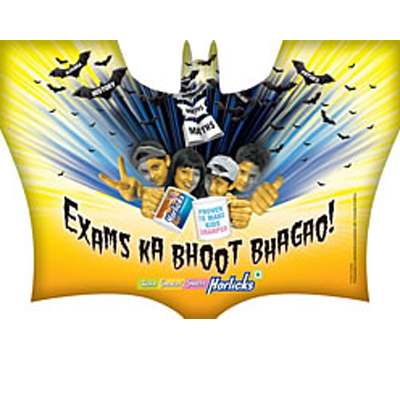
    MUMBAI: Exams can give nightmares and sweaty palms to some of the bravest kids. As exam fear inches closer, some of the tips put out by Horlicks should help both children and parents get over the ‘ghost’ of exams.

    Horlicks launched a campaign called ‘Horlicks Exam Ka Bhoot Bhagao’ in 14 cities of India in January. As a part of this campaign, Horlicks had conducted interactive sessions in schools where students were provided with valuable exam tips and health tips to prepare better for exams.

    The Horlicks ‘ Exam ka Bhoot Bhagao’ campaign has put out several tips that include how to beat distraction and concentrate better, exam tips for your learning style, techniques to sharpen your memory and maximize concentration and the D-E-T-E-R strategy to crack your exams.

    There’s advice for the almost as nervous parents as well with pointers on how to support your kids during exams and important tips to care of the child’s health. Sample this advice from the campaign: D-E-T-E-R strategy to crack your exams D = Directions

    Read the test directions very carefully.

    Ask the teacher to explain any part of the test directions that you do not understand. Following directions helps you demonstrate what you know better.

    E = Examine

    Examine the entire test to see how much you have to do
    Then break it down into parts that become manageable for you

    T = Time

    Once you have examined the entire test, decide how much time you will spend on each section. If there are different points for various sections, then plan to spend the most time on the sections which would make you earn maximum points
    Planning your time is especially important for essay tests

    E = Easiest

    The second E in DETER reminds you to answer the section you find the easiest first If you get stuck on a difficult section that comes up early in the test, move onto the next question.

    R = Review

    Once you are done, review your answers and make them as complete and accurate as possible. Also make sure to review the test directions to ascertain you have answered all required items.


  • Cartoon Network announces game plan for 2007

    Cartoon Network announces game plan for 2007

     MUMBAI: At the Cartoon Network Upfront event held in New York, Cartoon Network announced its programming line-up for 2007. Following the launches of Class of 3000; Foster’s Home for Imaginary Friends original movie, “Good Wilt Hunting;” and the network’s first-ever live-action movie, Re-Animated, Cartoon Network has announced five new original series in 2007.

    The network also showed a sneak peek of its previously announced Massively Multi-Player Game, scheduled for 2008, and also introduced a new after school franchise called Master Control, allowing kids to choose what they want to watch starting in the late summer.

    According to an official statement issued by the network, the new original series include Santo which is working title for animated action series which is about an iconic wrestler, an animated comedy Chowder, a comedy-action series The Secret Saturdays, The Marvelous Misadventures of Flapjack and live-action and animation combo Re-Animated.

    Turner Entertainment Group president Mark Lazarus said, “We’ve been on a strong run over the last few months on every platform with our content and our commitment to our core audience continues on all levels.”

    “Last year we saw tremendous growth by extending our brand into new areas of programming,” said Cartoon Network senior vice president of development and creative direction Michael Ouweleen. “We had great success by always being ‘on it’ for kids in whatever environment they wanted to enjoy the Cartoon Network experience and we are looking forward to growing even more with this new slate of programs and special events.”

    In addition, it was announced that the hit series from André “3000” Benjamin and Tom Lynch, Class of 3000, has been greenlit for its second season and will kick things off with a high energy musical event, adds the release.

    The network also announced special events outlined for the year like Cartoon Network Invaded, Props which recognizes kid talent in different spheres and Ben 10 which brings the animated series into a live-action movie.

    Previously, the network announced CallToons, a mobile application technology that allowed characters to take over kids mobile phones.


  • Cartoon Network, FDA encourage Kids to Spot The Block

    Cartoon Network, FDA encourage Kids to Spot The Block

    MUMBAI: US kids broadcaster Cartoon Network and the Food and Drug Administration (FDA) are unrolling a public education campaign this month.

    It encourages kids and tweens to use the Nutrition Facts information on the food label to make healthier food choices.

    Known as Spot The Block, the campaign uses online and customised public education on-air spots featuring characters from popular programs like Fosters Home for Imaginary Friends to promote portion control and a healthy eating lifestyle. This first of its kind partnership between Cartoon Network and the FDA kicks off today 14 February 2007.

    Spot The Block will feature two public education on-air spots produced by Cartoon Network and showcase favorite characters from the networks original programming lineup. The first on-air spot, Spot The Block, Yo! includes a funky, soulful song, ala School House Rock!, performed by characters from series, Fosters Home for Imaginary Friends, The Grim Adventures of Billy and Mandy, Camp Lazlo, and My Gym Partners a Monkey.

    The fun song and dance number demonstrates where to look for (spot) the Nutrition Facts label (the block) and the useful information it contains to help kids and tweens make healthy food choices. Creative components for the second public education on-air spot unveiled later in the year will be available at a later date.

    Spot The Block will also feature a custom micro site. The online destination will offer kids the opportunity to engage with the FDAs key messaging and offer tools to enable them to better understand the Nutrition Facts label on their favorite foods.

    Turner Entertainment Group president Mark Lazarus says, “We are extremely honoured that the FDA has selected Cartoon Network as their media partner for communicating these important nutrition messages directly to kids and tweens, said president . The campaign fits in with our overall commitment to kids and Cartoon Networks Get Animated programme, which helps to teach and inspire kids to get healthy, active and involved; and our beloved characters are the perfect ones to deliver such a message.”

    Launched in February 2005, Cartoon Networks Get Animated provides on-air, online, print and off-channel programs to teach children the value of a healthy lifestyle that includes regular exercise, good eating and helping others. Featuring the networks roster of popular cartoon characters, Get Animated currently includes multiple animated PSAs, a mobile tour, community programmes and its 2006 Rescuing Recess initiative.


  • ‘Dora The Explorer’ is the number one toy license in the US

    ‘Dora The Explorer’ is the number one toy license in the US

    MUMBAI: US kids brand Nickelodeon has announced that its lead licensed property and preschool character Dora the Explorer continues to make toy and licensing history.

    According to industry experts, The NPD Group, holiday 2006 sales propelled Dora intothe number one slot as the year’s top toy license. At Toy Fair in the US a number of key licensees including master toy partner Fisher-Price will showcase an expanded range of Dora the Explorer products that encompasses new play patterns and broader price points.

    Nickelodeon welcomes to Toy Fair four new additions to its toy partner line-up with the introduction of new licensees CDI/Jakks, MegaBloks, RC2 and Imperial Toy. From construction toys to role play and novelty toys, these companies will introduce a wide range of toys entering more channels of distribution than ever before with brands like Go, Diego, Go!, SpongeBob SquarePants, Avatar: The Last Airbender and The Backyardigans leading the way.

    These industry leaders join Nickelodeon’s growing network of licensees committed to supporting the imagination and creativity of children worldwide.

    Nickelodeon and Viacom Consumer Products president Leigh Anne Brodsky says, “Nickelodeon, with top-selling mega brands like Dora the Explorer, is the dominant force in pre-school licensed toys. With the highest ranked preschool shows on commercial television, we’re expanding our properties in new directions and bringing kids more of the characters they love. Last year’s launches of Go, Diego Go!, The Backyardigans and Avatar had great success and this year’s Toy Fair will continue their momentum.

    “The popularity for everyone’s favorite, SpongeBob, is at an all-time high and we’re excited about the launch of Hasbro’s Operation SpongeBob SquarePants. It’s a marriage of two classics that go together like peanut butter and jelly.”

    Dora the Explorer is in her fifth year of licensed product with more than $5.3 billion in retail sales under her belt. Dora has made the transition from top seller to global mega brand. Dora product will be making a big splash at this year’s Toy Fair. The property led 2006 sales with Fisher-Price’s Dora Talking Cash Register and Fairy Wishes Dora seen as two of the most popular toys of the season. This year’s line-up is anticipated to be Dora’s
    biggest ever.

    In 2007, the franchise is looking to hit new heights with added products and play patterns including make-believe dress-up, role play and building sets. New products include Dora Let’s Get Ready Vanity. It features fiesta adventure
    cards, bilingual interactive phrases and object recognition. Then there is Sparkle And Twirl Mermaid Dora. This toy looks to puts a new ‘spin’ on the character. When kids put Dora into her special shell base, she magically starts to twirl around, her arms raise, her tail magically grows, and sound effects will play as she transforms into a magical mermaid.

    The Talking Friendship Adventures Dora is a life-sized 34 inch tall doll who can speak 70 bilingual interactive phrases. Dora Friendship Adventure Game is a Dora focussed adventure and environment for Fisher-Price’s new Smart Cycle, which encourages an active, healthy lifestyle for kids. Smart Cycle is an innovative plug-and-play toy that combines physical play with learning for preschoolers. The Dora Friendship Adventure Game lets kids pedal and steer their “on-screen vehicle” through both active and learning- focussed Dora play modes.

    Meanwhile Nick says that Go, Diego, Go! toys launched in 2006 with success. Nickelodeon will expand the merchandising program greatly this year to include new die-cast vehicles, wood toys, building sets and water toys. In 2006 Diego’s Talking Rescue Center became one of the most sought after holiday toys and earned ‘Best Toy’ accolades from Parents Magazine, Family Fun Magazine and the New
    York Daily News. The Go, Diego, Go! Live tour, which will visit 50 markets across the US.

    SpongeBob SquarePants has made more than $6.3 billion in retail sales to date. SpongeBob SquarePants Nick says is the most-watched kids show in history. Nick says that the show’s and merchandise success is largely due to appeal that cuts across gender and age groups. No competitive brand has the appeal and scope of the one and only SpongeBob SquarePants.

    One product that will be launched is the Operation SpongeBob SquarePants. This is an updated version of the classic board game with a distinct Bikini Bottom twist — and the original games signature lights and buzzers. Bringing the two hits together is a perfect fit.


  • Charact’o’mania

    Inching in slowly, the forces of Mickey Mouse, Power Puff Girls, SpongeBob, Barbie and many others have come together to invade the lives of every Indian kid! They are everywhere, on their toys, stationary, clothes, bed sheets and even underwear… this mighty world of characters is tracking these kidlings down, longing to be a part of the air they breathe. In the same way, kids are wholeheartedly welcoming their favourite television characters to have a frolicking time – a phenomena I would like to call “Charact‘o‘mania.”

    Turner‘s Cartoon Network & Pogo extend their merchandise to every domain of a kid‘s life

    The children‘s entertainment market is fast gaining pace in India, and apart from television and cinema, kid‘s centric broadcasters are channeling their energy towards building a strong foothold in the licensing and merchandising space. The emergence of organized retail in India has set this process in motion and is laying the foundation of a new era for kid‘s entertainers!

    There are really no boundaries to the scope for merchandising activities which can extend far beyond the cliché toys and board games to apparel, accessories, publishing, stationery, home décor and home videos. Kid‘s entertainment permeates into every aspect of a child‘s existence and capitalizing on this trend are kid‘s broadcasters that look to take their brand and characters into the daily lives of children.


    Although it is difficult to ascertain the size of this vast merchandise market in India, Cartoon Network Enterprises India and South Asia licensing director Jiggy George estimates that the size for both character and non character licensed products at organized retail would be in the region of Rs 3.5 billion.

    A manifestation of the unorganised market: A boy selling Dora and Mickey erasers on a local train

    Unfortunately, a large section of this market is swamped by several small unorganized players that rule the roost. Mattel Toys India head marketing Rahul Bhomik says that the market for licensed kids entertainment properties is still not yet fully recognized in India. Besides, the organized retail sector only comprises a mere 4-5 per cent. Hence it is difficult to arrive at an accurate figure of the size of the entire merchandise market. However, the size of the organized toy market alone is in the worth between Rs 250 -300 million.

    With two years experience in the Indian market, Walt Disney Company (India) Pvt Ltd director consumer products Roshini Bakshi applies a different approach to understanding the undersized organized sector. She says, “The market in India for character and non character based merchandise is not as large as Japan and the US, the reason for this is that generations of kids in India have not grown up with most of these characters and therefore a strong affinity and emotional connect has not yet been established.”

    But just as every cloud has a silver lining, there emerges a consensus among experts to the fact that this industry is likely to see 15-20 per cent growth year-on-year.

    “Although organized retail is still in its embryonic stage, we are beginning to see growth in this sector. Besides, organized retail will help to insure that intellectual property is respected,” adds George.

    Beyblades took the Indian toy market by storm in 2005

    In the last two years kids channels have flooded the market with a host of products in various categories. In 2005, Cartoon Network Enterprises (CNE) partnered with Funskool India to unleash a craze that swept across the toy market with Beyblade. The merchandising arm of Cartoon Network CNE, boasts of having sold over 100,000 units across the country within a month of launch in August.

    Funskool joined Disney to launch Disney Princess toys & accessories

    In the boys segment, Disney followed with the launch of Power Rangers in 2006 across toys, apparel, back to school products, home products like linen and footware, for which it partnered with a Dubai based firm New Boy. According to Bakshi, the strong action and play factor helped the product to fare well in the market. The year before that Disney tied up with Funskool for a range of girls toys around the Disney Princess theme, which has now been taken across categories to include accessories and make-up kits.

    However, not all properties can be used across product categories. George highlights the fact that Beyblade as apparel may not garner the same response it did with toys, primarily because the main protagonist is the toy itself. While properties like Power Puff Girls would work well on apparel and Dexter on knowledge based products.

    Galli Galli Sim Sim muppets all say cheese !!!

    The year 2006 also saw Turner bring the muppets of the Indian adaptation of Sesame Street, Galli Galli Sim Sim out of the TV sets and onto a whole range of apparel, publishing, plush and home furnishing products centered around their key characters Elmo, Biscuit Badshah, Bharat and Ernie. Apart from these, Pogo‘s MAD (Music, Art & Dance) launched a series that included home entertainment DVDs, six new book titles, stationery and activity kits.

    It might be true that kids crave for a touch and feel experience of their stars, however this may come at a heavy cost, drilling holes in their parents wallets. Bhomik admits that a premium will be charged for licensed products, however the price largely depends on the property. For instance, a movie property will have a short shelf life (4-5 months) and therefore will require a bigger bang. Similarly the price points will also be higher.

    Mattel‘s Fisher Price caters to the pre-school segment with an array of interactive toys

    “Prices will be higher than non licensed products but at the same time kids are willing to pay to own their favourite character,” says Funskool India marketing head David Selavaraj.

    In their
    attempts to expand their categories and products Bakshi asserts, “We continue to push our partners to reduce costs because that is where the market lies. Although some licensed products are expensive, our objective is to grow because we want to be a mass brand available to the middle class Indian. Infact, this is how we have expanded globally.”

    Cartoon Network Enterprises launches Pogo branded apparel in 2006

    What‘s interesting is that broadcasters are also engaging in channel branding through multiple categories of products. Both Pogo and Disney launched branded apparel and accessories last year. Prior to that, Pogo also launched a boy centric toy range Pogo Wheels and is targeting to expand its footprint in other categories in the summer months of 2007.

    But for this little world of fun and play to come alive, toy manufactures must feed on kids broadcasters and vice versa, both working in tandem. Bhomik says it‘s important for the channel to build a big property, while the manufacturer helps to make that world of fantasy and role play come alive. This in turn helps the channel to strengthen the bond of their brand and characters with children. In some cases when manufactures have their own flagship properties like Mattel‘s Barbie and Hot Wheels, channels are also roped in to air movies created by the company. Barbie has a series of nine movies and Hot Wheels has four.

    But is this phenomena only metro specific or is this ‘make believe universe‘ making inroads into smaller Indian towns? George says that the Turner pair does have a mass strategy in place and is looking to build up its distribution in the Southern states during the course of this year, “We do not want to be elitist in pricing and distribution.”

    An in-store product layout gives parents and kid‘s an opportunity to get a feel of the brand

    However, the biggest limitation that marketers and distributors face in smaller towns is the lack of a spacious outlet. Mattel also follows a mass distribution path including traditional ‘mom and pop‘ stores and food and grocery outlets in smaller towns, however Bhomik explains that the major constraint is the lack of space for display the products, a key marketing strategy to allow the brand to come alive. This is the one benefit that mutli-brand outlets provide.

    “In the smaller retail outlets we have to rely on the salesmanship of the guy at the counter rather than allow the consumer to experience a large visual display of the product,” adds Selvaraj.

    Large format stores provide space to create a kid‘s environment: A Disney Princess interactive zone was created during launch

    For Cartoon Network Enterprises, which set up shop in India in 2001, merchandising initiatives currently contribute to
    10 – 12 per cent revenues of its overall business. Having been around the longest in the market, George says, “For merchandising to work, you have to have a good property. It would depend on three key factors: A function of the equity of the characters, which has to be built over time by the network, the partnership deals for distribution and marketing and of course retail.”

    Eyeing the advantage that kids channels are leveraging in this sector, even SET India‘s youth lifestyle channel Animax, which has been quite silent over the past few months, is planning to enter the merchandising arena with globally relevant characters and icons in the second half of 2007. Speaking of their plans Animax manager marketing Supriya Bambawale says, “These will not be based on a given anime property but instead would be created by the channel and will lend itself to music, gaming, fashion and lifestyle.”

    Currently, a team in Los Angeles is working on the themes for these contemporary characters but Bambawale opines that they will also have a touch of Indianess with names such as Karina and Jasmine. Following the refresh initiative to change the proposition from kids to youth centric (15-32 years) in June 2006, the channel hopes to reach out to this English speaking urban audience via a full fledged merchandising activity.

    Nick kicks off it‘s merchandisng initiative with a range of party items

    While on one hand some kids channels may be apprehensive to foray into the licensing and merchandising sector, given its unreliable nature. Others may just be waiting to strengthen their properties in India before making this move. Although Viacom‘s Nick has a strong merchandise presence globally and has an International partnership with Mattel for a whole range of products, the channel has only recently started showing some activity in this category. Last year,
    the channel signed up with Bombay Dyeing for bed linen and this year the network is planning to beef up it‘s offerings with a SpongeBob PC game available at Planet M, Nick Jr‘s Dora the Explora apparel range and a whole collection of party accessories.

    From the way the India story is unfolding – the higher disposable incomes among the growing middle class in India and the increasing influence of kid‘s ‘pester power‘, it seems like the kid‘s mechandising industry via the organised retail route is poised to see an exponential growth. For those players that have only recently realised the mammoth opportunity and revenue stream that this business provides, along with other seasoned players, the whole industry is bound to explode. So brace yourself for a mass attack!

  • FCC to examine relationship betweeen TV ads and obesity in kids

    FCC to examine relationship betweeen TV ads and obesity in kids

    MUMBAI: The controversy over the role TV ads play in kids obesity in the US is growing.

    US Senator Sam Brownback, and US media watchdog Federal Communications Commission (FCC) chairman Kevin Martin unveiled plans for a Valentine’s Day forum to examine potential voluntary actions that might ease any negative effects ads might have on children.

    The FCC announced the list of participants on the Task Force on Media and Childhood Obesity: Today and Tomorrow. The Task Force will hold its first meeting on 14 February, 2007.

    The Task Force consists of representatives of consumer advocacy groups, the food and beverage industry, media companies, and advertisers, as well as healthcare and academic experts. The participants include: American Diabetes Association, American Society for Nutrition, Coca-Cola, Kellogg Company, McDonald’s, Pepsi, Viacom, Discovery and Disney.

    The Commission is represented by Chairman Martin and Commissioners Deborah Taylor Tate and Michael Copps. They are joined by Brownback and Senator Tom Harkin. The goal of the Task Force is to provide a forum for the public and private sectors to jointly examine the impact of the media on childhood obesity rates and collaborate on voluntary recommendations to address the alarming rise in the rates of obese children.

  • Kids & parents in the US vote TV as top relaxation tool: Nickelodeon study

    Kids & parents in the US vote TV as top relaxation tool: Nickelodeon study

    MUMBAI: A research study conducted by Nickelodeon in the US, titled “The Digital Family” suggests that kids and parents believe that the television has become their medium of choice to relax. Contrary to popular belief, parents are embracing technologies just as much as kids, and view cell phones as essential part of managing their lives, while also providing kids more freedom.

    “In today’s modern family, parents and kids identify technology as a homework helper, virtual babysitter, time-keeper and a center piece of a lot of family time,” said Nickelodeon and the MTVN Kids and Family Group president Cyma Zarghami. “We found that technology has brought the need for new skills while seemingly lessening the need for others. What is very apparent is the critical role technology is playing in helping modern families functions.”

    “The Digital Family” research incorporates findings from Nickelodeon’s “Living in a Digital World” research project (2006), which explores technologies including: the internet, television, cell phones, mp3 players and more. “The Digital Family” offers insights from kids 8-14 and parents of kids 0-14, and references several findings from Nickelodeon commissioned studies (Multicultural Kids Study 2006 and Nickelodeon Wireless Study 2006), as well as Nielsen Media Research.

    The research revealed that television is still front and center in family life. No other technology has been able to take its place. In fact, television usage has increased over the last four years (since 2002) by approximately two hours a week for both kids and parents.

    Out of all the tech devices, TV seems to serve a different purpose, not only entertaining but also providing a key tool of relaxation for kids and parents in their daily lives.
    Infact, 49 per cent of parents said that TV helps them escape from their daily lives, while a larger percentage of kids (75 per cent) said it helps them escape from stress.

    Due to the use of the computer and internet – 26 per cent of parents and 24 per cent of kids agreed that it’s no longer necessary to read the newspaper. Some kids and parents also believe that because of the internet, they no longer need to be good spellers or learn to read a map.

    What’s more, the effect of mp3 players suggests that:

    – 23 per cent of parents and 33 per cent of kids 8-14 think there is no longer a need to make casual conversation.
    – 21 per cent of parents and 31 per cent of kids think there is no need to listen to the radio anymore.
    – 55 per cent of parents and 45 per cent of kids no longer see the need to purchase musical albums or CDs.

    “The Digital Family” incorporated a deprivation study, where cell phones, the internet, television and mp3 players, among others, were taken away from participating kids and parents for a period of 10 days. The deprivation research identified how parents and kids value various technologies. In particular, it found that kids and parents equate safety and piece of mind to the cell phone and no other device provides these two values the way cell phones do. And because of “digital supervision” cell phones provide, kids are gaining more and more independence.

    One parent said, “It’s a tool for me to keep in touch with them and know where they are, and allow them a little more responsibility while still having my little claws on them.”

    Tech devices like computers and the internet have become essential tools in daily living, making kids and parents much more productive and self sufficient. In some instances, the internet has almost become part of the family.

    Kids are as likely to use the internet for informational purposes as they are for entertainment. Nearly three quarters of kids use the internet for school work, says the study.

    Challenging the conventional assumption that kids bring most of the newer technologies into the home and demonstrate to their parents how to use them, most parents interviewed reported that they are actually as tech savvy or more so than kids:

    Additionally, parents are actually own cell phones, mp3 players and other devices just as much, or more so than kids. Only 2 per cent of parents are not online users and 29 per cent of kids are not using the internet.

  • FiddleFork Online to launch new cartoon series

    FiddleFork Online to launch new cartoon series

    MUMBAI: Having partnered with Canadian cartoon artist Bob Jadis, FiddleFork Online has developed a cartoon series directed towards fiddle players and violinists. The weekly series includes single frame FiddleFork Funnies in which imaginary characters are depicted in humourous fiddle and violin situations.

    Jadis said, “I am thrilled and honoured to be a part of this new project. I’ve been a musician and cartoonist most of my life and blending my two passions into one with FiddleFork is very exciting for me.”

    During the early half of 2007 FiddleFork Online will unveil it’s proprietary character, named FiddleFork Freddie. FiddleFork Freddie will be featured in a weekly three-frame cartoon story line. Kids and families alike will be able to follow the life and times of Freddie as he travels through his fiddling boyhood. Along with FiddleFork Freddie will be his companion pet dog, to whom a name has yet to be found.

    Throughout the first half of 2007 Internet visitors will be encouraged to vote on the website and submit their preferred name for FiddleFork Freddie’s dog and by the end of 2007 FiddleFork Freddie’s dog will have a name chosen by popular global demand.

    FiddleFork Online president Mike McGee said, “This is a considerable advancement for a niche online community devoted exclusive promotion and exchange of fiddle music. It is amazing to see how many people around the world enjoy fiddle music and show their appreciation by joining together in such a vibrant online community.”

    FiddleFork Online (http://fiddlefork.com) is fiddle player’s community on the internet.

  • Big brawl in the kids arena

    what‘s the next big thing on television? The response comes from a rather discerning bunch of little champions, kid‘s channels as a category have seen an exponential growth over the year, as 2005 saw this genre close at a 10 per cent genre share (Period: Jan – Dec 05 ; All India, TG: CS 4yrs-14yrs).

    The story this year seems to suggest that the whole category is heading further North, with the previous quarter (July, August, September 2006) clocking 15 per cent genre share.

    Year

    July – Sep 06

    Jan- June 06
    Jan- Dec 05
    Kids‘ genre share
    15
    14
    10

    Genre Share (%) of Kids‘ Channels
    TG: CS 4yrs-14yrs
    Market: All India

    Within this arena and from an all India perspective, the latest TAM data of third quarter results seem to indicate that all of the players are experiencing an upward trend except for the two from the Turner stable, which have slipped somewhat as their rivals upped their collective acts. However, Turner continues to be in the lead, with Toon Disney, which is rocking in the South, following closely behind.

    Channel / Year Jul-06 Aug-06 Sep-06
    Cartoon Network
    26
    24
    24
    Pogo
    23
    22
    21
    Toon Disney
    18
    18
    20
    Hungama TV
    17
    18
    19
    Disney Channel
    11
    11
    9
    Nickelodeon
    5
    6
    7

    Relative Shares (%) of Kids‘ Channels
    TG: CS 4yrs-14yrs
    Market: All India

    When slicing the kid‘s category and looking more specifically at the HSM segment, which is a core market for most players, the same is applicable. Cartoon Network reigns supreme but sibling Pogo appears to be battling it out with potential challenger for the pole position Hungama TV.


    Some industry observers are of the opinion that this is a landmark quarter, marking the beginning of the end of the dominance Turner has enjoyed all these years, as the carpet is being laid for other players to enter the fray. Data no doubt indicates that other players are slowly eating into the pie. Whether this is a one-off phenomena or will change the course of events for the category as a whole is yet to be determined though.

    What will be under close scrutiny is whether this will create an upheaval that may trickle into the fourth quarter of the year. But with the combination of Disney Channel, Toon Disney, which is the clear leader in the South and Hungama TV (for whom its only a matter of time before it comes under Disney‘s wing), does pose a deadly combination. Also, given the benefits that Toon Disney‘s experiment with local feeds in the South have brought to the network, it won‘t be a surprise to see Disney Channel also tread the same localization path in due course.

    However, the first international kids channel to touch Indian shores and long time leader Cartoon Network, asserts it is not threatened at all by all that is happening in its wake. Says Turner International India vice president advertising sales and networks (India & South Asia) Monica Tata, “When there‘s a successful, dominant player in the market, competition is a natural progression of a dynamic business model. Having blazed a successful trail in the kids‘ entertainment segment, it is only natural for others to see the potential. However, having said that, our biggest competitor is not other kids‘ channels, but ourselves. We are continually striving to raise the bar, build on our success, and continue to innovate and improve our array of matchless content that we offer to the discerning Indian viewer.

    “We believe it is not about shifting or changing strategies to meet competition, but to continually assess and anticipate what the audience wants and deliver in accordance with their viewing needs. As the market place changes, we will respond rapidly to the changing market dynamics. If you don‘t, then you will be left behind!”

    All said and done, the kids category is experiencing dynamic nationwide growth and capitalising on this are advertisers that see it as a worthwhile proposition to hop on board.

    Walt Disney Television International (India) director marketing and communication Tushar Shah states that currently the network has roped in 155 advertisers. Says Shah, “With the kids arena exploding, more players coming into the fray, in addition to the market growth, there are now more options available to advertisers to address kids predisposed in their own environment.”

    Counters Tata, “Cartoon Network and Pogo enjoy a lion‘s share of the advertising pie in the kids‘ television genre. We have witnessed consistent increase in ad sales revenue over the years with top International and Indian brands advertising their products and services on our channels. Moreover, both Cartoon Network and Pogo, through their leadership in reach and viewership, have also partnered with every major kids‘ marketer and several non-traditional clients like BPCL, ING-Vyasa, All-Out, Citibank, Bombay Dyeing, Red Label, amongst many others.”

    “Seeing this phenomenal growth in viewership, we believe there is still tremendous scope for advertisers to further increase their ad spends in the kids‘ genre. Cartoon Network and Pogo‘s ad sales have witnessed a 24 per cent combined growth over Jan-Sep 05 to Jan-Sep 06. The client base of Pogo grew nearly by 50 per cent from 2004 to 2005 with 56 new clients added in 2005. These include, TVS Motors, ICICI Bank, HDFC Standard Life (Insurance), McFills,” she adds.

    Apart from the traditional advertisers, several non-traditional players are also eying this option as a favourable one. Along with some of the prominent advertisers on Nick like Coca Cola, and Nestle, another strategic tie-up with the mother network Viacom sees Microsoft advertising on the channel. MTV Networks India director – Communications and Consumer products Sandeep Dahiya alludes, “This deal has given way to Viacom Brand Solutions which offers multiple integrated solutions, promoting the latest gaming console Xbox 360 on all three channels of the network. In line with this, Nick‘s show with sci-fi kid Jimmy Neutron has an Xbox segment where he provides tips on gaming.”

    Commenting on the pen brand categories that did not previously favour kids as a target as they would primarily use pencils, Hungama TV Senior VP marketing and communication Siddharth Roy said, “Presently we have close to 120 brands on board, out of which pens include Linc Pens, Add Pens, Cello Pens, and Reynolds. Predominantly pens did not advertise in the kid‘s space.”

    He added, “Reliance Infocomm first ad in the kid‘s space, Teleshopping category: a first in the kid‘s space. In the Entertainment category: all Hindi, English movies advertise on Hungama TV. It was also the first to bring in Hindi Movies to the kids space. The real significant victory for the kids space is the diversity of clients willing to experiment on it from FMCG, to banks, to insurance to telecom, to Hindi movie promos to other mass TV channels like Set, Sahara.”

    On non-traditional advertisers rationale for entering kids space, Kapur says that kids pester power now shifts to contributing to the purchasing decision in the household, which is why marketers are looking at kids space to advertise.

    “Advertisers at large recognises kids as an extremely important category within the family and therefore, be it cars, white goods, household items, etc, are also indirectly targeted at kids. The lines between a traditional and non-traditional advertiser have blurred.

    “Cartoons as brand ambassadors are gaining as much popularity as film and cricket stars! Today, an ICICI, BPCL or even an All-Out want to sign on a Tom and Jerry or a Scooby-Doo as their brand ambassador – because they realise the importance of speaking to kids and we have several brand extensions like merchandising, theme parks, etc,” says Monica Tata.

    An inevitable outgrowth of greater consumption is a rise in ad rates and industry sources opine that there has been a jump of about 10 – 15 per cent in ad rates across channels over this year. Well that‘s yet another reason for these broadcasters to be happy!

    On looking at the factors that have propelled kid‘s channels out of control, Kapur attributes Hungama TV‘s success story to three main factors – programming, marketing and distribution. Along these three parallels the channel had adopted a strategy where they play with time slots every week to give kids what they demand, when they want it, as well as on air contests like Right Here Right Now.

    On the marketing front he feels that interactivity through on ground initiatives like the Hungamathon, the Fireman Sam Safety Drive and the contest that has proved advantages as it provides the much needed feeback on their efforts, The Captains Hunt. Besides, the channel also boasts that the two Japanese acquisitions Doremon and Shinchan have done wonders for them.

    Disney‘s Shah believes that their volume of commitment to the Indian market is seen in the their efforts to create an overall Disney brand experience through a 360 degree solution to consumers via multiple touch points that includes the contribution of every one of their businesses.

    Their consumer products division supplies items from character based stationary to undergarments, to branded Disney apparel while the key drivers for their triumph include, That‘s So Raven, Mickey Mouse Club house and recent local production that the company claims is giving them good numbers Vicky Aur Vetaal. He also feels that entertainment at the ground level in India is something highly under-rated and speaks with reference to the event Disney Magic by saying, “Interactivity gives top gratification to the consumer and therefore, brand and character experience, is a turning point for entertainment in the country.”

    Also seeing the value in events, Monica Tata adds that their aim is to provide, new shows, themes, unique and fun-filled on-ground experiences – giving a 360-degree experience that is safe, enjoyable, fun and memorable. “Every year, we organise multi-city events such as Toon Cricket, Toon Yatra, Toon Games, Next Big Toon, Pogo Amazing Kids Awards, Fun Day Out, amongst others.” Recently, Cartoon Network also announced a pan-asian initiative titled Snaptoons (Short New Asia Pacific Cartoons).

    Category leader Cartoon Network forsees clear skies ahead for the kids category as a whole, “There is huge potential in the kids‘ segment and the Industry is definitely growing at a rapid pace. The viewership category has expanded. Plus, now it is not just about television/on-air programming or passive viewership – today kids‘ channels have the ability and option to offer viewers and clients multiple touch points and 360 degree solutions.”

    “This is definitely the age of the kids‘ segment and we have a bright future ahead. However, I would also like to add that even though adspends of brands targeting kids has grown over past years, this has not happened in line with the scorching viewership growth of the genre which has grown from 3.7 per cent in 2002 to 14.7 per cent in 2006, in terms of fair share of spends allocated to kids‘ channels. I am confident if advertisers targetting kids invest more on kids‘ channels than on general entertainment channels, audience deliveries will be much higher!” she adds.