Tag: Kids’ Genre!

  • Ad revenue, quality storyboard artists and co-productions are focus areas for animation industry

    Ad revenue, quality storyboard artists and co-productions are focus areas for animation industry

    MUMBAI: The animation industry is growing at 30 to 35 per cent but there are many challenges that this sector is facing from upgradation of hardware or software to revenue generation. According to experts, the industry has many opportunities on kids channels, OTT platforms and YouTube and to explore but it needs more successful studios, young talent and advertisers’ attention in the kids genre.

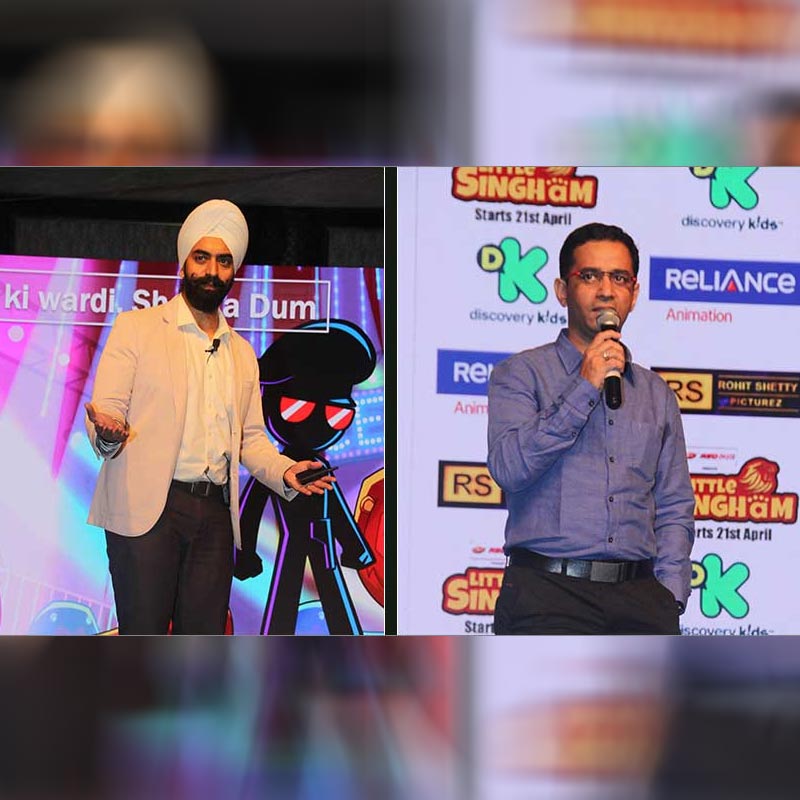
    In a panel discussion 'Animation 2020' at KAM Summit organised by Animation Xpress on 30 August 2019, experts discussed on what this industry holds in 2020. The panel discussion was moderated by FICCI chairman animation and gaming Ashish Kulkarni and panellists were Green Gold Animation founder and CEO Rajiv Chilaka, Sony Yay! programming head Ronojay Chakraborty, DQ Entertainment COO Manoj Mishra, Viacom 18 programming head Anu Sikka, Big Animation COO Tejonidhi Bhandare, and Cosmos Maya SVP revenue and corporate strategy Devdatta Potnis.

    Chakraborty said, "Animation as an industry is growing at a healthy pace. 35 per cent of the growth has come from the industry's producers and domestic broadcasters. As a channel, we started with 100 hours of content. In 2020 more hours will be added.  The producer depends on the broadcasters for financing and broadcasters look at the advertisers for finance, so the monetisation aspect needs to be looked into. Advertisers have to take notice of this category. We are one fourth the size of entire GEC category but in terms of revenue, we are one-tenth. Once the monetary aspect improves more and different varieties of programmes will be commissioned it will help the industry.”

    Mishra shared his view on monetisation of content in the international market. He said, "In terms of animation, the US market is evolving and creating great shows. The animation industry in Europe is not growing at the rate at which it should have. From a studio perspective in 2020, we see that demand is there and it is a stable market at this moment. IP monetisation and creating IP for a global market play an important role from our studio perspective."

    Chilaka wants to see more successful studios and young talent coming in this industry in 2020. He said, "As a studio, we have been here for the last 18 years and we realise the challenges faced by animation studios like upgradation of hardware and software from time to time bases. But for the growth of the industry, it's very important to have more successful studios. We also have the advantage of reaching out to the Indian diaspora across the world."

    Potnis said that India is growing on all fronts, especially digital “We finalised nine new shows in the domestic market and few months back we signed three European co-productions. We also have a YouTube platform called Wow Kids which has 27 million subscribers. May be by 2022 we may also create an original for that platform in addition to working with broadcasters and OTT players," he mentioned.

    Bhandare noted that ‘Animation 2020’ is not a vision but a start for the animation industry as there are lots of things that are opening up. “We need to focus more on talent and ways to build up talent. We need to create awareness about animation being age-agnostic and not only for kids. But we are not creating that kind of content yet. Our focus should be on creating great content,” he added.

    Kulkarni also asked whether 2020 will see good storyboard artists. To which Mishra replied, "This is the area where we are looking at very strongly as far as our curriculum is concerned. We are trying to get storyboard artists from international markets to provide training. At the same time, some kind of exposure in creating the curriculum is important and while giving them the opportunity, we have to trust our artists too. We as an organisation also have got our interest and trust more on the talent outside India and then we move to talent in India, that's something which we need to change."

    "There is a need for language training to fill the gap between the scriptwriter and storyboard artist for better transforming from the script to animation," commented Bhandare.

    Kulkarni also touched upon the topic of co-production in the animation industry. He commented, "We are in a process of redefining and changing the definition of audiovisual co-production treaty but India was never a very active partner in co-production. We would really like to see India on the map of co-production."

    Potnis shared his view on the same, "There is a feature project that we are working on. A couple of days ago I had conversations with studios in Ireland, Canada and Australia to compile the sort of support they get in term of subsidiaries. It is to the tune of 30 to 40 per cent of their budget and we stand nowhere in that sense. But now the government is also interested in this sector a little bit more. One thing that co-production helps do is to scale up on the quality front."

    All said and done, the advertising revenue flow into animation just isn’t there. Sikka said, "Animation will continue to progress and we will continue to cater to the audience of 7 to 14 years. We will do something in pre-school segment when the advertisers start recognising the potential of pre-school content in the audience. Today a generation has grown on animation for whom animation is no longer a taboo. The scope for family animation should also be explored."

  • Advertisers should focus on kids genre for better monization of animation industry, says experts

    Advertisers should focus on kids genre for better monization of animation industry, says experts

    MUMBAI: The animation industry is growing at 30 to 35 per cent but there are many challenges that this sector is facing from upgradation of hardware or software on time to time bases to revenue generation. According to experts the industry has many opportunities on kids channels, OTT platform and YouTube and to explore that it needs more successful studios, young talent and more attention of advertisers in kids genre.

    In a panel discussion 'Animation 2020' at KAM Summit organised by Animation Xpress on August 30, 2019 discussed on what does this industry holds in 2020. The panel discussion was moderated by FICCI chairman animation and gaming Ashish Kulkarni and panelists were Green Gold Animation founder and CEO Rajiv Chilaka; Sony Yay! programming head Ronojay Chakraborty; DQ Entertainment COO Manoj Mishra; Viacom 18 programming head Anu Sikka; Big Animation COO Tejonidhi Bhandare and Cosmos Maya AVP revenue and corporate strategy Devdatta Potnis.

    Chakraborty said, "Animation as an industry is growing at a healthy pace. 35 per cent of the growth has come from the industry's producers and domestic broadcasters. As a channel we started with 100 hours of content. In 2020 more hours of content will be added.  The producer depends on the broadcasters for financing, broadcasters look at the advertisers for finance, so the monitization aspect needs to be looked into. Advertisers have to take notice of this category very much. We are one fourth the size of entire GEC category but in terms of revenue we are one tenth. So, there is a need that the advertisers pay attention to this category as well because the category is appealing to the citizens. Once the monitory aspect improves more and different varieties of programmes will be commission and that will help the industry. 

    Mishra shared his view on monitization of content in the international market. He said, "In terms of animation USA market is evolving and creating great shows.The animation industry in Europe is not growing at the rate on which it should have grown. From studio perspective in 2020 we see that demand is there and it is a stable market at this moment. IP monitization and creating IP for global market play an important role from our studio perspective." 

    Chilaka wants to see more successful studios and young talent coming in in this industry in 2020. He said,"As a studio we have been here for last 18 years and we realise the challenges faced by animation studios like upgradation of hardware and software from time to time bases. But for the growth of the industry, it's very important to have more successful studios. We have so many advantages as well, there are so many kids channels and OTT platform in India. We also have the opportunity to reach Indian diaspora who are not just in India but across the world." 

    Potnis said, "India is growing on all front especially on digital and there is a opportunity or area for us to be there. We finalised nine new shows in the domestic market and few months before we signed three European co-production. We also have a YouTube platform called Wow Kids which has 27 million subscribers. May be by 2022 we may also create a original for that platform in addition to working with broadcasters and OTT players."

    Bhandare  said, "Animation 2020 is not a vision but a start for animation industry as there are lots of things that are opening up for the industry.  We need to focus more on talent and ways to how do we build up talents. We  need to create awareness regards to what animation is, it not only caters to kids like in west it caters to all age group. we are not creating that kind of content yet. Our focus should be on creating a great content. Platform is set for us to grow and there is lot of opportunities coming up."

    Kulkarni  also asked the panelist- will that situation come in 2020 where we have very good story board artist? To which Mishra replied, "This is the area where we are looking in very strongly as far as our curriculum is concern. We are trying to get story board artist who are helping us from international market to provide training to the artist in India. At the same time some kind of exposure in creating the curriculum is important and giving them the opportunity, we have to trust our artist. We as an organisation also have got our interest and trust more on the talent outside India and then we move to talent in India, that's something which we need to change."

    "There is a need for language training to fill the gap between the script writer and story board artist for better transforming from the script to animation," commented  Bhandare. 

    Kulkarni also touched upon the topic of co-production in animation industry. He commented, "We are in a process of re- defining and including changing the definition of audio visual co-production treaty but India was never a very active partner in co-production. We would really like to see India on the map of co-production."

    Potnis shared his view on the same, "There is a feature project that we are working on. Couple of days ago I had conversation with studios in Ireland, Canada and Australia to compile the sort of support they get in term of subsidiaries amount or tune of the volume they get is 30 to 40 per cent of their budget and we stand no where in that sense. That is the big area and now government is also interested in this sector little bit more. One thing that co-production has helps do is to scale up on the quality front." 

    On revenue perspective Sikka said, "Unfortunately the advertising revenue is not growing at the pace of which industry is growing. The kind of ratings that we get for both of our channels in kids genre unfortunately the ad revenue is not growing at that pace. Animation will continue to progress and we will continue to cater to the audience of 7 to 14 years. We will do something in pre-school segment when the advertisers start recognising the potential of pre-school content in the audience. Today a generation has grown on animation for whom animation is no longer a taboo. The scope for family animation should also be explored."

  • English movies emerges as most benefitted in Chrome DM week 27

    English movies emerges as most benefitted in Chrome DM week 27

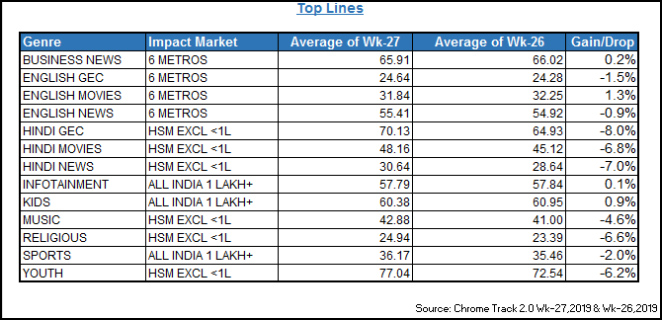
    MUMBAI: English movies genre has grown 1.28 per cent in week 27 of Chrome Data Analytics and Media. In this genre, Warner Brothers gained the highest OTS with 42 per cent in the six metro markets.

    OTS is the actual census-based percentage connectivity of a channel spread across 81 million homes, as reported by Chrome DM, across analogue cable, digital cable, and DTH.

    Kids genre secured the second position in gainers list with 0.94 per cent growth. Discovery Kids gained the highest OTS in the genre with 89.3 per cent in All India 1 Lakh+ market.

    Following Hindi movies and kids genre, the business news genre grew by 0.2 per cent and infotainment genre grew by 0.1 per cent. 

  • Sports genre emerges as most benefitted in Chrome DM week 26

    Sports genre emerges as most benefitted in Chrome DM week 26

    MUMBAI: Sports genre has grown by 2.83 per cent in week 26 of Chrome Data Analytics and Media. In this genre, DD Sports channel gained the highest OTS with 93.8 per cent in all India 1 Lakh+ areas.

    OTS is the actual census-based percentage connectivity of a channel spread across 81 million homes, as reported by Chrome DM, across analogue cable, digital cable, and DTH.

    This week, English GECs gained second position that grew by 2.47 per cent in 6 metros market. In this genre Comedy Central gained the highest OTS with 31.1 per cent. English news genre stood on the third position by gaining 1.60 per cent in 6 metros space. Republic TV secured the highest OTS with 97.2 per cent.

    English movies stood in fourth position in 6 metros markets and grew by 1.48 per cent. Warner Brothers gained the highest OTS with 41.1 per cent. Kids' genre stood in the fifth position and grew by 0.77 per cent in all India 1 Lakh+ market. In this genre, Discovery Kids gained the highest OTS with 86.3 per cent.

  • Youth genre emerges as most benefitted in Chrome DM week 24

    Youth genre emerges as most benefitted in Chrome DM week 24

    MUMBAI: Youth genre has grown by 5.61 per cent in week 23 of Chrome Data Analytics and Media data. In this genre, MTV channel gained the highest OTS with 86.9 per cent in HSM excluding less than 1 lakh markets.

    OTS is the actual census-based percentage connectivity of a channel spread across 81 million homes, as reported by Chrome DM, across analogue cable, digital cable, and DTH.

    This week, infotainment genre gained second position and grew by 5.35 per cent in all India 1 lakh+ market. In this genre, History TV18 gained the highest OTS with 82.5 per cent. Kids genre stood in the third position by gaining 4.67 per cent in all India 1 lakh+ space. Discovery Kids secured the highest OTS with 85.1 per cent.

    Hindi movies stood in fourth position in HSM excluding less than 1 lakh markets and grew by 4.63 per cent. Movies Ok channel gained the highest OTS with 91.1 per cent. Sports stood on the fifth position and grew by 4.47 per cent in all India 1 lakh+ market. In this genre, DD Sports gained the highest OTS with 92.3 per cent. 

  • Pre-school kids content’s monetisation and viewership challenges

    Pre-school kids content’s monetisation and viewership challenges

    MUMBAI: Animators have long contemplated the complexity of producing pre-school content for the ages of two to four years. On the third day of FICCI Frames 2019, executives from the industry spoke about ‘Catching youngest viewers: Powering the kids network and advertisers ecosystem through data’. It had panellists BARC India senior VP business development partnerships Elbert D’silva, Sony Yay head programming Ronojoy Chakraborty, DDB Mudra Group executive director Sathyamurthy Namakkal, GroupM business head entertainment, sports and live events Vinit Karnik, Viacom18 head content kids TV network Anu Sikka and Graphiti multimedia co-founder Mujal Shroff. The session was moderated by Punaryug Artvision founder Ashish Kulkarni.

    Sikka threw the limelight over the issue that the industry had been facing since the start and the reason why the kids genre is under-indexed. She said that at first it was a question of finance and so the industry depended on acquired content and later realised the need to produce home-grown content. Parents also exert some control over what the kid watches. A kid may have no issue with Dora being Indian or not, but it is the parents who demand local content. They would want their kids to watch localised content. “Kids from age five demand local content, but in case of kids from the age group of 0-2, the parents are the gatekeepers,” she concluded.  

    She further added that now is the time that we need to cater to specialised content. “If you look at our Nick Jr. channel, it has grown three to four times this year. But unfortunately, if you look at the overall programming, we don’t get viewership of the two to fourteen years age group. And that is why there is a lack of pre-schooling content,” she said.

    On the other hand, Shroff said that there is also a placement issue. He said, “If you look at the viewing pattern, as the child evolves these days, it is on multiple devices. But some age groups still prefer TV.” Kids aged 5-6 or 9-10 tend to consume content on their parents mobile phones or any other device but a 2-year-old kid still watches TV.

    Chakraborty explained that pre-school programming is only justified if it can be monetised. “If you look at our category, one-fourth share is GECs but the revenue share for kids category is one-tenth. Hence the revenue here is very less and therefore, broadcasters are not creating content,” he said. If BARC were to provide some viewership cuts for the pre-school audience rather than keep it as a part of the entire kids genre, broadcasters will be able to curate better content.

    Agreeing with him, Karnik said that it would be difficult to strategise programming for the pre-schooling kids as the category as a whole is under-indexed in terms of advertising. Despite witnessing a hike in ratings, revenues are increasing at a snail’s pace.

    Namakkal chipped in with a different standpoint. He said that the industry shouldn’t get greedy about data because there is already information overload. “One-third of kids consume one and a half hours of video on TV screens. But while we talk about advertising revenue, it will never be equal to viewership share,” he explained.

  • Guest Column: The scope for home-grown IPs for kids’ broadcasters

    Guest Column: The scope for home-grown IPs for kids’ broadcasters

    In the Indian television space, the specialised genre on kids emerged in 1995 and has only been growing ever since. The kids’ genre is the third largest, nationally, after Hindi GECs and Hindi movies. The category has seen a gradual shift with 4-14 audiences, with the genre being in single digits in 2005-2006, to now. There has been an exponential growth since then, with the age group increasing to 2-14 as well.

    The components of a child’s behaviour are summarised with two very simple attributes – imagination and spontaneity. But the kids’ genre now is a mature genre and more developed than ever before. Over 168 million kids under the age of 14-years are dedicated viewers. They demand variety, new concepts and most importantly connect with endearing characters.  Be it rural or urban, there is curiosity amongst kids to know more. Therefore, we respond to this need with exciting and engaging content in a language they can effortlessly comprehend.

    With kids relating to an immensely appreciating home-grown content, the scope for original content is unbeatable. Today, at least three out of the top five are Indian characters, reflecting the changing viewer preferences. Movie screenings on Indian cartoon characters rank high as well. Even if we bring foreign content to television screens, there always is a necessity to dub and bring in Indian flavours to be able to connect with the audience. Indian characters always get more traction, as they can be given physicality, context and mannerisms that are Indian and hence are more relatable. This is because kids are inclined towards situations and values they are familiar and comfortable with. 

    Other forms of engaging content created from these characters is where the true scope of growth lies – the ability to create a completely different ecosystem out of television, an edge that acquired content cannot offer.

    Broadcasters and producers have the edge as well since it gives them complete creative freedom – to design the content as well as decide the life of the content. And because they own the IP, the numbers of offerings are boundless. They can range from on-ground activations, merchandising, and brand extensions to other marketing activities.

    The scope for reducing the dependence on acquired content is immense and this is what will continue to boost localised, original content, thus fueling the expansion of the creative talent pool. Moreover, the localised content also attracts the right kind of sponsors to look at opportunities to weave in their brand story.

    It’s been two decades since we have realised the true potential of this genre. While we have come a long way, there is still a long way to go. And, launching with four home-grown shows, we at Sony Yay are just delighted to be a part of the growth journey of the category in the country.

    public://leena.jpgThe author is the business head of Sony Yay. The views expressed are personal and Indiantelevision.com may not subscribe to them.
  • 2-14 age-group is highly under-indexed, avers Sony Yay! business head Leena Lele Dutta

    Leena Lele Dutta had been hired in 2007 to establish the content distribution and licensing division of Sony Pictures Television in India in 2007 and expand the footprint thereafter into the south Asian markets. It’s been more than nine years Dutta has been a part of growing Sony family.  Currently, Dutta is heading the Sony Pictures Network India’s CEO N P Singh’s brainchild new kids channel — Sony Yay! In conversation with Indiantelevision.com’s Sonam Saini, Dutta shared her experience of shifting from B2B to B2C.

    Excerpts:

    You have been with Sony Pictures Television for over nine years. How has been the shift from content distribution arm to heading a kids channel? What are the challenges you are facing?

    My earlier role with SPE back in 2007 was to set up the content distribution arm for India and that included licensing of various Hollywood movies the studio produced and acquire across its four main studios. Not only the movie piece but also the television shows which are actually produced there and syndicated here in the network.

    The first year was invested in establishing the content arm and figuring out the role because, prior to that, I was a hardcore ad sales person. This is was the new channel but, in seven years, the market has also evolved.

    Being the country manager, I was responsible for monetisation of the existing content, and here it is the other way round. Here, it is the health of the overall business, here it is more of a B2C business. Here your clients are 2-14-year-old kids who are there across the length and breadth of the country. A kids channel was the missing link in the network.

    It is a mindset evolution. What made is easier is the transition within the Sony family. The kids channel, NP’s (N.P Singh) brainchild, wanted to get somebody on board, and here I am.

    Where did you see scope for a kids channel?

    A lot of scope existed in the space. With our four desi shows, we are very confident of making a mark. More similar shows are coming in October, and being the only channel that caters 100 per cent desi content, we will definitely have a well-known presence by the end of first year for Sony Yay!.

    We also want Sony Yay!, as the brand name stands for happiness, to spread happiness and contentment among the kids.

    The same thing will reflect in our marketing strategies. We will have lots of mall activities, theme park activities which resonate with Yay! We will also have CSR activity which will give Yay! moments to kids. These measures will co-exist with our content offering.  We would be pursuing school contract programme after summer breaks.

    How big is the kids genre in India market?

    The category is the third largest after Hindi general entertainment channels and Hindi movies channels. Accordig to the new BARC system, the 2-14 age group (*) is phenomenally huge. The biggest challenge this category has right now is that it’s highly under-indexed. 

    A lot of advertisers are looking to invest in the kids category — to focus on the 2-14 age-group. However, they are completely discounting the parents who are watching the content as well. In the coming months, we hope to engage with parents more in consuming our channel and not only expand the category. We also have significant play in the area where it is seen more seriously than just a kids channel.

    What will Sony Yay!’s strategy going forward?

    The strategy is very clear, we wanted to be the most preferred brand among the kids. We want people to know what Sony Yay! stands for.  Our partnership with Tiger Shroff has worked tremendously well. We have got a huge response from the kids and their mothers. The launch campaign has been talked about.

    Our colleagues in the industry have observed quite a movement in this category. Whatever we are doing including our content and marketing initiatives, we are here for the long haul. From day one, a lot of investment and efforts have been put into the new channel to make a mark and shake the category.

    At the press conference, you had mentioned that the IPs remain with the channel. Is there a chance that you might sell/licence rights to OTT players?

    Those are the primary revenue models we will consider. We will also consider the licensing and merchandising model as well. That’s the benefit of owning the IPs, and not sharing. There is a strategy of monetisation going ahead with the characters, but we are not going to roll it out in the immediate future.

    What are challenges you faced while distributing the channel?

    Luckily, our distribution team has been phenomenal as we stand today we are present in almost 90 per cent of all digital homes. We have been fairly well distributed — in fact, some major MSOs are willing to carry us in top five of the kids genre, which helped boost our ranking.


    (* Sony has helped rectify the BARC India category figures to GRP 582)  


    Also Read

    Sony to shift Animax channel to SonyLiv

    Age-appropriate ‘safe’ content is taken from Nat Geo Kids, Sony & Amar Chitra: Shirsa

    Sony Pictures Network builds team for kids channel, appoints two execs

  • BARC week 10: Pogo’s Chhota Bheem on top of the program list

    BARC week 10: Pogo’s Chhota Bheem on top of the program list

    MUMBAI:Pogo TV’s Chhota Bheem and the Incan Adventure topped the program list for week 10, which saw Viacom 18’s Nick staying strong at its top position as per  Broadcast Audience Research Council (BARC) India’s all India (U+R) data in NCCS All 4-14 Individuals category.

    Nickl bagged  77946 (000s sums) ratings, followed by Pogo TV with 74796 (000s sums) and Disney Channel was next with 58329 (000s sums) ratings. Turner’s Cartoon Network  took the fourth spot with a viewership rating of 56442 (000s sums), while Hungama came last among the five most watched channels in the genre with a rating of 53974 (000s sums).

    Amongst the top five programs in the kids genre, as mentioned above, Pogo TV’s  Chhota Bheem and the Incan Adventure took the lead with a rating of 713 (000s sums) closely followed by Nickelodeon’s  Motu Patlu Mission Moon  with 695 (000s sums) ratings. POGO TV’s  Tashi  took the third spot with a slightly lower rating of 665 (000s sums), while  its Chhota Bheem Dholakpur Maha Mela  followed after 643 (000s sums) ratings. Last but not the least among the top five program’s list was Nick’s Motu Patlu Deep Sea Adventure  with a ratings of 573(000 sums) . It must be noted that the top program ranking is based on average rating across all airings in the week, including original telecasts and repeats.

  • BARC week 10: Pogo’s Chhota Bheem on top of the program list

    BARC week 10: Pogo’s Chhota Bheem on top of the program list

    MUMBAI:Pogo TV’s Chhota Bheem and the Incan Adventure topped the program list for week 10, which saw Viacom 18’s Nick staying strong at its top position as per  Broadcast Audience Research Council (BARC) India’s all India (U+R) data in NCCS All 4-14 Individuals category.

    Nickl bagged  77946 (000s sums) ratings, followed by Pogo TV with 74796 (000s sums) and Disney Channel was next with 58329 (000s sums) ratings. Turner’s Cartoon Network  took the fourth spot with a viewership rating of 56442 (000s sums), while Hungama came last among the five most watched channels in the genre with a rating of 53974 (000s sums).

    Amongst the top five programs in the kids genre, as mentioned above, Pogo TV’s  Chhota Bheem and the Incan Adventure took the lead with a rating of 713 (000s sums) closely followed by Nickelodeon’s  Motu Patlu Mission Moon  with 695 (000s sums) ratings. POGO TV’s  Tashi  took the third spot with a slightly lower rating of 665 (000s sums), while  its Chhota Bheem Dholakpur Maha Mela  followed after 643 (000s sums) ratings. Last but not the least among the top five program’s list was Nick’s Motu Patlu Deep Sea Adventure  with a ratings of 573(000 sums) . It must be noted that the top program ranking is based on average rating across all airings in the week, including original telecasts and repeats.