Tag: Keynote Address

  • TCH 2022: Good ideas are bad ideas: Roy Price

    TCH 2022: Good ideas are bad ideas: Roy Price

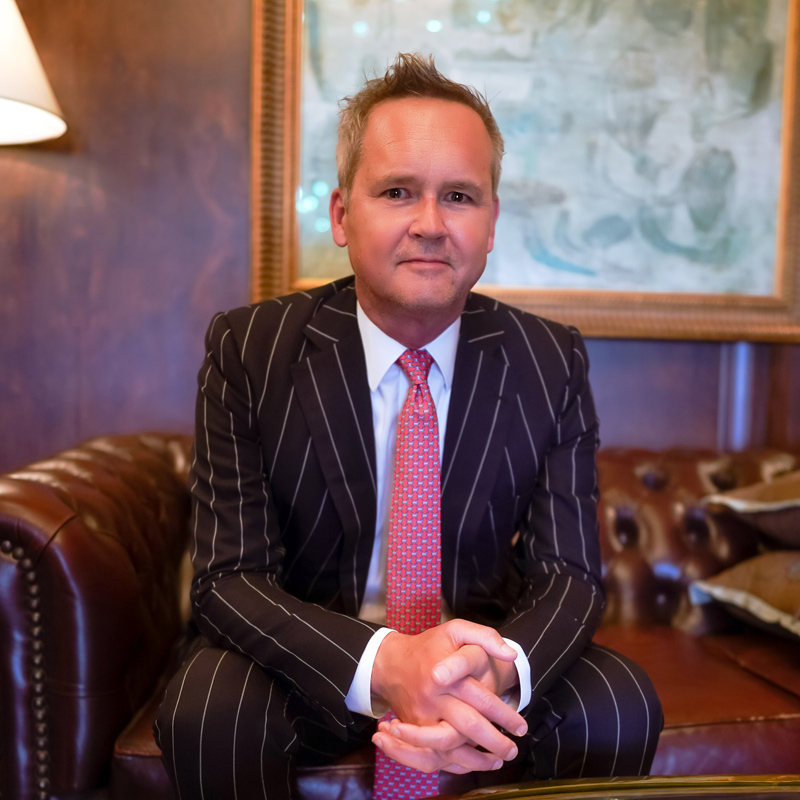
    Mumbai: Delivering the keynote address at the sixth edition of Viacom18 presents The Content Hub 2022 Summit organised by Indiantelevision.com on Wednesday, International Art Machine CEO Roy Price noted that good ideas are bad ideas. He gave the example of Amazon starting its content creation and delivery journey being met with skepticism. “The idea that people would download videos was met with skepticism in Hollywood. Today it seems natural but that is only because it has been done,” he said

    The industry event was co-powered by Applause Entertainment and IN10 Media Network. Aaj Tak Connected Stream was the association partner. Industry partners were Fremantle India, Hill+Knowlton Strategies, One Take Media, Pratilipi, Pocket FM and The Viral Fever. The Indian Motion Pictures Producers’ Association (IMPPA) is our community partner.  

    Roy recalled meeting a studio executive who said that nobody would download movies. “Of course, it all worked out in the end even if it was counterintuitive to some in the early days that digital video would be big. But it was obvious that digital video would work. It is more immediate. It is obviously better. We did not immediately prevail but the product steadily prevailed and now it is the most important format in the world. Then I advocated for original content. I argued that everyone would have to have original content. That was another bad idea and certainly it was controversial.”

    He said that the show Transparent had its share of sceptics. “If everyone thinks it is a good idea immediately, it might just be behind the curve.” The reason he explains is that really new ideas that are going to change things are unfamiliar and often tend to be instinctively rejected by many. So, if people think it is a good idea it might be behind the curve. But he also acknowledged that it might be Top Gun Maverick sometimes.

    However, Roy warned that nobody really gets paid to do the same thing as everyone else. “Culture evolves and the game changing shows, the ones that matter the most, are usually new and different. Producers tend to be pattern matchers. They do what has worked. They often do not grasp the new, next thing. The challenge is that the audience two years from now is always different and what works now will be passé in the future.  The next thing is never the same thing. You cannot copy your way to success.”

    He added that good is tempting in terms of show ideas, executives. But ultimately it is bad. Good crowds out the great, which is a bad thing. The skill he explains is not to distinguish good ideas from bad ideas. That is the easy part. The key is to distinguish good ideas from great ideas even if great ideas sometimes come in the disguise of bad ideas.

    Price noted that it is an incredibly exciting time to be in the media business in Asia. He said that in the past only American TV shows and movies travelled. “Now we see a greater diversity of movies and TV shows succeeding internationally. We have Parasite, Drive My Car, BTS, Call My Agent, Squid Game and others become international hits and award winners. We saw Dangal do tremendous business in China. American and European audiences in general are more receptive than ever to international content. I believe that Indian shows and movies are next. Dangal as an example which is perfect as a movie could also have been successful as an international television series. RRR is doing incredibly well. Both are terrific films and the momentum is building.”

    He said that when he left Amazon, he knew that the next biggest story in the coming years would be the rise of original Asian content. “Within a month I was in Asia and set up a company to develop shows and movies to help this process evolve.”

    He noted that shows do not have to feel international to succeed globally. None of the successful international shows have an American cast to make it more accessible. “The key is that the emotions are real and accessible. There needs to be great writing, great acting.”

    Roy felt that there will be Indian superhero movies that approach that genre in a local way. Action movies will also work and his company is developing some. But at the same time, he noted, big in terms of impact does not always mean action. He offered the example of The Lunchbox which he said was really about delivering emotion, being clever, being genuine and making people care. “The key is to be genuinely local,” he said.

    He noted that the world is de-centralising. People can create Twitter, YouTube, Facebook accounts. Every brand is a direct-to-consumer (D2C) brand. Today, direct brand building is possible for a pilot, music video etc. and that presents an opportunity to excite an audience. He feels that crypto is the most interesting part of the future. He said that blockchains can keep track of things like who owns what in a permanent way. It cannot be altered by any company, government or bad actor. He said it is not a speculative technology. It will influence the way in which commercial deals are done. On the blockchain one can go beyond selling images to movies, TV shows. One can sell securitised interest to a future movie or TV show and give a percentage of the profit to be paid out automatically via smart contract.

    To finance a show a producer can go to the networks or to Web3. He predicted another bad idea where a Web3 decentralised streaming service would exist where content can be uploaded by a producer, studio and revenue is divided by smart contract. This he said has advantages over a centralised culture of bureaucracy. People wanting to make a show will have access to thousands of investor groups around the world rather than three to four programming people at centralized networks.

    Also, groups of enthusiasts who are outside the professional cultural establishment will have, he predicted, a greater tendency to embrace ideas that are unusual, contrarian or are ahead of the curve. These groups will not be pattern matchers. They will be enthusiasts for a particular genre, talent. They do not have a reason not to embrace something that is different, cutting edge. They will not have bureaucratic resistance to doing something different. This is a strange weakness that develops with professionalisation. A decentralised system becomes like artificial intelligence (A.I.) which means being free of biases and being open to the next thing.

    He ended by saying that a streaming service that gives creators creative autonomy and ownership will attract top talent. Attracting top talent will ensure that one wins. This is a model with a Superbowl advantage. He said that the decentralised system will distribute power out from a very concentrated group today to producers, artists and will be as transformative as any previous change including subscription video-on-demand. This is the other thing that his company is building, he said.

    During his 13 years association with Amazon, Roy founded Amazon Video and Amazon Studios. He has been one of the most successful Emmy and Golden Globe-winning executives, having developed blockbuster shows like Transparent, Fleabag, Catastrophe, Marvellous Mrs Maisel, The Boys, Mozart in the Jungle. Bosch, Maid in Heaven, Tumble Leaf, Kim Possible, Teacher’s Pet, and Patriot – holding testimony to his experience and creative flair.

    As the CEO and founder of International Art Machine, Roy intends to build a new ecosystem for premium content creation; bringing together great talent, storytellers and platforms by melting borders and telling meaningful stories with universal sensibilities.

  • DD Free Dish emerged as enabler of competitiveness in M&E industry: Prasar Bharati CEO

    DD Free Dish emerged as enabler of competitiveness in M&E industry: Prasar Bharati CEO

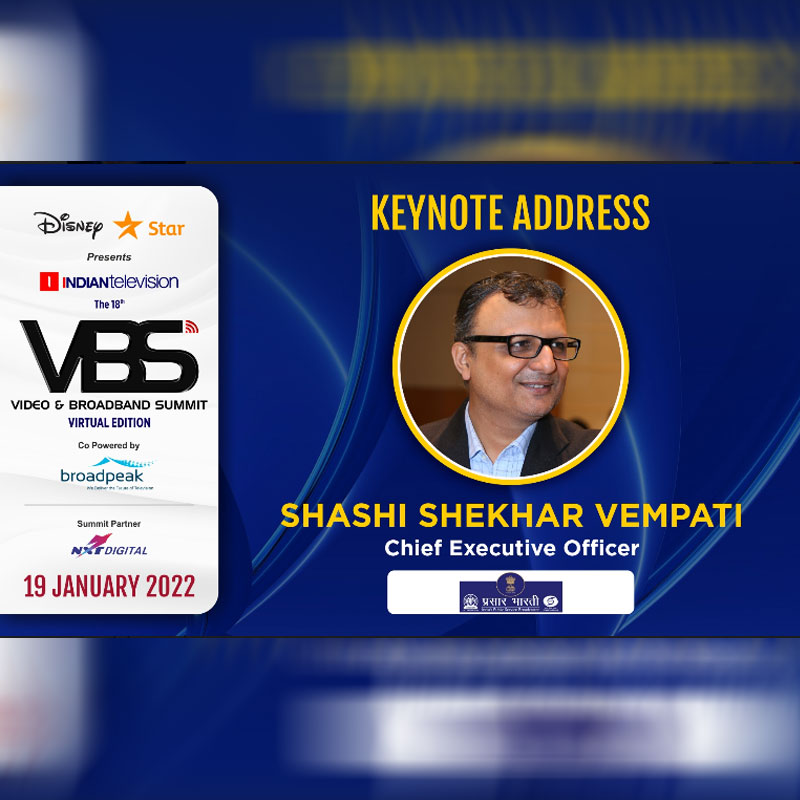
    Mumbai: With a presence in over 40 million households, DD Free Dish has emerged as an enabler of competitiveness in the media and entertainment industry, said Prasar Bharati CEO Shashi Shekhar Vempati on Wednesday, highlighting the stupendous growth recorded by the platform in recent years.

    Vempati delivered the keynote address at the 18th edition of the Video and Broadband Summit (VBS) organised virtually by Indiantelevision.com on Wednesday. The day-long summit was co-powered by broadpeak, with Disney Star as the presenting partner and Nxtdigital as the summit partner.

    Talking about the growth of DD Free Dish, the Prasar Bharati CEO said it was present in two crore households when he joined the public broadcaster in 2017 and has since doubled its base. “It was because of the Free Dish audience that channels like Dangal and genres like Bhojpuri have come of age,” he remarked. “There have been new, upstart channels that have challenged the incumbent bigger media houses. It has created a platform for people to sample content and subscribe to whatever they want to watch.

    DD Free Dish now in 40 million households

    During his five-year association with the public broadcaster, Vempati shared that he has observed striking changes in the way that the TV and video viewing market has evolved. According to him, the key factors that are driving this change are regulatory interventions, the decision by the government to phase-out analog terrestrial TV and the rise of OTT and digital.

    “The pandemic had a tremendous impact on the way we work,” he elaborated. When I joined the organisation, everything was paper-based but now we’ve become IT-based. The situation has forced us to think innovatively and put technology first.”

    Public Broadcaster’s Digital Turnaround

    Prasar Bharati’s digital growth has doubled every year with its YouTube channels clocking more than a billion views every month. The public operator which operates more than 400+ radio stations is now delivering its radio services via the News On-Air app. “While the app has several million downloads and an active listener base, it has also become a proxy for us to understand what people like to listen to on the radio,” said Vempati. “Analytics from the app gives us insights like which is the top city for online radio listening (Pune) and which streams do people prefer in every city. It also lets us know what time people are listening and which programmes they love the most.”

    He added that it was astounding that India has not leveraged its strength as the biggest media market and largest English-speaking market to build a local ecosystem for technology that can support the M&E sector. “As a public broadcaster, we invest (capital spending via government grants) up to Rs 100-200 crore in technology and it is very saddening to see this infusion of funds leaving the country,” he noted.

    Need for indigenous technology-development

    Most of the technology requirements of the M&E industry in India are imported and royalties go to entities in other countries. “We need to build a local ecosystem of technology vendors to supply the industry with all kinds of equipment,” said Vempati. “That’s why it is important that we focus on indigenous standards development.”

    For example, most of the 5G tech stack has been framed by entities in other markets. Prasar Bharati has recently signed a MoU with IIT Kanpur to develop IIndian-specific standards for 5G that allow for convergence between broadband and broadcast. This will allow for new opportunity areas such as direct-to-mobile broadcasting that will be in line with India’s unique needs to deliver content directly to mobile.

    Prasar Bharati developing next generation broadcast solution

    “With millions of people live streaming every event, it is going to raise the costs of the network and the pipes are going to choke. The telcos will not be able to handle so much traffic and that will lead to buffering. The way out is having the ability to offload steaming traffic to broadcast infrastructure if necessary. This benefits everyone including big OTT platforms,” he added.

    Another opportunity area that Vempati sees is innovation in the supply-side economics of content. “Why is content so expensive?” he asked. “There is a need to deliver higher quality content at lower cost and India should be cost leaders in terms of creating content, seeing the enormous talent base that we have. The M&E industry in India is looking for its “Walmart moment” when it comes to bringing down the cost of content. We should find innovative means, technologies, and approaches that can bring down the cost of content.”