Tag: Kevin Vaz

  • When Gods Meet the Grid JioStar’s AI Mahabharat Rewrites Epic History

    When Gods Meet the Grid JioStar’s AI Mahabharat Rewrites Epic History

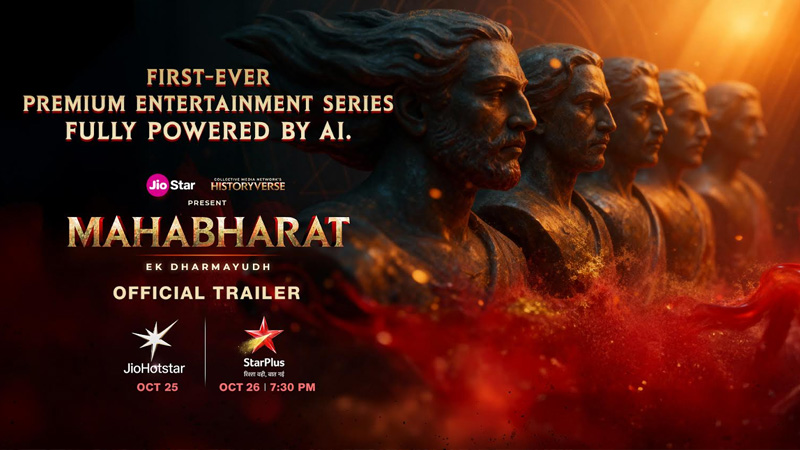
    MUMBAI: When Arjuna draws his bow this time, even the algorithms hold their breath. JioStar’s Mahabharat: Ek Dharmayudh is here to prove that when ancient mythology meets artificial intelligence, the result can be divine disruption.

    In an era when filmmakers worldwide are wrestling with AI’s role in creativity, JioStar has galloped ahead of the chariot line. Its latest web series, Mahabharat: Ek Dharmayudh, uses AI not as a gimmick but as a guiding force to reimagine India’s most revered epic for a new generation. The show’s trailer already hints at a visual spectacle that fuses emotion with engineering where machine intelligence breathes new life into gods, warriors, and moral dilemmas that have shaped Indian thought for millennia.

    Launching on JioHotstar on 25 October and premiering on Star Plus on 26 October, the first instalment spans 100 episodes, inviting viewers to relive the dynastic war between the Pandavas and the Kauravas now rendered with astonishing realism and cinematic scale. The AI-assisted production doesn’t just recreate battles and palaces; it reconstructs the soul of the Mahabharata itself, translating its philosophical weight into a modern, immersive visual language.

    For many of us, the Mahabharat is more than just a story; it’s the tales we grew up hearing from our parents and grandparents,” said Collective Artists Network founder and group CEO Vijay Subramaniam. “With AI Mahabharat, we get to experience those same timeless stories in a completely new way, brought to life through the power of modern AI technology. The trailer is just a glimpse of what’s ahead emotional, grand, and immersive.

    The collaboration between creative storytellers and machine intelligence lies at the heart of JioStar’s latest leap. JioStar CEO of entertainment Kevin Vaz called it “a fusion of a timeless epic and machine intelligence that mirrors the spirit of a new India.” He added, “Through this series, we’re building a bridge between tradition and the future, proving that our oldest and most revered stories can still be our most futuristic yet.

    The show stands as a technological and cultural statement that India’s storytelling tradition can evolve without losing its soul. For a generation raised on screens and scrolls, Mahabharat: Ek Dharmayudh offers not just nostalgia, but a rebirth of mythology in pixels and code.

    From Krishna’s counsel to Karna’s tragedy, every scene is rendered with AI precision yet retains the heart of human conflict and emotion. If JioStar’s gamble pays off, Mahabharat: Ek Dharmayudh may just mark the beginning of a new genre, one where myth meets machine, and creativity becomes truly infinite.

    Because when the Gita meets the grid, destiny isn’t just written, it’s rendered.

  • Kevin Vaz urges lighter regulation as India’s media story hits new high

    Kevin Vaz urges lighter regulation as India’s media story hits new high

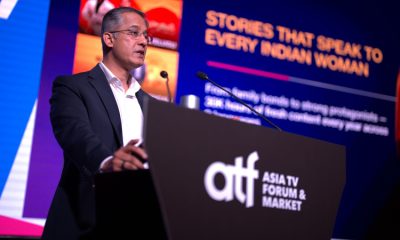
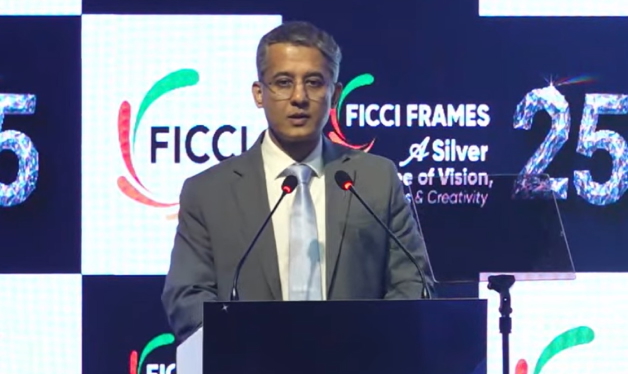
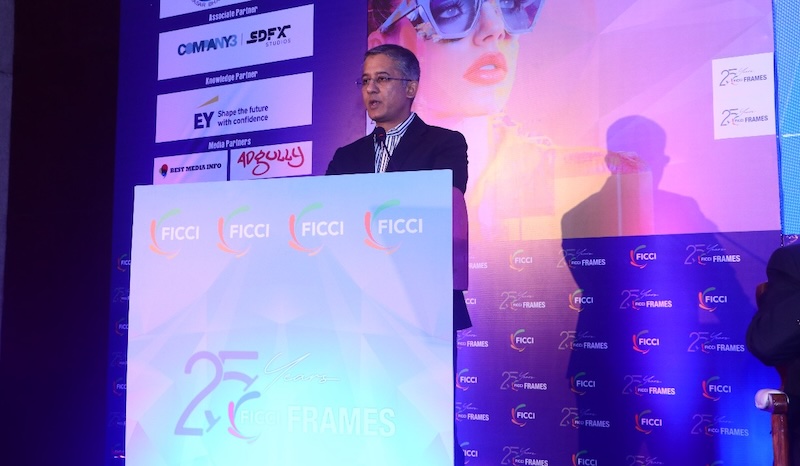
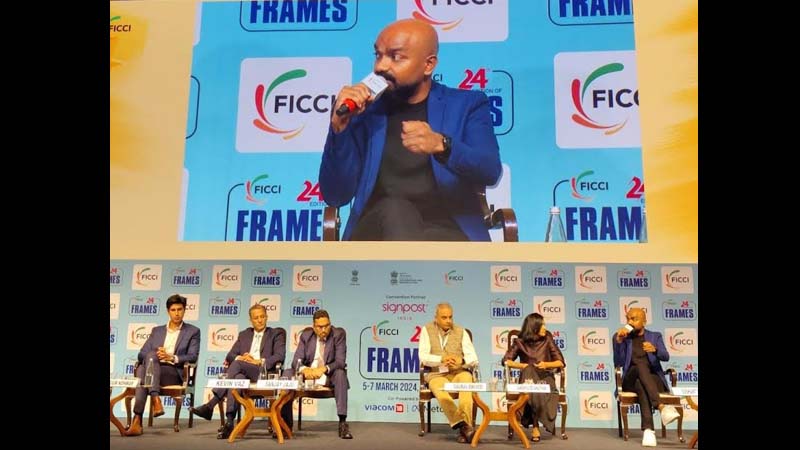
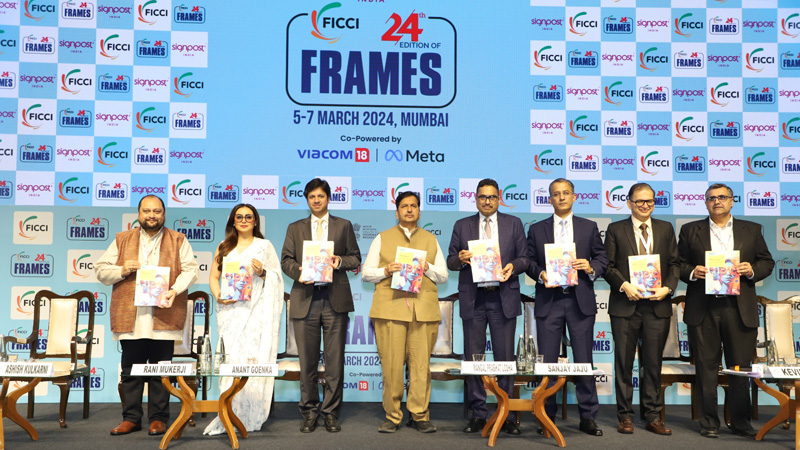
    MUMBAI: When the lights came up at Ficci Frames’ silver jubilee edition, JioStar Entertainment CEO and president of the Indian Digital Media Industry Foundation Kevin Vaz, took the stage with a rallying cry: “Rise Together.” The theme Reimagine, Innovate, Strengthen, Empower set the tone for a morning that was equal parts reflection and call to action.

    Marking 25 years of one of India’s most influential media and entertainment (M&E) gatherings, Vaz reminded the audience how far the industry has travelled since 2001, when Ficci Frames coincided with the government formally granting industry status to M&E. “It opened the doors to institutional finance, enabling capital flows, investments, and risk-taking in content and technology,” he noted, a turning point that defined India’s creative economy.

    Vaz saluted industry stalwarts like Yash Chopra, Karan Johar, and Uday Shankar for steering FRAMES through the years, while welcoming dignitaries including Maharashtra’s Cultural Affairs minister Ashish Shelar, MIB Secretary Sanjay Jaju, and actor Ayushmann Khurrana. “A quarter century of dialogue, discovery, and doing,” he said, “and yet the best is still ahead.”

    From satellite TV to OTT, from animation and VFX to gaming, the sector has evolved at lightning speed. India’s “AND” market, Vaz said, stands out globally for how television and digital coexist each expanding the other. “Unlike Western markets, India’s consumers haven’t chosen between TV and digital. They’ve embraced both,” he quipped, adding that the combined strength of PayTV, FreeTV, and Connected TV continues to grow the overall M&E pie.

    Sports, too, has emerged as India’s cultural engine. “Cricket may rule, but football, kabaddi and esports are fast catching up,” Vaz observed, calling for ease-of-doing-business reforms to boost live broadcasting from India.

    On cinema, he celebrated how regional and independent voices have made global waves from RRR and The Elephant Whisperers at the Oscars to Indian films shining at Cannes and Berlin. “Our stories aren’t just travelling,” Vaz declared, “they’re leading.”

    He spotlighted the rise of the AVGC sector, now moving from outsourcing to creating original IP, with 500 plus million gamers and the National Centre of Excellence in Mumbai giving India global creative heft. With MeitY’s support, gaming startups are scaling worldwide proof that technology and storytelling are increasingly entwined.

    But amid the applause, Vaz urged urgency. “The pace of change is accelerating,” he warned, “and this calls for stronger collaboration between business and policy-makers.” His sharpest message was reserved for regulators: “The heavy-handed regulation of linear broadcasting has stifled innovation. We need forbearance, a light-touch regime that allows creativity and competition to flourish.”

    Broadcasting, contributing nearly 40 per cent of the Indian M&E industry, he emphasised, remains central to the prime minister’s vision of making India the world’s content hub. “We’re in a golden era,” he said, “but to truly lead, quality must match ambition and innovation must be inclusive.”

    As Frames 25 concluded its opening key notes Vaz’s address resonated as both celebration and manifesto, a reminder that India’s creative economy, employing millions and inspiring billions, is ready for its next act.

    “Together,” he said, “we will Rise reimagining the next 25 years of storytelling, policy, and purpose.”

  • Kevin Vaz retained as IBDF president, Avinash Pandey to be secretary general

    Kevin Vaz retained as IBDF president, Avinash Pandey to be secretary general

    MUMBAI: The Indian Broadcasting & Digital Foundation (IBDF) has sent out a clear signal at its 26th Annual General Meeting in New Delhi: television remains the beating heart of India’s entertainment story.

    A significant leadership transition was announced at the AGM. Media veteran Avinash Pandey will assume the role of secretary general from October 1, 2025, succeeding Siddharth Jain, whose tenure concluded on September 30. Members expressed gratitude to Jain for his contributions and warmly welcomed Pandey. Reflecting on his appointment, Pandey said, “I am honoured to take on this role at such a pivotal time. My focus will be on engaging with government, navigating the evolving regulatory landscape, and strengthening IBDF’s role as the industry’s unified voice.”  

    Chairing the AGM in his inaugural address as president, Jiostar India CEO – entertainment Kevin Vaz underscored the enduring power of linear TV. He pointed out that 97 per cent of India’s original content in 2024, nearly 200,000 hours, was created for television, which continues to engage audiences at scale with roughly 46 trillion minutes of annual viewing across 190 million screens. He described TV as the “bedrock of content creation and brand building in India,” highlighting its unmatched reach and cultural resonance through the family co-viewing experience. Vaz added that advertising revenues are set to climb, with the festive season offering an immediate boost and the government’s recent GST reforms providing a strong foundation for long-term growth. “Television’s next chapter is one of evolution, leveraging reach and trust, amplified by digital,” he said, affirming IBDF’s commitment to advocate for a forward-looking regulatory framework.

    The AGM also featured board elections, where Gaurav Banerjee of Culver Max and R. Mahesh Kumar of Sun Network were re-elected, while Anil Kumar Singhvi of Zee Media joined as a new board member. The Office Bearers were re-elected for the new term, with Vaz as president, Rajat Sharma of India TV, Banerjee, and Kumar as vice presidents, and I. Venkat of Eenadu TV continuing as treasurer. The Board also includes Aroon Purie of TV Today Network, Gaurav Dwivedi of Prasar Bharati, Jayant Mathew of MMTV, and Punit Goenka of Zee Entertainment, while Sumanta Bose of Jiostar, John Brittas of Kairali TV, and Nachiket Pantvaidya of Culver Max were co-opted as members.

    The AGM was also attended by senior officials from the Ministry of Information & Broadcasting, including secretary Sanjay Jaju and additional secretary Prabhat, who joined industry leaders at a special luncheon hosted by IBDF, enabling constructive dialogue between broadcasters and policymakers.

  • Kevin Vaz honoured as the Media Person of the Year at the 12th IAA Leadership Awards 2025

    Kevin Vaz honoured as the Media Person of the Year at the 12th IAA Leadership Awards 2025

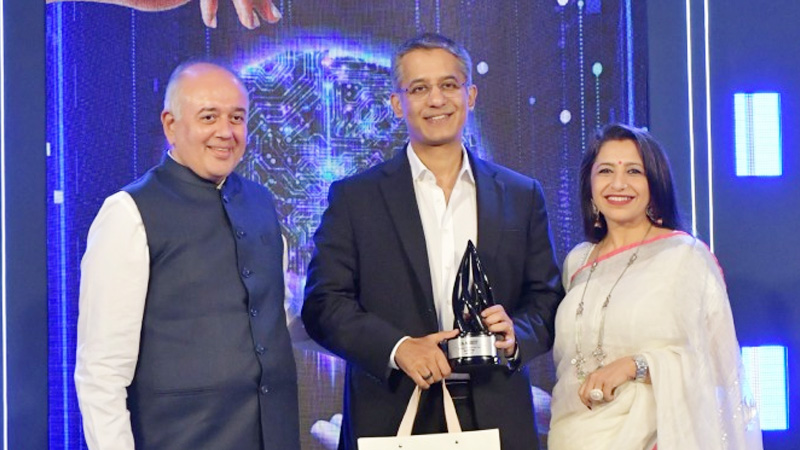
    MUMBAI: The 12th edition of the IAA Leadership Awards, held in Mumbai last evening, celebrated excellence across marketing, advertising, and media with Kevin Vaz, CEO – Entertainment, JioStar, receiving the coveted Media Person of the Year title. Organised by the International Advertising Association (IAA) India Chapter, the awards honour individuals whose leadership, creativity, and vision have left a lasting impact on the industry.

    “I’m truly humbled and grateful to receive this recognition. It’s a special moment for me, especially as I complete close to 30 years in this industry that I’ve quite literally grown up with. A heartfelt thank you to the International Advertising Association for this honour. IAA has always championed excellence and innovation across our industry and I’m proud to be recognised by an organisation that has played such an important role in shaping the media and marketing landscape.” said Kevin Vaz on receiving the award.

    With nearly three decades of experience in the Media & Entertainment sector, Kevin has been instrumental in driving growth, strategic expansion, and innovation across television, OTT, and films. At JioStar, he leads the entertainment business for both the network and JioHotstar, scaling revenues, expanding market share, and integrating content creation with monetisation. His career spans leadership roles at Star India, Viacom18 and Disney Star, where he launched and shaped language markets, and spearheaded industry-first strategies.
     

  • Digital media dethrones television as India’s M&E king, Ficci M&E report  report reveals

    Digital media dethrones television as India’s M&E king, Ficci M&E report report reveals

    MUMBAI: India’s media and entertainment sector has hit a milestone, crossing the Rs 2.5 trillion mark in 2024, but it’s digital media that’s stealing the show, according to the latest FICCI-EY report. The digital realm, growing by a stonking 17 per cent, has officially overtaken television, which has held the crown for two decades. Think of it as a digital coup, a right royal shake-up.

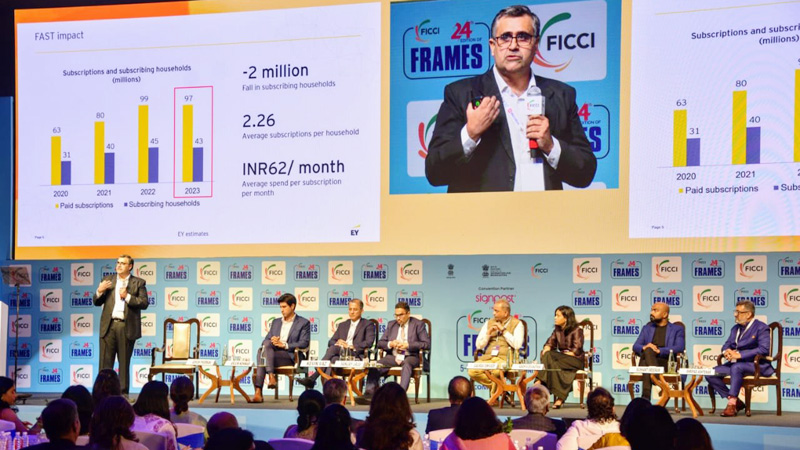
    While the overall sector grew by a respectable 3.3 per cent, reaching Rs  2.5 trillion ($29.4 billion), growth has slowed compared to the previous year, thanks to a 2 per cent dip in subscription revenues and a global slump in animation and VFX outsourcing. Still, it’s a hefty contribution to India’s GDP, at a solid 0.73 per cent.

    Advertising revenues, however, are booming, surging by 8.1 per cent, driven by digital performance advertising and a surge in premium OOH media. “The digital revolution has not only transformed how content is created and consumed but has also redefined the very essence of the M&E industry,” said Ashish Pherwani, media & entertainment leader and partner at EY India, rather grandly.

    Kevin Vaz, chairman of FICCI’s media and entertainment committee, declared the industry is at a “defining moment,” predicting it will surpass Rs 3 trillion by 2027. “The future is brimming with untapped potential,” he said, sounding positively chuffed.

    Key takeaways? Digital advertising is booming, live events are back with a bang (up 15 per cent), and OOH media is getting a digital makeover. However, subscriptions are taking a bit of a hammering, and online gaming is struggling under the weight of a 28 per cent GST and illegal offshore competition. “The online gaming segment could struggle unless illegal offshore platforms are not curbed,” the report warns, a rather pointed observation.

    Looking ahead, the report predicts a 7.2 per cent growth in 2025, reaching Rs 2.7 trillion, and a 7 per cent CAGR to Rs  3.1 trillion by 2027. AI is tipped to play a major role, bringing efficiencies across content production and distribution. “Artificial intelligence will play a large role in bringing efficiencies,” the report states, sounding rather futuristic.

    In short, India’s M&E sector is in a state of flux, with digital leading the charge and traditional models facing a bit of a squeeze. But with a bit of innovation and a dash of good old-fashioned British grit, the industry is poised for further growth. Quite right, too.

  • India’s M&E sector tipped for third place, Vaz declares at FICCI Frames curtain raiser

    India’s M&E sector tipped for third place, Vaz declares at FICCI Frames curtain raiser

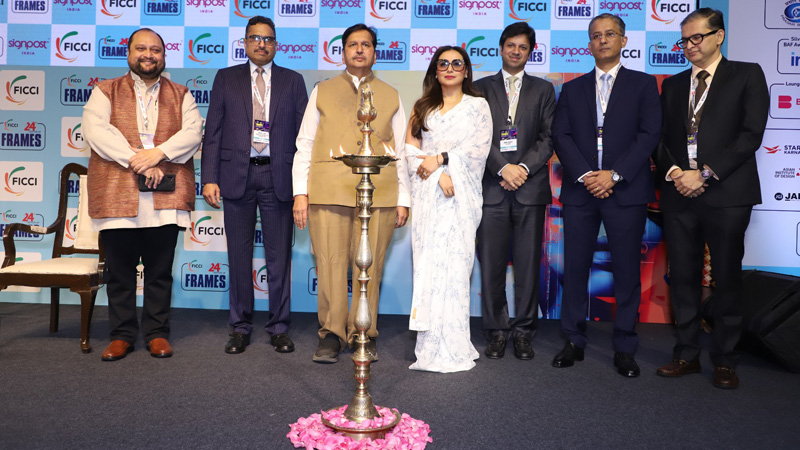
    MUMBAI: JioStar chief executive officer -entertainment business TV & digital and chairperson of the Ficci media and entertainment committee Kevin Vaz, kicked off the Ficci Frames curtain raiser with a bullish assessment of the nation’s entertainment sector, predicting it will be the third largest globally by 2028. He unveiled the 25th edition of the Ficci IEY M&E Report 2025, the industry’s official bible, amidst a flurry of industry heavyweights.

    “We are not an ‘OR’ market, but an ‘AND’ market,” Vaz declared, emphasising the co-existence of television and digital platforms. “Television will grow from 190 million households in 2024 to 214 million households by 2026, while digital platforms continue to soar.” A rather tidy bit of growth, one might say.

    He highlighted India’s global clout, citing Cannes and Oscar wins, and its emergence as a VFX powerhouse. Southern cinema, he noted, has reached “unprecedented heights,” showcasing some rather grand storytelling.

    Sports, particularly the IPL, is driving content consumption like a runaway train. “IPL 2025…it will be exciting to see how it reaches new heights and break records across both TV and digital platforms once again,” Vaz quipped, clearly anticipating a right royal viewership bonanza. He reported the 2024 IPL reached 525 million viewers on TV and a staggering 550-600 million on streaming platforms.

    OTT, he asserted, is set to become a “major force,” while television remains the “bedrock,” commanding over 30 per cent of the market. A rather sturdy foundation, then.

    Vaz welcomed industry luminaries including Sylvie Forbin, Gaurav Dwivedi, Ashish Pherwani, Arjun Nohwar and Munjal Shroff. He also plugged the Best Animated Frames (BAF) Awards, adding a touch of animated flair to the proceedings.

    “Let’s celebrate our achievements and the exciting opportunities ahead,” Vaz concluded, urging attendees to engage in discussions that would “propel the Indian M&E sector to the global stage.”

  • South Indian media market poised for global impact, says JioStar CEO Kevin Vaz

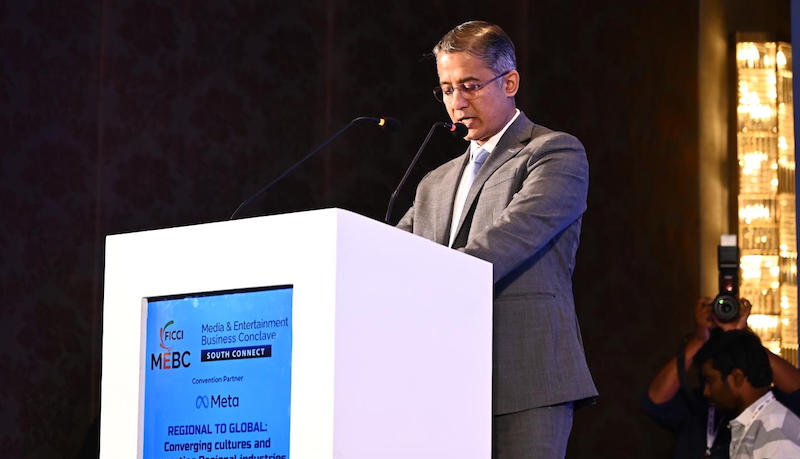
    South Indian media market poised for global impact, says JioStar CEO Kevin Vaz

    MUMBAI: JioStar Entertainment CEO &  FICCI Media & Entertainment committee chairman Kevin Vaz has highlighted the transformative growth of south India’s media and entertainment sector, emphasising its evolution from regional prominence to global recognition.

    Speaking at the Media and Entertainment Business Conclave, Vaz noted that south Indian cinema led the post-pandemic box office revival, citing blockbusters such as RRR, KGF-2, and Kantara. The success continued into 2024, with Pushpa 2 making significant inroads in the Hindi market, contributing 20% of Hindi box office collections through its dubbed version.

    The region’s creative output has garnered international acclaim, including RRR’s historic Academy Award win in 2023 and the recognition of Kannada short film Sunflowers Were The First Ones to Know at the 2024 Cannes Film Festival.

    Television remains a crucial platform for South Indian content, commanding over 30 per cent  of India’s media and entertainment market share. Vaz pointed to successful content adaptations, such as a leading Star Plus show based on the Tamil programme Siragiddika Aasaai,  demonstrating the increasing travelability of Southern content to national audiences.

    Contrary to global trends, Vaz emphasised that television continues to maintain strong youth engagement in India, attributing this to its affordability and accessibility. He characterised India as an “AND market rather than OR”, suggesting that television and digital platforms can coexist and thrive simultaneously.

    Looking ahead, Vaz identified the upcoming Waves forum as a significant initiative to drive innovation and growth in the sector. He emphasised the need for content creators and platforms to balance creative freedom with social responsibility, particularly in the digital space where social media has redefined audience engagement with audio-visual content.

    The executive’s remarks underscore the growing influence of south Indian media content and its potential to shape the future of Indian entertainment on the global stage.

  • JioStar launches JioHotstar platform, merging JioCinema and Disney+ Hotstar

    JioStar launches JioHotstar platform, merging JioCinema and Disney+ Hotstar

    MUMBAI: It’s a giga merger. Two of India’s leading brands fusing into one.

    Can the branding, the logo, and brand ident  that emerge be any less?

    The brands in question are; Jio and Disney+Hotstar, both very well-known of their own accord. One a leader in providing mobile telephony services which runs a streaming platform called JioCinema; the other a leader in streaming, the best in its class. Both have tremendous recall value and have customers running into hundreds of millions.What you get when you open up to JioHotstar

    A tough ask for any one to find a solution that would do justice when they unite – where the sum of the united two will be greater than the sum of both as individuals .

    One simple possibility was calling it JioHotstar.  Quite simple right?

    And that’s what JioStar, the joint venture formed by the merger of Viacom18 and Star India,  decided upon. The  birth of JioHotstar  will see the demise of both JioCinema and Disney+ Hotstar.

    It will have a reach of 500 million users and will offer 300,000 hours of content including films and shows from major Hollywood studios including Disney, NBCUniversal Peacock, Warner Bros. Discovery HBO, and Paramount, alongside Indian entertainment across 10 languages.

    “At the core of JioHotstar is a powerful vision—to make premium entertainment truly accessible to all Indians,” said  Jiostar chief executive digital Kiran Mani. The platform will offer free content to all viewers, with premium subscription plans starting at Rs 149.
    The Three Merry Men

    Jiostar chief executive entertainment Kevin Vaz emphasised the platform’s commitment to digital-first content, while sports chief executive Sanjog Gupta highlighted its enhanced sports viewing features, including ultra-HD 4K streaming and AI-powered insights. JioHotstar will also have a new segment called Sparks which India’s digital content creators can call their home.

    There was some debate in media circles on what the back end of the new service will be. Would it be the JioCinema one or would it be Disney+ Hotstar’s? At the time of writing, folks within JioStar had confirmed to indiantelevision.com that it was indeed Hotstar’s tech stack that was being used to power the JioHotstar app as it proved to be more superior on several fronts. The main ones being: ability to handle high concurrency of users, serve high end, high quality 4K videos,  even at low bandwidths, the tech innovations in terms of vertical video and interactivity that it supported. AI-powered insights, real-time stats overlays, multi-angle viewing and range of ‘culture’ and ‘special interest’ feeds — ensuring fans enjoy deeper, more immersive access to the sports they love.

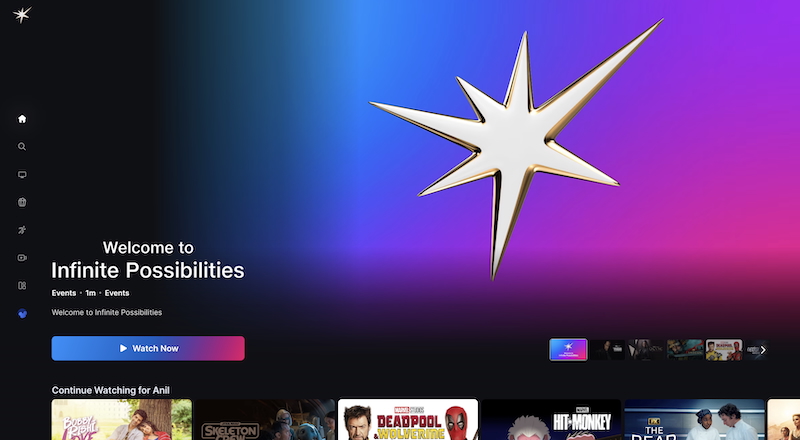
    The logo itself is a standout and can have several interpretations. Here’s two: a star doing a Swan Lake like dance;  a heavenly body arms open wide ready to embrace one and all. Clearly, for those who have been so used to seeing the Disney Star and existing JioCinema logos, it  will take some getting used to. The font for the brandname is sans serif, which fits well with the star burst.

    JioHotstar’s new brand identity  created and developed by venture3 embodies its vision for boundless entertainment. The Big Bang’ symbolises the dawn of a new era, while the Ripples radiate outward, representing energy, transformation, and innovation. The background colours are tetradic (psychedelic) with bright pinks, mauves , indigos and blues being thrown in for good measure and are eyecatching and hypnotic. Step one of the battle to attract viewers won! And the tagline carries with it a lot of promise: Infinite possibilities begin here!  SparksExisting JioCinema and Disney+ Hotstar subscribers will be able to transition seamlessly to the new platform.

    The service will stream major sporting events including ICC tournaments, IPL, WPL, Premier League and Wimbledon, alongside entertainment content in multiple Indian languages.

  • IBDF board admits new members; gets Kevin Vaz as president

    IBDF board admits new members; gets Kevin Vaz as president

    MUMBAI: There’s quite a few new names sitting  atop the Indian Broadcasting & Digital Foundation following its 25th annual general meeting held in New Delhi earlier today.

    No surprises for guessing, Kevin Vaz who heads JioStar just below Uday Shankar was elected  as the president. He is also the chairman of Ficci’s media and entertainment committee. The AGM  also saw some newcomers make their way into the highest echelons of the advocacy body, the IBDF board: Prasar Bharati’s Gaurav Dwivedi, MMTV’s Jayant M. Mathew, TV Today’s Aroon Purie, JioStar’s Sumanto Bose,  and Kairali TV’s John Brittas. 
     

    theibdf office bearers

    Other senior folks  such as Culver Max Entertainment’s  recently appointed CEO Gaurav Banerjee, R. Mahesh Kumar, along with India TV boss Rajat Sharma  were  elected as vice-presidents.  I. Venkat was elected as the treasurer.

    The list of some of the board members includes: Rajat Sharma, India TV, I. Venkat, Eenadu TV, Kevin Vaz, JioStar, R. Mahesh Kumar, Sun Network, Gaurav Banerjee, Culver Max, Nachiket Pantvaidya, Bangla Entertainment, Punit Goenka, Zee Media, Ashish Sehgal, Zee Entertainment,  Sumanto Bose, JioStar and John Brittas, Kairali TV. 

    Rajat Sharma said that the IBDF will continue advocating for a regulatory framework that fosters innovation, supports creators, and ensures fair competition. “Together, we will drive the industry toward a sustainable and prosperous future,” he stated.

    Kevin Vaz  made his first address as the IBDF president highlighting that Indian content can gain international acclaim, further strengthening India’s soft power globally.

    “As we increasingly embrace technology to scale up, it is imperative that we democratize content creation so that it is not demographically or geographically limited. While India consumes content from anywhere, driven by the proliferation of 5G, smartphones, connected TVs and better pay TV infrastructure, we must ensure that opportunities to create professional content from locations beyond the current hotspots is a viable future for the industry,” he emphasised.  “The media and entertainment industry has a multiplier effect that extends to sectors like sports, creating significant opportunities for growth at scale. To ensure that this growth can be sustainable we need to look at business models rooted in equitable collaborations that foster value creation for all stakeholders across the ecosystem.”

  • Kevin Vaz speaks on the ‘Future of Video in India’ at APOS 2024

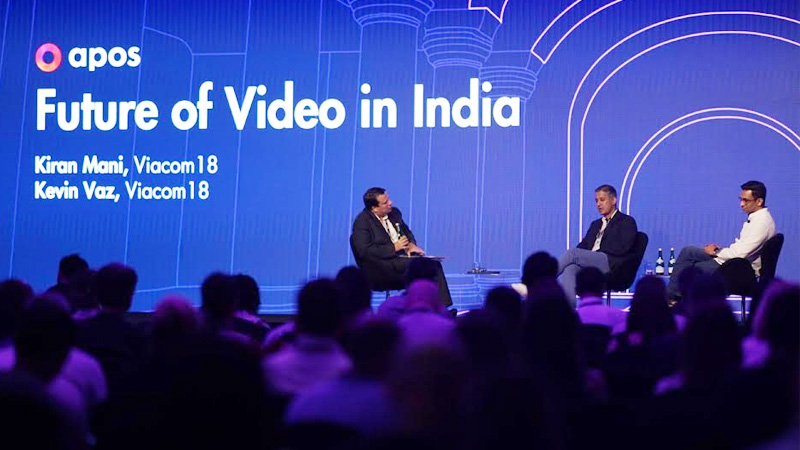
    Kevin Vaz speaks on the ‘Future of Video in India’ at APOS 2024

    Mumbai: At APOS 2024 in Bali, Indonesia, Viacom18’s CEO of broadcast entertainment Kevin Vaz shared his insights on the future of video in India.

    The global media and entertainment industry is advancing at a rapid pace, and India is no exception. In fact, India is at the cusp of an entertainment revolution, driven by technology, diverse content, and evolving consumer behaviour. And at the forefront of this revolution, leading the charge, is Viacom18. Over the last year, we’ve made significant strides not only in expanding our reach but also in reshaping how audiences consume content across the country. It’s been an exhilarating ride, and we’re just getting started.

    When I look back at the past year, I’m proud to say it’s been nothing short of transformative for us. Our first priority was assembling a world-class team with the vision, drive, and grit to execute on our ambitious goals. With that foundation in place, we made targeted investments in key brands like Colors, Colors Kannada, and Colors Marathi, and the results speak for themselves. Colors has grown by 35 per cent in less than a year, getting closer to securing the top spot in the industry. Nickelodeon, our kids’ portfolio leader, just celebrated a decade as the number one brand in its category. And in the regional space, Colors Kannada reigned as the top channel during primetime for three months, while Colors Marathi saw an astonishing 150% growth in the last three months alone, putting it in fierce competition for the second spot.

    In the non-fiction space, we’ve continued to lead with iconic properties like Bigg Boss and Fear Factor: Khatron Ke Khiladi, and we’ve added to that list with Laughter Chefs, India’s biggest comedy reality show to date. This homegrown success is a testament to our ability to create world-class content tailored to local tastes. For smaller screens and connected TVs, we launched JC Premium, bringing Hollywood’s best, top-rated web series, and 24/7 live streams of our reality shows to Indian households.

    Looking at consumption trends in India, it’s clear that audiences are more dynamic than ever before. There’s this notion that viewers are either glued to their TV sets or completely immersed in their phones, but the reality is far more fluid. A show like Bigg Boss is watched on Colors at its scheduled time, then consumed further on JioCinema’s 24-hour live feed, and even discussed on social media. This multi-screen experience is where the future of entertainment lies.

    India’s daily media consumption—combining both large and small screens—currently stands much lower than developed markets, but the potential for growth is immense. Large screens currently have around 60% penetration compared to 85-90% in other major markets, giving us significant headroom for growth. India is an ‘AND’ market, where both TV and digital are thriving in tandem, creating endless opportunities for content creators and distributors.

    Family entertainment has always been at the core of what we do, and we’ve ensured that our content seamlessly transitions between TV and digital. Bigg Boss, for example, saw 25% of its viewership last season coming from digital platforms, while some of our fiction shows are experiencing significant digital engagement alongside their TV broadcasts. It’s all about offering the consumer flexibility and choice.

    One of the most exciting trends we’re witnessing is the rise of local language content. India’s cultural and linguistic diversity is unparalleled—22 official languages and over 58 socio-cultural regions. This diversity presents both a challenge and an opportunity. Audiences today crave authenticity; they want stories that resonate with their own experiences. We are already serving content in 10 languages and aim to eventually cover all 22, making local content not just the present but the future of entertainment in India.

    When it comes to advertisers, we are uniquely positioned to deliver value across both large and small screens. Television continues to be a powerful medium, with a reach of around 900 million people in India. Given that over 95% of households have just one TV, families gather to watch together, creating shared experiences and deeper emotional connections. TV advertising remains one of the most effective ways to reach multiple demographics in one go—parents, kids, grandparents—all engaged in a single viewing experience.

    On the digital front, Viacom18 is home to the largest curated content platform in India, with a monthly active user base of around 300 million. This creates a safe, immersive environment for brands to connect with consumers, especially during drops of prime-time shows or live streaming of sports events, when engagement is at its highest. Whether it’s long-term brand building or short-term performance goals, our value proposition for advertisers is unparalleled.

    Viacom18 is at the forefront of the entertainment revolution in India – across large screens, small screens, and every format in between. We have the scale, expertise and experience to deliver results. The future of entertainment in India is bright, and we’re proud to be at the forefront of it.