Two years back, Maya Entertainment Ltd. was in trouble with two of its business verticals in the red. What followed was a restructuring and the education vertical since then has seen exponential growth to post over Rs 1 billion in FY‘09.
The studio business has also grown and Maya is in the midst of releasing its first animated movie, Ramayana The Epic.
Promoted by Bollywood filmmaker Ketan Mehta, the company went through an ownership change. Enam Securities holds 45 per cent stake, Bhukhanwala Holdings 20 per cent and Intel Capital, with three rounds of funding, around 12 per cent.
The company faces new challenges as it scales up and plans to raise funds.
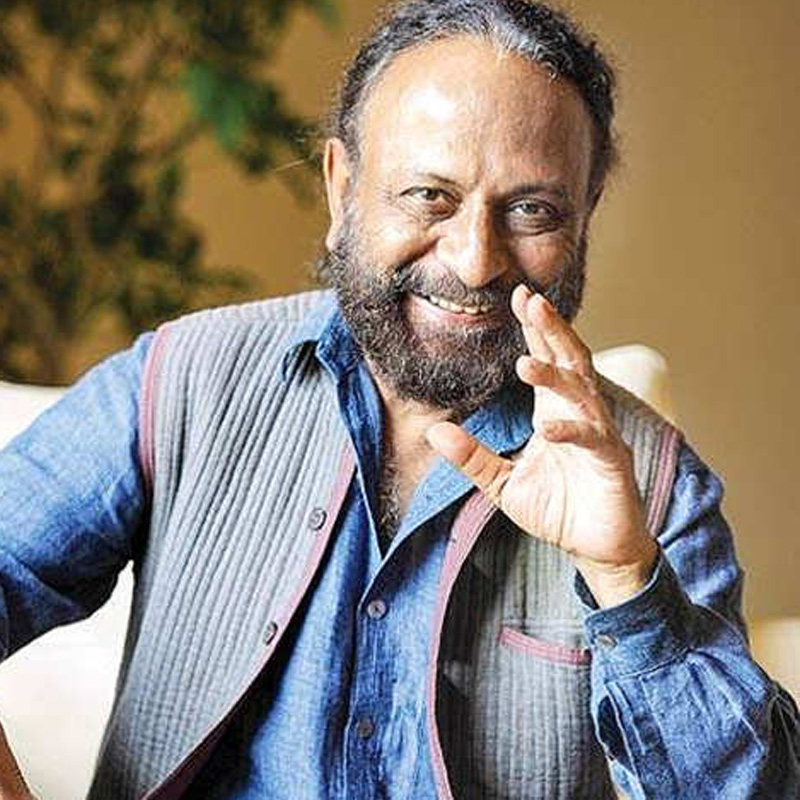
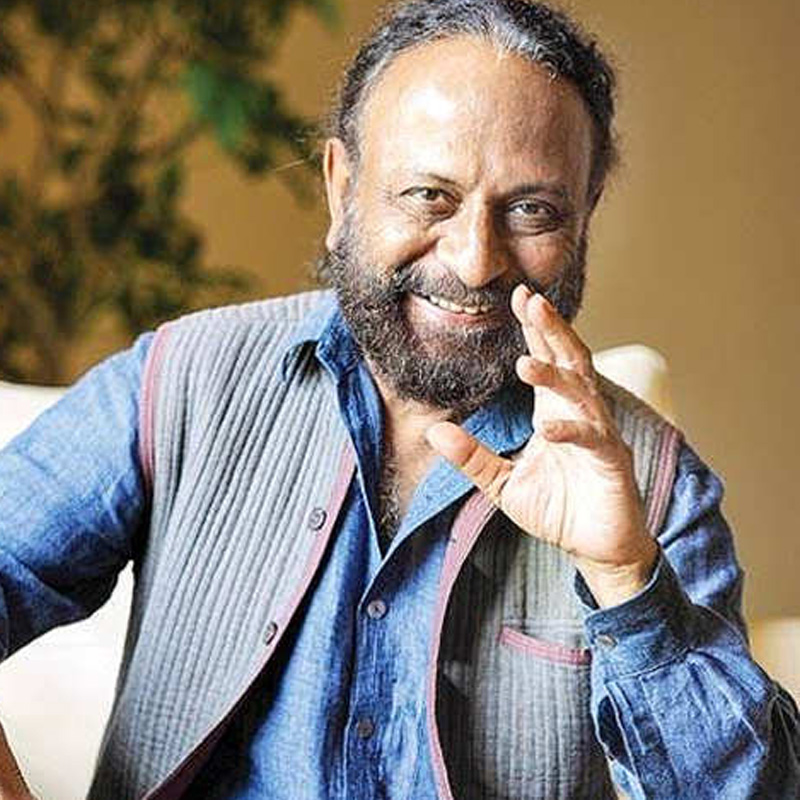
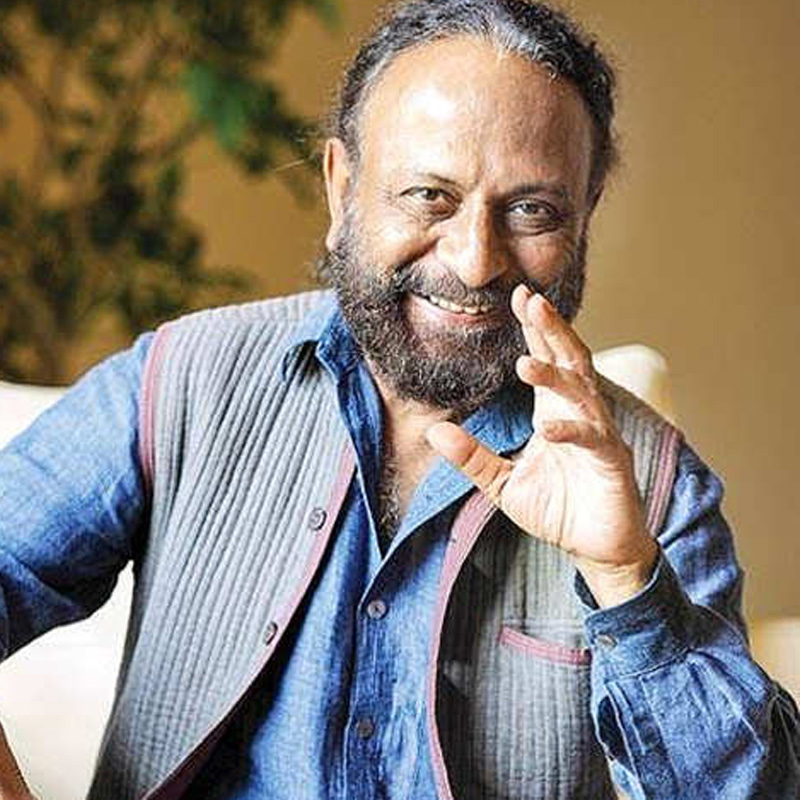
In an interview with Indiantelevision.com, Maya MD and CEO Ronald D‘Mello, who is preparing for a new innings, reflects on how the company managed to turn around in the last two years.
Excerpts:
When you took over as CEO of Maya Entertainment Ltd, there was a need to restructure the company. What are the measures you took?
There were substantial corporate hygiene issues which threatened the very structural stability of Maya as a company. In November 2007, we engineered a major restructuring exercise in our education vertical, risking almost half of our business, to eliminate conflict of interest positions of some of the key executives and employees of Maya, the group which went on to form a competing business. Thankfully, the exercise not only resulted in a clean and transparent Maya but also laid a strong foundation for substantial growth.
On the studio side, the challenge was both on business development and internal operational disciplines which we were able to overcome.
Did this mean that the key management of the education business changed?
We terminated 13 educational franchise centres in north India which collectively contributed to 50 per cent of our turnover. The result was extremely satisfying. We were able to grow the education vertical billings by over 300 per cent over the last two years to make it an over Rs 1 billion activity in billing in FY‘09. In terms of number of franchise centres, we grew from 38 ( at the end of the restructuring exercise in 2007 ) to 70 by June 2009.
We consolidated our position in animation education to become the largest player in career-oriented animation education. We created an Advisory Board comprising the stalwarts of animation industry to build a constant interaction between industry and academia so that the courses we offer are suited to industry needs. We converted the outlook of our courses from software to creativity- focussed. We also created a product ( MAAC Junior Toon Club ) for young students in the age group 7 to 14 as a creative enrichment platform to integrate with art and craft curriculum of schools across India. Association with IGNOU for degree program in animation and VFX was also a feather in our cap during this period.
And on the studio front?
We went on to have the most productive year in FY‘09 where the total output between international service work, own IP and domestic service work was amongst the largest in Indian animation studios.
When you joined two years back, animation was on a high-growth curve. Did that help Maya ride the tide in any way?
All industries go through highs and lows. Challenge is to get the best out of it when the industry is on a growth curve and to pro-actively future proof your business for industry lows. We did have the benefit of industry highs as much as everyone else in the segment did. But our growth probably outperformed industry and competition.
are the challenges the Indian animation industry faces today as the global economy is in the midst of a downturn?
I would rather not get too influenced by the downturn in global economy as it is the ‘uncontrollable” factor all are faced with. In isolation, I see Indian animation industry far slower than the hype it has created for itself. If we believe the global animation and VFX consumption numbers at over $60 billion, what India has managed to get in terms of service outsourcing is abysmally low even if you assume content production constitutes 10 per cent of the global animation consumption pie. Also, the demographics of India population indicate a good future for more youth friendly animation, gaming and VFX content.
Unfortunately, most of the early entrants in Indian animation production space lack a long term strategy to sustain market penetration and growth over a longer period of time. Even the development of talent has suffered due to this short term approach. If you see the IT sector and how it grew over the years, you will find sustained long term stay over decades by some of the dominant players to make India the hub of IT services and create a large industry today.
‘Indian animation studios may not be in the position of strength, both creatively or in market reach, to be up on the value and risk chain on co-productions‘
Several companies have ventured into animated movies for the domestic market as a scale up strategy. But most of them have flopped at the box office. How do you think this is going to impact the business?
This is what I meant by short term approach. If anyone thought of producing an animation movie thinking it would be a huge success, it is a wrong base to start with. Animation movies, like any other movies, are not free from the risks familiar to film producers. Moreover, you have the task of playing in an unestablished segment of viewership. I am afraid it would take few more movies to fail and learnings from those taken, before we see the domestic industry evolving in animation. Till someone takes that risk and has a sustained agenda to create this segment, it would be hard to imagine the domestic industry to mature.
In a period of hype, even Disney entered into a joint venture with Yash Raj Films for an animated movie Roadside Romeo when one thought they didn‘t require a local partner to aid them in what they are best at. Since the movie bombed, this may discourage international companies making animated movies for the Indian market. Are we entering a different phase of the business cycle?
I don‘t think any international studio considers failures as end of the road. I am sure Disney and Yash Raj Films have drawn considerable learnings from their first attempt which will only help them to make it better next time, both in terms of content creation and market exploration.
Is getting into co-production arrangements for international movies and TV series a more viable business model?
It all depends where you place yourself in the value and risk chain. If you are the last man standing in the chain, no international co-production can change the game for you. I am afraid, Indian studios may not be in the position of strength, both creatively or in market reach, as of now to be up on the value and risk chain on co-productions. Hence, it may be a while before it happens to its spoken potential.
What are the steps you took at Maya to prepare the company for producing an animated movie?
Ramayana The Epic, Maya‘s first animated film, was already in its baby steps when I joined. We decided to provide a development budget to the director and team so that the idea can be taken to a script, few key character designed and a three-minute sample fully animated and composed sequence developed. At the end of this exercise, we were fully convinced that the team can deliver an astounding product and decided to move on.
What is the budget for Ramayana and how have you de-risked the project?
We would have loved to have some co-producer coming in through its production phase. But the overall economic slowdown and Indian film ( specifically animation films ) sector dampness did not help us. The film is now complete and being shown to potential distributors.
How much does Maya depend on outsourced projects? How does it scale up its studio business?
Maya is predominantly a service studio, barring the first IP we produced over the last year. I cannot really comment on the future strategy for the studio scale up as it would be now left for Maya board to drive the company.
Are there too many animation companies fighting for too small a pie?
The pie is big, but someone needs to take a really long term view of the potential and have sustained existence to bear the desired fruit. Meanwhile, I see international animation producers and studios setting shops in India for captive backend facilities which will open new avenues for talent.
How tough is it for the small-sized animation companies to raise capital and survive?
Raising capital is dependent on the industry perception, company fundamentals and overall investment market climate. I presume in the present scenario it would be difficult for an animation production player to raise funds as none of the above three are in favour. Education industry will attract investor interest for businesses which have good fundamentals and clear future focus.
Is Maya planning to raise funds? How much, how and for what?
Yes, we have been on it since last year. But I can‘t give you more details.
You are quitting Maya at a time when it has still to grow. What do You think is the future of such companies?
I suppose I cannot comment on this. I am sure Maya will be able to attract the next anchor and drive the business forward.
You are quitting Maya at a time when it has still to grow. What do You think is the future of such companies?
I suppose I cannot comment on this. I am sure Maya will be able to attract the next anchor and drive the business forward.
How tough is it for the small-sized animation companies to raise capital and survive?
Raising capital is dependent on the industry perception, company fundamentals and overall investment market climate. I presume in the present scenario it would be difficult for an animation production player to raise funds as none of the above three are in favour. Education industry will attract investor interest for businesses which have good fundamentals and clear future focus.
Is Maya planning to raise funds? How much, how and for what?
Yes, we have been on it since last year. But I can‘t give you more details.
You are quitting Maya at a time when it has still to grow. What do You think is the future of such companies?
I suppose I cannot comment on this. I am sure Maya will be able to attract the next anchor and drive the business forward.