Tag: Keshav Prasad Maurya

  • From UP with love: Live Times XChange fires up India’s engines of growth

    From UP with love: Live Times XChange fires up India’s engines of growth

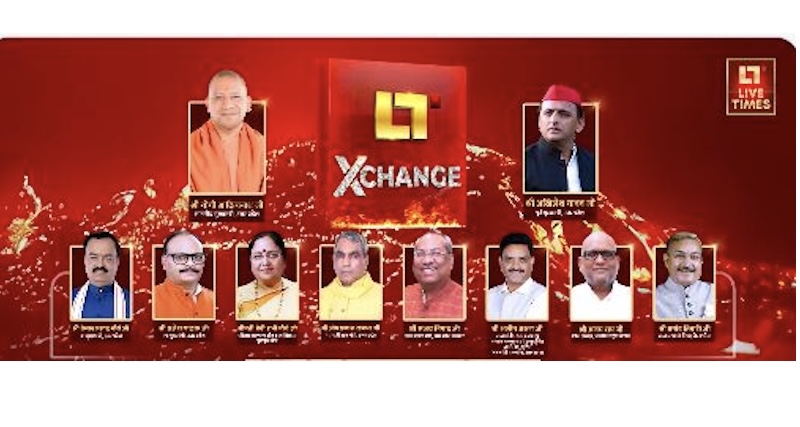
    MUMBAI: The debut edition of Live Times XChange, a flagship forum from India’s first global multicast news hub Live Times, landed in Lucknow with the energy of a start-up and the weight of a summit. With top ministers, rival netas, and sharp-shooting bureaucrats in attendance, the conclave turned into a masterclass on how India’s rise begins at the state level.

    At the centre of it all was Uttar Pradesh, positioned as India’s breakout growth story and a live case study on how good governance, strong policy, and people-first programmes can turn potential into performance.
    “This is not just the land of possibilities anymore. UP is now a model of success,” thundered chief minister Yogi Adityanath, outlining his vision to make the state a $1 trillion economy by 2029. With Rs 40 lakh crore in investment proposals, expressways zipping across districts, and the Mahakumbh pulling in 66 crore visitors, UP, he said, is no longer waiting its turn — it’s leading the charge.

    Former chief minister Akhilesh Yadav, playing both the critic and the statesman, praised the event for backing “constructive journalism” and urged unity in the wake of the Pahalgam terror attack. He also took a dig at delayed projects and reminded the audience of metro lines and roadways launched during his tenure.

    Adding further heft were deputy chief ministers Keshav Prasad Maurya and Brajesh Pathak, alongside Baby Rani Maurya (women’s welfare), Asim Arun (social justice), and Ajay Rai, president of the UP congress. Baby Rani Maurya, with 95 lakh SHGs under her belt, said women were no longer waiting for empowerment — they were earning it.

    Live Times founder Dilip Kumar Singh called the event a “defining moment for India’s future”, noting that “when states thrive, the nation soars”. He positioned XChange as a bridge between policymakers and citizens, built on the bedrock of facts, not frills.

    The conclave didn’t just talk policy — it sparked purpose. With sessions covering caste inclusion, women’s safety, local industry and jobs, XChange set the tone for what public discourse should sound like in a new Bharat: tough, topical, and totally democratic.

    Next stop? More states, more voices, and more action. Because when growth is a team sport, XChange is where the players meet.
  • Navbharat Ka Mahakumbh charts India’s cultural & economic roadmap

    Navbharat Ka Mahakumbh charts India’s cultural & economic roadmap

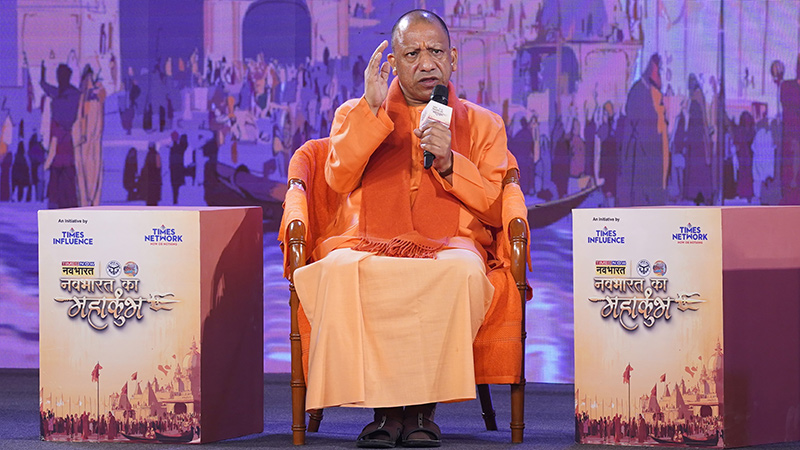
    MUMBAI: If spirituality meets strategy, and tradition fuels transformation, then ‘Navbharat Ka Mahakumbh’ was the place to be. Hosted by Times Now Navbharat, the conclave turned Lucknow into the epicentre of discussions on culture, economy, and governance, proving once again that India’s past and future walk hand in hand. With a power-packed lineup of political leaders, industry stalwarts, and spiritual icons, the event placed the Mahakumbh’s global significance under the spotlight while outlining a vision for India’s growth.

    From policy and infrastructure to tourism and faith, the conclave unpacked the synergy between tradition and modernity. The event featured Uttar Pradesh chief minister Yogi Adityanath, deputy chief minister Keshav Prasad Maurya, tourism minister Jaiveer Singh, and spiritual leader Dhirendra Krishna Shastri, among other dignitaries. With high-impact discussions, the conclave provided a blueprint for cultural diplomacy, economic advancement, and sustainable development.

    Addressing the audience, Adityanath emphasised how India’s rise as a global power is deeply tied to its cultural and spiritual strength. He pointed to the Mahakumbh’s economic impact and the state’s commitment to reviving sacred sites, stating, “Sambhal, once plagued by power theft, now stands as a beacon of historical and religious significance. Our government is dedicated to reviving these sacred sites—not just as places of worship but as symbols of India’s rich legacy.”

    On India’s global cultural influence, he remarked, “The President of Indonesia, the world’s largest Muslim-majority country, proudly acknowledges his Indian ancestry. Indian leaders should take inspiration from this rather than dividing communities through appeasement politics. The Indian Constitution ensures justice and equality, and our government upholds ‘Sabka Saath, Sabka Vikas’ as its guiding principle.”

    Discussing infrastructure advancements, Adityanath highlighted major developments ahead of Mahakumbh 2025, including 14 new underpasses and flyovers, expansion of the civil terminal, and 5,000 additional acres allocated for parking.

    With 16 crore devotees already taking the sacred dip at the Sangam, he called it a “moment of global faith and unity”—even adding a cheeky political jab, “Even those who once dismissed India’s traditions are now taking the holy dip. Congress president Mallikarjun Kharge may not be here yet, but he will come sooner or later.”

    Maurya dismissed claims that the Mahakumbh was a political spectacle, emphasising its centuries-old spiritual significance. He criticised past administrations, stating, “The Kumbh is not a BJP event—it is an event of faith. Unlike in 2013, when mismanagement plagued the festival, this government has ensured its smooth execution under PM Modi and CM Yogi’s leadership.”

    Singh highlighted Uttar Pradesh’s rise as a global spiritual tourism hub, stating, “What was once a gathering of saints is now a global celebration. The world is watching how Uttar Pradesh manages this massive event with precision and peace. Our vision goes beyond Mahakumbh—we are driving long-term investments in eco-tourism, spiritual tourism, and rural tourism to create sustainable growth.”

    The event wrapped up with discussions on how governance, spirituality, and industry can fuel India’s economic and cultural aspirations. As Uttar Pradesh cements its position as a spiritual and economic powerhouse, the Mahakumbh is proving to be more than a festival—it is a movement redefining India’s identity on the world stage.