Tag: Keerat Grewal

  • India streams ahead with 601 million OTT users in Ormax 2025 report

    India streams ahead with 601 million OTT users in Ormax 2025 report

    MUMBAI: When it comes to streaming, India is no longer buffering, it’s booming. Ormax Media has unveiled the fifth edition of The Ormax OTT Audience Report: 2025, pegging the country’s OTT universe at a staggering 601.2 million viewers (60.12 crore), or 41.1 per cent of India’s population.

    The report, based on a robust survey of 15,600 respondents across urban and rural India in June and July 2025, defines an OTT audience as anyone who has watched at least one online video free or paid in the past month. While the audience base grew by 10 per cent year-on-year, the rate is slightly slower than the 13–14 per cent surge in 2023 and 2024.

    Paid subscriptions are also gaining ground, with 148.2 million active subscriptions (including telecom bundles and aggregator deals) recorded in the report. Meanwhile, the most dramatic growth has come from the living room: India’s Connected TV user base now stands at 129.2 million, translating to 35–40 million homes, marking a jaw-dropping 87 per cent jump in just a year.

    Ormax Media Founder & CEO Shailesh Kapoor said the Connected TV surge was a turning point: “India has long been regarded as mobile-first, but this sharp rise in CTV usage signals a paradigm shift in viewing behaviour.”

    Since its launch in 2021, the Ormax OTT Audience Report has become the industry’s go-to yardstick. This year’s edition goes further, adding fresh parameters on time spent, preferred languages, content formats, and media habits. Ormax head of business development (streaming, Tv & brands) Keerat Grewal said these updates were driven by industry feedback: “The 2025 edition widens the scope, complementing business and monetisation insights with a richer picture of content consumption.”

    The full report, available on subscription, is aimed at streaming platforms, advertisers, media agencies, investors, and production houses, offering a data-backed lens on the ever-expanding OTT ecosystem.
     

  • Ormax Media plays a data masterstroke with OTT sports tracking tool

    Ormax Media plays a data masterstroke with OTT sports tracking tool

    MUMBAI: In a country where 678.2 million people tune into everything from cricket to kabaddi, Ormax Media has decided it’s time the scoreboard reflected more than just runs and goals. The media insights powerhouse has launched Ormax Sports Track, a syndicated audience research tool built to measure the engagement and marketing impact of sports tournaments on OTT platforms right from the announcement press release to the final whistle. Designed for both streaming platforms and sports leagues, it tracks four key parameters Buzz, Reach, Appeal and Potency giving stakeholders a 360° view of audience sentiment over a tournament’s entire run.

    The methodology is as rigorous as a DRS review. Every week, 600 regular OTT sports viewers split evenly between metro and non-metro markets are surveyed online, with the sample aligned to The Ormax Sports Audience Report 2024. Subscribers receive two data deliveries a week, a Tuesday mid-week report and a Friday wrap-up to act fast on shifting trends, test marketing muscle, and tweak strategies in real time.

    “OTT platforms now have a powerful subscription-based tool to benchmark the impact of their sports campaigns against industry-wide trends,” said Ormax Media head of business development for streaming, television & brands Keerat Grewal. “It’s about integrating audience tracking with strategic insights to drive subscriptions, optimise spend, and stand out in a crowded sports landscape.”

    With OTT players investing heavily in sports properties from cricket and football to tennis, wrestling and beyond Ormax Sports Track could be the independent, data-backed umpire brands need to call the big shots, measure ROI, and ensure their campaigns hit the sweet spot every time.

  • Old Hindi TV shows make a comeback to light up primetime again

    Old Hindi TV shows make a comeback to light up primetime again

    MUMBAI: Ready for a trip down Tele‑vision Lane? Indian TV networks are reaching for the rewind button, dusting off iconic serials from the 90s and 2000s and re-hashing them with a modern twist. From crime procedurals to kitchen politics, old favourites are back to reclaim viewer loyalty, and early signs suggest it’s working. From Kyunki Saas Bhi Kabhi Bahu Thi and CID to Bade Achhe Lagte Hain, broadcasters are betting big on nostalgia to revive TRPs. These revamped shows began dropping between December 2024 and July 2025 CID 2 returned last December, Bade Achhe Lagte Hain 4 launched in June, and Kyunki 2 is all set to make  its grand comeback come 29 July. 

     Why the flashback fix? For starters, the 25–45 age group grew up with these shows, making them more than just content, they’re memories. Channels are cashing in on this emotional bond to draw back viewers amid the OTT onslaught. Legacy titles offer not just a TRP rescue but a cost-efficient revival strategy complete with ready sets, familiar faces, and low marketing spends. As a source at Star India put it, it’s a smart way to “mitigate screen fragmentation.” Plus, the pandemic proved nostalgia’s power when Ramayan and Mahabharat re-aired, they smashed viewership ratings records, outpacing even fresh content.  

    CID

    Ormax Media head of business development for streaming, TV & brands Keerat Grewal said:  “Over the past three to four years, shows with strong protagonists such as Anupamaa, Yeh Rishta Kya Kehlata Hai, Ghum Hai Kisi Ke Pyaar Mein, and Kumkum Bhagya, have managed to sustain high viewership even across multiple leaps. This has been largely driven by the strong emotional equity their lead characters hold. The shows have skillfully introduced a new generation of characters who inherit familiar personality traits while addressing more contemporary issues, allowing the audience to feel a sense of continuity and evolution. 

    “The growing preference for shows with known characters and familiar storylines is not just a trend – it’s deeply rooted in how the human brain works. Neuroscience research shows that nostalgia and familiarity activate the brain’s reward centers, triggering comfort, trust, and emotional safety. Audiences are neurologically wired to return to content that evokes positive memories or past emotional resonance. That’s precisely what the return of a show like Kyunki Saas Bhi Kabhi Bahu Thi will tap into.”

     Kyunki Saas Bhi Kabhi Bahu Thi

    Based on Ormax’s extensive tracking in the HGEC category, we know that the Kyunki brand still holds strong equity among viewers today. This is reflected in the exceptional performance of the show’s new promo on our proprietary awareness tracker Ormax Showbuzz. Within just two days of the promo’s release, the show has recorded unaided awareness levels typically seen only after three to four weeks of sustained marketing in this genre. The data underscores the power of nostalgia, combined with trusted storytelling and iconic characters, to drive early interest and engagement. 

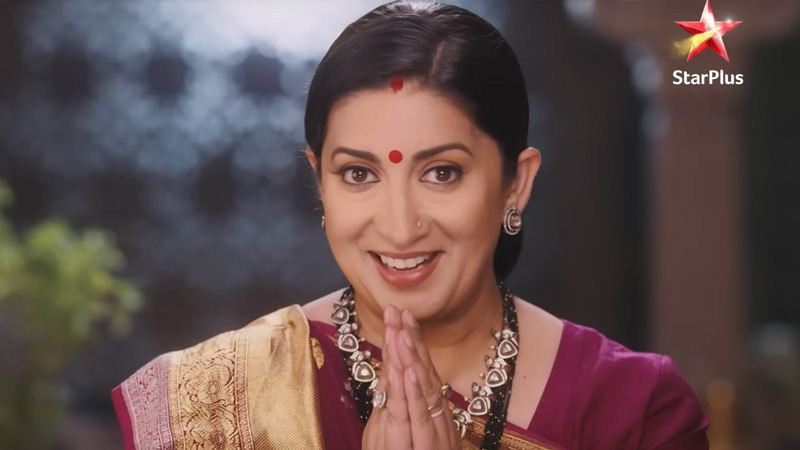
    Kyunki Saas Bhi Kabhi Bahu Thi (2000–2008) is set to return with Smriti Irani reprising her iconic role of Tulsi on Star Plus. CID (1998–2018) made its way back in December 2024 with most of the original cast. Bade Achhe Lagte Hain 4 debuted in June 2025, introducing a next-gen romance against a familiar emotional backdrop. Also making a play for comeback glory: Shaktimaan, slated for an audio reboot and a blockbuster film starring Allu Arjun; Aahat, the spooky staple now re-airing nightly; and evergreen titles like KhichdiOffice OfficeShrimaan Shrimati and Ramayan, all back on air or rumoured to be. 

    Bade Achhe Lagte Hain

    A JioStar spokesperson said, “Bringing back a show like Kyunki Saas Bhi Kabhi Bahu Thi is not just hinged on nostalgia, it is a strategic storytelling move designed for today’s viewers. At Star Plus, we see legacy IPs as powerful cultural assets that can be reimagined to reflect today’s evolving values. By blending familiarity with freshness, we aim to bring together households, unite generations, spark new conversations and reaffirm the enduring relevance of stories rooted in family, identity, and resilience.” 

    A source at Balaji Telefilms revealed that the decision to bring back Kyunki wasn’t an easy one. The creator Ekta Kapoor initially resisted, reportedly saying, “You can’t compete with nostalgia. Why shake it up?” 

    One of the reasons she said yes, sources close to her say, is the creative challenge to make it connect with today’s evolved audience and make an impact by tackling issues which don’t find their way into the current roster of shows on air. (On a lighter note, it will give Balaji Telefilms an opportunity to take the show past a record-breaking 2,000 episodes; remember, it was taken abruptly off-air in its 1,833rd episode). 

    The clincher for the channel and OTT was  not just ratings, it was legacy. Internal research commissioned had once shown that Kyunki helped amplify women’s voices in Indian homes. It tackled domestic abuse, ageism, and marital consent long before these were TV buzzwords. 

    The reboot, sources said, is less about chasing numbers and more about “reclaiming the power to reach millions and change mindsets.” 

    Sources familiar with the strategy at Star noted that Kyunki’s return serves both sentiment and business. “Broadcast reach is still far greater than OTT,” one executive explained. “Advertisers too have bought into the show because of its familiarity, going by the  sponsors who have been tied up: Procter & Gamble (a classic soap advertiser), Colgate and Fortune Oil.” 

    They added that older viewers with their own families who first watched  shows such as Kyunki as youngsters or young adults or are now settled, have disposable income, and more free time.  “This group is now reachable again especially  in slots like 10:30 pm,” said she. 

    With KyunkiCID and Bade Achhe Lagte Hain leading the charge, the revival roster is far from done. Insiders suggest shows like NaaginFIR, and Shrimaan Shrimati could be next in line. Meanwhile, connected TVs and Fast (free ad-supported streaming TV) channels are helping extend the reach of these classics into smaller towns and rural households, where smart TVs and budget broadband are becoming the norm. 

    Indian TV isn’t stuck in a time loop, it’s cleverly remixing the past. This wave of strategic nostalgia blends cultural memory with broadcast savvy, reminding us that some stories never really go out of style. In fact, they just get retold with better twists, lighting, cast and production values.

  • From solitude to shared screens: How connected TVs Are changing SVOD in India

    From solitude to shared screens: How connected TVs Are changing SVOD in India

    MUMBAI: Picture this: you’re slouched on the couch, watching the season finale of your favorite show, but the room feels hollow. No one to laugh with, no one to argue about the plot twist. Feels a little dull, doesn’t it?

    You’re not alone—literally. A new wave of co-viewing, driven by Connected TVs, is revolutionising how India engages with subscription video on demand (SVOD) platforms.

    Ormax Media’s latest SVOD audience report 2024 reveals a seismic shift in urban India’s viewing habits. With insights from 3,000 subscribers, the report paints a vibrant picture of a market where language diversity, shared experiences, and tech-savvy innovation drive customer loyalty and growth. From couch-bound solo binging to interactive group viewing, the way Indians consume content is evolving faster than ever—and it’s bringing a mixed bag of emotions along for the ride.

    The question is: are you tuning in alone, or are you part of this co-watching revolution?

    The report highlights a stagnation in the SVOD audience base, which declined by two per cent to 150.6 million in 2024, compared to 153 million in 2023. This represents 28 per cent of India’s digital video audience, a group dominated by ad-supported video on demand (AVOD) viewers who account for 72 per cent of the market. The slowdown in SVOD growth underscores the competitive challenges platforms face in subscriber acquisition and retention.

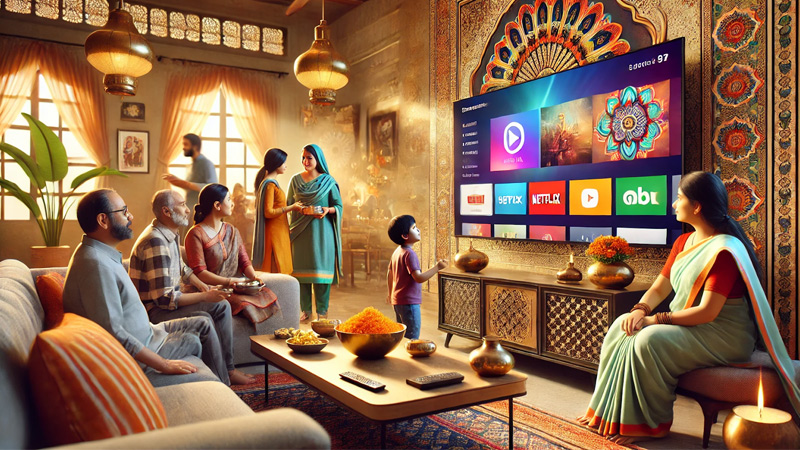
    A major revelation of the report is the growing impact of Connected TVs, with 36 per cent of SVOD audiences in urban India regularly using such devices to stream content. This trend is expanding beyond metro cities into mini metros and smaller towns, altering how content is consumed.

    The report also sheds light on the phenomenon of co-viewing, where 66 per cent of Connected TV users watch streaming content with family members. This shift calls for OTT platforms to prioritise inclusive content catering to diverse age groups and preferences, ensuring a broader family appeal.

    Ormax Media, head of business development (streaming, TV & brands), Keerat Grewal underscored the importance of these insights in shaping OTT strategies.

    “In a cluttered marketplace where subscribers typically pay for just 2-3 apps, pay OTT platforms must align their pricing, content, and marketing strategies with audience preferences,” Grewal said.

    She added, “While platforms have data on their own subscribers, Ormax Media has consistently built industry-wide insights for the Indian OTT sector. Our latest report equips platforms to craft compelling value propositions, grounded in macro-level audience behaviours and tastes.”

    Contrary to perceptions that Connected TVs are limited to metro audiences, the report reveals growing traction in smaller towns and mini metros. Grewal highlighted the potential for this shift to fundamentally reshape the type and style of content consumed on OTT platforms in India.

    The Ormax SVOD Audience Report: 2024 is now available for subscription and provides valuable data for streaming platforms, brands, and content producers. Covering viewing behaviour, language preferences, genre trends, content sampling triggers, and media habits, the report is a comprehensive resource for industry stakeholders aiming to stay ahead in a dynamic market.

  • Ormax Media launches campaign testing tool Ormax Campaign Express

    Ormax Media launches campaign testing tool Ormax Campaign Express

    Mumbai: Media analytics firm Ormax Media announced the launch of Ormax Campaign Express, its campaign testing tool for across theatrical, streaming and television categories. While Ormax Media has been testing campaigns for films and shows for 15 years now, Ormax Campaign Express brings with it the capability to provide results within an express timeframe of just four days, hence providing a much-needed solution to the dynamic landscape of entertainment marketing, where campaigns are often finalized just days before launch, making conventional ad testing approaches infeasible.

    The tool forecasts key business metrics for each category, i.e., first-day box office for films, first-weekend viewership for OTT shows, and first-week viewership for television. Combined with asset-level likability and qualitative feedback on campaign elements, Ormax Campaign Express delivers holistic recommendations to maximise audience delivery for entertainment campaigns.

    Ormax Media head – business development (streaming, TV & brands) Keerat Grewal emphasised the significance of Ormax Campaign Express, stating: “Despite the acknowledged need for it, campaign testing is sparingly used in the Indian entertainment industry due to a critical constraint – insufficient time for testing. Ormax Campaign Express acknowledges this challenge by providing our business partners with results and action points within a timeframe of just four days.”

    Ormax Media head – business development (theatrical) Sanket Kulkarni highlighted the tool’s potential impact on theatrical releases, stating: “In times of content clutter, reduced attention spans and discerning audience behaviour, a good trailer is more important than ever before. The first reaction of the audience to the teaser or the trailer typically sets the level at which the film will open. All secondary assets can only have an incremental impact of not more than 10-15% at best. With Ormax Campaign Express, we can now deliver results of trailer testing, as well as evaluation of trailer options, in line with the industry’s requirement of quick decision-making.”

    Ormax Media head – content & campaign testing Mitesh Thakkar spoke about the company’s rich experience in campaign testing, stating: “With over a decade of experience in testing 100+ campaigns across domains, we have developed robust metrics and benchmarks to test campaigns of new films, OTT shows and TV shows. With Ormax Campaign Express, we hope to make this expertise available to those business partners who have not been able to use it earlier because of constraints of time.”

    Ormax Campaign Express is now available for use to all film studios, production houses, OTT platforms and TV channels.


  • The Ormax OTT Audience Report: 2023 estimates 13.5% growth in India’s OTT audience

    The Ormax OTT Audience Report: 2023 estimates 13.5% growth in India’s OTT audience

    Mumbai: Media consulting firm Ormax Media has released the latest edition of India’s largest audience research to size the OTT universe in the country, titled The Ormax OTT Audience Report: 2023. The research, based on a sample size of 12,000 across urban and rural India, was conducted from July to September 2023.

    Ormax Media released select findings of the report, which reveal that the Indian OTT audience universe is currently at 481.1 Million (or 48.11 Crore) people. This translated into a penetration of 34%. The report defines an OTT audience who watched at least one online video (free or paid) in the last one month. The report breaks down this universe by gender, age, NCCS, pop strata, states, and cities.

    Speaking about the significance of the report, Ormax Media business development head (streaming, TV & brands) Keerat Grewal said, “The latest edition of our annual report reveals that after the upsurge in the Indian OTT market during the pandemic years of 2020 and 2021, the growth has settled down at more moderate levels. The Indian OTT audience base grew 20% from 2021 to 2022, but has grown only 13.5% over the last one year, highlighting that the category is now past the peak growth phase it witnessed in the two preceding years.”

    The report also reveals that there are currently 101.8 Million active paid (B2C) OTT subscriptions in India, across 36.4 Million SVOD (B2C) audiences, i.e., an average of 2.8 subscriptions per paying audience member. B2C subscriptions in the report refer to subscribers who have taken a membership directly with the OTT platform, in contrast with B2B subscriptions, which are via telecom packs offered by various operators. Mumbai, Delhi and Bengaluru are the top 3 cities on paid subscriptions, with more than 6 Million active paid subscriptions each.

    Elaborating on the findings, Grewal said, “The extensive data in this report can help OTT platforms and associated agencies take more informed strategic decisions in areas like pay vs. free strategy, TG and market selection, content and communication strategy, revenue planning, etc. Ormax Media continues to stay committed to the idea of helping the Indian media & entertainment industry use data and analytics towards building more profitable and consumer-centric businesses.”

    The full report is available by subscription for streaming platforms, production companies, media agencies and other companies associated with the OTT category in India.

  • Ormax Media launches audience analytics tool for TV channels

    Ormax Media launches audience analytics tool for TV channels

    Mumbai: Ormax Media has announced the launch of a new audience analytics tool, Ormax Televate. It is designed to help TV channels in achieving viewership growth by identifying a focused and consumer-centric strategy based on insightful data on parameters built through Ormax Media’s 13 years of work in the television industry in India, said the media consulting firm in a statement on Tuesday.

    “TV channels make various efforts in the areas of content, marketing, branding, distribution, acquisition, etc. to increase their viewership. However, these initiatives are often like hit-and-trial, and a lot of time and resources are spent on activities that may have incremental value at best,” stated Ormax Media founder & CEO Shailesh Kapoor. “Ormax Televate will use consumer data, advanced analytics, and our deep expertise in the television domain to help channels identify the most critical aspects of their business that must be fixed from a viewership perspective. These are the only things that the leadership team should spend their time on.”

    Ormax Televate has two stages and it currently covers the urban Indian market, addressing 157 channels in the industry in 36 genres across languages. The tool is available for GEC, films, news, kids, music, and infotainment genres across all major Indian languages.

    In the first stage, a TV channel commissioning a project will get access to syndicated data that maps their channel and its competition on strategic parameters related to awareness, brand performance, and category needs. Making use of its extensive body of work, Ormax Media has identified 172 viewership barriers that channels may potentially face. With the help of an algorithm up to 15 barriers that are most relevant to the channel in question will be identified.

    In the second stage, strategic analysis, content and brand analytics, and qualitative research will be used to identify three priority areas that the channel must focus on to increase its viewership. For each of these areas, Ormax Televate will recommend a specific and actionable plan.

    “TV channels conduct a lot of ongoing consumer research to build their consumer understanding, over and above the rating data available to them. However, this often leads to data overload where there’s too much information available but very little clarity on how to process and action it,” said Ormax Media – partner Keerat Grewal. “Ormax Televate is an audience analytics engine that cuts through this information clutter to identify three priority areas a TV channel must focus on to achieve sizable viewership growth while laying out a detailed strategic roadmap for each of them.”

  • English GECs eye greater ad share with mass appeal formats

    English GECs eye greater ad share with mass appeal formats

    Mumbai: The English GEC genre accounted for less than one per cent of TV viewership and ad volumes in 2020, according to Broadcast Audience Research Council (BARC) India. TV broadcasters hoped that the genre might grow subscription revenues post the implementation of the new tariff order (NTO). However, the pandemic struck before the TV viewership stabilised. With OTT platforms luring away their core audience with original content, some channels are now looking at massy shows to attract new audiences.

    In 2020, popular English movie channels HBO and WB, GECs AXN and AXN HD, and infotainment FYI TV18 were shuttered. The viewership and advertiser support for the English GECs dwindled as global content pipelines were disrupted, stalling fresh programming. Most English GECs acquire pre-produced content which includes international sitcoms, reality TV, and even movies that are packaged for TV viewers in India.  

    “English general entertainment category has been impacted severely post NTO implementation which has resulted in multiple channels within the genre going off-air. All these factors, along with the regulatory changes, have been a double whammy for the English GEC in India, severely challenging its growth potential,” said Ormax Media, partner, Keerat Grewal.

    The content cost for English GECs was lower than other language GECs, as they did not have any original programming. However, that turned out to be an Achilles heel post-pandemic. When the production of English content resumed, much of it was distributed via OTT platforms that reached a global audience. These platforms paid a premium to acquire English content and thus producers were able to recoup their investment.

    “Competition for English GECs is mounting with the growing demand for OTT that makes premium English content more accessible to viewers in India. Consequently, English GECs have to dig deeper down the funnel to attract and interest viewers,” said Merren, chief operating officer, Monalisa Saxena.

    Experts also highlight that the audience for English GECs is primarily metro skewed, and that overlaps with the paid SVOD audience. Metro audiences are migrating to video on-demand platforms, following the lure of original content. Many of these audiences are unlikely to return to TV screens once they’ve formed a habit of on-demand content.

    Since subscription revenues were being claimed by OTTs, TV broadcasters looked at growing the advertising revenues for English GECs.

    Zee Café has launched massy show formats like “Chef vs. Fridge” and “Dance With Me” to grow viewership and advertising revenues. While these properties were launched on Zee Café they were also aired on other network channels to make it more attractive to advertisers.

    “English audience growth is linked to curation and creation of content that explores interest areas of the audience. Dance and cooking-based content are interest areas that Zee Cafe has explored. Across these formats, Zee Cafe has been able to drive sampling across more than 35 million audiences across the network,” said Zee Entertainment Enterprises Ltd, business head – premium channels, Karthik Mahadev.

    The strategy worked as the broadcaster was able to rope sponsors for both the shows. Brands like Haier, Lifebouy, Parle Platina Hide & Seek, Prestige, Catch Salt & Spices, The Gift Studio partnered with “Chef vs. Fridge” while Cetaphil Bright Healthy Radiance Range, Lifebuoy, L’Oreal Paris Total Repair 5, Jeevansaathi, Prestige and Yamaha Fascino 125Fi Hybrid partnered with “Dance With Me”.

    It is a win for the brands, Mahadev noted, “On English GEC SD, between 8 p.m to 9 p.m Sunday time band, 83 per cent viewership contribution comes from reality genre followed by sitcom at 8 per cent (BARC, Period Wk 1’21- Wk32’21 – Jan 2021 to YTD).”

    While these shows aired on an English GEC and were made for a premium audience, the hosts converse with the audience in Hindi or Hinglish increasing their mass appeal. This has also contributed to the popularity and reach of these shows.

    “In the longer run, regional markets undoubtedly will be the driver for growth for English entertainment. There is a whole set of audience moving from regional to English content as they become more comfortable with English as a professional, conversational language” remarked Mahadev.

  • Sincerely yours: Key to longevity in the Hindi GEC category

    Sincerely yours: Key to longevity in the Hindi GEC category

    MUMBAI: From the start of daily soaps in 2000, Hindi GEC fiction has witnessed multiple ‘eras’: From the now-notorious saas-bahu dramas in the first decade, to shows addressing societal evils and women empowerment,to family-based love stories that brought in the younger viewers. With each passing era, characters in the Hindi GEC category have become smarter, more fashionable and more progressive in their outlook. What’s interesting, however, is that characters who have managed to retain long-term popularity among the audience have one aspect common to their personalities: they are generally over-indexed on the personality dimension ‘sincerity’.

    In her brand personality framework, psychologist Jennifer Aaker identifies five dimensions to a personality –sincerity, excitement, competence, sophistication and ruggedness. Most brands will have some image associations with these dimensions, but the more enduring brands largely have one emphasised primary dimension, and optionally a secondary one.

    While originally designed for brands, the framework works equally well for celebrities and characters. In the Hindi GEC category, the one emphasised dimensionacross most long-standing popular fiction characters is the sincerity dimension. Five of the seven popular Hindi GEC characters between 2016-19 (based on Ormax Characters India Loves)had sincerity as their strongest, or a strong number two, dimension. These five characters span a width of age, profession and content genres. There’s themiddle-aged shop keeper and familyman Jethalalin a sitcom; young dentist Ishita engulfed in across-cultural family drama where she falls in love with a divorced father;the quintessential girl-to-bahu journey of Akshara; the young and quirky Pragya who marries a rock star accidentally; and the talentedvillage singing prodigy Kullfi,who moves to the city in search of her father.

    The trend continues in 2020. The undisputed success story of this year has been Star Plus’July launch Anupamaa. The show has achieved record ratingsin a challenging and disruptive Covid2019 period. The lead character of the show raced to number two on Ormax Characters India Loves within a month of the show’s launch, a new record in character popularity tracking in the last decade.

    Anupamaa’s rapid growth is a combination of various factors, such as a unique yet relevant concept (it addresses the ‘anti-family’ topic of extra-marital relationship in a very family-palatable way), strong writing and direction, and the performance by thelead actor herself. It is no surprise, however, that Anupamaa’s character too is heavily loaded on the sincerity dimension, even more than the five characters listed above.

    So why do ‘sincere’ characters strikesuch adeep chord with the audience?

    Storytelling on Indian televisionis different from films and web-series, because in serials, audience look for ideas that are important to them. They connect with characters that are ‘avatars’ of themselves. They feel their feeling, live their emotions. As a collectivistic society, most Indians value family cohesion and cooperation as a non-negotiable aspect of their identity. They take great pride, and seek comfort, in the strong emotional bonds they share with their family members. Watching stories driven by characters who reinforce family values give these shows a higher purpose beyond entertainment. 

    In this context, characters like Jethalal and Anupamaa are the quintessential Indianfamily man and Indian family woman respectively, who value their families and relationships above everything else. While the former is in a sitcom and the latter leads a family drama, it is their fundamentally earnest personalities thatendear them to the Indian value system. Coupled with good storytelling, such characters build long-term equity, engaging the audience with their journeys that fundamentally revolve around their large families in a manner that’s truly Indian at heart, i.e.,sincere!

    Story and storytelling will continue to get more progressive with time. But the cherished place characters high on sincerity have in the hearts of Indian TV audience is unlikely toweaken anytime soon.

    (The author is Ormax Media partner. Indiantelevision.com may not subscribe to their views.)