Tag: KCCL

  • OTTplay Premium and KCCL introduce combo of high-speed internet and Premium OTT content

    OTTplay Premium and KCCL introduce combo of high-speed internet and Premium OTT content

    Mumbai: In a strategic move to meet the escalating global demand for high-speed internet and diverse entertainment options, OTTplay Premium, India’s first AI-powered streaming platform, has joined forces with Kerala Communicators Cable Limited (KCCL), the largest Multiple System Operator (MSO) in Kerala and a top-ranking MSO with the largest connection base in India.

    This game-changing partnership is set to redefine the landscape of home entertainment and high-speed internet access, offering an unparalleled package that includes a 50 MBPS internet connection, a massive 4000 GB data limit, and access to 14 premium OTT platforms. Subscribers will also enjoy a rich array of content, featuring popular platforms such as SunNXT, Sony Liv, Zee 5, Lionsgate Play, Distro TV, Namma Flix, ALT Balaji, Play Flix, iStream, Fancode, Dollywood Play, Shorts TV, and Raj Digital.

    What makes this offering truly innovative is the affordable pricing at just Rs. 616, making it one of the most cost-effective and comprehensive entertainment and internet packages in the market. This partnership between OTTplay Premium and KCCL aims to cater to the growing consumer demand for high-quality content and high-speed internet at an accessible price point.

    Recently, the announcement of this partnership took place during a grand ceremony at Radisson Blu Kochi, Kerala. Key representatives from both OTTplay and KCCL teams were present at the event, marking a significant moment for the industry. This event symbolized the commitment of both entities to revolutionize home entertainment and high-speed internet services in India.

    Representatives from both sides have conveyed their enthusiasm on the announcement, stating:

    OTTplay CEO and co-founder Avinash Mudaliar expressed his excitement about this partnership, saying, “Our mission at OTTplay Premium has always been to enhance the streaming experience for our users through cutting-edge technology and a vast content library. Teaming up with KCCL allows us to extend our reach and offer a comprehensive package that combines the power of personalized streaming with high-speed internet access. We believe this partnership will set new standards for the industry.”

    Commenting on the partnership, Aboobecker Sidique, president said, “The Company adopted OTT bundled schemes previously but the tie-up with OTTplay is a full-fledged one to meet the demand of operators and customers.”

    COA general secretary KV Rajan said, “KCCL has sustained competition from big corporate giants in the entertainment industry of Kerala and launching of OTT bundling offer with OTTplay will be a new leap to retain customer base.”

    KCCL and KVBL chairman Govindan highlighted, “The growth story of KVBL in broadband as the 8th largest FTTH broadband provider in India and reiterated that it will grow further by diversification of its service offer including OTT bundling”

    KCCL and KVBL MD  Sureshkumar explained, “New attractive OTT bundled schemes with higher Mbps and attractive rate to ensure maximum market penetration.”

    KCCL and KVBL COO Padmakumar N said, “Wired broadband penetration in India is only 5% of total broadband and there is high potential for wired broadband to grow with attractive offers like OTT bundling.”

    TCCL chairman Shakeelan also attended the launching function.

    OTTPremium is proud to be the leading aggregator in the south, and this partnership adds another feather to its cap. This collaboration is expected to have a transformative impact on the way consumers experience entertainment and internet services at home. The bundled offering is now available for subscription, and both companies are confident that it will quickly become the go-to choice for households seeking a seamless blend of high-speed internet and premium entertainment.

  • KCCL signs subscription agreement under NTO 3.0

    KCCL signs subscription agreement under NTO 3.0

    Mumbai : The interconnection subscription agreement with the broadcasters was signed by MSO Kerala Communicators Cable Ltd (KCCL) in accordance with the Trai-mandated NTO 3.0 after UCN.

    Now that the Trai’s new rate order has been modified, KCCL has joined a growing group of MSOs, including Siti Cable, KAL Cables, Tamil Nadu Arasu Cable TV, and Thamizhaga Cable TV, that have agreed to negotiate interconnection agreements with the broadcasters.

    Even as the legal dispute between cable operators represented by the AIDCF (All India Digital Cable Federation) and the broadcasters continues in the Kerala High Court, there now appears to be a rift within the cable fraternity in its fight against the broadcasters regarding signing the interconnection agreements under the NTO 3.0.

    Den, Fastway Transmissions, GTPL Hathway, Hathway Digital, and other MSOs are among those that are still engaged in this conflict with the broadcasters.

    Leading three broadcasters (Sony, Disney Star India, and Zee Entertainment) cut off their signals to nearly ten MSOs on February 19 who are AIDCF members.

    Broadcasters are justifying the increase in price after a four-year hiatus. Cable operators, on the other hand, claim that the price increase is exorbitant and will raise consumers’ monthly cable bill. They have also filed numerous petitions against the amended tariff regime in the country’s high courts.

    AIDCF claims that despite the fact that the case is in court, these major broadcasters disconnected their signals.

    Meanwhile, AIDCF has warned advertisers, media planners, and ad agencies, against advertising on Disney-Star, Sony and Zee, because their recent actions have “deprived more than 25 million households across India from watching their channels since Saturday, 18 February 2023.

    The federation claimed that the 25 million homes account for nearly 35 per cent of the pay TV market in India.

    “Are you still getting the reach that you have paid for? Your advertisements are not reaching more than 200 million consumers across all states and Union Territories in India for the past three days. More than 46 billion minutes of viewing time are being lost per day across India on the largest cable networks in India including GTPL, DEN, Hathway, Fastway, In Cable, NXT Digital, Asianet, KCCL, UCN and many more. These networks cater to large audiences in HSM as well as South with dominant presence in Punjab/Haryana/ Chandigarh HP, UP Uttarakhand, Gujarat, Rajasthan, Maharashtra, West Bengal Odisha, Madhya Pradesh/Chhattisgarh, Bihar/Jharkhand, North-East, AP Telangana, Kamataka, Kerala, Tamil Nadu, etc,” said a release by AIDCF.

    The industry body warns the advertisers to take an informed decision when they advertise on any of the channels including Star Plus, Zee TV, Sony.

  • Cable TV, DTH players cautiously optimistic on Jio fiber competition

    Cable TV, DTH players cautiously optimistic on Jio fiber competition

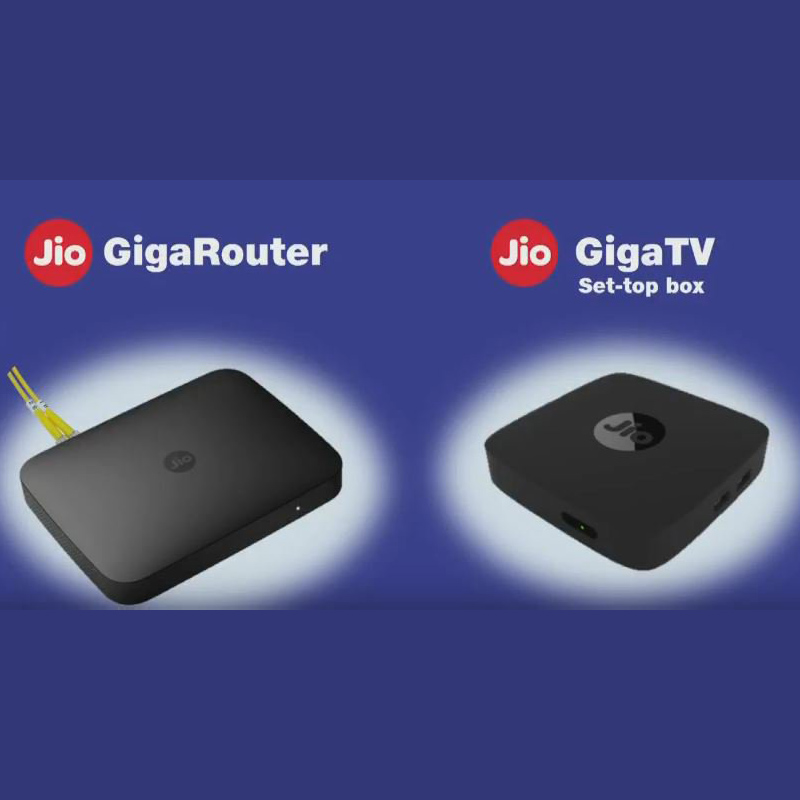
    MUMBAI: The terminator…, oops sorry, the disruptor is back. And, this time it is targeting India’s multi-billion-dollar cable TV and DTH businesses with promises to unleash high-speed fixed line fiber-based broadband services that aims to “connect everyone, and everything, everywhere” — at least in 1,100 cities to begin with. No wonder the legacy businesses are eyeing the announcement on the launch of Reliance Jio GigaFiber project with a mix of healthy skepticism and optimism.

    “It will be a challenge, but then this would increase general awareness about fixed-line broadband (FLBB) services as penetration of wired broadband is pretty low,” Kerala Communicators Cable Ltd (KCCL) CEO Shaji Mathews told Indiantelevision.com when asked about the big bang launch of Jio GigaFiber from 15 August 2018, which is also backed by Reliance Industries’ money power.

    According to Mathews, Jio GigaFiber rollout would help getting the focus back on good quality FLLB services as “over the years the industry in general had been focusing on and talking more about wireless broadband”. KCCL is an initiative of independent cable TV operators in Kerala under the guidance of Cable Operators Association (COA), an umbrella union of over 4,000 local cable operators functioning all over the southern state.

    What about the gorilla in the room? Mathews, who has spent almost a life time in the cable TV business, was of the opinion that Jio’s entry into the FLLB segment would “bring true value to real players as the capable cable ops will survive” the competition. “Moreover, as the cable companies are already on ground with existing businesses, they have an added benefit of existing fiber optics,” he added optimistically.

    Echoing similar sentiments SITI Networks Limited chief business officer Rajesh Sethi, while accepting further disruption — as in Jio fiber — was expected in the content delivery eco-system, said, “As we keep pace with changing technological trends, the industry is expected to become more multifaceted, efficient and customer centric.”

    A senior rep from another MSO company who didn’t want to be named felt that with the entry of cash-rich companies like Reliance Jio, it would help legacy players to “focus better” on the core business. “The new venture of Jio will also bring back investors’ focus on the sector, apart from increased awareness among consumers,” the MSO company exec added while talking to Indiantelevision.com.

    India’s FLBB penetration was expected to increase to 10.3 per cent from the present single digit share by year 2022 as per Singapore-based Media Partners Asia research. As content and applications were also getting heavier and denser in size gradually, there were fair chances that Jio could disrupt the market, while other players have equal opportunity too in this segment, the MPA analysis had stated some time back.

    An immediate effect of the Jio fiber project announcement was that shares of listed MSO companies like Hathway Cable & Datacom, Den Networks, GTPL Hathway and SITI Networks dropped in the early part of trading on Indian bourses. It must also be mentioned that shares of Reliance Industries too had dipped in early trading as RIL chairman Mukesh Ambani was addressing the shareholders at yesterday’s company annual general meeting.

    While the spotlight may be falling on cable operators and MSOs, there is no denying the fact that Jio GigaFiber could also impact the business plans of DTH platforms and incumbent telecom players like Airtel, Vodafone and even State-run BSNL as Jio plans to offer not only just FLBB, but also a host of other telecom and TV services, apart from smart solutions for the retail consumer’s home, in general.

    India’s DTH players, for example, felt that while fiber-based broadband services could be a good option for high-rise residential complexes in urban Indian cities, it would be a challenge to lay fiber in far-flung hilly areas or take the lines into homes in those places where houses are horizontally laid out.  

    For cities like Mumbai, Bengaluru and Gurugram, having rows and rows of high-rise gated residential complexes, fiber based broadband services was a good opportunity, but it would be an expensive affair for a row of houses, DTH operator Dish TV’s managing director Jawahar Goel was quoted by BloombergQuint as saying. He added: “For delivering the cable and DTH services, we will always have the competitive edge, as our cost is lesser.”

    Telcos like Bharti Airtel, considered India’s biggest operator in terms of market and subscriber shares, however, are expected to react to the impending Jio competition in FLLB by cutting subscription rates and handing out higher monthly data packages to consumers at reduced costs.

    Over the last few months, Airtel, for example, has been aggressively attempting to sell its high-speed digital fixed line broadband services to existing consumers in Delhi and National Capital Region, which includes areas like Gurugram and places like Vaishali and Kaushambi in Ghaziabad district and Noida — all having rows of high-rise residential complexes of various sizes with varied population.

    Meanwhile, telecom industry body Cellular Operators Association of India (COAI), which has been at loggerheads with member Reliance Jio over a slew of issues in the past, yesterday termed Jio’s fixed-line fiber broadband system as a “game changer” and said the company garnering over 200 million mobile users in a short span of time is “commendable”, according to a Press Trust of India report from New Delhi.

    “The announcements made by Mukesh Ambani (RIL chairman) have positioned RJio as an extensive technology company rather than just a telecom service provider. This is an interesting development and once the plans laid out today start taking shape, we can expect new streams of revenue to be initiated that will benefit the industry,” COAI director-general Rajan S Mathews was quoted by the wire service as having said in a statement.

    The PTI report also took note of a latest note from JP Morgan that said while there were no details yet on pricing of the upcoming optic fiber broadband service, it was of the view that given Jio’s customer acquisition strategy, the launch pricing should effectively be at a “large discount” to current broadband and set top box pricing prevalent.

  • Dual LCN helping consumers, says KCCL’s Shaji Mathews

    Dual LCN helping consumers, says KCCL’s Shaji Mathews

    MUMBAI: Kerala Communicators Cable Ltd (KCCL) CEO Shaji Mathews believes dual local channel numbers (LCN) is helping consumers and that its fate should be left to the market.

    2017 saw many channels, especially news broadcasters, raising the issue of channels broadcasting themselves on two LCNs thus creating biased ratings in their favour. Their contention was that the channel gets overarching visibility for viewers. “I don’t see any problem in dual LCN and why the government is restricting dual LCN. They need to rectify the rating system if they see some issues in the rating of a channel. Dual LCN is helping the consumer and we should leave it to the market to decide,” Mathews told Indiantelevision.com in an interaction.

    The structure of the Indian cable and satellite TV distribution market is evolving, led by digitisation of cable network mandated by the government. The Kerala cable industry has benefitted from the digitisation process with over 5000 cable operators and 50 lakh active subscribers.

    KCCL is an initiative of independent cable TV operators in Kerala under the guidance of Cable Operators Association (COA). COA is an umbrella union of local cable operators all over Kerala. KCCL has around 25 lakh active subscribers according to Mathews. The digitisation in the state was complete in March 2017.

    “In Kerala, the majority of the market is with KCCL and Asianet Cable. Apart from this, there are about a dozen small cable operators. The size of the state’s cable industry is around Rs 100 crore,” says Mathews.

    Mathews shares that the overall revenue has gone up because pay subscribers have increased. “The ARPU (average revenue per user) remains the same after the shift to digital from analogue, which is below Rs 200 in Kerala,” Mathews reveals.

    He says that small cable operators didn’t complete the digitisation on time because of various reasons such as non-availability of STBs and expecting the dates to be postponed.

    For KCCL’s first project-Kerala Vision Channel-raised a share capital of Rs 1.5 crore in 2006. The channel today covers 20 lakh homes in Kerala. Now its share capital is enhanced to Rs 10 crore with the approval of Registrar of Companies, SEBI and other government authorities. The capital outlay for the second major project is Rs 8.5 crore, 50 per cent of which has already been raised from the existing shareholders.

    There is already a cumulative investment of Rs 500 crore in the cable TV industry in the form of equipment, networking, studios and other infrastructure owned by individual cable TV operators all over the state with a consolidated turnover of Rs 250 crore per annum.

    Mathews lashed out at broadcasters who indulge in discriminative pricing. “To keep the competition going, the big broadcasters give their channel feeds to small operators for very low rates which forces us to negotiate and accept their terms and conditions.”

    The Telecom Regulatory Authority of India (TRAI) had clarified that a channel can only be present at one LCN number and the landing page would be considered as a separate one which is not allowed and TRAI has the right to investigate and take action.

  • KCBL to launch Malayalam GEC in March 2018

    KCBL to launch Malayalam GEC in March 2018

    MUMBAI: Keralavision Channel Broadcast Limited (KCBL) is all set to launch a new Malayalam satellite general entertainment channel Kerala Vision Digital. Testing began on 1 November 2017 while the commercial launch of the same is planned by end of March 2018 for the free-to-air (FTA) channel.

    Praveen Mohan is the chairman of KCBL and Raj mohan Mambra is the managing director(MD).

    Talking to Indiantelevision.com, Kerala Communicators Cable Limited (KCCL) CEO Shaaji Mathews said, ” The normal composition of this regional channel will include current affair bulletins also apart from movies, serials events, game shows and such gec content. The serials and family drama will be totally different from the current trend of glamorous hind content being dubbed into regional languages. We will emphasise on traditions, culture, family values and original talent. Further Our current affairs will be very local and relevant to the state . The channel will also cover the local Kerala events.”

    “We have tied up with some of the operators in other states to reach the Malayalam audience. There is a large number of people with roots in kerala and residing in other states and metros”, said Mathews.

    KCBL and KCCL are the two public limited companies incorporated and formed under the initiative Cable Operators Association (COA).

    COA was formed because Cable TV networks emerged in various parts of Kerala in the early 1990s as ventures of self-employment by the youth. As the cable TV industry was entering a high-growth stage nationally and networks with massive capital investment appeared on the scene, FTA channels began turning into pay channels.

    This phenomenon posed a stiff threat to the small local neighbourhood networks. It was in such a scenario that a fellowship of cable operators calling itself the Cable Operators’ Association was born. It has been functioning with remarkable foresight in the consolidating the base of small networks and helping them pool valuable resources.

    Intelsat 17 satellite is being used for the testing of the channel.

  • Shaji Mathews appointed as Kerala MSO KCCL CEO

    Shaji Mathews appointed as Kerala MSO KCCL CEO

    MUMBAI: From Gujarat, where he helped steer MSO GTPL towards its IPO, he is now headed back to his home city of Kochi in Kerala. Shaji Mathews has been appointed as the CEO of Kerala Communicators Cable Ltd (KCCL), a leading cable TV and broadband network in Kerala which is a consortium of operators who are shareholders and participate in management.

    An initiative of Kerala’s independent cable operators it works under the guidance of the 4,000 member strong Cable Operators Association ( COA), the main objective of which is to develop Kerala’s cable TV sector by building wider networks, upgrading technology, finding new avenues of activity apart from addressing various issues and challenges before the industry for and on behalf of its members.

    The company is led by the chairman Boobacker Siddique and managing director PP Suresh Kumar.

    KCCL’s website states that these cable operators have cumulatively invested Rs 5 billion in equipment, networking, studios and other infrastructure all over Kerala. The cable operators have a consolidated turnover of Rs 2.5 billion per annum. KCCL has a network capacity of 300 SD channels and 60 HD channels, and provides 240 SD channels and 28 HD channels to its two million digital subscribers.

    “KCCL has been one of the front runners in Kerala on digitisation and has received appreciation from the MIB and TRAI as well,” says Mathews. “The network derives huge strength from the dedicated team of operators who have active participation in the management. It is quite similar to the state my previous company GTPL was when I joined it four years back. While KCCL has completed its digitsation, there is a lot of scope in the area of broadband for which Kerala’s citizens have a huge appetite. My objective is to create a similar success story like GTPL with KCCL as it is poised for rapid growth going forward.”

  • KCCL launches Cardless security solution from Conax including latest chip technology from ALi

    KCCL launches Cardless security solution from Conax including latest chip technology from ALi

    MUMBAI: Conax, a leading global provider of solutions for securing digital video content distribution on all networks and devices, today announced that Kerala Communicators Cable Ltd has entered a pilot project to deploy the new Conax Cardless solution launched in September at IBC Expo. KCCL is a consortium of over 3000 independent cable TV networks in Kerala, South India. The pilot project includes an upgrade of KCCL’s existing Conax Contego™ security back-end to include support for the new Conax Cardless secure CA client. The solution consists of Conax Cardless CA and uses Coship STBs with secure chipsets from ALi Corporation, seamlessly complementing the existing card-based STB population. Coship is one of the vendors in a portfolio of licensed STB partners for the Conax Cardless offering.


    KCCL operators represent 70% of cable TV services in the southwestern Indian state of Kerala – a region with a population of 33 million people. The enhanced Conax Contego security hub will empower KCCL network operators to easily operate both Smart Card and Cardless clients and differentiate between security requirements of diverse consumer groups and content. Now KCCL will be able to offer a cost efficient solution for targeting low ARPU segments and enabling rapid digitization – as well as reducing churn.


    Through a strategic partnership with ALi Corporation, the Conax solution will provide KCCL with a highly secure Cardless solution utilizing a unique combination of hardware (security) and software security; for a revolutionary level of protection not available in pure software solutions. The secure software is executed within a purpose-built hardware protected environment (Secure Execution Environment) within the ALi chipset, the main CPU in the set-top-box level of protection. KCCL has chosen to deploy Conax security evaluated set-top-boxes from Coship. To enable rapid development of the cardless set-top-boxes from Coship and other STB vendors, Conax and ALi are providing a reference design with an embedded Conax Cardless security core.


    -Mr. Nassir Hassan Anwar, Director, KCCL, “We are pleased  to further strengthen our relationship with security partner Conax based on the Conax brand value, long experience and reliability in India, 24/7 support, flexibility of operations and open policy for STB selection. Upgrading KCCL’s security back-end to include Conax Cardless, using Ali chipsets and Coship STBs, will allow member operators to easily create new product offerings using cards or cardless clients based on varied consumer groups. The Conax solution will continue to enable KCCL operators with a future-proof, secure roadmap.”


    The combined solution will enable KCCL to capture new business in the next phase of digitization in South India, while expanding their platform for additional business models and content offerings. The Conax Contego solution will also provide KCCL with easy upgrade for integrating future offerings such as VOD, multiscreen and over-the-top content viewing.

    -Tom Jahr, EVP Products & Partner, Conax, “Conax is very proud that KCCL, a forward-thinking consortium with a unique business model and vision for the future, has chosen to partner in the Conax Cardless pilot deployment.  Our aim is to enable KCCL to benefit from the best of both worlds, employing the cardless solution for low-end video content and smart card security for premium content. With the new solution, Conax is providing KCCL with the comprehensive and flexible tools for developing secure business models and capturing future growth.”


    -Tony Chang, General Manager of International Business Unit, ALi Corporation, “Only a few months after the launch of Conax Cardless security solution at IBC including the latest generation of ALi’s secure cable STB SoC, we are proud that KCCL has chosen Conax Contego supporting both Smart Card and Cardless clients with ALi’s secure chipsets. Using the reference design provided by ALi and Conax, we are pleased that Coship was able to rapidly deploy a cardless STB, thus together we are enabling KCCL to rapidly respond to different market needs. This also further confirms the technical leadership of ALi’s secure chipset solutions in both standard and high definition, as well as the partnership with Conax on delivering cost effective cardless solutions to the low APRU segment.”


    Technical recap:

     
    · Conax Cardless is fully supported as one of the client options for the Conax Contego™ security back-end, making it easy for KCCL to expand their security hub to include cardless content distribution


    · Utilizing a dedicated security core in the new chipset technology from ALi, Conax combines hardware security and software security to place a cardless security client within the ALi chipset integrated in the STBs from Coship. As the security of the solution relies on both software and hardware security, Conax Cardless has a significant market advantage over competitors’ software solutions.