Tag: Kazakhstan

  • GoQuest gets new distribution   deals for Turkish Drama Kuma going

    GoQuest gets new distribution deals for Turkish Drama Kuma going

    MUMBAI: It’s quest to go further global has met with more success. Indian content distribution firm GoQuest Media has secured licensing deals in additional territories for it first co-production, the Turkish family drama Kuma (The Other Wife): Latvia, Georgia, Kazakhstan, Indonesia, and Kenya.

    These new agreements build on earlier sales announced at Mipcom 2024, which included Hungary, Romania, and India. The series, produced by Stellar Yapim, completed production in October 2024 and has since debuted on television.

    Further distribution deals were recently closed by co-producers VIP 2000 TV, extending Kuma’s reach to Paraguay, Peru, and Panama.

    Set against the rugged landscapes of eastern Turkey, Kuma (The Other Wife) tells the gripping story of Ceylan, a woman falsely accused of murder. Forced into becoming the second wife of Karan — the brother of the man she is accused of killing — Ceylan navigates a complex family dynamic while fighting to clear her name. The drama explores themes of love, redemption, and resilience.

    GoQuest Media, headquartered in Mumbai with offices in the UK and Vietnam, specialises in the global distribution of high-quality international dramas and scripted formats. The company’s curated catalogue includes titles featured on major platforms such as Disney+ Hotstar, Globoplay, SBS, Voyo, and Telemundo. It has a sales presence in Istanbul and the Central and Eastern Europe region.     

  • NASA Television to air launch of astronaut Jack Fischer

    MUMBAI: NASA astronaut Jack Fischer is poised for a journey of exploration and research on the International Space Station. Extensive coverage of upcoming prelaunch activities, launch and arrival will air on NASA Television and streamed on the agency’s website.

    Coverage begins Thursday, 13 April, with video of prelaunch activities in Baikonur, Kazakhstan, which will air on NASA TV through Wednesday, 19 April.

    Fischer and his Expedition 51-52 crewmate Fyodor Yurchikhin, of the Russian space agency Roscosmos, are scheduled to launch at 3:13 a.m. EDT Thursday, April 20 (1:13 p.m. Baikonur time), from the Baikonur Cosmodrome aboard a Soyuz MS-04 spacecraft. NASA TV coverage of the launch will begin at 2:15 a.m.

    The pair will travel on a fast-track, six-hour course to the space station and dock to the Poisk module at 9:23 a.m. NASA TV coverage of the docking will begin at 8:30 a.m. Once at the station, they will be welcomed by Expedition 51 Commander Peggy Whitson of NASA and Flight Engineers Oleg Novitskiy of Roscosmos and Thomas Pesquet of ESA (European Space Agency). Hatches between the Soyuz and space station will open at 11:05 a.m. NASA TV coverage of hatch opening and welcome ceremonies will begin at 10:45 a.m.

    Expedition 51 will continue work on hundreds of experiments in biology, biotechnology, physical science and Earth science aboard the International Space Station, humanity’s only microgravity laboratory.

    Fischer, a first-time space flier, and Yurchikhin, a veteran of four spaceflights, will spend more than four months aboard the orbiting laboratory before returning to Earth in early September.

  • AsiaSat 7 replaces the ageing AsiaSat 3S today

    AsiaSat 7 replaces the ageing AsiaSat 3S today

    MUMBAI: In early October 2010, Asian satellite service provider, AsiaSat, and International Launch Services (ILS) had announced a contract for the launch of the AsiaSat 7 satellite on an ILS Proton.

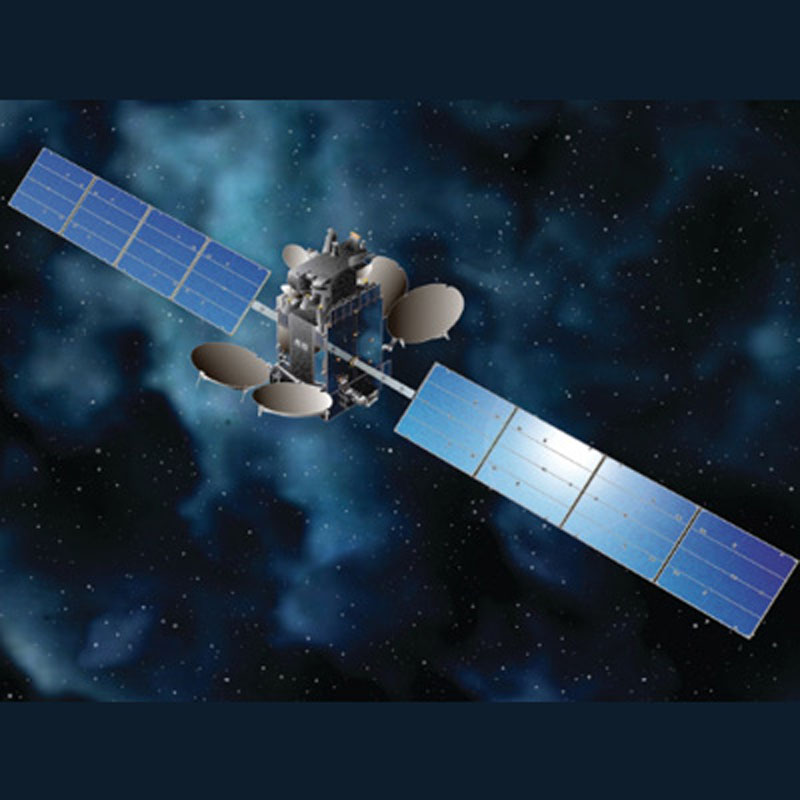
    AsiaSat 7 was configured as a replacement satellite for AsiaSat 3S, one of AsiaSat‘s flagship satellites, operating at the orbital location of 105.5°E. AsiaSat 7 will carry 28 C-band and 17 Ku-band transponders, and a Ka-band payload. Its region-wide high power C-band beam covers Asia, the Middle East, Australasia and Central Asia, with Ku-band beams serving East Asia, South Asia and a steerable Ku beam.

    According to plan, the AsiaSat 7 satellite was successfully launched in Hong Kong on November 26, 2011, on an ILS Proton Breeze M launch vehicle from the Baikonur Cosmodrome in Kazakhstan. Nine hours and 13 minutes after lift-off, AsiaSat 7 successfully separated from the launch vehicle. Over the next few days, the satellite will arrive at the geostationary orbit, some 36,000 km above the Equator.sia

    “With AsiaSat 7 successfully launched well ahead of the planned date for AsiaSat 3S‘s replacement, we can assure continuity of service to customers, while at the same time, adding to our on-orbit capacity to service new business,” said AsiaSat president, CEO William Wade, in a press statement earlier. “With this launch opportunity on the ILS Proton, we are continuing our replacement strategy to provide continuity of services to our current and potential new customers across Asia, Middle East, CIS and Australasia. We know that we can count on the professionalism of ILS and Khrunichev for a successful launch for AsiaSat 7.”

    While AsiaSat 3S was launched on March 21, 1999, as a replacement for the ageing AsiaSat 1 in May of that year, AsiaSat 7 marked the launch of the fourth AsiaSat satellite on ILS Proton, the 20th Space Systems/Loral Satellite launched on ILS Proton, and the 69th ILS Proton launch overall.

    AsiaSat 7 is similar to AsiaSat 3S, and has been designed with a 15-year design life and will offer enhanced power and coverage at orbital location 105.5°E.

    As for AsiaSat 3S, it currently beams some of the popular channels in India which include: Zee TV, Star Plus, Star Utsav, Sahara One, Sahara Filmy, Sahara Firangi, Sahara Samay, 9X Media, 9X Jalwa, Big RTL Thrill, Big Magic, Big CBS Spark, B4U Movies, B4U Music and ETC Bollywood, among others.

    AsiaSat’s business continues to be affected by The Finance Act passed in India in May 2012. The Act taxes revenue generated from the provision of satellite transponder capacity to Indian customers and any non-Indian customers considered to have earned income from any business or source in India.

    The Indian government approved in its budget an increase of the royalty withholding tax rate from 10 per cent to 25 per cent, effective from 1 April 2013. Nevertheless, as stated in previous reports, the amount of AsiaSat’s revenue considered to be Indian sourced, and thus taxable in India, is still under discussion as of the date of this report. The increase in the tax rate will have a negative impact on its future business, and to remain competitive in the market, AsiaSat may make pricing adjustments which could negatively impact its margins in the coming financial year.

    In other major announcements by AsiaSat, the company indicated in its operational highlights for the financial year 2014-15 that two of its other satellites, AsiaSat 6 and AsiaSat 8, are on schedule and will launch in mid-2014 to provide new C and Ku-band capacity for business growth. Also, the commencement of the preliminary design phase for AsiaSat 9, the replacement for AsiaSat 4 in 2017, will provide new coverage and services at 122?E.

    AsiaSat chairman Sherwood P. Dodge said in a company statement: “Acquiring new business in 2014 will remain a top priority. Our expanding satellite fleet and reputation for providing quality and reliable satellite capacity, together with our commitment to our customers puts us in an excellent position to develop new business opportunities. The market remains highly competitive, but I believe our able management team and our high-quality services will enable us to move the business forward in 2014.”


  • Measat-3 satellite successfully launched

    Measat-3 satellite successfully launched

    MUMBAI: A Proton Breeze M launch vehicle, launched from the Baikonur Cosmodrome, Kazakhstan, successfully placed the Measat-3 satellite into orbit earlier today.

    After separation, the satellite will be manoeuvred into its orbital location and will undergo in-orbit testing. This is expected to be completed by 1 February, 2008.

    The project cost of the Measat-3 satellite is $ 280 million.

    Providing 300 per cent more capacity at the key 91.5E orbital location, Measat-3 is one of the region’s most technologically advanced satellites.

    Measat-3 has 24 Ku-band transponders and has been designed to provide capability for data services and Direct-to-Home (DTH) applications in Malaysia, Indonesia and the Indian Subcontinent. The satellite has been designed with a C-Band payload capable of reaching over 100 countries, representing 70 per cent of the world’s population, and the most powerful Ku-band DTH coverage for over 160 million TV households in the countries under its footprint.

    Measat-3’s launch opens up the options available to Indian operators looking to enter the DTH arena. Kalanithi Maran’s southern broadcast network Sun Group’s Sun Direct DTH service is ready to launch and is only waiting a satellite to beam off. Anil Ambani’s ADAG also has plans for a DTH service under the brand name Bluemagic, which is headed by the former CEO of Zee Group’s Dish TV, Sunil Khanna.

    It may be recalled that the unfortunate failure in July of the GSLV-F02 launch rocket carrying the Insat-4C communication satellite had wrecked the timetables for the launch of Sun Direct.

    Sun had booked seven high-power Ku-band transponders, six for DTH and one for DSNG (digital satellite news gathering), of the total 12 carried by the Indian Space Research Organisation’s Insat-4C.

    Said Measat’s COO, Paul Brown-Kenyon: “The launch of Measat-3 will enhance our ability to support Malaysian and international customers. It will not only augment capacity but also enhance redundancy capabilities for customers using the Measat-1 satellite. Planning is already underway for the launch of Measat- 1R, scheduled for end 2007 / early 2008, which is being developed to support and sustain future growth requirements for existing and prospective customers.”

    Currently operating a two satellite network, Measat provides video distribution services across East and South East Asia, Indochina, South Asia and Australia. The launch of Measat-3, and Measat-1R end 2007 / early 2008 will extend the reach of the Measat fleet, providing customers with a satellite able to reach Pay-TV operators in over 100 countries, representing more than 70 per cent of the world’s population. Leveraging facilities at the Measat Teleport and Broadcast Centre, and working with a select group of world-class media partners including Astro, Pacific Century Matrix and STT, Measat provides a complete range of broadcast services including video playout, up-linking, and video turnaround to and from the key European and North American markets.