Tag: Kaya

  • Glow with the flow Kaya and Fatima Sana Shaikh ditch skincare fads

    Glow with the flow Kaya and Fatima Sana Shaikh ditch skincare fads

    MUMBAI: When every scroll throws up a new “glow hack” and DIY miracle routine, Kaya is cheekily asking – why chase fads when you can trust the experts? Marico Limited’s latest campaign for Kaya products stars actor and brand ambassador Fatima Sana Shaikh, who takes on beauty buzzwords and 10-step routines with wit, charm, and a healthy dose of common sense.

    In the campaign films, Fatima is seen calling out quick fixes, viral remedies, and trend-chasing jargon, urging viewers to ditch the noise and embrace skincare that’s grounded in science. Her message is clear: radiance doesn’t come from gimmicks, but from expert-led, dermatologist-designed solutions tailored for Indian skin.

    Backed by over 20 years of dermatological expertise, Kaya is now introducing its latest hero, the Kaya Gluta Glow Face Serum. Packed with eight potent actives, including the much-lauded Glutathione, the serum promises a visible glow from the very first use (basis a 2025 clinical self-assessment). It’s positioned as the antidote to fleeting fads: science-based, effective, and designed for lasting results.

    Fatima, known for her versatile screen presence, steps into her new role as the face of Kaya with an easy relatability. By playfully mocking the cluttered beauty universe, she embodies Kaya’s philosophy: “glow powered by knowledge, not noise.”

    Kaya’s product portfolio now spans 75 plus science-backed personal care solutions, co-created with dermatologists. The range covers everything from acne, pigmentation, dullness, ageing, and sun protection, to hair and body care. For consumers juggling endless choices, Kaya aims to cut through with credibility and efficacy.

    The campaign, created by Ronin Labs, brings together a sharp creative team, Amit Basak (executive creative Director), Girija Naiksatam (Creative Director), Nachiket Bohra (Producer), Abhishek Kumar (art director), and Edwin Quadros (director) – to deliver films that land Kaya’s message with equal parts humour and authority.

    Rolling out across leading digital platforms, the campaign is set to reach millions of skincare-conscious Indians, especially millennials and Gen Z audiences who are increasingly overwhelmed by skincare clutter but still hungry for effective solutions.

    With Fatima Sana Shaikh at the helm, Kaya isn’t just selling a serum, it’s selling a philosophy. In an era where beauty routines can feel like full-time jobs, Kaya is nudging consumers back to basics: trust the science, trust the experts, and let your glow do the talking.
     

  • Pooja Sahgal appointed global CMO at International Gemological Institute

    Pooja Sahgal appointed global CMO at International Gemological Institute

    MUMBAI: Pooja Sahgal has been appointed global chief marketing officer at the International Gemological Institute (IGI).

    Sahgal joins from Godrej Consumer Products, where she served as vice president and head of category direction since August 2023. She previously held CMO positions at Raymond Consumer Care (2021-2023) and Kaya Limited (2019-2021).

    Her career includes senior roles at L’Oréal as general manager for Maybelline New York India, and nearly seven years at Kellogg across UK and Indian operations. Earlier positions include stints at Marico, Unilever, JWT and Lowe and Partners.

    Sahgal holds an MBA in Marketing from Sydenham Institute and a Bachelor of Commerce from H.R. College.
    Known for her expertise in brand development, digital marketing and ecommerce, colleagues highlight her collaborative leadership style and cross-functional capabilities in the consumer products sector.

  • IBS: Tapping into the D2C Opportunity

    IBS: Tapping into the D2C Opportunity

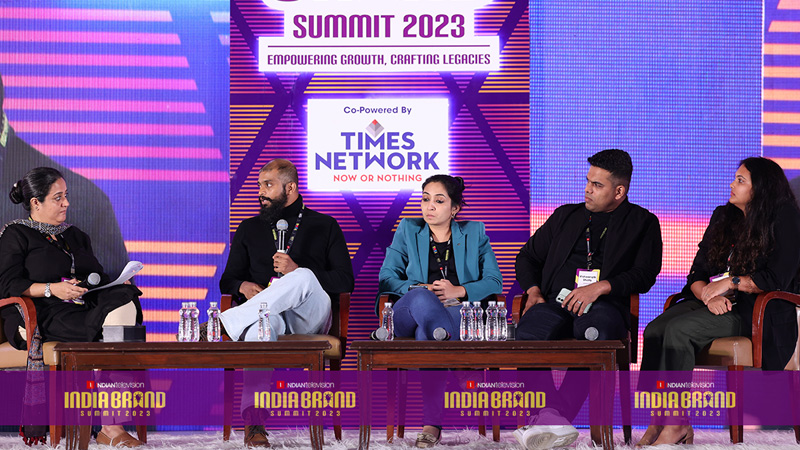
    Mumbai: The India Brand Summit held on 28 November 2023 at The Lalit Mumbai, convened leaders, marketers, entrepreneurs, and experts to explore current trends, challenges, and opportunities in the dynamic brands and marketing arena.

    The session delved into: Is D2C the correct way for businesses? How bright is the future? The session offers an in-depth exploration of the brands choosing the way of D2C and how that decision has impacted the success journey and contributed to their successful brand building.

    The key highlights of this session were: Brands are turning to D2C for rapid revenue growth and enhanced customer loyalty. This shift, crucial in price-sensitive markets like India, overcomes distribution challenges. D2C not only bridges gaps but also utilizes data for personalized user journeys, ensuring quicker and more efficient consumer connections.

    The panel was moderated by Boston Consulting Group partner and associate director Jyoti Narula Ranjan and had panelists including

    Candere By Kalyan Jewellers head of marketing, brand experience & data Akshay Matkar, NIVEA India digital precision marketing manager Tanvi Amladi, Pocket Aces business head Vishwanath Shetty, Kaya VP & head of marketing Samyukta Ganesh Iyer.

    The session began with Ranjan asking, “How do you as a brand, map the consumer journeys in this omni-channel D2C world? There is an aspect of marketing to these users in this digital world and there is a method of mapping the consumer journeys.”

    Amladi answered, “ I think one for us was to really acknowledge that today consumer journeys are not linear. So we know consumers are exposed to so many different touchpoints, especially in a category like skincare. I think the first step for us when we talked about customer journey was to really acknowledge that fact and say then therefore What are these different ways in which I can reach my consumer? The second thing was actually understanding the consumer and therefore just making sense of who she is because we knew weren’t talking to someone who is just 18 to 22. That is someone who is just displaying a certain specific life she would within that she’s doing so many different things. She comes in with different, she’s at different stages in her skincare journey. So speaking, again specifically to the category that we play in, it was very important for us to even understand what is her category entry point. When she gets into skin care. Someone’s getting into it, at the age of 18, by the time she’s 22, she’s already super evolved in her journey. Someone is getting introduced to it only at the age of 25, maybe when she’s a little bit into her career. So, for us just understanding all these little nuances around how the consumer comes into the category and how kind of she plays around with it, in different in different ways. That was the starting point and that’s always been kind of the anchor around which we build a lot of what we do at NIVEA.

    Commenting on the same, Ranjan said, “I think one thing which is probably coming out stronger is how over the long term period there were a lot of micro-moments that you’re probably capturing in how these consumers are entering the purchase journey or just the brand interaction journey.”

    She then asked Matkar, “It would be very interesting to see how really as a brand to thrive in an environment where consumers are doing this omni channel touch point. How do the marketing teams really thrive using agile methodologies, both on preparing the back end, and getting the right touchpoints in place? How do you make that happen at the backend because one is knowing the consumer, but then how do you capture that touchpoint in a digital-first world?”

    Matker replied, “I’ll break it into two parts. Part A is, how you look at the consumer area. So in our case, since we have an online store and also offline store. We look at it in four parts. Part A is, that the user has discovered the product online and purchased it offline. Part B is, consumers have discovered the product online and purchase is also happening online. Third and fourth is user has discovered the product offline and purchased it offline and the user has discovered the product offline and made the purchase online. So these are the four different types of consumer journeys that we look at. Hence our entire marketing spends, the teams, the way we operate, it shifted. We started our offline reading journey in 2022. Prior to that, it was completely online. What we do is, we have something created called our entire data warehouse, and we have something called a CDP like many brands do. The main problem in the digital space is that it’s not about collecting the data, it’s about how accurately your data you’re collecting and what are the data losses that are happening. So because we have multiple systems, we have CRM, we have a communication platform, we have personalisation tools, we have recommendation tool and then so many data points that we need to collect, we need to process and then we need to look at different data and based on that how do we actually split the entire marketing spends. So looking this journey into four halfs has helped us to make informed decision on which channel we need to invest more. Though, I think we can see that, our data pointers like 70 per cent of the consumers are discovering the product online. So though our CPA on the retail side would be lower, but our investments should be on the higher side on the digital space.”

    Thereafter bringing Iyer into the conversation next, Ranjan asked, “How did you help these (Baskin Robbins & Kaya) brands find out the value proposition to the right consumer set mapping? And how did you really use digital media to drive this omnichannel existence for the brand?”

    Iyer said, “One big thing I think we were discussing just before the panel right now in terms of saying that, today every brand, small, big otherwise needs to have a very strong presence both online and offline. So it’s no longer about whether I’m a D2C brand, or whether I have an offline brand. Everyone’s omnichannel today. Brands that were born on D2C have now started opening up stores offline in order to give consumers the experience that they’ve been craving because they don’t get that online. And vice versa, the convenience, the comfort of calling for things online is why even the large brands who registered for the longest time today are all there. A great case study would be what happened with CPR in, when we actually did one of the first collabs, that we drove with Swiggy where we actually did a 50/50 partnership in terms of making the ads, making all of the media buys including Hotstar Integration. For the very first time, two brands, one aggregator brand and one brand actually came together and it hit the nail on many boxes because one, a brand like Baskin-Robbins, which had been there in the Indian market for 26 years at that point in time, globally for 75 years, suddenly became relevant to millennials who had kind of played back to us saying ‘it’s my childhood friend, it’s a brand that I grew up having as a kid with my parents. After dinner, we would go for a walk, go to the nearest Baskin-Robbins parlor, and pick from their 31 flavours. But today it was not the brand of choice for millennials so there was a definite issue there. For Swiggy, they wanted a premium ice cream brand on their platform. So it kind of hit the nail on many, many boxes there. Second, it had also become irrelevant to the male audiences, perhaps because of the color pink it had become little alienating to the audience, that ice cream as a category is fairly gender agnostic otherwise. Third, there was also a problem of the brand not being easily available because ice cream, as a category, was not something that people were calling for online. So going live on IPL being there from, the first match to the last match, we did this fantastic innovation with Hotstar as well where you could just call for the ice cream while the gamification was happening. It has changed the landscape because suddenly the brand became relevant. The brand had fresh fruit ice cream flavors like Naturals and Ibaco and it also helped everybody. As I was saying it was a much larger connect because suddenly during the lockdown the brand was available and that would have never happened. I mean we could have never forced on. So I think why D2C matters, it kind of answers the question of the topic today, the brand is then available. Any brand of your choice is then available at your fingertips.”

    Thereafter Ranjan asked Shetty, “What is the mantra for getting content right on social marketing and how do you advise brands to leverage content social media influencer marketing for building brands having that direct connect?”

    Shetty replied, ”I feel knowing your customer is very important. Where is the customer? Are they on Instagram or are they on Facebook or on LinkedIn, That’s also really, really important. So content is a huge bucket where you can bifurcate its basis where your audience is. Interestingly, when the influencer wave started post-COVID. I think there was good traction initially. I remember basically when we started Skinsi which was direct competition to Kaya then and we largely were D2C, so we provided clinical services at home. So for us, I still remember we did drop challenge which was one of the first campaigns that I did for Skinsi back then and this was I think Woman’s Day. So there was a clear trend that we saw, globally whatever works on TikTok on Insta, in a week’s time it is to travel to India. So you always want to make your UGC content a success and everyone starts digging into what should we do. While it was very simple for what we saw, we executed in 10 days and we spent barely around 10-12 lacs. Interestingly, we didn’t get a lot of leads in such, but the consideration and the conversion doubled our business. So, I think influencer marketing is not just a big mark in a box, but you need to be very, very sure what will work for your brand and how your audience will take it and if you make it a very inclusive community campaign, budget doesn’t matter. It will work for your brand. So that’s influencer marketing and working and you don’t have to spend crores, but you can still leverage it using international trends or global trends. Indianise it, take one or two good influencer and make a UGC content, do a tactical campaign, and kick-off. So that’s how influencer marketing has really helped especially for a skincare category. So I think that’s a great example. But now what has happened is a lot of these influencers also don’t want to be called influencers, they want to be called creators. So if you go back to the influencers, tell them, ‘You know what here is a reel, a post, do one story, one reel’, they’ll charge you a bomb but instead if an Instagram influencer wants to do a podcast series on Spotify and as a brand you help him to do that, he will come at 1/3 the cost and he will do value ads like no one’s business. So when you start connecting with the creator, help him in his journey, is when the brand grows and then the creator will be happy to push extra stuff from his side.”

  • Innovation and pioneering helped Marico grow: Harsh Mariwala

    Innovation and pioneering helped Marico grow: Harsh Mariwala

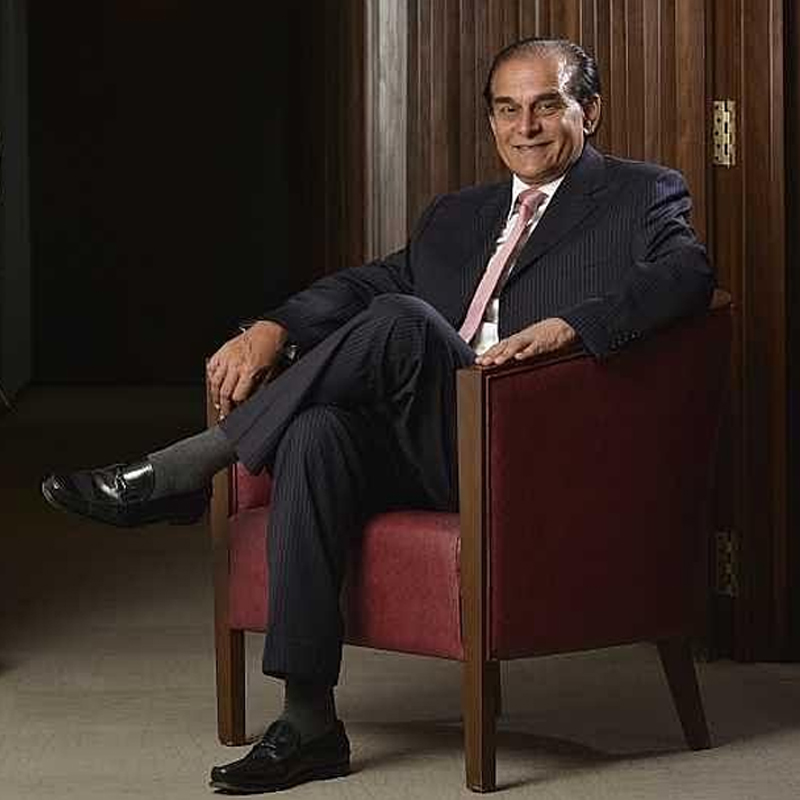
    MUMBAI: Harsh Mariwala transformed his family's trading business in spices and edible oils into Rs 7,300-crore FMCG giant Marico, led by flagship brands such as Saffola and Parachute which sell in 25 countries. The company recently launched Saffola FITTIFY, a range of healthy soups and shakes. Mariwala's other businesses include Kaya, a chain of skin care clinics.

    The company also scouts for young Indian entrepreneurs and facilitates the start-up ecosystem through the mentoring platform Ascent Foundation.

    Mariwala is someone who walks the talk and lives by example – a catalyst of positive change, said Raj Nayak during a tete-a-tete with the affable Marico founder.

    “We started in phases, earlier the name of the company was Bombay Oil Industries. It's an edible oil business where we were selling coconut oil, refined oils to trade as well as some industries. That business was not doing too well, lots of businesses depend on how well you cover your raw material or how the raw material prices behaved, so it was very erratic in terms of margin and performance,” shared Mariwala.

    So he thought of converting the oils business from unbranded to branded in order to make it more profitable and sustainable, a bold move which paid off. And that’s how it all started. He started travelling to internal markets, appointed distributors, talent managers, advertising agencies in the interiors of Maharashtra and Gujarat. The consumer product is highly de-licensed, which helped Mariwala to gain profit. Apart from licensing, one clear no for him was entering the high-tech business.

    Mariwala mentioned that while his iconic Parachute brand was a success, it was mainly selling in 50 litre tins. Initially, the retailers would buy it and sell it in bottles which were later purchased by consumers. Back then, the market of packed coconut oil was much smaller than what it is today. Later, the idea struck him to create a packaged product which was sold in various parts of Maharashtra. Mariwala’s initial foray was to scale up the existing business across India.

    Another well-known brand, Saffola was neglected for a very long period of time, he revealed. After starting the business, his focus was to identify further opportunities. He added, “I wanted to be in the number one position, to be a market leader, as it helps you to get more margin. We grew by innovating in the coconut oil market, during that time the whole market worked on tin containers, then we converted it to plastic. It was not an easy journey; it was a tough conversion. However, it ensured that our growth rate jumped up multiple times. We applied the same innovation in Bangladesh, and now we are the leading coconut player in the Bangladesh market.”

    Another key innovation was the lice-killing hair product Mediker, a must-have in Indian households with young kids.

    “We acquired Mediker from Proctor & Gamble and introduced it in oil format, the sales just doubled. So, innovation and pioneering helped us to grow,” the business tycoon remarked.

    Relating an interesting anecdote behind how the Revive detergent was launched in the early ‘90s and creating a market for a product where none existed, Mariwala said, “We came up with our product Revive out of a personal necessity. I liked crisp clothes, that is how we made Revive which helps to starch clothes without any hassles.”

    According to him, for any product, there must be a consumer need which is big enough to build a brand. Moreover, to become a market leader, advertising is very important and once a certain mass is created, one can go back to devising effective cost structures and improving margins.

    Everybody still wonders, from where the name Parachute emerged. Mariwala jokingly said that is the question that the nation wants to know. He shared that Bombay Oil Industries was formed in 1947, shortly after the second World War when a lot of Indians got to know about parachutes – and that’s how Mariwala’s uncle thought of creating a brand by this name, which is now a huge success.

    On the subject of world wars, Mariwala opined that there is an ongoing war for talent, and one has to treat hiring like marketing. “When there is a shortage of good talent, you have to market yourself first,” he quipped. “That means you have to identify what is unique about you, you arrive at what we call employee value proposition, which is unique in the job market. In our case, unlike big MNC corporations where decisions are taken in closed headquarters, we empower our employees.”

    Spoken like an entrepreneur who knows how to make a difference.


  • Brands ride on the 10-year challenge wave

    Brands ride on the 10-year challenge wave

    MUMBAI: While Facebook’s latest viral trend #10YearChallenge is being seen as a negative conspiracy; an attempt to "train a facial recognition algorithm on aging" by many, brands have leveraged the upward tide of its popularity in an interesting manner by sharing their own versions of the challenge. From modest to quirky, the responses are drawing a lot of attention on social media. Check out a few of them below:

    1. Acer boasts about its improved design and efficiency

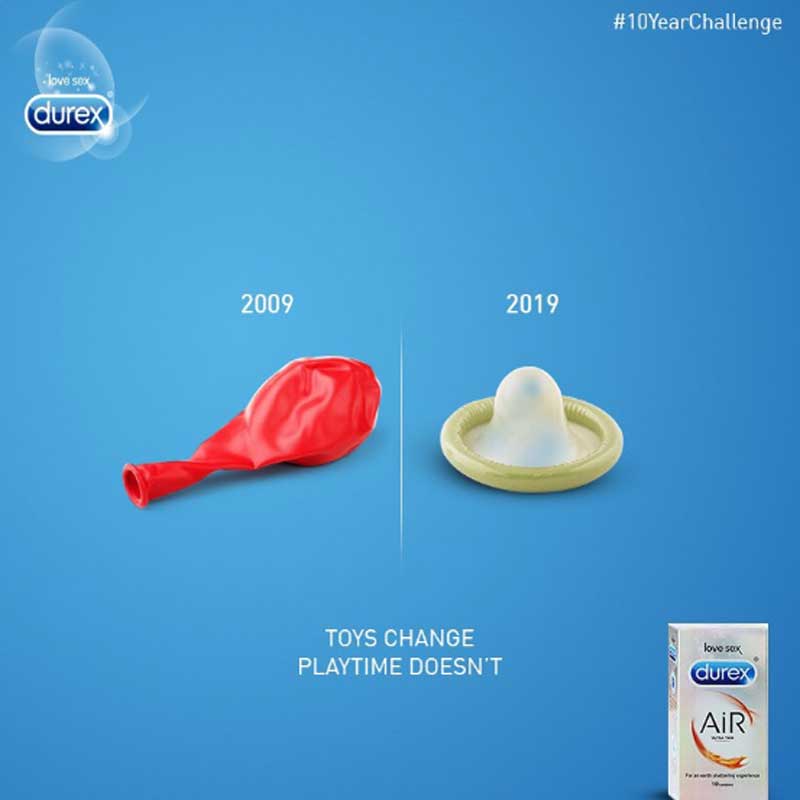
    2. Durex goes quirky again


    3. Fevicol’s hilarious take on its ‘Mazboot Jod’


    4. Manforce changes the taste of the challenge


    5. Swiggy’s ‘Ladka Nikal Chuka Hai’ is all the assurance you need


    6. Tinder truly drives nostalgia home


    7. Uber Eats brings in the latest viral star to its feed


    8. Talk about personalisation and Zomato is ready with its unique take


    9. Google India changing how we have known things since ever


    While all these brands flowed with the wave of showing changes in the narrative over the past decade, a few brands managed to show how some things never change.

    10. Airtel then and Airtel now


    11. Amul India’s utterly butterly take on its evergreen presence


    12. Kaya promotes its timeless beauty idea

    13. Finolex Pipes shows longevity


    14. KamaSutra India takes pleasure 10 years ahead


    15. KFC India says taste is never out of fashion


    16. Godrej Nature’s Basket brings in a fresh take


    17. Parle G hasn’t changed a bit


  • ADIL gets Milind Sarwate on-board as independent director

    ADIL gets Milind Sarwate on-board as independent director

    MUMBAI: Indian fashion house And Designs India Limited (ADIL) has appointed Milind Sarwate as an independent director.


    Sarwate, a 55-year old corporate professional, brings over 31 years of experience in finance, HR, strategic planning and business development. His background in consumer products and services with companies like Marico, Kaya and Godrej will be of value to ADIL, in its quest to grow and create value.


    ADIL co-founder and managing director Mukesh Sawlani said, “We are very excited to have Milind on board. He brings nearly three decades of experience in finance, HR, strategy, risk management and corporate governance, which will be invaluable to us in building and scaling our business in India and globally. He will be working closely with the board and our senior management.”


    Sarwate added, “I am delighted to be on the And Designs’ Board. I have been an admirer of their entrepreneurial passion. It will be a pleasure to work with the ADIL team and facilitate growth and value creation for all stakeholders.”


    His long stint at Marico included various roles and membership of its group executive committee. He also played an institutional role in shaping the Marico story, through shareholder value creation, inorganic growth, corporate structuring, information technology, GRC, talent management, corporate branding and social responsibility.