Tag: Kashmir

  • 2nd edition of LIFF to premiere docu on Frontier Gandhi

    2nd edition of LIFF to premiere docu on Frontier Gandhi

    NEW DELHI: A total of 115 films from fifteen countries will be screened at the second Ladakh International Film Festival (LIFF) being held early next month.

    The films will be screened in five screens in Leh from 5 to 7 July, according to Festival founder and Festival Director Melwyn Chirayath who said the festival will be inaugurated by Jammu and Kashmir chief minister Farooq Abdullah and the awards on the closing day will be given away by Information and Broadcasting minister Manish Tewari.


    The jury for LIFF 2013 will be headed by well known actor / Director Aparna Sen while members are Paul Smaczny (Emmy winner), Mathew Robbins (Palm d‘Or), Vimukhti Jayasundara (Palm d’Or), Alireza Shahrokhi (Iran) & Teri McLuhan (Canada).

    Announcing the details, Chirayath said “Ladakh is a one of its kind place in India, known for its serene environment and brilliant landscape. LIFF, in its second year, will screen a cross section of films.”

    These include international feature films, documentaries from India, short films (national – international) and Indian feature films.

    In addition, there will be a retrospective on lyricist-filmmaker Gulzaar by Director/Producer Vishal Bharadwaj who had got his first major break in the former’s ‘Maachis’.

    There is a section celebrating women through some of the finest women oriented films made in India.

    Chirayath added that entries were received from close to 130 countries, after which the best were selected for the final showcase.

    A major highlight is the green carpet premiere at LIFF 2013 of Teri Mc Luhan’s documentary ‘Frontier Gandhi’, on the forgotten freedom fighter, nationalist and peace advocate Khan Abdul Gaffar Khan. There will also be a special children’s section curated by Amole Gupte, Chairperson of the Children’s Film Society, India, which will feature six children’s films.

    The Ladakhi section will include Tsering Motup Chospa’s feature film Lzadol (Broken piece of moon), with its central theme of women’s strength, patience and wit against the evils of the day. In addition 5 short films from Ladakh will also be premiered this year”

    Mike Pandey, a specialist in wild life and environment films and a patron of the Festival, said the Directorate of Film Festivals had curated an eight-film package to mark 100 years Celebration stressing on Women in Cinema. These include Diamond Queen (Homi Wadia) Hindi 1940; Meghe Dhaka Tara (Ritwik Ghatak) Bengali 1960; Mirch Masala (Ketan Mehta) Hindi 1986; Dasi (B Narsing Rao) Telugu 1987; Dahan (Rituparno Ghosh) Bengali 1997;Chandni Bar (Madhur Bhandarkar) Hindi 2001; Mee Sindhutai Sapkal (Anant Mahadevan) Marathi 2010; and Byari (Suveeran( Byari 2011.

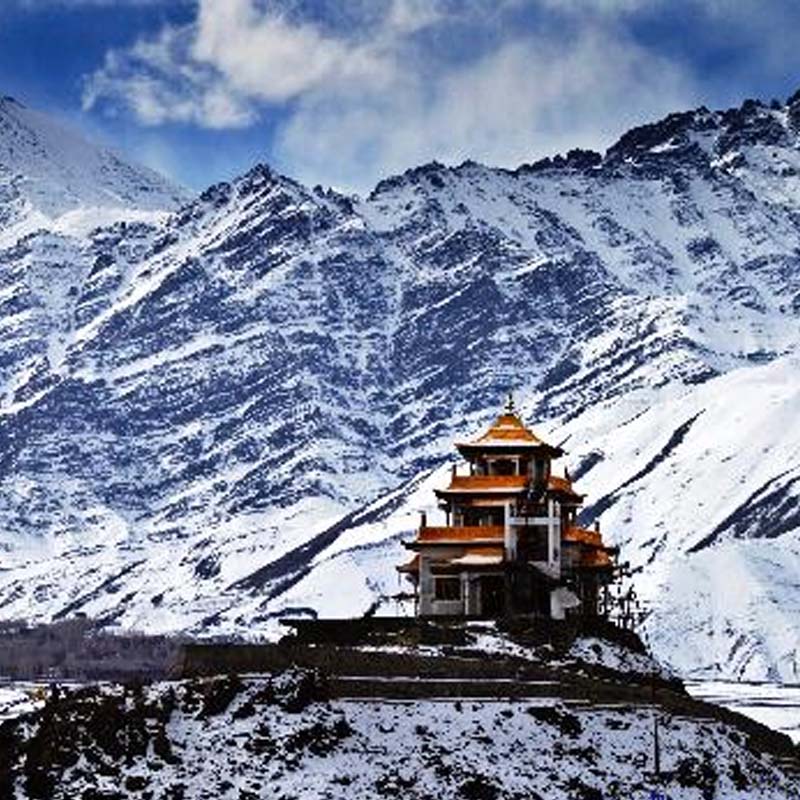
    While renowned filmmaker Shyam Benegal, chairman of LIFF, said: “Apart from the fact that it is a festival that takes place in Leh on the roof of the world surrounded by the magnificent snow peaks of the Himalayan Zanskar range skirted by what appears to be a little fledgling river Indus which will soon become one of the great rivers of the sub-continent as it goes downstream. This is a veritable Shangri-la and the film festival is the latest of its cultural attractions. The venue of the festival is a large theatre on a hilltop built for this purpose by the state government with smaller halls surrounding it making for a perfect location for this delightful festival in the northernmost part of India.”

    Vishal Bhardwaj, patron member of LIFF said: “To watch films in one of the most pristine landscapes in the world is a rare pleasure only the ladakh film festival offers. One walks out of the auditorium and is surrounded by mountains on all sides, it‘s almost surreal. What makes it even more special this year is the retrospective on Gulzar Saab, it will be an honor for me to curate this event which showcases some of his best work.” –

    Shaji N Karun, patron member of LIFF referred to cinema being a tool to identify it in spiritual languages and said he believed that Ladakh is one of the most suitable places of our land for spirituality.”

  • Festival of films on Kashmir in Mumbai

    Festival of films on Kashmir in Mumbai

    NEW DELHI: ‘Kashmir – Before our Eyes‘, a three-day Festival of films on Kashmir is to be held at the Films Division auditoria in Mumbai from 31 May.

    The festival has been curated by filmmakers Ajay Raina and Pankaj Rishi Kumar and will screen shorts, documentaries and feature films.

    The first date of the Festival is devoted to ‘Roots of the conflict: The nationalist discourse‘ with films like Storm over Kashmir by B D Garga and A Diary of Aggression by N V K Murthy (both made by Films Division), followed by a discussion on the conflict between India and Pakistan vis-?-vis Kashmir.

    The Special India Preview will feature the multi-award winning feature Valley of Saints by Musa Sayeed from the US.

    The second day will be devoted on ‘Paradise: Kashmir then and now‘ with films Before My Eyes by Mani Kaul; Lolaab – A Valley In The Himalayas by Mohiuddin Mirza, and Paradise On A River Of Hell by Abir Bashir Bazaz and Meenu Gaur which got the PSBT Special Recognition for the Third Karachi Film Festival, Pakistan, 2003.

    This will be followed by a discussion in which Moiuddin Mirza, Piyush Shah, Jyoti Swaroop, and Siddhartha Gigoo will take part, moderated by Ajay Raina.

    The same evening, there will be feature on the theme of exile, disappearance, dislocation, The Last Day by Siddhartha Gigoo and the non-fiction Tell them, the tree they had planted has now grown by Ajay Raina which won the MIFF award for PSBT.

    This will be followed by reading from The Garden of Solitude by Siddartha Gigoo.

    Later, the non-fiction Where Have You Hidden My Crescent Moon by Iffat Fatima, Autumn‘s Final Country by Sonia Jabbar, and the feature Bub (Father) by Jyoti Sarup will be screened.

    The last day will see the screening of Jashn-e-Azadi by Sanjay Kak, Pather Chu (The Play is on) by Pankaj Rishi Kumar for PSBT, Apour ti Yapour. Na Jang Na Aman. Yei Chu Talukpeth (Between Border and the fence. On the edge of the map) by Ajay Raina for PSBT and the feature Harud by Aamir Bashir.

  • DD Direct Plus earns Rs 865.7 mn from slot auctions

    DD Direct Plus earns Rs 865.7 mn from slot auctions

    NEW DELHI: India‘s public broadcaster Doordarshan earned a total of Rs 865.7 million in 2011-12 from auction of slots on its DD Direct Plus direct-to-home (DTH) TV platform. The earnings from auction of slots on the country‘s only free DTH TV service is nearly twice the revenue Doordarshan expected when it for the first time auctioned slot in July 2011.

    Doordarshan had expected to earn over Rs 460 million from auction of 21 slots on DD Direct Plus when it e-auctioned slots in July 2011. It now has 37 private television channels on its DTH TV service.

    Prior to the e-auction, Doordarshan earned just Rs 168 million at Rs 8 million per channel. At the July 2011 e-auction, the public broadcaster had received bids ranging from Rs 21.7 million to Rs 22.5 milion per slot.

    DD Direct Plus has capacity to carry a total of 59 channels but three slots are currently vacant. The DTH platform carries 19 Doordarshan television channels, in addition to the 37 private television channels including three foreign channels – Russia Today, DW and NHK World.

    Doordarshan wants to increase the capacity of DD Direct Plus but non-availability of transponders has put hurdles in its plans.

    DD Direct Plus also plans to widen its subscriber base. Information and Broadcasting (I&B) Ministry sources told indiantelevision.com that a scheme had been approved for distribution of 30,000 DTH sets in remote, tribal and border areas of the country.

    In addition, 10,000 DTH sets have been installed by DD in uncovered areas as part of the DTH project and another 55,000 DTH sets under various other schemes have been provided to the state governments for uncovered areas like the north-east region, Jammu and Kashmir, Lakshadweep Islands, and Pondicherry.

    Bids received by Doordarshan in e-auction held in July 2011:


    Amount
    Channels
    Rs. 22.5 mn Sadhana News (Uttarakhand/Himachal), Aastha Bhajan, B4U Movies, Sanskar.
    Rs. 22.2 mn RK News (Sadhana), Sahara Samay.
    Rs. 22.1 mn Enter 10 music, TV 24, Day& Night News.
    Rs. 22.0 mn B4U Music, Time TV, Divya, Katiani.
    Rs. 21.9 mn Sahara Aalmi (Urdu), Sahara Firangi.
    Rs. 21.8 mn Zee Salaam, Zee Smile, Etc music, 9X, Zee Jagran.
    Rs. 21.7 mn Enter 10 Movies.


  • Film on Kashmir to get theatrical release this week

    Film on Kashmir to get theatrical release this week

    NEW DELHI: Harud (Autumn), the film by debutante Aamir Bashir, which has been winning laurels in international festivals for the past two years, is finally getting a theatrical release on 27 July.

    Bashir told indiantelevision that the film will be released with around 15 prints in PVR theatres in some parts of the country.

    The Hindi film, which has earlier run into trouble with Central Board of Film Certification forcing the filmmaker to run his promos for the film on social networks instead of in theatres, is a stark picture of Kashmir where the people constantly live under the shadow of the gun.

    Funded by the Hubert Bals Fund, the film was in the official selection in London and Toronto apart from the Mumbai International Film Festival. It was screened at the 54th BFI London Film Festival, 30th Fajr International Film Festival in Iran, 29th Munich International Film Festival and 54th San Francisco International Film Festival.

    It stars among others Reza Naji, who was born in Tabriz in 1942 and began his artistic career when he was twenty. His breakthrough role was in “Children of Heaven” directed by the renowned Iranian filmmaker Majid Majidi. In 2008 he won the Silver Bear at the Berlin film festival for his performance in the film “Song of Sparrows”.

    Others in the film include Shanawaz Bhat, Shamim Basharat, and Salma Asha.

    The story of the film revolves around Rafiq and his family. He is struggling to come to terms with the loss of his older brother Tauqir, a tourist photographer, who is one of the thousands of young men who have disappeared since the onset of the militant insurgency in Kashmir. After an unsuccessful attempt to cross the border into Pakistan to become a militant, Rafiq returns home to an aimless existence. Until one day, he accidentally finds his brother‘s old camera.

    The CBFC has objected to a promo carrying a scene that has the protagonists against a backdrop that reads: Aazadi. But the film given a U/A certificate has the scene. In the film itself, there were some dialogues that were removed.

    Bashir said it is absurd to ban a promo after clearing the film.

    Also see:

    Harud promo faces Censor hurdle

  • Harud cleared by Censors, to release in April

    Harud cleared by Censors, to release in April

    MUMBAI: Aamir Bashir‘s directorial debut, Harud (Autumn), is set to release in April.

    The film is the story of Rafiq and his family who are struggling to come to terms with the loss of his older brother Tauqir, a tourist photographer, who is one of the thousands of young men who have disappeared, since the onset of the militant insurgency in Kashmir. After an unsuccessful attempt to cross the border into Pakistan to become a militant, Rafiq returns home to an aimless existence. Until one day he accidently finds his brother‘s old camera.

    Despite being acclaimed internationally in film festivals at Toronto, London, New York, San Francisco and Dubai, the film failed to receive the government‘s censor certificate and, hence, never got to release in India.

    According to Bashir, the issue has now been resolved and his film is set for release.

    Bashir is currently writing the script of his next venture titled ‘Winter‘.

  • Film on Kashmir architecture to be screened in Kolkata film fest

    Film on Kashmir architecture to be screened in Kolkata film fest

    NEW DELHI: The film “Ancient Architectural Styles of Kashmir” by veteran filmmaker of Kashmir Mushtaq Bala is being screened at the 17th Kolkata Film Festival on 17 November.


    The film highlights the architectural excellence and blending of different architectural patterns through ages into Kashmir architecture. It aims at exploring the salient feature of both the residential architecture and the monumental architecture so as to reveal how Kashmiri architecture, under various historical, social and cultural milieus has assimilated influences from the Buddhist, Greek, Central Asian and Indian architectural styles and achieved an identity of its own.


    A study of ancient architectural styles of Kashmir, among other things, augments the historical consciousness of the audience by unraveling the cultural grandeur of the past of Kashmir.


    Historians Kapila Vastasayan and F.M.Hasnain , INTACH, Director Salim Beigh are among the experts featured in the film.


    This is for the third time Bala has made his entry into the Kolkata Film Festival. Known for his skillful traits of filmmaking, he earlier had been felicitated for films “Budshah” and “Sufiana Music of Kashmir” in 2008 and 2009 respectively


    “Ancient Architectural Styles of Kashmir” has won wide acclaim and critiques. The film was assigned to Bala by the Films Division in 2010.

  • Musharraf: Pakistan against independence of Kashmir

    MUMBAI : In a landmark interview on NDTV Pak President Pervez Mushrraf has for the first time said that Pakistan is prepared to give up its claim to Kashmir if India and Pakistan agree on the ‘four-point solution’

    (a solution in which boundaries are not changed and India does not have to give up any territory).

    Musharraf, when asked by NDTV’s Dr Pronnoy Roy, “so you are prepared to give up your claim to Kashmir”? replied: “We will have to … Yes … if this solution comes up”. The excerpts of the interview will be telecast on News on Tuesday night, an NDTV press statement said.

    Musharraf also says that Pakistan would give up its demand for a plebiscite in the region and give up on the UN resolutions, under this solution. He added that that self-governance or autonomy is not independence -saying that Pakistan is against independence for Kashmir.

    It may be remembered that last year, Musharraf had hinted that the solution to the Kashmir problem could be possible “within Indian Prime Minister Man Mohan Singh and my tenures”, and the latest startling statement on NDTV seems to be a well-planned one, following a calculated roadmap.

    When Roy repeated his question: “You are letting them self govern and you have no claim on Kashmir” … Musharraf retorted: “Why are you going on … I have said, at the moment, both India and Pakistan … We are on the same position as we were since 1948. But we both … I am saying … we both ought to be prepared to give up all that we have been saying. And this includes all this … If we reach an agreement where we are giving self governance, yes indeed…”

    In the interview President Musharraf also makes it clear that if the four-point solution (no change in boundaries of Kashmir; borders and the LoC to be made irrelevant; staggered demilitarisation; and autonomy or self-governance with a joint supervision mechanism) is agreed upon … Pakistan would also give up on the UN resolutions and its long-standing demand for a plebiscite.

    Roy further asked, “One thing in your solution… I will just be very clear so that the people of India can know this clearly. You are being, in a way, extremely bold, because it means that you are giving up plebiscite and giving up the UN resolution?”
    The wily general replied “One is giving up that clearly and I say, yes am giving up…There is a provision in that. One is prepared to give up, in case India leaves its stated position also…”

    The Pakistani President also said: “I believe when you are negotiating and you go for peace, it means what? It means compromise … otherwise you can’t… go for a solution of a problem … What do you mean by compromise? Compromise can never take place if you don’t step back. Compromise inherently means stepping back by both sides. So inherently, both sides have to give up their positions … and step back. If one of us is not prepared to step back, we will not reach a solution.”

    Musharraf also made it clear that once Pakistan gives up its claim to Kashmir, this four-point solution would not be a negotiating step towards getting independence for Kashmir and that self-governance or autonomy is not the first step to Kashmir’s independence.
    Roy asked: “Are you then saying, No independence for Kashmir?” and the general said: “Absolutely, we are against independence… and so is India.”