Tag: Kashmir

  • NDTV pivots to live entertainment with star-studded concert series

    NDTV pivots to live entertainment with star-studded concert series

    NEW DELHI: NDTV, India’s three-decade-old news broadcaster, is striking out into uncharted territory with the launch of NDTV Good Times, a live entertainment venture that promises to bring marquee musical acts to iconic venues across the country.

    The move marks a bold departure for the Delhi-based media house, which has built its reputation on hard news and current affairs. Now it is betting that India’s youthful demographics and growing disposable income will fuel demand for premium live experiences.

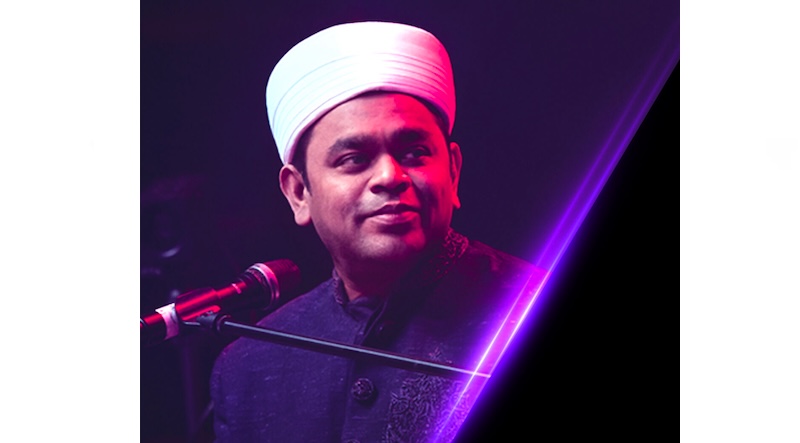
    The inaugural lineup reads like a who’s who of Indian music. AR Rahman will perform at Varanasi’s sacred ghats along the Ganges, while Sonu Nigam plans a tribute to legendary playback singer Mohammed Rafi at Kashmir’s Dal Lake. The roster also includes composer trio Shankar-Ehsaan-Loy and popular singers Jubin Nautiyal and Neha Kakkar.

    “NDTV has always stood at the intersection of storytelling and society,” said chief executive and editor-in-chief Rahul Kanwal. The company aims to “curate iconic performances that will not just entertain but also inspire, connect, and create lasting memories.”

    The venture taps into a global trend where live entertainment has become a cultural force, particularly among younger audiences who prize authentic, shared experiences over passive consumption. India, with one of the world’s youngest populations, appears ripe for such offerings.

    NDTV’s strategy leverages its existing broadcast and digital infrastructure to amplify these events beyond their physical venues. The company has partnered with ticketing platform  District to handle bookings and logistics.

    Rahul Shaw, the newly minted chief experiences officer, positions the initiative as “reimagining the heartbeat” of Indian culture by combining top-tier talent with extraordinary settings.

    The move comes as traditional media companies worldwide grapple with changing consumption patterns and seek new revenue streams. Whether NDTV’s gamble on live entertainment pays off will depend on its ability to translate its storytelling credibility into successful event curation—and whether Indian audiences are ready to pay premium prices for the privilege.

  • Zee J&K Ladakh: Zee Media’s northern frontier reboot with a mission for truth and unity

    Zee J&K Ladakh: Zee Media’s northern frontier reboot with a mission for truth and unity

    MUMBAI: In a strategic pivot steeped in regional pride, Kesar TV has been rebranded to Zee J&K Ladakh— a new avatar designed to capture the pulse of India’s northern frontier. Zee Media’s fresh orange and red brand identity goes beyond mere optics, standing as a beacon for integrity, resilience, and the region’s indomitable spirit, according to a press release issued by it.

    The rebranding is not just cosmetic, adds the release. It’s a statement. Zee J&K Ladakh is here to amplify the voices of Jammu, Kashmir, and Ladakh—showcasing local stories, bridging communication gaps, and serving as a platform for hyper-local journalism. In a region where history, culture, and geopolitics collide, the channel aims to provide a steady, truthful narrative.

    Zee Media CEO Karan Abhishek Singh highlighted in the release: “With the strategic rebranding, Zee J&K Ladakh, the channel/ platform aims to be the voice of a region that has long been at the crossroads of history, culture, and geopolitics.  In fact, it is a bold step towards redefining how regional stories are told, heard, and understood. We look forward to bringing the stories of Jammu, Kashmir, and Ladakh to the forefront, with integrity, empathy, and a relentless focus on truth.”

    Salaam TV and  Zee J&K Ladakh editor Tarique Faridy added: “Zee J& K Ladakh is committed to shedding light on the issues that matter most to the people of Jammu, Kashmir, and Ladakh. We are focused on providing the region with a platform for authentic storytelling, tackling everything from local politics to the aspirations of its youth. Through this, we aim to foster understanding, cultivate hope, and inspire change within and beyond the region.”

    The press release further highlighted that Zee J&K Ladakh’s digital-first strategy would enhance its reach with a revamped website and YouTube platform, offering trusted news and insightful public interest content to audiences across borders and generations. From the snow-clad peaks of Ladakh to the bustling streets of Srinagar and Jammu, the channel pledges to be a trusted source of news, covering politics, technology, sustainability, and more.

  • Licious serves a feast of colours with ‘Gulaal & Gravy’ Holi campaign

    Licious serves a feast of colours with ‘Gulaal & Gravy’ Holi campaign

    MUMBAI: Who says Holi comes just once a year? Licious, India’s leading D2C meat and seafood brand, is bringing the festival of colours to the plate with its latest campaign, Gulaal & Gravy. The visually rich ad film captures the essence of India’s culinary diversity, turning every meal into a celebration of vibrant hues and bold flavours.

    The film opens with an irresistible shot steaming basmati rice being drenched in a rich, hearty mutton curry, setting the stage for a feast painted in shades of laal (red), hara (green), bhoora (brown), and peela (yellow). As the poetic narration proclaims, Kaun kehta hai Holi ka din ek hi baar aata hai? Dekho kaise desh mera isse har din manata hai! (Who says Holi comes only once a year? See how my nation celebrates it every day!).

    What follows is a rollercoaster of meaty indulgence, Tandoori Tikkas, Attukal Paya Soup, Galauti Kebabs, masaledaar chops, Mutton Dhansak, and an array of fragrant biryanis, each dish representing the rich tapestry of Indian cuisine.

    “Holi is about colours, and so is our food,” said Licious founders Abhay Hanjura & Vivek Gupta. “From the fiery reds of Kashmiri Rogan Josh to the golden yellows of Hyderabadi Biryani, the vibrant greens of Karnataka-style mutton chops to Kerala’s creamy coconut-infused Chicken Stew, India’s plates are a never-ending festival of colours. ‘Gulaal & Gravy’ is our ode to this vibrant diversity.”

    The film’s tagline, Kashmir se Kanyakumari, Gujarat se Arunachal, chalta rahe India ka ye swaadbhara rangon ka tyohaar (From Kashmir to Kanyakumari and Gujarat to Arunachal, may India’s delicious festival of colours go on forever!) perfectly encapsulates the thought. Because while Holi comes once a year, India’s love affair with bold flavours never stops!

  • ‘The Kashmir Files’ to have its OTT premiere on Zee5

    ‘The Kashmir Files’ to have its OTT premiere on Zee5

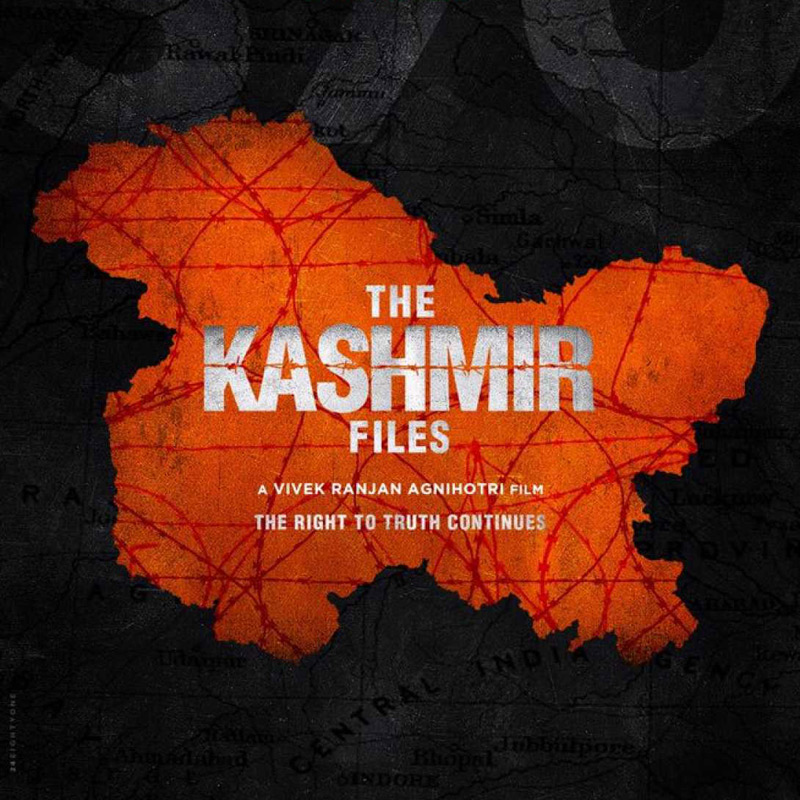
    Mumbai: After the super successful theatrical run both domestically and internationally, director Vivek Ranjan Agnihotri’s latest hard-hitting drama “The Kashmir Files” is going to have its world digital premiere on Zee5. The official date of its digital release is yet to be announced.

    The film recently crossed Rs 250-crore-mark at the box office and broke all records in the post-pandemic era. “Wth its digital release on Zee5, ‘The Kashmir Files’ will be accessible to the viewers of across 190+ countries in multiple languages like Hindi, Tamil, Telugu and Kannada,” said the streaming platform in a statement.

    The film is produced by Zee Studios and Tej Narayan Agarwal, Abhishek Agarwal, Pallavi Joshi and Vivek Ranjan Agnihotri, and it is written and directed by Vivek Agnihotri and features a stellar cast of actors including Mithun Chakraborty, Anupam Kher, Darshan Kumaar, Pallavi Joshi and Chinmay Mandlekar.

    Living up to its title, “The Kashmir Files” is a true story, based on video interviews of the first-generation victims of “Kashmir genocide” of Kashmiri Pandit community. The film garnered positive response from critics and fans alike and even struck an emotional chord with many including superstars like Aamir Khan and Akshaye Kumar among others.

    Commenting on the digital release of “The Kashmir Files,” Zee5 chief business officer Manish Kalra said, “At Zee5, we are building a platform that empowers its audiences as much as it entertains them. We are always looking for real, relatable stories to connect with the Indian audience. Over the last few years, we have accelerated and expanded our offerings while partnering with the best of talent and content creators to design a slate that makes us the platform of choice for entertainment seekers.”

    “’The Kashmir Files’ is not just a film but an emotion and a movement,” said director Vivek Ranjan Agnihotri. “I am glad that the theatrical release received such overwhelming response across the world and now with its World Digital Premiere on India’s largest homegrown video streaming platform – Zee5, the film will reach more people and will continue to strike a chord in millions.”

  • DD Kashir sees 50% increase in viewership from J&K between 5-16 August

    DD Kashir sees 50% increase in viewership from J&K between 5-16 August

    MUMBAI: After the abrogation of article 370 in Jammu and Kashmir, there have been speculations all over the media about communication blackout in the valley. Commenting on the issue, Prasar Bharati CEO Shashi Shekhar Vempati said between 5 to 16 August, Kashmir’s TV channel DD Kashir saw 50 per cent increase in viewership from the Jammu and Kashmir region citing BARC data.

    “Contrary to narratives carried by certain sections of foreign media on information blackout, viewership data released by BARC India reveals that between 5 Aug & 16 August DD Kashir saw a 50 per cent increase in viewership from J&K region and a 60 per cent increase from all over India,” Vempati tweeted.

    Vempati also added that during the same period other prominent news channels also saw a viewership spike from the Jammu and Kashmir region as high as 30-80 per cent. Recently, the central government announced the decision of scraping the special constitutional provision of Article 370 that governed the relationship between India and the state of Jammu and Kashmir.

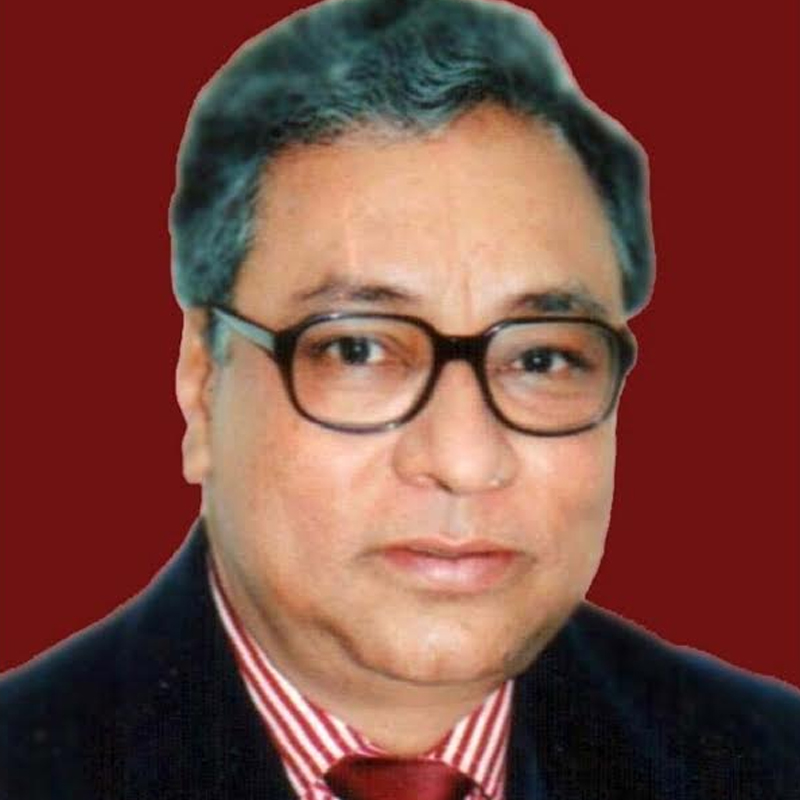
  • Prasar Bharati’s monopolistic-era mind-set has to change: CEO Jawhar Sircar

    Prasar Bharati’s monopolistic-era mind-set has to change: CEO Jawhar Sircar

    Jawhar Sircar, the 60-something chief executive of India’s public broadcaster Prasar Bharati, is bubbling with ideas and energy —- in sharp contrast to the organisation’s headquarters that gives a casual visitor a sense of life in slo-mo.

    Prasar Bharati is the parent organisation of 57-year-old Doordarshan and 86-year-old All India Radio, the country’s public broadcasters who claim to cover almost the whole of this vast country stretching from Kashmir to Kanyakumari — and a little beyond to a few islands in the Indian Ocean.

    Critics say age and a semi-lethargic attitude of the over 40,000-strong workforce impede both the organisations from being nimble footed in an age when technology has vastly changed the speed and mode of delivery of video and voice. Add to these government controls (via annual funding from taxpayers’ money to bridge the gap between revenues and expenditure) and Prasar Bharati continues to function as a moribund government organisation despite an autonomous status.

    The chief executive of Prasar Bharati, who joined the organisation in 2012 after serving in the government for over 30 years, is not shy to admit that some fundamental problems stop it from being `India’s BBC’ or `India’s NHK’. He goes a step ahead to say (with tongue firmly in cheek) that functionaries of Prasar Bharati “are living in a time warp” — in a world of their own that could be a zillion years behind reality.

    Even if you give full marks to the tech and social media-savvy Sircar for being candid, it cannot be wished away that both DD and AIR will continue to be an extension of the government’s PR division unless there’s a radical change in the thought process of India’s ruling class and policy-makers.

    Sitting in his office, in New Delhi’s PTI Building, amidst files and colleagues, many of them keep trooping in and out for advise and suggestions, the multi-tasking Sircar, is completely at ease conversing with Indiantelevision.com’s consulting editors B B Nagpal and Anjan Mitra on a wide range of subjects. Edited excerpts from the interview:

    Q: What could be the five guiding principles that you have etched out for Prasar Bharati’s possible reform?

    JS: Having joined the organisation in 2012, I don’t have much time left now, but I am still trying to (a) bring about transparency (b) prioritise our objectives as a public broadcaster (c) get the organisation adjusted to competition (d) get the organisation to look at non-terrestrial and satellite-based transmission and (e) strengthen the FreeDish platform.

    Q: Do you think all of these could be achieved; especially as majority of Prasar Bharati workforce seems to still live in a pre-Independence era?

    JS: Sadly, the majority mindset is a big hurdle in moving forward in an era where technology is changing fast and competition (from private sector) reacts faster to changing situations and ground realities. Many of my colleagues still believe they are in a monopoly era when DD and AIR were the only source of entertainment and news for Indians. Such a mentality needs to change if we are to be in the race as a viable and relevant organisation.

    Moreover, I and the board of Prasar Bharati, have been functioning with inadequate human resources at senior levels too. There had been no Member-Finance for a long time and regular Director-Generals for DD and AIR are yet to be put in place.

    However, I also believe that with some change in mindset and additional revenue, which can accrue from infrastructure sharing with private sector players and better use of under-utilised existing infrastructure, Prasar Bharati can be more relevant as an organisation and to the Indian public.

    Q: Can you give an example of monopolistic era mindset that, probably, tries to be immune to technological advances?

    JS: (Smiles) During the first few years of my tenure nobody here understood what OTT (over the top) stood for and how it’s relevant to our services. Another example is that of adoption of MPEG-4 broadcast technology. It had been cleared one and a half years back, but procedural delays hampered quick adoption.

    Q: Now that we are talking about new technologies, what would your reaction be if digital terrestrial TV (DTT) is thrown open to private sector players by the government?

    JS:  Prasar Bharati approved DTT over a year back. We were told to come up with a plan but no base paper could be prepared as there was some resistance internally from certain quarters. And, Prasar Bharati is not afraid of private players’ entry into DTT… we are quite open to the idea. Rather we’d support any such move if the government some time allows private players in DTT.

    Q: What can Prasar Bharati gain by supporting private players’ entry in an arena that had been a monopoly of the pubcaster?

    JS: Changing with the times makes you relevant. Why should DTT be Prasar Bharati’s monopoly? By allowing others, Prasar Bharati can earn additional revenue as we can lease out our infrastructure to private players who, otherwise, would have to make huge investments in setting up infrastructure. Let a private sector (content) aggregator come forward with a business plan. DD, anyway, is investing on DTT infrastructure.

    Q: You earlier talked of bringing about transparency in Prasar Bharati. In what way do you feel the proposed e-auction system will be an improvement on the systems adopted until now to obtain content?

    JS: The proposed e-auction would be a completely transparent method and a step towards overall transparency in the organisation to acquire content for DD. It will also put the onus on the successful bidder to ensure good content.

    Q: But, before the current SFC system of self-financed commissioned programmes, DD had a system of sponsored programmes whereby good programmes where especially produced for DD. How is e-auction going to be an improvement over the sponsorship scheme?

    JS: That kind of system had led to monopolization… with a few big names dominating the entire prime time of the public broadcaster. Ultimately, the same big names from Bollywood made serials for Doordarshan and left little scope for fresh talent.

    In fact, I had initially faced internal resistance to the plan for e-auction of prime time slots too, and it took serious convincing on my part for the idea to sink in with others. DD has already announced that this is being done on an experimental basis and may be extended to its other channels if the scheme is accepted.

    I am confident that audience loyalty, national sentiment, and the vast reach of  Doordarshan would help to make the scheme a success.

    Q: You referred to giving a push to FreeDish, which is the country’s only free-to-air KU-band service. What are the plans and what would be the present subscriber base of FreeDish?

    JS: As the antennas are available in the market (at a nominal one-time price ranging between Rs 3,000-4,000) and no monthly subscription is paid, it is difficult to know how many television households have FreeDish. This audit will become easier when we complete the process of encryption of FreeDish while keeping it free to air.

    Exact figures may be difficult in our case as even the Telecom Regulatory Authority of India admits there is a gap between the number of active and registered subscribers of private DTH operators. But it is understood (from feedback from market and sale of antennas) that there are around 15 million households hooked to FreeDish.

    In recent times, FreeDish has got some very good response from private TV channels…many of them, including the big names, want to hop onto FreeDish’s platform for wider reach of their products. We have plans to increase the number of FTA television channels on the platform so a consumer gets more choice.

    Q: There were plans to upgrade FreeDish to MPEG 4 to increase its capacity to carry more signals. But there has been no report on the progress in this regard.

    JS: It is not possible to implement MPEG 4 and the new Indian Conditional Access System (iCAS) together at the same time. But the commitment of FreeDish is to reach the rural areas and also cover all the areas not reached so far by television.

    Q: After initial protests by Prasar Bharati, Broadcast Audience Research Council had begun to give rural data separately. Are you satisfied with the audience measurement system?

    JS: We at Prasar Bharati have had some issues with BARC, which we would prefer to raise directly with the organisation. But our understanding is that DD covers a large part of India via its terrestrial and satellite services.

    Q: Why is it that Prasar Bharati cannot function like BBC or other public service broadcasters in the world?

    JS: The move to greater professionalism is eventually bound to happen, but some hurdles have to be crossed including those relating to budgets.

    Public funding on the public broadcaster in India is just Rs 2,400 crore as compared to Rs 51,653 crore in Germany, Rs 39,800 crore in the United Kingdom, Rs 34,097 crore in Japan. The amount spent on Prasar Bharati was even lower than those spent on pubcasters in Canada, Australia, and Korea.

    The per capita funding in India on the pubcaster is only Rs 19 as compared to UK and Germany where it is approximately Rs 6,000 to Rs 7,000. Even Malaysia has a per capita funding of Rs 350.

    Q: What are the constraints on acquiring good content for Doordarshan? 

    JS: The expenditure on content in India is a mere six per cent as compared to 75 per cent by NHK in Japan and 71 per cent by the BBC.
     The Indian Government gives 62 per cent as compared to 100 per cent in Russia, 98.2 per cent in Malaysia, 97 per cent in Germany, and 83 per cent in the UK. So, this should answer your question.     

  • Prasar Bharati’s monopolistic-era mind-set has to change: CEO Jawhar Sircar

    Prasar Bharati’s monopolistic-era mind-set has to change: CEO Jawhar Sircar

    Jawhar Sircar, the 60-something chief executive of India’s public broadcaster Prasar Bharati, is bubbling with ideas and energy —- in sharp contrast to the organisation’s headquarters that gives a casual visitor a sense of life in slo-mo.

    Prasar Bharati is the parent organisation of 57-year-old Doordarshan and 86-year-old All India Radio, the country’s public broadcasters who claim to cover almost the whole of this vast country stretching from Kashmir to Kanyakumari — and a little beyond to a few islands in the Indian Ocean.

    Critics say age and a semi-lethargic attitude of the over 40,000-strong workforce impede both the organisations from being nimble footed in an age when technology has vastly changed the speed and mode of delivery of video and voice. Add to these government controls (via annual funding from taxpayers’ money to bridge the gap between revenues and expenditure) and Prasar Bharati continues to function as a moribund government organisation despite an autonomous status.

    The chief executive of Prasar Bharati, who joined the organisation in 2012 after serving in the government for over 30 years, is not shy to admit that some fundamental problems stop it from being `India’s BBC’ or `India’s NHK’. He goes a step ahead to say (with tongue firmly in cheek) that functionaries of Prasar Bharati “are living in a time warp” — in a world of their own that could be a zillion years behind reality.

    Even if you give full marks to the tech and social media-savvy Sircar for being candid, it cannot be wished away that both DD and AIR will continue to be an extension of the government’s PR division unless there’s a radical change in the thought process of India’s ruling class and policy-makers.

    Sitting in his office, in New Delhi’s PTI Building, amidst files and colleagues, many of them keep trooping in and out for advise and suggestions, the multi-tasking Sircar, is completely at ease conversing with Indiantelevision.com’s consulting editors B B Nagpal and Anjan Mitra on a wide range of subjects. Edited excerpts from the interview:

    Q: What could be the five guiding principles that you have etched out for Prasar Bharati’s possible reform?

    JS: Having joined the organisation in 2012, I don’t have much time left now, but I am still trying to (a) bring about transparency (b) prioritise our objectives as a public broadcaster (c) get the organisation adjusted to competition (d) get the organisation to look at non-terrestrial and satellite-based transmission and (e) strengthen the FreeDish platform.

    Q: Do you think all of these could be achieved; especially as majority of Prasar Bharati workforce seems to still live in a pre-Independence era?

    JS: Sadly, the majority mindset is a big hurdle in moving forward in an era where technology is changing fast and competition (from private sector) reacts faster to changing situations and ground realities. Many of my colleagues still believe they are in a monopoly era when DD and AIR were the only source of entertainment and news for Indians. Such a mentality needs to change if we are to be in the race as a viable and relevant organisation.

    Moreover, I and the board of Prasar Bharati, have been functioning with inadequate human resources at senior levels too. There had been no Member-Finance for a long time and regular Director-Generals for DD and AIR are yet to be put in place.

    However, I also believe that with some change in mindset and additional revenue, which can accrue from infrastructure sharing with private sector players and better use of under-utilised existing infrastructure, Prasar Bharati can be more relevant as an organisation and to the Indian public.

    Q: Can you give an example of monopolistic era mindset that, probably, tries to be immune to technological advances?

    JS: (Smiles) During the first few years of my tenure nobody here understood what OTT (over the top) stood for and how it’s relevant to our services. Another example is that of adoption of MPEG-4 broadcast technology. It had been cleared one and a half years back, but procedural delays hampered quick adoption.

    Q: Now that we are talking about new technologies, what would your reaction be if digital terrestrial TV (DTT) is thrown open to private sector players by the government?

    JS:  Prasar Bharati approved DTT over a year back. We were told to come up with a plan but no base paper could be prepared as there was some resistance internally from certain quarters. And, Prasar Bharati is not afraid of private players’ entry into DTT… we are quite open to the idea. Rather we’d support any such move if the government some time allows private players in DTT.

    Q: What can Prasar Bharati gain by supporting private players’ entry in an arena that had been a monopoly of the pubcaster?

    JS: Changing with the times makes you relevant. Why should DTT be Prasar Bharati’s monopoly? By allowing others, Prasar Bharati can earn additional revenue as we can lease out our infrastructure to private players who, otherwise, would have to make huge investments in setting up infrastructure. Let a private sector (content) aggregator come forward with a business plan. DD, anyway, is investing on DTT infrastructure.

    Q: You earlier talked of bringing about transparency in Prasar Bharati. In what way do you feel the proposed e-auction system will be an improvement on the systems adopted until now to obtain content?

    JS: The proposed e-auction would be a completely transparent method and a step towards overall transparency in the organisation to acquire content for DD. It will also put the onus on the successful bidder to ensure good content.

    Q: But, before the current SFC system of self-financed commissioned programmes, DD had a system of sponsored programmes whereby good programmes where especially produced for DD. How is e-auction going to be an improvement over the sponsorship scheme?

    JS: That kind of system had led to monopolization… with a few big names dominating the entire prime time of the public broadcaster. Ultimately, the same big names from Bollywood made serials for Doordarshan and left little scope for fresh talent.

    In fact, I had initially faced internal resistance to the plan for e-auction of prime time slots too, and it took serious convincing on my part for the idea to sink in with others. DD has already announced that this is being done on an experimental basis and may be extended to its other channels if the scheme is accepted.

    I am confident that audience loyalty, national sentiment, and the vast reach of  Doordarshan would help to make the scheme a success.

    Q: You referred to giving a push to FreeDish, which is the country’s only free-to-air KU-band service. What are the plans and what would be the present subscriber base of FreeDish?

    JS: As the antennas are available in the market (at a nominal one-time price ranging between Rs 3,000-4,000) and no monthly subscription is paid, it is difficult to know how many television households have FreeDish. This audit will become easier when we complete the process of encryption of FreeDish while keeping it free to air.

    Exact figures may be difficult in our case as even the Telecom Regulatory Authority of India admits there is a gap between the number of active and registered subscribers of private DTH operators. But it is understood (from feedback from market and sale of antennas) that there are around 15 million households hooked to FreeDish.

    In recent times, FreeDish has got some very good response from private TV channels…many of them, including the big names, want to hop onto FreeDish’s platform for wider reach of their products. We have plans to increase the number of FTA television channels on the platform so a consumer gets more choice.

    Q: There were plans to upgrade FreeDish to MPEG 4 to increase its capacity to carry more signals. But there has been no report on the progress in this regard.

    JS: It is not possible to implement MPEG 4 and the new Indian Conditional Access System (iCAS) together at the same time. But the commitment of FreeDish is to reach the rural areas and also cover all the areas not reached so far by television.

    Q: After initial protests by Prasar Bharati, Broadcast Audience Research Council had begun to give rural data separately. Are you satisfied with the audience measurement system?

    JS: We at Prasar Bharati have had some issues with BARC, which we would prefer to raise directly with the organisation. But our understanding is that DD covers a large part of India via its terrestrial and satellite services.

    Q: Why is it that Prasar Bharati cannot function like BBC or other public service broadcasters in the world?

    JS: The move to greater professionalism is eventually bound to happen, but some hurdles have to be crossed including those relating to budgets.

    Public funding on the public broadcaster in India is just Rs 2,400 crore as compared to Rs 51,653 crore in Germany, Rs 39,800 crore in the United Kingdom, Rs 34,097 crore in Japan. The amount spent on Prasar Bharati was even lower than those spent on pubcasters in Canada, Australia, and Korea.

    The per capita funding in India on the pubcaster is only Rs 19 as compared to UK and Germany where it is approximately Rs 6,000 to Rs 7,000. Even Malaysia has a per capita funding of Rs 350.

    Q: What are the constraints on acquiring good content for Doordarshan? 

    JS: The expenditure on content in India is a mere six per cent as compared to 75 per cent by NHK in Japan and 71 per cent by the BBC.
     The Indian Government gives 62 per cent as compared to 100 per cent in Russia, 98.2 per cent in Malaysia, 97 per cent in Germany, and 83 per cent in the UK. So, this should answer your question.     

  • Love story to be flag bearer of Tata Sky’s disruptive initiative

    Love story to be flag bearer of Tata Sky’s disruptive initiative

    MUMBAI: Indian DTH player Tata Sky rattled competitors when it launched the world’s first ‘Daily Recharge’ plan for a meager Rs 8, which gave viewers the choice to enjoy TV on a daily basis.


    In order to promote this disruptive concept, Tata Sky introduced a first of its kind ad campaign in association with Ogilvy & Mather, comprising a series of 13 TVCs. The campaign weaved into a love story, showcases the Daily Recharge of Rs 8 as the catalyst, igniting a love interest between two youngsters.


    Set in a small town in Kashmir, 13 episodes will slowly unveil how the product works and cleverly amplify the benefits of Daily Recharge, through Mannu (Prit Kamani) and Neelu (Himani Sisodiya) the protagonists of the love story. Keeping the thrill to know ‘what happens next?’ alive, each TVC will smoothly highlight how the Daily Recharge enables convenience and value for money. The ad will also aptly shows how Daily Recharge empowers subscribers to be in control of their TV expenses, conveying – Jis din TV dekho sirf uss din ke paise do (You only pay for the day you watch TV).


    Speaking to Indiantelevision.com on the campaign insight, Ogilvy & Mather executive creative director Sukesh Nayak says, “We had to make the small towns and rural India fall in love with Daily Recharge – a product that was designed to make DTH accessible and affordable to rural and small towns in India. We launched this product with a unique love story that promotes everyday usage in an interesting manner. The promise: “Daily milenge toh pyaar to hoga hi” is a simple expression of the product benefit and the brand promise. To further reinforce daily usage, the campaign evolved over multiple episodes.”


    When queried on the reason behind choosing Kashmir as the location for the ad shoot, Nayak says, “We wanted a quaint and beautiful small town setting for a romantic story, and Gulmarg is a place you would fall in love with at first sight.”


    Every successful one of a kind campaign tends to start a trend and is copied by others. When queried as to whether he sees this concept becoming a trend, Nayak says, “It is not necessary that the multi-film concept will start trending, as it is the idea that drives an execution like this.”

     
    The ads were launched during the Indian Premier League (IPL) with one episode being played each day. Of the ad’s 13 films, every episode is released simultaneously on TV and on the digital platform.


    All the videos garnered substantial number of views, but an unusual trend has emerged from the campaign. Of all the eight videos released so far on the social media platform, the first has the least views while the last has the most. Talking about the same, Nayak says, “In an episodic campaign, the response peaks as the story unfolds, hence the ascending views on YouTube. We are extremely happy with the response we have got. This campaign pitches a value offering in a very emotional and endearing manner. If we look at the category both the product and campaign have a very innovative approach.” 


    The ads were launched during the Indian Premier League (IPL) with one episode being played each day. Of the ad’s 13 films, every episode is released simultaneously on TV and on the digital platform.

  • Prasar Bharati to be upgraded as MIB plans to invest Rs 3,500 crore in it

    Prasar Bharati to be upgraded as MIB plans to invest Rs 3,500 crore in it

    MUMBAI: The government broadcaster, Prasar Bharati is set to see a major advancement. Reportedly, the Ministry of Information and Broadcasting (MIB) is planning to invest close to Rs 3,500 crore on upgrading the pubcaster’s broadcast infrastructure and network development, especially in the border areas of Jammu and Kashmir and the North-Eastern states.


    According to a report by The Hindu Business Line, the proposal has been recommended by the Expenditure Finance Committee and is up for approval from the Cabinet Committee on Economic Affairs (CCEA). “The funds are expected to be used to strengthen the transmission in border areas by augmenting the broadcast infrastructure so as to counter anti-terrorist activities, among other initiatives,” reveals the daily.


    Apart from this, the fund is also expected to be used for digitisation of transmitters and studios of All India Radio (AIR) and Doordarshan, High Definition TV, expansion of DD Direct to Home and modernisation of DD and AIR.


    Reportedly, the Ministry is already monitoring this project through inter-ministerial meetings with representatives from the Ministries of Home Affairs, External Affairs, Defence, and the Cabinet Secretariat, among others.


    Currently, 273 TV transmitters are operational in the border districts. “In J&K, five high power TV transmitter projects are under implementation, while plans are afoot to put in more transmitters in the Indo-Nepal border,” reports the daily.

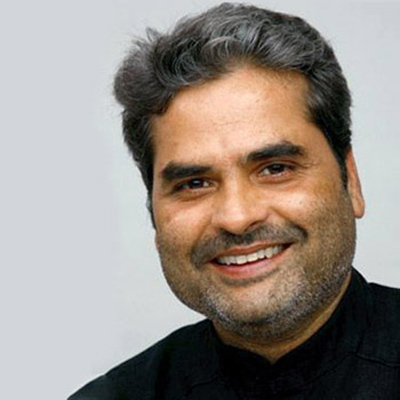
  • Vishal Bhardwaj to shoot Hamlet in Kashmir

    Vishal Bhardwaj to shoot Hamlet in Kashmir

    Though the leading man in Vishal Bhardwaj’s film adaptation of Hamlet is still under wraps, the locations for the film has been finalised. Bhardwaj’ recently revealed that the film will be shot in Kashmir.


    Apparently, the director wanted to weave the story of Hamlet with a violent, political backdrop and he believes that the story of Kashmir would perfectly suit the theme. With Maqbool (adaptation of Macbeth) which was based in Mumbai and Omkara (adaptation of Othello) based in a small town in the north, this location for yet another drama seems to be an apt choice.


    The film is said for a 2014 release and will coincide with the 450th birth anniversary celebrations of the most popular playwright William Shakespeare. Thus, continues Bhardwaj’s obsession with making movies on his favourite writer’s plays.