Tag: Kartik Sharma

  • ‘Not taking anything for granted is our guiding philosophy’: Maxus MD Kartik Sharma

    ‘Not taking anything for granted is our guiding philosophy’: Maxus MD Kartik Sharma

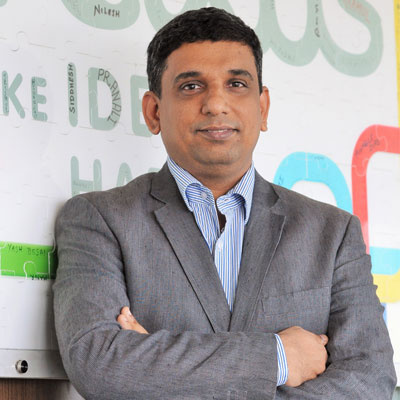
    ‘No room for complacency’ is a motto Maxus South Asia managing director Kartik Sharma as well as his team follow strongly when it comes to upholding the philosophy of not taking their position in the market for granted. In a market where traditional media practices are being challenged every now and then by a new start up or biz solutions provider, Maxus isn’t too worked up, says Sharma, but is definitely not taking it easy.

    With client retention being top priority, the media agency has heavily invested in new and innovative services in the last few years… while some have worked, others have taught team Maxus what to work on next… the next innovation.

    In an interview with Indiantelevision.com’s Papri Das, Sharma speaks on the company’s future initiatives that not only prepares Maxus as an agency of tomorrow but also forms yardsticks for the dynamic current media ecosystem.

    Excerpts:

    How was 2015 for Maxus in terms of new businesses and mandates?

    2015 was a challenging as well as gratifying year. We have been successful in achieving our business goals. We have picked up a fair amount of new businesses as well. But that is part and parcel of our business. We did some landmark work in the area of sports where we helped our client Paytm bag the BCCI home series sponsorship rights of 84 matches. We also set up a new marketing command centre called Mesh that reads signals from social media and other data platforms to help brands to come up with real time interventions and help campaigns.

    What were the challenges that you faced in 2015?

    The first quarter was a bit slow and I think this was uniform across all agencies last year. Therefore business was slow but it picked up in the latter half of the year. There was also this sentiment about the new government and what it can do, which drove a lot of the business decisions as well. We had mixed feelings through the year regarding how our clients will end up spending and whether they would be making cuts, because that directly impacts our business. Having said that, things were looking better by the end of the year.

    How useful has Mesh proved for you and your clients?

    We launched Mesh around April – May last year with two centres in Mumbai and Delhi, and very soon we will set up one in Bangalore as well. The idea was to set it up internally and have a culture change within Maxus. Parallelly, we also got multiple projects at the back of Mesh. A lot of clients are already using Mesh in various ways, be it ad-hoc or continual projects.

    It actually started much earlier in a different avatar when we deployed a similar service with Nestle as a client. We did some interesting work with L’oreal on the same principles where we continued to monitor all the social media pages and activities on the brand, understand the top influences and the kind of content that was working for the brand. The engagement analysis told us which part of India was giving us response on a particular product. It was immensely helpful in understanding what consumers feel about various brands.

    With the technology evolving and the ecosystem becoming more dynamic, do you think advertisers’ dependency on media agencies has increased?

    More than dependency, I think we work with clients as partners so it’s all about being equal in that. We have been able to demonstrate the real value of what we call the command centre. It’s about telling really powerful and relevant stories, which you can actually take back as an impact on your business.

    We must also take into consideration the number of new pitches that happened globally. Last year, around 20 million plus pitches took place globally. Fortunately for us, we weren’t part of it as you can never really predict how these additions will work out. As an agency, I would rather focus on current clients doing a great job than pitching. I think that having a few new strategic pitches are fine as long as it doesn’t effect your loyalty to your current clients.

    Don’t you think Maxus as a group has the capability to take on new clients without disappointing the existing ones?

    I have mentioned this again and I will repeat it yet again, Maxus as a group never takes its position in the market for granted. We have to earn what we are standing on and demonstrate every single day to all our stakeholders. That is critical to Maxus’ functioning. Not taking anything for granted is our guiding philosophy. It is also about the changing environment and Maxus needs to be forward facing to some extent. Mesh is a project keeping that in mind. If we don’t invest in Mesh and prepare ourselves for the future, then we can’t make that transition.

    Do you sense competition from all the ‘marketing solutions’ providers that have mushroomed in the industry recently? Some of them claim to provide similar services that Maxus has.

    Competition is always welcome. It builds a certain degree of positive energy for everyone to do better. Having said this, we have our own vision. It is a very inspiring vision that leans in to change. If you look at how we work, the entrepreneurial streak is very strong within Maxus. The DNA of Maxus is all about innovation, doing new things and evolving. So I am not overtly worried about the competition, yet we will keep a watch. We will not become complacent for sure.

    We see several big agencies collaborating with start-up agencies for specific skill sets. Do you think it reflects the lack of certain skills within the big media agencies to take on the changing market dynamics?

    Firstly, the skill set factor is not affecting just the agencies, I think it is across the board. As the market landscape changes, there are two ways to deal with it – either incorporate and evolve all the skill sets internally, which requires its own time and effort, or partner with someone who has these skill sets in a focused area still relevant to you. It is always going to be hybrid between building yourself and partnering with others.

    Can it be considered a shortcut way out?

    I don’t think it’s a shortcut. Once a client comes on board an agency, we want to give them the best possible solution. Clients don’t really worry too much on where that solution is coming from. There will always be something like a super specialisation, which an agency might not require for all its clients. Therefore it is better to partner, for a particular client or for a brief period of time.

    We too work with multiple partners. For example, we introduced a tool called Synapse last year, which marries television ratings with social buzz. We work with our partner Frrole to develop that. Frrole has certain proprietary technology for which it makes immense sense for us to partner with them.

    Within the WPP ecosystem we work with the research agency Kantar because it gives us certain specialisations. Rather than replicating the same skills within the agencies, it’s better to work with the experts.

    How do you ensure client’s faith in television, especially for advertisers who are heavily dependent on the television medium when there is all this talk about television losing importance in the advertising space?

    Firstly, we will continue to use the industry endorsed television rating system, which is currently Broadcast Audience Research Council (BARC) India. Secondly, as I mentioned earlier, we have the tool Synapse that helps marry television ratings with the social buzz. For particularly niche brands, which have a well defined target group, sometimes only TV ratings may not work. It may be that a certain type of channel, say a niche channel with a very targeted audience will work for them. We can identify them by listening to the social buzz. So in many ways, we are supporting the need for television through these new initiatives.

    Agencies are increasingly facing the ‘4 second challenge’ digital platforms with this current ADHD generation. How can the industry deal with this?

    First and foremost, one needs to take a hard look at the communication created for television and have an open conversation with the client and the creative agency on whether the same communication will hold true in a digital environment.

    The second thing is about doing a lot of experiment and a bit of trial and error at low cost to see what works and then tweaking it accordingly. Keeping an eye on what’s happening globally and learning from best practices or successful examples there and contextualising in the Indian market is also necessary.

    Any new services or products that are in the pipeline from Maxus?

    There are at least four or five big initiatives that we have in mind but it’s a little premature to talk about it now. By end March or early April we will be able to give a proper communication on the same.

    We keep innovating on our product front and learn from the previous launches. If certain things haven’t worked, we go back to the black board and think on what needs to change. At this point in time, I can say that we will soon be introducing an improved version of our T2D tool that was launched last year targeting the eCommerce community. We have received good feedback on it and will build on it to develop it into a more powerful tool.

  • ‘Not taking anything for granted is our guiding philosophy’: Maxus MD Kartik Sharma

    ‘Not taking anything for granted is our guiding philosophy’: Maxus MD Kartik Sharma

    ‘No room for complacency’ is a motto Maxus South Asia managing director Kartik Sharma as well as his team follow strongly when it comes to upholding the philosophy of not taking their position in the market for granted. In a market where traditional media practices are being challenged every now and then by a new start up or biz solutions provider, Maxus isn’t too worked up, says Sharma, but is definitely not taking it easy.

    With client retention being top priority, the media agency has heavily invested in new and innovative services in the last few years… while some have worked, others have taught team Maxus what to work on next… the next innovation.

    In an interview with Indiantelevision.com’s Papri Das, Sharma speaks on the company’s future initiatives that not only prepares Maxus as an agency of tomorrow but also forms yardsticks for the dynamic current media ecosystem.

    Excerpts:

    How was 2015 for Maxus in terms of new businesses and mandates?

    2015 was a challenging as well as gratifying year. We have been successful in achieving our business goals. We have picked up a fair amount of new businesses as well. But that is part and parcel of our business. We did some landmark work in the area of sports where we helped our client Paytm bag the BCCI home series sponsorship rights of 84 matches. We also set up a new marketing command centre called Mesh that reads signals from social media and other data platforms to help brands to come up with real time interventions and help campaigns.

    What were the challenges that you faced in 2015?

    The first quarter was a bit slow and I think this was uniform across all agencies last year. Therefore business was slow but it picked up in the latter half of the year. There was also this sentiment about the new government and what it can do, which drove a lot of the business decisions as well. We had mixed feelings through the year regarding how our clients will end up spending and whether they would be making cuts, because that directly impacts our business. Having said that, things were looking better by the end of the year.

    How useful has Mesh proved for you and your clients?

    We launched Mesh around April – May last year with two centres in Mumbai and Delhi, and very soon we will set up one in Bangalore as well. The idea was to set it up internally and have a culture change within Maxus. Parallelly, we also got multiple projects at the back of Mesh. A lot of clients are already using Mesh in various ways, be it ad-hoc or continual projects.

    It actually started much earlier in a different avatar when we deployed a similar service with Nestle as a client. We did some interesting work with L’oreal on the same principles where we continued to monitor all the social media pages and activities on the brand, understand the top influences and the kind of content that was working for the brand. The engagement analysis told us which part of India was giving us response on a particular product. It was immensely helpful in understanding what consumers feel about various brands.

    With the technology evolving and the ecosystem becoming more dynamic, do you think advertisers’ dependency on media agencies has increased?

    More than dependency, I think we work with clients as partners so it’s all about being equal in that. We have been able to demonstrate the real value of what we call the command centre. It’s about telling really powerful and relevant stories, which you can actually take back as an impact on your business.

    We must also take into consideration the number of new pitches that happened globally. Last year, around 20 million plus pitches took place globally. Fortunately for us, we weren’t part of it as you can never really predict how these additions will work out. As an agency, I would rather focus on current clients doing a great job than pitching. I think that having a few new strategic pitches are fine as long as it doesn’t effect your loyalty to your current clients.

    Don’t you think Maxus as a group has the capability to take on new clients without disappointing the existing ones?

    I have mentioned this again and I will repeat it yet again, Maxus as a group never takes its position in the market for granted. We have to earn what we are standing on and demonstrate every single day to all our stakeholders. That is critical to Maxus’ functioning. Not taking anything for granted is our guiding philosophy. It is also about the changing environment and Maxus needs to be forward facing to some extent. Mesh is a project keeping that in mind. If we don’t invest in Mesh and prepare ourselves for the future, then we can’t make that transition.

    Do you sense competition from all the ‘marketing solutions’ providers that have mushroomed in the industry recently? Some of them claim to provide similar services that Maxus has.

    Competition is always welcome. It builds a certain degree of positive energy for everyone to do better. Having said this, we have our own vision. It is a very inspiring vision that leans in to change. If you look at how we work, the entrepreneurial streak is very strong within Maxus. The DNA of Maxus is all about innovation, doing new things and evolving. So I am not overtly worried about the competition, yet we will keep a watch. We will not become complacent for sure.

    We see several big agencies collaborating with start-up agencies for specific skill sets. Do you think it reflects the lack of certain skills within the big media agencies to take on the changing market dynamics?

    Firstly, the skill set factor is not affecting just the agencies, I think it is across the board. As the market landscape changes, there are two ways to deal with it – either incorporate and evolve all the skill sets internally, which requires its own time and effort, or partner with someone who has these skill sets in a focused area still relevant to you. It is always going to be hybrid between building yourself and partnering with others.

    Can it be considered a shortcut way out?

    I don’t think it’s a shortcut. Once a client comes on board an agency, we want to give them the best possible solution. Clients don’t really worry too much on where that solution is coming from. There will always be something like a super specialisation, which an agency might not require for all its clients. Therefore it is better to partner, for a particular client or for a brief period of time.

    We too work with multiple partners. For example, we introduced a tool called Synapse last year, which marries television ratings with social buzz. We work with our partner Frrole to develop that. Frrole has certain proprietary technology for which it makes immense sense for us to partner with them.

    Within the WPP ecosystem we work with the research agency Kantar because it gives us certain specialisations. Rather than replicating the same skills within the agencies, it’s better to work with the experts.

    How do you ensure client’s faith in television, especially for advertisers who are heavily dependent on the television medium when there is all this talk about television losing importance in the advertising space?

    Firstly, we will continue to use the industry endorsed television rating system, which is currently Broadcast Audience Research Council (BARC) India. Secondly, as I mentioned earlier, we have the tool Synapse that helps marry television ratings with the social buzz. For particularly niche brands, which have a well defined target group, sometimes only TV ratings may not work. It may be that a certain type of channel, say a niche channel with a very targeted audience will work for them. We can identify them by listening to the social buzz. So in many ways, we are supporting the need for television through these new initiatives.

    Agencies are increasingly facing the ‘4 second challenge’ digital platforms with this current ADHD generation. How can the industry deal with this?

    First and foremost, one needs to take a hard look at the communication created for television and have an open conversation with the client and the creative agency on whether the same communication will hold true in a digital environment.

    The second thing is about doing a lot of experiment and a bit of trial and error at low cost to see what works and then tweaking it accordingly. Keeping an eye on what’s happening globally and learning from best practices or successful examples there and contextualising in the Indian market is also necessary.

    Any new services or products that are in the pipeline from Maxus?

    There are at least four or five big initiatives that we have in mind but it’s a little premature to talk about it now. By end March or early April we will be able to give a proper communication on the same.

    We keep innovating on our product front and learn from the previous launches. If certain things haven’t worked, we go back to the black board and think on what needs to change. At this point in time, I can say that we will soon be introducing an improved version of our T2D tool that was launched last year targeting the eCommerce community. We have received good feedback on it and will build on it to develop it into a more powerful tool.
  • Maxus recruits Vidur Patney and Pooja Verma with strategic roles

    Maxus recruits Vidur Patney and Pooja Verma with strategic roles

    MUMBAI:  Maxus, a global marketing communications consultancy firm under the GroupM umbrella, has announced two key appointments for its specialist units. Vidur Patney is roped in as the national director experiential marketing and Pooja Verma will be the head of Maxus ESP.


    In his career span of eighteen years, Patney has worked with leading agencies like Dentsu Communications Private Limited, Encompass Events Private Limited, and 212 Traders etc. He was with Globox Media Private Limited before being absorbed by Maxus. He has handled important and significant clients in all his earlier stints and brings to the table a proven ability to manage key account relationships and large-scale projects.


    Earlier with leading multi-nationals like Disney, BASF,etc. Pooja Verma has been involved in building engagement as a part of content strategy through communication, branding, marketing and citizenship initiatives, for nearly 15 years. In her last role she was the director of marketing and communication for Make-A-Wish based in Singapore.


    Talking about the two new appointments Maxus South Asia MD Kartik Sharma asserted, “The appointments of Vidur Patney and Pooja Verma reflect Maxus’ commitment to attracting the best and brightest talent to our agency. They both are reliable leaders with robust backgrounds in experiential marketing and content marketing respectively. Both of them will fit very well within our strongly established client-driven culture and marketing culture and we are sure they will achieve even higher success with Maxus.”


    Elaborating on this development, Vidur Patney said, “The media landscape is possibly at its most dynamic state today. It’s a time of rapid and big changes. With the vision that Maxus has, and the kind of work that they do, my decision making became that much easier. Maxus is going from strength to strength; I’m excited to be a part of this growth oriented organization and being present while we achieve greater heights of success.”


    “Maxus ESP is in a unique position to tell our client’s stories through differentiated content and associations with leading entertainment, sports and live properties. As MAXUS ESP gears up to the next level, I am privileged to lead this award winning team in its mission. I look forward to utilising all that I have learnt working with multinational brands in enabling the team to build an imaginative and successful body work for our clients”, adds Pooja Verma on her new appointment.

  • AMES 2015: Lowe Lintas + Partners bags 10 awards, Maxus India wins 5

    AMES 2015: Lowe Lintas + Partners bags 10 awards, Maxus India wins 5

    MUMBAI: The Asian Marketing Effectiveness & Strategy (AMES) Awards 2015 declared Lowe Lintas + Partners as the Agency of the Year in the Effectiveness category.

    After bagging the maximum number of shortlists from India (17), the agency managed to win a total of 10 awards comprising four Silver and six Bronze trophies.

    In all, the Indian agencies put out a sterling performance by winning 31 trophies this year. The Indian contingent was led by Lowe Lintas + Partners, who with a rich haul of 10 trophies emerged as the agency with the largest number of wins from not just India but also in the Asia Pacific region.

    The awards tally of Lowe Lintas + Partners includes:

    Commenting on the performance put up by the agency, Lowe Lintas + Partners CEO Joseph George said, “After being declared earlier this year by WARC as 2014’s Most Effective Agency in the World, this performance at the AMES last night is a further confirmation of what we and juries around the world believe what we are good at – delivering disruptive creative solutions that work in the mind and in the market. We look forward to carry this momentum and performance right through the year!”

    Lowe Lintas + Partners national planning director S Subramanyeswar added, “We thank the jury for acknowledging our work and giving it due recognition from a host of entries across the Asia Pacific. This appreciation for effective work gives us the opportunity to do more. We would like to build on this momentum and hope to beat ourselves next year again.”

    On the other hand, global communications consultancy firm Maxus won five awards at the Asian Marketing Effectiveness and Strategy Awards. The ceremony, which took place on 3 June, saw over 600 entries. India had a total of about 15 shortlists across different agencies out of which six were from Maxus India. Maxus India won two silvers and one bronze award for Tata Tea Power of 49 Campaign and two bronze awards in the data analytics and retail analytics categories too.

    Maxus south Asia managing director Kartik Sharma said, “Maxus has always made strong, enthusiastic and consisted efforts to achieve the best and future ready in a digitally competitive market where every agency is striving for better than the best. We at Maxus believe these wins have given us an overall and stronger edge in the market, helping us bring unlimited satisfaction to our existing clients and bring new clients into the fold. We are of course ecstatic about the wins! We would like to share the credits with Tata Tea who have believed in the idea and the entire team who has put in the hard work over the years. These wins also prove beyond doubt that Maxus has an undying spirit of wanting to deliver the best for our clients always and keeping them involved at the levels without any hesitation.”

    This year, out of a total of 1100 entries and 289 shortlists, the juries awarded trophies to 144 winners from 10 countries – three Platinum, 26 Gold, 45 Silver, 75 Bronze trophies. Country-wise, it was India that took the lead with 31 wins followed by China at 26 and Australia with 24 wins. 

  • Pitch game: Sell your idea in 30 seconds says Paritosh Painter

    Pitch game: Sell your idea in 30 seconds says Paritosh Painter

    MUMBAI: The last session of PromaxBDA witnessed a candid and fun conversation between broadcast executives and agencies, who acknowledged the elephant in the room – pitching. For many agencies and their clients, pitching is a hot and sensitive topic.


    The session with Namit Sharma, Abhijit Avasthi, Maxus South Asia’s Kartik Sharma and Reliance Broadcast Network’s Paritosh Painter was moderated by Reliance Broad Network CEO Tarun Katial.


    Panelists had a unanimous answer to the three key points that one must prepare before engaging in a pitch. They are as follows: 1) Knowing what the client wants, 2) A unique idea and 3) Conviction to pitch the idea before presenting it to the client.


    Sharma was of the opinion that one should share ideas in the time given. He said, “You have five minutes to convince the client. If he is not convinced in that time then you should move on to plan B,” he said.


    Avasthi added, “You need to be ruthless to yourself while evaluating the idea so that you can get the best out of it.”


    Maxus’ Sharma further added, “You need to work for the client, so that he can benefit and that should also be a point that one should keep in mind.”


    Replying to Katial’s question as to whether ideas should be original or inspired, Painter said, “Ideas are generally original, but the client might not understand it at the first instance. At that point, one needs to give them referral points so that they understand it better. Hence they are original and inspired.”


    On questioning about the tangibility of the idea, Sharma said, “It can be a combination of both. But pitching needs execution.”


    An agency wins or loses a pitch on the basis of the execution. Maxus’ Sharma said, “A brilliant idea can help us win a pitch.” Stating an example, he said that there have been times when his team has gone unprepared for a pitch, but the client has liked the idea and they have won pitches. Indeed, he is of the opinion that winning or losing a pitch doesn’t depend on the tangibility of the idea.


    When asked as to what happens when a tangible idea is not strong, Avasthi said, “Personally, since I come from the advertising background, I feel one needs to evaluate the idea and then pitch it. I have seen instances when my team has come up to me and we have brainstormed the idea because I am quite aware that they will not be able to polish it. So I try to pull out something breakthrough from their idea.”


    Painter asserted that one should sell the idea in 30 seconds. He said, “I am generally convinced about my idea so that I can sell it. When I evaluate pitches, I first try to understand the intention of the pitch. Is it business or passion that is driving the person? If it is business then the person sitting in front of me has to do a lot of hard work to convince me, but if it is passion, 70 per cent of the convincing job is done. You just have to push the person the extra 30 per cent for you to say yes. And that person will do it, because a lot of passion drives him to do that.”


    The discussion then took the curve of whether an experienced person’s pitch value is more than that of a youth. Sharma opines that the idea must be focused on and not the experience of the person. On the other hand, Avasthi and Maxus’ Sharma opined that it depends on the client. If the client is new then youngsters do present pitches, while if it is an old and important client then an experienced person should give the pitch.


    Concluding the discussion with tips on what one should do after the pitch, Avasthi said, “The person should take ownership of the pitch and it is important that the other person is concurrent with that.”


    Painter asserted, “One must do a thorough research on the idea and on the client.”


    Concluding, Maxus’ Sharma said, “Ask a lot of questions and you will get rich insights. During the pitch have a feedback and close the pitch with a dialogue.”

  • Maxus bags media planning mandate of Shopclues.com

    Maxus bags media planning mandate of Shopclues.com

    MUMBAI: Maxus has won the media planning duties for e-commerce venture Shopclues.com following a multi agency pitch.


    The Maxus Delhi team will be managing the account under the aegis of Maxus managing partner Navin Khemka. 


    Maxus South Asia managing director Kartik Sharma said, “It is indeed a prestigious win for us and we are thrilled to partner with the Shopclues team and to grow with them as their business scales newer heights. We are particularly excited to bring out the best business-oriented solutions for them.”


    Shopclues.com co-founder and chief business officer Radhika Aggarwal added, “We are on a very rapid growth orbit and after careful evaluation we decided Maxus will be an ideal partner for driving this growth engine. We are excited to have Maxus on board and confident that their innovative strategic and creative inputs will create the right buzz that we as a brand need today. We expect a lot of superlative work on our brand.”

  • Maxus strengthen top brass; Priti Murthy upped as chief strategy officer

    Maxus strengthen top brass; Priti Murthy upped as chief strategy officer

    MUMBAI: Global communications consultancy firm Maxus has promoted Priti Murthy as chief strategy officer in order to strengthen its top brass.


    Maxus managing director Kartik Sharma said, “Over the years Priti Murthy has built a strong insights team across offices who are working tirelessly to raise the bar. Priti’s contribution to the business is exemplary and the 2014 award wins for data, research and analytic across forums is a testimony of great work being done by team Insights across clients under her leadership. One can definitely expect very interesting breakthrough initiatives from Priti and her team very soon. A proven leader she will be leading and constructing quite a few cutting edge engagement initiatives for us.”


    In her new role, Murthy will be working towards building the Maxus product focusing on Insights, effectiveness and behavior change projects through Moribus, its behavioral science unit for delivering client delight. Additionally she will also be working closely with the Maxus APAC regional planning team in developing new methods and techniques for strengthening our communications planning offering.


    Murthy added, “I am delighted to come on board as the chief strategy officer at Maxus.  I am sure my new role will further broaden the horizon for me.  I am excited to bring alive the trinity – data, digital and content. My focus will be to use the right consumer data, to come up with solutions that will deliver for our strong portfolio of clients and take the solutions to the next level with strategic and creative programmes that go beyond just traditional platforms and to blend content and creativity at the heart of our delivery. In the innovative span of time that I’ve worked here, I have got an encouraging glimpse of a very positive working atmosphere.  My focus will be I look forward towards another thrilling round at Maxus.”

  • “IPL 8 will be bigger and better in every aspect including brand valuation”: Rohit Gupta

    “IPL 8 will be bigger and better in every aspect including brand valuation”: Rohit Gupta

    MUMBAI: The country hasn’t yet recovered from the celebrations of India’s victory over Pakistan in the World Cup and they are being served with another dose of cricketing enthusiasm with Indian Premiere League (IPL). India discard Yuvraj Singh became the highest paid player in 2015 Pepsi IPL players auction as Delhi Daredevils paid Rs 16 crore to earn his services. The multimillionaire league will start on 8 April in Kolkata.


    This time round, Multi Screen Media (MSM) will hike the ad rates by 10 – 15 per cent for the league’s matches. Emphasising on the commercial aspect, Multi Screen Media (MSM) president Rohit Gupta tells Indiantelevision.com, “We will have a 10 to 15 per cent hike in the ad rate this time too. We cannot increase the number of advertisers as our inventory follows certain guidelines laid down by the Board for Control of Cricket in India (BCCI).”


    Speaking on the eighth edition of IPL, Gupta adds, “IPL has established itself as a stable format now like any other major sporting league in the world. There is not much room for improvisation when it comes to the format of the game. The tournament has seen tough times. Last year IPL was organised in the midst of general elections and everyone thought the viewership will take a blow but the ratings say a different story. The fact that we successfully traveled through all the tough times, proves IPL’s establishment as a mature tournament.”


    The tournament starts only 10 days after the World Cup and when questioned about the fatigue factor of viewers and advertisers Gupta replies, “This World Cup is highly different from 2011 edition when the matches were played in the Indian subcontinent. Spectators went to the ground to cheer for the national team. In this edition of the World Cup that’s not happening since the matches are being played in Australia and New Zealand. India has already played against Pakistan and for many cricket lovers the tournament is over there. Interest will be high for other India matches, which comes once a week and a point that has to be noted is none of the matches are being played in the primetime. Overall fatigue is not at all an issue or concern when it comes to viewership or commercial interest. During IPL you get a competitive match every day and need not wait for a week.”


    The digital rights for IPL have been bagged by MSM’s competitor Star India’s VOD platform Hotstar. When questioned about the impact of that on viewership, Gupta asserts, “TV viewership does not get affected by the digital platform. If someone has the option of choosing one of the two mediums, the obvious choice would be television. The digital platform helps building curiosity and as a result increases viewership. Moreover in India, we have a lot of issues like bandwidth and lack of proper 3G network.”


    Necessary ignition was offered by the IPL players’ auction where Yuvraj Singh and KC Cariappa emerged as two shocking acquisitions. The flagship tournament is already being talked about and hence sets the stage for marketing. Throwing light on the network’s promotional strategy, Gupta says, “We are launching a huge marketing campaign, which would be different and bigger from last year. IPL is our biggest asset and we need to back it with proper promotional activities. It will be a 360 degree campaign across all mediums and it is expected to go on air by the end of February.”


    IPL may be a platform for new talent but it has been the centre of a lot of controversies in recent times. The Supreme Court of India had to intervene to fight misdemeanour of many officials. When questioned about the integrity of the tournament, Gupta asserts, “BCCI is an established organisation and it will certainly take care of the integrity. International cricket stars play in the tournament, spectators love it and advertisers are interested in it, that’s all that matters. By mid-March we will have a packed ad inventory.”


    “IPL season 8 will be bigger and better in every aspect including brand valuation. We will grow our viewership and successfully earn good ratings,” Gupta adds.


    Media buyers are also upbeat about the tournament. Helios Media managing director Divya Radhakrishnan says, “IPL has a different set of spectators and there is no possibility of fatigue ruining the enthusiasm of the tournament. Whereever there is viewership, there is advertisement and IPL is one of the highest viewed cricket tournaments, which automatically make it a tournament of high commercial interest.”


    Maxus managing director Kartik Sharma adds, “The first two or three matches will decide the fate of the tournament. They have to be strong and well fought bouts. If we get last ball finishes and super overs in the initial stages of the tournament it will evolve as a big thing. It’s all about entertainment at the end of the day and if IPL manages to attract spectators and viewers, advertisers will automatically follow.”

  • Maxus wins media mandate for ICC Cricket World Cup 2015

    Maxus wins media mandate for ICC Cricket World Cup 2015

    MUMBAI: GorupM’s agency Maxus has won the media investment mandate in India for the International Cricket Council (ICC) Cricket World Cup 2015, which is taking place in Australia and New Zealand.


    Maxus MD Kartik Sharma said, “Cricket is one of the important sports in India and the frenzied excitement and popularity it has is unprecedented as compared to other sports. Maxus is extremely proud and excited to manage the media duties for the ICC Cricket World Cup 2015. The World Cup is the pinnacle of one day cricket expected to draw tremendous excitement all over the world.”


    Maxus has previously handled four campaigns in India for the ICC including the ICC Cricket World Cup 2011, ICC World Twenty20 Sri Lanka 2012, ICC Champions Trophy England & Wales 2013 and ICC World Twenty20 Bangladesh 2014.


    ICC Cricket World Cup 2015, which will commence on 14 February, will conclude in Melbourne on 29 March, during which a total of 49 matches and 14 participating nations will test their mettle.