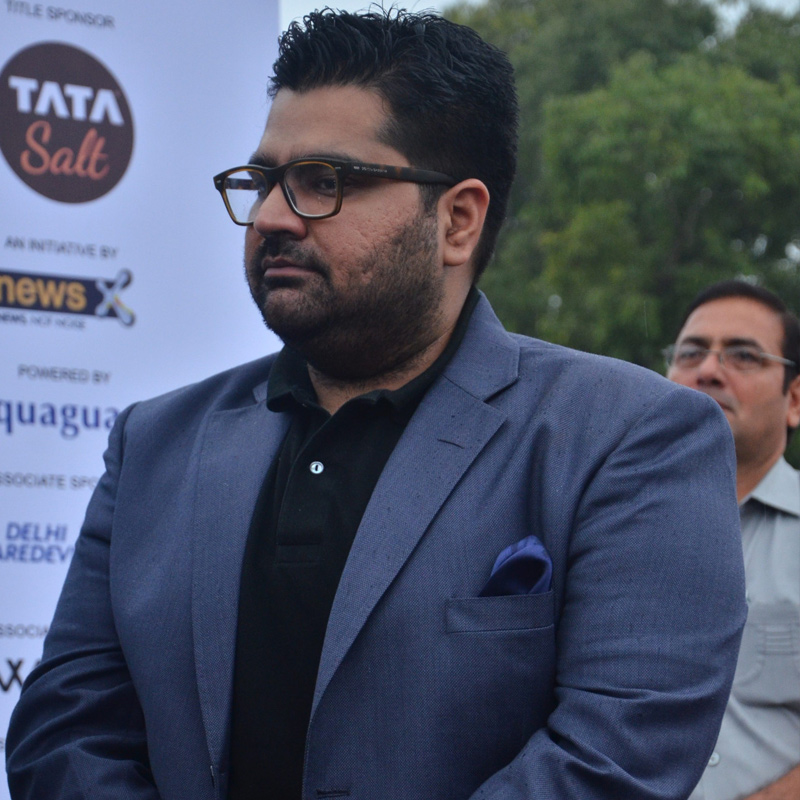
Tag: Karthikeya Sharma

  • Treat viewers as customers; package & sell your ‘sport’ brand well: PWL

    Treat viewers as customers; package & sell your ‘sport’ brand well: PWL

    MUMBAI: Last year in Delhi thousands of people could be seen queued up outside a stadium waiting anxiously to get in after buying tickets. For a cricket match? Nope. The buzzing crowd was there to watch the wrestlers in action in the first season of Pro Wrestling League (PWL).

    In sharp contrast, a tennis premier league also being held around the same time as PWL found it hard to get in the audience despite having big international and Indian stars on show. Though tennis league’s high cost of tickets could have been a deterrent for the average people, but Pro- Sportify and ITV Media Network managing director Karthikeya Sharma, the man behind the PWL has a point when he said, “It’s not always about bringing a big star or highlighting quirky aspects of the product, but it’s about getting the fundamentals right. We started by understanding the sport of wrestling, its importance and sentimental values for viewers and in-stadia audience and then built around it a league by properly identifying the customer.”

    Wrestling joined the league of sporting leagues in India on 10 December 2015 and PWL is a property that’s jointly owned and managed by Wrestling Federation of India and Pro Sportify Pvt. Ltd. The league is supported by the International Wrestling Federation (IWF). The league, which garnered millions of eyeballs last year, is back in its second season from 15 December 2016 with the tagline “Double Dhamaka”. The new additions include having eight teams instead of six, increasing the players’ pool to 80 from the initial draft of 54 and spreading the duration of the multi-city league over a month from the initial 18-day edition.

    However, it hasn’t been smooth sailing for the wrestling league or its organisers as in a cricket-crazy nation like India not many other sports succeed to get big bucks from advertisers or the swooning crowd in stadia. “We had to face lot of adversities as we had to pick up an Olympic sport that’s perceived boring and a long-hour format sport both from the point of broadcast and on-ground audience,” Sharma elaborated on the early difficulties at an event yesterday in Mumbai organised by Event and Entertainment Management Association (EEMA), Pro- Sportify and ITV Media Network.

    But as rightly pointed out by Sharma wrestling does connect with the Indians at some level, especially those from semi-urban areas of India. Though cricket, tennis and in recent times badminton is seen as medal-winning sports in India, but the first Olympic medal for the country was won in 1952 by KD Jadhav in wrestling. “I think it’s a different story to pick a sport that’s, perhaps, not as popular (as cricket or tennis) and turn it into a commercial success by building on the facts that it is respected and connected to our land,” he explained.

    Talking about the success of PWL, Sharma informed, “In the first season PWL was about 100 per cent more in terms of reach in viewership then ISL in second season. As the commercial sports league we are second highest watched property in its first season itself.”

    The first season of PWL had 50 Olympians and 20 Olympic medallists from 35 counties. The numbers double in second season. The growing numbers are also an indication that the league is attracting financial supporters who see opportunities. “You cannot distinguish between the 10,000-20,000 people that come to watch in the stadium and the approximately 400,000 people who watch the same product on TV sitting their houses. I think it’s extremely important to hand out an experience that is not only valued by people sitting in the stadium, but also by people sitting at home,” Sharma held forth on the business of a league.

    Pointing out that 48 per cent of viewership came from female audience for PWL’s first season, Sharma aptly summed up:“We are trying to build a product that’s dominated by the males. The female viewership largely came in because of innovations though we have not changed any Olympic rule.”

  • Treat viewers as customers; package & sell your ‘sport’ brand well: PWL

    Treat viewers as customers; package & sell your ‘sport’ brand well: PWL

    MUMBAI: Last year in Delhi thousands of people could be seen queued up outside a stadium waiting anxiously to get in after buying tickets. For a cricket match? Nope. The buzzing crowd was there to watch the wrestlers in action in the first season of Pro Wrestling League (PWL).

    In sharp contrast, a tennis premier league also being held around the same time as PWL found it hard to get in the audience despite having big international and Indian stars on show. Though tennis league’s high cost of tickets could have been a deterrent for the average people, but Pro- Sportify and ITV Media Network managing director Karthikeya Sharma, the man behind the PWL has a point when he said, “It’s not always about bringing a big star or highlighting quirky aspects of the product, but it’s about getting the fundamentals right. We started by understanding the sport of wrestling, its importance and sentimental values for viewers and in-stadia audience and then built around it a league by properly identifying the customer.”

    Wrestling joined the league of sporting leagues in India on 10 December 2015 and PWL is a property that’s jointly owned and managed by Wrestling Federation of India and Pro Sportify Pvt. Ltd. The league is supported by the International Wrestling Federation (IWF). The league, which garnered millions of eyeballs last year, is back in its second season from 15 December 2016 with the tagline “Double Dhamaka”. The new additions include having eight teams instead of six, increasing the players’ pool to 80 from the initial draft of 54 and spreading the duration of the multi-city league over a month from the initial 18-day edition.

    However, it hasn’t been smooth sailing for the wrestling league or its organisers as in a cricket-crazy nation like India not many other sports succeed to get big bucks from advertisers or the swooning crowd in stadia. “We had to face lot of adversities as we had to pick up an Olympic sport that’s perceived boring and a long-hour format sport both from the point of broadcast and on-ground audience,” Sharma elaborated on the early difficulties at an event yesterday in Mumbai organised by Event and Entertainment Management Association (EEMA), Pro- Sportify and ITV Media Network.

    But as rightly pointed out by Sharma wrestling does connect with the Indians at some level, especially those from semi-urban areas of India. Though cricket, tennis and in recent times badminton is seen as medal-winning sports in India, but the first Olympic medal for the country was won in 1952 by KD Jadhav in wrestling. “I think it’s a different story to pick a sport that’s, perhaps, not as popular (as cricket or tennis) and turn it into a commercial success by building on the facts that it is respected and connected to our land,” he explained.

    Talking about the success of PWL, Sharma informed, “In the first season PWL was about 100 per cent more in terms of reach in viewership then ISL in second season. As the commercial sports league we are second highest watched property in its first season itself.”

    The first season of PWL had 50 Olympians and 20 Olympic medallists from 35 counties. The numbers double in second season. The growing numbers are also an indication that the league is attracting financial supporters who see opportunities. “You cannot distinguish between the 10,000-20,000 people that come to watch in the stadium and the approximately 400,000 people who watch the same product on TV sitting their houses. I think it’s extremely important to hand out an experience that is not only valued by people sitting in the stadium, but also by people sitting at home,” Sharma held forth on the business of a league.

    Pointing out that 48 per cent of viewership came from female audience for PWL’s first season, Sharma aptly summed up:“We are trying to build a product that’s dominated by the males. The female viewership largely came in because of innovations though we have not changed any Olympic rule.”

  • ITV Network’s Karthikeya Sharma picks up majority stake in Barun Das’ ad sales firm

    ITV Network’s Karthikeya Sharma picks up majority stake in Barun Das’ ad sales firm

    MUMBAI: ITV Network MD Karthikeya Sharma has picked up majority stake in private equity backed ad sales agency Cent Percent Media Solutions, a company co-founded by former Zee News CEO Barun Das and Amit Tripathi, who was heading the ad sales function of Zee News.


    Sharma owns ITV Network, which runs a clutch of news channels. Besides Hindi news channel India News, the other regional-language channels are India News Haryana, India News Bihar-Jharkhand, India News Rajasthan, India News Chhattisgarh and India News UP.


    Last year, ITV Network acquired English news channel NewsX from Vinay Chhajlani and Jehangir Pocha.


    With this stake dilution to Sharma, Cent Percent Media Solutions will handle the ad sales of the ITV-owned channels. The plan is to have a slew of regional-language news channels.
        

    Commenting on this acquisition, ITV Network MD Karthikeya Sharma said, “Barun and his team have tremendous track record in managing news television business in the highly competitive genre. Also given the proliferation of niche and regional channels that I foresee, riding the digitisation of cable distribution, Cent Percent is an extremely exciting proposition.”


    ITV Network CEO R K Arora added, “Our thrust is on content and marketing strategy, which has already started showing results.”


    Cent Percent Media Solutions is outsourcing adverting sales organisation with its core focus on regional and niche channels.


    Cent Percent Media Solutions co-founder Das said, “Regionalisation and Digitisation are the primary growth drivers of TV media, where so far the profitability has been the prerogative of only a select few. With capacity growing exponentially due to digitisation, Indian TV industry is poised for the next big leap. In a country of 1.24 billion people with 22 official languages, niche and regional language channels would realise their true potential, now. I expect more 200 new channels, mostly regional and Niche would be launched in next 3-5 years. Cent Percent would be a one-stop shop to meet the advertising revenue challenge of all niche and regional channels who may not find it viable to build a strong national sales team.”


    Tripathi added, “We would have a strong national team with about 70 leading sales professional. Our initial plan is to build a bouquet of regional news channels which would be the biggest and most effective one from the point of view of national advertisers. Within the first fortnight of its operations, Cent Percent has signed up with seven high potential regional news channels. We are confident that before the new financial year, we would be setting up a bouquet of 10 regional news channels. Our primary bouquet would have one channel each from leading regional TV markets of India. We would carefully handpick those channels.”