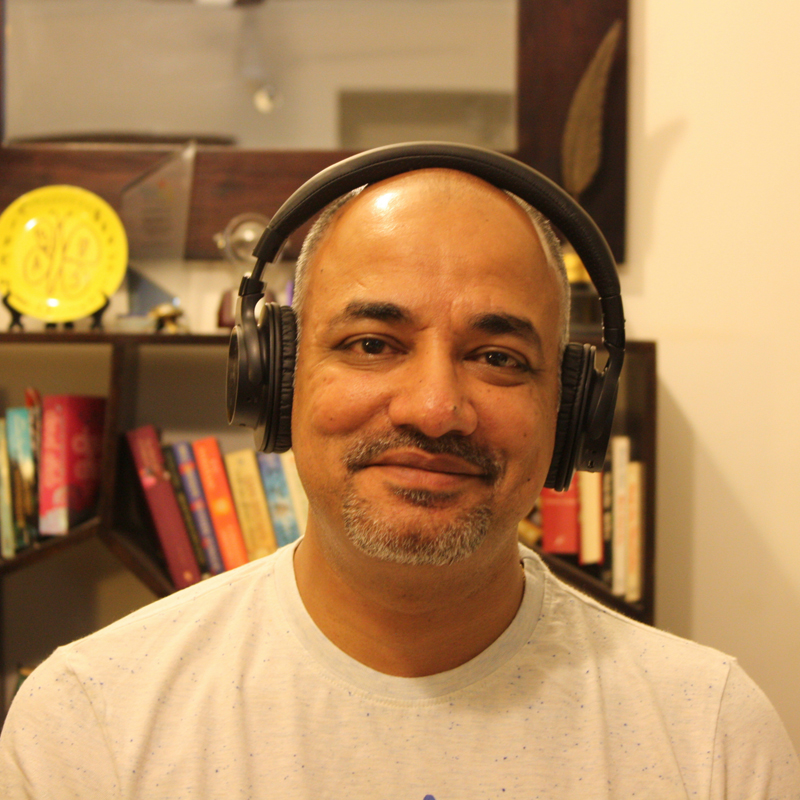
Tag: Karthik Srinivasan

  • Alia Bhatt’s YouTube channel to boost her brand value

    Alia Bhatt’s YouTube channel to boost her brand value

    MUMBAI: In the past few years, YouTubers across the world have managed to grab a celebrity status for themselves. Names like Bhuvan Bam, Prajakta Koli, Ashish Chanchlani have become immensely popular and have got the chance to perform with several Bollywood celebrities. Creators like Shibani Bedi and Harsh Beniwal also made their Bollywood debuts this year.

    While these micro-and mini-influencers are on their way to embrace the silver screen, a star from there has shifted to the digital pedestal in a big way. Alia Bhatt, who within a career spanning over just 7 years has become a critically acclaimed star and has been getting abundant love from the fans as well, has launched her own YouTube channel on which, in her own words, she is planning to showcase her ‘unadulterated’ self.

    Bhatt is already a huge star and has a massive following on Instagram and Twitter. Then why did she decide to go the YouTube way?

    As per communications consultant on digital/social media marketing and PR Karthik Srinivasan the move is understandable as YouTube helps in long-form content far better than Facebook or IGTV given the SEO benefits.

    Indiatimes and Lifestyle Brands at Times Internet COO Angad Bhatia says that Bhatt already has strong cultural relevance and with YouTube she can become an influential content creator in her own way.

    It is not the first time that a celebrity is trying to dabble in the social media space away from conventional platforms like Instagram and Facebook. Jacqueline Fernandez has a strong Snapchat presence, and she also debuted on TikTok recently along with Shahid Kapoor, and Tiger Shroff. Sonam Kapoor has her own app where she connects with her fans sharing beauty tips and offering a sneak peek into her lifestyle. In fact, a few celebs like Ajay Devgn, Shilpa Shetty Kundra, and Priyanka Chopra have their own YouTube channels as well, but they often upload just professional stuff.

    Alia, who is one of the most loved stars in the country right now, could have easily leveraged these other media as well, especially her own app. Brand-nomics’ Viren Razdan notes that apps have their own limitations and challenges and that has led to international celebs like Kim Kardashian and Taylor Swift shutting down their individual apps.  

    Srinivasan says, “An app demands that people install it in the first place. And unless they happen to be really big fans, they may not install the app since it has limited appeal on an everyday basis. Plus, app content cannot be discovered by casual fans and fans of specific topics they address from time to time, while a YouTube page, with well-curated titles and tags would be.”

    Landor managing director Lulu Raghavan adds that an app needs very strong market machinery to promote and it is quite doubtful that people would want to add more app to their phones. Meanwhile, users are already there on YouTube and watching many forms of content and it makes it easier for discovery.

    Brand guru and founder Harish Bijoor Consultants Harish Bijoor quips, “YouTube is the place to be. A magnet star with a magnet brand-name can do just so much in promoting her own app. YouTube, on the other hand, provides it all and more within a nano-second. For Alia Bhatt, it must be like saying, ‘why dig a well when you can outsource the sea?’”

    Rightfully so, within just three days of the launch and just one introductory video online, Bhatt’s channel has more than 310K subscribers. Meanwhile, Sonam Kapoor’s app on Google Play Store reflects only 100K+ downloads in three years.

    Experts also believe that being on YouTube will add several points to Alia Bhatt’s already sky-high brand value.

    Raghavan feels that the platform might give her an edge amongst her peers and it is possible that she emerges as the next global star from India after Priyanka Chopra.

    “Of course, her primary brand value will be based on her roles and how well her movies perform. But if shares genuinely interesting and useful content besides, she could considerably enhance her brand value,” says Srinivasan.

    “An active medium definitely helps build your influencing power and has the potential to strengthen conversations. If curated well, it could build her value immensely,” adds Razdan.

    Bhatia adds, “This new generation of celebrities is very social media friendly. They know how to convert excessive social scrutiny to their benefit. More visibility is important for a top of the mind recall and higher brand value. Different media and social platforms ensure just that.”

    Also, brands can come forward to leverage in this new side of Bhatt’s social media presence. The actress is already associated with prominent brand names like Caprese, Frooti, Garnier, and Nokia and her venture into this new domain might open up other big opportunities.

    Srinivasan mentions that this will especially help brands that cannot afford expensive TV media. Her YouTube channel could be their first big media push if the target audience is appropriate.

    However, Raghavan points out that this is the one area in which Bhatt will have to tread carefully. “If she has authenticity then she should only promote those brands that she truly believes in. It shouldn’t become another value for sales pitches as that can easily backfire. But if she can track it (the products) beautifully in the narrative of her life, the word of mouth of a celebrity is extremely fast.”

  • Regional representation in creative teams can help reduce blind spots: Karthik Srinivasan

    Regional representation in creative teams can help reduce blind spots: Karthik Srinivasan

    MUMBAI: If you’re not in tune with the intricacies of a different language, you’re going to land yourself in a soup. Just like Google’s voice assistant Alexa a few months ago when it had censored the word “chhod” (meaning ‘leave’ in English) from a number of popular Hindi songs, as it confused it with an expletive that is spelt the same way when written in English.

    While the world is currently moving in an inner spiral with people and cultures merging, the vernacular is extending outwards. And in an assorted country like India, this trend only deepens. As lucrative as it sounds, advertisers are still struggling to extract the most from this.

    Case in point is the latest ‘Tinda Moments’ campaign by Uber Eats, as highlighted by communications consultant on digital/social media marketing and PR Karthik Srinivasan in a LinkedIn post. Srinivasan, who has earlier worked with companies like Ogilvy, Flipkart, and Edelman, noted that a Tamilian or Malayali might not be able to get the reference of Hindi word ‘Tinda’. He asked an important question, “Is it too much to expect the brand to customise/localise the ad for the regions it is advertising in? Or is it ok in these multi-lingual metro-centric days where having your ad understood by those who can (and if it is assumed to be a sizeable number) is good enough?”

    Indiantelevision.com got in touch with Srinivasan to discuss more on the subject of the need of regional content in the advertising sphere and he shared some interesting insights with us. Edited excerpts follow:

    The need for vernacular content in advertising is rising steadily, especially after the boom of digital media. Most of the marketers are talking about it. But do you think the brands understand this requirement?

    First of all, I would like to note that the term vernacular might not be the best one to describe regional languages. The origin of the word goes back to the varna system in India – it is literally 'language spoken by different coloured people' according to the British. I believe that ‘regional language’ should be used in fact.

    On your question, I'd say that the local brands understand this better than the national brands. Those brands that have a strong regional-decision making team for marketing get this really well. If the decisions are made for all of India, in say a Mumbai or a Delhi, unless the teams have adequate representation from the regions or good, sensible counsel from the agencies, they could miss this aspect. It's hardly ever intentional but more of a blind spot.

    Isn’t it going to cost the brands more if they create the same ad in various languages? How can this progression towards personalised content be made more cost-effective?

    Brands (at least the ones that are national) already do this. Even regional brands, when they go national, do this quite effectively. For example, Manappuram had 8 versions and 8 brand ambassadors, one for each region (Mohanlal, Vikram, Venkatesh, Puneet Rajkumar, Utham Mohanty, Mithun Chakraborty and Sachin Khadekar). I'd not see it as a cost imperative. This is more targetting and effectiveness imperative. Having a nationally known brand ambassador is easy – there are enough Hindi film stars or sports stars, who can be recognised across the country. Having them talk in various regional languages is also a good deal and already happens. But, if you want to reach the heart of a region and not just its eyes, you need to contextualise its communication to appeal to its specific sensibilities. That's not just locally known brand ambassadors, but also locally nuanced content.

    How are programmatic advertising and artificial intelligence contributing to the growth of regional content in advertising space?

    To the best of my knowledge, AI hasn't really caught up with the nuances of Indian regional languages. There are broad efforts to get the basics right, like Google Maps translating names of areas in all Indian languages. But understanding and translating with context to local nuances is quite some time away. Programmatic does help in micro-targeting. There is better awareness in building a pool of localised content and let the right one be used for the right region. But even here, it is the intent that is the starting point. The marketing team should realise the need for localisation first.

    Can you think of any brand that is using regional content to its benefit smartly?

    For instance, take Muthoot's campaign featuring Vidya Balan. The choice of Vidya Balan as a brand ambassador is a good move, given her almost pan-Indian appeal and familiarity. But beyond that, it is very interesting that they use 'Blue' (an English word) as connecting glue for the campaign tagline. 'Blue' is the term for smart entrepreneurs (who get some help from Muthoot Finance, of course). The end tagline, 'Blue hai आत्मविश्वास' (Atmavishwas, meaning confidence) translates to 'நம்பிக்கையின் (Nambikkayin meaning confidence in Tamil) niram blue', for instance. The word blue is not translated and is retained as a common factor to connect across multiple regional languages. If blue was translated too, then the statement may seem different in each language. You can argue that 'neel' in Hindi or 'neelam' in Tamil or similar variants is the most common translation for blue in many Indian languages, but that may not be uniform in all languages. The effort in understanding local nuances and working accordingly shows. Another was an effort by ET Money last year in its “Upar Ki Kamayi” campaign, which was printed in seven different languages for different areas on the same day.

    What can be the key strategies of a brand to design and implement the right form of multi-linguistic content?

    The first, and most basic, is the intent. It is simply recognising the need that regional language content if you have a substantial target audience in that region, will simply work far better in reaching them. It is the humility in accepting that I don't know everything and I can do better by asking around and learning other kinds of effective communication.

    Then you have the strategies and processes. Ad agencies and brands simply need to look for inspiration from the dubbing and subtitling industries in India. If you switch on cable TV and look at any Hindi movie channel during non-peak hours (sometimes even during peak hours), they only play Hindi-dubbed South Indian movies. And that dubbing is done brilliantly, placing the location to Northern regions and even using local Northern dialects and nuances.

    The subtitling industry is also doing some stellar work since that's a basic requirement for films to be shown in OTT platforms. So, much of the subtitles are done professionally, understanding the context within films and not just transliterated. If the film industry can pull it off, there's no reason a far more professional and educated bunch of people in marketing and advertising cannot. It all boils down to the intent and getting the right people.

    How do you see the growth of regional content industry in general?

    I'd say it is the next big frontier. Most large brands like Google, Facebook and Twitter are trying to crack that in order to reach Indians better with better context. Even in the OTT space, there's a profusion of regional language content. From a user interface/user experience perspective too, most of the mobile wallets that are from startups have a multi-lingual interface, while those from larger, legacy banks still lack this feature and use English as default.

    To a large extent, the bigger technology brands are leapfrogging the complexities of written regional language by taking the voice input route. Google and Amazon's smart speakers already recognise and respond to a few Indian regional languages well and are improving.

    Any special pointers you want to share with the brands and marketers regarding the topic?

    The most important one is again on intent. We Indians seldom venture beyond our comfort zone when it comes to languages. For instance, our choice of music or movies is usually in English + our mother tongue. It is only now that subtitles have opened up the audience for all kinds of languages but they remain small. With music, is a classic case – if I ask a Hindi speaking person for his/her favourite Tamil or Telugu songs, the standard reaction would be to name a song from Baahubali (pan-India) and say they don't understand the language so they don't listen. But remember, music was supposed to be universal, and we gladly listen to Latin and Spanish hits from the US, like Despacito! The point is, if your target audience is in Karnataka, get to know the local nuances first and not assume that mere Hindi and English would do. They would, no doubt because most people have been conditioned to learn English and perhaps know functional Hindi too for day-to-day survival in cities, but when they see or hear something in their mother-tongue, the appeal goes straight to the heart. It’s much like you being in another part of India and seeing a car with a number plate from your state!

  • Karthik Srinivasan joins Ogilvy as Social@Ogilvy national lead

    Karthik Srinivasan joins Ogilvy as Social@Ogilvy national lead

    MUMBAI: Ogilvy India today announced the appointment of Karthik Srinivasan as Social@Ogilvy national lead.

    Srinivasan, who was previously Flipkart AVP corporate communications, comes with over 14 years of experience, both as a client as well as an agency professional. He has led PR, digital and social media agency mandates for brands like Intel, Lenovo, ARM, Cisco, Cricinfo, General Motors, BlackBerry, LinkedIn and Infosys, among others. 

    Besides being a regular in major social media and digital events in the country, Srinivasan is also a prolific blogger, with two blogs – one on communications, branding and PR, and the other on music reviews.

    Ogilvy, as a brand, is all about bright, path-breaking ideas says Karthik Srinivasan

    Ogilvy India chief digital officer Kunal Jeswani said,Social@Ogilvy is already India’s largest social media agency practice. Our ability to connect strong social skills with creative and content capabilities has driven dramatic growth for us over the past five years. The social landscape is constantly evolving and Karthik has the right skills to help us shape the future of Social@Ogilvy. His experience in handling large social media mandates will also help us offer truly seamless social solutions to our clients.”

    Social@Ogilvy is Ogilvy’s cross-discipline specialist social media offering which has highly skilled social media leaders collaborating with the agency’s digital, public relations and creative practices to create seamless and effective social media solutions for client businesses.

    Social@Ogilvy asia-pacific director added, “Karthik’s appointment further strengthens our market-leading position for social media in the asia-pacific region. The strength of our team is directly derived from our ability to attract leaders of Karthik’s calibre. His knowledge and experience will immediately bring great value to our clients in India and across the region.”

    Srinivasan, on his new role at Ogilvy commented, “Ogilvy, as a brand, is all about bright, path-breaking ideas. And social media, as a function, has moved its focus away from run-rate platform management to creative ideas that work at the intersection of multiple client functions – marketing, corporate reputation, customer relationship, supply chain and human resources, among others. With the kind and nature of clients Ogilvy has in India, I see tremendous potential in the use of social media to make a tangible difference to their businesses.”