Tag: Karnataka

  • DAS extension: Karnataka HC reserves order till 16 April

    DAS extension: Karnataka HC reserves order till 16 April

    BENGALURU/NEW DELHI: The Karnataka High Court is set to decide on 16 April whether the stay on Digital Addressable System (DAS) roll-out in Bengaluru and Mysore will continue after the hearing in the matter concluded today.

    The HC reserved its order after hearing arguments of Union of India represented through Information & Broadcasting (I&B) ministry and the Indian Broadcasting Foundation (IBF), which had impleaded itself in the case on Monday.

    Earlier, the HC had heard arguments from petitioners Karnataka State Cable TV Operators (KSCOA) and Mysore Cable TV Operators Association (MCOA) and Multi System Operators (MSOs), the respondents in the case.

    The interim order restraining MSOs from disconnecting analog signals continues in both the cities.

    The KSCOA and MCOA had filed petitions, which were later clubbed together, seeking relief in digitisation deadline due to shortage of Set Top Boxes (STBs) and lack of clarity on STB ownership.

    The MSOs and IBF have sought the dismissal of petition on the ground that a large number of homes have already been seeded and there is no need for an extension to seed STBs in the remaining homes.

    Hearing in Gujarat adjourned till 16 April

    Meanwhile, the hearing of digitisation extension case in the Gujarat High Court could not take place as the court was pre-occupied with other matters. The HC has adjourned the case till 16 April which means that the stay in Ahmedabad, Rajkot, Surat and Vadodara will continue.

    The Cable Operators Association of Gujarat (COAG) had filed a petition seeking postponement of digitisation due to shortage of STBs. The COAG through its president Pramod Pandya has filed a rejoinder to an affidavit filed by I&B ministry.

    Pandya said STBs ordered from China has failed to arrive because of internal problems in that country and therefore the local cable operators (LCOs) should be given more time to seed STBs in all the homes.

    The Government has already switched off analogue signals in the remaining 30 cities that were covered under phase II of digitisation beginning 1 April.

    Along with Karnataka and Gujarat, digitisation has also been stayed in two cities of Andhra Pradesh – Hyderabad and Visakhapatnam – where the hearing is expected to commence next week.

    Also read:

    Stay continues in Karnataka and Gujarat as courts adjourn hearing to 10 April

    IBF joins MSOs to oppose DAS extension in Bengaluru and Mysore

    Stay continues in Bengaluru and Mysore as HC pushes hearing to 8 April

    DAS Phase II: Karnataka HC extends hearing to 5 April, stay to continue in Bengaluru

  • Stay continues in Karnataka and Gujarat as courts adjourn hearing to 10 April

    Stay continues in Karnataka and Gujarat as courts adjourn hearing to 10 April

    NEW DELHI/BENGALURU: The stay on digitisation of cable television will continue in six cities of Gujarat and Karnataka as the High Courts in both the states decided to continue hearing tomorrow of the petitions filed against the digital addressable system (DAS) on the ground of shortage of set top boxes (STBs).

    The stay on switching off analogue signals has been put off till further orders in the cities of Ahmedabad, Rajkot, Surat, and Vadodara as the counsel for the Union of India could not appear for the hearing due to personal reasons. The matter has been adjourned for tomorrow.

    Justice Rajesh Shukla of the Gujarat High Court directed the petitioner Cable Operators Association of Gujarat through its president Pramod Pandya to file by tomorrow his rejoinder to the affidavit filed by the Information & Broadcasting ministry.

    Justice S Abdul Nazeer of the Karnataka High Court also extended the stay in Bengaluru and Mysore after the hearing writ petition filed by the Karnataka State Cable TV Operators Association (KSCOA) remained inconclusive. The hearing will continue tomorrow.

    The petitioners, Karnataka State Cable TV Operators (KSCOA), and one set of respondents -the MSOs‘ legal representatives – finished their arguments in the matter that ran throughout the day.

    It is now the turn of the other respondents – the Union of India through I&B ministry and the Indian Broadcasting Foundation (IBF) to present their arguments against the writ petition tomorrow.

    The IBF has impleaded itself as a party in both Gujarat and Karnataka, primarily to argue that there should be no delay in implementation of DAS.

    In its petition, the Cable Operators Association of Gujarat has said that there is shortage of set top boxes and no clarity on acquisition of these boxes.

    The Government has already switched off the analogue television signals in Phase II from the midnight of 31 March.
    Pandya said over phone from Ahmedabad that STBs ordered from China had failed to arrive because of internal problems in that country and therefore the local cable operators could not be penalized for this.

    As reported earlier, KSCOA filed a writ petition against the implementation of the second phase of the Digital Addressable System (DAS) that was to be implemented on 1 April onwards in Bengaluru. Other petitions filed against DAS in Mysore and some other LCOs were clubbed together.

    Meanwhile, digitisation has also been stayed in Hyderabad and Vishakhapatnam and the case is coming up for hearing before the Andhra Pradesh High Court next week.

  • I&B sec Varma: “DAS Phase II roll-out smooth”

    I&B sec Varma: “DAS Phase II roll-out smooth”

    NEW DELHI: India‘s historical march towards cable television digitisation has taken a giant leap forward with the government expressing satisfaction over the implementation of Digital Addressable System (DAS) that covered 38 cities and towns in phase II.

    Speaking to Indiantelevision.com, Information & Broadcasting (I&B) ministry Secretary Uday Kumar Varma said that analogue signals had been switched off in 33 of the 38 towns at the stroke of midnight of 31 March.

    A confident Varma expressed that the success of the first and second phase of digitisation has strengthened his resolve that government‘s digitisation initiative was on track to be completed before the 31 December 2014 deadline.

    Five cities in Gujarat and Karnataka have been left out since there was a stay by Gujarat and Karnataka High Courts on DAS. Overall 75 per cent of the television homes in these 38 cities have been digitised, said Varma.

    In Gujarat, digitisation in Ahmedabad, Surat, Vadodara and Rajkot has reached 50 per cent with Vadodara leading the pack with 70 per cent digitisation.

    Varma also asserted that seven cities including Hyderabad, Amritsar, Chandigarh and Allahabad out of the 38 had 100 per cent digitisation, while another nine had achieved over 75 per cent.

    However, he did confess that towns like Srinagar, Vishakhapatnam and Coimbatore were slow in seeding of STBs. Around 12 million of the 16 million TV households had been digitised, he said.

    He said the Ministry was keeping a watch on the situation with regard to STBs and said his information was that there were enough STBs at present for all the 38 cities in fourteen states and one union territory.

    “It was a mammoth task and I am happy that the switch-over had been smooth, without any law and order problems,” he said in a candid conversation.

    Asked about the 48-hour cable TV blackout in Delhi, Varma brushed it aside by saying that it has been an abject failure. He, however added that the Telecom Regulatory Authority of India (Trai) will look into the grievances of the LCOs.

  • DAS Phase II: Karnataka HC extends hearing to 5 April, stay to continue in Bengaluru

    DAS Phase II: Karnataka HC extends hearing to 5 April, stay to continue in Bengaluru

    BENGALURU: Bengaluru will have to wait for DAS (Digital Addressable System) for another four days in the least, with the Karnataka High Court extending the interim stay till 5 April.

    Hearing a petition by Karnataka Cable TV Operators Association President V S Patrick Raju seeking postponement of the analogue switch off date for the garden city beyond 31 March as there was no clarity about set top boxes was put off by Justice Nazeer as another petition by a multi-system operator was filed today.

    The newly licensed MSO stated that he had not been given enough time to acquire STBs and install them in subscriber homes.

    Additionally, a DTH operator representative present at the hearing also stated that his company would not be able to meet the demand for STBs.

    Meanwhile, the Court also decided to hear on 5 April a case by Mysore Cable TV Operators Association which has wanted extension on digitisation deadline due to shortage of STBs.

  • Viswaroopam cleared for screening by Madras High Court

    Viswaroopam cleared for screening by Madras High Court

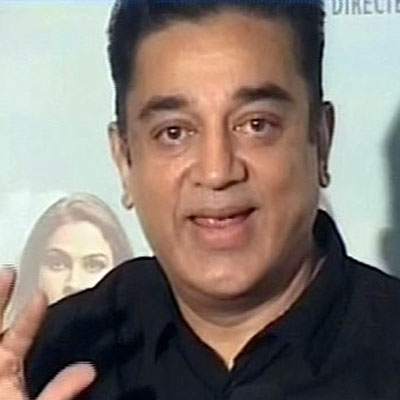
    NEW DELHI: Renowned actor-filmmaker Kamal Haasan has received a major relief with the Madras High Court lifting the ban on his film ‘Vishwaroopam‘ which had been imposed by the Tamil Nadu government for allegedly anti-Muslim content.

    After a day-long hearing, Justice K Venkataraman passed the orders, paving the way for the screening of the movie reportedly made with a budget of nearly Rs one billion. The judge had personally seen the film on 26 January.

    The court also kept in abeyance prohibitory orders imposed by the District Collectors across the state under section 144 of the CrPC.

    During the hearing, the Tamil Nadu government questioned the ‘UA‘ certificate issued for the film and alleged that the certification of films itself was a “very big scam” and sought a probe into it by a law enforcing agency.

    Advocate General A Navaneethakrishnan said the “UA” certificate to ‘Vishwaroopam‘ was not issued by the Central Board for Film Certification, but only by an Examining Committee not mandated by provisions of the Constitution.

    Rejecting the charge, Additional Solicitor General Wilson said the certification was done by procedure. The application for certification came to the Board on 4 October 2012, the film was viewed on 8 October and a show cause notice to cut certain scenes sent on 10 October, he said.

    The cuts were accepted and removed and the final certification given on 17 October. Scenes to a running time of 1.08 minutes were cut, he said.

    Even at a meeting with the Home Secretary on 23 December last, the Examining Officer said objectionable scenes were deleted from the film, Wilson said.

    Interestingly, the film has been released globally and has also been doing well in Karnataka though it is being screened there under heavy security

  • Cinépolis  launches  its first plex in Mangalore

    Cinépolis launches its first plex in Mangalore

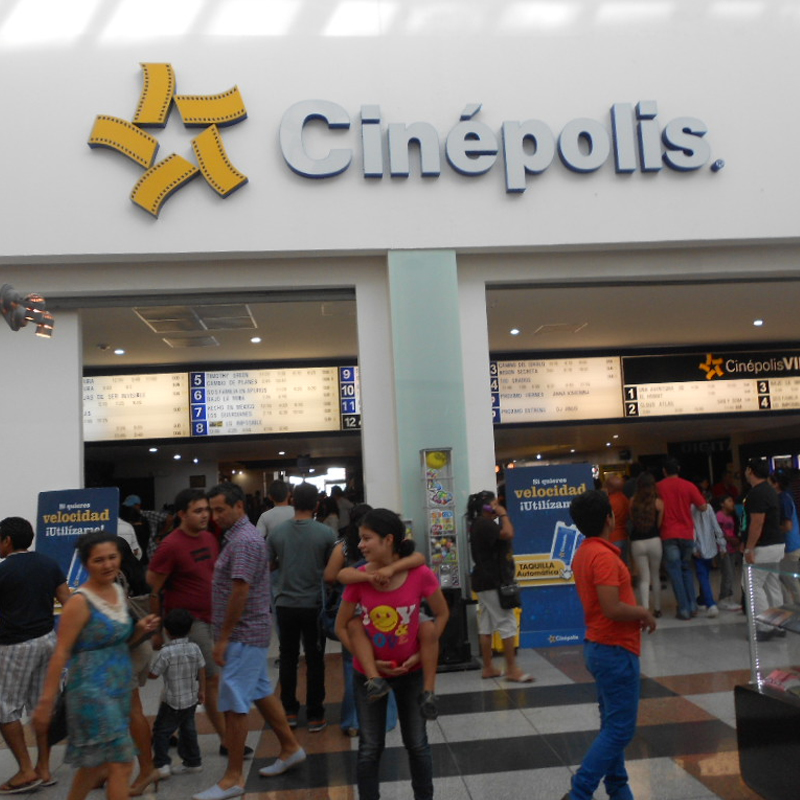
    MUMBAI: Cinépolis, the world’s fourth largest cinema chain and India’s first international exhibitor, has launched its 5-screen, 100 per cent digital multiplex at Mangalore.

    The multiplex with 1,233 seats brings together Real D, the world’s best 3D technology, Hollywood standard 2k digital screens and 7.1 Dolby digital audio.

    After Bengaluru, this is the second Cinépolis multiplex in Karnataka.

    Cinépolis India managing director and country head Milan Saini said, “We are pleased to open the biggest and best cinema of Mangalore. Our patrons can look forward to enjoying a truly world class movie going experience with our state of the art cinemas which are conveniently located in the heart of the city and in the best mall of the city. "

    Added Cinépolis business head – exhibition Ashish Shukla, “After an overwhelming response to our international product quality in Bengaluru, we are extremely happy to introduce the same at Mangalore. Along with a truly international movie watching experience through audio and video, the multiplex will offer an indulging experience at our VIP Cinemas. Another added attraction at Cinépolis is ‘Coffee tree’, an in-house coffee shop which will feature a wide range of freshly prepared gourmet food and beverages.”

    For the first few weeks, Cinepolis has set a special introductory price offer starting at Rs 80 for normal seats and Rs130 for VIP seats. “

    Cinépolis currently operates at Ahmedabad, Amritsar, Bengaluru, Patna, Surat, Ludhiana, and Bhopal. Starting 2012 with 32 screens, Cinépolis has added 17 more screens until now, making it one of the fastest growing multiplex chains in the country. With the addition of Cinépolis Mangalore, Cinépolis now stands at a total of 49 screens across all four geographic zones.

  • NDTV brings opt-out tech for Kolkata viewers during Durga Puja

    NDTV brings opt-out tech for Kolkata viewers during Durga Puja

    NEW DELHI: NDTV today announced the launch of the `opt-out’ technology in Kolkata starting with Durga Puja and the onset of the festival season.

    This initiative will enable the viewers of Kolkata to watch region-specific news and special programmes on NDTV 24×7. With this launch, Kolkata becomes the fourth location to have the opt-out technology, according to an official statement from NDTV.

    Earlier this year, NDTV had launched the opt-out technology for its viewers in the states of Tamil Nadu, Kerala and Karnataka.

    The viewers of Kolkata will be able to watch the 30 minutes `opt-out’ programming at 10.30 pm everyday, which started on 25 September and will last till 2 October.

    The new technology will enable viewers in Kolkata to watch special programmes, catering to the taste of local viewership during this festive season.

    Opt-out works on a technology, which is an innovative step in the broadcasting system. The process involves automatic satellite transmission without any manual intervention.

    There are individual boxes that are programmed to receive and switch frequency at the desired time to opt-out of the regular feed and again switch back to the main feed when the opt-out is over, with a two second changeover interval between the switch.

    NDTV plans to expand its coverage for the `opt out’ service to other states also in the near future and this will be executed for all its three channels, NDTV 24X7, NDTV Profit and NDTV India.

  • Airtel crosses 3 mn mobile subscribers in Karnataka

    Airtel crosses 3 mn mobile subscribers in Karnataka

    BANGALORE: Bharati Airtel has announced that their total mobile subscriber base has crossed three million in Karnataka. With this they claim to be the circle with the largest portion in the Airtel all India subscriber pie of 25.89 million (to end July 2006).

    Airtel joint president-mobility Sanjay Kapoor said, “This equals Singapore’s subscriber base.” Karnataka has been the growth engine for Airtel disclosed Kapoor.

    Bangalore has a subscriber base of roughly 50 per cent of Airtel’s Karnataka mobile subscribers according to Airtel Karnataka CEO Deepak Mehrotra.

    Airtel continues to be Karnataka’s no. 1 mobile network in telephony, even beating BSNL mobile services. The only other entity that could match Airtel coverage in numbers and reach is the BSNL landline. Airtel now covers over 12,000 towns and villages in Karnataka, of which more than 11,000 towns and locations have a population of less than 5000. This includes 96 per cent of the gram panchayat area in the state, and covers 63 per cent of the population. Around 500,000 subscribers have been added over the last three months, a million over the last six, informs an official release.

    Airtel plans to expand the gram panchayat reach to 100 per cent by March 2007. Mehrotra revealed that Airtel has spent around Rs.14.35 billion capitalization to date in the state and another Rs.3.5 billion have been earmarked till end March 2007.

    Karnataka and the Andhra Pradesh circle which stands third after Delhi both contribute to more than 20 per cent of the all India subscribers in the Airtel kitty. While Punjab stands fourth with a subscriber base of around 2.4 million, adds Airtel Karnataka COO V Venkatesh.

    Airtel executive director -southern regional hub, mobility Atul Bindal revealed that the southern hub comprising of five circles has had the fastest growth in the number of subscribers in the country.

  • Delhi High Court restrains 92 cable operators from unauthorised telecast of World Cup

    Delhi High Court restrains 92 cable operators from unauthorised telecast of World Cup

    NEW DELHI: The Delhi Court granted stay to ESPN Star Sports, the official broadcaster of the Fifa World Cup, in favor of its application for a civil suit filed against 92 cable operators across the country for unauthorised broadcast of the Fifa World Cup restraining all the cable operators from showing Fifa through any other channel other than ESPN Star Sports.

    The channel has an exclusive deal with Fifa to telecast all the matches of the Fifa World Cup in territory of India. After this order anyone still showing FIFA World Cup through any other channel will be held in contempt of court and liable for prosecution, says an official release.

    Elaborating on this, ESPN Software India Pvt Ltd AVP Affiliate Sales Rajesh Kaul says, “No other channel, whether pay, free to air or terrestrial is authorised to provide, show or distribute the Fifa World Cup Germany 2006 in the territory of India. Also carriage, reception or distribution of the Fifa World Cup Germany 2006 by any MSO, Cable Operator, Sub-Operator without written authorization from ESPN Star Sports is a violation of copyrights and hence an illegal activity. Strict and legal action will be taken against the operators who violate the court orders. Post the order; police raids have already been started.”

    The 92 cable operators restrained from the unauthorized telecast are from Tamil Nadu, Jharkand, Maharashtra, Gujarat, Assam, Tripura, Karnataka, Kerala, West Bengal, Bihar and Punjab, adds the release.

    “The 92 cable operators across the country were broadcasting by means of wireless diffusion the services of free to air international channels like TV 5 Cambodia TV, CC5 Channel, CCTV1, Super Sports, Multi-choice and Dream Satellite, thereby infringing the copyright of ESPN Star Sports. Today after an application in the Delhi High Court, the judge has restrained these operators from carrying and distributing the World Cup by any means whatsoever, without authorized permission from ESPN Star Sports. Operators showing the Fifa World Cup through other channels should stop this to avoid legal court action,” adds Kaul.

  • Karnataka Opening Up!

    In the last two years, the South Indian television market has witnessed much churn in terms of fresh investments and new initiatives. In all the languages combined, at least 10 new channels were launched during this period. In this two-year period, there has been one market missing all the action – Karnataka.

    However, 2006 holds something different for the Rs 1.5 billion Kannada television market. Zee has made the first move by launching its second South Indian channel Zee Kannada, a pay channel, on 11 May. Not to be left behind, the Hyderabad-headquartered Associated Broadcasting Company Pvt Ltd, which runs Telugu news channel TV9, is targeting a July launch for its Kannada news channel – TV9 Kannada.

    Exploring the news space further in the market will be Kannada Kasturi, promoted by chief minister Kumaraswamy‘s wife Anitha. The news channel is expected to launch by year-end.

    Though the Kannada television market is the third largest player in the regional space (behind Tamil and Telugu), it, surprisingly, didn‘t help much in attracting new investments. While the Rs 1.25 billion Malayalam (Kerala) television space witnessed the launch of about five channels in 2005, Karnataka received just one single player, Udaya 2, a youth-oriented music channel from the Sun Network stable. And it required two outside players – Zee and TV9 – to bring some changes in the pattern.

    “It has something to do with people‘s mindset. It looks like Kannadigas are not very enterprising when it comes to television. They are more involved with the film business. Also it requires a mammoth effort to make your presence felt in the market since you have two established players — ETV and Udaya — to compete with. Then, Hindi also attracts audience here,” points out Shyamsundar, head of the production house Yantra Media.

    Explains ETV chief producer Manvi: “The Kerala market is different from Tamil and Telugu because, here it is not a one-sided competition. Asianet and Surya are going neck and neck, but you have smaller players also making significant contributions. The market attracts fresh investments since it is open to all kinds of experiments and fresh programming strategies. In Kerala, new players are thriving on this confidence. Other regional markets are yet to deliver that confidence.”

    In that case, what is the strategy that Zee has zeroed in on to take on ETV and Udaya in Karnataka? The media behemoth had suffered a setback five years ago when it first entered the South market through Kannada with Kaveri TV through a joint venture with Asianet. Understandably, Zee has done its homework before making the second attempt as an independent venture now.

    The preparations included extensive field research involving about 700,000 households to get its programming mix right. Soaps, films and telefilms will constitute 25 per cent of the channel programming. Gameshows and talk shows will make up another 25 per cent. As for the rest of it, there will be a stress on current affairs programmes, events and film-based shows.

    Zee Kannada‘s positioning is in direct contrast to that of its southern sibling Zee Telugu. The one-year old Telugu channel targets the young upwardly mobile viewer segment, while Zee Kannada is following the traditional strategy of going for the mass audience.

    “Being the second largest player in the regional space, you can afford to experiment a lot in the Telugu space. We had our options to choose our target group (TG) in Telugu. But Kannada is a comparatively a smaller market. Hence, the plan is to follow the traditional strategy,” states head of Zee South Initiatives Ajay Kumar.

    Most importantly, Zee Kannada will be making a conscious attempt to be very close to Kannada culture and retain the local flavour in its programmes. According to market sources, Zee has adopted this strategy from ETV Kannada.

    “ETV‘s programmes are very local oriented and that is the channel‘s USP. Almost 95 per cent of the programmes are done by local producers. Zee Kannada seems to be following the same strategy by signing up a chunk of local producers. At the same time, Udaya follows a different gameplan as it explores the whole of South and Hindi as well (Balaji Productions),” says a source.

    Shedding light on the programming strategies of the leading channels, both Udaya and ETV Kannada have created their own compartments in the space. ETV banks on serials and fiction programmes, while Udaya is known for its films and film based programmes. Udaya has three more channels in Udaya News, Ushe (film and music) and Udaya 2.

    One common strand in any South market is films and this plays a crucial role in Kannada television as well. Acquisition costs for a blockbuster film ranges from Rs 15 million to Rs 20 million.

    Knowing that having strong film content would matter a lot for the channel‘s strategy in the movie-crazy market, Zee Kannada has acquired a combo package of new and old films to create its movie library.

    “Since the TG is the same, Zee Kannada will have a head-on collision with Sun Network‘s Udaya TV and its sister channels. In this context, having strong film content will be crucial,” says a source.

    “Though ETV Kannada acquires many good films every year, Udaya is ahead when comparing the number of films acquired,” adds Shyamsundar.

    Switching to the news space, we have TV9 Kannada and Kannada Kasturi gearing up to explore the relatively virgin land. Finally offering some competition to the lone player in the segment, Udaya News. Kannada Kasturi is still in the process of streamlining its strategies whereas TV9 Kannada is preparing the ground for a July launch.

    Driven by the tagline “Close to your heart”, TV9 Kannada is positioned as a young-at-heart, urban news channel with an international look and feel. TV9 has adopted its Telugu strategy for Kannada as well.

    “We targeted the urban youth and women with TV9 Telugu. We are following a similar strategy for TV9 Kannada also. Within a short duration, TV9 Telugu reached an impressive position in the market, and we are confident of repeating this performance in Kannada as well,” states TV9 chief news coordinator Rajasekhar.

    TV9 Kannada is planning to create a space for itself in the film-crazy, entertainment-oriented market through efficient coverage and innovations. “The idea is to crack the market by providing something fresh. Kannadigas are used to the traditional methods of news delivery and presentation. Our attempt will be to take it to a new level, with a lot of innovations. The plan is to woo the urban crowd by offering them international standards in the local language,” says Rajasekhar.

    Inspired by the entry of new players, the Kannada television market is targeting a 25 per cent expansion this year. Market analysts feel that this would also inspire more local advertisers, including retailers, to try television.

    “The ratio between local advertisers versus national advertisers is as low as 10 per cent versus 90 per cent in Karnataka. The television advertising here totally depends on Mumbai and Bangalore clients. We hope this will change with the entry of players such as Zee and TV9,” says Shyamsundar.

    “The market has the potential to touch even the Rs 2 billion mark in a short time. New players mean competition, but it is surely a good sign for the business,” adds Manvi.