Tag: Karnataka

  • BSNL, MTNL to get financial help on surrender of BWA Spectrum

    BSNL, MTNL to get financial help on surrender of BWA Spectrum

    NEW DELHI: Bharat Sanchar Nigam Limited (BSNL) and Mahanagar Telephone Nigam Limited (MTNL) have got the approval for financial support from the Union Cabinet on surrender of Broadband Wireless Access (BWA) spectrum.


    Upfront charges paid for such spectrum would be refunded.


    The objective of this decision is to provide financial support to the extent of one-time upfront charges paid for BWA spectrum for six service areas of BSNL and both service areas of MTNL on surrender of the spectrum. The six licensed service areas of BSNL are Gujarat, Maharashtra, Andhra Pradesh, Karnataka, Tamil Nadu and Kolkata.


    The amount to be refunded to BSNL is Rs 6724.51 crore and Rs 4533.97 crore for MTNL. The refund will be made to ensure support for the revival and revitalisation of BSNL and MTNL in the competitive telecom sector. It shall also help these PSUs to arrange finances to meet basic financial commitments such as operation and maintenance of their telecom network.

  • Carnival cinemas has big expansion plans in South

    Carnival cinemas has big expansion plans in South

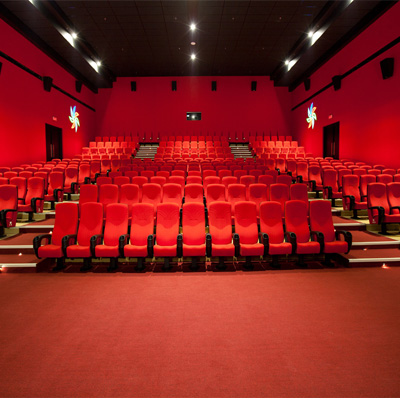
    MUMBAI: After introducing Angamaly in Kerala to the multiplex culture, Carnival Cinemas opened its five- screen multiplex in Dindigul (nearly 50 km away from Madurai) on Thursday kick- starting its multiplex business in Tamil Nadu.

    Carnival Cinemas, a part of a Mumbai-based business group claims to lead south Indian cinema exhibition by 2014, with a holding of 87 screens. Considering the number of film releases in Malayalam, Telugu and Tamil Carnival Cinemas is focused to spread its roots in the smaller cities in south.
    Talking about the expansion plans Carnival Group chairman Shrikant Bhasi said, “We have signed 50 screens in 11 districts of Kerala. By end of 2014 Carnival Cinemas will become the largest holder of screens in Kerala.”

    Apart from this it has also signed 20 screens which would be operational in TN in the next six months and about 17 screens in Karnataka with further expansion plans in Andhra Pradesh bringing world class movie experience to most of the towns in the southern states.

    Further, about 50 screens are slated to be opened in Madhya Pradesh. Carnival Cinemas plans to become a holder of 300 screens across India by 2018 and be a big player in the multiplex business segment in the country. It has adopted both organic and inorganic mode of expansion to speed up the growth.
    Currently, its multiplex in Angamaly is the hottest entertainment destination for people from all walks of life, across a wide age group and user profile. It features regional, national and international movies.

    “Carnival Cinemas tapped the secondary market and the tier 2 and tier 3 cities in south at the time when no one dared to explore these markets or to provide metropolitan cinema experience to the audiences there,” said Bhasi adding that they had also pioneered in playing National Anthem Jana Gana Mana in its theatres in Kerala and the idea was later adopted by several others.

    With a planned tie- up with a firm from Hollywood in Los Angeles, Carnival Cinemas would bring updated technology available in the world.

     “Our aim is to provide quality movie watching experience to the movie goers of smaller cities and town in the country. Carnival group with its own chain of food court and recreation facilities is aiming at wholesome family entertainment zones in most of the places where it sets up multiplexes,” added Bhasi who is confident about ruling the secondary market in the southern states.


  • South Indian GECs push fiction to include Saturday

    South Indian GECs push fiction to include Saturday

    Television viewing has always been about appointment viewing – catch up with your favourite shows on a particular day at a particular time.

    While airing fiction shows from Monday to Friday and comedy and movies over weekends has been somewhat the norm, a clutch of channels down South, particularly in Karnataka, has taken a shine to fiction shows spilling over to Saturdays as well.

    Asianet Suvarna, Star’s GEC channel in Karnataka, took this route about six months ago when it started airing fiction shows for six days a week.

    Star’s Malayalam GEC Asianet followed suit with a few prime-time fiction shows extended to Saturday.

    Recently, Sun TV, the Tamil GEC from the dominant Sun Network, joined the fray with its prime-time fiction shows replacing a movie and a game slot on Saturday.
    Not to be left behind, Sun Network’s Malayalam GEC Surya TV added Saturday to the telecast of the crime thriller Satyameva Jayate and its Kannada GEC Udaya TV also traversed the same path.

    So, what prompted these GECs to include Saturdays in their fiction line-up? Apparently, the channels believe airing soaps on a Saturday is more profitable as compared to airing movies, which they used to earlier. “Producing a half-an- hour fiction serial would mean investing about Rs 70,000 to Rs 80,000 whereas acquiring a movie would mean spending at least Rs 2-5 crore depending on the movie,” says Asianet Suvarna business head Anup Chandrashekaran.

    Another factor is that while Tamil Nadu is probably and arguably the best movie market in the south, the Karnataka film industry isn’t prospering too much, according to many channel executives. Hence, neither advertisers nor the revenue from Kannada movies is consistent as compared to that from shows. Again, movie repeats depend on the premiere performance. A good movie can fetch anywhere between Rs 40 lakh to Rs 60 lakh  as ad revenues from its first telecast. This means that for recovery it has to be telecast several times but repeats don’t get the same value.

    It also states that the number of films certified from Karnataka has dropped from 162 in 2008 to 128 in 2012. Whereas, the number of films certified from Tamil Nadu has grown from 175 to 262 in the same time span.

    A month ago, Zee Kannada too joined this elite club with fiction shows between 6:00 pm and 8:00 pm extended to Saturday. “Production of Kannada films has come down and for a movie to premiere on TV takes nearly a year unlike Bollywood where the gap between the theatre premiere and TV premiere is just two or three months,” says Zee Kannada nonfiction programming AVP Balaraj S.

    Balaraj says that Tamil Nadu and Andhra Pradesh are better off since movies do well there

    The Deloitte report also stated that though Tamil and Telugu films are adopting better technology to match Hollywood standards, the same is lacking in the other two markets.

    It also highlighted that since the beginning of this year, broadcasters in Karnataka and Kerala have become selective in acquiring rights of small budget movies due to the use of low quality digital cameras resulting in poor visual appeal on TV.

    ETV Kannada, which was the first GEC to extend its afternoon and evening fiction shows to Saturdays nearly two years ago, has seen better viewership since because most people are at home over the weekend.

    “It is a cost effective way of managing your Fixed Point Chart (FPC) or else you have to invest in movies or events. Fiction shows have appointment viewing and time spent on them is very high,” says Viacom 18 EVP and business head –Kannada, Bengali and Oriya- Ravish Kumar.

    For showcasing movies, the channel makes use of its existing bank rather than relying on new ones. Kumar believes that by the time the movie gets premiered on TV, the interest in it has already faded.

    Balaraj feels that the only good thing about premiering movies is a better sampling of viewers while Chandrasekharan says it is easier to get advertisers locked for six days rather than approach new ones every week for a Saturday.

    Ravish feels that having shows on Saturday gets more viewers due to it being a holiday for most

    So will this trend catch up with other states as well? Balaraj feels that it won’t affect Tamil Nadu and Andhra Pradesh since the film community there loves producing and audiences gorge on movies. New Generation Media Corporation CEO RBU Shyam Kumar, who heads newly-launched Tamil GEC Pudhu Yugam, feels it is too early to speculate. “A movie acquisition runs into crores of rupees and recovery time is long and most channels have a separate movie channel as well,” he says.

    While the Deloitte report said of the total revenue of Rs 2,680 crore from the South Indian film industry in FY 2013, the lowest was from Karnataka with just Rs 150 crore as compared to Rs 1,190 crore from Tamil Nadu and Rs 1150 crore from Andhra Pradesh, the silver lining is that the report also estimates that the Karnataka market is set to grow at a CAGR of 18 per cent by FY 2017 to reach Rs 250 crore, the highest of all four.

    TV advertising market in south India was pegged at Rs 4000 crore during FY 2013 with Karnataka contributing Rs 710 crore. So clearly, television stands at a better position than film.

    The media planners we spoke to feel that as long as serials get good viewership, brands won’t have any problem advertising for an extra day in the week and Saturday anyway gets better viewership since it is the beginning of the weekend.

    Be that as it may, the weekends look to have rung in the end of weak and expensive movies on TV in Karnataka, and the dawning of cheaper fiction shows. 

  • MCOF seminar aims to educate LMOs

    MCOF seminar aims to educate LMOs

    MUMBAI: Constituted just over a year ago to protect cable operators and safeguard their business, the Maharashtra Cable Operators’ Federation (MCOF), today organised its first business and education seminar in Mumbai.


    Held in Hindi and English,around 400 Last Mile Operators (LMOs) travelled from neighbouring states like Gujarat, Andhra Pradesh, Goa and Karnataka for it.


    The first session was to educate LMOs about the importance of customer care and enhancing the quality of service. Vishwamangal Education CEO Suman Keluskar who deals in soft skills highlighted the need for LMOs to be well groomed as well as train their subordinates to be the same to make customers feel good.
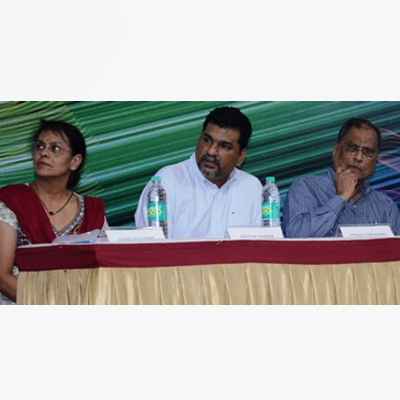
    Suman Keluskar, Vynsley Fernandes and Tony D’Silva spoke about customer care, global trends in cable TV and the upcoming HITS technology respectively


    “The reason why customers welcome a Pizza Hut boy is because he is nice to them,” she said, stressing that customers today were ready to pay for good service but for that to happen, LMOs needed to know the opportunities available to them as well as what customers were demanding. “Innovate in your production. Use the internet to advance yourself,” she said.


    Session two discussed how while LMOs across the globe have learnt to monetise their business, back home, it continues to be a loss-making one. Addressing the session, Castle Media director Vynsley Fernandes, started off by describing how developed countries such as the US, UK and Taiwan had faced the same issues that India is currently facing. But the cable ops dealt with them through innovation and have today grown to last mile digital system providers.


    “From the time the Gulf War happened and everybody wanted to watch TV, things are much different now. Multi-screen viewing is what is happening now,” he said.
    Citing the example of the US, where operators have increased their revenues despite a drop in the number of TV homes, and are expecting the ARPU to go up to $40 from $21 currently in the next five years, Fernandes reasoned this was because they had adapted to using TV along with the Internet and were offering viewers a multi-screen experience.


    He pointed out that concepts like Hybrid Broadband TV, second screen, catch up TV, time shift TV, TV on mobile etc. had already penetrated the US markets and helped cable operators exponentially.


    “Think long term as to whether you can monetise your product. Whenever you are investing in a technology, what is its future road map?” he urged, saying that the only challenge would come from OTT services such as Netflix and Hulu where movies and channels will go directly on the Internet without the need for an MSO or LMO. However, he was quick to add that this hasn’t met with much success in India, yet.

    While advertisers are approaching LMOs to target specific demographics on TV, the STBs taken up by LMOs are not so advanced, Fernandes said. Pointing out that in the US, LMOs provide a posse of services including entertainment, home monitoring, automation comfort, energy management and wellness assisted living, in India too, “an LMO should be the one-stop digital services’ stop for customers,” he concluded.


    Drawing upon his experience in broadcast and DTH to present his project on Headends in the Sky (HITS), former Sun TV CEO Tony D’Silva said this was a good prospect for LMOs to think about.


    D’Silva said that most consumers watch not more than 12 to 15 channels and so, it was necessary to create such packages and device-shifting technologies for the future.


    “You are at the threshold of a game change. Our main threat is the DTH players and we need to be above them and have a robust system,” he said, stressing that HITS was a much better option for LMOs than taking signals from MSOs. Under HITS, the agreements are directly with broadcasters, there are no carriage fees, and it would yield higher revenue (Rs 108) as compared to dealing with an MSO (Rs 59.5) or even independently (Rs 85).


    “The biggest cable company in the world today is Comcast. 17 million out of Comcast’s 22 million subscribers get supply services from HITS and Comcast gives its customers all the benefits that Fernandes spoke about,” said D’Silva, urging LMOs to adopt HITS through which they could choose and demand things as well as insert local channels, the revenue from which would be completely theirs.


    A local cable operator from Goregaon, Bernadette Dsouza, said: “I have come for the seminar to know about new opportunities as well as how to save my business from MSOs’ domination.”

    The good news is MCOF plans to hold such seminars in other states as well in the coming months.

  • It’s a SCaT man’s world!

    It’s a SCaT man’s world!

    MUMBAI: The SCaT (Satellite and Cable TV) trade show in its 22nd year took place at the World Trade Centre, Cuffe Parade here over the weekend between 25 and 27 October. The show received a great response with all the stalls sold out. The show was buzzing with energy and enthusiasm.

    “I feel like a kid in a candy shop, I am really spoilt for choice. I would love to check out all the new products and try out a few,” said one of the visitors.

    According to the organisers, they had to take additional hall space to cater to the higher demand from exhibitors. It was deliberately held over a weekend to make it convenient for outstation visitors and the number of registrations clearly out did the previous years on both days. Several operators from Maharashtra, Gujarat, Karnataka and Andhra Pradesh attended in groups and of course from all over India too.

    The show attracts visitors to review and purchase products from over 150 companies and brands, not only from India but worldwide. Over 40 international companies participated in the show this time around. The focus of SCaT 2013 was to showcase attractively priced digital headend products to meet the needs of smaller cable TV networks looking to migrate to digital cable TV within a year.

    In fact, the entire idea to hold the exhibition is to make work easier for the people in the industry, say the organisers, who also come out with a monthly magazine, SCaT. “We launched the magazine in 1993 and it was the first trade publication catering to the satellite and cable TV industry in the south-Asian region. Simultaneously, we also started organising the SCaT Trade show for which we got huge appreciation,” says SCaT Media & Consultancy publisher and MD Sudeep Malhotra.

    According to Malhotra, the entire idea was to cash in on the growing cable TV industry, which was at a nascent stage at that time. “There was a big barrier between the manufacturers of cable TV products and the cable operators who were the buyers. They could only connect through the shopkeepers, who at times were not really helpful. So, if an operator was looking for an amplifier, he would be supplied only those products that was available at the shops. He may not even be aware of the better products that are being manufactured,” says Sudeep, who with the magazine and the trade show wanted to bridge that gap.

    The organisers hosted the first show in February 1993 and had just nine companies on board. In the same year in October, the show had 30 companies participating which was a huge jump for the organisers. “Over the years, we have been growing at a rate of almost 20 to 30 per cent. Now, we have 156 companies on board, with participation of about 21 countries,” says Malhotra, also adding that they have special permissions from the government to get the products from other countries.

    The footfall has increased considerably too – from 300 people in the first show over three days to almost 18,000 in the present show. “We have visitors not just from India but from Bangladesh, Nepal, Sri Lanka etc as well. We also have cable associations visiting the show in groups of 100, 200 from various states in India,” says Malhotra.

    The exhibition was spread across two buildings and witnessed a great response in terms of visitors. The show had a great mix of companies varying from those providing headend equipments to those providing end to end solutions. There was also a prominent presence of news channels like Captain TV (Chennai) and Channel News Asia (Singapore).

    Satellite & Cable TV Magazine editor and executive publisher Dinyar Contractor expounded, “We hold this exhibition annually to let the industry get together under one roof and explore the new products that are available or will soon be available in the market. We at SCaT believe that the opportunities are manifold at this show and the industry can benefit at large.”

    With the DAS rollout and impending phase III and IV implementation, the focus was but naturally on affordable digital headends and STBs which are cost efficient for small networks of the smaller towns that are not MSO dominated. Like always, it was the Chinese, Taiwanese and Korean manufacturers who dominated. Interestingly, the key Indian hardware companies like Catvision, Channel Master, Saibaba Electronics among others had all tied up with international manufacturers and were offering complete end to end DAS solutions. 

    “While clearly the focus was on hardware, the middleware and software vendors offering value added services, SMS and billing integration were yet to see significant traction. Also on display was the sole HITS service provider JainHits offering complete services including content, having recently won his legal case against the aggregator/distributors,” said media analyst Sanjeev Hiremath.

    One of the products that caught everyone’s attention was the Android OTT IP-STBs – these are set top boxes that function on an Android 4.0 and can be easily synced with any device – which can enable internet surfing, listening to online music via WiFi or Ethernet interface. The STB also supports Live TV watching and VoD if the user has an account with the solution provider.

    Another attraction at the event was Gaian Solutions’ new product through which cable operators and DTH players can now customise the advertisements being aired not only within states, but also within the city limit. “The new technology helps you to air different ads at the same time. So if in south Mumbai, a consumer will see a Mercedes ad on TV during a programme, another consumer in other part of the city can watch a different ad, according to the need of the market,” informed Gaian Solutions director-operations Mrigesh Gaurav.

    The lobby of the Taj Vivanta President where most of the participants stayed was also a meeting place for networking and also became the hotspot for the trade party on the penultimate day.

    All in all, it was an exciting and eventful three days of knowledge enhancement, serious business and networking.

  • Aircel and Micromax join hands to share channel and retail network

    Aircel and Micromax join hands to share channel and retail network

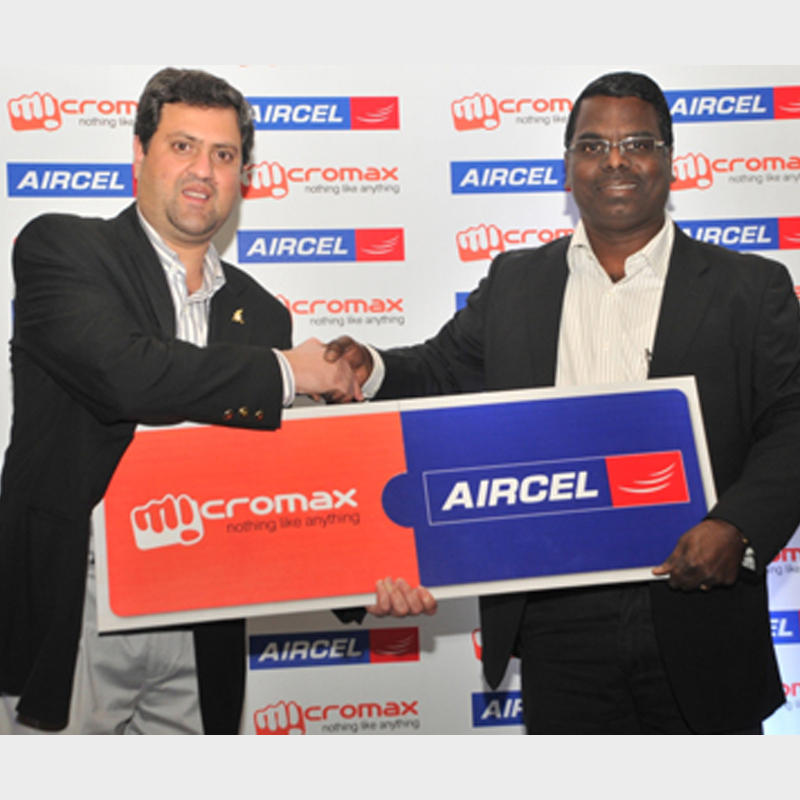
    BENGALURU:  Telecom player Aircel and Indian handset supplier Micromax announced a strategic partnership with the aim to drive data growth. Under this new partnership, Aircel and Micromax will share their channel and retail networks, sales resources and run an integrated device sales activation program. The announcement was made simultaneously in four cities in India – New Delhi, Mumbai, Bengaluru and Chennai today. 

    Also, the duo introduced reverse bundling handset offers worth Rs 12,000 per month for every new Aircel customer. Aircel’s focus on data innovation and its expertise in mobile network, along-with Micromax’s expertise in device marketing will redefine the user experience and take data penetration to the next level claim the companies. 

    In Bengaluru, Aircel Circle Business Head, Karnataka, Kadhiravan K, said, “India is at the cusp of a data revolution and device tie-ups will strengthen the telecom ecosystem in the country, which is critical to drive data penetration.  According to a recent study, by the year 2020, mobile internet users are set to grow four – five times and smartphone penetration is set to increase five times to 50 per cent in India. Affordability in devices will give a rise to data proliferation which will be the main revenue generator for both telecom operators as well as handset manufacturers in the near future.” 

    “Aircel recognises the importance of smartphone devices to drive data usage. In line with that, it is our focus to get into partnerships with leading smartphone device manufacturers in an endeavor to bring to our customers exciting bundled products. In this exclusive partnership with Micromax, we will share their robust channel and retail network to deliver innovative and best value for money products and services,” added Kadhivaran. 

    At present, mass media communications will be limited to print media by Aircel and Mircomax individually, where each company will mention the other in their advertisements. Since the festive season is not very far off, a joint multimedia ATL and BTL campaign will be launched before the Durga Pooja/Duhessara and Diwali festivals revealed a source.

  • Vodafone India offers free Twitter access for three months

    Vodafone India offers free Twitter access for three months

    MUMBAI: Vodafone India is offering its prepaid and postpaid mobile subscribers free Twitter access for a period of three months starting today (29 July).

    Under the promotion, users will be able to access mobile.twitter.com or the Twitter Android app without incurring any data charges on the Vodafone network. The operator clarifies that access to mobile.twitter.com would be free only when the subscriber uses the native or default browser.

    It also adds that “the Eligible Subscriber would only be charged for connection setup, at 10p/10KB on 2G all circles except Uttar Pradesh (West), Madhya Pradesh and Karnataka and 2p/10KB on 3G and 2G in Uttar Pradesh (West), Madhya Pradesh and Karnataka in case he/she is subscribed to Pay As You Go Tariff at Prevailing Pack Tariff in case he/she has subscribed to any of the Vodafone India Mobile Internet Packs.”

    Free Twitter access is available only when the subscriber sets the APN to ‘www’ in the Internet data settings on the phone. The offer is not available to BlackBerry users.

    Vodafone is also running advertisement messages within the Android Twitter app showing promotional messages under individual tweets and pop-up messages when one tries to compose a tweet.

    It’s not the first time an Indian telecom operator has tied up with Twitter to offer free access. In April, Reliance Communications had also tied up with Twitter to offer a “Twitter Access” program for three months, wherein it offered its GSM subscribers access to Twitter’s mobile website and app without levying any extra data consumption charges.

  • DAS extension pleas quashed in Karnataka and Gujarat

    DAS extension pleas quashed in Karnataka and Gujarat

    NEW DELHI/BENGALURU: The information & broadcasting ministry can heave a sigh of relief as the the high courts in Karnataka and Gujarat today dismissed petitions filed by cable operators seeking extension of digitisation.

    The court orders mean that the government can go about systematically switching-off analogue signals in the cities that are covered in the Phase II of the rollout of cable TV digitisation in the two states.

    The Karnataka high court today dismissed a petition filed by Karnataka State Cable TV Operators Association (KSCOA) seeking extension of deadline for implementing digital addressable system (DAS). The KSCOA petition was trashed as the HC found no merits in the case.

    Similarly, the Gujarat high court also dismissed two petitions seeking postponement of digitisation in the four cities in the state. The court also vacated the stay ordered on 28 March in the cities of Ahmedabad, Rajkot, Surat, and Vadodara.

    The decision by the high courts paves the way for switch-off analogue signals in the cities that are covered in Phase II of DAS.

    Expressing satisfaction, Information & Broadcasting ministry secretary Uday Kumar Varma told Indiantelevision.com that the judgements vindicated the government‘s stand that the advent of new technology could not be stopped. He also said that there was no truth in reports about the shortage of set top boxes (STBs).

    KSCOA president Patrick Raju said that he and his legal team would look at a copy of the court order before commenting about further action that his association would take in the matter.

    Among the contentions of the cable operators association in Karnataka was that a large number of cable homes in Bengaluru and Mysore would go dark if DAS is implemented since there isn’t enough supply of STBs.

    The KSCOA and MCOA (Mysore Cable TV Operators Association) had filed separate petitions, which were later clubbed together, seeking relief in the digitisation deadline due to shortage of STBs and lack of clarity on box ownership and many other issues.

    The Cable Operators Association of Gujarat (COAG) in its petition had contended that there was a shortage of STBs and no clarity on acquisition of these boxes. COAG president Pramod Pandya said STBs ordered from China had failed to arrive because of internal problems in that country and therefore the local cable operators could not be penalised for this.

    Also read:

    Gujarat HC dismisses petitions seeking DAS extension

    Karnataka HC dismisses KSCOA petition, paves way for analogue cable switch-off

  • Karnataka HC dismisses KSCOA petition, paves way for analogue cable switch-off

    Karnataka HC dismisses KSCOA petition, paves way for analogue cable switch-off

    BENGALURU: Analogue signals in Bengaluru and Mysore are set to be switched off as the Karnataka High Court today dismissed a petition filed by Karnataka State Cable TV Operators Association (KSCOA) seeking extension of deadline for implementing Digital Addressable System (DAS).

    The KSCOA petition was dismissed as the HC found no merits in the case. The cable operators association had contended that a large number of cable TV homes in Bengaluru and Mysore would go dark if DAS is implemented since there isn‘t enough supply of Set Top Boxes (STBs).

    Bengaluru and Mysore are part of 38 cities that were slated to go digital in Phase II of DAS. The deadline for switching off analogue signals was 1 April, however, an interim order passed by Karnataka HC saw the deadline getting dragged by a good two weeks.

  • DAS stayed in Madhya Pradesh till 8 May

    DAS stayed in Madhya Pradesh till 8 May

    NEW DELHI: After Andhra Pradesh, Gujarat and Karnataka it‘s Madhya Pradesh‘s turn. The Madhya Pradesh High Court today stayed the switch-off of analogue signals till 8 May in the cities of Indore, Bhopal and Jabalpur covered in Phase II of digitisation.

    The stay order came on two petitions – including public interest litigation by one LCO including Rashmi Dubey, and one by an MSO run by Nilesh Rawal linked to Digicable – citing shortage of set top boxes, billing issues and some other problems linked to digital addressable system.

    The High Court also issued notice to the Union of India and the Information & Broadcasting ministry, according to Rawal‘s counsel Abhijit Awasthi.

    As on 3 April, the status of seeding in Madhya Pradesh was 65.34 per cent in Bhopal, 75.79 per cent in Indore, and 37.69 per cent in Jabalpur.

    Meanwhile the Karnataka High Court is expected to pronounce judgment tomorrow with regard to two petitions by local cable operators and multi-system operators from Bengaluru and Mysore.

    Meanwhile, the stay on DAS in Hyderabad, and Visakhapatnam will continue for another day as the matter did not come up for hearing in the Andhra Pradesh High Court today.

    The hearing in DAS extension cases will resume tomorrow in Karnataka and Gujarat. Infact, the Karnataka HC had reserved its verdict for 16 April after hearing all the parties involved in the case.