Tag: Kantar

  • Kantar to continue India investment, increase talent pool & improve tech after deal with Bain Capital

    Kantar to continue India investment, increase talent pool & improve tech after deal with Bain Capital

    MUMBAI: Research agency Kantar is aspiring to invest more in its global delivery centres and further strengthen its core insight and consulting business in India post the 60 per cent stake sale to Bain Capital. The WPP-held company also emphasised on its India business.

    Speaking to journalists worldwide via a conference call, Kantar chief executive officer Eric Salama said that India is one of the biggest and most important markets for Kantar and the association with Bain will not change anything in the way they do business here.

    “India is important for us not only because it is a big market but also because we have got a lot of data centres there, which are playing a big role in the rest of the world. We also run our largest delivery systems out of Hyderabad, Gurgaon and Pune. We will continue to invest in the Indian market. There is a real desire to invest more in the delivery centres, as they are world-class, and as well as in the core insight and consulting business within India,” Salama noted.

    He highlighted Kantar’s strategy post the changes in its ownership over the 40-minute long call. He said that with the new association with Bain, it is going to put more focus on ramping up its acquisition activities as well as becoming a tech and data-led firm that can deliver real-time data to clients.

    Salama said, “We are focusing on becoming much more tech-led, faster, and a real-time predictive organisation. Being a part of Bain Capital, from a capability point of view and from a money point of view, would be enormously helpful in doing that.”

    The firm is also looking to increase the length and breadth of its talent pool, Salama mentioned. “We think the world is becoming one where we need more and more specialists around certain areas and build capabilities around media ROI and engineering capacities. We are becoming a much more tech-centric company and adding more data scientists (to our talent pool). We have around 1500 of them around the world and we are going to scale that quite considerably. We are also going to add lots of consultants to deliver a greater client impact.”

    He added that the firm is investing in real-time and predictive offers for its clients as well as machine learning and artificial intelligence. It will also be working more on its cross-media measurement techniques to deliver better cross-media management to its clients.

    He elaborated on how Kantar is working towards incorporating more technologies and manpower in its business across various verticals like Trade Optimisation, World Panel, and the Kantar Marketplace to deliver more precise and timely data to its clients across the globe. “We are scaling our differentiated solutions. We have introduced a lot of innovation in the market over the last 18 months and now we have the focus on scaling those globally and consistently for all our clients.”

  • Premium category growth double that of entire FMCG sector

    Premium category growth double that of entire FMCG sector

    MUMBAI: Even though the FMCG sector in rural India is facing a slow down for the past few quarters, the number of households buying more than 20 categories in a year saw a jump of nearly 50 per cent in the past year, Kantar managing director for Worldpanel Division south Asia K Ramakrishnan told Indiantelevision.com as he highlighted the key findings from the Consumer Connection 2019 report, which is based on the buying habits of around 8200 households in India across 95 categories.

    Ramakrishnan said, “Rural India is in a conundrum. On the one hand, there is a slowdown (for FMCG) and on the other hand, they are trying more categories. Rural aspirations are just like urban consumers’ right now. So, they are trying newer things by cutting on staples like atta, oil, salt, etc. They are rationing it in such a way that they avoid the wastage of these staples and also the stocking.”

    One of the reasons behind this increase in categories that the rural consumers buy from are actions taken by various brands in making products available at cheaper price points in the form of trial packs.

    Ramakrishnan highlighted that along with Indian consumers’ move towards bigger packs—as compared to their affinity to sachets like earlier—increasing, there has been a substantial jump in the sale of premium category products across the country. “The growth of premium category is twice that of the FMCG category as a whole,” he said.

    He further noted, “We see it as a result of several things like there have been strong pricing actions by manufacturers for promoting larger packs; strong promotional actions to popularise these larger packs; and interesting innovations like Kissan’s ketchup sachets with a nozzle.”

    Ramakrishnan added, “The premiumisation is showing tremendous growth not just because the base is small, but also because a lot of premium brands are offering trial packs. For example, Surf Excel is a premium brand but it has grown, largely, on its Rs 10 pack.”

    He also mentioned that after a slowdown in the FMCG sector, that started from the second quarter from 2018, the industry is now looking towards a revival. The first quarter of 2019 has shown improvements, and Ramakrishnan believes that the worst is over.

    Ramakrishnan also elaborated on the increased penetration of e-commerce in the Indian market. He shared that though the category has witnessed 3-time increase in its penetration, it is largely because the base is small. He attributed this growth to the increasing smartphone penetration and cheaper data prices.

    Some other key findings of the Consumer Connections 2019 include a dip, of about 50 per cent, in the success rate of newly launched products, a 15 per cent volume drop in the sale of baby foods, and loss of volumes for unbranded products.

  • Kantar releases CX+ India Retail Banking Report 2019

    Kantar releases CX+ India Retail Banking Report 2019

    MUMBAI: In today’s experience era, the majority of CEOs believe customer centricity is essential for driving business growth. However, there is still a big gap between ambition and reality; while 91% of retail bank CEOs in India see the need to become customer-centric, just 29% of consumers believe banks offer truly customer-centric experiences, according to Kantar CX+ study. 

    The new CX+ study released by Kantar today is the only sector-specific index that assesses banks based on a unique combination of their customer experience scores. In addition, the study identifies each bank’s Experience Gap – which quantifies the difference between their Brand Promise and the actual customer experience delivered.  

    The Top Ten CX+ Retail Banks in India

    Ranking

    Brand

    1

    HSBC

    2

    Standard Chartered

    3

    Citi

    4

    Yes Bank

    5

    IndusInd bank

    6

    ICICI Bank

    7

    Kotak Mahindra Bank

    8

    HDFC Bank

    9

    Syndicate Bank

    10

    Axis bank

    CX+ reflects that providing excellent customer experiences is no longer enough. In a connected environment, brands and customer experience have become synonymous. Thus the roadmap to growth is based on 5 key CX success factors: 

    Clarity of brand promise 

    Empowered employees 

    Empowered customers 

    Creating lasting memories 

    Exceptional delivery

    Commenting on the launch of the findings and CX+ ranking, Preeti Reddy, CEO-South Asia, Insights Division, Kantar said: “We live in the age of experience, but many brands are still missing the mark as there’s a huge gap between brand promise and customer experience. Our study reveals that the top-ranking Retail banks in India have delivered a superior customer experience that is matched with a strong brand promise thus giving them a distinctive Experience advantage over their competition. However, there’s a huge opportunity for growth as half of India is still unbanked and are increasingly looking up to their banks to give them more personalised experiences, smoother and more convenient digital services, and a more human approach to technology. Encouragingly, the entire industry has a unique opportunity to enhance its service for a receptive, fast-growing audience.

    Other findings underline the clear benefits of delivering strong customer experience:  

    Banks that lead in the CX+ Index are 1.6x are more likely to be recommended than banks at the lower end of the index. 

    Banks that deliver an excellent experience on digital channels are 2.5x more likely to delight customers.

    Customers are 3.6x more delighted when they feel appreciated by their bank. 

    While improved customer experience can benefit financial services companies across the board, the opportunity to grow is particularly significant among women, according to the research:

    About 114m Indian women are unbanked. About half of women in India with personal bank accounts use them in a limited capacity or not at all.

    Women use more online banking than men (w: 55,7%, m: 49,8%) and are less likely to visit branches (w: 61,6%, m: 64,7%). 

    Women are more skeptical regarding FinTechs / technology-enabled banking providers. They feel less in control of their finances with technology-enabled banking providers 

    (w: 39%, m: 44%).

    The Kantar CX+ study analyzed 7,280 retail banking customers in India and was conducted in 2019.

  • WPP announces proposed sale of 60 per cent of Kantar to Bain Capital

    WPP announces proposed sale of 60 per cent of Kantar to Bain Capital

    MUMBAI: One of the world’s largest advertising agencies, WPP, announced on Friday that it has entered into an agreement to sell 60 per cent stake in Kantar to US-based private equity firm Bain Capital. After severe turmoil in the last two years, especially after founder Martin Sorrell’s departure, the company is figuring out new ways to grow.

    “Kantar is a great business and we look forward to working with Bain Capital to unlock its full potential. As a strategic partner and shareholder in Kantar, WPP will continue to benefit from its future growth while our clients continue to benefit from its services and capabilities. I would like to thank Eric Salama, his team and everyone at Kantar for their tremendous contribution to WPP – a contribution that will continue as we develop the business together,” WPP chief executive officer Mark Read said.

    “This transaction creates value for WPP shareholders and further simplifies our company. With a much stronger balance sheet and a return of approximately 8 per cent of our current market value to shareholders planned, we are making good progress with our transformation,” he added.

    The proposed transaction of Bain Capital’s acquisition of 60 per cent of Kantar creates a strong partnership with WPP to accelerate the development of Kantar along with valuing it at c.$4 billion. WPP also highlighted that proceeds on completion, after tax and continuing investment in Kantar, were expected to be about $3.1 billion. It will further simplify and reposition WPP for growth, whilst unlocking significant value for shareholders.

    “Our new ownership structure presents a great opportunity for Kantar, our employees and our clients. In Bain Capital we have a partner who shares our ambition, brings relevant expertise and – with WPP – can help us accelerate our growth and impact for clients. We are focused on delivering ‘human understanding at scale and speed’ and the ‘best of Kantar’ more consistently. We will do so by investing more in talent and by becoming a more technology-driven solutions provider,” said Kantar CEO Eric Salama.

    “We believe that we are well-positioned to support Kantar, alongside WPP, in driving forward the business in a rapidly changing industry. Our deep sector knowledge, operational expertise and strong track record of partnering with management teams to accelerate growth gives us confidence that we can help Kantar grow both organically and by acquisition,” Bain Capital Private Equity managing director Christophe Jacobs van Merlen said.

  • Kantar Increases creative impact through artificial intelligence

    Kantar Increases creative impact through artificial intelligence

    MUMBAI: Kantar, the world’s leading data, insights and consulting company today extends its leadership in Artificial Intelligence (AI) integration into the advertising and creative world with the announcement of four new big data and AI-based solutions. The new offerings will help brands, advertising agencies and media companies more efficiently and accurately build and measure campaigns that have global impact. 

    The new offerings announced are: 

    Context Lab: A new platform that creates synergy between creative and media strategies. Context Lab answers the question “How does content perform incrementally better in different media environments?” The platform is flexible enough to optimise elements of a sponsorship, assess the value of branded content, evaluating boutique sites, choose the right creative for the right environments, understand potential for influencer or social performance within a live feed or optimise ad units for the environment in which they’ll run.

    Creative Transport: A new toolset capable of forecasting how well creative executions designed for one country will perform if transported to other markets. Kantar combines learning from historical ads and the Link™ database to unleash AI-powered predictive models that guide where to reuse creative and where investment in new creative is needed. In beta testing clients have saved up to 30% in reduced creative production costs.

    Balanced Attribution: A new solution that allows marketing leaders to balance short-term sales optimization and long-term brand equity growth. Balanced Attribution allows companies to find the right mix of channels, both online and offline. Built on the experience of over 10,000 brand lift studies and enhanced with AI capabilities from Kantar’s Analytics Practice and sales data from Kantar and our partners help clients optimize their marketing to the ideal balance between upper funnel brand objectives and lower funnel sales. 

    Enhanced Visual Analytics (EVA): A new online platform that analyses social media imagery at scale to help brand owners understand how their brand and products are being visually represented in broader culture. With almost 100 million images uploaded daily to Instagram alone, Enhanced Visual Analytics is the future of how we understand brands in a culturally connected way, and a critical component in how brands develop and deliver content to consumers. Combining AI and semiotics expertise EVA understands the equity that brands and categories have in culture and helps create great content, track brand equity and understand the opportunities in category ‘white space’. 

    Discussing the launch of Kantar’s latest suite of AI tools Eric Salama, CEO, Kantar said “At Kantar, we have a longstanding reputation as being the world’s most innovative research and consulting company. Today’s launch illustrates clearly how that innovation delivers meaningful impact for our clients across the whole marketing cycle. From understanding how your brand is perceived and used by consumers in social media, to ensuring investments are repurposed or directed to the right channels through to calculating ROI, it is clear AI is beginning to have a significant impact in the world of marketing”.

  • Marketers reinforcing harmful gender-based stereotypes

    Marketers reinforcing harmful gender-based stereotypes

    MUMBAI: As per a recently released AdReaction report by Kantar, marketers today are reinforcing rather than helping to eradicate harmful gender-based stereotypes. While the clear majority of marketers globally (more than 75 per cent) think they are avoiding gender stereotypes, 76 per cent of female consumers and 71 per cent of male consumers believe that the way they’re portrayed in advertising is completely out of touch.

    The latest AdReaction report from Kantar includes analysis on advertising creativity and media effectiveness both globally and in India. The latest edition is based on a comprehensive analysis of how women and men are portrayed in ads, and how they respond differently to marketing. The report aims to guide marketers on their gender progress journey and help brands grow, by Getting Gender Right. 

    Commenting on the study findings, Kantar Millward Brown, South Asia managing director Vishikh Talwar said, “Gender is a sensitive topic – one that society is currently renegotiating across social, cultural, political and commercial spheres. The India leg of the survey comes at a very pertinent time as the subject of gender portrayal has gained immense importance both globally and closer to home. The report highlights that the bulk of ads in India are targeted at women; but marketers appear to be targeting them led more by stereotypes. Gender targeting should not be an either/ or decision and we need to challenge these outdated assumptions. From a portrayal perspective, more emphases need to be made towards aspirational and authoritative roles. The industry, as a whole, needs to be more aware than ever that things need to change”

  • TV eats into ad shares of radio, print in South India: TAM

    TV eats into ad shares of radio, print in South India: TAM

    MUMBAI: TAM Media Research – a joint venture between global media research organisations, Nielsen and Kantar has released the very first and one-of-its-kind, comprehensive go-to-market AdEx study for South India. ‘The Southside Story 2018’ shows a sharp increase in the advertising potential in the southern market as media outlets are growing at an exponential rate. One third of all India advertisers are spending in the southern market.

    The year 2018 was dominated by television followed by radio FM in the share of advertising. The advertising pie (in terms of ad insertions) had 79 per cent share of television and 16 per cent share of radio. In terms of ad insertions, print ranked last with a low 4 per cent share.

    The report shared, “The number of TV Channels has increased by 45 per cent (2014: 137 to 2018: 199). Year 2018 had over 66,000+ advertisers/ 86,000+ brands advertising across 690+ categories in TV, print and radio.”

    The sectoral analysis within the report reveals that personal care is the highest contributor to the advertisements on south Indian TV, the services sector is focusing majorly on the radio, and the auto sector advertises the most on print. The top 10 common advertisers contributed 25 per cent of ad insertion share in the Southern market during the year 2018, whereas from 2014-17 it was 33 per cent.

    The state-wise details for the period between 2014 and 2018 reveal that the share of ad insertions on Andhra Pradesh was dominated by television, which stood at 70-78 per cent. Television ruled the ad shares in Karnataka as well, with insertions ranging from 67-77 per cent, which also substantially ate into the pie of radio and print.

  • Asian consumers want brands to align with relatable social causes: Kantar

    Asian consumers want brands to align with relatable social causes: Kantar

    MUMBAI: As per a report titled ‘Purpose in Asia’ from Kantar, consumers in Asia want brands to align with issues that matter to them. The report finds that people favour brands that engage in social issues – provided these are the causes that matter to them personally.

    “Nine in ten consumers in the region want brands to get involved in the issues they care about, meaning that an authentic brand purpose is now an expectation as opposed to a bonus,” the report reads.

    “Aligning with the issues that matter to consumers also makes business sense. 60 per cent of people questioned said they were more likely to buy brands aligned with their views, and the same number said they would be happy to pay ‘a little more’ for brands with sustainability credentials,” it adds.

    The study also reveals a disconnect between the causes that dominate global media and international brand campaigns, and the issues that matter to consumers in Asia. While climate change and gender equality were the two high-profile issues most likely to be seen by people, causes closer to home mattered most to them personally, such as health and wellbeing, or ending poverty. These two topics appeared within the five most important issues for all countries questioned and appeared alongside issues such as quality education and hunger in emerging markets, and decent work and economic growth in developed markets.

    The report also mentions that consumers in Asia are quick to challenge brands that outwardly supported a cause, but at the same time have problems with their own business practices. “Developed markets were more skeptical of brands’ involvement. Only 33 per cent of Australians felt that brands were able to authentically engage with issues, in comparison to India where 74 per cent perceived it as trustworthy brand activity,” it states.

  • Connected Intelligence, AI and Voice will transform the media landscape in 2019

    Connected Intelligence, AI and Voice will transform the media landscape in 2019

    MUMBAI: Kantar, the world’s leading marketing insights and consulting company, today released its perspective of the major trends that will shape the media landscape for brand owners, agencies and media platforms in 2019. The predictions report outlines 12 key trends that will transform the next year in media. Exploring advances from augmented reality, through gender portrayal to vertical video the 12 predictions are:

    Advanced Analytics and Artificial Intelligence (AI) will resolve the integrated online/offline return on marketing investment dilemma.

    Voice technology will breakthrough in creative planning and the marketing mix.

    Chinese leadership in social media and social media analytics will be ‘fast-followed’ by the west. 

    The emergence of the ‘branded experience network’ will transform media management in to ‘internet of everything’ management.

    Brands will start to take the portrayal of women in advertising seriously.

    Amazon will emerge from the advertising world ‘shadows’ to make the duopoly an triopoly.

    Vertical video will lead the way in creativity.

    The big screen will make a comeback, bigger and better than before.

    Attitudinal insights combined with predictive modelling will make programmatic buying more agile and accurate.

    Influencer marketing strategies will pivot to prioritise credibility ahead of reach.

    GDPR compliance will drive more sophistication in brand data strategies.

    Augmented Reality (AR) will start to shape both the consumer journey and customer experience. 

    “Constant innovation and change in the media landscape continues, but I think the speed of adoption of technologies like artificial intelligence will be surprising. Connected intelligence in all its forms will start to dominate the narrative, as well as new opportunities like voice”, said Eric Salama, CEO, Kantar. “How we measure media and its effectiveness is evolving quickly, and the industry needs to work together so our clients can understand the impact of their investments. There has never been a more exciting time in marketing.”

  • Communication more important than advertising: The Store WPP, David Roth

    Communication more important than advertising: The Store WPP, David Roth

    MUMBAI: Local is the way forward. India is at an interesting cusp right now where we see a lot of homegrown brands stealing the thunder of MNCs. The Indian retail industry is witnessing rapid transformation with new technology driving businesses and changing shopper behaviour.

    Indian brands get local nuances right which is the key to great marketing and brand building exercise. Interestingly, in the recent BrandZ report by WPP and Kantar Millward Brown, the top 10 brands are all Indian homegrown companies. The list saw HDFC Bank, LIC, Tata Consultancy, Airtel, State Bank of India, Maruti Suzuki, Kotak Mahindra Bank, Asian Paints, ICICI Bank, Reliance Jio, Flipkart and Paytm make it in the top 10, the first time ever. 

    It speaks volumes about Indian brands’ credibility, the modern Indian shopper’s behaviour and choices. New technologies are dramatically re-shaping the marketing, entertainment and retail industries. With data-infused in everything, the boundaries between content and commerce continue to blur.

    The Store WPP CEO EMEA and Asia David Roth is known as a man whose love for marketing is evident in every statement he makes. Roth loves India, Indian brands, the local retail sector here and is optimistic about the growth in the country. 

    The Store is WPP’s global retail practice. With offices in London and Chicago, the company shares best practice in retail across WPP’s group companies to facilitate leading-edge thinking and deliver extra value that supports client initiatives.

    As a knowledge hub, The Store draws insights from the group’s unparalleled understanding of consumers, retailing, brands, technology and shopper marketing. The Store interprets learnings and insights to a broad audience inside and outside of WPP in the form of conferences, articles, webinars, guest lectures at universities and digital content.

    Indiantelevision.com caught up with David Roth where he spoke to us about industry challenges, increasing brand loyalty for Indian brands, way forward for e-commerce and more.

    Excerpts:

    What are brands and agencies focusing on right now?

    I think they are spending more time understanding the consumer better and understanding the consumer journey, from awareness to purchase. They are working out where along that consumer journey is the best place to communicate with them and to give them new information. Brands and agencies are working very hard on innovating in a useful way for the customers. 

    If we see the recent BrandZ report, HDFC bank retained its pole position for the fifth consecutive year but we haven’t seen too much advertising activity from the brand. Isn’t advertising equally important along with creating brand loyalty and being innovative?

    Advertising is clearly important but communication is exceptionally important. There are ways in which brands can now communicate with customers and potential customers as well. The combination of communicating with customers on a one-to-one basis along with brand building communication is the best and cost-effective way to build stronger brands.

    What are the things that e-commerce players in India should focus on right now to get more customers on board?

    The market currently is a land grab where it is exceptionally hard to get the customer attention and get them to try your products once or twice. For e-commerce companies, most of the effort needs to go in increasing the level of trials and it is equally important to have a promise of providing a seamless experience and a good physical delivery experience. E-commerce platforms have growth opportunity in India and it will only occur if the actual proposition and what they promise to the customers is delivered in reality. The most important metrics for me are acquisition, the cost of acquisition and the per cent of customers they acquire who become their loyal customers.

    What are the challenges in the retail industry globally and do you see a growth in the business going forward? Will retail continue to flourish or will we see fewer stores?

    Retail is a very challenging business globally at the moment because of the fundamental economic model of retailers that are coming under pressure due to the cost of space. The real estate prices are soaring high around the world and that is not being offset by their ability to raise prices and contain their cost. In addition, they have to invest heavily in new technologies, e-commerce, delivery and that puts a big cost on their structure. However, I believe that physical retail stores are going to stay in the future. I think there will be fewer stores but those stores will be better focused on customer experience.

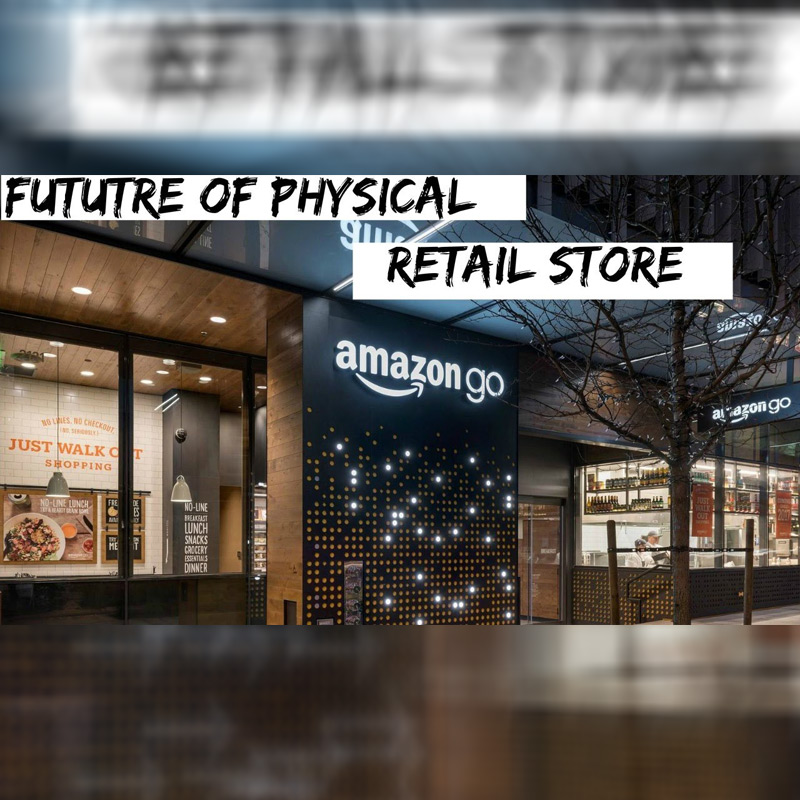
    What’s interesting is that Amazon also has its own store now and other Indian e-commerce players have also started opening brick and mortar outlets…

    Amazon, Alibaba and other major e-commerce platforms are all opening up physical stores. This shows the importance of having a mix of both physical stores and virtual shopping in the future, especially grocery stores. In India, the strength of grocery stores is far too much as compared to other parts of the world. It will take a lot for e-commerce to displace them, especially as they deliver most of the e-commerce benefits such as personalised service, fast delivery and they also have an added advantage of giving customer credit.

    Everyone talks about how the millennial consumer is fickle about their buying options. How can brands woo this new generation of consumers?

    I don’t think the millennial consumers are fickle. I think they know what they want and they are much more prepared to try things. If somebody comes with a new idea, product or innovation in the market, they are much more likely to try it. The millennial consumers are slightly less loyal though because of that, but they value brands and they buy into brands. It is just that they are more difficult to reach but once you reach them, and once they have tried your products, you have every opportunity to make them loyal customers.

    Recently, we are seeing an emergence of homegrown Indian brands. Is the Indian audience finally willing to accept and believe in homegrown companies?

    It all comes down to a strong consumer proposition and really understanding who the customer is and then being very fast and agile. We are seeing that local brands have the ability to do that quickly and swiftly and that is a distinct advantage when consumers are more fickle about what they choose.

    What are some of the key industry problems according to you and how can they overcome them?

    The foremost challenge for the industry is the fast-changing consumer and to anticipate those changes. The second challenge is that all companies need to start acting like startups and be agile, quick moving. The third challenge is that consumers are available across different mediums and you just have to find the right mix while creating tailor-made communication for the consumers.

    While everyone talks about video being the way forward and how ADEX is shifting towards creating more digital ads, the truth remains that it’s annoying after a point of time. Facebook and Youtube now also have pre-rolled ads that you can’t skip and that’s why we are getting “ad-blocked”. How can the industry skip being ad blocked?

    I think brands have to be very good at communication and it all comes down to that. The advertising needs to be timely, appropriate and relevant. We as brand custodians, have a duty to make sure that we are reaching customers in ways that they don’t find it annoying. The more we bombard them with unnecessary ads, the more likely they are to click the skip button and install ad blockers. The ad industry owes it to itself to make sure that we act appropriately and not be ad-blocked by our acts.