Tag: Kantar

  • Kantar’s OTT audience measurement aims to be industry currency

    Kantar’s OTT audience measurement aims to be industry currency

    MUMBAI: Kantar, in association with VTION, has launched OTT Audience Measurement Insights for audio streaming platforms at a time when a unified third-party measurement is need of the hour. While the video measurement will come up in Q2, both the companies, on the back of the collaboration, aim to fill the need gap.

    “The idea here is that we hope to provide a third party independent measurement, which tells platforms about what the consumers are listening, at what time which platforms, what kind of content is being consumed. We don't have any stake, either of the parties in any of the platform. The idea is that we want to be the currency for the OTT industry to make decisions about content, marketing and communication,” Kantar South Asia Insights Division managing director and chief strategy officer Hemant Mehta said.

    Mehta added that VTION’s expertise in technologies is the core strength of the partnership, while Kantar brings in the knowledge of using that data to understand from a media planning or market insights perspective. Despite challenges, both the parties are now confident that what they are measuring and reporting to the market is reliable.

    He added that having one standard metric is not possible, it would vary. “What we are giving is our standard variables by which you can evaluate like in any other medium. We've got reach, rating, time spent, share – the four variables which every medium has, we are also releasing those to the industry. And we hope that industry will take a consensus about what should be the measure,” Mehta said.

    He also added that the in-depth measurement data will be subscription-based. As shared by him, along with platforms, advertisers are also showing interest in the data. The recent study is based on a robust sample size of 9000+ stretching across top 9 cities (Delhi, Mumbai, Kolkata, Chennai, Bangalore, Hyderabad, Pune, Ahmedabad & Lucknow/Kanpur) among male and female of age group of 18+ and across SEC A, B & CDE.

  • Kantar reveals consumer trends for 2020

    Kantar reveals consumer trends for 2020

    MUMBAI: How are consumers going to behave in  2020? The economy is in a bind, consumer spending has been cautious. Will they be a little more prone to reach into their pockets to make purchases? Well, market research firm  Kantar has drawn up the top 10  key trends that will impact consumer behavior in India in the year 2020. The trends touch upon a range of categories including FMCG, durables, home buying, transportation, loans, infrastructure, online engagements, entertainment, imported goods and much more.

    Speaking about the trends, Kantar insights division South Asia CEO Preeti Reddy stated, “If the consumer behavior in 2019 was driven by the desire to seek stability, the over-riding sentiment is one of ‘wait and watch’ in 2020 amongst Indian consumers. Meanwhile, with their wallets squeezed and aspirations intact, a large-scale reprioritization of spending is underway across the board”.

    Kantar- Consumer Trends for 2020

    Waiting for the economy to recover

    Declining household saving is forcing shoppers to buy smaller packs, and cheaper variants of household consumables. Apart from millennials reluctant to own homes, tighter budgets and job uncertainty mean that families will put off purchasing homes. And yet the affordability and accessibility of credit, particularly with the entry of digital lending players that offer instant loans, will ease this scenario. Lenders have seen a 50 per cent surge in loan applications for holidays.

    Waiting for deals

    97 per cent of Indian households in 2019 bought at least one CPG (consumer packaged goods) product on promotion, with overall promotion volumes up by 6.4 per cent. Brands have no option but to find new ways of rewarding smart, well-informed, deal-seeking consumers, as information gathering becomes an integral part of the shopping experience. 85 per cent of consumers check at least two data points other than prices and discounts when purchasing.

    But not waiting to sell

    Social commerce platforms like Meesho, GlowRoad, Dealshare, Mall18 will tap into the next wave of online shoppers, that is,  200 million from smaller cities of India with very different behaviour and needs vs the current group. Their transactions are hyperlocal in nature and work by sharing deals over WhatsApp. New platforms are enabling sellers to find buyers by leveraging their social networks. Bulbul and Simsim users interact with sellers during live video streaming and make their purchases immediately.

    Waiting for infrastructure

    Tired waiting for roads, consumers have embraced technological solutions such as car pooling and shared bus rides. The shared transportation market will grow to Rs 35,000 crores by 2025. Cities plagued by congestion and infrastructure troubles, such as Mumbai and Bengaluru, are quick adopters. The lack of action towards improving the abysmal quality of air is encouraging people to work from home, even as solutions such as air purifiers and oxygen bars emerge to give them a breather.

    Not waiting to deal with waste

    22 per cent of Indians say that plastic wastage is the top concern for them environmentally – significantly higher than the global average of 15 per cent. 53 per cent of Indian consumers will pay more for environment friendly products. A similar proportion is prepared to make changes to their lifestyle for the environment. Expect greater awareness and action around food waste, and trends such as up cycling to take off, spurred by conscious business and activist youth.

    Won’t wait for the experience

    Tighter control overspending does not necessarily mean that consumers are cutting back on experiences. 37 percent of urban Indians say that they finance experiences by trading down in certain product categories including jewelry, mobile phones, apparel, and home furnishings. Some consumers are optimizing their spends by renting kitchen appliances, clothes, and furniture; 25 per cent of consumers would consider renting in the future. 

    Won’t shy away from risk

    Uncertainty in the social and economic environment has propelled Indian consumers to embrace new opportunities and create alternative futures for themselves. India is now witnessing reverse migration, as two-tier cities and state capitals emerge as attractive places due to lower land and home prices, cleaner air and availability of quality education. Consumption-wise, there is rising experimentation with an array of offerings on e-commerce platforms, even as consumers seek ways to mitigate risk of redundancy by reskilling themselves through online courses. [93 per cent of Indian learners are in the 18-39 age bracket]

    Won’t wait for rcep

    Despite the political reluctance to leverage trade opportunities within Asian, Chinese, Japanese and Korean consumer brands – which have won the hearts and wallets of Indian consumers – they will continue to do well. Expect an integration of technology and content in many of these products. From home appliances to automobiles to social platforms such as TikTok. While Korean pop culture will capture the imagination of youth across campuses and small-town India, Tokyo’s hosting the Olympics will create greater engagement with Japanese brands.

    Will watch and play/relax

    Our mobile gaming study reveals that 76 per cent of the gamers indulge in playing games on their mobile phone more than twice a day; and 31per cent play four to five times a day. 70 per cent of gamers spend more than half an hour and 42 per cent spend more than an hour playing mobile games. In-app purchases in online and mobile games present developers with financial opportunity. Some brands will deploy ASMR (autonomous sensory meridian response) – videos using audio stimuli like sounds of nature, mellow music, people whispering – to relax, soothe or invigorate viewers.

    Will watch local

    An average Indian spends 6.2 hours consuming online content daily. Going forward, spending per month on digital media content is expected to grow by 2.5 times. 95 per cent of online video consumption is in Indian languages. Bengali content growing more than 100 per cent year-on-year in watch time. Marketers will look towards online publishers and media companies to build engagement by learning techniques like transmedia storytelling, where single narrative cuts across multiple platforms and formats using available digital technologies.

  • Brands to rebalance media spends between online and offline: Kantar

    Brands to rebalance media spends between online and offline: Kantar

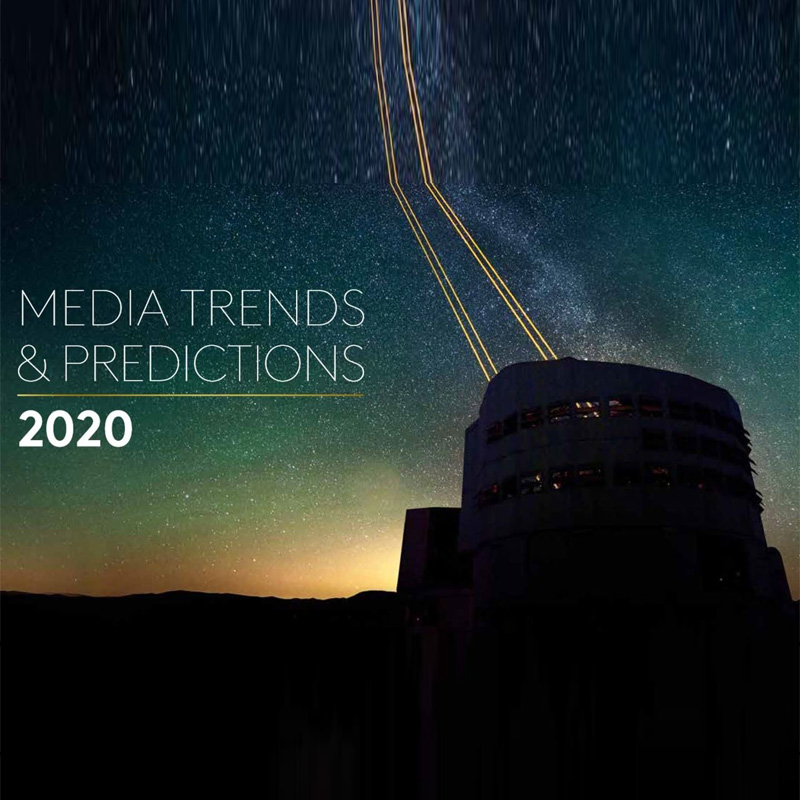
    MUMBAI: Many online-first and disruptor brands will be investing in offline modes of advertising, as they seek to “redress the balance between short-term performance marketing and long-term brand building,” reveals the latest Media Predictions 2020 report, released by Kantar. Not just this, multimedia advertisers will make efforts to better integrate their marketing efforts with offline experiences.

    In the report, Kantar expert Duncan Southgate writes, “This rebalancing will take many forms across the marketing landscape, so let’s consider a few different perspectives. For online players this will mean more attempts to bring their brands to life in the real world and build closer connections with consumers.”

    Southgate shares the examples of Mozilla, owner of Firefox browser, which had recently reduced digital marketing spend by 10 per cent and shifted more dollars to offline marketing efforts including events and content marketing.

    “Brands like eBay are rebalancing their media spend in favour of brand-building traditional channels. This makes sense, as we know from our CrossMedia database that digital media spend is far less likely to be cost-effective for brands where digital exceeds over half of the budget.”

    With the trend to getting back to reality taking shape in 2020, it is expected that a slowdown in the global digital advertising growth. However, with 31 percent of the marketers struggling to integrate their media and non-media touchpoints, it will be important for them to break down down the silos to achieve the desired growth.

    Other important trends highlighted in the report included an upsurge in ‘voice search’ thus heralding a new age of audio advertising.

    “We expect podcasts to be one of the fastest growing channels for ad spend: according to our Getting Media Right 2019 study, 63% of marketers say they plan to increase spend in podcast advertising over the next 12 months,” writes Kantar North America’s Heather O’Shea.

    Another trend shaping up in the year, with many browsers disabling cookies that were a prime source of data collection for digital advertisers, and countries taking stand for data privacy, would be an influx of direct integrations between publishers and measurement partners, which will enable true cross-publisher measurement for the first time.

    “What is certain is that campaign measurement will become ever more complex. Marketers will need to future-proof their measurement frameworks and reduce their reliance on cookies for tracking. And many will turn to third-party measurement providers like Kantar to help them navigate the evolving media landscape,” shares Jane Ostler.

    Campaign measurements will surely get tougher during the year, therefore prompting the marketers to seek for new and innovative ways to keep a tab of their ROI. 

  • Retail Insight witnesses a growth in triple digit in 2019; adding headcount by at least 30%

    Retail Insight witnesses a growth in triple digit in 2019; adding headcount by at least 30%

    Bangalore: Retail Insights, a well-recognized Omni Channel technology solution provider for Retailers and Brands has grown by triple digit in the financial year 2019. With this, the company has adding headcount by 30%.

    Retail Insights has onboarded 13 clients in 2019. The company is the preferred system integration partner for word-class products made for retail viz. JDA, Adobe, Kantar, Phone Pe, Salesforce Commerce Cloud, Go Frugal, Diebold, Google, Intel Openvino, Carlippa, Search Tap, Shipsy and Firsthive and Vinicullum.  

    The company has entered into the Omni (All) Channel Commerce implementation (“De-clutter retail complexities and serve customers better from interaction to transaction”) partnerships with Adobe and Salesforce Commerce Cloud being the market leaders in the same category along with next gen technologies development capabilities.

    Retail Insights has up the game by becoming One Stop Solution Centre (Technology + Domain) helps retailers/brands formulate effective online-2-offline (O2O) and Digital strategies with there uniquely positioned eco system.

    Commenting on the growth, Mr. Vishnu Gullipalli – CEO & Solution Advisor, Retail Insights said, “We are pleased with our steady growth rate, and 2019 has been an exciting year for Retail Insights. With our new onboard clients, we have proved to be the strategic Omni Channel Technology partner across the retail value chain and act as innovation pods for business excellence. Our retail solution and technology excellence with  transparent delivery models have played a pivotal role in achieving this significant milestone.”

    The company has entered in Wallet and Market Place Integrations partnership with a leading player Viz. Phonepe. With Shipsy the Retail Insights has entered into the Promise Management partnership, enabling last-mile deliveries. It promises Digital Customer Experience in collaboration with Intel Platform Openvino. The company has also entered in Order Management Retail Insights Proprietary Integrations framework with the SAP and Microsoft AX. Trade Promotion for the CPG – Kantar Retail. Along with partnership with AWS, SAP Cloud and Google Cloud, Post Man, etc.

    For 2020 the Retail Insights has a plan to handle fewer clients with more attention. The company is determined to enter Europe and UK for business expansion. It will also create a stronger partner relationship with Adobe, JDA, Kantar, Diebold and Salesforce in future.

  • Kantar and VTIONTM announce partnership to roll out ‘OTT Audience Measurement’ solution

    Kantar and VTIONTM announce partnership to roll out ‘OTT Audience Measurement’ solution

    MUMBAI: Kantar, the world’s leading data, insights and consulting company, has partnered with VTIONTM to roll out ‘OTT Audience Measurement’, India’s first, real-time audience measurement solution that redefines audience measurement.

    The joint, go-to-market offering brings together Kantar’s expertise in media measurement and Consumer insights with VTIONTM’s proprietary audience measurement technology and data management framework to provide a unique, comprehensive understanding of audience behaviour, insights for communication planning as well assessment of ROI for media investments across OTT Video platforms, OTT Audio Streaming & Podcasting and Broadcast Radio FM Platforms. 

     “With consumers moving seamlessly across screens, it is imperative that their behaviour across different media platforms is tracked comprehensively. The explosion in smart phone ownership, availability of affordable data plans and launch of multiple OTT based media options, have resulted in consumers increasingly spending time on their phones and seek their entertainment solutions. OTT platforms have broken the shackles of linear broadcasting and are changing consumers’ entertainment and media consumption habits. With the launch of OTT Audience Measurement solution, we hope to provide rich insights into audience profiles, their content and platform preferences as well as give guidelines for communication planning and activation. We are confident that our partnership with VTIONTM will bring immense value for all the constituents of the industry – content creators, platforms, brand owners and media planners”. Kantar Insights Division managing director Hemant Mehta said.

     “Today, more than half of the world’s population has the power of smartphones. This is profoundly changing the way in which consumers are satisfying their entertainment needs by using their devices to discover and consume content of their choice as per their convenience. At VTIONTM, we, are utilising this power to study their entertainment consumption habits. Our mission is to bring to the market a real-time audience measurement powered by latest technology. Our partnership with Kantar and our proprietary data management framework, which utilizes advanced Machine Learning algorithms, will significantly enhance consumer understanding and add new layer of intelligence for the industry, ” VTIONTM founder and CEO Manoj Dawane said.

  • Berlin, Auckland and Moscow lead global mobility, Kantar study finds

    Berlin, Auckland and Moscow lead global mobility, Kantar study finds

    MUMBAI: Berlin and Aucklandare the world leaders in urban mobility, according to new analysis from Kantar’s Mobility Futures study. The German capital tops Kantar’s City Mobility index on account of its cost-effective travel and ease of access to a wide variety of public transport infrastructure and ride-sharing services. Conversely, due to limited public infrastructure, Johannesburg, Sao Paulo and Nairobi languish at the bottom of the ranking, which assesses the affordability and availability of transport options.

    The City Mobility Index Top 10

    The study, based on more than 20,000 commuter interviews across 31 cities, coupled with in-depth interviews with 53 of the world’s leading mobility experts, aims to inform urban transport planning and development around the world, and help shape business strategies for both new and existing players in the transport and mobility sector.

    Kantar also assessed the world’s greatest cities on their environmental credentials in its Green Commuter index. According to the analysis, Asian cities are leading the way in environmentally-friendly commuting with Tokyo taking the top spot, followed by Beijing and Singapore. This is driven by a low proportion of solo drivers and a high proportion of walkers, cyclists and public transport users. In Europe, London ranks as the most environmentally friendly commuter city because of its extensive rail and underground network.

    Other findings from the research include: 

    Car is still king: Despite growing environmental concerns, commuters still love their cars because of the status symbol, convenience, or often out of necessity. Globally, 39% of urban commuters drive to work alone – more than any other mode of transport. And with public transport eliciting the most negative emotional response of all transport modes, it’s no surprise that people are opting for the ease and comfort of a private vehicle. 

    Amsterdam and Copenhagen are home to the world’s “super-cyclist” commuters, ranking at no. 1 and no. 2 in Kantar’s Cycle index respectively. Beijing rounds out the top three. 

    Residents of Tokyo and Manchester are the world’s biggest walkers, with the proportion of commuters choosing to walk to work reaching 18% and 16% respectively. 

    South East Asia also leads the way in travel app usage. Residents of Mumbai and Jakarta on average use over five apps to navigate in and across their city. On Chinese mainland, the average number of apps is lower than the rest of the world, since car and bike-sharing providers have already integrated into other more widely used apps such as Baidu, Alipay and WeChat to make their offerings even more accessible.

    “The great cities of the world are exciting and energising places to live – but as populations increase, and the pace of life intensifies, urban mobility poses a growing challenge,” commented Guillaume Saint, Global Automotive & Mobility Lead at Kantar. “Our research reveals that one of the biggest challenges facing global cities today is moving commuters away from the convenience and comfort of their cars, and onto more sustainable transport options. Understanding people’s pain points and emotional response will be key to driving meaningful behavioural change. People are more likely to use modes of transport that bring a little bit of delight into their daily commute and become a lifestyle choice rather than just a way to get around. 

    Cities have much to gain from developing people-centric mobility solutions. The likes of Berlin and Auckland are earning a reputation for being a great place to live – and commute – and these cities will attract the brightest minds into the local workforce, while improving the mental and physical health of those already living there.”

    Kantar’s Mobility Futures study surveyed over 20,000 city dwellers about their current travel experiences and desired modes of transport. The full research will be available in November.

  • Kantar and Frrole announce the launch of ‘TGISocial+’

    Kantar and Frrole announce the launch of ‘TGISocial+’

    MUMBAI: Kantar, the world’s leading data, insights and consulting company, has partnered with Frrole toroll outTGI Social+, a comprehensive offerwhich will bring together rich consumer profiles from TGI embeddedwith social media analyticsto provide a comprehensive understanding of online consumers.

    In today’s customer-centric marketing, brands need to decode their consumers from both an online and offline perspectiveto create relevant and meaningful messaging and conversations that effectively engage their consumers.TGI Social+enables marketers to get a holistic understanding of their online target groupandconnect with them in their own language when they are most engaged. TGI Social+ offers:

    •       Marketers to seamlessly understand the social speak among various target groups (as defined by TGI)

    •       Augmented dataset that can be used for deeper consumer understanding and targeting

    •       Dataset by category users, durable ownership, and by media interest and intensity

    •       Marketers can assess both the offline as well as the online personality, likes and interests of their target groups in real time

    Commenting on the new offer, Hemant Mehta, Managing Director, Insights Division,Kantar said “We know that consumers express themselves more openly and candidly when they are online. Social media analytics gives marketers a unique opportunity to comprehensively understand their consumers, gather their feedback, their likes and dislikes, their issues and interests effectively. This 360-degree understanding of their consumerscan help them tailor their messages sharply and make them more relevant and reach the right audience. TGI Social+is our unique, first of its kind offerthat helps brands to engage and talk to their consumers in their language using relevant themes, at relevant times and on relevant online channels.”

    Commenting on the partnership, Amarpreet Kalkat, CEO, Frrole said, "We are delighted to partner with a global leader like Kantar to bring together online and offline insights in one place, creating a first of its kind offering that has been missing from the arsenal of marketing teams. It allows both of our customers on the agency as well as brand side to develop a holistic picture of their consumer and the market. It also allows them to answer previously unanswered question during planning and measurement, without having to bother about the hitherto isolated nature of data sources. That will now be a thing of the past for those who use TGI Social+."

    TGI Social+helps marketers to segment their consumers based ondemographics, geography, category consumption behaviour, lifestyle and psychographic profilers and media touchpoints through TGI. While Frrole’scontribution brings to the fold, a thorough understanding of the online personality, behaviour, social activity time, interests and hobbies across the spectrum.

    The product leverages capabilities of both TGI and Frrole. Launched in 2001, TGI covers 3000 brands,400 categories,300 lifestyle statementsand Traditional and Digital media habits. Frrole; on the other hand, brings consumer intelligence through Artificial Intelligence comprising social listening, audience intelligence and influencer intelligence.

    The first wave of TGI Social+ is now available and will be updated monthly.

  • Technology adoption makes banks lead ‘BrandZ Top 75 Most Valuable Indian Brands’

    Technology adoption makes banks lead ‘BrandZ Top 75 Most Valuable Indian Brands’

    MUMBAI: The slashing of corporate tax, from an effective 35 per cent to an effective 25.17 per cent, by finance minister Nirmala Sitharaman will translate into value increase for the brands working in the service sector, Kantar Insights Division chief client officer Vishikh Talwar told Indiantelevision.com on the sidelines of the “BrandZ Top 75 Most Valuable Indian Brands 2019” report launch in Mumbai on Wednesday.

    He said that there is a great growth potential for the top brands in the list and he is positive that by the next year, they will come up with even better performance.

    Introducing the key findings of the report, Talwar also noted that since 2014, not many brands have been able to earn consumer trust, which is one of the key driving factors that drive the brand in the list of most valuable ones.

    He indicated that it is necessary for brands to stick to their brand purpose to gain this consumer trust. “Brand purpose is more than just advertising. It goes farther. A brand will have to be very clear about what role it is going to play in a consumer’s life. It is not just about marketing people to be working on. The entire ecosystem within the organisation should be working towards serving that purpose. Cases in point are Swiggy and Zomato. It is the whole ecosystem which has to ensure, right from all the process, each of the process, each of the people in between, all their intermediaries, will have to ensure that they are providing the convenience of service and lifting the quality of life of consumers,” he added.

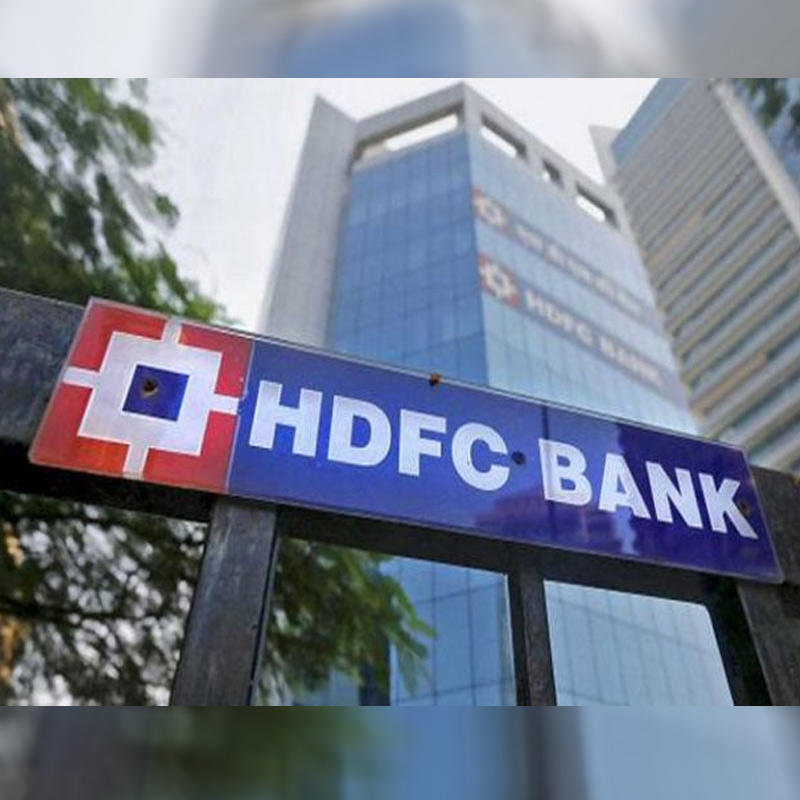
    Out of 75, 12 brands in the most valuable brands list are from banking, insurance, and payment sector, including the topmost HDFC Bank. Other names include LIC, ICICI Bank, Axis Bank, Paytm, and ICICI Prudential, among others.

    On being asked about why the category is dominating the list, Talwar said that that very simple reason for this is that all the names are great brands. “If you look at financial services in India, I think it is ahead of its counterparts in many other countries. The way they have adopted technology to serve the needs of the consumers, innovated their packages not just in terms of saving but equally in terms of loans, and how they have reached out to the end consumer, all of this comes together to make them the top brands.”

  • Brand-building for longevity and future growth becomes major focus for top brands in Brand Top 75 Most Valuable Indian Brands ranking

    Brand-building for longevity and future growth becomes major focus for top brands in Brand Top 75 Most Valuable Indian Brands ranking

    MUMBAI:–India’s most valuable brands, many of which have built their businessesthrough disruption, are now looking to capitalise on their achievements and invest in strategies for long-termgrowthand stability.This is a key finding of the sixth BrandZ™ Top 75 Most Valuable Indian Brands ranking, released today by WPP and Kantar. This year’s results revealed a 6 per cent rise in overall brand value to $228.2 billion, a moderate pace compared to previous years, given India’s recent macroeconomic challenges. Despite that, such growth is still in line with that of the BrandZ Top 100 Most Valuable Global brands, as India steadily rises in global economic rankings. 

    HDFC Bank, now ranked No. 1 for a sixth consecutive year,has demonstrated the rewards of maintaining a forward-thinking and innovative outlook,withits consistent focus on exceeding the changing needs of its customers. With new financial products, an ongoing drivetowards digital banking and new branches set-up throughout the country, the bankgrew 5 per cent in brand value to $22.7 billion. This is a positive contrast to the 8 per cent decline in value of the top 20 global banks .

    The BrandZ study, which is the only brand valuation ranking to combine companies’ financial data with consumer insight and opinion, shows that trust is key to develop the stabilityrequired for long-term success; highly trusted brands in the Top 75 are worth 129 per cent more than less trusted ones. 

    Trusted brands include many of the consumer-facing technology platforms and service providers. Despite owing their success to disruptive beginnings, these brands now also focus on activities to build trust such as ongoing and effective communications with consumers that generate comfort and familiarity with using the brand. With a 30 per cent increase in value, this sector was the fastest growing group of brands in the ranking.

    Notable brands include ecommerce site Flipkart (No. 12), which increased its brand value 14per cent to $4.7 billion, while unicorn brands hotel booking site Oyo($2.0 billion), online food ordering service Swiggy ($1.6 billion) and online restaurant marketplace Zomato ($1.0 billion) are newcomers to the ranking at No.30, No. 39 and No. 61 respectively.

    The fastest riser in the 2019 ranking is telecom provider, Jio, which climbed one place to No. 9 with a 34per cent increase in brand value to $5.5 billion.Itsdisruptive business model has made internet access available to many Indianswho were previously unable to afford it, thereby opening up access to digital platforms and services.Vodafone ($2.5 billion) meanwhile was the top-ranked newcomer at No. 24.

    Both digital and offlinebrandssuch as D-Mart (No. 25, $2.4 billion) have found success as a result of the rise of ‘middle India’; the growing number of people in the country’s second, third and fourth-tier cities and towns that are changing India’s traditional urban-rural divide.  These previously poorly-served segments increasingly have access to a variety of online services, with Swiggy and Zomatobuilding much of their growth on this shift.

    With an expanding choice of offerings to buy, Indian consumers increasingly care more about the quality of service than whether a brand originates in India, as long asit demonstrates that it understands what it means to be Indian. That insight is reflected in the decision by Amazon to launch itself a year ago as India’s ‘neighbourhood shop’.

    David Roth, CEO of The Store WPP EMEA and Asia and Chairman of BrandZ, says:“As India flexes its muscles on the world stage, it faces increased macroeconomic headwinds which have combined with a rise in global trade tensions to create a challenging environment.Successful Indian brands are adapting to these challenges andrecognising that longevity requires them to do more than just disrupt the status quo; long-term brand building requires new strategies that major on stability.”

    BrandZ Top 10 Most Valuable Indian Brands 2019

    Preeti Reddy, CEO South Asia, Insights Division, Kantar says “Consumer trust is a common thread among successful brands. However, it is concerning that only a few have succeeded in growing trust over the last five years. Those who done so, have done it through open and honest conversations with their customers. Brands would do well to consciously work at building consumer trust – it is the shield that gives a brand the resilience to face headwinds in uncertain times.”

    Vishikh Talwar, chief client officer, Kantar Insights Division, says: “The rise of ‘middle India’ combined with rapid growth of the mobile internet is providing unprecedented opportunities for brands.  But, with an almost overwhelming choice of products and servicesto buy, consumers are increasingly discerning; the Indian psyche requires that brands cater for local needs with offerings that genuinely improve daily life.  Today that’s as much about providing comfort and reliability as it is about generating new experiences.”

    In general, India’s top brands are taking a long-term approach to value creation. Over the past five years, a stock portfolio containing the BrandZ™ India Top 75 Most Valuable Indian Brands would have increased 33.8per cent in value. This compares to a rise of just 12.4per cent for India’s SENSEX, an index of 30 stocks on the Bombay Stock Exchange, demonstrating that valuable brands generate superior shareholder value. 

    Key trends highlighted in the BrandZ Indian Top 75 study include:

    Mobile internet access: Smartphone user numbers in India increased by 18per cent in 2018 (the fastest rate of growth in the world), mainly due to a combination of Jio’s own low tariffs and the renewed competition causing other telecom providers to reduce their rates.

    Buying power:Retail is the second fastest growing category, with online and offline both growing strongly. New entrantReliance Retail (No. 55, $1.1 billion)opened nearly 500 new stores and usedJio’s service to connect retail shops with grocery deliveries, while D-Mart ($2.4 billion) focused predominantly on offline, rising two places to No. 25.

    The Amazon effect:Amazon and Flipkart compete with many Indian brands across several sectors, with Amazon also opening its largest campus yet in India.  This has increased competition and driven brands to step up their operations to ensure they are meeting customers’ needs.

    A confident country: The success of unicorn brands such as Swiggy, Zomato and Oyo is fostering a new-found confidence in India.  This is augmented with the increasingly global outlook of these new brands as they actively seek to expand their operations outside India.

  • Social media platforms, online video to consolidate advertising dominance in 2020

    Social media platforms, online video to consolidate advertising dominance in 2020

    MUMBAI: A considerate portion of marketers in Asia Pacific (29 per cent)don’t have the right balance and synergies between digital and offline media, while the majority (84 per cent) still struggle with cross-channel measurement. That’s according to the latest annual state of marketing study, Getting Media Right: Marketing in Motion, released today by Kantar.

    2020 is set to see a significant rise in digital ad spend, as marketers in the region look to optimise their media mix. 80 per cent of marketers plan to increase their investment in online video advertising over the next 12 months, while 68 per cent plan to increase spend on social media networks and 57 per cent plan to increase spend on podcasts. This is in sharp contrast to print media, where72 per cent of marketers say they will decrease spend in magazines, while 60 per cent will reduce their investment in newspaper advertising.

    Despite the projected growth in online advertising, digital measurement remains a challenge for marketers, with blind spots such as ‘walled gardens’ impacting the ability to understand cross-channel performance. This leaves many advertisers in the dark about the performance of their brand across channels.

    Now in its sixth year, Getting Media Right examines the current state of marketing in a fast-moving connected world, and is based on in-depth survey feedback from nearly 500 senior marketers globally spanning advertiser brands, media publishers and agencies globally. It reveals an industry that continues to diversify its usage of different media contexts, yet requires better understanding of how ideas, content and media channels work together to achieve their goals of driving short-term sales and long-term brand growth.

    Key findings from the study include:

    The short-term vs. long-term dilemma comes to a head. Almost all marketers in the region (89 per cent)now recognise the importance of balancing short-term sales with long-term brand building. However, still only 61 per cent of marketers are using both short and long-term measurement; 32 per cent still rely solely on short-term sales results.

    Marketers globally still struggle with integrated campaigns, but APAC marketers are having more success. 88 per cent of marketers say they have integrated their marketing organisations, compared to 75 per cent of global marketers.

    Programmatic targeting continues to grow. Four in five marketers in APAC (78 per cent) currently use programmatic targeting for their campaigns – and that is expected to reach 87 per cent in 2020. But still one in five marketers(21 per cent) aren’t confident they’re successfully targeting the right audiences.

    Cookieless advertising could leave marketers in the dark. More than a third of marketers (36 per cent) haven’t begun preparations for a cookieless world, leaving many concerned about how such change will impact the industry.

    Nearly two-thirds of marketers (61 per cent) agree that developing custom content is imperative, but when it comes to understanding how context impacts creative executions, there’s still a gap. More insight is required into how specific content needs to be tailored to specific contexts to improve message receptivity.

    “While the rapid growth in digital ad spend comes as no surprise, this new research indicates that marketers still have a long way to go to when it comes to cross-channel measurement and proving ROI,” said Jane Ostler, Global Head of Media Effectiveness, Kantar. “The next 12 months will see huge changes for the industry, with the rise of newer channels, such as podcasts and advanced TV, and the move away from cookies set to transform the way advertisers target and measure campaigns. Marketers should aim for the best of both worlds: they need to create a framework to monitor impact on business and brand metrics. That means harmonising measurement tools, building an infrastructure that enables measurement across the diverse marketing mix, and creating meaningful insights to improve performance across all channels.”

    Pablo Gomez, Chief Digital Officer for the region, said: “The results go to show just how dynamic and complex APAC is as a region. Marketers here are faced with the challenge of rapidly increasing their digital investment, whilst at the same time, ensuring there is integration with offline media.

    He continues: “Measurement also remains one of the biggest issues for the region, especially online-offline cross measurement which is critical in a region dominated by TV and mobile. It’s clear that marketers need more focused data, with insights that give them the direction they need to better integrate and optimize their campaigns. This will also allow them to customise content better and improve the entire experience for their audiences.”

    Kantar executive director, South Asia, insights division Sandeep Ranade said, “This research indicates that many marketers today focus on short-term measurement though they recognise the importance of balancing short-term sales vs long-term brand building. Integrated campaigns are the way forward, however, there is still a lot that needs to be done here. Marketers need to be more cognizant of specific contexts while developing content. This will help them future proof their digital measurement approaches in the rapidly growing and changing digital scenario”