Tag: Kantar

  • Online is second most consumed media after TV in rural India: Report

    Online is second most consumed media after TV in rural India: Report

    Mumbai: There has been an internet revolution in rural India, with online being the most consumed media after television, according to a joint report released by media agency GroupM and insights and consulting firm Kantar on Wednesday.

    With respect to online content consumption, music/audio leads the pack at 69 per cent followed by news at 49 per cent and gaming at 33 per cent. Usage of video/OTT apps is driven by YouTube at 87 per cent (most in Rajasthan, AP/ Telangana, TN, and Bihar), followed by Disney+ Hotstar at 30 per cent (highest usage in UP, TN, Gujarat, Kerala), the report said.

    WhatsApp and Facebook are the most used social media/ messenger platforms at 87 per cent (most in Rajasthan, AP / Telangana, Karnataka) and 66 per cent (most in Odisha, UP, Gujarat and West Bengal) usage respectively, according to the second edition of the Rural COVID Barometer report. 

    The report explores rural India’s concern about the impact of the second wave and how it alters consumer behaviour and purchase patterns. The research was conducted with Kantar’s data and insights network and Dialogue Factory’s rural marketing intelligence in eighteen Indian states, across rural adults (18+ years in age) with representation across gender, NCCS, and age groups.

    Phone Pe is the most used digital payments app with 19 per cent of rural consumers having used these services in the last 6 months, says the report. Usage of Phone Pe is driven by Karnataka at 46 per cent followed by Rajasthan at 38 per cent.

    Growth in the consumer durables and automotive (two-wheeler) sectors is likely to slow down in the next six months. However, the smartphone category is expected to see fast growth in the near future.

    The construction sector is also expected to see a bounce-back with consumers expected to spend on building a house/undertake smaller construction work in the next six months.

    As a result of the pandemic, rural consumption and shopping patterns have witnessed a major shift. With respect to retail channels, 56 per cent of consumers prefer local village shops for purchasing groceries, and 49 per cent for personal hygiene, and 45 per cent for cleaning products. Even big-ticket items like consumer electronics and durables are preferred to be bought at these local shops at 50 per cent and 46 per cent respectively. 

    Rural consumers are saving 25 per cent of their income, the report stated. Southern India (except for Tamil Nadu) is saving more in comparison to other parts of the country. As expected, expenses are higher on personal care, hygiene and cleaning products while spends on indulgence and beauty products have been deprioritised.

    “The pandemic has evolved the rural consumer’s decision-making process. They are watching their spending and prioritising their buying patterns by the need of the hour,” said GroupM Dialogue Factory, head of experiential marketing – APAC, Dalveer Singh. “There is a positive acceptance of the vaccination and the upper- and middle-class rural Indians are being more proactive in financial planning to deal with covid constraints, which make these markets a significant place to introduce investment and savings products. There is a deep sense of uplift on the subject of India’s economic future.”

    While rural India is concerned about the COVID situation in the second wave, most are also positive about economic recovery once the situation normalises. Nearly three in four rural households have received some form of assistance via government schemes, thus providing the much-needed financial cushion to consumers, the report stated.

    “With a highly concerned rural consumer, rural India is planning finances better and inclined towards a savings mindset,” stated Kantar Insights Division, senior executive director, Puneet Avasthi. “We are witnessing a significant rise in digital payments as an important mode of transaction. With the change in consumption priorities in favor of health and hygiene products, FMCG marketers should leverage this trend for planning their innovation pipeline.”

  • TikTok tops ad equity charts for second year: Kantar

    TikTok tops ad equity charts for second year: Kantar

    Mumbai: Data, insights and consulting company Kantar on Thursday released its report titled Media Reactions 2021, the second edition of Kantar’s global ad equity ranking of media channels and media brands. Ad equity refers to the attitudes consumers have towards the advertising experience within specific platforms and ad formats.

    Across branded digital platforms, TikTok remains top of the global ad equity rankings. Although leading the highest spot as overall platform in only one market – Taiwan, TikTok is the leading global digital platform in the important US market and is first or second-ranked of the global digital platforms in 9 of the 22 markets where it was measured.

    The inclusion of commerce platforms in this year’s ranking illustrates their increasing importance across the digital advertising landscape. Amazon ranks second globally among consumers, topping the list in 4 markets. Together with regional e-commerce giant Mercado Libre, which leads in Argentina, Amazon’s success showcases why e-commerce has entered the online media channel ad equity rankings in third place.

    Despite the prominence of digital platforms in daily life, consumers continue to be more positive about offline ad platforms such as cinema, sponsored events, magazine ads, and point of sale (POS). The popularity of podcast adverts has risen. Positioned at #11 in the overall ad equity ranking, they have overtaken influencer content as the preferred digital ad medium. Podcast ads are perceived as both better quality and more relevant compared to 2020, but also more repetitive, unsurprising given the increase in ad spend on the platform.

    Global vs Local: The report highlights the importance and challenge of market-specific media strategies. In 16 of the 23 markets surveyed the top-ranked media brand was a local media brand or a localised version of global media brands. The 10 of these 16 are news and magazine brands. This local success, together with differing attitudes to the ads on global digital media brands, makes balancing the benefits of scale of global media platforms with the promise of greater relevance from local media gems ever more important.

    The Innovator’s Dilemma: The report also underlines the challenge for brands in keeping their media mix reflective of the latest consumer media preferences as well as reflective of their own values and brand positioning. Marketers favour channels and platforms they believe provide both trustworthy and innovative advertising environments. Among the global brands, Instagram best manages this balancing act. YouTube, Google and Facebook are trusted platforms but are considered slightly less innovative.

    TikTok is not yet trusted by marketers as much as the more established platforms, but it has made enormous improvements in the past year. It remains comfortably the most innovative place for ads, and trust has doubled, so many more marketers are now positive about placing ads on the platform.

    Ad Spend Outlook: The report marketers’ survey provides insights into probable media growth areas for 2022. The vast majority of global marketers plan to increase spend on their favoured ad formats: online video, influencer content and social media ads. Many will reduce spend on print ads.  YouTube, Instagram, and TikTok are the platforms set to benefit most.

    Discussing the findings, Duncan Southgate commented: “The ad industry has been encouraged by the rapid recovery in 2021, as advertising has been used as one of the levers to fuel recovery in the wider economy. As we emerge into a new media landscape, brands need to understand which consumer and marketer attitudes have changed, and which have stayed the same. Which media brands have retained their appeal, and which have grown stronger? While the pandemic accelerated the growth of digital in every aspect of life, we have seen robustness in consumers’ preference for offline advertising, and some strong local news brands in particular.”

    “Marketers need to ensure their strategies respect those preferences alongside the benefits of scale delivered by global digital platforms. TikTok has done an impressive job retaining its differentiated advertising proposition with consumers – even as its user base has almost doubled over the past year. We have also seen the re-emergence of retail as a critical ad platform, both online and physically. Advertising strategies that seamlessly align with omnichannel retail strategies provide a great opportunity for marketers to deliver more popular campaigns.”

    Kantar, head of media- South Asia, insights division, Sandeep Ranade added, “Moving into 2022, we will see consumers adopting more and more digital channels and it will impact advertiser’s appetite for digital connection opportunities. Consumers do not differentiate between the way media is bought and hence it will no longer be offline vs online but a balance of reach vs receptivity and global vs local media partners to bridge the gap between what consumers prefer vs what advertisers perceive consumers prefer. We have also seen that Indian consumers generally have more pronounced views on advertising compared to the global audience”

  • 77% consumers prepared to invest in companies that do good: Kantar

    77% consumers prepared to invest in companies that do good: Kantar

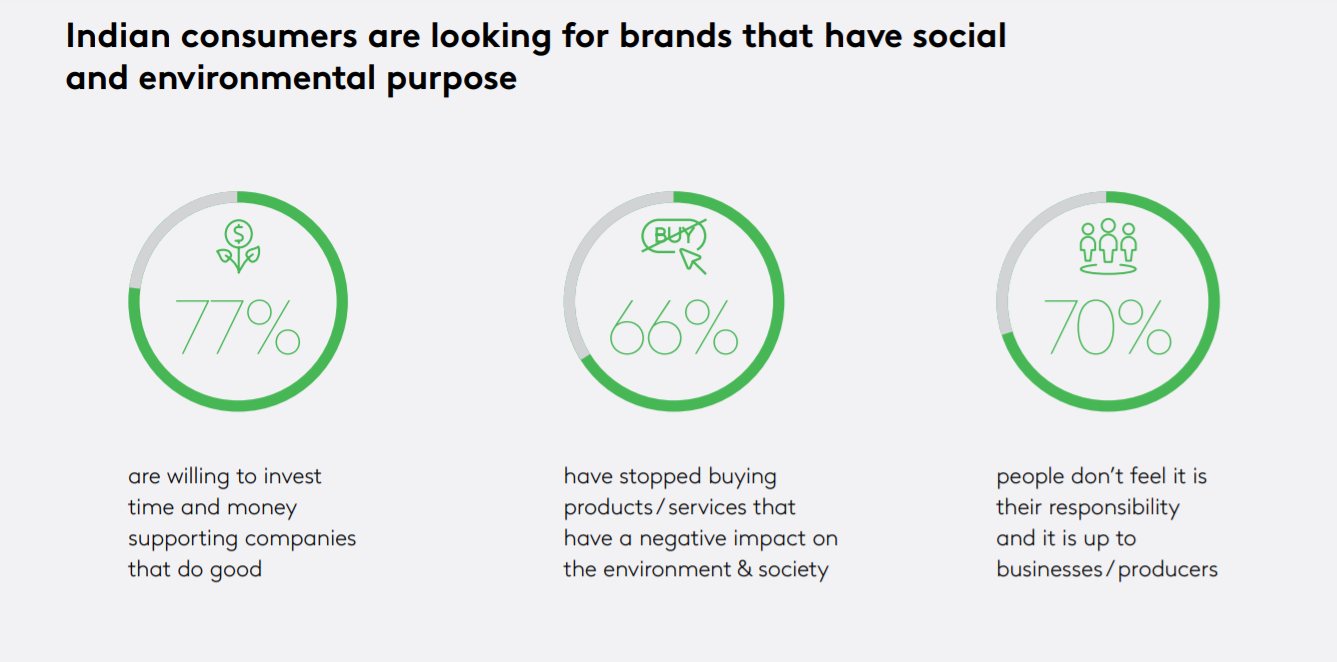
    MUMBAI: The last eighteen months of the pandemic have forced the world to press the reset button and reflect on the direction it’s headed in. In a reflection of that trend, a substantial 77 per cent of Indian consumers are prepared to invest time and money supporting companies that do good, according to the latest study conducted by Kantar.

    As part of the ‘Asia Sustainability Foundational Study’, the data-driven analytics and brand consulting company interviewed over 10,000 consumers across nine countries in the region, including India, to understand their concerns and priorities.

    According to the report, a significant 66 per cent have stopped buying products & services that have a negative impact on the environment and society. On the flip side, however, 70 per cent of them do not feel sustainability is their responsibility, believing it is up to the companies or producers.

    The study also shares insights for marketers to understand the views of the consumers and their expectations from brands. In India, it says, the key concerns are issues that have a direct impact on the consumers’ daily lives such as water pollution, poverty and hunger, deforestation, lack of access to healthcare and vaccinations and air pollution.
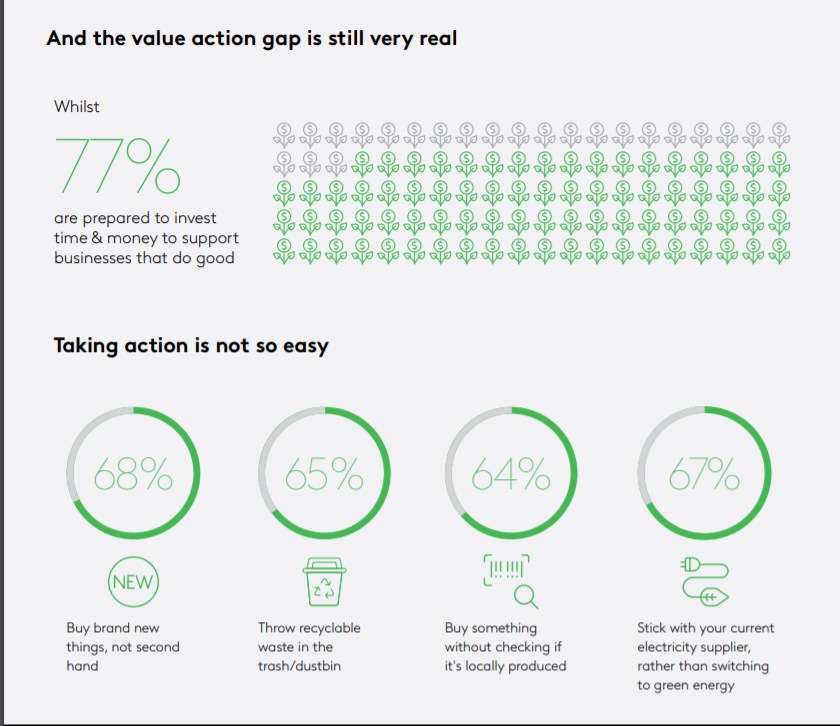
    The Kantar team interviewed 1,026 consumers in India in May 2021, covering six major cities – Delhi, Mumbai, Kolkata, Chennai, Bengaluru and Hyderabad. Unsurprisingly, in a country faced with numerous socio-economic issues, resource scarcity and environmental challenges, the issues closest to home take precedence for consumers. However, the intent does not always translate into action, the report found. While 48 per cent of consumers in India are active and engaged on sustainability issues with 77 per cent saying they are prepared to support companies that try to do good, nearly 84 per cent of consumers still prioritise saving money over saving the planet when it comes to their real-world actions!

    The Value Action Gap

    Though most Indians are conscious of the impact of their own choices, the Value-Action Gap is still significant, with consumers often failing to act on these good intentions. For example, 65 per cent of consumers report that they throw recyclable waste in the trash or dustbin.

    Further, the study measures the three factors persistently undermining sustainable consumer behaviour: Cost, Comfort and Convenience. At least 76 per cent say they do not have enough information to choose sustainable options and 72 per cent say they tend to forget about sustainability in their busy day-to-day lives.

    According to the report, consumers’ concerns also vary depending on the category in question, so brands developing their sustainability strategy need to understand this in order to focus their efforts. For example, consumers expect food brands to avoid over packaging and to discourage wastage.

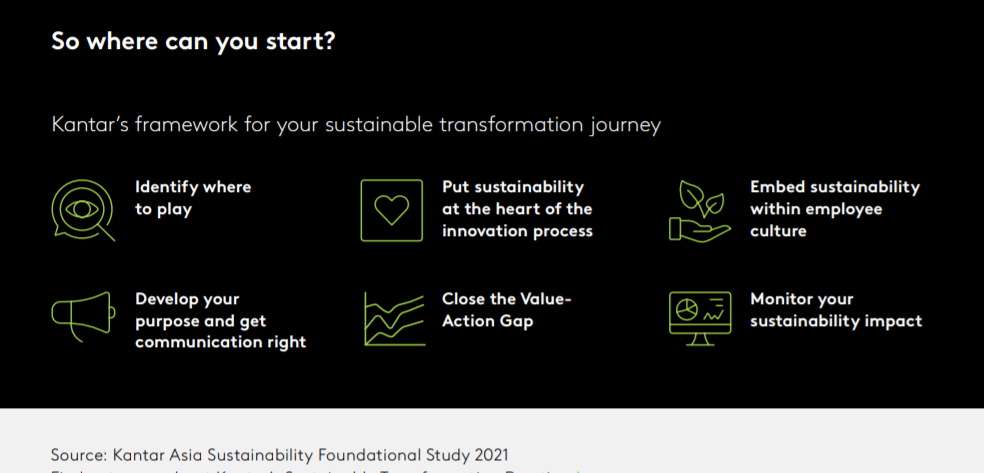
    The research additionally introduces Kantar’s Sustainability Framework which businesses can use to build a consumer-centric strategy for success. This leverages a ‘Sword and Shield’ approach to better understand how brands in different categories can responsibly navigate sustainability issues by identifying where to focus their attention, how to localise their brand purpose to address local consumer tensions, and how to innovate to overcome the Value-Action-Gap.

    “India’s stage of growth and increasing consumer consciousness regarding sustainability gives it huge potential to create commercial value and address environmental and social issues. Consumers are looking for brands that have social and environmental purpose, so from a marketing standpoint, purpose is imperative, and sustainability will potentially drive consumer choice,” said Kantar’s head of Sustainable Transformation Practice, India, Paru Minocha. “Our research illustrates the importance of taking a local approach to sustainability issues. While a company purpose could be a global constant, translating that into action needs to take into consideration the tensions that exist in each market.
    According to Minocha, for the first time, the team has been able to identify which sustainability issues consumers care about most and how that should translate to action depending on the consumer category. The immediate task ahead is to find levers to unlock this behaviour change, she added.

    Kantar Sustainable Transformation Practice managing partner, Jonathan Hall said, the study uniquely identifies the social and environmental issues that are relevant for consumers on a sector-by-sector basis in India and across the world. “Brands have the opportunity to apply the lens of their purpose to understand where to play in the space and to create interventions that are meaningful for different consumer segments. In this way, brands can help people align their actions with their sustainable beliefs and close the Value-Action Gap,” he said.

  • Kantar brings in Chris Jansen as group CEO

    MUMBAI: Data and media company Kantar has announced the appointment of Chris Jansen as group chief executive officer, effective 1 November. He is currently CEO at Cognita, a global schools group.

    Jansen joins Kantar with more than 20 years of leadership experience in the services sector, ranging from brand building to service delivery transformation, alongside a background in classic FMCG marketing, and an established track record of managing private equity-owned businesses.

    Welcoming Jansen on board, Kantar chairman Adam Crozier said, “Chris’ track record of building great companies, as well as his entrepreneurial and competitive spirit, further strengthens the leadership team we have been building over the past 18 months. Chris is a highly people-centric leader who understands the importance a strong culture plays in delivering outstanding results. As we continue on our transformation journey at Kantar and build on our recent business momentum, his leadership will be instrumental in fulfilling the ambition that we have for Kantar.”

    Jansen has previously served in various leadership roles, and board positions at both British Gas and British Airways. He led the Automobile Association (AA) to a stock market flotation in 2014.

    Kantar’s newly appointed CEO said, “Kantar is rightly regarded as a world leader in data and insights-led consultancy and has an outstanding reputation with its clients. This is a result of having outstanding people, and I am really looking forward to working very closely with the Kantar team. We have an exciting future ahead, as we continue to embrace advanced analytics and the latest technology in order to better serve our clients.”

  • Amazon, Apple emerge as most valuable global brands 2021: Kantar

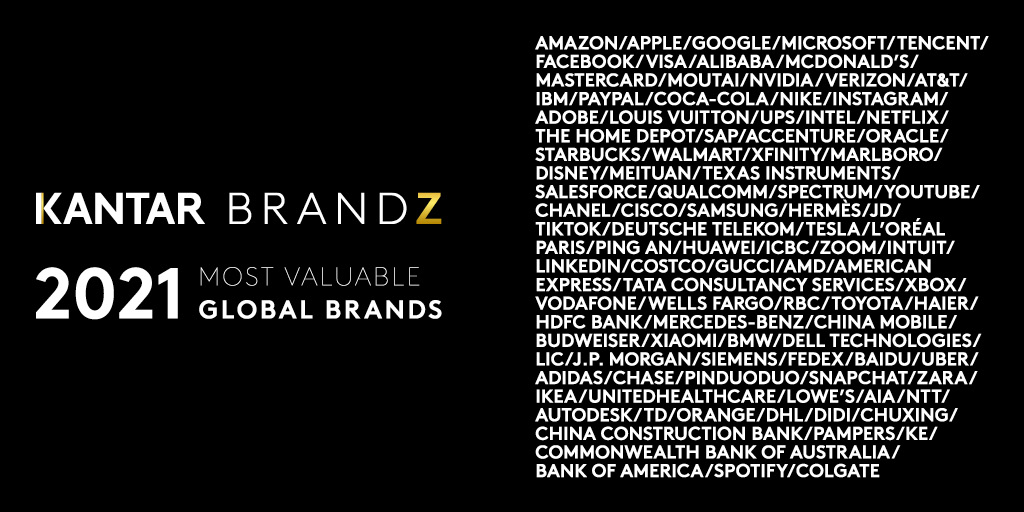
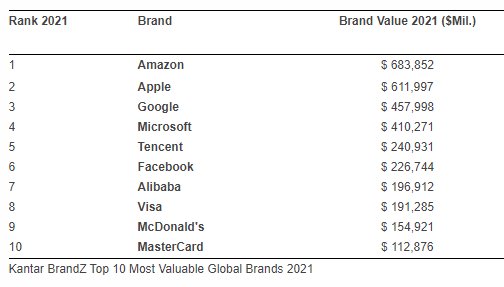
    New Delhi: Multinational giant Amazon consolidated its position as the world’s most valuable brand, growing 64 per cent to $ 684 billion, Kantar said in its latest BrandZTM Most Valuable Global Brands 2021 ranking released on Monday.

    Amazon’s brand value grew by almost $268 billion this year and it became the first half-a-trillion-dollar brand, alongside Apple, at number two, valued at $612bn. The other brands that figured in the top ten most valuable global brands in 2021 were: Google, Microsoft, Tencent, Facebook, Alibaba, Visa, McDonald’s, and MasterCard.

    China’s TikTok and USA’s Tesla are among the brands that doubled their brand values during the pandemic. Tesla even emerged as the fastest growing brand and became the most valuable car brand, growing its value by 275 per cent year-on-year to $ 42.6 billion, said the report.

    Tech brands dominate global rankings

    Seven of the top ten brands are from the tech sector. Tech has also enabled non-tech brands to achieve significant growth, for example Gucci – harnessing the power of TikTok during the pandemic, and Domino’s – leveraging online and delivery services. New entrant Zoom was one of the big tech stories of 2021, with its ease of use and reliability driving momentum with business and personal users. It entered the ranking at 52 with a valuation of $36.9bn.

    World’s most valuable brands show record growth

    Despite the economic downturn brought by the devastating wave of Covid-19, the report found that the world’s most valuable brands experienced record growth. Their total worth reached $7.1 trillion – equivalent to the combined GDP of France and Germany. This was largely driven by confidence derived from vaccine availability, economic stimulus packages, and improving GDP outlooks, said Kantar Group.

    “Despite many facing a difficult year, our research has again proven that strong brands deliver superior shareholder returns, are more resilient, and recover more quickly,” said Kantar CMO, Nathalie Burdet. “With global e-commerce growing from 12 per cent to 15 per cent of all sales in 2020, it has been a positive year for brands involved in that value chain.”

    Apparel brands overtake M&E brands

    Despite reduced travel and lockdowns globally, apparel brands have collectively grown even more than media and entertainment brands in the ranking, as people redefined the boundaries between work and leisurewear. Adidas, Nike, and Puma all secured over 50 per cent value growth. Whilst, collectively, fast fashion did not grow as fast, notably, Uniqlo (+88 per cent) and H&M (+47 per cent) grew valuations significantly. The Top 20 retailers grew their brand value by a combined 48 per cent.

    Success of subscription-based models

    Microsoft innovated offers to adapt to new working environments and transitioned to subscription models to improve convenience and scalability, recording a growth of 26 per cent. Xbox (+55 per cent), Disney (+13 per cent), and Netflix (+55 per cent) all saw growth, while Spotify entered the ranking following a 454 per cent growth in subscribers from 2015-20 and a significant improvement in consumer brand equity.

    Reputation: A Key factor

    According to the report, reputation, especially for sustainable and ethical purposes, is increasingly a driver for brand growth. The luxury category saw 34 per cent brand growth with, predominantly, French and Italian luxury companies such as LVMH investing in their corporate reputation through pandemic-related initiatives, sustainable transformation, and support for social movements such as BLM. Similarly, L’Oréal Paris successfully bucked the trend across beauty brands in the pandemic, securing brand growth by flexing its assets and driving female empowerment.

    Emphasis on Trust and Reliability

    “Our analytics have uncovered that 70 per cent of what makes a brand successful is executing four fundamentals well: providing superior experience across consistently branded touchpoints, a range of well-designed and functional products and services, convenience, and exposure through great advertising. However, COVID-19 has emphasised consumer values such as trust and reliability. Those brands that are evolving their values, projecting leadership on these issues are demonstrating differentiation and standing out,” said Burdet.

  • Post-pandemic, 50% commuters anticipate continued remote working

    Post-pandemic, 50% commuters anticipate continued remote working

    Mumbai: More than half of commuters around the world plan to continue working remotely, at least in part, after the pandemic. This, together with a growing preference for healthier modes of transport, but also a resurgence in commuting by car, means the next year will be pivotal in shaping the transport infrastructure and the future of mobility. New research from Kantar’s Mobility Futures study, based on deep analysis conducted across almost 10,000 city dwellers ahead of June’s Movin’ On World Summit on Sustainable Mobility revealed that the pandemic resulted in a 30 per cent drop in travel volume to work, places of education and leisure activities.

    Of those surveyed, 50 per cent respondents who commute to their workplaces anticipate continuing to remotely to some extent post-pandemic. Furthermore, public transport has experienced a 5.6 per cent loss of share as hygiene concerns became a factor with the outbreak of Covid.

    Car usage has experienced a 3.8 per cent increase in share of journeys during the pandemic and looks set to stick as preference for post-pandemic travel. A five per cent shift in share of journeys across Western Europe to healthy modes of transport, walking, cycling and scooting, during the pandemic, with an increase in those saying it will be their preferred mode of transport.

    In the newest research, conducted as the world starts to think about life after the pandemic, city planners and transport infrastructure professionals adapt to the new travel patterns. Kantar predicts that remote working will play a significant part in the ‘New Normal’ after pandemic restrictions lift. Currently, around two in three residents of major urban areas are working from home globally and the study shows that on average half plan to keep working remotely in the future. 

    Healthier modes of transport have seen a noticeable increase in this period especially in Europe. With limited transport sharing options, Europeans have favoured walks and bike rides for their daily journeys. Kantar has observed a 4.8 per cent rise in the use of healthy modes of transport in Europe, with walking being the most preferred of these means and scoring a 78 out of 100 on the satisfaction chart. US cities however have seen only a slight increase in use of healthy transport means (0.6 per cent year-on-year), mainly due to large distances and car-centric infrastructures.

    The pandemic has created an increased focus on localism and shorter trips. This trend could positively impact the ‘15-minute city’ concept – moving away from being car-centric and offering all the amenities for people’s essential and daily needs within a 15-minute walk or bike ride. Kantar data supports this by revealing that walking and biking are currently the highest scoring means of transport in terms of satisfaction.

    Despite the health-kick, there has also been an increase in car usage. Social distancing measures and health concerns led to more people choosing to drive alone during the pandemic to reduce exposure to the Coronavirus. Driving remains one of the preferred ways to travel, despite the negative environmental impact of petrol-powered cars, with usage growing 3.6 per cent and preference +1.9 per cent – making driving the second most popular mode of transport after walking. 

    In contrast, public transport has taken a serious hit during the pandemic, dropping by 5.6 per cent YoY in usage and scoring only 37 out of 100 for satisfaction, as a result of restrictions on its use, social distancing and people choosing individual means of transport (i.e. walking or biking). The challenge for cities will be how to entice members of the public back onto these services in order to reduce traffic congestion and limit environmental damage in cities.

    Kantar executive VP & practice lead – automotive & mobility, South Asia, Anang Jena said, “The pandemic in India has fundamentally changed the way people process and consume mobility, especially with more serious manifestation in the current wave. There will be an inherent psychological restriction towards public transportation which is likely to be fairly long term, especially amongst those who had opted for public transportation even if they could afford personal mobility solutions such as personal vehicles. The large part of India’s migrant population will continue to rely on public mobility solutions with a lot of caution and sensitivity. Public mobility suppliers need to gear up to address these sensitivities going forward. The last mile connectivity will continue to thrive as social distancing practice can be applied effectively – this could create a clear and significant opportunity for e-mobility.”

  • 82% people are worried about carrying germs in clothes: Whirlpool & Kantar survey

    82% people are worried about carrying germs in clothes: Whirlpool & Kantar survey

    KOLKATA: Whirlpool of India, the world’s leading kitchen and laundry home appliance company, facilitated a survey with Kantar to understand how consumers are responding to the hygiene and sanitation of their clothes. In the current environment, people world-over are concerned about keeping themselves and their surroundings germ-free and sanitized. Extra precautions are being taken every step of the way to minimize interaction with the outside world. 

    The detailed survey was conducted with a sample size of 500 individuals (men and women) aged 28-40 years in Delhi, Mumbai, Bangalore, Chennai and Kolkata. The primary objective of this survey was to arrive at hard-hitting facts on consumer’s awareness around the cleanliness of clothes and its implication in today’s time. 

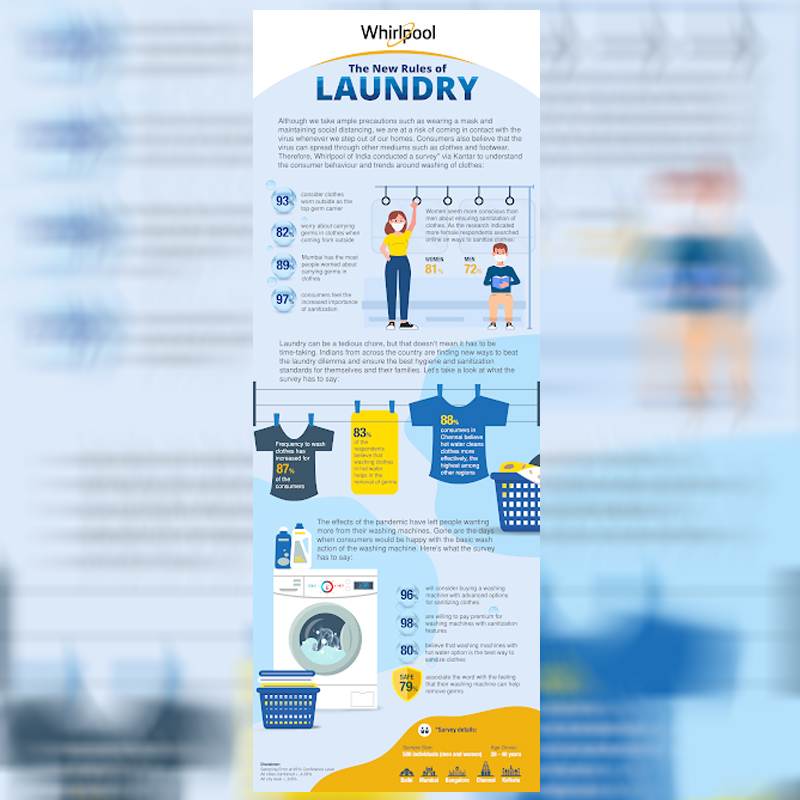
    The survey reveals that 97 per cent of consumers feel the importance of sanitization has increased and the frequency with which they wash clothes has gone up for 87 per cent consumers.

    The other stark findings revealed by the survey include:

    Clothes worn outside the home tops the list of objects feared to carry germs with 93 per cent endorsements. The other carriers of germs include- 

    • Any surface area like lift, railings etc. and home delivered food (92 per cent)
    • Footwear (88 per cent)
    • Bags (83 per cent)
    • Mobile phones and money (82 per cent) 

    In the current situation, 82 per cent respondents claimed that they are worried about carrying germs in clothes when coming from outside. The other worries include- 

    • Sanitisation of hands and surfaces (80 per cent)
    • Sanitization of clothes (78 per cent)
    • Falling sick (76 per cent)
    • Lack of adequate medical help (73 per cent)
    • Increase in household chores (72 per cent)

    People from Mumbai are most worried about carrying germs in clothes when coming from outside at 89 per cent, followed by Chennai and Kolkata 

    87 per cent of the respondents claim that worrying has led to increase in washing of clothes for the following reasons: 

    • To maintain hygiene and cleanliness (91 per cent)
    • To keep our kids and elderly members safe from germs/allergens (83 per cent)
    • Prevention from falling sick (82 per cent)
    • Washing clothes worn outside after single wear (81 per cent)

    79 per cent of the respondents claim that hot water helps in Sanitizing clothes along with ‘effective cleaning’ and ‘removal of tough stains’

    • 88 per cent consumers in Chennai believe hot water cleans clothes more effectively, the highest among other regions

    Significantly higher number of female respondents (82 per cent) feel that hot water will help sanitize ‘kid’s toys, bedding and clothes’ more than males (73 per cent) 

    Respondents claimed that Germs/allergen in clothes can be removed by washing it with:

    • Detergent (82 per cent) 
    • Hot Water (76 per cent)
    • Disinfectant (71 per cent)
    • Using home remedies (43 per cent) 

    73 per cent of the consumers claimed that they use hot water to wash only a certain type of clothes such as:

    • Clothes with tough stains (91 per cent)
    • Baby clothes (86 per cent)
    • Clothes used in kitchen (85 per cent) 

    96 per cent of the consumers claimed that they will consider buying a washing machine that has an advanced option for sanitising clothes as well

    • In fact, 98 per cent of the consumers are even willing to pay premium while buying a washing machine with sanitisation feature rather than on other consumer appliances like AC, refrigerator, etc., shown to respondents

    93 per cent of the consumers believed that different water temperature is required for cleaning different type of clothes

    80 per cent of the consumers believe that washing clothes in a washing machine with hot water is the best way to remove stains and sanitise clothes

    • However, only 20 per cent of these respondents claim to use hot water wash for all types of clothes

    ‘Safe’ is the word that consumers associate with the feeling that their washing machine can help remove germs/allergens (79 per cent)

    Women are much more conscious about ensuring sanitization of clothes 

    • Significantly higher number of female respondents (81 per cent) have done online search to understand how to sanitize their clothes than male (72 per cent) respondents
    • There is a relatively higher concern among Moms (85%) on the worry of germs getting carried in from outside
    • 75 per cent of working women are more aware and highly concerned through online search on improving sanitisation
    • More working women (82 per cent) believe that hot water helps in sanitizing clothes

    Whirlpool of India vice president marketing KG Singh said, “People today are more vigilant of their health and hygiene than ever before. With sanitisation becoming the need of the hour, we commissioned a survey to gauge the behaviour patterns around their rising concerns of keeping clothes clean. With ‘Everyday, Care’ at the core of our brand, we wanted to be there for our consumers during this time by better understanding their needs and offering a portfolio of products that meet their expectations.” 

    “The survey clearly indicates the stress and worry around sanitization of clothes. Consumers are researching online to know of effective ways to clean their clothes and kill germs brought in from outside the home. Hot water which is known to be effective in cleaning stains has stood out as a top preference for consumers when opting for a washing machine along with the added benefits of sanitization features. It is extremely critical to take care of the hygiene and sanitization of one’s surroundings and clothes,” said the official spokesperson from Kantar. 

  • Great opportunities for BFSI, hygiene brands in rural India: Report

    Great opportunities for BFSI, hygiene brands in rural India: Report

    NEW DELHI: Consumers in rural India are increasingly concerned about health, safety, and future well-being, especially of the chief earners in their families, shifting their focus to better financial planning, revealed the recent Rural Covid Barometer Report, released by Kantar in partnership with GroupM’s experiential marketing unit- Dialogue Factory. The report stated that the rural Indian is balancing the budget by cutting on “indulgence” categories like cold drinks, ready to eat snacks like chips etc and diverting the savings towards hygiene products. They are also looking to buy health and insurance products, opening up a large market for the BFSI segment.

    The report aims to provide a unique, fact-based perspective on consumer sentiments, their consumption choices and the behavioural changes brought about by the pandemic. This survey was conducted in 17 Indian states and deep dives into the lives of rural consumers and their adaptations post-Covid2019, providing valuable inputs for any brand’s rural strategy.

    With one in three rural adults being impacted by Covid2019, the rural economy is likely to take a hit, stated the report. However, with fewer job losses and consequent reduction in the incomes of the affluent households, the overall impact on rural consumption pattern is likely to be muted in the future. This presents an opportunity for businesses to sharply target their products towards the upper end of the rural consumer spectrum.

    However, brands will have to focus on their distribution and last-mile connectivity, since product availability in the local village stores will significantly impact brand choices of the rural shopper.

    It also highlighted that like their urban counterparts, rural Indians are increasingly relying on digital services for their day to day activities. With the pandemic accelerating digital adoption, there is a huge potential for businesses and brands to leverage mobile as a medium to reach rural consumers.

    Dialogue Factory head of experiential marketing – APAC Dalveer Singh said, “Rural India has always had a higher degree of resilience which makes it more confident for a rapid recovery than the urban areas during these unprecedented times. This report, which is one of the biggest assessment of the impact of the pandemic on rural areas, speaks volumes on the new, defining values that are shaping rural India – resilience, planning for future, protection from falling sick and growing reliance on digital.”

    Kantar senior executive director – insights division – Puneet Avasthi added, “For businesses, we would recommend a regional prioritisation. We believe that western India is likely to bounce back earliest. On the other hand, indications seem to suggest that rural South might take longer to recover as the impact of Covid2019 on employment has been more severe, which in turn has depressed the economic outlook of consumers there. We see this as an opportunity for brands to deploy their resources across zones in a graded and phased manner.”

    The report also assessed the impact of reverse migration. The study suggests that nearly 53 million migrant workers in India have returned to their villages. 80 per cent of migrants who have returned due to Covid2019 come from five states.

    Avasthi noted, “With one out of three rural migrants not planning to go back to urban India, we are likely to see a huge shift in rural consumption choices. This will also affect the availability of labour in urban India”

    The report also highlights a deep sense of optimism regarding India’s economic future; stemming from healthy growth in the agricultural sector and near-universal reach of targeted government programs (75 per cent of all consumers claimed to have received at least one of the major government schemes for rural India; 66 per cent claimed to have received free rations under PM Garib Kalyan Yojana).

  • Netflix, Jio lead in customer experience: Kantar report

    Netflix, Jio lead in customer experience: Kantar report

    NEW DELHI: Jio and Airtel have emerged as the top telecom operators in terms of customer experience, according to a report by consulting firm Kantar. Among streaming platforms, Netflix delivered the most consumer satisfaction, followed by Amazon.

    Music streaming services like Amazon Music, Spotify and Apple Music also made the list as "special mentions" for providing great customer experience.

    The new CX+ TMT report released by Kantar evaluates companies in the telecom, media and technology sectors based on a unique combination of their experience scores, and on dimensions that are critical to the customer's journey.

    The study analysed responses from over 6,000 customers across 13 cities in the country in early 2020 to find out key brands in the TMT sector that consumers are most satisfied with.

    In the mobile device segment, Apple topped the list, displacing Xiaomi as the technology brand that provides the best customer experience. OnePlus and Samsung tied for third place. As per the report, Apple has 1.8x higher engagement levels than those at the lower end of the index.

    Tata Sky retained the top spot in the satellite service provider category.

    The landscape across the TMT sectors has changed drastically over the last one year, said Sushmita Balasubramaniam, domain lead for CX and Commerce – South Asia, insights division, Kantar. "Consumers' adoption of and dependence on digital, whether for basic everyday living, working, studying or entertainment has presented enormous challenges to companies in these sectors. And, the changes in usage of products and services will also mean that customer priorities on the kind of experience they are seeking will be different from the pre-COVID era."

    Soumya Mohanty, chief client officer, South Asia, insights division, Kantar explained that there will be vigorous competition in the TMT sector owing to tech convergence and emerging global media giants.

    “Be it network services providers, handheld device brands or streaming media providers, all will leverage customer data to build personalised journeys, CX and owning the relationship with the end user will become increasingly important,” added Mohanty.

  • DMart is most preferred brand for grocery: Kantar CX+ report

    DMart is most preferred brand for grocery: Kantar CX+ report

    NEW DELHI: In today’s experience era, majority of CEOs believe customer centricity is essential for driving business growth. However, there is still a big gap between ambition and reality. While nearly all CEOs in India see the need to become customer-centric, just 37 per cent of consumers believe retailers offer truly customer-centric experiences, according to a Kantar CX+ study.

    The new CX+ study released by Kantar is the only sector-specific index that assesses retailers based on a unique combination of their customer experience scores. In addition, the study identifies each retailer’s Experience Gap – which quantifies the difference between their Brand Promise and the actual customer experience delivered.

    In the study conducted in early 2020, clear winners emerged in each of the sectors. Amazon was rated the top retailer in two sectors out of the three covered. DMart emerged as the winner in the grocery sector. While Flipkart figures in the top three in all sectors.

    CX+ reflects that providing excellent customer experiences is no longer enough. In a connected environment, brands and customer experience have become synonymous. Thus, the roadmap to growth is based on 5 key CX success factors:

    1.     Clarity of brand promise

    2.     Empowered employees

    3.     Empowered customers

    4.     Creating lasting memories

    5.     Exceptional delivery

    Kantar South domain lead for CX and commerce Asia Sushmita Balasubramaniam said, “We are currently going through major changes – economically and socially, and consumer priorities are changing in line with how the pandemic is unfolding. This has resulted in their purchases also changing, right from what they buy, where they buy, to how much they spend.

    "In this changed scenario, retailers need to tread even more carefully since they are dealing with situations no one has encountered before. Our CX+ study reveals that for many retailers, there is a huge gap between the brand promise and customer experience. The retailers who emerge as leaders are those who have delivered a superior customer experience that is matched with a strong brand promise thus giving them a distinctive ‘Experience Advantage’ over their competition.

    "Retailers have a tremendous opportunity to review their strategies, take the current challenges head-on and look for ways and means to service customer needs better in the coming months. They will have to do this in the presence of a strong traditional retail which became even more indispensable during lockdown times. Creating a shopping ecosystem with the customer at the centre – integrated retail that goes beyond just having a digital and physical presence, redefining the role of the physical store, offering safe yet personalized shopping environments are factors that will be critical to win.”

    Other findings underline the clear benefits of delivering strong customer experience – in the three retail sectors

    In grocery retail:

    ̶          Retailers that lead in the CX+ Index are 1.4x more likely to be recommended then those at the lower end of the index.

    ̶          The likelihood of their customers remaining loyal to them increases by 1.6x

    ̶          Retailers with whom the last interaction has been excellent become the most preferred retailer for the future in 1.4x cases.

    ̶          Delivering on basics is critical for a grocery retailer – variety and quality of products at good value coupled with ease of shopping – the key contributors to building a better experience

    In fashion retail

    ̶          Retailers that lead in the CX+ Index are 1.5x more likely to be recommended than those at the lower end of the index.

    ̶          The likelihood of their customers remaining loyal to them increases by 1.6x

    ̶          Retailers with whom the last interaction has been excellent become the most preferred retailer for the future in 1.3x cases.

    ̶          Fashion retail needs to deliver on many fronts, with range and value leading the pack. But, in-store experience – digital or physical and use of technology to deliver an enhanced shopping experience becomes a key differentiator

    In general retail

    ̶          Retailers that lead in the CX+ Index are 1.6x more likely to be recommended than those at the lower end of the index.

    ̶          The likelihood of their customers remaining loyal to them increases by 2.2x

    ̶          Retailers with whom the last interaction has been excellent become the most preferred retailer for the future in 1.3x cases.

    ̶          Like fashion, general retail also must deliver on many fronts. But, employees and support provided to customers to make the shopping process easier can be a key differentiator in experience

    The study analysed 6,068 retail customers in India and was conducted in early 2020.