Tag: Kantar

  • Hygiene, health & wellness remain key consumer concerns: Kantar report

    Hygiene, health & wellness remain key consumer concerns: Kantar report

    Mumbai: Emerging from the pandemic, the Indian FMCD (Fast Moving Consumer Durables) market presents significant opportunities. While the pandemic caused much anxiety amongst consumers in general, there was a high demand in the FMCD health and wellness space, according to the latest Sustainability Report from Kantar. New-market segments such as air purifiers, ACs with purification filters, smaller sub-categories such as UVC disinfection categories, UVC Desk lamps, and growth of personal care health tech products such as smartwatches and fitness monitors saw amped-up sales, says the report. Consumption patterns have changed significantly – towards safety, premiumness and technologically advanced products.

    The data-driven analytics and brand consulting company unveiled the FMCD Sustainability Report – “Walking the Talk on Sustainability with Consumers – a roadmap for India’s FMCD Sector.” The Kantar report reveals that the Indian consumers are also becoming more conscious about the impact of human activity on climate change and other environmental factors. The report highlights how the intersection of the FMCD sector and sustainability will further enable growth. It aims to provide key sustainability roadmaps for FMCD brands to help them navigate the ecosystem with sustainable solutions.

    The India Story: Post-pandemic Consumer Attitudes and Behaviour

    According to the Kantar report, consumer reactions in the wake of Covid-19 continue to evolve and the Indian market presents several opportunities for the FMCD brands. The report further states that cautious consumption is the norm – hygiene, health and wellness are key consumer concerns, where 91 per cent Indian households are washing hands more often now, 47 per cent Indian households claim increased toilet cleaning, more so in rural (49 per cent) vs urban (43 per cent).

    Data also suggests that consumers are changing education and work codes, with work ecosystems being reshaped by digital transformation. With accelerated digital adoption, there is 125 per cent growth in usages of smart devices among internet users, paving the way for the emergence of a smart home. Some of them are – smart lights, smart speakers, smart air purifiers, smart display, smart home entertainment and smart cleaning.

    There is also evidence to suggest that ‘value’ is a key factor for consumers since post-pandemic financial concerns have cropped up, where 73 per cent attribute Covid-19 to have impacted household income, while 67 per cent pay greater attention to prices while shopping. This has led to an overall joint accountability of both businesses and consumers towards adopting a stronger sense of collective corporate responsibility, according to the report.

    “The FMCD sector is witnessing rapid growth even in post pandemic phase while we’ve also seen a great consumer shift towards sustainability and the environment urging brands to rethink their strategies,” said Kantar Insights Division Qualitative & Lead- Sustainability Practice South Asia managing director Paru Minocha. “Consumers have greater expectation from companies than from themselves; this is likely to be amplified in FMCD, where personal behaviors post purchase is led primarily by the policies/features of the product and company they use. With this report, we are putting forward recommendations to brands which help in solving customer tensions with sustainable solutions, addressing barriers such as packaging, service models, repairability, and return and recycling policies.”

    Commenting on the focus and relevance of FMCD, Kantar Shopper and CX Domain lead Sushmita Balasubramaniam said, “Consumers today are more aware and concerned about sustainability and other issues like pollution, carbon emissions, etc. For example, in the mobile phones category, consumers expect brands to address macro environment issues of carbon emissions and plastic pollution whereas in the computing category – carbon emissions, packaging and tax evasion are palpable concerns. In appliances, concerns exist on pollution (air and plastic) and emissions besides packaging. While we see consumers consciously making smarter choices, the responsibility resides with brands andmarketeers to provide sustainable solutions to resonate and build credibility with their audiences moving forward.”

    Launched at the recent CII’s FMCD Summit, the Kantar report also provided key recommendations for the FMCD brands such as embedding Green Lifecycle across portfolio and processes, connecting the environment and the everyday, addressing Consumer Knowledge Barriers and meeting accountability expectations. With the suggested roadmap, the report also highlights noticeable consumer trends that lead to a collective accountability of both businesses and audiences, seeking the path to a more sustainable world.

  • Kantar’s Link AI is now available on its market research platform

    Kantar’s Link AI is now available on its market research platform

    Mumbai: Data-driven analytics and brand consulting company Kantar has announced that Link AI, its AI-powered ad testing solution is now available on Kantar Marketplace, its market research platform.

    Launched in June 2020, Link AI is the first fully AI-powered solution to be featured on Marketplace, said Kantar in a statement, adding that the ‘state-of-the-art creative effectiveness solution’ reliably predicts a TV ad’s in-market performance within 15 minutes and has been already used by its clients including Coca-Cola, Google, and Unilever.

    The speed and scalability of Link AI make it possible to test ads for a wider range of scenarios than before. To test competitors’ ads, get feedback on early versions in the creative development process, optimise live campaigns in real-time, or build an evidence base of ad performance across a sector or market.

    In 2021, more than 16,000 ads were tested in Link AI. Kantar Marketplace tested over 13,000 creative, media and brand assets and innovation concepts- up 180 per cent compared with 2020 while serving more than 700 clients including Amazon, Audi, PepsiCo, Coca-Cola, Diageo, Johnson & Johnson, Mastercard, Samsung, Reckitt, Vodafone, among others.

    Link AI was trained using Link, a normative advertising database that consists of over 230,000 survey-enabled ad tests, 10 years of data, and 35 million real human interactions.

    “Link AI is a hugely exciting and innovative addition to our portfolio of agile market research solutions. It is a truly market-leading solution, facilitating ad testing at an unprecedented scale,” said Kantar Marketplace executive managing director Will Galgey. “Delivering at incredible speed, combined with the power of the industry’s deepest ad testing database, and available either as self-serve or with optional servicing from Kantar’s expert team, Link AI on Kantar Marketplace should be an indispensable part of any marketer’s toolkit. This is a huge milestone for Kantar Marketplace and for our clients.”

    “We know our clients have wide-ranging needs when it comes to creative testing, which requires a mix of human and machine-based solutions. The launch of Link AI on Kantar Marketplace is a real landmark in terms of delivering insights at speed, as well as making it easier than ever to use,” added Kantar executive managing director for creative and media Jane Ostler.

  • Expectations Budget ’22: Fuel prices, medical expenses remain major concerns shows Kantar survey

    Expectations Budget ’22: Fuel prices, medical expenses remain major concerns shows Kantar survey

    Mumbai: With the third wave of pandemic raging on, the majority of consumers expect the government to increase focus on strengthening the healthcare infrastructure, showed the latest pre-budget survey conducted by data insights company Kantar.

    According to the survey conducted across 12 cities, healthcare tops consumers’ concerns, followed by mounting medical expenses, and fuel prices. In a telling indicator of the increased health care expenses over the last two years, 53 per cent of consumers, especially those from non-metro cities, said they expect an increase in deductions for their medical/health insurance.

    The rising fuel prices too have also taken a toll. At least 72 per cent of the people surveyed expect the government to bring petrol and diesel under the ambit of GST to bring down the fuel costs. With increased focus on climate change and sustainable living, 60 per cent of consumers expect the government to prioritise subsidies on electric vehicles in the coming year.

    Tax Deductions

    With respect to consumer expectations in terms of tax deductions, investments under 80C covering multiple investment options emerged at the first rank with 60 per cent claiming they want an increase in deductions from the same. The younger, affluent salaried class consumers seemed to have a higher desire (65 per cent) for this, as compared to mass consumers (57 per cent), according to the survey.

    Home Loan EMI emerged third with 39 per cent of consumers seeking an increase in tax deduction on their Home Loan EMI’s. A higher skew for this increase was seen in metros at 41 per cent.

    “As we step into the third year of the pandemic, the public wants the government to further invest in public health infrastructure and other favourable policies like tax deductions for insurance, which help alleviate the burden of medical expenses. Concerns about fuel prices come through, as does a desire that the government should help us wean ourselves off dependency on dirty and ever more expensive fossil fuels, through e-vehicle subsidies,” said Kantar executive managing director- South Asia, Insights Division Deepender Rana.

    Cryptocurrency

    Cryptocurrency as an investment avenue is expected to continue making noise this year as well. Intention to invest in cryptocurrency also showed a jump to 32 per cent, as against 19 per cent in July 2021, possibly driven by awareness and exposure that advertising and celebrity endorsements have generated over the last few months. Millennials seem to be keener on trying this new investment avenue as their intention to invest is higher at 32 per cent as compared to those in the age group of 36-55 years which is at 26 per cent.

    “As cryptocurrencies take off and the government mulls a tax on crypto transactions, investors want the government to play a role in encouraging yet regulating these innovative finance instruments through India’s own cryptocurrency,” added Rana.

    Majority expect India to launch its own official cryptocurrency in 2022. There is an overwhelming preference towards investing in India’s cryptocurrency with 79 per cent claiming to invest in that over existing cryptocurrencies like Bitcoin, Ethereum, Dogecoin etc. This is driven by the perceptions of it being more secure due to clear regulations laid down by RBI.

    Interestingly, the survey also indicates that consumers are leaning towards adopting the new tax regime since it came into existence on 1 April 2020. At least 55 per cent said that they intend to choose the new tax regime in 2022.

    The survey mapped consumer sentiments and expectations from the union budget, scheduled to be unveiled on 1 February. As many as 1419 consumers aged between 21-55 years including a mix of salaried and business owners as well as mass and affluent class from the metro & non-metro cities were interviewed from Mumbai, Delhi, Chennai, Kolkata, Pune, Hyderabad, Bangalore, Ahmedabad, Indore, Patna, Jaipur, and Lucknow.

  • Kantar Annual Trends 2022 report unveils 10 themes for recovery & innovation

    Kantar Annual Trends 2022 report unveils 10 themes for recovery & innovation

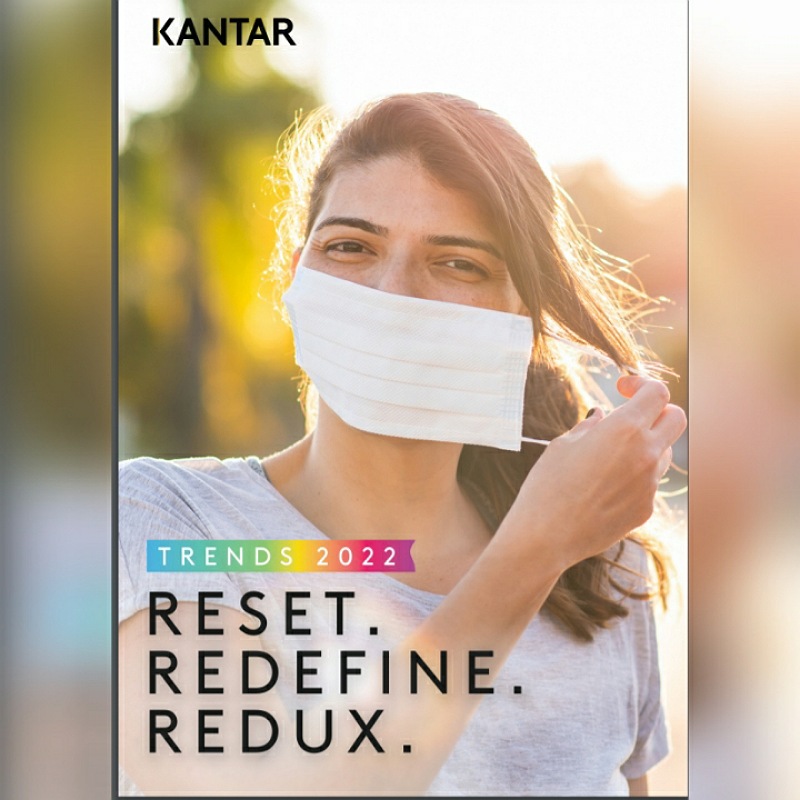
    Mumbai: 2021 has been a year of discovery for consumers. As we learn to adjust in a world that changes often and unpredictably, brands would need to listen more intently to consumers than ever before, be transparent in their promises and provide solutions for their evolving needs. Keeping this in mind Kantar has unveiled its ‘Annual Trends 2022’ report, that’s borne out of the insights generated, based on their conversations with consumers across the country.

    The report spells out ten themes that define how consumers are preparing themselves for 2022, even as it aims to guide businesses through a period of recovery and innovation:

    1.      Going small to live big

    The lockdown and the opportunity of working from home have allowed people to consider an alternative to the city humdrum. As companies chose remote working as ‘business as usual,’ the service sector employees chose to move ‘back home’ to smaller towns. The current trend offers a unique opportunity to reimagine our cities, our infrastructure and mobility, notes the report. Brands, on the other hand, need to reinforce supply chains to avoid losing customers due to last-mile connectivity gaps, Kantar says.

    2.      Seeking assurance in ‘ghar jaisa’ khana

    The pandemic has made consumers painfully sensitive about the importance of health and immunity. They are more mindful of what they eat and are willing to make an effort to table fresher meals, with nearly 72 per cent preferring fresh home-cooked food than the packaged with the fear of preservatives, as per the report. With increasing importance to freshly cooked meals, consumers would be open to kitchen solutions in terms of ingredients or appliances that make ‘home-made’ easier. Additionally, the affinity towards ‘home-like food’ will also guide what the food industry will offer in terms of offerings on restaurant menus.

    3.      Proactive upskilling

    Proactive self-learning through online courses has become the new norm for working professionals trying to stay employable as well as students gearing up to join the workforce. 65 per cent of learners were upskilled to strengthen career prospects and 33 per cent of learners were senior-level professionals. As both freshers and experienced employees become more conscious of the skill gap and lean in to bridge it, enrolments into online courses continue to exponentially grow, noted Kantar.

    Proactive and consistent training and development led by employers will be increasingly critical, not only to keep the workforce equipped for the changing workplace but also to ensure that employees are engaged and invested in the evolving business imperatives of the organisation.

    4.      Exercising autonomy through gig work

    The Indian freelance job market gained rapid acceleration with the pandemic-induced job instability.

    The nature of freelance work has also evolved and gig working is not limited to factory or support function jobs. With 15 million freelancers, India is already the second-largest gig market in the world, says the report. In the long term, the Indian gig economy has the potential to serve up to *90 million jobs in India’s non-farm economy. India Inc. should make the most of this opportunity to absorb a diverse workforce and let them contribute professionally while taking care of their personal comfort.

    5.      Shrinking personal space with remote work

    Though remote work was expected to improve employee productivity, there is mounting evidence of increased burnout, noted the report. 1 in 3 professionals in India feels burnt out due to increased workload and unmanageable stress. While the focus has been on making work from home more convenient through virtual workplaces, organisations will also need to start rethinking their entire work models, culture, and values to ensure better mental health amongst the workforce. Employees are also learning to draw a line between personal and professional while operating from the same physical space, notes Kantar.

    6.      Yearning to get away from home

    Lockdown fatigue had resulted in strong pent-up demand which is fuelling unique trends of ‘getting away from home.’ Travellers have started to rekindle their travel plans through weekend getaways and similar convenient means to escape from the challenging life of work-from-home stifling schedules. As consumers continue to seek respite from house arrest yet again, by planning for getaways, dropping into restaurants for a meal, or even choosing to work from coffee shops, the reassurance of sanitation and hygiene-related measures such as fully vaccinated staff would ensure that they keep coming back, says Kantar.

    7.      Instagram is the new store

    As the pandemic further accelerated the growth of e-commerce, social commerce has emerged as a favoured means of online shopping. Consequently, social chatter is fast becoming an active driver of brand choice; while advertising manages to influence 38 per cent towards a brand, 41 per cent tend to be swayed by comments or reviews posted on social media.  Riding on social word-of-mouth, today social commerce shoppers account for 53 per cent of total online shoppers in India.

    Stepping ahead of dynamic customer engagement, social commerce has proved to be an effective and affordable channel for smaller businesses, the report says.  This channel has also presented a cost-effective alternative for larger businesses and brands reeling under the pressure of mounting customer acquisition costs and struggling to protect these precious customers from competitors wooing them endlessly with deep discounts.

    8.      Beauty goes beyond skin deep

    With virtual workplaces and limited social engagement, there is no mad rush to show up looking one’s best and people are moving towards a more sustainable self-care practice grounded in nature, health and wellness. Consumers have become extremely conscious about taking care of their bodies, and not just for the purpose of looking good. What started as an obsession for sanitisers and hand-washes, has now gradually moved towards conscious choices of personal care, personal hygiene and wellness products.

    Brands need to be cognizant of shift in consumer choices towards personal care and grooming and cater to this growing affinity towards sustained self-care through their product solutions as well as communication of benefits, says the report.’

    9.      True inclusion finding a voice among the youth

    Consumers are being drawn towards brands that embrace diversity and advocate causes that support social equity, according to the report. There has been a shift in advertising campaigns featuring stories of real people told with a sensitivity that has found favour with consumers. However, the report says that brands looking to engage this generation will need to extend their efforts beyond mere lip service. Just dressing brand communication with diverse imagery will not be enough. To stay relevant, brands need to embed diversity in their organisational culture as well as in their product development endeavours.

    10.   Collective consciousness towards sustainability

    The pandemic has been a wake-up call; consumers are now acutely aware of the cumulative damage caused to the environment by human carelessness and are eager to ‘make good.’ 76 per cent pay a lot of attention to the environmental and societal issues in the news, says Kantar. 77 per cent are prepared to invest time and money to support companies that do good and while shopping 64 per cent consumers factor in sustainability at least once in a while.

    Brands can fuel these actions by increasing awareness about the use of green energy in their production process, making it easier to recycle, incentivizing consumers and making it convenient for them to buy sustainable products, notes Kantar.

  • Amazon, Asian Paints & Tata Tea emerge as ‘Most Purposeful Brands’: Kantar report

    Amazon, Asian Paints & Tata Tea emerge as ‘Most Purposeful Brands’: Kantar report

    Mumbai: Data insights and consulting company Kantar has released the 2021 edition of its annual BrandZ India report that unveils the year’s ‘Most Purposeful Brands’ in India. Amazon, Asian Paints, and Tata Tea emerged as the most purposeful leaders in India across technology, non-FMCG, and FMCG categories respectively, according to the report.

    The technology ranking has Amazon followed by Zomato, YouTube, Google, and Swiggy jointly in fourth place, followed by Flipkart. The non-FMCG ranking is dominated by telecom brands, with Samsung and Jio jointly second, followed by MRF, Tata Housing, and Airtel. The FMCG category ranks some of India’s biggest names: Tata Tea followed by Surf Excel, Taj Mahal, Parachute, and Maggi both in fourth position, and Britannia completing the list, as per the report.

    According to Kantar BrandZ data, consumers believe that these brands lead with a clear sense of purpose to make their everyday lives better. It also exhibits those that have taken a bolder social stance, as Covid-19 magnified the need for brands to do more than focus on profits alone. The findings tie in with longer-term trends in India and abroad to value brands on ESG criteria (environmental, social and governance) alongside traditional factors, such as valuations and earnings growth.

    While the fundamentals of brand-building remain the same as before namely – Meaningfulness, Difference and Salience, what has changed this time is the expectation that the brand will stand for something more. Kantar conducted an analysis of 418 brands across 30 categories from a total of over 12,000 respondents and found that in India especially, perceptions of a brand’s purpose, its ability to ‘make people’s lives better,’ is crucial to establishing a brand’s meaningful quotient and thus, boosting prospects for growth.

    The Indian consumer, as per the report, is on par with many of their Asian counterparts in actively engaging with sustainability. 77 per cent are prepared to invest time and money in companies that try to do good, the report stated.

    The 2021 Kantar BrandZ data for India, in conjunction with other Kantar consumer sentiment tracking, has also revealed several patterns in what Indian consumers deemed ‘Purposeful’ in 2021.

    Some of the key highlights are that it is critical to amplify or communicate the brand purpose, even as tech brands showed how everyday convenience contributes to brand purpose. These brands have been able to scale up and showcase a wide range of products plus enter new categories at a time when consumers were desperate for at-home & delivery solutions.

    For FMCG brands, taking a social stance by focusing on reducing their carbon footprint scored high, showing that purpose and profit can go hand-in-hand. The key is to do more than just meet consumers’ immediate needs, like non-FMCG brands that adopt marketing strategies that promote the brand in ways that look beyond the function of product or service.

    “Brand Purpose provides an anchor amidst constant uncertainty, both as a North Star for brands, but also as reassurance to consumers. Purpose as a contributor to brand equity is 10 times more important in India, in comparison to globally. This shows that a larger societal purpose is even more critical to success for brands in India,” said Kantar executive managing director for South Asia Insights Division Deepender Rana.

    “Of course, vague slogans and one-off ‘corporate charity’ events do not work, and it is not about jumping on the bandwagon of the latest fashionable cause either. Instead, real Purpose flows from and builds on, a brand’s existing core values and DNA. This reinforces the need to understand and measure if a brand’s Purpose is perceived as adding real meaning to consumers’ lives,” he added.

    Speaking about Kantar BrandZ’s report in India, Kantar managing director- client and quantitative Insights Division Soumya Mohanty stated, “Purpose can work as a strategy for brands, when it’s based on the right consumer insights, and executed effectively. In India, Kantar BrandZ data suggest that a brand’s Purpose ranking has a direct impact on its Meaningfulness score – which in turn is one of the cores, proven building blocks of brand value growth.”

    Methodology

    The Kantar BrandZ database was analysed from 2020-21 covering 418 brand cases for this project, with brand perception and brand equity metrics for brands across 30 categories from a total of over 12,000 respondents. The database includes 28 consistent attributes. A two-stage analysis process was used to arrive at the decision to centre Purpose in this year’s report.

  • Kantar Marketplace hits $100 million revenue milestone

    Kantar Marketplace hits $100 million revenue milestone

    Mumbai: Registering a significant milestone in its transformation journey, data-driven analytics Kantar on Monday announced that the cumulative revenue for Kantar Marketplace, its market research platform, has reached $100 million within two-and-a-half years of operation. 

    Launched in mid-2019, Kantar Marketplace offers insights professionals, marketers and agencies the ability to build meaningfully different brands with speed and agility. Built on a foundation of Kantar’s expertise and proven methodologies, it delivers decision-quality insights in as little as a few hours. The automated platform features a range of consumer insights solutions that accelerate business decision-making – whether brands are getting feedback on an idea, developing a new product or launching a campaign.

    In 2021 YTD* (Year to 30 September 2021) Kantar Marketplace is testing approximately 1000 creative and innovation assets per month, up 250 per cent compared with 2020 YTD and serving more than 500 client organisations, an increase of 150 per cent in 2020, including Coca-Cola, Diageo, Johnson & Johnson, Mastercard, Samsung, Reckitt, Vodafone, Walgreens Boots Alliance, and many more. It is available in 65 markets globally.

    The newest solution suite on Kantar Marketplace is designed to support the innovation and product development lifecycle, with tools to help clients identify the best ideas, test and optimise concepts, and get-to-market quickly with packaging design testing. This builds on the creative effectiveness, media optimisation and brand insights solutions available on the platform.

    At the heart of all Kantar Marketplace solutions is Kantar’s ‘Meaningfully Different’ framework, giving clients a reliable way to understand whether their marketing is likely to drive sales and brand equity. Insights delivered by Kantar Marketplace are fast, and tied to key business outcomes, providing greater decision-making confidence for the brands that use it.

    “This is a fantastic milestone for Kantar Marketplace. The context that our clients’ businesses operate in is evolving rapidly, and they expect high quality insights faster than ever before. To have achieved $100m in sales just 30 months from launch is a ringing endorsement of the platform and our team,” said Kantar Marketplace MD Will Galgey, commenting on the achievement. “The growth in client users, as well as the increasing frequency with which clients turn to the platform to address their research needs, gives us great confidence that Kantar Marketplace will only go from strength to strength as more products and clients come onboard.”

  • Audiences have replaced slots as the new language of transaction: Kantar’s Puneet Avasthi

    Audiences have replaced slots as the new language of transaction: Kantar’s Puneet Avasthi

    Mumbai: Following the ratings controversy in the US that led to the revocation of Nielsen’s MRC accreditation, the TV measurement Company late last month announced an “Impressions First Initiative” to support an industry-wide move to impression-based buying and selling in local markets across the US. This shift to an impression-based currency will lay the groundwork for implementing Nielsen ONE – Nielsen’s single cross-media product – across local, national, and digital measurement.

    The alacrity with which the Company has acted indicates the growing importance of CTV measurement for advertisers and how it has been at the core of the entire unrest. Closer home, similar voices are being heard, though at a much lower intensity. One may recall that at the height of the Barc TRP controversy last year, a section of the industry had expressed dissatisfaction with the ratings agency’s efforts and even intentions to bring forth a unified, cross-platform measurement system.

    According to Ormax Media’s recent research, the Indian OTT audience universe is now 353.2 million people, translating into a penetration of 25.3 per cent. This means that one in four Indians watched online videos at least once in the last one month. CTV viewing in India increased by 31 per cent as per mediasmart’s India CTV Report 2021. Amazon streaming services that were once considered niche in India are today being accessed by 99 per cent of the pin codes in the country. Now that Amazon has turned into a super app with the launch of Prime Video Channels, further massification is expected. Add to all this, the availability of linear TV on OTT platforms, and the medium becomes a staple in media plans for brands across categories.  

    Needless to say, advertisers are clamouring for a third party measurement system for OTT and a unified metric across linear and connected TV that serves all their data needs. While there is no industry body that has been recognised as the standard, individual players both global and independent, are working to meet marketers’ demands, with each contributing its own unique technology, methodology as well insights to evolve a robust and competitive OTT measurement ecosystem in the country.

    Taking the discussion forward, Indiantelevision.com’s Ashee Sharma connected with Kantar director (specialist businesses) –South Asia Insights Division, Puneet Avasthi to understand the work being done by the data and insights Company in the field of OTT measurement in India, and the shift in TV measurement over the years.

    Edited Excerpts:

    On the big shift in TV measurement

    The advertising market has seen a significant shift in recent years with the old order of having TV commercials placed on (time) slots changing. Instead of slots, audiences are being sold today, and that has become the new language of transaction. In the old linear TV viewing world where there used to be a fixed time for a content piece, we were measuring the viewership for a particular time spot. But now as viewership and programming become non-linear we have to offer audiences in terms of size and profile, at a particular point in time, and on the content of choice. This effectively means that what used to be a time-centric measurement system is today viewer-centric.

    On the challenges of measuring OTT

    OTT Measurement is challenging because, one has to not just measure the time when the audiences are available online but, also what content are they watching on the OTT platforms. In the earlier world, the task was principally to estimate how many people are going to be watching TV and which channel, and that could be used to ascertain the particular programme being watched and therefore you had the rating. Now you are estimating not just the viewership at a particular time slot, but also looking at the content that has been specifically beamed into a device. So, media measurement is going to be about both time as well as the content.

    On the problem of duplication

    In a world of multi-screeners, it is possible that a million impressions that have been counted might actually be fewer because the same individual who is toggling screens may have been served the ad multiple times. Therefore, when it comes to OTT viewership we should ideally be capturing the frequency i.e. how many times someone has watched a particular ad, and not how many times it was served. The latter is what the OTT platforms are able to tell anyway. 

    On how Kantar is addressing these issues

    Kantar, along with its partner VTION, measures OTT viewership through a consent-based app that can be installed on android devices of people who have been recruited into a 16000-strong panel online. We focus on all on-mobile viewership in towns that have a population of over one lakh. Since it is a recruited panel we have a fairly good understanding of the audience profile. The system allows us to tell the time of viewing and the content that is being watched. It is also possible to extend this service to measure ‘what ads have been served on various devices’, and therefore, theoretically speaking, it is possible to assess the reach of advertising, online.

    Another level at which we measure OTT is through the annual baseline or internet usage study called ICUBE. It is conducted on a sample size of 75000 to determine the reach of the internet across urban and rural India. Within that we track the usage of different internet services which includes video entertainment as well; OTT specifically. This gives us an idea of the reach and how it has evolved over a period of time for different OTT platforms.

    On Convergence

    Eventually, there has to be a convergence where one is able to integrate the viewership of programmes across different modes of content delivery, whether linear on OTT. That is something everybody is working towards. There are technologies that are available. 

  • FMCG shopping by eco-actives to reach $446 bn in 2021: Kantar Study

    FMCG shopping by eco-actives to reach $446 bn in 2021: Kantar Study

    Mumbai: Environmentally sustainable grocery market is forecast to double over next five years, as per a new sustainability study from Kantar. FMCG/ consumer packaged goods shopping by environmentally concerned households (eco-actives) will total $446 billion in 2021, up $70 billion vs 2020, the data analytics firm estimates. It forecasts this segment will grow to $925 billion by 2026 – a CAGR of 15.7 per cent, more than five times faster than the grocery market as a whole.


    Interestingly, the ‘Who Cares, Who Does’ study that interviewed almost 90,000 respondents in 26 countries, also throws light on the importance of children as critical influencers in making daily household shopping habits more environmentally responsible. Family, mostly children, were identified as the biggest influence (36 per cent of respondents) after product packaging, in shifting habits according to the global study. Almost half of households, at 49 per cent, said the Covid-19 pandemic has made sustainability even more important to them.


    The percentage of ‘eco-active’ households has grown from 16 per cent in 2019 to 22 per cent in 2021, the study, in its third year, found. The Eco-active segment has grown six percentage points over the past two years, to account for 22 per cent of global households. Kantar projects this segment will grow to 40 per cent of all households over the next five years, and more than half of households by 2029.


    The ‘Who Cares, Who Does’ study segmented households into three categories of eco-actives (22 per cent of households), eco-considerers (40 per cent of households) and eco-dismissers (38 per cent of households) based on their actual behaviours on sustainability


    “Eco-actives are driving growth for brands that embrace sustainable strategies. As a segment the Eleco-active market will grow five times faster than the overall grocery market, so building a competitive advantage through your sustainability strategy represents a major opportunity for brands,” said Kantar’s Worldpanel division CEO Guillaume Bacuvier. “Companies that get it right will reap the rewards, those that fail to act risk turning away a growing number of shoppers. Two-thirds of all shoppers have stopped purchasing a product or service which has a negative impact on the environment at least once.”

    Kantar also asked consumers to identify their major sustainability concerns and their major barriers to acting sustainably. Climate change, Water pollution and Plastic waste were the top concerns while ‘products are harder to find or more expensive’ were the top barriers to sustainable behaviour.

    “For retailers, there is a much more to do. Only 44 per cent of shoppers are somewhat or very satisfied with the in-store offering. A good choice of local products and affordable options are the most important sustainability factors shoppers consider when choosing a store for their shopping. Fewer people are looking for a specific sustainable section,” Bacuvier further said.

  • 16 per cent urban Indians currently own cryptocurrency: Kantar study

    16 per cent urban Indians currently own cryptocurrency: Kantar study

    Mumbai: The sentiment around cryptocurrency in India and the world over is volatile, with tweets or news around cryptocurrency seen to have an immediate effect on it. As per a recently concluded study by Kantar, it is learned that while 83 per cent of urban Indians are aware of cryptocurrency, the ownership is at a healthy 16 per cent for a product that has gained traction only recently.

    Out of the 16 per cent urban Indians who claim to currently own cryptocurrency, ownership is highest in the top four metros at 20 per cent, among private banking customers at 19 per cent and in the age group of 21-35 years at 18 per cent, found the study. The owners have a higher risk appetite, with their investment basket comprising shares at 31 per cent and mutual funds at 21 per cent over traditional choices like fixed deposits at 19 per cent and life insurance at 16 per cent.

    The survey by the evidence-based insights and consulting company was primarily conducted amongst males and females aged between 21-55 years across twelve key Indian cities such as Mumbai, Delhi, Chennai, Kolkata, Pune, Hyderabad, Bangalore, Ahmedabad, Indore, Patna, Jaipur, and Lucknow. Respondents were a mix of salaried and business owners- all with savings accounts across various banks, Kantar stated adding that the time frame of undertaking the social analytics was from January 2020 to June 2021.

    The study also found that cryptocurrency owners and intenders have a diversified financial portfolio. The average number of financial products owned is higher (6.6) among those who have currently invested in cryptocurrency as well as those who intend to (5.2). In comparison, the average number of financial products owned by non-crypto-owners stands at 4.6 and 3.6 for non-intenders.

    Interestingly, one in two consumers intending to invest in cryptocurrency are repeat investors. Out of the total sample surveyed, 19 per cent Indians intend to invest in cryptocurrency in the next six months. However, this is lower when compared with the intention to invest in mutual funds (49 per cent) and shares (33 per cent) in the next six months.

    Most Indians are currently trying to better understand how cryptocurrency works and if it’s worth the investment and risk, according to Kantar- Insights Division executive director Anand Parameswaran. “This is the first of its kind research study on cryptocurrency in India. We met close to 2,000 consumers and saw that awareness levels are clearly quite high,” he said about the study, adding that, “Consumers are willing to invest in the product and are looking at diversification of their portfolio among high-risk products. Engagement with various crypto exchanges also indicates that ownership numbers seem likely to increase in future.”

    In terms of ownership, the top five preferred currencies are Bitcoin which leads by far at 75 per cent, followed by Dogecoin at 47 per cent, Ethereum at 40 per cent, Binance Coin at 23 per cent and XRP at 18 per cent. Though Bitcoin leads on ownership; net sentiment is highest for Ethereum (41). Net sentiment for other cryptocurrencies like Dogecoin, XRP, and Binance coin is also higher compared to Bitcoin.

    Consumer intelligence from social data shows that the profile of those interested in cryptocurrency is most likely to be men in the age group of 25-44. The higher skew of the cryptocurrency interested audience is also seen towards the top metros with Delhi topping the charts at 21 per cent followed by Mumbai at 17 per cent, Bangalore at 12 per cent, Hyderabad at seven per cent and Pune at six per cent.

    Crypto exchanges like WazirX, Zebpay, Coinswitch, and Kuber are most used to purchase the currency for the most popular ones- Bitcoin (70 per cent), Dogecoin (78 per cent) and Ethereum (70 per cent).

    “While most perceive cryptocurrency currently as a digital currency, it is also perceived by the majority as an alternate form of investment. Cryptocurrency thus can be a potential competition to alternate investment instruments like gold,” said Frrole AI co-founder Amanpreet Kalkat.

    Earlier, Elon Musk’s tweet (about not accepting Bitcoin for the purchase of Tesla vehicles) gave cryptocurrencies a negative sentiment around May 2021. However, post a reassurance, these sentiments shifted back to positive post-June 2021.

  • Kantar appoints Guillaume Bacuvier to lead Worldpanel

    Kantar appoints Guillaume Bacuvier to lead Worldpanel

    Mumbai: Data-driven analytics and brand consulting company Kantar on Tuesday announced the appointment of Guillaume Bacuvier as global chief executive officer (CEO) of its consumer panel division Worldpanel. Bacuvier succeeds Josep Montserrat, who has been elevated to the role of non-executive chairman of the Worldpanel business. Both appointments are effective from 13 September. 

    Most recently, Bacuvier was group CEO of dunnhumby Ltd, a global leader in customer data science for the retail and CPG/FMCG industry. He led a commercial and technological transformation of the business, involving material investment in the company’s product portfolio, and both acquisitions and divestments to strengthen the company’s competitive positioning. Over his four-year tenure, dunnhumby improved its operating performance and expanded its customer base across the globe whilst improving employee engagement and customer satisfaction.

    Prior to dunhumby, Bacuvier was at Google for more than a decade, holding a number of senior roles, culminating in vice-president, advertising solutions, EMEA where he was responsible for all aspects of the core online advertising business in the region, including commercial P&L for Google’s Doubleclick and Analytics business. He started his career as a strategy consultant in BoozAllen Hamilton’s TMT practice before moving to Orange Group where he was responsible for messaging services for all Orange OpCos. He holds an MBA from INSEAD and a graduate degree in industrial economics from Université Paris-IX Dauphine.

    “The next phase of growth for our Worldpanel business will be heavily influenced by technology and advanced data analytics, and Guillaume’s expertise and experience will prove invaluable,” said deputy CEO and CFO Ian Griffiths.

    Montserrat joined Worldpanel in 1994 and was appointed CEO of the Worldpanel business in 2007. Over 14 years, he has built a world-renowned business that serves as industry currency standard data in almost 50 countries. He built the Worldpanel business on the foundations of strong employee culture.

    “In Josep, we have a leader who understands deeply that great businesses are built by teams with a passion for what they do. He excels at channeling that passion into great outcomes for his clients,” said Griffiths. “The data and insights generated by Josep and his team, quite literally helped supermarkets keep their shelves stocked during the pandemic period. We thank Josep for his incredible contribution to Kantar so far and look forward to his continued leadership in his new role.“