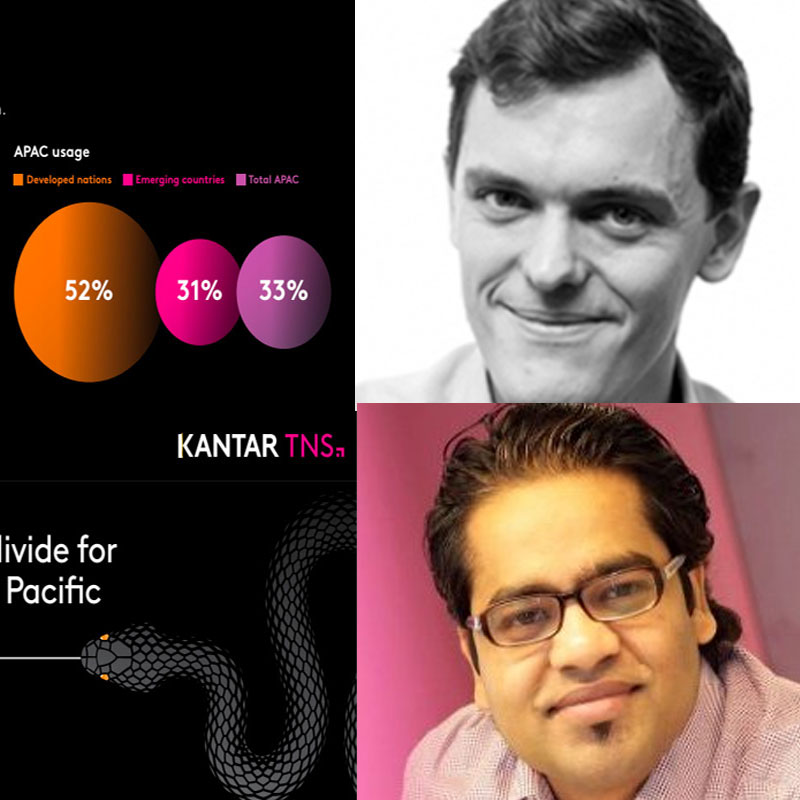
Tag: Kantar TNS

  • 23% Indians use m-payments once a week: Kantar TNS study

    23% Indians use m-payments once a week: Kantar TNS study

    MUMBAI: Connected consumers in India are increasingly using mobile-based payments according to the results from the latest Connected Life study from Kantar TNS. Post demonetisation and with a greater push by the government for adoption of digital payments, mobile payments have seen a sharp rise with 1 in 3 (35 per cent) connected consumers in India using it. The popularity of mobile payments in India is also revealed by the number of regular users, with 23 per cent saying they use mobile payments at least once a week.

    The results of the study show that India is ahead by 35 per cent compared to other APAC countries like Indonesia’s 9 per cent, and Philippines’s 7 per cent, but still has a lot of catching up to do with the likes of China at 94 per cent and Singapore at 65 per cent where mobile payments have become a regular habit.

    The popularity of mobile payments in India is set to rise further, as the future seems bright with 33 per cent of connected Indians claiming to prefer paying for everything using mobile phones in the coming months. This seems far more promising than other APAC countries like Vietnam, Indonesia and Philippines.

    Kantar TNS executive vice president India Anusheel Shrivastava says, “The mobile payment space was already heating up with the launch of several mobile wallets by leading banks and aggressive promotional pushes for customer acquisition by the likes of Paytm. The trend gained momentum after demonetisation, as the scope for digital payments shot up leading to a sharp rise in adoption of mobile payments in India.”

    The study also revealed that APAC leads the world in m-commerce. Connected consumers in Asia Pacific are one-third (33 per cent) more likely to make an online purchase on their mobile than via a desktop or laptop.

    Southeast Asian countries are leading the way when it comes to m-commerce. The majority of people with internet connections in Asian markets such as Indonesia with 93 per cent, Thailand with 93 per cent, Vietnam with 86 per cent and India with 85 per cent, are using their mobiles to make purchases as they leapfrog traditional forms of online shopping and go straight to their phones.

  • Indians may share personal data online, brands must act responsibly: Kantar TNS

    Indians may share personal data online, brands must act responsibly: Kantar TNS

    MUMBAI: Connected consumers in India are far more trusting than other countries in the region when it comes to their online activities, according to Kantar TNS’s latest Connected Life research. In comparison to the rest of the world, they are more open to sharing their personal data if it improves their online experience. Brands need to use this information responsibly or risk the rise of doubt and cynicism.

    Kantar TNS surveyed 70,000 people across 56 countries and conducted 104 in-depth interviews as part of the 2017 Connected Life study. The research explored consumer trust in brands in relation to four themes: technology, content, data, and e-commerce.

    Only 29 per cent of Indian consumers have concerns about the amount of personal data brands have on them, compared to 40 per cent globally and rising to as high as 56 per cent in Australia. What’s more, only 27 per cent are adverse to connected devices monitoring their activities online if it makes their lives easier, compared to 56 per cent of consumers in Korea and 62 per cent in New Zealand.

    However, Indians are not as trusting of global brands as other countries in APAC, with 38 per cent trusting big global brands in comparison to 54 per cent in both Vietnam and Myanmar, and 47 per cent in Indonesia. Consumer trust falls significantly in developed markets like Australia and New Zealand, where just 19 per cent and 21 per cent, respectively, trust big global brands.

    The trust on social media platforms is high with 39 per cent of connected consumers in India say that the content they see on social media channels is reliable, compared to 32 per cent globally.

    Kantar TNS India executive vice president Anusheel Shrivastava says, “The majority of Indians are not particularly concerned about their digital privacy yet, however this is not to say that they won’t follow the trend of more developed countries where people are now far more sceptical of how their personal data is being used. Brands need to act responsibly online to maintain the trust that they currently hold.”

    Kantar TNS global lead of connected solutions Michael Nicholas adds, “Trust is fragile. Brands in emerging countries see higher levels of consumer trust today than those in developed ones but they shouldn’t take it for granted. To build and protect trust, brands need to put the customer first.”

  • ’85 per cent Indians consume video content online every week’

    ’85 per cent Indians consume video content online every week’

    MUMBAI: Kantar TNS’ recently-conducted Connected Life study has concluded that 85 per cent of Indian consumers consume video content online every week. The study shows that this consumption is spread across various platforms such as video content that appears in social feeds, free video on platforms such as YouTube along with some paid online TV subscription services as well.

    What differentiates the Indian video consumer from its global counterparts is, while the weekly trend translates strongly into daily online video consumption as well (global average = 65 per cent), in India, only less than half of these weekly users watch online videos daily (39 per cent).

    The barriers that stop online video from becoming a mainstream daily habit are mainly around high data costs and patchy connectivity.

    Kantar TNS India executive director Anusheel Shrivastava said on a positive note, “With Jio’s launch the data rates are already seeing a drop; this along with improved availability of public WiFi will help in lowering the barriers. It may not be long before the online video landscape in India will change”.

    Connected Life data showed that free online video, such as YouTube, is watched by a large proportion of connected consumers daily, with Cambodian internet users watching the most at 94 per cent, followed by Hong Kong (84 per cent) and China (78 per cent); whereas in India it is at 39 per cent. Two thirds (62 per cent) of people online are also watching videos that appear on their social feed, either from brands, news sources or their friends. Connected consumers in mobile-first markets are consuming a lot of video in this way, with 93 per cent of internet consumers in Cambodia watching social video daily, 80 per cent in Malaysia and 69 per cent in Vietnam. Digital channels are allowing one in three (32 per cent) connected consumers to access on-demand channels, allowing them to catch up on broadcast TV content online. Some are also using paid-for subscription services such as Netflix, viewed by 11 per cent daily across the region.

    Kantar TNS digital director APAC Zoë Lawrence said: “There’s been an explosion in the consumption of online ‘on-demand’ viewing across Asia Pacific, creating new media moments that didn’t exist in a traditional marketing world.Online video provides brands with an opportunity to tell their story in a different way; we’re seeing a lot of brands succeed with long-format video and also great creative work that overcomes some of the challenges of video in a social feed. If the content is good enough, people will watch it. Brands now know that simply putting their TVC online will not work; they need to develop content that works well within the context of the online channel they are using.”

  • ’85 per cent Indians consume video content online every week’

    ’85 per cent Indians consume video content online every week’

    MUMBAI: Kantar TNS’ recently-conducted Connected Life study has concluded that 85 per cent of Indian consumers consume video content online every week. The study shows that this consumption is spread across various platforms such as video content that appears in social feeds, free video on platforms such as YouTube along with some paid online TV subscription services as well.

    What differentiates the Indian video consumer from its global counterparts is, while the weekly trend translates strongly into daily online video consumption as well (global average = 65 per cent), in India, only less than half of these weekly users watch online videos daily (39 per cent).

    The barriers that stop online video from becoming a mainstream daily habit are mainly around high data costs and patchy connectivity.

    Kantar TNS India executive director Anusheel Shrivastava said on a positive note, “With Jio’s launch the data rates are already seeing a drop; this along with improved availability of public WiFi will help in lowering the barriers. It may not be long before the online video landscape in India will change”.

    Connected Life data showed that free online video, such as YouTube, is watched by a large proportion of connected consumers daily, with Cambodian internet users watching the most at 94 per cent, followed by Hong Kong (84 per cent) and China (78 per cent); whereas in India it is at 39 per cent. Two thirds (62 per cent) of people online are also watching videos that appear on their social feed, either from brands, news sources or their friends. Connected consumers in mobile-first markets are consuming a lot of video in this way, with 93 per cent of internet consumers in Cambodia watching social video daily, 80 per cent in Malaysia and 69 per cent in Vietnam. Digital channels are allowing one in three (32 per cent) connected consumers to access on-demand channels, allowing them to catch up on broadcast TV content online. Some are also using paid-for subscription services such as Netflix, viewed by 11 per cent daily across the region.

    Kantar TNS digital director APAC Zoë Lawrence said: “There’s been an explosion in the consumption of online ‘on-demand’ viewing across Asia Pacific, creating new media moments that didn’t exist in a traditional marketing world.Online video provides brands with an opportunity to tell their story in a different way; we’re seeing a lot of brands succeed with long-format video and also great creative work that overcomes some of the challenges of video in a social feed. If the content is good enough, people will watch it. Brands now know that simply putting their TVC online will not work; they need to develop content that works well within the context of the online channel they are using.”