Tag: Kannada

  • South Indian movies to follow IIFA, host awards abroad

    South Indian movies to follow IIFA, host awards abroad

    MUMBAI: Dubai will play host to the first-ever South Indian International Movie Award (SIIMA) on 21 and 22 June. The award function will reward the best works in Telugu, Tamil, Malayalam and Kannada cinema.

    SIIMA will be an annual affair and will take South Indian movies to new territories on the lines of the IIFA.

    SIIMA will reward greatest achievements in cinema during the year 2011 which will be nominated by a jury of artists and professionals from all the four industries.

    Vishnuvardhan Induri, the man behind the successful Celebrity Cricket League, has conceptualised the awards function. According to a statement by the organisers, this will be the first time that the South Indian film industry will have its awards abroad. With the function, the organisers will promote South Indian cinema on a global platform that would increase overseas revenues.

    Though the industry down south constitutes the largest number of films released in India and the Indian box office collections of a hit South Indian movie is at par with any hit Bollywood film, the overseas revenue of a South Indian movie is 10 per cent of a Bollywood movie, the statement observed.

    The organisers have sent out invitations to all the big stars across India with a hope to get participation not just from those who have been nominated and those who are performing but from the film fraternity at large.

  • Veerapan-based film lands in controversy

    Veerapan-based film lands in controversy

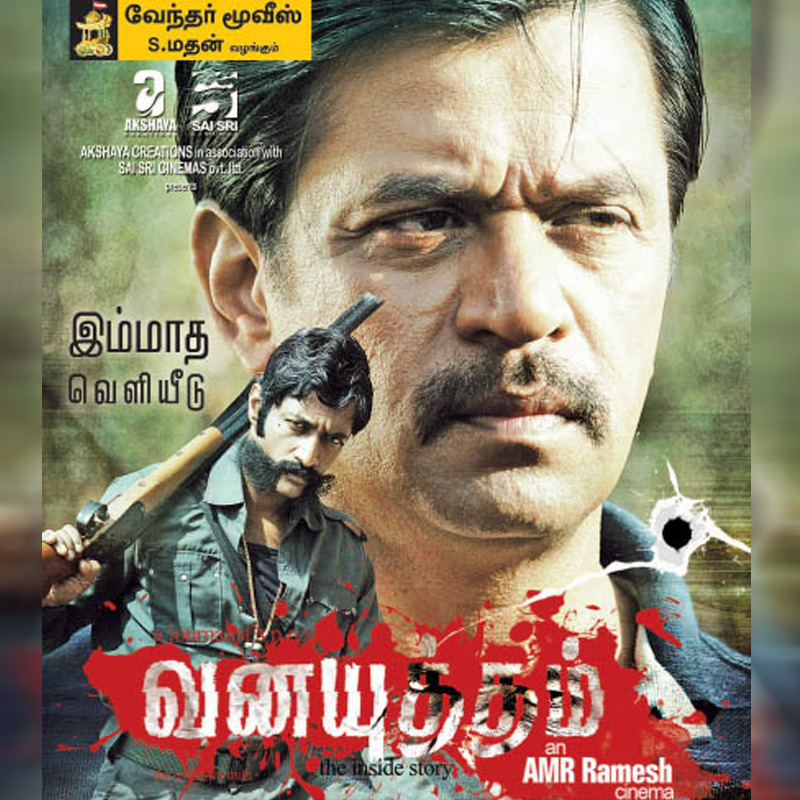
    MUMBAI: These days every other film lands in one or the other controversary. The latest to join the bandwagon is director AMR Ramesh’s film Vana Yudham based on the life and times of Sandalwood smuggler late Veerappan.


    The sandalwood smuggler‘s wife Muthulakshmi has sought a ban on the film alleging that it portrays her and Veerappan in bad light.


    She is of the contention that neither the director nor the producer of the film ever discussed the story with her. She has registered a case in a Chennai Court.


    Muthulakshmi observed that the film would influence the pending case against her.


    While Kishore plays the role of Veerappan, Vijayalakshmi will essay the role of Muthulakshmi. Jeyabalan plays a military officer who played an important role in Veerappan‘s death. Suresh Oberoi plays Dr Rajkumar in the film.


    The film will be released in Kannada as Attakaasam.

  • TV18 stalls plans of Gujarati and south language biz news channels

    TV18 stalls plans of Gujarati and south language biz news channels

    MUMBAI: TV18 has stalled its plans to launch three regional business news channels and will wait till the economic downturn reverses before it revives its growth plans in this space, a source tells Indiantelevision.com.

    TV18 is looking at launching a Gujarati and a south-language business news channel. The plan is also on to launch another regional business news channel, the language of which is kept under wraps.

    “We will launch these channels only when the market improves,” says the source.

    CNBC TV18 South will be a single channel that will beam out business news in all the four southern languages – Tamil, Telugu, Kannada and Malayalam.

    TV18 believes that there is potential to grow its business by making strategic investments, both through organic and inorganic routes, in regional and local language news channels.

    TV18 is planning to raise Rs 5.1 billion through rights issue, out of which Rs 3 billion will be utilised towards repaying debt and Rs 300 million on the Forbes project. The company will also invest Rs 450 million for subscribing to the rights issue of Infomedia.

  • ‘Southside sees action’

    ‘Southside sees action’

    “Mind it!”

    A phrase immortalized by Channel [V]’s south Indian cowboy character Quick Gun Murugun in the nineties. And one that is most relevant to the regional language market in 2007. The year saw a flurry of launches or announcements of launches, a change in long-running political equations, continued growth, and an increasing intensity of competition in almost every language segment – whether Tamil or Malayalam or Kannada or Telugu – of the regional market.


    The big news of the year in this space was the public parting of ways between Kalanidhi Maran’s Sun Network and his grand uncle Karunanidhi, the chieftain of the DMK party. The breakup was bitter, and it was almost as if the floodgates were let open and a flurry of launches followed.

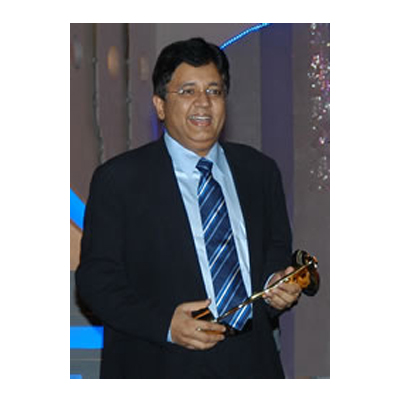
    Kalanithi Maran holds the Contribution to Television Award trophy he was presented with at the Indian Telly Awards 2006.

    The DMK launched its own channel Kalaignar TV with a little bit of help from former Maran friend Sharad Kumar, a few Sun TV employees and Sun arch rival Raj TV. The latter offered it uplinking facilities for Kalaignar TV which has a menu consisting of film and entertainment programs and news. The DMK appeared to be in in a hurry to make up for time it lost – over the past decade during which it supported the Sun Network – and announced plans to build a channel bouquet with a 24-hour news channel and music or a movie channel. This apart, it initiated steps to set up its own cable network in the state to counter any moves by the Maran-owned MSO Sumangali Cable Vision as well as to gain control of the last mile.

    DMK ally, Raj TV announced plans to introduce its DTH service, again as if to darken the Sun Network’s DTH prospects. In May 2007, the Raj TV management said that it would roll out 11 channels, and would take the acquistion trail to expand nationally in other languages, without disclosing any time frame. In August, 2007, it unveiled a FTA music channel Raj Musix.

    Besides Musix, Raj TV telecasts two channels – Raj TV and Raj Digital Plus’.
    On the Raj TV horizon are Tamil and Telugu news channels.


    Jaya TV, backed by the AIADMK party, and a comparatively smaller player, recently started testing two new Tamil channels – music and news, which are expected to start full time transmissions sometime this month. As the year drew to a close, Tamil Nadu Congress member of parliament, KV Thangabalu’s flagged off Mega TV, a 24 hour FTA Tamil news, current affairs, and entertainment channel, while Tamil Nadu Congress MLA Vasanth Kumar said he intends to start Vasanth TV.


    For the Sun Network, 2007 was business as usual, the political setbacks notwhithstanding. The network, which has the highest number of channels in south India, dominates the region, with the exception of Kerala where it trails Asianet as a close No 2. It drew the curtains on its DTH service using transponders on Insat 2B, offering subscription packages that looked extremely competitive and attractive. Industry watchers expect Sun’s dominance to get eroded over time, but 2008 is unlikely to be the year when we will see that happen.

    “Sun’s biggest strength has been content, be it GEC or movie. Just because Sun may be not be gaining numbers and Kalaingar is showing unprecedented growth, it doesn’t mean that advertisers are going to run away from Sun to its next biggest rival. At present, Sun has retained a firm grasp on its slowly reducing share in percentage terms, its share has not reduced in numbers,” says an ad executive.


    So far, Sun has been able to maintain a lead over all the others in most of the space it operates in. In a few places, even its second channel has performed better and attracted far more viewers than its nearest competition’s main channel has. In a very dynamic space, how the new equations will work out only time can tell.


    For Telugu print and TV baron Ramoji Rao, however, 2007 would be a year he would prefer to write off as a bad dream. For Rao, who owns TV network ETV and leading Telugu newspaper Eenadu, it was reportedly his close alignment for the past quarter century with the Telugu Desam and his run-ins with the Congress chief minister of Andhra Pradesh, Y Rajshekhar Reddy that cost him dear. It is pertinent to note that a deal signed between US-based Blackstone Group and Rao’s holding company Ushodaya in January 2007 for the sale of a 26 per cent stake is yet to see closure. If Blackstone’s proposal to invest $275 million in Ushodaya had gone through, it would have been the biggest ever media investment in an Indian firm.

    2007 will also go down in the annals of regional television history as the year of TV9. Promoted by Associated Broadcasting Corporation’s (ABCL), it appears to have ambitions to get its foothold into almost every language segment. In Andhra Pradesh, TV9 News got the better of Gemini News and ETV2 News, with its Telugu religious channel Sanskruti beginning to get noticed.

    In Karnataka TV9 Kannada surpassed the biggest player Sun’s Kannada news offering Udaya Varthegalu. It has also been itching to get control of Kerala’s fledgling news channel IndiaVision, but has only managed to start selling air time for it.


    Karnataka witnessed the launch of two GEC channels Asianet’s Suvarna and Kasthuri (the latter headed by then chief minister HD Kumaraswamy’s wife) during the year. Another channel ‘Real Estate TV’ for national consumption by a construction group made a lot of noise, but failed to get its signals carried.


    “Kasthuri could be eating into DD Bangalore’s ad shares, especially ads by the state government and public sector undertakings based in Karnataka,” said an executive from an advertising agency. “Having been the chief minister, Kumaraswamy could leverage his contacts in these companies. Even if these pickings are small, they are very good for a new entrant,” he avers.


    Observers expect the action in the southern space to continue. Balaji Telefilms is expected to launch TV channels in partnership with Star TV either in 2008 or 2009. And there is no doubt that others will also make a try for the southern pie.

  • Tata Indicom launch low cost Motofone F3c having Qualcomm single chip

    Tata Indicom launch low cost Motofone F3c having Qualcomm single chip

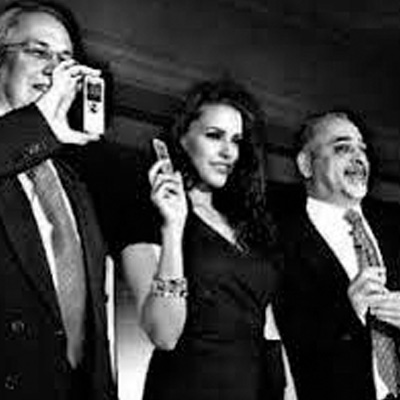
    BANGALORE: Tata Indicom today announced the national launch of the ultra slim Motofone F3c on the CDMA platform in Bangalore today based on Qualcomm’s QSC 6010 chipset. On the anvil are launches of other chipsets – 6020 and 6030 with other handset manufacturers according to Tata Teleservices (TTL) CEO Darryl Green. The Motofone F3 will be exclusive for TTL for the next six months. Bollywood actor Neha Dupia did the honours for TTL.

    TTL plans to target the ordinary man who probably gets a cell phone for the first time with the low cost stylish handset as bait. The Motofone F3c is priced at Rs.1,699/- inclusive of all taxes and charges. TTL plan to combine Motofone F3c with the benefits of their GO XTRA PACK, will enable customers to avail double talk time for the first six months with bonus talk time valid for 1 year from the date of activation. The scheme also offers free incoming calls for the first six months without recharge. Darryl is confident of selling 2 to 3 million of these handsets over the next 12 months.

     
    This was also the first global launch of the single chip by any company globally according to Qualcomm senior vp Kanwalinder Singh who avers that “QUALCOMM is committed to bringing wireless connectivity to emerging markets, and our QSC family of solutions enables compelling, affordable devices for cost-sensitive countries such as India. We are pleased to be working with Motorola and Tata in bringing the Motofone F3c, and look forward to further collaboration with the industry toward the common goal of making connectivity accessible to more people worldwide.”

    “Though many companies have announced single chip solutions, they are so far only there on paper,” added Singh.

     
    The Motofone F3c has features such as voice prompts in six local languages—English, Hindi, Tamil, Telugu, Kannada and Malayalam, the QUALCOMM Single Chip (QSC) enabled device from Motorola, MOTOFONE F3c has been specially designed to suit the needs of Indian consumers. It offers a rich vacuum metallized finish making it extremely sturdy, with polyphonic ringtones including three Indian tones, high audio, office quality speakerphone and ringtone downloads.

    TTL, which recently crossed one million subscribers in Karnataka and two million subscriptions in New Delhi, is looking to close the financial year with 18 million subscribers. They currently have 15 million subscribers.

  • Chandrasekhar acquires Asianet; network to expand into Kannada, Tamil

    Chandrasekhar acquires Asianet; network to expand into Kannada, Tamil

    MUMBAI: Former BPL head honcho Rajiv Chandrasekhar has acquired a 51 per cent stake in Asianet Communications to become the chairman of the leading Malayalam television channel.

    Chandrasekhar’s acquisition, made through group company Jupiter Entertainment Ventures (JEV), is part of its expansion plans, which include new satellite channels in Tamil and Kannada, a press release issued in Thiruvananthapuram states.

    JEV also has plans to launch FM radio stations (under the Indigo brand name), the release says.
    The Kannada channel is expected to be launched early next year, and work is on in full force, the release adds.

    Once the statutory approvals are through, the remaining stake will be held between Raji Menon, the original promoter of the network, and Asianet managing director K Madhavan, with Zee Group holding a small 3% holding.

    Though Menon will no more have any direct operational role in the network, he will reportedly retain a 26 per cent stake in the network. Madhavan will, however, continue as MD overseeing the current management team.

    Asianet Communications operates three channels — Asianet, Asianet News and Asianet Plus for youth.

    Chandrasekhar, who unlocked over Rs 12 billion by selling the telecom business he had built up to Hutchison Essar, has more than adequate cash reserves to make current southern media kingpin Kalanidhi Maran sit up and take note.

  • MSN India launches Hindi, Tamil, Telugu, Kannada and Malayalam portals

    MSN India launches Hindi, Tamil, Telugu, Kannada and Malayalam portals

    MUMBAI: With the sixth anniversary celebrations of MSN India under way, MSN India has announced the launch of five new portals, MSN Hindi, MSN Tamil, MSN Telugu, MSN Kannada and MSN Malayalam apart from unveiling Windows Live Messenger in Hindi, Tamil, Telugu, Kannada and Malayalam.

    MSN India also unveiled the new MSN India Homepage and Windows Live Domains. Prominent amongst these announcements is the launch of its new language portal homepage on http://in.msn.com along with launching Windows Live Messenger in the Hindi and the other regional languages (Tamil, Telugu, Kannada and Malayalam).

    This new introduction enables MSN users to now chat in their regional language with their friends and family on MSN Messenger. The MSN Hindi and regional language portals was launched by renowned singer Shubha Mudgal in an event organized recently in the capital.

    The new MSN Hindi other regional languages (MSN Tamil, MSN Telugu, MSN Kannada and MSN Malayalam) feature of Windows Live Messenger is also integrated with the MSN portal and has plenty of content which is of desi flavor such as Movies featuring film previews and interviews with the stars. The MSN Language portals (MSN Hindi, MSN Tamil, MSN Telugu, MSN Kannada and MSN Malayalam) also has the latest news with a special focus on local news, Infotech, Astrology, Sports, Recipes and Humour, informs an official release.

  • Sifymax to offer Fiffa World Cup updates in five languages

    Sifymax to offer Fiffa World Cup updates in five languages

    MUMBAI: Broadband portal Sifymax is providing World Cup updates in five different languages – Hindi, Kannada, Tamil, Telugu and Malayalam.

    This initiative is an attempt to enhance the reach and the accessibility to the Fifa World Cup available in “our national language and other south based languages”, according to an official release.

    Besides providing Fifa updates on sify home page www.sify.com, the language channels have also been linked to the city channels namely, www.sifymax.com, www.bangalorelive.in and www.samachar.com.

    Sify Limited VP Surya Mantha said: “Further to providing exclusive highlights and special video footages on FIFA World cup 2006, we are excited to go that extra mile to give more privilege to football lovers by providing them updates in 5 different languages. This includes our national language further enhancing the accessibility of the game nationwide.

  • Karnataka Opening Up!

    In the last two years, the South Indian television market has witnessed much churn in terms of fresh investments and new initiatives. In all the languages combined, at least 10 new channels were launched during this period. In this two-year period, there has been one market missing all the action – Karnataka.

    However, 2006 holds something different for the Rs 1.5 billion Kannada television market. Zee has made the first move by launching its second South Indian channel Zee Kannada, a pay channel, on 11 May. Not to be left behind, the Hyderabad-headquartered Associated Broadcasting Company Pvt Ltd, which runs Telugu news channel TV9, is targeting a July launch for its Kannada news channel – TV9 Kannada.

    Exploring the news space further in the market will be Kannada Kasturi, promoted by chief minister Kumaraswamy‘s wife Anitha. The news channel is expected to launch by year-end.

    Though the Kannada television market is the third largest player in the regional space (behind Tamil and Telugu), it, surprisingly, didn‘t help much in attracting new investments. While the Rs 1.25 billion Malayalam (Kerala) television space witnessed the launch of about five channels in 2005, Karnataka received just one single player, Udaya 2, a youth-oriented music channel from the Sun Network stable. And it required two outside players – Zee and TV9 – to bring some changes in the pattern.

    “It has something to do with people‘s mindset. It looks like Kannadigas are not very enterprising when it comes to television. They are more involved with the film business. Also it requires a mammoth effort to make your presence felt in the market since you have two established players — ETV and Udaya — to compete with. Then, Hindi also attracts audience here,” points out Shyamsundar, head of the production house Yantra Media.

    Explains ETV chief producer Manvi: “The Kerala market is different from Tamil and Telugu because, here it is not a one-sided competition. Asianet and Surya are going neck and neck, but you have smaller players also making significant contributions. The market attracts fresh investments since it is open to all kinds of experiments and fresh programming strategies. In Kerala, new players are thriving on this confidence. Other regional markets are yet to deliver that confidence.”

    In that case, what is the strategy that Zee has zeroed in on to take on ETV and Udaya in Karnataka? The media behemoth had suffered a setback five years ago when it first entered the South market through Kannada with Kaveri TV through a joint venture with Asianet. Understandably, Zee has done its homework before making the second attempt as an independent venture now.

    The preparations included extensive field research involving about 700,000 households to get its programming mix right. Soaps, films and telefilms will constitute 25 per cent of the channel programming. Gameshows and talk shows will make up another 25 per cent. As for the rest of it, there will be a stress on current affairs programmes, events and film-based shows.

    Zee Kannada‘s positioning is in direct contrast to that of its southern sibling Zee Telugu. The one-year old Telugu channel targets the young upwardly mobile viewer segment, while Zee Kannada is following the traditional strategy of going for the mass audience.

    “Being the second largest player in the regional space, you can afford to experiment a lot in the Telugu space. We had our options to choose our target group (TG) in Telugu. But Kannada is a comparatively a smaller market. Hence, the plan is to follow the traditional strategy,” states head of Zee South Initiatives Ajay Kumar.

    Most importantly, Zee Kannada will be making a conscious attempt to be very close to Kannada culture and retain the local flavour in its programmes. According to market sources, Zee has adopted this strategy from ETV Kannada.

    “ETV‘s programmes are very local oriented and that is the channel‘s USP. Almost 95 per cent of the programmes are done by local producers. Zee Kannada seems to be following the same strategy by signing up a chunk of local producers. At the same time, Udaya follows a different gameplan as it explores the whole of South and Hindi as well (Balaji Productions),” says a source.

    Shedding light on the programming strategies of the leading channels, both Udaya and ETV Kannada have created their own compartments in the space. ETV banks on serials and fiction programmes, while Udaya is known for its films and film based programmes. Udaya has three more channels in Udaya News, Ushe (film and music) and Udaya 2.

    One common strand in any South market is films and this plays a crucial role in Kannada television as well. Acquisition costs for a blockbuster film ranges from Rs 15 million to Rs 20 million.

    Knowing that having strong film content would matter a lot for the channel‘s strategy in the movie-crazy market, Zee Kannada has acquired a combo package of new and old films to create its movie library.

    “Since the TG is the same, Zee Kannada will have a head-on collision with Sun Network‘s Udaya TV and its sister channels. In this context, having strong film content will be crucial,” says a source.

    “Though ETV Kannada acquires many good films every year, Udaya is ahead when comparing the number of films acquired,” adds Shyamsundar.

    Switching to the news space, we have TV9 Kannada and Kannada Kasturi gearing up to explore the relatively virgin land. Finally offering some competition to the lone player in the segment, Udaya News. Kannada Kasturi is still in the process of streamlining its strategies whereas TV9 Kannada is preparing the ground for a July launch.

    Driven by the tagline “Close to your heart”, TV9 Kannada is positioned as a young-at-heart, urban news channel with an international look and feel. TV9 has adopted its Telugu strategy for Kannada as well.

    “We targeted the urban youth and women with TV9 Telugu. We are following a similar strategy for TV9 Kannada also. Within a short duration, TV9 Telugu reached an impressive position in the market, and we are confident of repeating this performance in Kannada as well,” states TV9 chief news coordinator Rajasekhar.

    TV9 Kannada is planning to create a space for itself in the film-crazy, entertainment-oriented market through efficient coverage and innovations. “The idea is to crack the market by providing something fresh. Kannadigas are used to the traditional methods of news delivery and presentation. Our attempt will be to take it to a new level, with a lot of innovations. The plan is to woo the urban crowd by offering them international standards in the local language,” says Rajasekhar.

    Inspired by the entry of new players, the Kannada television market is targeting a 25 per cent expansion this year. Market analysts feel that this would also inspire more local advertisers, including retailers, to try television.

    “The ratio between local advertisers versus national advertisers is as low as 10 per cent versus 90 per cent in Karnataka. The television advertising here totally depends on Mumbai and Bangalore clients. We hope this will change with the entry of players such as Zee and TV9,” says Shyamsundar.

    “The market has the potential to touch even the Rs 2 billion mark in a short time. New players mean competition, but it is surely a good sign for the business,” adds Manvi.