Tag: Kamasutra

  • Brands ride on the 10-year challenge wave

    Brands ride on the 10-year challenge wave

    MUMBAI: While Facebook’s latest viral trend #10YearChallenge is being seen as a negative conspiracy; an attempt to "train a facial recognition algorithm on aging" by many, brands have leveraged the upward tide of its popularity in an interesting manner by sharing their own versions of the challenge. From modest to quirky, the responses are drawing a lot of attention on social media. Check out a few of them below:

    1. Acer boasts about its improved design and efficiency

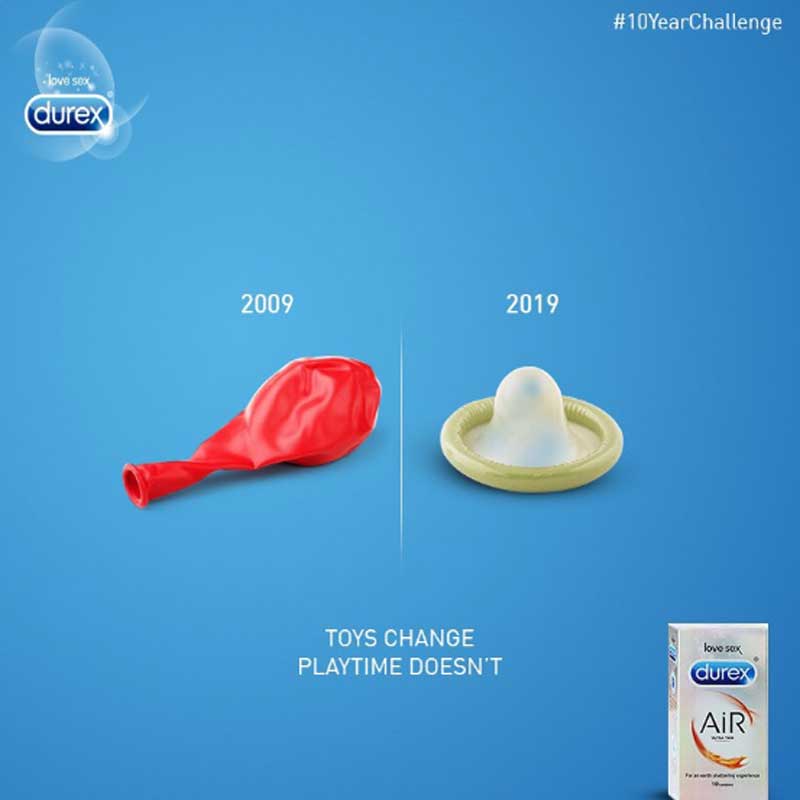
    2. Durex goes quirky again


    3. Fevicol’s hilarious take on its ‘Mazboot Jod’


    4. Manforce changes the taste of the challenge


    5. Swiggy’s ‘Ladka Nikal Chuka Hai’ is all the assurance you need


    6. Tinder truly drives nostalgia home


    7. Uber Eats brings in the latest viral star to its feed


    8. Talk about personalisation and Zomato is ready with its unique take


    9. Google India changing how we have known things since ever


    While all these brands flowed with the wave of showing changes in the narrative over the past decade, a few brands managed to show how some things never change.

    10. Airtel then and Airtel now


    11. Amul India’s utterly butterly take on its evergreen presence


    12. Kaya promotes its timeless beauty idea

    13. Finolex Pipes shows longevity


    14. KamaSutra India takes pleasure 10 years ahead


    15. KFC India says taste is never out of fashion


    16. Godrej Nature’s Basket brings in a fresh take


    17. Parle G hasn’t changed a bit


  • Need for condom brands to target the rural audience

    Need for condom brands to target the rural audience

    MUMBAI: Sex is perhaps the most rampant taboo in India. Despite the economic and technological advancements, sexual discourse in the country is yet to witness a significant evolution. From sex education in school to conversations at home, the country in a sense continues to avoid addressing the elephant in the room. The cultural conditioning, especially in a country as large and diverse as ours, tends to have major implications on industry and market economics. Marketers and advertisers tend to feel handicapped when operating around no-go-zones. That's the space India's condom companies find themselves in.

    In India, Condoms advertising continues to be a tug of war between advertisers and the regulatory authorities. Companies create an advertisement, spend millions on marketing, only to find out that ASCI and MIB have slapped them with charges to withdraw or modify the ad. There is no running away from the fact that Indians have a conservative approach to sex. And When condom brands try to titillate and opt for sleazy advertising, they compound the problem.

    This rather 'controversial' category has always had its challenges and limitations when it comes to product marketing. The ‘Sanskaari’ Indians don't want to see condom ads on television, hoardings or radio. Maybe, that’s the reason we tend to notice fewer condom brands around us. 

    While the situation is still better in urban and metro cities, one wonders what the scenario is like in rural pockets of the nation where topics like condom and sex are considered 'impure' and 'grubby'. 

    The overall condom penetration in India is only six per cent. According to several studies and surveys, the Indian condom market is projected to reach $180 million by 2022. This is on account of rising consumer awareness about HIV, STI and other sexually transmitted diseases. The booming e-commerce business, rising young population and an increase in the average marriageable age are other contributing factors that have played a role in effecting this change.

    The market is primarily dominated by Manforce with a 32 per cent share, followed by Moods at 12 per cent, Skore at 10 per cent, Kamasutra at eight per cent, Kohinoor at eight per cent and Durex at around three per cent along with local brands. 

    The National Family Health Survey in its 2015-16 survey revealed that the knowledge of contraceptive methods is almost 100 per cent in India and 99 per cent of married women and men aged between 15-49 know of at least one such method. Sounds like a good number, right? However, the condom penetration (usage) in India is extremely low, with the urban sector clocking around six per cent and the rural a mere four per cent.

    GRAPH.jpg

    The rural market is still small in India and contributes to about 27 per cent of the 1073 crore condom market in India as per a Nielsen report. But the good news is, it has grown by 16 per cent in terms of value in 2017. Usage of condom in smaller pockets has increased in the last five years due to modernisation, digital penetration and availability of low cost smartphones and data.

    The segment is still unorganised with major private players taking the lead in developed regions. They spend millions on advertising and marketing themselves in the eyes of modern consumers. Case in point: Manforce signed pornstar-tuned-Bollywood actor Sunny Leone, Durex snapped up Bollywood actor Ranveer Singh after he admitted that he was ‘addicted to sex’, SKORE condoms went international and signed cricketers Chris Gayle and Dwayne Bravo. The result? These brands are now at the top of brand recall in the eyes of consumers.

    But the rural scene is majorly dominated by local players. Retailers often take advantage of the consumer discomfort and display brands that allow them good margins, which in most cases are local companies.

    At such a point, it is crucial for national brands to create brand visibility for the audience that isn't really big on television or digital. In order to increase the penetration in smaller segments of India, JK Ansell has launched low value products under the portfolio of KamaSutra brand. Interestingly, Kamasutra currently does not advertise or market its product in rural regions, as 95 per cent its sale comes from the developed cities.

    Brands such as Durex, KamaSutra, Moods and SKORE prefer staying away from rural marketing and undertaking any awareness campaigns. But maybe its time they look into these markets as the next phase of growth is bound to stem from tier two and three towns.

    c20204cb-952a-4b9a-94c7-3eaaf22b798f.jpg

    Most condom brands look at targeting the younger generation in rural areas aged between 20-24 in the hinterland, where condom usage is greater. JK Ansell GM for marketing Ajay Rawal said, “Condom consumption is generally in the age group of 18-30 years. Beyond this, owing to sterilisation and IUD post marriage, the condom usage generally dips. So, the younger generation is where the future lies and hence we want to effectively tap into this segment.”

    Durex's pack of three condoms costs around Rs 55 whereas Skore, Manforce and KamaSutra are priced at Rs 25. Among local brands, Cobra condoms are sold at Rs 14, KIK at Rs 15 and Invigra's pack of 4 at Rs 30. 

    All said and done, distribution and social awareness still remains a challenge in the rural segment for major players as it is still serviced by low price condoms and free condoms (NIRODH) distributed by the Government of India. 

    Sales through modern trade outlets and the digital media are further driving the off take in the category, giving consumers more time during the transactions.The good news is that the rural consumers have taken a step towards accepting quality products rather than settling down with basic low value cheap condoms. 

    But that's not enough. The need of the hour, for condom companies and India as a country, remains the challenge of permeating social awareness down to the last mile.

    Also Read :

    I&B tightens up on condom ads on TV

    Time for condom brands to review their storytelling

    'Sanskari' India wants condom ads off primetime

    MIB recants, says only explicit condom ads banned during the day

  • Time for condom brands to review their storytelling

    Time for condom brands to review their storytelling

    MUMBAI: Ironically, when it comes to advertisements, condom players don’t know how to play it safe. Condom ads have been at the centre of numerous controversies owing to the erotic nature of the storytelling. Several governments have taken a strong stand against sleazy ads.

    Condom advertising in the US has been a much-debated topic for the longest time. At first, advertisements for condoms were mostly limited to men’s magazines such as Penthouse. The first television ad, on the California station KNTV, aired in 1975 but was quickly pulled off after it provoked the ire of people. Years later, the first condom commercial on US television aired in 1991.

    Condoms have been available in India since the 1940s but the first mass-distributed condom was introduced in 1963 under the name of Kamaraj (pseudonym of Indian cupid Kamadeva) but K Kamaraj was then the president of the ruling party, Indian National Congress. Hence, a new name for the condom was chosen: Nirodh that means protection in Hindi.

    In 1952, the Government of India established the first national family-planning programme in the world. At this time, condoms were privately manufactured and sold at high prices. Only the rich could afford the price of 25 paise even though population growth rate was the highest amongst the lower-income groups. In the late 1980s, several TV commercials were developed to create awareness about Nirodh. But the message from these advertisements was not clear about what a condom was, who used it, where would one get it or that it was distributed free of cost.

    It was in 1991 that KamaSutra condoms seduced viewers with erotic images of Bollywood actors, linking condoms to pleasure for the first time. Today, you have plenty of condom brands but all of them rely on the same creative–sensual and explicit scenes. Durex, Manforce, Playgard, Skore and others have resorted to the same storytelling through the years.

    They have not wavered from using the ‘sex sells’ motto to grab eyeballs. The Glitch co-founder and content chief Varun Duggirala thinks that the audience has matured but is still being considered as naive.

    It was in December 2017 when the Ministry of Information and Broadcasting (MIB) decided to ban condom advertisements on television between 6 am to 10 pm. The move was directed after the Advertising Standards Council of India (Asci) approached the MIB for withdrawing condom ads that were telecast during prime time or ‘family-viewing time’. The council was reacting to complaints regarding the kind of content condom brands showed in ads, which was not necessarily suitable for kids and teenagers. Asci, in its letter to the ministry, specifically stated that ads that were explicit and vulgar in nature should be aired only between 10 pm and 6 am.

    Havas India CEO Nirmalya Sen thinks that in India, the category has, to an extent, called the recent ban upon itself with mindless use of sex to sell condoms. He adds that this ban, in fact, could well be the catalyst the brands in the category need to act responsibly and be creative.

    Ajay Rawal, general manager of marketing for JK Ansell, maker of KamaSutra sexual wellness products, believes brands need to change their communication now and move away from using erotic ads. “Things have changed drastically in the last decade and the option to view eroticism is now easily available online. Millennials today are not interested in seeing this kind of content and want to see a creative that is relatable, realistic and memorable for them,” he adds.

    Interestingly, condom ads on digital are more creative than the TV ones – skewed to showing their use and benefits.

    Condom makers don’t use these ads on TV because of the cost involved in buying ad slots where they don’t want to risk their necks.

    Rawal notes that the advertising spends in the condom category are pithy compared to the giant FMCG category. “If a condom brand wants to create a new communication that does not have eroticism and sexual overdose to it, it has to be memorable and a lot of effort needs to be put in creating resonating, real and relatable stories,” he adds.

    While stating that India is still a conservative country when it comes down to sex, Dentsu One president Harjot Singh Narang mentions that companies tend to resort to the easiest part of storytelling—to have lots of sex without any fear—which is why most condom ads show romanticising situations on air. “Internationally, brands have moved over sexuality in ads and are talking about where it actually fits in the consumer’s life. In India, Durex is taking that route but we still have a long way to go,” he says.

    Historically, most condom purchases were made by men and that’s why the focus has predominantly been on the male audience. But since using contraception is essentially a woman’s call, maybe there is a need for change in communication and have more female protagonists in ads.

    While raising a point that why condom advertising in India stops at soft porn, Narang concludes that it is time for brands to build deeper relationships with consumers by creating engaging content as it is the need of the hour.

  • Y-Films’s ‘Sex Chat with Pappu & Papa’ to enlighten young minds

    Y-Films’s ‘Sex Chat with Pappu & Papa’ to enlighten young minds

    MUMBAI: Why is it so tough to talk about sex in a country which is home of texts and temples such as the Kamasutra and Khajuraho? Children are not imbibed with appropriately curated or delivered sex knowledge in schools. Sex is still a taboo topic in India. Forget that, rather than providing an answer to the ‘curious minds’, most parents clam up when having to talk to kids about the ‘birds & the bees’. The bigger question that arrives here is: Why not satisfy them when in doubt rather than misinforming them or leading them to wrong sources of information.

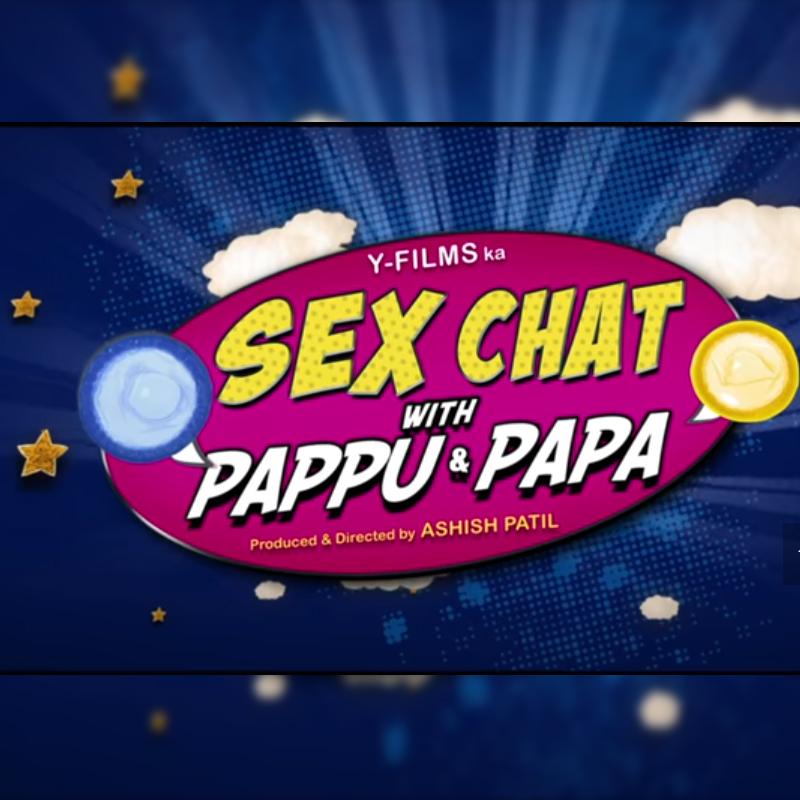
    Yash Raj Films’ youth arm Y-Films is here to deliver information across different themes related to sex / sexuality with its new web-series titled Sex Chat with Pappu & Papa. Divided into 5 parts of less than 10 minutes each, the fictional series will deal with everything from masturbation and periods to condoms, pregnancy and homosexuality. Each episode will deal with a new theme. “These are a few topics which are often kept in a closet and are never really discussed. Curiosities of children in today’s time are answered by Google. Research clearly shows that sex talk with parents is directly and clearly linked to safer sexual behaviour. They have incorrect perceptions about everything related to sex”, says Y-Films head Ashish Patil.

    Sex Chat with Pappu & Papa is slated to launch by mid-July and will follow YFilms’s existing format with new episodes every Tuesday.

    Patil further adds, “Through this series, we want to converse basic fundamentals of sexuality to everyone but in a clean, honest style with a lot of humour. It is a unique show of its kind in India and probably the world, certainly a show with a lot of heart.”

    /sites/default/files/styles/large/public/raj.png?itok=5ROh4lOM

    Targeted at everyone from kids to adults, the series is a story of the Watsa family featuring a curious 7-year-old boy, Punit Watsa (Kabir Sajid) nicknamed Pappu who shoots the most outrageous questions to his Papa, Anand (Anand Tiwari). The father attempts to answer them to the best of his ability initially with a lot of awkwardness and eventually with a lot of fun, simple anecdotes. 

    All this while his own father – the very traditional, conservative and possibly khadoos Pitaji played by Sachin Pilgaonkar- keeps questioning his actions. While his wife, the much pregnant, Shireen enacted by Sanjeeda Shaikh and mother, Usha Watsa aka Mataji played by Alka Amin get torn between this mad conflict and help Pappu & Papa find peace, balance and, of course, add a lot of their own masti to it.

    The series also features Abish Matthew, Ali Fazal, Faisal Khan, Gaurav Pandey, Saba Azad, Sharib Hashmi, Shreya Dhanwanthary, Urvashi Rautela, Dr. Piya Ballani Thakkar, etc., playing different characters.

    http://www.indiantelevision.com/sites/drupal7.indiantelevision.co.in/files/styles/large/public/raj1.png?itok=MeN8kGje

    The show is directed by Ashish Patil while Nikhil Taneja is the associate producer of the series. Written by Devang Kakkad and Gopal Datt, the series has been shot by Adil Afsar, while the catchy music has been given by Superbia.. The promo with its fun element has already garnered 126,357 views within three days of its launch and is created by Taxi Films.

    Y-Films has heavily researched and ratified the concept of this series by some of the foremost medical experts, top hormonal, gynaecological doctors of the country.

    The series is not targeting any specific category of brands to get on board as sponsors. “I think everyone should invest money in this. We are not focusing only on sex related brands. Anyone from Basmati rice to a car brand can hop on in as sponsors”, voices Patil.

    Apart from promoting it on Facebook, Twitter, YouTube and its official page, the series is also available to be picked up by schools for free. “I think this show should be aired in all the schools for better understanding. I will give it for free if any school is keen to do so. We hope it creates some genuine social impact, not just locally but globally”, adds Patil.

    Cheers to Patil and his team for providing sex education to impressionable minds, something that schools should have actually be doing!

  • Y-Films’s ‘Sex Chat with Pappu & Papa’ to enlighten young minds

    Y-Films’s ‘Sex Chat with Pappu & Papa’ to enlighten young minds

    MUMBAI: Why is it so tough to talk about sex in a country which is home of texts and temples such as the Kamasutra and Khajuraho? Children are not imbibed with appropriately curated or delivered sex knowledge in schools. Sex is still a taboo topic in India. Forget that, rather than providing an answer to the ‘curious minds’, most parents clam up when having to talk to kids about the ‘birds & the bees’. The bigger question that arrives here is: Why not satisfy them when in doubt rather than misinforming them or leading them to wrong sources of information.

    Yash Raj Films’ youth arm Y-Films is here to deliver information across different themes related to sex / sexuality with its new web-series titled Sex Chat with Pappu & Papa. Divided into 5 parts of less than 10 minutes each, the fictional series will deal with everything from masturbation and periods to condoms, pregnancy and homosexuality. Each episode will deal with a new theme. “These are a few topics which are often kept in a closet and are never really discussed. Curiosities of children in today’s time are answered by Google. Research clearly shows that sex talk with parents is directly and clearly linked to safer sexual behaviour. They have incorrect perceptions about everything related to sex”, says Y-Films head Ashish Patil.

    Sex Chat with Pappu & Papa is slated to launch by mid-July and will follow YFilms’s existing format with new episodes every Tuesday.

    Patil further adds, “Through this series, we want to converse basic fundamentals of sexuality to everyone but in a clean, honest style with a lot of humour. It is a unique show of its kind in India and probably the world, certainly a show with a lot of heart.”

    /sites/default/files/styles/large/public/raj.png?itok=5ROh4lOM

    Targeted at everyone from kids to adults, the series is a story of the Watsa family featuring a curious 7-year-old boy, Punit Watsa (Kabir Sajid) nicknamed Pappu who shoots the most outrageous questions to his Papa, Anand (Anand Tiwari). The father attempts to answer them to the best of his ability initially with a lot of awkwardness and eventually with a lot of fun, simple anecdotes. 

    All this while his own father – the very traditional, conservative and possibly khadoos Pitaji played by Sachin Pilgaonkar- keeps questioning his actions. While his wife, the much pregnant, Shireen enacted by Sanjeeda Shaikh and mother, Usha Watsa aka Mataji played by Alka Amin get torn between this mad conflict and help Pappu & Papa find peace, balance and, of course, add a lot of their own masti to it.

    The series also features Abish Matthew, Ali Fazal, Faisal Khan, Gaurav Pandey, Saba Azad, Sharib Hashmi, Shreya Dhanwanthary, Urvashi Rautela, Dr. Piya Ballani Thakkar, etc., playing different characters.

    http://www.indiantelevision.com/sites/drupal7.indiantelevision.co.in/files/styles/large/public/raj1.png?itok=MeN8kGje

    The show is directed by Ashish Patil while Nikhil Taneja is the associate producer of the series. Written by Devang Kakkad and Gopal Datt, the series has been shot by Adil Afsar, while the catchy music has been given by Superbia.. The promo with its fun element has already garnered 126,357 views within three days of its launch and is created by Taxi Films.

    Y-Films has heavily researched and ratified the concept of this series by some of the foremost medical experts, top hormonal, gynaecological doctors of the country.

    The series is not targeting any specific category of brands to get on board as sponsors. “I think everyone should invest money in this. We are not focusing only on sex related brands. Anyone from Basmati rice to a car brand can hop on in as sponsors”, voices Patil.

    Apart from promoting it on Facebook, Twitter, YouTube and its official page, the series is also available to be picked up by schools for free. “I think this show should be aired in all the schools for better understanding. I will give it for free if any school is keen to do so. We hope it creates some genuine social impact, not just locally but globally”, adds Patil.

    Cheers to Patil and his team for providing sex education to impressionable minds, something that schools should have actually be doing!

  • Kamasutra 3D in the contention list for Oscars 2014 in three categories

    Kamasutra 3D in the contention list for Oscars 2014 in three categories

    New Delhi: Rupesh Paul’s Kamasutra 3D figures in the contention list of the 86th Academy Awards, with selection in the three categories – Best Motion Picture, Original Score and Original Song with five songs.


    It is the only movie from India contending in the music category lists. The results were announced on yesterday by the Academy of Motion Pictures Arts and Sciences on its official website.


    Kamasutra 3D has been slated for a 23 May 2014 release after its premiere.


    Presented by Dr George John (GJ Entertainments) and produced under the house of Rupesh Paul Productions (RPPL), in co-production and project design by Sohan Roy, Kamasutra 3D is the only movie with five songs after The Great Gatsby to be selected in the Original Song category. The songs include – Aygiri Nandini, Saawariya, I Felt, Of Soil and Har Har Mahadeva – composed by Chennai based music directors, Sachin and Sreejith while its lyrics are penned by Rupesh Paul and Pratyush Prakash.


    Also scripted and penned by Rupesh Paul, the movie is set in the backdrop of the real historical milieu portraying the journey of a soulful love embodied with betrayal and war. It weaves the transformative changes in body, mind and soul by the forbidden world of sexual love and sensuality.


    Recently, with the release of its work-in-progress trailer, Kamasutra 3D critically came out to be more of a Hollywood war based epic movie than a classic erotica, it hyped to be with the sensuous Sherlyn Chopra, initially.


    Director Rupesh Paul, however, confirmed that he would not disappoint his viewers expecting the movie to be a classic erotica.


    Speaking on the Oscar entry, he stated, “Probably now we have an answer for all of them who claimed the movie to be a soft porn. Hopefully, they know that soft porns are not eligible for the Academy Award nominations”. He would his movie to be considered a musical than epic or erotica as Kamasutra 3D is influenced with its melody over the drama.


    After creating the best of pre sale records at the Cannes Film Festival 2013 and the American Film Market 2013 with its sale in most of the territories, Kamasutra 3D is all hopeful to make it in the final nominations of the categories in the 86th Academy Awards to be announced on 16 January, 2014 in the Academy’s Samuel Goldwyn Theater.