Tag: Kamal Hassan

  • Culture Machine’s movie Amoli starring Vidya Balan, Rajkumar Rao, Kamal Hassan, Nani and Jisshu Sengupta as narrators wins the 66th national film award

    Culture Machine’s movie Amoli starring Vidya Balan, Rajkumar Rao, Kamal Hassan, Nani and Jisshu Sengupta as narrators wins the 66th national film award

    MUMBAI: The announcement of the most prestigious 66th National Film Awards, took place at Rashtriya Bhavan New Delhi recently honoring the best films of 2018. Culture Machine’ a digital media company which runs some of India’s largest digital brands won the ‘Best Investigative Film’ award for its movie Amoli.

    Starring the renowned stalwarts of the film industry – Vidya Balan, Rajkumar Rao, Kamal Hassan, Nani, and Jisshu Sengupta as the narrators, Amoli’ is a definitive documentary on the repulsive commercial sexual the exploitation of children, a deep-seated and well-organized criminal industry.

    Released in seven languages, the documentary is narrated in 4 chapters – Mol (Price), Maya (Illusion), Manthan (Internal conflict), Mukti (Liberation). Each chapter takes the audience on a journey that delves deep into the grimdark world of child sexual exploitation.

    Speaking on the remarkable achievement at the 66th National Film Awards, Sameer Pitalwalla– Founder and CEO, Culture Machine said, “It is a proud moment for the company to have been honored with such an esteemed award. Through Amoli, we tried to create awareness among people on the scale and human cost of the sexual manipulation of children in India. We are glad to see the appreciation being showered on the documentary.”

    The gorgeous and talented Vidya Balan, who narrated the English version of the movie said, “The film Amoli has a strong storyline and I am glad to have been associated with this documentary. It revolves around the heart-wrenching story that exposes the ugly business of commercial sexual exploitation of children. I have narrated the English version of the movie. It gives me immense happiness to see it receive the prestigious 66th National Award and this is definitely a proud moment for the entire team.”

    Acclaimed documentary filmmakers Jasmine Kaur Roy and Avinash Roy who directed the movie quipped on the spectacular win, “The award not only recognizes the hard work put in by the team but also celebrates the indomitable spirit of those who are fighting a constant battle to put an end to child sex trafficking. We hope that this National Award would further help to highlight these voices and bring a stronger law against this horrific crime.”

  • Balaji Telefilms to restructure its motion picture business

    Balaji Telefilms to restructure its motion picture business

    MUMBAI: It’s restructuring time at Balaji Telefilms Ltd (BTL). The company has informed the Bombay Stock Exchange that it has got the board approval to rejig some of the businesses its subsidiary companies Balaji Motion Pictures Ltd (BMPL) and Bolt Media Ltd (BML).

    BMPL does both, film production and distribution. The film production part of BMPL is being carved out and demerged with BTL, with the former being left with film distribution on its plate on which it will focus. Additionally, BTL is also being merged into BTL. BML was set up help BTL have a presence in non-fiction, reality and digital content a few years ago.

    BMPL reported a revenue of Rs 22.82 crore and it had a negative net worth of Rs 47.58 crore in the year to 31 March 2016. In the past year, the company produced films such as Udta Punjab, Kya Kool Hain Hum 3, Azhar, Great Grand Mastii, and A Flying Jatt. The films that are slated to be released under its banner over the next year include: the Kamal Hassan-directed Vishwaroopam II, the Ken Ghosh-directed XXX, the Mohit Suri-directed Half Girlfriend, and the Sashanka Ghosh directed Veera Di Wedding.

    BMPL had once been placed among the top five film production companies in India. BML had revenues of Rs 65 lakh in the same period with its net worth getting wiped out to the tune of Rs 1.74 crore.

    The entire transaction – not involving any cash flow – will not impact BTL’s share capital. However, BMPL’s equity will see a reduction. Axis Capital is advising to BTL with Shardul Amarchand Mangaldas acting as the legal advisor.

    BTL says it is resorting to this so as help streamline the group’s structure as BTL is also into production. The amalgamation and demerger will result in economies of scale, improve capital allocation, cost and operational efficiency, cash flows, and utilization of resources.

    Says BTL joint managing director Ekta Kapoor: “This will help us to focus more efficiently on our content genres and formats.” Adds BTL group CEO Sameer Nair: “We are committed to improving margins and profitability and consolidation of our operations is a step in that direction leading to a better value creation for our shareholders. This will also ensure more efficient use of our senior management’s bandwidth, thereby allowing more time to focus on ALT Digital, our digital foray, which is set to redefine the entertainment viewing experience of Indians in India and across the globe.”

    The restructuring proposal, however, awaits shareholder and other legal approvals.

  • Balaji Telefilms to restructure its motion picture business

    Balaji Telefilms to restructure its motion picture business

    MUMBAI: It’s restructuring time at Balaji Telefilms Ltd (BTL). The company has informed the Bombay Stock Exchange that it has got the board approval to rejig some of the businesses its subsidiary companies Balaji Motion Pictures Ltd (BMPL) and Bolt Media Ltd (BML).

    BMPL does both, film production and distribution. The film production part of BMPL is being carved out and demerged with BTL, with the former being left with film distribution on its plate on which it will focus. Additionally, BTL is also being merged into BTL. BML was set up help BTL have a presence in non-fiction, reality and digital content a few years ago.

    BMPL reported a revenue of Rs 22.82 crore and it had a negative net worth of Rs 47.58 crore in the year to 31 March 2016. In the past year, the company produced films such as Udta Punjab, Kya Kool Hain Hum 3, Azhar, Great Grand Mastii, and A Flying Jatt. The films that are slated to be released under its banner over the next year include: the Kamal Hassan-directed Vishwaroopam II, the Ken Ghosh-directed XXX, the Mohit Suri-directed Half Girlfriend, and the Sashanka Ghosh directed Veera Di Wedding.

    BMPL had once been placed among the top five film production companies in India. BML had revenues of Rs 65 lakh in the same period with its net worth getting wiped out to the tune of Rs 1.74 crore.

    The entire transaction – not involving any cash flow – will not impact BTL’s share capital. However, BMPL’s equity will see a reduction. Axis Capital is advising to BTL with Shardul Amarchand Mangaldas acting as the legal advisor.

    BTL says it is resorting to this so as help streamline the group’s structure as BTL is also into production. The amalgamation and demerger will result in economies of scale, improve capital allocation, cost and operational efficiency, cash flows, and utilization of resources.

    Says BTL joint managing director Ekta Kapoor: “This will help us to focus more efficiently on our content genres and formats.” Adds BTL group CEO Sameer Nair: “We are committed to improving margins and profitability and consolidation of our operations is a step in that direction leading to a better value creation for our shareholders. This will also ensure more efficient use of our senior management’s bandwidth, thereby allowing more time to focus on ALT Digital, our digital foray, which is set to redefine the entertainment viewing experience of Indians in India and across the globe.”

    The restructuring proposal, however, awaits shareholder and other legal approvals.

  • Films for telecast should be re-certified: Shyam Benegal Committee

    Films for telecast should be re-certified: Shyam Benegal Committee

    NEW DELHI: Films submitted for telecast on television or for any other purpose should be re-certified.

    This has been recommended by the committee on Film Certification headed by renowned filmmaker Shyam Benegal set up in January following the controversy relating to film certification in December last year.

    The committee has made it clear that any complaints received by the central government should be  referred to the Central Board of Film Certification whose chairperson may, if he considers it necessary to do so, refer the film to a revising committee for examination once again in view of alleged violation of Section 5B(1) of the Cinematograph Act, 1952.

    Regarding the categorisation of films, the committee recommends that it should be more specific and apart from U category, the UA Category can be broken up into further sub-categories – UA12+ & UA15+. The A category should also be sub-divided into A and AC (Adult with Caution) categories.

    The committee has said that online submission of applications as well as simplification of forms and accompanying documentation should be permitted.

    In order to preserve Indian Cinema, the committee recommends that every applicant should deposit the Director’s Cut in the National Film Archives of India for preservation. At present, only the certified version is submitted but the committee felt that the original will ‘truly reflect the cinematic history of Indian cinema’.

    Out-of-turn certification may be permitted on condition that the applicant pays five times the fee that would have to be paid if the certification were done in the normal course.

    Meanwhile, the committee was given time by Information and Broadcasting minister Arun Jaitley to give recommendations on the certification of films regarding issues relating to clearances to be obtained from the Animal Welfare Board under the Prevention of Cruelty to Animals Act; depiction of smoking in films wherein films are required to show a disclaimer in every scene that involves smoking, according to a directive from the Health and Family Welfare ministry.

    Following the request by the committee, it has been asked to give its recommendations on these issues by 20 June 2016.

    An official note said the committee had been set up on 1 January 2016 in sync with the overarching vision of the prime minister Narendra Modi and Arun Jaitley to lay down a holistic framework for certification of films.

    The committee was asked to lay down norms for film certification that take note of best practices in various parts of the world and give sufficient and adequate space for artistic and creative expression,  lay down procedures and guidelines for the benefit of the CBFC Board to follow and examine staffing patterns with a view to recommending a framework that would provide efficient and transparent user friendly services. 

    Other members of the committee are actor and filmmaker Kamal Hassan, filmmakers Rakeysh Om Prakash Mehra and Goutam Ghose, ad guru Piyush Pandey, critic Bhawana Somaaya, and National Film Development Corporation MD Nina Lath Gupta. I and B Joint Secretary (Films)   K Sanjay Murthy is Member-Convenor.

    The committee also said the  CBFC should only be a film certification body whose scope should be restricted to categorizing the suitability of the film to audience groups on the basis of age and maturity.

    However, it could make recommendations to refuse certification if a film contains anything that contravenes the provisions of Section 5B (1) of the Cinematograph Act, 1952; and when content in a film crosses the ceiling laid down in the highest category of certification.

    The applicant must specify the category of certification being sought and the target audience.

    The committee said that the objective of these guidelines would be to ensure that children and adults are protected from potentially harmful or unsuitable content; audiences, particularly parents are empowered to make informed viewing decisions; artistic expression and creative freedom are not unduly curbed in the process of classification of films; the process of certification is responsive, at all times, to social change; and the certification keeps within the rights and obligations as laid down in the Indian constitution.

    The highlights of the recommendations of the committee broadly cover the areas related to Film Certification Process and its simplification, Restructuring staffing pattern of central and regional censor advisory panels and re-certification of films for purposes of telecast on television and measures to preserve the identity of Indian Cinema.

    The certification of films will be carried out in accordance with the guidelines proposed for certification that have been split into three sections, with each section required to be read with the other two – General Guidelines, Issue Related Guidelines and Category Specific Guidelines.

    The committee has also made certain recommendations regarding the functioning of the board and has stated that the board, including chairman, should only play the role of a guiding mechanism for the CBFC, and not be involved in the day-to-day affairs of certification of films.

    The functions of the board shall be confined to the duties defined in the existing CBFC rules, which include an annual review of CBFC work, submission of annual report to the government, review of public reactions to films, and periodic recommendations for revision of guidelines.

    Given these limited functions, the size of the board should be compact with one member representing each regional office. Therefore, the total composition of the board should not be more than nine members and one chairman.

    Regarding the Regional Advisory Panel the committee has laid down the criteria for appointment. All nine regions will have advisory panels comprising persons who are acquainted with the languages being certified by that regional office.

    The panels should have 25 per cent members from all walks of life, recommended by the National Film Development Corporation to the central government; 25 per cent members of the general public recommended by the Federation of Film Societies of India; 25 per cent members recommended by the National Council for Protection of Child Rights (NCPCR) and National Commission of Women (NCW); and 25 per cent representatives of the local film industry as recommended by FFI (Film Federation of India).

    Women should have a 50 per cent representation on each panel, the committee said.

  • Films for telecast should be re-certified: Shyam Benegal Committee

    Films for telecast should be re-certified: Shyam Benegal Committee

    NEW DELHI: Films submitted for telecast on television or for any other purpose should be re-certified.

    This has been recommended by the committee on Film Certification headed by renowned filmmaker Shyam Benegal set up in January following the controversy relating to film certification in December last year.

    The committee has made it clear that any complaints received by the central government should be  referred to the Central Board of Film Certification whose chairperson may, if he considers it necessary to do so, refer the film to a revising committee for examination once again in view of alleged violation of Section 5B(1) of the Cinematograph Act, 1952.

    Regarding the categorisation of films, the committee recommends that it should be more specific and apart from U category, the UA Category can be broken up into further sub-categories – UA12+ & UA15+. The A category should also be sub-divided into A and AC (Adult with Caution) categories.

    The committee has said that online submission of applications as well as simplification of forms and accompanying documentation should be permitted.

    In order to preserve Indian Cinema, the committee recommends that every applicant should deposit the Director’s Cut in the National Film Archives of India for preservation. At present, only the certified version is submitted but the committee felt that the original will ‘truly reflect the cinematic history of Indian cinema’.

    Out-of-turn certification may be permitted on condition that the applicant pays five times the fee that would have to be paid if the certification were done in the normal course.

    Meanwhile, the committee was given time by Information and Broadcasting minister Arun Jaitley to give recommendations on the certification of films regarding issues relating to clearances to be obtained from the Animal Welfare Board under the Prevention of Cruelty to Animals Act; depiction of smoking in films wherein films are required to show a disclaimer in every scene that involves smoking, according to a directive from the Health and Family Welfare ministry.

    Following the request by the committee, it has been asked to give its recommendations on these issues by 20 June 2016.

    An official note said the committee had been set up on 1 January 2016 in sync with the overarching vision of the prime minister Narendra Modi and Arun Jaitley to lay down a holistic framework for certification of films.

    The committee was asked to lay down norms for film certification that take note of best practices in various parts of the world and give sufficient and adequate space for artistic and creative expression,  lay down procedures and guidelines for the benefit of the CBFC Board to follow and examine staffing patterns with a view to recommending a framework that would provide efficient and transparent user friendly services. 

    Other members of the committee are actor and filmmaker Kamal Hassan, filmmakers Rakeysh Om Prakash Mehra and Goutam Ghose, ad guru Piyush Pandey, critic Bhawana Somaaya, and National Film Development Corporation MD Nina Lath Gupta. I and B Joint Secretary (Films)   K Sanjay Murthy is Member-Convenor.

    The committee also said the  CBFC should only be a film certification body whose scope should be restricted to categorizing the suitability of the film to audience groups on the basis of age and maturity.

    However, it could make recommendations to refuse certification if a film contains anything that contravenes the provisions of Section 5B (1) of the Cinematograph Act, 1952; and when content in a film crosses the ceiling laid down in the highest category of certification.

    The applicant must specify the category of certification being sought and the target audience.

    The committee said that the objective of these guidelines would be to ensure that children and adults are protected from potentially harmful or unsuitable content; audiences, particularly parents are empowered to make informed viewing decisions; artistic expression and creative freedom are not unduly curbed in the process of classification of films; the process of certification is responsive, at all times, to social change; and the certification keeps within the rights and obligations as laid down in the Indian constitution.

    The highlights of the recommendations of the committee broadly cover the areas related to Film Certification Process and its simplification, Restructuring staffing pattern of central and regional censor advisory panels and re-certification of films for purposes of telecast on television and measures to preserve the identity of Indian Cinema.

    The certification of films will be carried out in accordance with the guidelines proposed for certification that have been split into three sections, with each section required to be read with the other two – General Guidelines, Issue Related Guidelines and Category Specific Guidelines.

    The committee has also made certain recommendations regarding the functioning of the board and has stated that the board, including chairman, should only play the role of a guiding mechanism for the CBFC, and not be involved in the day-to-day affairs of certification of films.

    The functions of the board shall be confined to the duties defined in the existing CBFC rules, which include an annual review of CBFC work, submission of annual report to the government, review of public reactions to films, and periodic recommendations for revision of guidelines.

    Given these limited functions, the size of the board should be compact with one member representing each regional office. Therefore, the total composition of the board should not be more than nine members and one chairman.

    Regarding the Regional Advisory Panel the committee has laid down the criteria for appointment. All nine regions will have advisory panels comprising persons who are acquainted with the languages being certified by that regional office.

    The panels should have 25 per cent members from all walks of life, recommended by the National Film Development Corporation to the central government; 25 per cent members of the general public recommended by the Federation of Film Societies of India; 25 per cent members recommended by the National Council for Protection of Child Rights (NCPCR) and National Commission of Women (NCW); and 25 per cent representatives of the local film industry as recommended by FFI (Film Federation of India).

    Women should have a 50 per cent representation on each panel, the committee said.

  • Film Heritage Foundation conducts second edition of Film Preservation and Restoration workshop

    Film Heritage Foundation conducts second edition of Film Preservation and Restoration workshop

    MUMBAI: The Film Heritage Foundation saw major success with the second edition of Film Preservation and Restoration Workshop India 2016; a crucial initiative, given the urgent need to preserve India’s rich film legacy.

    Viacom 18 was the principal sponsor of this 10 day workshop that was conducted by the Film Heritage Foundation in collaboration with the National Film Archive of India and International Federation of Film Archives, which was held at NFAI in Pune.

    Actor Kamal Hassan was the guest of honour at the closing ceremony of the Film Preservation and Restoration Workshop 2016. The 10 day workshop had an international faculty of leading experts in the field who addressed current issues surrounding film preservation and restoration including practical training of current restoration and archival best practices. The initiative covered the preservation of both film and non-film material like posters, documents, lobby cards, photographs, etc. which are an integral part of our cinematic heritage.

    Viacom 18 group CEO and chairman of CII National Committee on media and entertainment Sudhanshu Vats said, “Preservation and Restoration of Indian cinematic heritage is an on-going priority for us. Our goal is to help create awareness as to how important it is to preserve our cultural heritage for the benefit of the future generations. We are thankful to Film Heritage Foundation for having us on board once again and we look forward for a continued association to ensure enhanced dialogue and cooperation between all those who care about and love Indian cinema”

    Film Heritage Foundation founder director Shivendra Singh Dungarpur said,“It  has been a great year and with a second successful workshop behind us, we now have to start work on our mission to build an army of skilled film preservationists and restorers that is needed to save our moving image legacy. As always, we at Film heritage foundation cannot thank enough Sudhanshu Vats and his entire team at Viacom18 for their continued support for our cause and for understanding the importance of encouraging those who value India’s rich cinematic legacy to learn, explore and contribute towards saving it for posterity.”

    On this occasion the actor and chief guest  Kamal Hassan  said,“I am very pleased to be invited to be chief guest at the closing certification ceremony of the film preservation and restoration workshop in Pune and to present the FIAF certificates to the participants. A workshop of this kind is crucial for our country that has lost so much of our cinematic history and we need to grow a resource of passionate film archivists who are committed to saving our cinematic heritage. I would like to congratulate the Film Heritage Foundation for this remarkable initiative and for conducting the workshop at the National Film Archive of India.”

  • Film Heritage Foundation conducts second edition of Film Preservation and Restoration workshop

    Film Heritage Foundation conducts second edition of Film Preservation and Restoration workshop

    MUMBAI: The Film Heritage Foundation saw major success with the second edition of Film Preservation and Restoration Workshop India 2016; a crucial initiative, given the urgent need to preserve India’s rich film legacy.

    Viacom 18 was the principal sponsor of this 10 day workshop that was conducted by the Film Heritage Foundation in collaboration with the National Film Archive of India and International Federation of Film Archives, which was held at NFAI in Pune.

    Actor Kamal Hassan was the guest of honour at the closing ceremony of the Film Preservation and Restoration Workshop 2016. The 10 day workshop had an international faculty of leading experts in the field who addressed current issues surrounding film preservation and restoration including practical training of current restoration and archival best practices. The initiative covered the preservation of both film and non-film material like posters, documents, lobby cards, photographs, etc. which are an integral part of our cinematic heritage.

    Viacom 18 group CEO and chairman of CII National Committee on media and entertainment Sudhanshu Vats said, “Preservation and Restoration of Indian cinematic heritage is an on-going priority for us. Our goal is to help create awareness as to how important it is to preserve our cultural heritage for the benefit of the future generations. We are thankful to Film Heritage Foundation for having us on board once again and we look forward for a continued association to ensure enhanced dialogue and cooperation between all those who care about and love Indian cinema”

    Film Heritage Foundation founder director Shivendra Singh Dungarpur said,“It  has been a great year and with a second successful workshop behind us, we now have to start work on our mission to build an army of skilled film preservationists and restorers that is needed to save our moving image legacy. As always, we at Film heritage foundation cannot thank enough Sudhanshu Vats and his entire team at Viacom18 for their continued support for our cause and for understanding the importance of encouraging those who value India’s rich cinematic legacy to learn, explore and contribute towards saving it for posterity.”

    On this occasion the actor and chief guest  Kamal Hassan  said,“I am very pleased to be invited to be chief guest at the closing certification ceremony of the film preservation and restoration workshop in Pune and to present the FIAF certificates to the participants. A workshop of this kind is crucial for our country that has lost so much of our cinematic history and we need to grow a resource of passionate film archivists who are committed to saving our cinematic heritage. I would like to congratulate the Film Heritage Foundation for this remarkable initiative and for conducting the workshop at the National Film Archive of India.”

  • Zee Classic to air multi-star period drama ‘Raaj Tilak’

    Zee Classic to air multi-star period drama ‘Raaj Tilak’

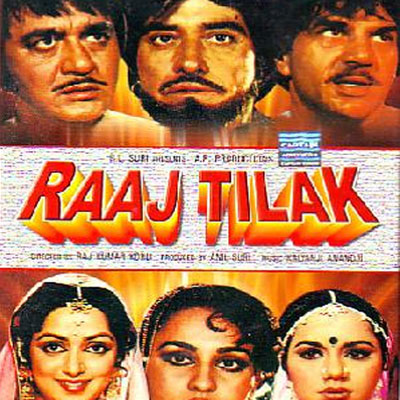
    MUMBAI: Zee Classic, India’s only classic Hindi movie channel, adhering to its core proposition ‘Woh Zamaana Kare Deewana’ will present Rajkumar Kohli’s Raaj Tilak for the first time on Sunday, July 12 at 9 PM. Raaj Tilak, an action period drama, boasts of an incredible starcast including Dharmendra, Sunil Dutt, Raaj Kumar, Kamal Hassan, Hema Malini, Ranjeeta Kaur, Reena Roy, Yogeeta Bali and Sarika.


    Raaj Tilak revolves around a King who has many enemies including his own trusted men: Bhavani Singh (Ajit) and Ranjeet (Madan Puri). The lust for power makes Bhavani Singh do the unthinkable. He ends up killing the King and is the catalyst in abducting the only legal heir to the throne. The devastated queen is consoled by her rakhi brother Arjun Singh (Pran) who offers his son to her, but falls prey to the evil plans of Bhavani Singh who switches his own child Shamsher Singh (grown up- Raj Kiran) with Arjun Singh’s newborn Jai Singh (grown up- Sunil Dutt).


    Years later, the King’s chief Samadh Khan (Raaj Kumar) who had been falsely accused as a traitor and exiled from the land returns to amend everything that was wrong. With the help of two warriors Jai Singh (Sunil Dutt) and Zohravar Singh (Dharmendra) and a gypsy Suraj (Kamal Hassan), Samadh Khan is on a mission to find the true heir.


    Will the real prince surface to set things right or will he continue to live the life of a gypsy without knowing his true legacy?

  • Kamal Hassan & Shruti Hassan’s films to clash in May

    Kamal Hassan & Shruti Hassan’s films to clash in May

    MUMBAI: The father – duo of Kamal and Shruti Hassan is all set to clash at the box office. Come 1 May, their respective films are all set to hit screens.


    While Shruti will be seen in the action thriller film Gabbar is Back with Akshay Kumar, Kamal’s film Uttama Villain will also be releasing.


    Though both films belong to different genres and languages, it will be interesting to see the duo clash at the box office. It may be noted that Gabbar is Back is the official remake of the much acclaimed tamil film Ramanaa.


    Shruti’s spokesperson said, This is the first time in Shruti’s career that her film is releasing on the same day as her father’s film, though the genre and language is different – Shruti is definitely excited about the same as its all within the family.”

  • “I have nothing to lose in Bollywood”: Dhanush

    “I have nothing to lose in Bollywood”: Dhanush

    MUMBAI: R. Balki’s upcoming movie, Shamitabh will feature Amitabh Bachchan, Dhanush and Kamal Haasan’s daughter Akshara Haasan in lead roles.


    Dhanush, who has always played larger-than-life roles in his south flicks, has picked an unconventional role this time round. He feels motivated to experiment with roles in Bollywood as according to him, he has nothing to lose here.


    Last seen in the romantic drama Raanjhanaa opposite Sonam Kapoor, Dhanush said, “I have been trying to mix my characters as much as possible down south. There, one image is stuck, so I am restricted. Here in Bollywood, I have nothing to lose. So, I experiment with my characters. I am thankful to Balki who has given me this film.”


    Talking about his experience of working with Amitabh Bachchan, he said, “I don’t know if I have done enough work to deserve to be working with Mr Bachchan. God has blessed me with this film.”


    Akshara Haasan, who will be making her Bollywood debut with Shamitabh, added, “I really look up to Amitabh Bachchan and Dhanush but when we got on the sets, they made me feel very comfortable and made things easier for me.”


    Shamitabh, which also stars Rekha, is set to release on 6 February 2015.