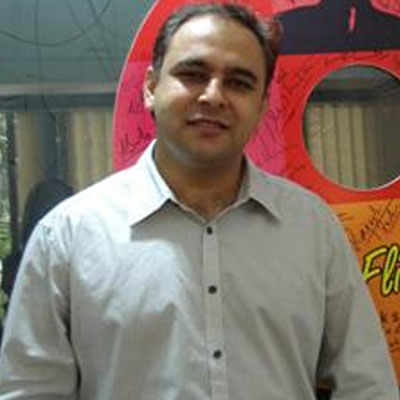
Tag: Kamal Gianchandani.

  • PVR ties up with O-Zone to provide Wi-Fi to patrons

    PVR ties up with O-Zone to provide Wi-Fi to patrons

    NEW DELHI: PVR Cinemas is introducing free high-speed Wi-Fi at some of its properties and has tied up with public Wi-Fi service provider O-Zone Networks for the same. 

    “At PVR, we believe in reaching out to our guests in a way that makes their each visit to our cinemas a memorable one. There is a growing demand for technology and need for staying connected amongst our guests, all over the country. Our response to this demand and efforts are manifest with the introduction of Wi-Fi services at select cinemas of our chain. The service will soon be expanded to our other cinemas. With the launch of Wi-Fi services, we hope it will further consolidate our position as pioneers in the cinema going space,” said PVR chief of strategy Kamal Gianchandani.

    Ozone Networks Founder and CEO Sanjeev Sarin added, “We are proud to be chosen by PVR to help bring advanced guest Wi-Fi services to their customers. Our unique offering will give PVR new and powerful ways to connect with their customers. Our aim is to build the largest Wi-Fi network in India by 2016 and our partnership with PVR is an important step in this journey. With 6,000 hotspots in the country today, we aspire for a connected world and through this partnership we will not only provide high speed but also a secure internet connection, which can be availed during the wait time for the movies. We are confident that cinema goers will enjoy all time connectivity at cinemas now.”

  • PVR ties up with O-Zone to provide Wi-Fi to patrons

    PVR ties up with O-Zone to provide Wi-Fi to patrons

    NEW DELHI: PVR Cinemas is introducing free high-speed Wi-Fi at some of its properties and has tied up with public Wi-Fi service provider O-Zone Networks for the same. 

    “At PVR, we believe in reaching out to our guests in a way that makes their each visit to our cinemas a memorable one. There is a growing demand for technology and need for staying connected amongst our guests, all over the country. Our response to this demand and efforts are manifest with the introduction of Wi-Fi services at select cinemas of our chain. The service will soon be expanded to our other cinemas. With the launch of Wi-Fi services, we hope it will further consolidate our position as pioneers in the cinema going space,” said PVR chief of strategy Kamal Gianchandani.

    Ozone Networks Founder and CEO Sanjeev Sarin added, “We are proud to be chosen by PVR to help bring advanced guest Wi-Fi services to their customers. Our unique offering will give PVR new and powerful ways to connect with their customers. Our aim is to build the largest Wi-Fi network in India by 2016 and our partnership with PVR is an important step in this journey. With 6,000 hotspots in the country today, we aspire for a connected world and through this partnership we will not only provide high speed but also a secure internet connection, which can be availed during the wait time for the movies. We are confident that cinema goers will enjoy all time connectivity at cinemas now.”

  • “The Rs 100 crore Bollywood film club is bullshit:” Mukesh Bhatt

    “The Rs 100 crore Bollywood film club is bullshit:” Mukesh Bhatt

    MUMBAI: The year 2014 will go down in history as one of the worst years for Indian cinema in recent times with poor box office collections. Movie economics were also adversely affected by dramatic reduction in demand for satellite rights by broadcasters.


    In an endeavour to produce bigger and larger movies, is the emphasis on quality declining? Are studios misreading audience tastes? Are movie budgets bloated beyond control? These questions were raised in a session of FICCI Frames 2015 moderated by Sikhya Entertainment founder Guneet Mongia with Viacom 18 Motion Pictures CEO Ajit Andhare, Eros International MD and group CEO Jyoti Deshpande, film distributer Anil Thadani, PVR Pictures president Kamal Gianchandani, Fox Star CEO Vijay Singh and Film and TV Producer Guild president Mukesh Bhatt.


    With a mere growth of 0.9 per cent, the film industry has reached its abysmal low. The panelists citied the major reason behind that as filmmakers getting carried away by big names and not sticking to the budget drawn.


    Deshpande opened up the discussion by aggressively protesting over budgeting. “We should immediately stop chasing big names and stick to quality content in order to make the industry prosper. Before green lighting content, we need to tackle a number of issues and better research can help the industry grow. Simultaneously, we also need to ensure that the number of screens increases as more screens mean more money.”


    Speaking on the shrinking number of screens, Gianchandani said, “While we are growing in some parts of the country, the fact is that there is stagnancy in some areas. The growth of multiplex depends on numerous factors, government and content being the two vital ones. We need to ensure that we have content that rejuvenates consumers and they reach the theatres.”


    It should be noted that in China a new screen starts in every three days and the industry is growing bigger and faster, whereas India is witnessing the exact opposite. Addressing the issue, veteran producer Mukesh Bhatt asserted, “In this business, if you don’t have the temperament to take a risk then you are on the wrong ship and you will certainly drown. Playing safe is not possible in the film industry and the perception that only the Khans can earn you money is ruining the industry. The Khans are good but they are 50 now and people won’t accept them singing romantic songs anymore. We have to discover new stars and new directors. All studios need to back raw and new talent. Moreover, multiplexes should have different pricing for movies that star newcomers. My father advised me that all my spending should reflect in the frame. However, nowadays our spends hardly reflects in the frame but satisfies the ego and arrogance of big names. The media given Rs 100 crore club is absolute bullshit and make no sense. I thank Viacom for green-lighting films like Mary Kom and Bhag Milkha Bhag and hope they keep it up.”


    Viacom CEO Ajit Andhare added, “I don’t recall when the film industry made profit or grew larger. The biggest challenge is to make people believe that spending more is not the key to success and one has to pay more attention to content and not green-light a movie going by the actor or director’s name.”


    Great content like Aankhon Dekhi, Dr Prakash Baba Amte and Chatuskone find it difficult to stay in theatres where glamour and big names keep knocking. Similarly, the scenario where a common man finds it difficult to afford a ticket needs to change in order to ensure growth of the film industry.

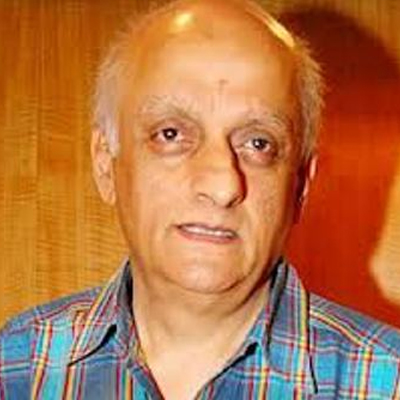
  • PVR introduces special merchandise for ‘Singham Returns’

    PVR introduces special merchandise for ‘Singham Returns’

    MUMBAI: PVR Cinemas, a movie exhibition company in India has recently commenced another new venture to woo its audience. The company has launched an exclusive range of merchandise for its patrons to give them an even closer feel to the nuances of the movie. These merchandises are integrated with PVR’s F&B service.


    PVR, being the cinema partner of the film Singham Returns, has associated with the Bollywood production house for the first time. As part of this, it will introduce exclusive Singham Returns popcorn bags, sippers for beverages and lunch boxes that can also be carried home by patrons, as souvenirs.


    PVR Pictures president Kamal Gianchandani said, “Cinema watching in India is changing at a dynamic rate. Today, the patrons demand a personal- visual treat when they enter to watch a movie. Internationally, movie merchandising is extremely popular with cult movies like Star Wars, Harry Porter series, Jurassic Park and many more. PVR, being the industry leader leaves no stones unturned to offer its patrons a global- standard movie watching experience in the country.”


    PVR has launched a series of candy merchandising with Disney as well with its ‘Take Home Disney collection’ for international characters like Spiderman and Princess. Some upcoming merchandise includes the likes of Cars and Avengers. 


    The movie Singham Returns is slated to release on 15 August 2014.

  • PVR Cinemas ropes in Dharmesh Datta

    PVR Cinemas ropes in Dharmesh Datta

    MUMBAI: PVR Cinemas has appointed Dharmesh Datta as vice president for its alternate content vertical. He commenced his new role from 23 June 2014 and will be based out of Mumbai.


    Datta brings with him an experience of over 16 years, having worked in organisations such as Wizcraft International Entertainment, Lintas India, The Times of India Group, Network18 (TV18 Group) and Endemol India. At PVR, he will focus on developing and executing a strategy to stimulate ‘event cinema’ i.e. alternate content initiative.


    PVR Pictures President Kamal Gianchandani said, “We are pleased to welcome Dharmesh to the PVR family. His extensive experience in serving large businesses, building properties and consumer insights will be invaluable as we aim to take a step further and go beyond movies to showcase other forms of compelling content at our cinemas. Dharmesh adds the necessary leadership and depth, as we continue to explore new and more meaningful ways to engage our patrons.”


    PVR Pictures vice president alternate content Dharmesh Datta said, “I am very excited to be a part of the largest multiplex chain in India. PVR is the most respected name in the film exhibition industry and is known for bringing world acclaimed cinematic content to its viewers in the country. Designing a strategy to monetise alternate revenue streams and building on differentiated properties for PVR will definitely be an exciting proposition for me.”

  • Tarzan to exhibit his wilderness into Indian cities this April

    Tarzan to exhibit his wilderness into Indian cities this April

    MUMBAI: The latest motion capture animated motion picture adaptation of Edgar Rice Burrough’s beloved Tarzan will be released in India by PVR Pictures on 18 April.


    Commenting on the release of Tarzan, PVR president Kamal Gianchandani, states, “Tarzan is a family entertainer set to release in times when animated movies are the toast of the season. The story’s universal appeal coupled with state of the art special effects will undoubtedly win over Indian fans. We feel privileged to maintain our endeavor to bring the best of international titles to India.”


    The film features the vocal talents of Kellan Lutz (The Twilight Saga) as Tarzan, Spencer Locke (Resident Evil), Jaime Ray Newman (Mind Games), Mark Deklin (Devious Maids) and Trevor St. Johns (One Life to Live) and is directed by Reinhard Klooss (Animals United).


    The story of Tarzan, the ape-like protagonist begins with an expedition in the remote African jungle where in an unfortunate series of events, John Greystoke and his wife are killed in a helicopter crash while investigating a mysterious meteorite site. Only their young son J.J., nicknamed Tarzan, survives. A group of gorillas discover the boy in the wreckage and take him in as their own. Tarzan grows up learning the harsh laws of the jungle for nearly a decade until he encounters another human being – the courageous and beautiful young Jane Porter. It is love at first sight. But things get dangerous when William Clayton, who travels to Africa with Jane under false pretense, reveals his true – and greedy – intentions. Tarzan, now a man like no other, must use all his jungle instincts and intellect to protect his home and defend the woman he loves.

  • ‘Online consumption of content in India is more pervasive than we think it is’ : Kamal Gianchandani – BigFlicks COO

    ‘Online consumption of content in India is more pervasive than we think it is’ : Kamal Gianchandani – BigFlicks COO

     BigFlicks, Reliance Entertainment’s online film rental service, plans to invest $100 million over three years. The plan includes a strong offline presence as well. With 50 offline rental stores already dotting the landscape, the ramp up agenda includes 200 stores by the end of this year.


    In an interview with Indiantelevision.com’s Ashwin Pinto, BigFlicks COO Kamal Gianchandani talks about the company’s growth plans.


    Excerpts:

    What progress has BigFlicks made so far?
    We have over 1000 films on our online library. We have acquired TV content that runs into thousands of hours. We also have short form content. So the content part has grown exponentially. In terms of registrations which are free, we have 400,000 customers.


    We have done lakhs of streams. In terms of the rental business in India, we have reached 50 stores. We operate in 10 cities spread across Bangalore, Hyderabad, Indore, Ahmedabad and Pune.

    BigFlicks is investing $100 million over three years. Where will this mostly go?
    The key areas would be our rental service, followed by Video-on-Demand (VoD). We would also add community features as we go along. This will also take investments.

    What is the revenue model for BigFlicks?
    The model for the rental business is subscription. In VoD the model is two-fold. One can download films for a fee ranging from $2-$10. As we go along we will have ad revenue from free streaming. But it is too early to speak about revenue targets.

    What is BigFlicks’ USP vis-a-vis other film rental companies?
    We offer convenience, multiple access points. We offer stores in combination with an online service. Most competitors offer either online or offline. We offer both as an integrated service. Our presence is more pervasive. We have a call centre with a common number. Customers can also reach us through SMS. Typical mom and pop stores do not offer these multiple access points.

    What are the synergies that exist between Big Flicks and Reliance Entertainment’s other verticals?
    Some synergies are apparent. There is direct synergy with Big TV for instance. It offers VoD of limited titles. We have a broad spectrum of titles for VoD.


    Then there are synergies that are not so apparent and which are diverse. For instance in Delhi and Mumbai, Reliance Energy has a huge base of consumers who use the power that they supply. This offers us bundling opportunities.


    Which company in Reliance Entertainment acquires films for various platforms?
    We have a central acquisition team. They acquire films for all platforms and also make sure that each department’s interests are looked after. If, however, a title’s rights are broken up, then we will acquire it for VoD directly from the producer.

    Who are the major content owners that Big Flicks has deals with?
    We have deals with several parties. Shemaroo is one of them. We also have deals with smaller players. On the television side, we have deals with the likes of NDTV, Raj Television, Zoom. Most of them are revenue sharing deals. Some of them are also fixed amount deals. In our VoD business, we have over a thousand titles. For rental we have 15,000 titles.

    What strategy has BigFlicks followed to create awareness?
    In India we will be doing a 360 degree marketing campaign. This will encompass television, print, online, radio, outdoor. We will also look at alliances as we move forward.


    For the overseas markets, we have done a lot of search related marketing. We have done things like banner displays. We have also done alliances with services that target the same audience. We have tied up with Reliance India Calling Cards. They are big in the US which is also our main market abroad. We do a lot of marketing and promotional activities with them. On television, we have a tie up with below.tv. They are a broadband site that offers cricket subscription.


    We recently did a deal with Willow TV for the IPL. We also have a deal with Remit2India which is a Times of India Group company. They target NRIs who send money to India.

    When you talk about the online space, piracy is a big headache. How is Big Flicks approaching this challenge?
    We monitor this actively. We keep a track of the rights we have and we are vigilant. If a site is offering downloads of a film illegally, then we inform the producers and right owners. We let them take action against the concerned parties. BigFlicks also has DRM software to prevent illegal downloads.

    What trends have been noticed in terms of how films are consumed online?
    Films are the dominant form of online media consumption. They also offer repeat value. While we offer new titles that are popular, the older titles like Golmaal also get consumed a lot.


    What we are also seeing is that there is preference in consuming short form content which could be three minutes in duration. This is consumed when people are on the move or when they are in the home and wish to break the monotony. We have music videos and other kinds of short form content.

    Is the TG mainly the net savvy youth or do older people also go online?
    Our main TG is in the 18-35 year age bracket. People who are on the older side also visit, but they are a small portion.

    Could you give me examples of unique promotions that BigFlicks does?
    When we launched Jab We Met we had free streaming for 24 hours. We advertised this move. The reception was positive. We also did a Laughter Riot Week where comedies were showcased.


    We have weeks where we focus on an actor and we pull out all his films and put it for our users. Going forward, we will be doing interactive initiatives involving film stars. This could be in the form of contests.

    If you want to have business of a certain scale in India, then you need to be offline as well

    How is BigFlicks leveraging the online social networking phenomenon?
    We will be adding community features. The idea is to create more stickiness on the site. While consumers come to rent or watch streaming movies, they also have their need to express opinions.


    Some elements like reviews and ratings given to movies are already present. But web 2.0 features like having a forum, tagging are being introduced so that consumers will not feel the urge to jump onto another site to express their viewpoints.

    In terms of allowing people to transfer downloaded content to the mobile, what arrangement has been made to facilitate this?
    We already have the backend to support this. We are looking at doing this in the next three months.
    Why did Big Flicks feel the need for an offline presence in India?
    At the current level if you want to have business of a certain scale in India, then you need to be offline. If you are only an online player, then you will target a smaller segment.

    What were the logistical challenges faced in setting up stores?
    The biggest challenge is the lack of an organised delivery mechanism. The postal service and courier companies deliver goods one way. The return path, though, is complicated for them. We have had to hire delivery boys on our own. They have to be trained. Inventory has to be managed. We do not have an efficient third party solution yet in the country.


    We also have a customer relationship management (CRM) team that focusses on the consumer. They look at feedback, complaints and issues that customers raise. Our call centre is a part of it. In any case training is in the DNA of Reliance Entertainment. We constantly train our people and ensure that their skills get upgraded. This is an on-going process.

    How many stores will there be by the end of the year?
    We will have 200 stores by the end of the year. The first 50 stores are our own. The next 75 will be with Reliance World. We will do a shop-in-shop model.


    The remaining 75 will come through franchisees. We have received a lot of queries in this regard but we have not formulated a franchise plan as of now.

    The dynamics of the home video market are changing due to aggressive pricing. What is the strategy of BigFlicks in this regard?
    Aggressive pricing is good for the market as it encourages consumers to buy DVD players and consume more content at home. It also fights piracy. We focus on our quality of service.


    We want to aggregate as much content as possible. People want access to a huge catalogue in one place. Our monthly charge schemes are Rs 250, Rs 399 and Rs 499. There is no restriction on the number of DVDs one can take in a month and there is no time limit to return a DVD.

    What would be more popular in India – downloads or rentals?
    In the near to mid term, monthly rentals would be more popular. But the future lies in digital copies being downloaded.

    Will offline or online be more important down the line?
    Our main business will be online. The broadband bottleneck will have been broken by then. Already companies like Reliance and Tatas are working to achieve this goal.


    The offline space will become more of a customer acquisition point and more about customer relationship management. But servicing and watching films will happen more online.

    What have the learnings been from servicing consumers?
    Indian consumers want a dependable service. They do not just want a cheap service. At the same time, price elasticity is less in our business. Online consumption of content in India is more pervasive than we think it is. Eighty per cent of our members use the online service.


    Overseas, the phenomenon of the long tail is visible. People consume content that has been seen repeatedly. Niche content also has a lot of takers overseas.

    What kind of tie ups and alliances are you looking at in India?
    We are talking with DVD manufacturers. We are also talking with retail outlets for cross promotional tie ups. We will offer subscription as a bundle like when somebody buys DVDs or say a data card for the laptop which has a net connection, they get a monthly subscription. For a retail store if the customer’s billing reaches a certain amount, then he/she gets a monthly subscription from BigFlicks.
    Are you looking at acquiring companies operating in the home video space?
    At the moment we have nothing on the table. But if a suitable opportunity comes, we will look at it. It would depend on the strategic value that the other company brings to the table.

    In the US a film that does not fare too well in cinema halls, can recover the rest through home video, PPV and even make a profit. How far away are we from seeing this happen in India?
    In developed markets like the US, the home video business is bigger than theatrical. The cinema route is used to set up a film and build a brand. The money comes from other avenues like VoD, television rights, etc.


    In India we still depend heavily on theatrical revenues. I don’t see the situation changing drastically in the near term. But the home video segment is growing. The amount of revenue a film gets from theatres has come down to around 60 per cent from 80 per cent earlier.


    As entertainment economies get more mature, the trend globally is that people increasingly watch movies at home. A similar trend will happen in India.