Tag: KAM Summit

  • Kids content should not be excessively kiddy

    Kids content should not be excessively kiddy

    MUMBAI: Kids animation content should be more inclusive to make a bigger impact, insisted a panel, speaking on “Creating an Impact for Kids Audience”, at the recently concluded KAM Summit by AnimationXpress.com. The panellists noted that content created for kids should not be ‘so kiddy’ that it doesn’t appeal to the people they are watching it with.

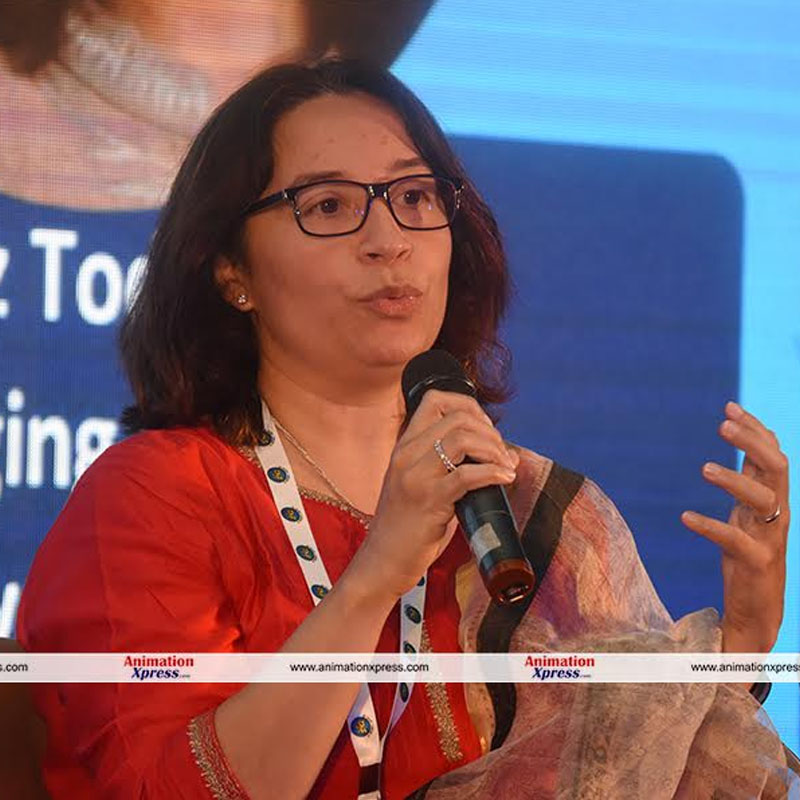
    The panel aimed to highlight ground rules for creating marketing content targeted and kids and included Wavemaker managing partner Monaz Todywalla, Omnicom Media Group AVP-PhD media Asmita Reelkar, and GREY Group India head of strategy and national planning director Arun Raman. The session was moderated by Sony YAY! VP – marketing and OAP Sujoy RoyBardhan.

    Reelkar mentioned that parents play a key role in monitoring the content that kids are watching and are also making most of the purchasing choices for them, so it is pertinent that a brand can persuade the parents too.

    Citing some interesting examples, Raman said, “There are no massive kids’ brands in India. I can think of Gini & Jony, which is one of the largest brands in the space, but no one is buying from them. People buy from brands like H&M Kids and Zara Kids.”

    He pointed out that there has been a behavioural and cultural shift in the Indian audience. “There are many kid-centric brands like ‘Naughty Boy’ from Bata, which are not as popular now. They now have something called ‘Ambassador Collection’. I am hearing Britannia and Parle are putting ‘Chota Bheem’ on their packages but it doesn’t mean that they are creating separate kids brands. In fact, it is making a brand meant for adults relevant to kids.”

    The panellists also pointed out that kids today are smarter and know facts. They can read through if a brand is trying to lie to them and that’s why it is important for brands to maintain highest standards of advocacy while creating communications for them.

    Another important point shared was that the brands should now be focussing on multi-screen advertising as the kids of today are digital natives.

    Todywalla said, “More and more creators, marketers, and brand custodians are realising that it has become a multi-touch world. But brands are still relying mostly on TV to interact with kids. Maybe they do some sprinkling of digital or a few events. But the landscape is changing dramatically. Kids are probably bypassing the whole TV phase and going directly to digital. Brands are agencies are still grappling with that area.”

    They unanimously agreed on the point that content is going to play a key role in taking brands through this phase of change.

  • Ad revenue, quality storyboard artists and co-productions are focus areas for animation industry

    Ad revenue, quality storyboard artists and co-productions are focus areas for animation industry

    MUMBAI: The animation industry is growing at 30 to 35 per cent but there are many challenges that this sector is facing from upgradation of hardware or software to revenue generation. According to experts, the industry has many opportunities on kids channels, OTT platforms and YouTube and to explore but it needs more successful studios, young talent and advertisers’ attention in the kids genre.

    In a panel discussion 'Animation 2020' at KAM Summit organised by Animation Xpress on 30 August 2019, experts discussed on what this industry holds in 2020. The panel discussion was moderated by FICCI chairman animation and gaming Ashish Kulkarni and panellists were Green Gold Animation founder and CEO Rajiv Chilaka, Sony Yay! programming head Ronojay Chakraborty, DQ Entertainment COO Manoj Mishra, Viacom 18 programming head Anu Sikka, Big Animation COO Tejonidhi Bhandare, and Cosmos Maya SVP revenue and corporate strategy Devdatta Potnis.

    Chakraborty said, "Animation as an industry is growing at a healthy pace. 35 per cent of the growth has come from the industry's producers and domestic broadcasters. As a channel, we started with 100 hours of content. In 2020 more hours will be added.  The producer depends on the broadcasters for financing and broadcasters look at the advertisers for finance, so the monetisation aspect needs to be looked into. Advertisers have to take notice of this category. We are one fourth the size of entire GEC category but in terms of revenue, we are one-tenth. Once the monetary aspect improves more and different varieties of programmes will be commissioned it will help the industry.”

    Mishra shared his view on monetisation of content in the international market. He said, "In terms of animation, the US market is evolving and creating great shows. The animation industry in Europe is not growing at the rate at which it should have. From a studio perspective in 2020, we see that demand is there and it is a stable market at this moment. IP monetisation and creating IP for a global market play an important role from our studio perspective."

    Chilaka wants to see more successful studios and young talent coming in this industry in 2020. He said, "As a studio, we have been here for the last 18 years and we realise the challenges faced by animation studios like upgradation of hardware and software from time to time bases. But for the growth of the industry, it's very important to have more successful studios. We also have the advantage of reaching out to the Indian diaspora across the world."

    Potnis said that India is growing on all fronts, especially digital “We finalised nine new shows in the domestic market and few months back we signed three European co-productions. We also have a YouTube platform called Wow Kids which has 27 million subscribers. May be by 2022 we may also create an original for that platform in addition to working with broadcasters and OTT players," he mentioned.

    Bhandare noted that ‘Animation 2020’ is not a vision but a start for the animation industry as there are lots of things that are opening up. “We need to focus more on talent and ways to build up talent. We need to create awareness about animation being age-agnostic and not only for kids. But we are not creating that kind of content yet. Our focus should be on creating great content,” he added.

    Kulkarni also asked whether 2020 will see good storyboard artists. To which Mishra replied, "This is the area where we are looking at very strongly as far as our curriculum is concerned. We are trying to get storyboard artists from international markets to provide training. At the same time, some kind of exposure in creating the curriculum is important and while giving them the opportunity, we have to trust our artists too. We as an organisation also have got our interest and trust more on the talent outside India and then we move to talent in India, that's something which we need to change."

    "There is a need for language training to fill the gap between the scriptwriter and storyboard artist for better transforming from the script to animation," commented Bhandare.

    Kulkarni also touched upon the topic of co-production in the animation industry. He commented, "We are in a process of redefining and changing the definition of audiovisual co-production treaty but India was never a very active partner in co-production. We would really like to see India on the map of co-production."

    Potnis shared his view on the same, "There is a feature project that we are working on. A couple of days ago I had conversations with studios in Ireland, Canada and Australia to compile the sort of support they get in term of subsidiaries. It is to the tune of 30 to 40 per cent of their budget and we stand nowhere in that sense. But now the government is also interested in this sector a little bit more. One thing that co-production helps do is to scale up on the quality front."

    All said and done, the advertising revenue flow into animation just isn’t there. Sikka said, "Animation will continue to progress and we will continue to cater to the audience of 7 to 14 years. We will do something in pre-school segment when the advertisers start recognising the potential of pre-school content in the audience. Today a generation has grown on animation for whom animation is no longer a taboo. The scope for family animation should also be explored."

  • Advertisers should focus on kids genre for better monization of animation industry, says experts

    Advertisers should focus on kids genre for better monization of animation industry, says experts

    MUMBAI: The animation industry is growing at 30 to 35 per cent but there are many challenges that this sector is facing from upgradation of hardware or software on time to time bases to revenue generation. According to experts the industry has many opportunities on kids channels, OTT platform and YouTube and to explore that it needs more successful studios, young talent and more attention of advertisers in kids genre.

    In a panel discussion 'Animation 2020' at KAM Summit organised by Animation Xpress on August 30, 2019 discussed on what does this industry holds in 2020. The panel discussion was moderated by FICCI chairman animation and gaming Ashish Kulkarni and panelists were Green Gold Animation founder and CEO Rajiv Chilaka; Sony Yay! programming head Ronojay Chakraborty; DQ Entertainment COO Manoj Mishra; Viacom 18 programming head Anu Sikka; Big Animation COO Tejonidhi Bhandare and Cosmos Maya AVP revenue and corporate strategy Devdatta Potnis.

    Chakraborty said, "Animation as an industry is growing at a healthy pace. 35 per cent of the growth has come from the industry's producers and domestic broadcasters. As a channel we started with 100 hours of content. In 2020 more hours of content will be added.  The producer depends on the broadcasters for financing, broadcasters look at the advertisers for finance, so the monitization aspect needs to be looked into. Advertisers have to take notice of this category very much. We are one fourth the size of entire GEC category but in terms of revenue we are one tenth. So, there is a need that the advertisers pay attention to this category as well because the category is appealing to the citizens. Once the monitory aspect improves more and different varieties of programmes will be commission and that will help the industry. 

    Mishra shared his view on monitization of content in the international market. He said, "In terms of animation USA market is evolving and creating great shows.The animation industry in Europe is not growing at the rate on which it should have grown. From studio perspective in 2020 we see that demand is there and it is a stable market at this moment. IP monitization and creating IP for global market play an important role from our studio perspective." 

    Chilaka wants to see more successful studios and young talent coming in in this industry in 2020. He said,"As a studio we have been here for last 18 years and we realise the challenges faced by animation studios like upgradation of hardware and software from time to time bases. But for the growth of the industry, it's very important to have more successful studios. We have so many advantages as well, there are so many kids channels and OTT platform in India. We also have the opportunity to reach Indian diaspora who are not just in India but across the world." 

    Potnis said, "India is growing on all front especially on digital and there is a opportunity or area for us to be there. We finalised nine new shows in the domestic market and few months before we signed three European co-production. We also have a YouTube platform called Wow Kids which has 27 million subscribers. May be by 2022 we may also create a original for that platform in addition to working with broadcasters and OTT players."

    Bhandare  said, "Animation 2020 is not a vision but a start for animation industry as there are lots of things that are opening up for the industry.  We need to focus more on talent and ways to how do we build up talents. We  need to create awareness regards to what animation is, it not only caters to kids like in west it caters to all age group. we are not creating that kind of content yet. Our focus should be on creating a great content. Platform is set for us to grow and there is lot of opportunities coming up."

    Kulkarni  also asked the panelist- will that situation come in 2020 where we have very good story board artist? To which Mishra replied, "This is the area where we are looking in very strongly as far as our curriculum is concern. We are trying to get story board artist who are helping us from international market to provide training to the artist in India. At the same time some kind of exposure in creating the curriculum is important and giving them the opportunity, we have to trust our artist. We as an organisation also have got our interest and trust more on the talent outside India and then we move to talent in India, that's something which we need to change."

    "There is a need for language training to fill the gap between the script writer and story board artist for better transforming from the script to animation," commented  Bhandare. 

    Kulkarni also touched upon the topic of co-production in animation industry. He commented, "We are in a process of re- defining and including changing the definition of audio visual co-production treaty but India was never a very active partner in co-production. We would really like to see India on the map of co-production."

    Potnis shared his view on the same, "There is a feature project that we are working on. Couple of days ago I had conversation with studios in Ireland, Canada and Australia to compile the sort of support they get in term of subsidiaries amount or tune of the volume they get is 30 to 40 per cent of their budget and we stand no where in that sense. That is the big area and now government is also interested in this sector little bit more. One thing that co-production has helps do is to scale up on the quality front." 

    On revenue perspective Sikka said, "Unfortunately the advertising revenue is not growing at the pace of which industry is growing. The kind of ratings that we get for both of our channels in kids genre unfortunately the ad revenue is not growing at that pace. Animation will continue to progress and we will continue to cater to the audience of 7 to 14 years. We will do something in pre-school segment when the advertisers start recognising the potential of pre-school content in the audience. Today a generation has grown on animation for whom animation is no longer a taboo. The scope for family animation should also be explored."

  • Advertisers desire better opportunities to use animated characters in ads

    Advertisers desire better opportunities to use animated characters in ads

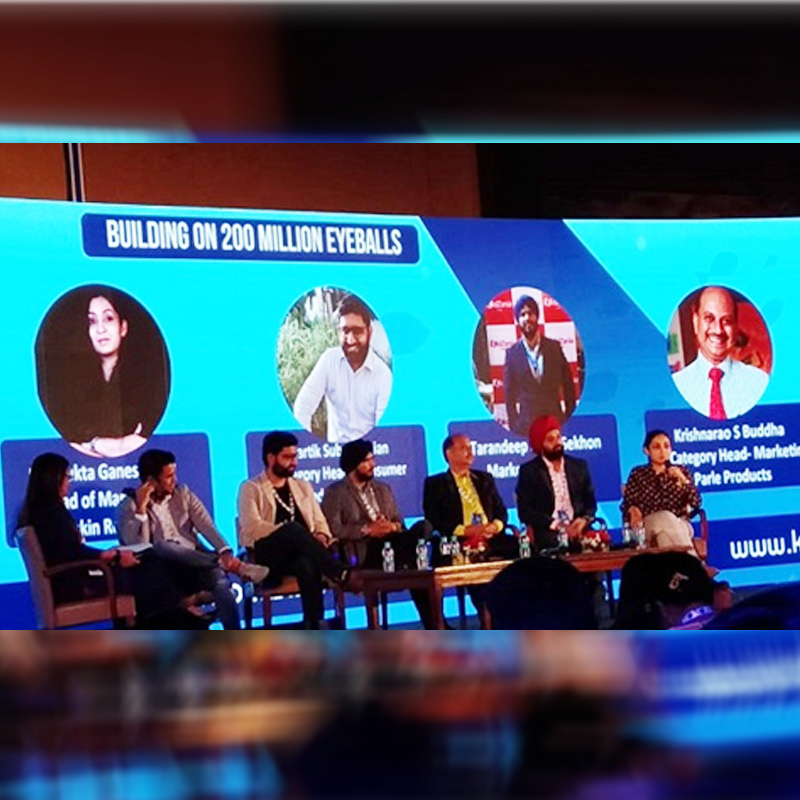
    MUMBAI: Advertisers are looking at broadcasters to create more Indian animated characters that they can leverage to market their products amongst kids to get better engagement. This was the topic of the panel discussing “Building on 200 eyeballs” at the recently concluded AnimationXpress.com’s Kids, Animation & More Summit.

    The panel, including Hamleys India head of marketing Sivaraman Balakrishnan, Baskin Robbins India head of marketing Samyukta Ganesh Iyer, Pidilite Industries category head – consumer products division Kartik Subramanian, KidZania India marketing director Tarandeep Singh Sekhon, Parle Products senior category head marketing Krishnarao S Buddha and Mattel Toys head – consumer products Permendra Singh, was being moderated by Publicis Worldwide managing director Srija Chatterjee.

    All the panellists unanimously agreed that it is better to communicate with kids in a manner that is more appealing and understandable for them. However, there is a serious lack of animated advertisements and marketing initiatives in the Indian scenario. They urged broadcasters like Sony and Discovery, who were present in the audience, to create more IPs of strong resonating Indian cartoon characters that they can license for marketing.

    Balakrishnan noted that there is a dearth of Indian cartoon characters who complete the full circle of being present across all media, including TV, print, and digital and that makes it difficult for them to qualify as licensable units.

    He said, “Barring Chhota Bheem and Motu Patlu, I can’t think of any other Indian characters that are present across platforms. For example, Peppa Pig. You can see it on TV, and on digital, they have an app and are present in stores; basically across all touchpoints that a child today goes to. For most Indian characters, TV is the only touchpoint. They really don’t reach that stage.”

    Iyer shared that Baskin Robbins, in countries like Japan and Korea, has created some licensing properties, like associating with Pokemon, Frozen, etc. In India, it hasn’t done much. We are on a hunt to find good IPs that we can partner with. I would urge everybody sitting here to create characters that we can license.”

    Singh added that it is also important for the characters to emotionally connect with the user to become a franchise. Citing the example of Barbie, he noted that a child spends most part of the day with the doll dressing her, playing with her, even sleeping with her and therefore develops a relationship that lasts for a lifetime. He said, “It is not about characters or brands, it is about how strongly they are connected to the audience.”

    Subramanian added another dimension to the discussion as he insisted that it is necessary for brands to interact directly with animation studios as they do with their ad agencies. He said that there are a lot of benefits that animated advertisements can give to brands by opening a very broad canvas.

    An interesting suggestion was pelted towards the panel by Indiantelevision.com founder, CEO, and editor-in-chief Anil Wanvari as he asked the brands to create their own unique IPs and partner with channels to get them on screen.

    Krishanarao S Buddha mentioned that creating animation in-house is quite expensive and difficult to sustain. “The better way out is to create an association, like Parle has done with Chhota Bheem. We have a special Chhota Bheem Parle G pack that has already started contributing 8-10 per cent to performance.”

    Sekhon noted that creating own unique IPs is a more of a business than marketing decision but he will be glad to see the KidZania mascots on the bigger screen.