Tag: Kalyan Ram Challapalli

  • WolfzHowl names VAN Sharma to lead StraTech drive

    WolfzHowl names VAN Sharma to lead StraTech drive

    MUMBAI: WolfzHowl has brought on board Eswara VAN Sharma as consulting director – StraTech and brand orchestration for India and ASEAN, marking a key leadership addition to power its next phase of growth.

    In his new role, VAN will lead brand strategy, client success, and business growth, advancing WolfzHowl’s signature StraTech movement, which merges behavioural insight with technology to build future-ready brands.

    At its core, StraTech blends culture, behavioural science, data, and AI to help brands forge meaningful connections across every stage of the marketing funnel.

    VAN’s global career spans marketing, innovation, and strategy across India, the Middle East, and Southeast Asia, with stints at major brands including Mondelez, Emirates, Samsung, and ExxonMobil.

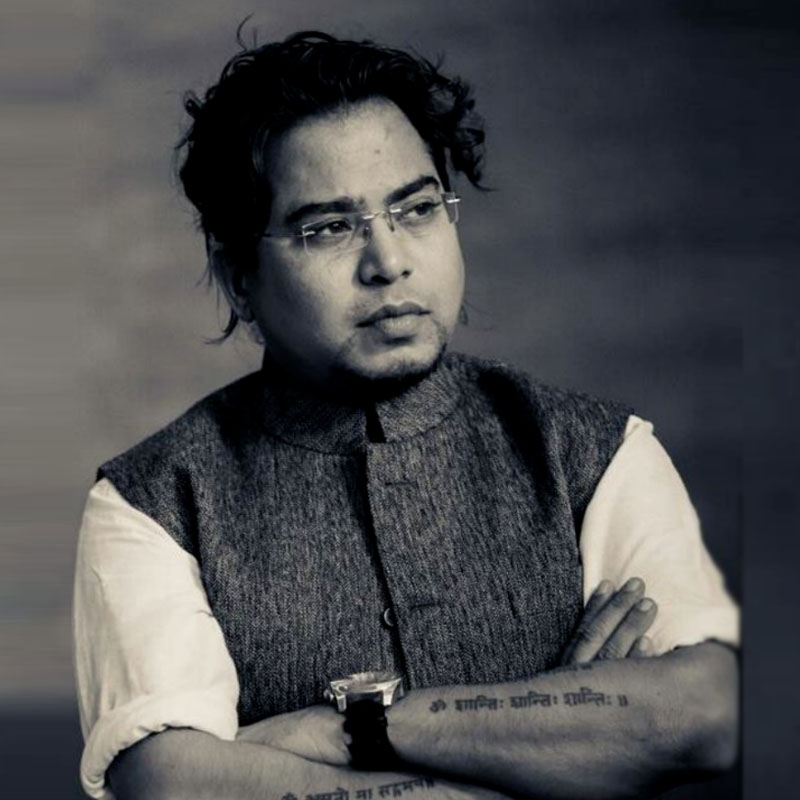
    Commenting on the appointment, WolfzHowl India founder and partner & head of strategy WolfzHowl Global Kalyan Ram Challapalli said, “As we enter a new chapter of strategic growth, we need seasoned leaders to scale and strengthen our StraTech vision. VAN’s experience, integrity, and collaborative leadership make him the perfect catalyst for this journey.”

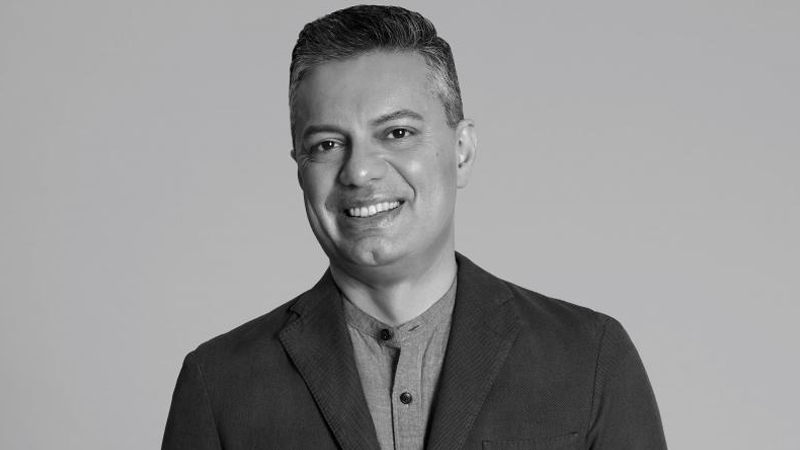
    Reflecting on his new role, VAN Sharma said, “It’s rare to find a space that unites behavioural science, technology, and brand building so seamlessly. I’m excited to help orchestrate this convergence at WolfzHowl and shape what we proudly call StraTech.”

    Based in Bengaluru, VAN will also support WolfzHowl’s expansion across Southeast Asia and Australia, working closely with the global leadership team to amplify the consultancy’s innovation-led brand.

  • Brands want biz problems solved, not just communication problems: Wolfzhowl’s Kalyan Ram Challapalli

    Brands want biz problems solved, not just communication problems: Wolfzhowl’s Kalyan Ram Challapalli

    MUMBAI: The consumers of today are more complicated than ever. They are educated, smart and can easily call out a bluff if they spot one. They value experiences more than creatives. Advertising and marketing, therefore, is becoming more dynamic and consumer-centric to woo the ever-growing consumer base, which owns more disposable income but less time to invest. Therefore, a brand needs to look beyond a communication-based promotional approach and really work hard to generate not just a greater brand recall but strategise to better get hold of consumer attention on the racks as well.

    Wolfzhowl Strategic Instigations chief strategist and founder Kalyan Ram Challapalli believes that strategists are becoming more relevant and important in today’s time to help brands sail through the competition.

    In an exclusive conversation with Indiantelevision.com, he said, “Behaviour and culture is larger than just an ad or campaign. We can do much more than just (helping with) a firm’s communication. We decode consumer and culture to help brands. What we always strive to be a little more positive towards the consumer and the society, and not just (drive) business transactions.”

    But with businesses moving to in-house strategists or working with agencies for the purpose, how can specialised firms like Wolfzhowl attract prominence?

    Challapalli noted that agencies are more business- and number-driven than consumer-driven. "What is happening with advertising is that the topline and the bottomline are shrinking. The strategists are not getting trained the way they should be because where is the time for training when you have less people to do more work. The role of a strategist is to be a brand business partner beyond what one’s firm does but that is not happening. It is because there are more brands and less strategists and they aren’t trained well.”

    Speaking more about the same, he added, “On the digital side, there are bright young boys and girls working as strategists but they are more channel driven.”

    He insisted that brands today are looking more than what these strategists at agencies have to offer. They want their business problems solved and not just channel or communication problems.

    “There are two things that are missing. One is an integrated strategy and the second is efficacious media-neutral strategy,” Challapalli noted.

    However, he agrees that for some reasons, the independent purely strategist companies are not surviving in the market. But he sees the emerging trend to be providing more opportunities and scope for them in the coming times. He attributed it to the growth of the gig economy where more and more young people are leaving their fancy agency jobs to do freelancing and more versatile work.

    He also noted that the CXOs of today have become as smart as the advertising people, which was essentially not the case earlier. “The CXOs have big decision making power now. They are meeting more interesting people like travel bloggers and product designers when agencies are putting their heads down creating artworks and TVCs,” he said.

    This makes businesses more demanding and aware of the fact that not just communication can solve all their business problems. They need more integrated strategies, from product design to user experience to improved sales.

    He feels that strategists are going to rise as a threat and a pain point to the advertising agencies. “Advertising really lost the game in the early 2000s. When clients cut media budgets and put them on a time-sheet, advertising agencies also put their passion on excel sheets. Whereas, advertising was never a rational business, it is now about putting as much passion as there is money. Another part is that advertisers were cutting-edge thinkers once. Their exposure to life and consumer cycle was higher. But how many people in agencies today go out for a vox-pop or research? They have so much work to do that they prefer searching on google. That is something that a client can also do.”

    Challapalli shared that while advertising is not dead, its role has been reappropriated with the rise of digital and trends like experiential and AI, VR, ML marketing. “I am not saying that agencies are not growing to fit the trends but they are in silos. There is no integration.”

    And that is the exact pain point that strategists and firms like his can address.

  • WolfzHowl collaborates with Leap Frog Strategy for brand management

    WolfzHowl collaborates with Leap Frog Strategy for brand management

    MUMBAI: WolfzHowl Strategic Instigations, the 7-year-old brand strategy firm founded by Kalyan Ram Challapalli has entered into an alliance with Semiotics specialist firm, Leapfrog Strategy Consulting. Given this new marketing era, both partners in the alliance believe that new thinking, specialised know-how and collaborations are the future of brand strategy solutions.

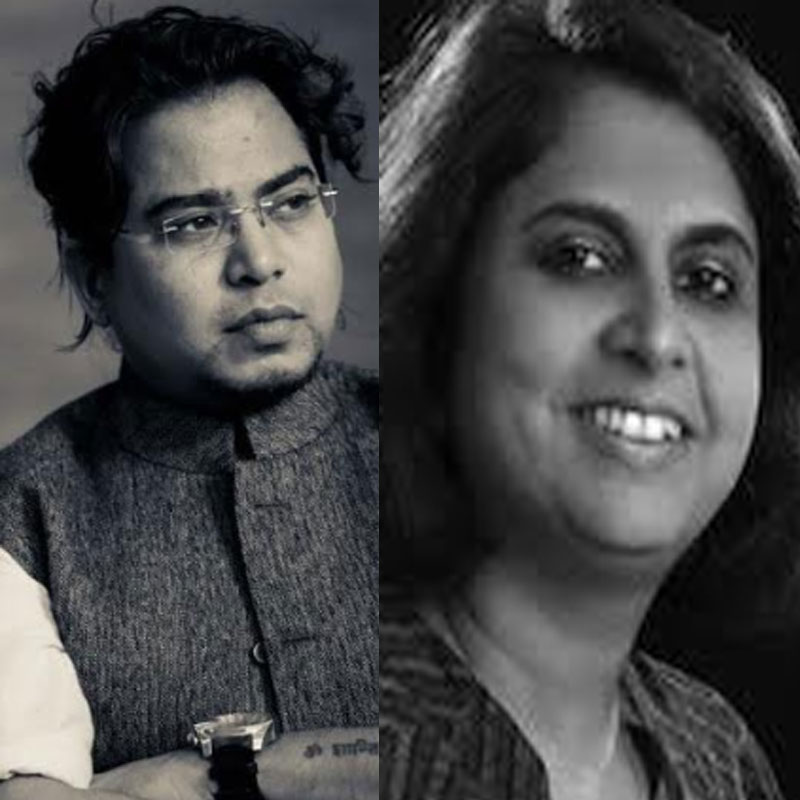
    Wolfzhowl strategic instigations founder Kalyan Challapalli said, “Interrogation of culture and consumer behaviour from a multitude of dimensions and with greater depth is essential in the post digital world, to create lasting impact. Semiotics is often thought of as esoteric application in marketing and relegated to “also good to do”. WolfzHowl believes that this needs to change. We want to help clients shape their brand-consumer relationships more effectively by taking semiotics into their everyday work.”

    “We enter a new marketing era in 2020. In 2019, 12,000 brands used TV, 2 Lakh brands advertised on print and the number of brands that put money on digital was over a million! Digital has not quite taken off TV’s share (and sheen) but has been additive in customer consumption habits. It has increased today’s marketer’s touchpoints (rather screens and screen time) for the same customer

    and yet it has made the job far harder than ever with the the democratisation of consumer journey and choices,” he further added.

    Leapfrog Strategy founder Hamsini Shivakumar said , “Globally, it is proven that Semiotics is central to brand strategy. We are delighted to partner with the diverse and passionate team of Wolfzhowl to demonstrate the power of semiotics for brands in impacting consumer behaviour while drawing from culture.”

    She further added, “The days when brilliant advertising campaigns were the only basis for defining and building brands are over. Everything communicates and brands use a wide range of media platforms to get their message and image out to consumers. Brand purpose, mass personalisation and customer experience have grown in importance. In such a scenario, tools and frameworks of thought built in the FMCG, TVC, creative campaign dominated world are passé. Brands need much more intellectual horsepower of various kinds, to live up to their potential for creating value for businesses.”

    Hamsini Shivakumar is also co-founder of Semiofest, the only global conference for applied semiotics. Since its founding in 2012, Semiofest has travelled the world. Shivakumar and her team have been working in the field of applied marketing semiotics since 2009. She has previously been planning head for JWT Mumbai and has also worked with P&G as well as TNS/Mode.

    Kalyan Challapalli is a veteran strategist with over 18 years of experience leading strategy teams forContract Advertising, TBWA, Leo Burnett ASEAN and Commonwealth (APAC). Wolfzhowl specialises in creating behaviour change through brands.