NEW DELHI: Indian cable, satellite TV has been drawing in investors like a honey pot attracts bees. The reason: it has continued to grow despite recession in other areas. It turned over Rs 34,000 crore representing around 42 percent of the total media industry with the country having 15.5 crore TV households at the end of year 2012.
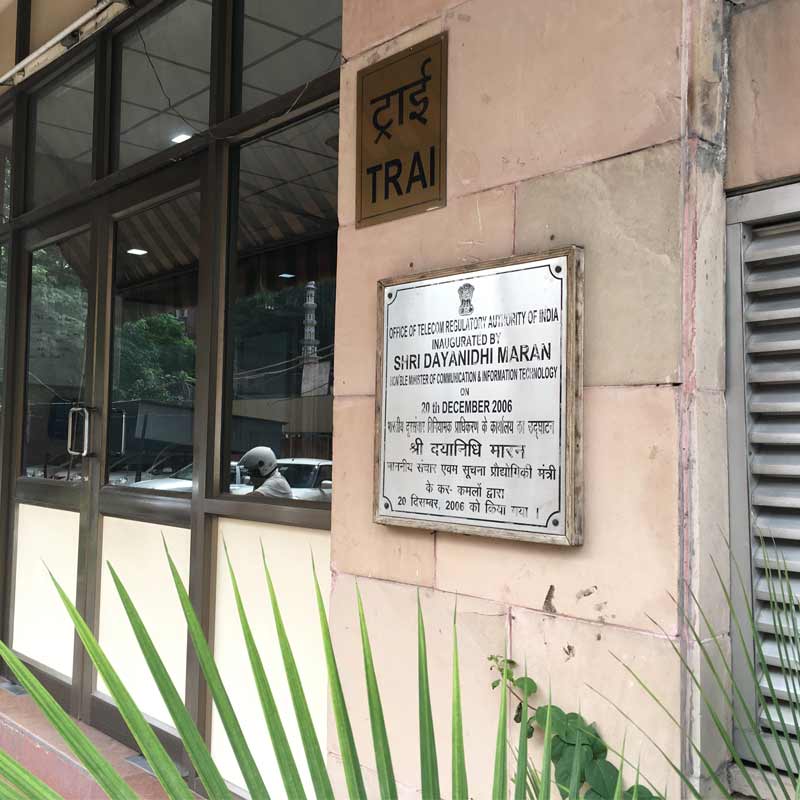
A consultation paper by the Telecom Regulatory Authority of India (TRAI) on Monopoly/Market dominance in Cable TV services says this is just the tip of the iceberg. There‘s a lot more scope for growth as TV penetration in India is still at approxminately 60 per cent of total households.
TRAI had received a reference dated 12 December last year from the Indian information & broadcasting ministry seeking TRAI’s recommendations in view of the fact that it has become necessary to examine whether there is a need to bring in certain reasonable restrictions on MSOs and LCOs including restricting their area of operation or restricting subscriber base to prevent monopoly as cable TV distribution is virtually monopolized by a single entity in some Indian states.
In the paper, TRAI has sought stakeholders‘ views on whether the state should be the relevant market for measuring market power in the cable TV sector or suggest alternatives. In the first place, TRAI wants to know if stakeholders agree that there is a need to address the issue of monopoly/market dominance in cable TV distribution and how the ill effects of monopoly/market dominance can be addressed. TRAI has sought to know whether, to curb market dominance and monopolistic trends, restrictions in the relevant cable TV market should be based on area of operation or based on market share.
Asking a series of fifteen questions, TRAI has said it wants written comments on the consultation paper by 24 June and Counter comments, if any, by 1 July.
Cable TV has grown significantly with the number of subscribing households increasing from just 410,000 in 1992 to more than 9.4 crore by the end of March 2012, says the TRAI consultation paper.
And although direct-to-home (DTH) has emerged as an alternate to cable TV and its pulling in subscribers at a faster rate than cable TV, the percentage of cable TV homes is significantly higher vis-a-vis DTH subscribers which numbered an estimated 5.45 crore by the end of year 2012.
Cable TV subscribers constitute approximately 60 per cent of the total TV homes in the country, whereas the share of DTH is about 35 per cent. DTH operates on a national basis and transmits all channels throughout the country irrespective of variations in demand of channels in different markets. Cable TV networks on the other hand operate on a regional basis and can choose channels to be supplied according to the demand in the area served. In the pay DTH sector, there are six major players providing services on a national basis. In contrast, Cable TV operators are limited in a particular area and in most cases the customer is served by a single local cable operator. On the technical front also, there are differences between DTH and cable TV in terms of the number of channels .
The increase in the subscriber base has also led to commensurate growth on the supply side. India today has a large broadcasting and distribution sector, comprising 828 television channels, around 6,000 multi system operators (MSOs), approximately 60,000 local cable operators, 7 DTH/ satellite TV operators and a few IPTV service providers and one terrestrial TV operator, the pubcaster Doordarshan. .
Pointing out that there are currently no restrictions on the area of operation and accumulation of interest in terms of market share in a city, district, state or country by individual MSOs and LCOs in cable TV, TRAI says it has been observed in some states that a single entity has, over a period of time, acquired several MSOs and LCOs, virtually emerging as a monopoly. In such states, operation of a major portion of the cable TV network is controlled by a single entity. Such monopolies/market dominance are clearly not in the best interest of consumers and may have serious implications in terms of competition, pricing, quality of service and healthy growth of the cable TV sector.
Technological developments, particularly use of packet switched digital communications, have made it possible to provide Internet access as well as telephone services over cable TV networks. Therefore, cable TV networks can become a cheaper and more convenient way of providing broadband and voice services, as cable TV networks already have outreach to a large number of households. Then, there is the possibility that the effects of monopoly/market dominance in cable TV distribution could also extend to other services, such as voice and broadband, which are carried on cable.
The Cable TV Network (Regulation) Act 1995 and the Cable TV Rules do not restrict the number of MSOs/LCOs operating in any particular area. There are MSOs which operate at the national level, while others operate either on regional level or in a smaller area.
Some of the prominent national MSOs are DEN Networks Ltd., Digicable, Hathway Datacom, IndusInd Media and Communication Ltd. and Siti cable. Some of the prominent MSOs that are operating in regional markets are Fastway, GTPL, KAL Cables (Sumangali), Ortel, Asianet, Tamil Nadu Arasu Cable TV (TACTV) Corporation Ltd., Manthan, JAK communications and Darsh Digital. However, the majority of the remaining are small, local (city based) MSOs with a subscriber base of a few thousand.
In the case of analogue platforms which are non-addressable, LCOs had the option of downlinking free to air (FTA) channels directly from broadcasters without the help from MSOs. Pay channels were obtained by LCOs through MSOs as these are transmitted by broadcasters in encrypted form. MSOs obtain signals from broadcasters, decrypt the encrypted signals and supply these to LCOs for distributing to consumers.
With the implementation of DAS, the business model has undergone a change as now only MSOs can receive signals from the broadcasters as per the Cable TV Networks Rules, 1994 as amended on 28 April 2012. In the case of DAS, both FTA and pay channels received from the broadcasters are transmitted to LCOs in encrypted form by the MSO. The MSO maintains a Subscriber Management System (SMS) where details about each customer and his/her channel preferences are stored. All the channels are now decrypted at the customer end through a set top box (STB) programmed by the MSO as per details in the SMS. Therefore, in the DAS environment, MSOs play a key role in distribution of both FTA and pay channels. Thus, with the changed scenario in DAS, the issue of dominance in the cable TV sector needs to be addressed at the MSO level.
TRAI has also observed that the level of competition in the MSOs‘ business is not uniform throughout the country; certain states (e.g. Delhi, Karnataka, Rajasthan, West Bengal and Maharashtra) have a large number of MSOs.
On the other hand certain markets like Tamil Nadu, Punjab, Orissa, Kerala, Uttar Pradesh and Andhra Pradesh are characterized by dominance of a single MSO. However, the same MSO is not dominant in all states. While it could be argued that because of larger size, an MSO is able to reap the benefit of economies of scale and pass on the benefits to the customers, in practice such dominance in certain markets can and has led to non-competitive practices.
In case the loss in consumer welfare due to inadequate competition outweighs the gains from economies of scale, measures will obviously be required for promoting competition. It is in this backdrop that the question arises whether there is a need for any restrictions to be imposed on MSOs/LCOs to prevent monopolies/accumulation of interest so as to ensure fair competition, the TRAI asks in the consultation paper.
In a well-functioning competitive market, where firms are competing on fair terms and there are no artificially erected barriers of entry, there may not be any need to impose restrictions. However, if there is little or no competition in the market or in case where barriers to entry are erected by incumbents, there is the distinct possibility of the abuse of market dominance by the incumbent service provider (s).
The TRAI paper has revealed that the MOSs have the following share of STBs seeded through phase I and phase II of digitisation: Hathway (23.5 per cent), Den (18.5 per cent), Siticable (11 per cent), IMCL (10.6 per cent), Digicable (10.1 per cent), Fastway (6.3 per cent), GTPL (6 per cent), KAL (3 per cent) and others (11 per cent).
The exact market shares of the MSOs are not available because in the analogue platform the number of subscribers cannot be accurately ascertained due to non-addressability and the lack of transparency in reporting of subscriber base. Once DAS is implemented, cable TV services will have to be provided through a set top box and it will be possible to obtain the exact number of customers through the subscriber management system of the MSO.
TRAI‘s studies have further shown that some MSOs are controlling more than 80 per cent of the DAS market in some cities. Since subscriber figures for the state are not available, the share of STBs seeded in DAS market could be used as a proxy for market share for the entire state.
The size of markets catered to (across states, cities and even localities) by an MSO determines its market power and influence. One of the ways in which MSOs have tried to expand and increase their size (and influence) is by buying out LCOs and smaller MSOs. The joint venture/ subsidiary model has emerged as a result of mergers and acquisitions (M&A) of LCOs/MSOs by large MSOs. The MSOs have varying levels of ownership interest in these LCOs. Typically, MSOs provide more favorable terms and financial assistance to joint venture companies and subsidiaries. The point is that, by way of acquisition, joint venture or subsidiary, some MSOs have been increasing their presence and size leading to a situation of market dominance.
TRAI has also found instances where the dominant MSOs are ‘â€?misusing their market power to create barriers of entry for new players, providing unfair terms to other stakeholders in the value chain and distorting the competition. MSOs with significant reach (i.e. a large network and customer base) are leveraging their scale of operations to bargain with broadcasters for content at a lower price and also demand higher carriage and placement fees. Such MSOs are in a position to exercise market power in negotiations with the LCOs on the one hand, and with the broadcasters on the other.‘
TRAI says that large MSOs, by virtue of securing content at a lower price and charging higher carriage and placement fee from broadcasters, are in a position to offer better revenue share to LCOs. ‘They, therefore, can incentivize LCOs to move away from smaller MSOs and align with them. Such MSOs use their market power to provide unfavourable terms or make it difficult for the broadcasters to gain access to the distribution network for reaching the customers. There are instances where a dominant MSO has made it difficult for some broadcasters to have access to its distribution network for carrying content to consumers. Blocking content selectively can also become an obstacle to promoting plurality of viewpoints.‘