Tag: Kailashnath Adhikari

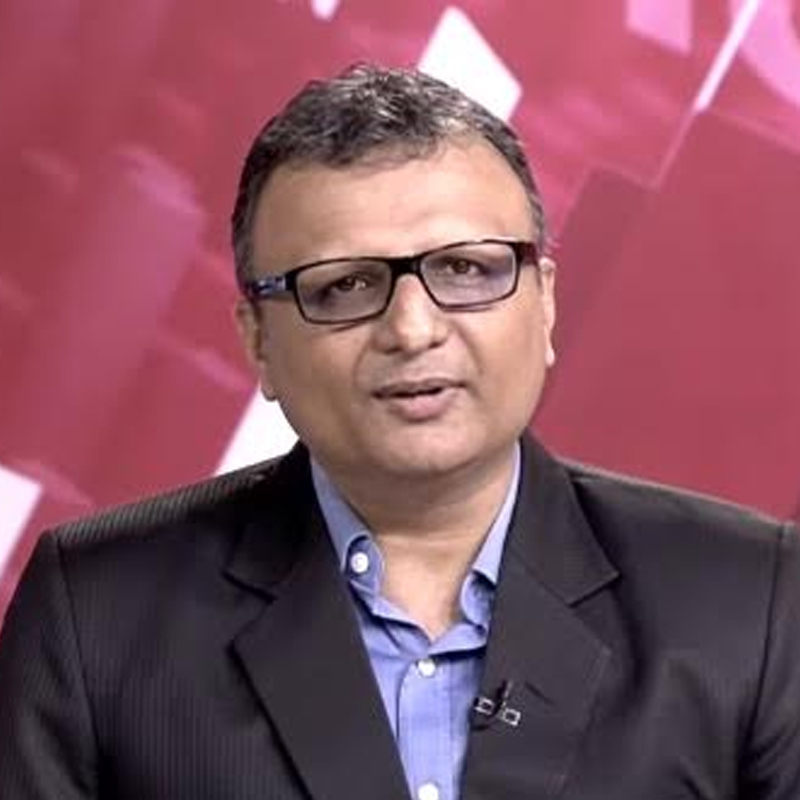
  • News broadcast stuck in time warp, must evolve or die: Sudhir Chaudhary

    News broadcast stuck in time warp, must evolve or die: Sudhir Chaudhary

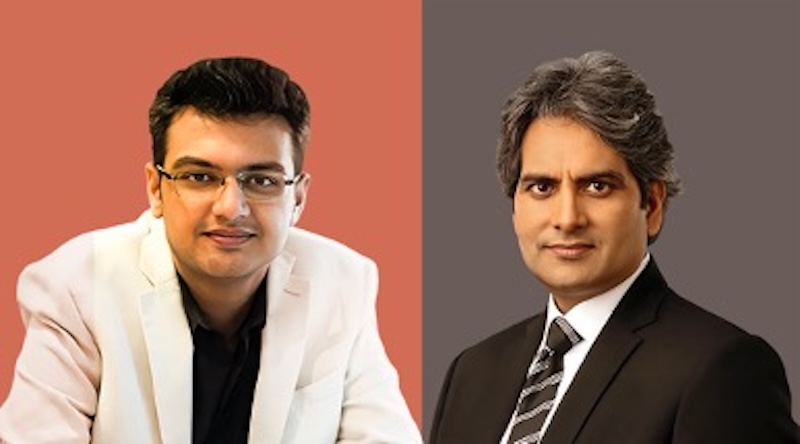
    MUMBAI: News broadcasting hasn’t had a proper makeover in two decades and is paying the price as viewers switch to sexier platforms, claims popular anchor Sudhir Chaudhary. Speaking on a Governance Now podcast with Sri Adhikari Brothers managing director Kailashnath Adhikari, , Chaudhary delivered a blunt diagnosis of the industry’s ailments.

    “Least innovation has taken place in the news broadcast industry,” lamented the veteran journalist. “With nearly 400 news channels today, the big 10-15 follow identical breaking news formats with red alerts, similar headlines, and studios where anchors look remarkably alike—debating the same subjects with familiar panellists.”

    The industry, he argues, has become obsessed with ratings rather than reinvention. “Experts in newsrooms study TRPs and suggest content creation based on popularity. Ninety-nine per cent of the industry functions in this reactive manner. The industry has lost its way.”

    Chaudhary, who boasts 7.9 million followers on X (formerly Twitter), noted a telling shift in viewer language: “Earlier people said they watch me on TV, but now they say they follow me.”

    While traditional news outlets flounder, social media influencers are cultivating massive audiences through innovative formats. Unlike cricket—which reinvented itself from five-day tests to T20 spectacles—television news remains trapped in amber, with the same stale formulas recycled night after night.

    “Today the consumer has a plethora of available options,” Chaudhary observed. “News is available on WhatsApp, Instagram, Snapchat, television, print and social media. You have to show the same story in different formats, durations and parts on different platforms.”

    Looking ahead, Chaudhary—rumoured to be joining the National Broadcaster—says he craves “freedom to create content instead of chasing TRPs” and will seek alliances with social media creators. The message is clear: evolve or become yesterday’s news.

  • Day 2 of Goafest 2024 delivers strategies for adaptation and innovation

    Day 2 of Goafest 2024 delivers strategies for adaptation and innovation

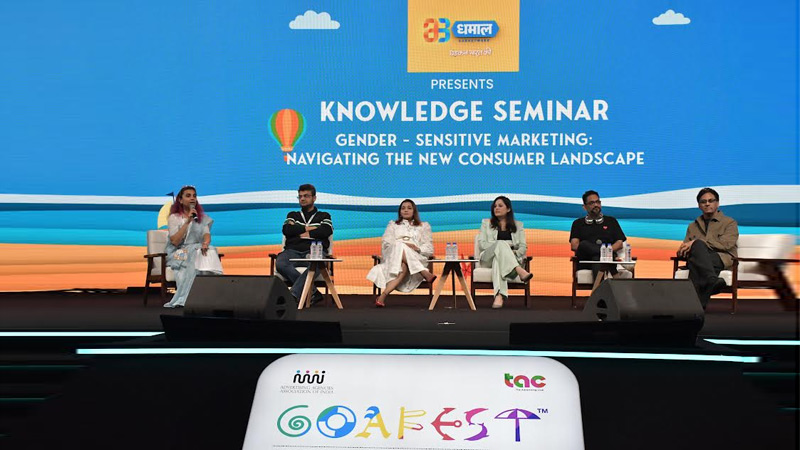
    Mumbai: Setting a powerful tone yet again, Day 2 of Goafest 2024 began with the first session hosted by Adhikari Brothers Networks – Dhamaal presents a Knowledge Seminar with Knowledge Partner IAA in collaboration with UNICEF called Gender-Sensitive Marketing: Navigating The New Consumer Landscape. Among the distinguished speakers were Chandni Shah, Chief Operating Officer of FCB Kinnect; Darshana Shah, Head of Marketing & Customer Experience at Aditya Birla Capital; Kailashnath Adhikari, Business Head of Sri Adhikari Brothers & Managing Director of GovernanceNow; Rajdeepak Das, Chief Creative Officer of Publicis Groupe South Asia & Chairman of Leo Burnett South Asia; and Ram Madhvani, Filmmaker, Producer, and Founder of Equinox Films and Ram Madhvani Films. Guiding the discussion was Kranti Gada, Management Committee Member of the India Chapter of the International Advertising Association and Founder of NeOwn.in.

    This thought-provoking session delved into the nuanced realm of gender-sensitive marketing, exploring strategies to navigate the ever-evolving consumer landscape. Chandni delved into the core issues within the education system and how the portrayal of men and women contributes to the lack of women in leadership roles. “Women can nurture women,” she emphasised, highlighting subconscious biases and the fact that men are often the primary decision-makers in households. She also advocated for conscious choices to address these issues. Subsequently, In answer to Kranti’s question on depiction, Ram discussed the Bechdel test, which measures the representation of women in film and other fiction. He mentions how important representation of women in fiction is also very poignant, “It’s rare to see women discussing anything other than men in many series and movies.”
    Rajdeepak, in his turn, spoke about the dramatic increase in female education rates, from 8.9 per cent in 1951 to 64 per cent in 2011 to 92.5 per cent in 2021! “What didn’t change in five to six decades has transformed in just one,” he remarked, suggesting that education and the creative industry could impact, accelerate, and enable women. Kailashnath, thereafter, pointed out the economic impact of gender inequality, stating, “According to a published report, several low to middle-income countries have lost over a trillion dollars because women weren’t empowered.” He also noted that 37 per cent of women globally lack internet access, adding, “Men have more facilities at their disposal than women, and that needs to change.”

    With a focus on inclusivity and understanding diverse perspectives, the speakers shed light on how brands can effectively connect with consumers in a way that respects and reflects their identities. Through insightful anecdotes and practical insights, the seminar provided a roadmap for brands to authentically engage with audiences, fostering deeper connections and driving meaningful impact in the marketplace.
    Thereafter, in a keynote address, Snap Inc. India managing director Pulkit Trivedi revealed how Snapchat emerged as the preferred platform for young India. Trivedi highlighted the platform’s unique features and engaging content, illustrating its resonance with the youthful demographic and its pivotal role in shaping digital culture. Pulkit revealed Snapchat’s approach to building a safe and creative space for its predominantly GenZ user base. With 75 per cent of its users hailing from this demographic, the app prioritised authenticity and fun, reflecting the generation’s carefree attitude towards online sharing. As the saying goes, “GenZ don’t feel the pressure of being judged.”

    Looking to the future, Snapchat will be investing in advanced engagement tools and will also look at the camera’s potential for advertisers while maintaining its commitment to user privacy and security. By deleting content by default and omitting likes and comments, the platform empowers users and safeguards their experiences. As the company declared through Pulkit, “We try giving power to our users.” By doing so, Snapchat cemented its position as a leader in the social media landscape, prioritising creativity, authenticity, and user well-being.

    Following this, the next session was presented by Sports18 & JioCinema, titled Media Agencies Panel – The Changing Expectations from a Media Client Leader, and the Challenges in Getting There, comprising prominent industry leaders. The esteemed panellists included Ajay Gupte, CEO of Wavemaker South Asia; Anita Kotwani, CEO of Media South Asia at Dentsu; Tanmay Mohanty, CEO of Publicis Media Services India; and Vaishali Verma, CEO of Initiative India. Guiding the discussion was Vikram Sakuja, Partner & Group CEO of Media & Out-of-Home at Madison Communications.

    In this revelationary session, the panel explored the evolving expectations placed on media client leaders and the challenges they face in meeting these demands. Through this conversation, key requisites for an effective client leader were explored, where Vaishali stressed that the requirements for a good client leader vary with each category and client. She emphasised the importance of identifying the nature of the business and then positioning a client leader whose skills and experience would be an asset to both the client and the brand. To this, Anita added, “A client leader needs to be obsessed with winning for the client and their profitability.” Moreover, Ajay brought attention to whether the client leader needs to be a single point of contact (SPOC). While acknowledging that much has changed in the industry, he noted that some fundamentals remain the same, such as the importance of understanding the client’s needs. He pointed out that change is a constant, and a client leader must evolve with market shifts and the information available, maintaining a client-centric approach.

    Through insightful dialogue and shared experiences, the discussion delved into the dynamic landscape of media agencies, offering perspectives on how leaders navigate industry shifts while striving for excellence. From adapting to emerging technologies to addressing changing consumer behaviours to having a client-centric attitude to display ownership and accountability, the session provided valuable insights into the strategies and approaches required to succeed in today’s fast-paced media environment.

    The third Knowledge Seminar titled, Trust or Bust: Thriving in the Digital World, was presented by Malayala Manorama with Knowledge Partner – ASCI, which brought together a distinguished panel of experts. Among them were Amit Doshi, Chief Marketing Officer at Britannia; Falguni Vasavada, Professor at MICA and Digital Creator; Paras Sharma, Director of Global Partnerships at Meta; and Sharan Hegde, Finance Content Creator and Co-founder and CEO of 1 per cent Club. Steering the conversation was Manisha Kapoor, CEO & secretary general of ASCI.

    In this informative and interesting session, the panel offered insights into navigating the idea of trust through the complexities of the digital landscape. Amit began by stating, “Trust between a consumer and a brand is now a two-way street.” He also emphasised the exponential importance of listening to the conversations in which a brand is involved. Additionally, in response to Manisha, Sharan stated that finance content creators play a crucial role in demystifying complex financial topics and offering accessible advice to consumers. He noted that financial scams have existed for ages and believes that the realm of content creation and digital following has only begun to address financial awareness. “Building trust is relatively easy, but once it’s lost, it can be gone forever due to one bad move or piece of news. Therefore, the focus should be on maintaining and nurturing that trust consistently,” he added.

    With discussions ranging from building trust in online platforms to leveraging digital innovations for business success, the session provided invaluable perspectives on how organisations can thrive amidst the challenges and opportunities presented by the digital age. Through shared experiences and expert analysis, attendees gained a deeper understanding of the evolving dynamics of trust and authenticity in the digital realm.

    The Fireside Chat by Viacom18 featured industry veterans, including Ankit Kapoor, Head of Marketing & International Business at Parle Agro; Mahesh Shetty, National Sales Head at Viacom18, and Navin Khemka, CEO of South Asia of Essence Mediacom. Conducting the conversation was Shibani Gharat, an accomplished Anchor and Associate Executive Producer. Mahesh discussed the evolution of Bigg Boss, highlighting how the show has expanded to include digital creators, thereby increasing its relevance. He emphasised the importance of catering to a diverse set of consumers and noted that the core principle of creating mass content remains unchanged. Over the past year, Mahesh’s team has merged television and digital divisions to better achieve their goal of reaching a broad audience.

    In response to a question about creating widespread brand love, Ankit underscored the necessity for marketing teams and brand managers to have a clear understanding of the role each medium plays. He pointed out that only with this clarity can brands successfully cultivate and maintain strong brand loyalty, saying, “Only through clarity are brands able to achieve what they set out to in terms of brand love.” In this insightful session, the panellists engaged in a candid discussion on navigating the evolving landscape of marketing and media, wherein consumers and the touchpoint – Television and Digital – are concerned.

    Day 2 of Goafest 2024 also kicked off with an enriching masterclass by WhatsApp on Agency Exclusive: Drive growth across the customer journey with WhatsApp, presented by Riddhika Sand. The session threw light on the WhatsApp Business platform and its features. Riddhika spoke about how Whatsapp Business is designed to supercharge customer journeys. “Today around 1 billion people are using messaging business and 90.4% of online adults in India message with business at least once a week”, said Riddhika Sand.

    Thereafter, Ujaya Shakya enlightened the attendees with an intriguing masterclass on Unlocking Market Potential: Open your eyes to Nepal, presented by Outreach Nepal. Shakya began by asking the audience, “What does Nepal mean to you?” Through this, he highlighted the features of today’s Nepal – a vibrant, heterogeneous country, with famous personalities such as fashion designer Prabal Gurung. He said, “Today’s Nepal shows promising signs of growth, with immense market potential. Out of a population of 30 million, 72% are of working age, indicating a rise in the middle-income bracket. Major companies like Hyundai, Samsung, and all major Indian FMCGs are all investing in Nepal.”

    Shakya further added that from the perspective of marketing, the Nepali youth is a major target. The reason for the success of several Nepali brands today was the right positioning and marketing towards the youth. By displaying several examples, Shakya spoke of the most successful strategies used: achieving Nepalisation, using Nepali actors, creating relatable stories, and using cultural connections. Brands such as Mountain Dew, Centerfruit, Coca-Cola, Ncell, and Pepsi have all benefited from these strategies. Shakya concluded by asking the audience, “What does Nepal mean to all of you after this session?” The responses displayed that this masterclass effectively enlightened them on Nepal’s burgeoning market potential.

    Thereafter, the D&AD masterclass, presented by Lisa Evans and Paul Drake titled Unlocking Award Winning Ideas, gave valuable insights into the art of visualising innovative ideas. Drake discussed the importance of nurturing new talent through initiatives like D&AD New Blood and D&AD Shift, which provide opportunities for self-taught creatives. He also mentioned the Creative Leaders Program, partnering with companies like Adidas and Heinz to foster innovation. He noted, “The aim is to open doors for new talent and help them shine in the creative industry.”

    On crafting excellence, Lisa Evans explained the idea-execution-relevance triad for impactful work and introduced the unique categorization of creative work using the D&AD pencils (Wood, Graphite, Yellow, White, and Black) for categorising creative excellence. She outlined a hierarchy from destructive to legendary work. The case studies presented by them showcased brands such as ‘We Are Warriors’, ‘Jersey Pay’, ‘Proudly Second Best (IKEA)’ as fresh, innovative and contagious ideas. Evans and Drake also highlighted the Five P’s approach—understanding the problem, generating possibilities, choosing what to push, building a prototype, and making a pitch which was exemplified through a brainstorming session with Heinz and subsequent team presentations.

    Next, Amazon miniTV held a masterclass on Brand Integration. Vijay Iyer, Director, Amazon Ads India and Amogh Dusad, Head of Content, Amazon miniTV led the session. The masterclass highlighted the growth in free video viewership in India and the effectiveness of brand integrations on video streaming services like miniTV in driving advertising impact. It provided an overview of various integration formats, amplification approaches, and performance metrics, which make miniTV a suitable proposition for marketers looking to reach and engage Indian consumers through relevant video content.

    The first half of Goafest 2024 Day 2 was wrapped up with an informative masterclass on Hall of Flame – The Olympics Masterclass by Sports18 and JioCinema, presented by Chandan Roy. The masterclass provided a unique perspective on the world of the Olympics and sports. Chandan shed light on the birth of the Olympics, its viewership, and its broader significance. He explained that the Olympics reflect the political and economic strength of a country and serve as a source of national pride, with people desiring their country to win regardless of the sport. Chandan emphasised, ‘The Olympics is a force for good’. He also discussed India’s aspiration to host the Olympics in the future. Chandan mentioned that as a platform, they are striving to bring the Olympics to a larger audience. To support this effort, they have created a show called ‘Get Set Goal’, hosted by Dinesh Karthik. Given that the majority of India’s sports audience consists of cricket lovers, the vision behind this show is to leverage cricket to spread awareness about the Olympics.


  • NP Singh honoured as media personality of the year at Governance Now visionary awards ’21

    NP Singh honoured as media personality of the year at Governance Now visionary awards ’21

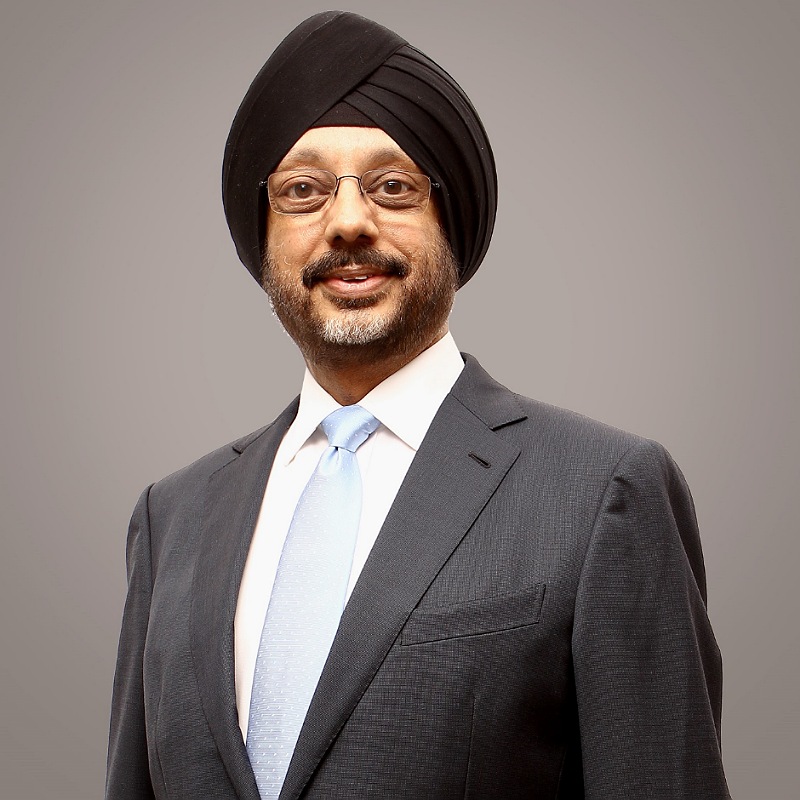
    Mumbai: Sony Pictures Networks India (SPNI) managing director and CEO NP Singh has been conferred with the media personality of the year award at the Governance Now visionary awards 2021. The award was bestowed upon him by the chief guest minister of law and justice Kiren Rijiju at a virtual ceremony organised by Governance Now MD Kailashnath Adhikari.

    “Singh’s visionary leadership and persistent efforts have substantially contributed to shaping Sony Pictures Networks India into the media behemoth it is today,” said the statement. “His passion, commitment, and hard work have contributed to the growth of SPNI and the advancement of the ever-evolving media and entertainment industry. He envisioned value for the industry in combining the might of SPNI and Zeel into one company. For him, being visionary means being ahead of the curve and leading from the front.”

    Governance Now is a public policy and analysis platform as well as a multi-media initiative for participatory reportage and analysis related to the governance of all institutions. The platform has more than one million website visits and 400k subscribers on its YouTube channel. It is owned by Indian M&E conglomerate Sri Adhikari Brothers Group with interests in broadcast, films, content production and publishing.  

    “The Indian media and entertainment industry has grown exponentially over the years, and as part of an industry that is brimming with leaders, I am indeed humbled and honored to be conferred with this recognition,” said NP Singh. “It is the ability to challenge the status-quo and make room for pioneering initiatives that propels us as leaders, benefiting the industry at large.”

    “Governance Now Visionary Awards is an attempt to honour the stellar work of visionaries across sectors who by their sheer commitment and vision have changed the course of the domain they operate in,” stated Kailashnath Adhikari. “These are challenging times that we are witnessing and our awardees that are selected after a rigorous process of screening by our expert jury have pushed the envelope time and again and proved their mettle. It is worth extreme pride that we bring this year’s edition of Visionary Awards. NP Singh has been instrumental in making Sony Pictures Networks India the media behemoth that it is. The proposed merger between Sony and Zee is scripting a new chapter in the course of Indian media and entertainment.”

  • SAB Group partners with DistroTV to expand global footprint

    SAB Group partners with DistroTV to expand global footprint

    Mumbai: Media and entertainment company Sri Adhikari Brothers (SAB) Group has partnered with California-based media technology company DistroScale to expand its footprint across the globe. DistroTV is an independent free ad-supported streaming television (FAST) platform and is available internationally.

    The group’s music and youth channel Mastiii, Bhojpuri channel Dabangg and Marathi music channel Maiboli will reach audiences in the UK, Europe, and the USA via DistroTV, said the media company in a statement on Monday.

    The channels will be part of DistroTV’s channel bundle called DistroTV Desi which offers more than 15 Southeast Asian channels for free. It offers viewers a variety of diverse content focusing on news, entertainment, and lifestyle geared towards the Southeast Asian (India, Pakistan, Bangladesh, Sri Lanka) population abroad, it added.

    “We are very happy to enter into this partnership which will enable us to reach foreign audiences and our Indian diaspora settled abroad. Our aim is to not only promote our network channels but also our country through the content we air globally,” said SAB Group business head Kailashnath Adhikari.

    “We are always looking to grow and diversify our channel content to meet the needs of our rapidly expanding audience,” said DistroScale chief executive officer Navdeep Saini. “This partnership with SAB Group is allowing us to do just that and we could not be more thrilled to have them join our 150+ growing channel line-up.”

    “Our growing audiences in the US, Canada, and the UK can now watch and enjoy the latest and retro Bollywood musical hits on Mastiii TV, available as a free live 24×7 channel on DistroTV on the web or any device,” stated DistroScale vice president of business development and content acquisition Rajesh Nair. 

  • There will be a ‘Mahabharat’ between TV & OTT: BARC’s Sunil Lulla

    There will be a ‘Mahabharat’ between TV & OTT: BARC’s Sunil Lulla

    MUMBAI: BARC India CEO Sunil Lulla is in a unique position, being at the helm of a body which is the only industry currency for the 3.5-billion-dollar television advertising market. Needless to say, it comes with a lot of responsibility.

    Lulla brings over 35 years of significant leadership and domain proven knowledge, with ground-up experience in growing brands and building businesses. Having worked across media, brands and advertising, he has occupied leadership roles at MTV, Sony, Times Television Network, SaReGaMa, Diageo, Indya.com, GREY group, JWT and Balaji Telefilms. Sunil maintains active interests in serving industry interests to foster the spirit of self-regulation and collaboration. He is an active long-distance runner, enjoys sailing and evocative conversations.

    During an interaction with Governance Now’s Kailashnath Adhikari, Lulla talked at length about the impact of Covid2019 on the television and broadcast industry, key takeaways during the pandemic, television viewership, technology, advertising, and much more.

    Lulla shared that the peak in television viewership has gone down compared to the pre-Covid2019 level, but it is slowly picking up. Said he: “We are more than 902 million viewing minutes, it picked up to one billion viewing minutes. As people are confined into their homes the lines have blurred between primetime and non-prime time. The prime-time hours of 6 am to 6 pm witnessed a major shift in viewing.”

    With filming being halted during the lockdown, no production of televised content was happening, so the only option left with audiences was to watch news, movies and kids’ content. Hence, the news genre picked up pretty well – it went from seven per cent of viewing to 21 per cent, then back down to 14 per cent. Now it’s holding steady at seven per cent share of the category. Similarly, kids watched a lot of content before schools went online. Movies became big and once original programming started general entertainment channels (GECs) are back with higher viewership than the pre-Covid2019 period.

    TV will continue to remain as the screen of the household, claimed Lulla, but the initial few months into the lockdown were difficult for the industry as a whole. While there was a peak in viewership, advertising went down. The gap has never been as difficult to bridge before. “However, now advertising volumes are higher than what they were last year, so the shortfalls that are present will not be as bad as expected,” he said. A whole new set of advertisers and brands have come in, health and hygiene products, digital, gaming, e-commerce, ed-tech became huge during this time.

    In the middle of the crisis, digital has picked up fairly because of more mobile connections, higher data consumption, digital show launches. Also, despite being a difficult time period, the IPL has performed well both in terms of viewing and advertising.

    Another aspect that Lulla highlighted is the stiff competition between television and OTT. As audiences are now moving towards online content it is believed that digital advertising will outgrow television advertising in the coming years. Lulla quipped that there will be a Mahabharat between TV and OTT.

    “I think in 2020 in the US, digital advertising may overtake TV advertising but that’s unlikely  to be the case in India before 2030. It’s a question of quality service, quality of economy and what happens to the overall economy. It is not about OTT content or mobile screen. It is more about screen time. I think there will be growth in digital advertising. TV is not dropping, it is sustaining. Because if you want to reach the masses of India, TV is still the best medium.”

    In the last few months, the duration of a lot of niche channels like English GECs and infotainment has witnessed a lot of turbulence, courtesy the pandemic and NTO. But the question that begs to be asked is: weren’t they already seeing a slow death?

    Lulla explained that English is a sliver of the content pie, with less than one per cent of Indian audiences watching English programming. Later, the audiences started watching content on other mediums. So, in order to survive English GECs will have to rework their strategies.

    Another challenge before the television is that it is too advertising dependent, which is not the case in the west, where there is a balance between advertising and subscription. But since cable service in the country is cheap, compounded by a price tariff regime, very few channels are going to make profitable money on subscription alone, Lulla concluded.

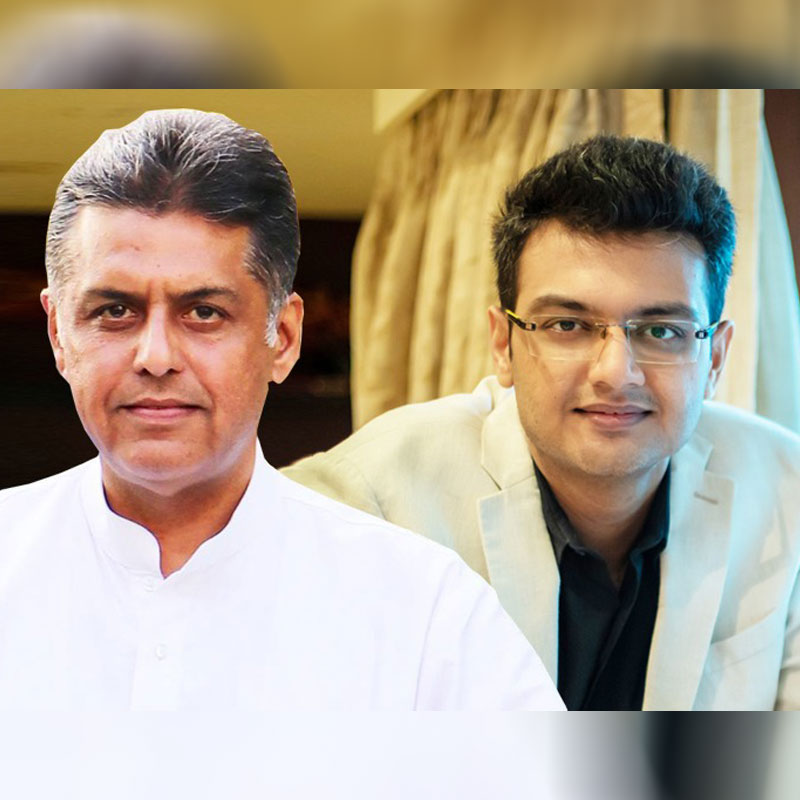
  • 93% TV households do not watch news channels; media degenerated into becoming pet performing  poodle of govt” former I&B minister, Manish Tewari to Kailashnath Adhikari, MD,Governance Now

    93% TV households do not watch news channels; media degenerated into becoming pet performing poodle of govt” former I&B minister, Manish Tewari to Kailashnath Adhikari, MD,Governance Now

    “93% TV households do not watch news channels; media degenerated into becoming pet performing  poodle of govt” former I&B minister, Manish Tewari to Kailashnath Adhikari, MD, Governance Now.

    Former Information and Broadcasting Minister and MP, Lok Sabha, Manish Tewari has said that  with only 7percent of 950 million people in India with TV sets at home watching news  and current affairs channels and with 391 news and current affairs channels digging around  in that 7%  space to earn money, it  has become a dog eat dog market.

    While speaking to Kailashnath Adhikari, MD, Governance Now at the webinar during the Visionary Talk series, organized by the public policy and analysis platform, Tewari while giving out numbers said that there are  950 million people with television set at home in India. 93% do not watch news channels. Only 7% watch news and current affairs channels and the 391 existing news and current affairs channels are  digging around  in that 7% space trying to earn money. “It has become a dog eat dog market.”

    Tewari also said that that media needs to relook its  revenue models and cannot have  model which is totally advertisement driven.

    While responding to a question if the revenue model could be regulated with a policy, Tewari recalled that when he was the I&B minister he cleaned out the TRP paradigm with a policy framework on how companies which generate TRP’s  need to be regulated when a leading newspaper at that time decided to get out of business.

    “If you want to correct your revenue model and charge subscribers a higher rate for the newspaper they buy or a TV channel they want to see, you will be able to then offer them better content. You have to start pricing your products properly and get people into the habit for paying..  But since you remain advertising dependent it is measured by fake currency called TRP’’ said Tewari.

    The former MP added that like print and electronic media, social media is equally worst and said the  biggest difficulty today is that what used to plague the print media and electronic media now plagues the social media which is also completely advertisement driven model. He said that the advertisement driven model does not allow you to curate quality content and be independent as bulk of small and medium people in the business depend on handouts which are given by the BOC (bureau of  outreach and communication). “There is a fundamental problem they are not willing to look at” he said.

    Coming down heavily on media Tewari said that media is not philanthropic. “Over a period of time media has degenerated into becoming the pet performing poodle of the government. Freedom of press in India is a myth. It is a chimera. Huge corporate interest dictates the direction and trajectory of media depending upon what their business interest currently are. Except  for print media, unfortunately I can’t  say that for substantive section of electronic media”

    Speaking on  paid news the former minister said that when he was trying to amend the Press and Registration of Books Act, 1867 and specifically tried to insert the section on  paid news and penal provisions, ‘‘the push back from biggies in the media industry was so enormous that the bill has not seen the light of day till date.”

    “The news and current affairs media is about educating people, presenting facts in perspective and bringing seriousness to public discourse. That’s the responsibility you need to discharge rather than looking at bottom lines and spin off cheap entertainment as news which does not require news licence” said Tewari in a scathing attack on the news. 

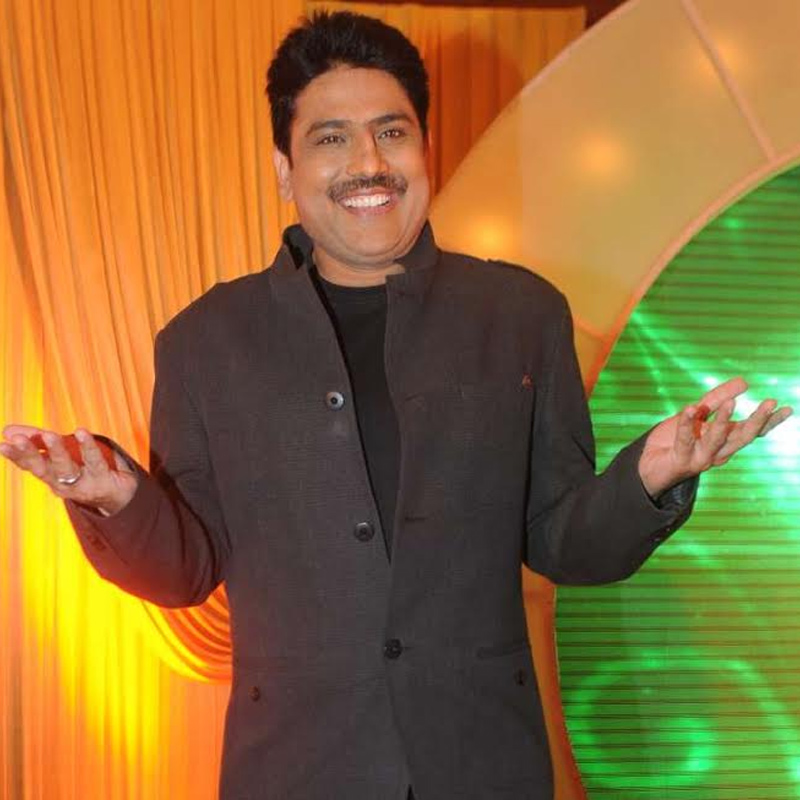
  • Television actors should also get royalties on reruns and repeat telecasts: Taarak Mehta Ka Ooltah Chashmah’s Shailesh Lodha

    Television actors should also get royalties on reruns and repeat telecasts: Taarak Mehta Ka Ooltah Chashmah’s Shailesh Lodha

    MUMBAI: Television industry has been one of the worst-hit sectors due to the pandemic followed by the subsequent lockdown. Now, when the shoots have finally resumed after a hiatus of four long months amid all SOPs and safety measures laid down by the government, many celebs are working with a sense of fear.

    aAmpere Analysis projected that the pandemic had delayed at least 60 per cent of scripted television programming worldwide, including at least half of the programming originally scheduled to air in the second half of 2020. There had been a noticeable increase in non-scripted productions—including smaller-scale series capable of being produced remotely—that can be used to fill schedules until scripted programs resume production (noting that audiences may eventually become tired out by pandemic-themed programming).

    Shailesh Lodha, an Indian actor, comedian, writer, and best known for playing the role of Taarak Mehta in India's longest-running sitcom serial Taarak Mehta Ka Ooltah Chashmah, in an interaction with Governance Now MD Kailashnath Adhikari talks about challenges faced by the television industry, actors and much more. 

    According to him actors especially who also do brand endorsements, live shows and appearances are facing the brunt of pandemic.

    LodhaShailesh shares, “I belong to show business, which has been severly impacted due to pandemic. There are no events or live shows. Thankfully television shooting started last month. So professionally speaking there were no activities during pandemic. I did quite a few online shows, but they don’t give you satisfaction. You don’t feel like you are performing.”

    He mentions that it is difficult to predict when the normalcy will return but according to him situations are better than before. However, he believes that the turmoil caused by the pandemic has instilled the sense of fear among people. He said that while entering the set when someone sees cast and crew members in masks, PPE kits, and gloves it creates a fearful environment. He also thinks that India is doing considerably better, with recovery rate at 72 percent and death rate at 2 percent.

    Kailash Adhikari raised a question to Lodha if production houses broadcasters are partially responsible for the issues faced by  artists, hair and makeup artists and technicians.

    Lodha quipped that the challenges faced by the entertainment industry is no different from other sectors. It is just that the entertainment world is glamorous, and people are more attracted towards entertainment news, hence the media stays in the limelight. But he believes there are various issues and it is going to be in every section of the society and entertainment world is no different from that. He suggests operating business to create job opportunities and strengthen the economy.

    As far as the industry’s responsibility towards daily wage earners is concerned Lodha said, “I think if we had taken our responsibility towards the lower section of the society more seriously, it would have been a much better situation.”

    As the daily soaps went out of stock, broadcasters resorted to popular reruns of their shows. However, TV reruns might have attracted viewers but not advertisements. Despite viewership no shareholders have been benefited. But during the conversation with Adhikari, Lodha sparks a larger debate about royalties. He said, “Why artists are not benefited when reruns or repeat telecasts are happening. In most of the instances, we look at what is happening in the West, but I think it is high time when artists should also get the royalties of the show. There should be some provision’s under IPRs (Intellectual Property Rights).”

    Actors who are part of endorsements, appearances and live shows are severely impacted with their earnings being hampered by the pandemic and lockdown.

    Lodha who is a renowned poet and worked in SAB TV’s Waah Waah Kya Baat Hai and several other shows notes that for an artist it is important to have a live audience. Looking at the audience’s reaction gives a certain amount of happiness. But to the pandemic there are no live shows, you are not able to see audience reaction. 

    He adds, “As a writer and a performer I can say there is not much earning, and whatever is there it is biased earning. In a biased market there is earning but no satisfaction. People are arguing to reduce rates as things are happening virtually, but the artist remains the same. I think it will take one year to get back to normal.”

    Finally, film and television shootings have started with a lot of restrictions and limitations. Speaking about the same Lodha highlights that it is the new normal. However, he points out that shooting is more about precautions and less about limitations. He thinks that technology will have to play a much bigger role.  Production houses are heavily dependent on chroma, special effects and VFX  to shoot crowd scenes.

    Recently, a blanket ban was introduced in the industry where actors, technicians and crew members above the age of 65 years were not allowed on the film and television set. However, as per Bombay high court’s verdict the ban is now lifted. Lodha thinks at that time it was justified to impose a ban considering elderly citizens were at high risk.

  • “Most private broadcasters don’t give credit to live DD feed”: Prasar Bharati’s Shashi Shekhar Vempati

    “Most private broadcasters don’t give credit to live DD feed”: Prasar Bharati’s Shashi Shekhar Vempati

    NEW DELHI: Prasar Bharati CEO Shashi Shekhar Vempati is a little miffed with private broadcasters. The reason? While 200 TV channels carried Doordarshan’s live coverage of main events, most private channels didn’t give credit.

    “I asked my team to look at how many channels gave credit to Doordarshan. There were only a handful and the rest had cleverly masked the logo with advertisements. But as a public broadcaster, it's our responsibility to share content without any expectations,” he expressed in a conversation with Governance Now MD Kailashnath Adhikari.

    Vempati shared that over 160 million people watched the live telecast of foundation stone-laying ceremony of the Ram temple in Ayodhya, which resulted in viewership hike of more than seven billion viewing minutes across television in India. The event took place between 10.45 am and 2 pm on 5 August.

    Although it is a public broadcaster, Vempati believes there is a need for it to be monetised as well. “Monetisation is a priority because it improves our self-sufficiency and reduces dependence on public money."

    However, there are several constraints while monetising a public broadcasting channel. "Unlike a private broadcaster, I can't monetise everything and anything the way I want. I have certain obligations and responsibilities. And those are not necessarily commercial. So, to the extent that we do monetise, we also share a lot without any expectation of monetisation. One new area that we have been monetising is for digital especially our archival content,” he said.  

    He also mentioned that Doordarshan is planning to leverage the phenomenal success of Ramayana and Mahabharata.