Tag: Kahaani Ghar Ghar Ki

  • KBC’s 15 years: A dash of nostalgia

    KBC’s 15 years: A dash of nostalgia

    MUMBAI: 3 July, 2000 is a date Indian television industry folks will not forget. It was on this day that a new show hit TV screens on a channel called Star Plus which was a straggler in the Hindi general entertainment channel (GEC) sweepstakes.


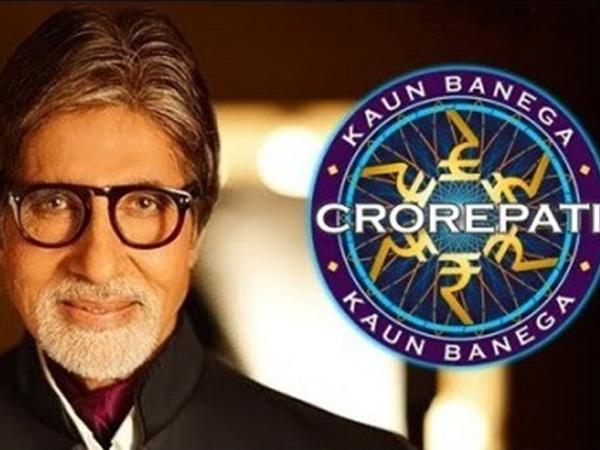
    It was hosted by an ageing actor who was a superstar a decade before.  Amitabh Bachchan on the Indian adaptation of Who Wants to be a Millionaire? Kaun Banega Crorepati? caught Indian TV viewers’ imagination.


    Television had in the past experimented with film talent hosting or acting or directing shows. In the eighties, Ramesh Sippy, BR Chopra and Ramanand Sagar had managed to get the Indian TV audiences riveted in front of their TV sets with their ensemble consisting of film actors and some newbies. And it had worked – worked incredibly well.


    But Mr Bachchan was not at his peak.  He had begun his fall down the cliff. The buzz was that his star was on the descendant, his health had failed him and his business ventures had capsized, he had defaulted on payments and loans and he owed a lot to people.


    Hence, no one really expected Mr Bachchan and the new show to work. Excepting two executives: Sameer Nair, who was then programming head at Star and Steve Askew, his senior colleage out of Star Asia, HongKong. And Peter Mukerjea who headed Star India then. He had replaced the flamboyant former government bureaucrat Rathikant Basu.


    Packaged intelligently with Kaun Banega Crorepati were two other shows: Kyyunkii Saas Bhi Kabhi Bahu Thi and Kahaani Ghar Ghar Ki. Both talked about families and values of a bygone era, yet they seemed very contemporary because probably they were. And these three powered Star Plus very soon to the number one spot in the GEC space, polevaulting over the well entrenched Zee TV, Sony and Doordarshan.


    It was a spot it held on to for almost seven years, earning for News Corp billions of dollars, and becoming the brilliant stone of its Asian crown.


    Today, the network is headed by Uday Shankar who has expanded it into the regional space, niche content, sports, OTT services. It still leads the Indian market as probably the most valued Indian entertainment company. Some may argue that it’s Zee which is at the top, but that’s an argument that no one will possibly win.


    On 3 July, however, who were associated with the channel and the show at that time got nostalgic on social media.


    It began with a post by the then Star entertainment channel programming head Steve Askew: “15 years today since the beginning of the Indian Television revolution for STAR Plus! Thanks to Big Synergy, Balaji and of course Sameer Nair.”


    Sameer in turn went on to thank Big B and a host of others from Star associated with the show at that time.  Big Synergy promoter Siddhartha Basu then raised a toast stating: “Here’s to the crystal anniversary of the show that brought in the millenium, and everybody who was part of making it happen, cheers !”


    Star Plus marketing executive Mubina Ansari then posted a comment on her Facebook page which attracted several comments like bees to a honeypot.


    Said she:  “I will never forget 3.7.00. Rains like never before and a 1000 promoters on the streets of Mumbai asking people to tune in to KBC.”


    To which another Star Plus marketing had Vidyuth Bhandary (currently with Fremantle India) responded: “Yep !! How 15 years have passed !! I still remember behaving like a typical client with Roshan Abbas and Karan Chettri, as I was overlooking the Delhi onground promotions on 3rd July 2000 !! That was a mammoth operations and nothing has come close to it even today !!!”


    Remembering the old times Roshan Abbas who ran an event agency then added: “Oh I remember ! With Siddharth Roy Kapur (currently CEO UTV-Disney) in Lucknow, Vidyuth Bhandary Mubina Ansari all manning the streets ! And then came the biggest revolution in TV and Star Plus.”


    Sumantra ‘Sumo” Dutta (currently based in Dubai with a telecom company) who headed sales at that time piped in  “Seriously fun times. Game changing times. High risks too.”


    “Everything was planned up to the last detail,” revealed Samson Jesudas (in the distribution of Star India then). “Be it programming, marketing, distribution, advertising, branding, etc etc. I have yet to see a launch like this… No wonder today, if one picks up any channel, advertising firm, agencies, MSO, etc, one will find a ex Star guy/girl working for them. Amazing experience.”


    Jesudas also elaborated the role that distribution played in making the show visible to Indian viewers. He remarked in his response to Mubina: “Guys u forgetting the distribution team who ensured that Star Plus runs in prime band in all cable networks. I remember that we bought all cable guys under one roof on 3.7.00, so that there’s no sabotage and blackout of Star Plus and even if there’s one, we have the cable owner in front of us to rectify the same.”


    He finally ended by saying it was “teamwork” which made it happen.


    KBC, ran for only three seasons on Star Plus (2000-2001, 2005-2006 and 2007) but it helped chart a new course for Murdoch’s Indian entertainment venture. It moved to Sony in 2010 and has run for five seasons (2010, 2011, 2012, 2013, and 2014).  The format has undergone a metamorphosis with more reality elements being added. Hopefully, its sixth season will do the trick for Sony.

  • Your content should be good, it will attract people anyway: Asit Modi

    Your content should be good, it will attract people anyway: Asit Modi

    MUMBAI: At a time when daily soaps the likes of Kyun Ki Saas Bhi Kabhi Bahu Thi and Kahaani Ghar Ghar Ki ruled the small screen, one man dared to differ. Asit Kumar Modi of Neela Telefilms nurtured a dream – to produce a daily comedy based on Taarak Mehta’s column ‘Duniya ne oondha chashmah’ in the popular Gujarati weekly, Chitralekha. Friends found the idea ridiculous while general entertainment channels (GECs) simply trashed it. However, Modi stuck to his guns and finally found a taker for his show Taarak Mehta Ka Ooltah Chashmah! in Sab TV. Today, the sitcom has not only completed five years but has acquired sort of cult status, maintaining its position among the top ten TV shows of all time. In a heart-to-heart with Disha Shah of indiantelevision.com, Modi casts a long and close look at the journey thus far…

    If there was one thing Modi knew he would have to face is repeated rejections. Indeed, it took eight long years for his show to come on-air. “In between 2000-2008, no GEC was ready to accept comedy. Every channel wanted to focus on saas-bahu and drama soaps because that was the trend at the time. However, I through that ‘if a daily drama can run, then why not a daily comedy?’” he says. Modi was also aware that writing a daily comedy was a huge challenge as one had to churn out something new every day to keep viewers hooked.

    His friends laughed at him when he told them about his plans. “They de-motivated me and said that viewers are not going to accept a daily comedy; a genre like this will be accepted only over the weekends. But somehow, I had the confidence in me that channels would have to accept a daily comedy,” he recalls.

    The show had to convey the harshest truths in the funniest possible way. Also, when he purchased column rights in 2001, all characters were Gujarati. He faced the uphill task of bringing in characters from different communities to appeal to a universal audience. “I wanted to showcase the lives of middle class families; how they live, eat, sleep, and even go through stress laughingly. Moreover, I wanted to showcase different cultures living together in one society; how they celebrate festivals together, the bond between them and so on in a simple but humorous way,” he remembers.

    So, he researched each and every character he had in mind for the show and considering Mumbai’s cosmopolitan background, created mixed combinations like a Parsi and Punjabi family, a Tamil and Bengali family etc.

    Armed with a concept, Modi approached channels including Star Plus and Sony (four times) but in vain. At the time, Sony had just taken over Sab TV, and NP Singh invited Modi and asked him to produce the show for Sab TV. That’s how Modi finally got a platform to showcase his talent. Apparently, Disney too had approached Modi but the channel wanted to feature only children, which is why Modi had to turn them away.

    Casting was most difficult and took Modi over two months to finalise, what with each artist being auditioned five times to ensure the right fit. “I wanted faces with which people can identify. Dilip Doshi (Jetha) was always my first priority when it comes to comedy. Daya’s role was suggested by Doshi and a few other artists; I had watched her plays but wasn’t sure because she hadn’t really dabbled in comedy. I was a little confused, but when she mimicked a few personalities, she was excellent,” says Modi. He would often take the actors to the sets to familiarise them with their characters. “Whenever the set was in a developing stage, I used to take the actors and tell them that this was their society where they would stay and so on. In the beginning, I had to mould each of the actors personally.  While it took time, at the end of the day, the whole team worked equally hard,” he says.

    Working within budgets was the other big constraint, considering Sab’s budgets were very low at the time the show was launched. “For the first six months, I incurred heavy losses. I had to create a huge society. Usually, a daily soap demands one set- either a house or a haveli or other methods of living. I had to create two sets – Gokhuldam exterior sets and interiors showcasing everyone’s houses,” reveals Modi. The one thing that kept Modi going was his belief that if your show is good, you can build the slot and become the slot leader as well. Besides, he had an understanding of the ways of TV, having been associated with it since the days of Buniyaad and Hum Log. “There was a time when people did not consider afternoon slots. But shows like Shanti, Bhabhi and Swabhiman on Star Plus made people watch TV during the afternoon as well. There was also a time when shows like Mahabharat and Ramayan made people watch TV on Sunday mornings,” he explains. “Your content should be good; it will anyway attract people. I believed that if I made a good show, there would be a loyal audience for Sab TV as well. With lots of households having just one TV set, we decided to cater to the entire family.”

    Putting a team in place was the third challenge. “The writers who came to me for work were all new; they didn’t have any experience in writing. So with my kind of experience, I had to train them and utilize their talents in the best possible manner. I have designed this show, so it is in my blood,” says Modi, adding, “We get our reward when we manage to make people smile at the end of a hard day.” Currently, Modi has about seven to eight people in direction, and around 10 people in editing. “I have an in-house editing studio and three to four writers. I am always aware of what’s happening in terms of the screenplay. I don’t want those ‘yes, sir’ type of people, otherwise how will I grow? In the creative field, one has to constantly grow and reinvent. And for this, you need people who can pinpoint your weaknesses,” he says. As it is a daily comedy, editing happens 24×7. “We do it shift-wise. Compared to daily soaps, comedies need much more editing. One needs to understand that comedy is more dynamic and hence, there is more work,” says Modi. The staff strength including directors, script writers, technicians and laborers is nearly 150. “What is wonderful is that my whole team has remained with me through these years. About 98 per cent of crew members have stuck with me. We all work as a team, a big family,” he adds with pride.

    Looking back, Modi feels he has succeeded in making it a one-of-a-kind show. “In television, you work for the audience. One needs to be aggressive. You will lose the audience, if even one or two episodes are not up to their expectations. It will leave your target audience disheartened. They then have options of switching to other channels. So, for the stickiness of the show, I made the show as real and as simple possible. With daily soaps taking tons of leaps, in my show, I have taken no leap. No double meaning comedy jokes, it’s all about simplicity. The show is different and unique in its own way and that is the reason it is running strong for years,” he elaborates.

    Anooj Kapoor, Senior EVP and Business Head, SAB TV

    While media experts observe that Sab TV’s reach would be lower than say, that of a Star Plus or Colors, the higher TVTs enjoyed by Taarak Mehta… mean that the show is watched more intently by viewers as compared to other offerings in the same time band. Thus, great content on Sab TV has translated into stickiness for the channel. Sab TV executive vice-president and business head Anooj Kapoor could not agree more on this. “When we defined our brand promise of ‘Asli Maza, Sab ke saath ata hai’, the idea was to showcase light-hearted entertainment that the entire family can sit together and watch. So, that was our brand promise. Modi interpreted our brand promise in a very nice manner by showing people of different communities living together in a fun sort of way.” Kapoor feels casting is the best thing to ever happen to the show, with the characters of Daya and Jetha becoming extremely popular.

    Ask Kapoor the reason for Taarak’s success and he says: “In Taarak, because there are so many characters from such diverse backgrounds and different communities, that they are able to create a wide array of plots and keep the show robust and that is the reason why it continues to be successful.”

    He informs that in the last six years, Sab TV has grown 600 per cent in terms of ratings despite a reach of 40 and a budget which is one fourth of the total. “That has been possible firstly, because of our unique decision taken as a channel and secondly, because of successful shows like Taarak and so on. “

    Elaborating on Sab TV’s strategy as a channel, Kapoor says: “Our strategy was differentiation through innovation. We tried to create several different brands with each having a very distinctive kind of an image. So, the entire bouquet fell together very nicely which was ably led by the success of TMKOC.”

    Going by industry experts, the stickiness has enabled Sab TV to rake a premium for its leading show. A 10-second ad spot on the channel goes for Rs 50,000. Its popular show commands a premium of 15 to 20 per cent. Taarak Mehta Ka Ooltah Chashmah sees its ad slots being sold for Rs 80,000.

  • Sahara One to launch ‘Ghar Ek Sapnaa’ on 15 Jan

    Sahara One to launch ‘Ghar Ek Sapnaa’ on 15 Jan

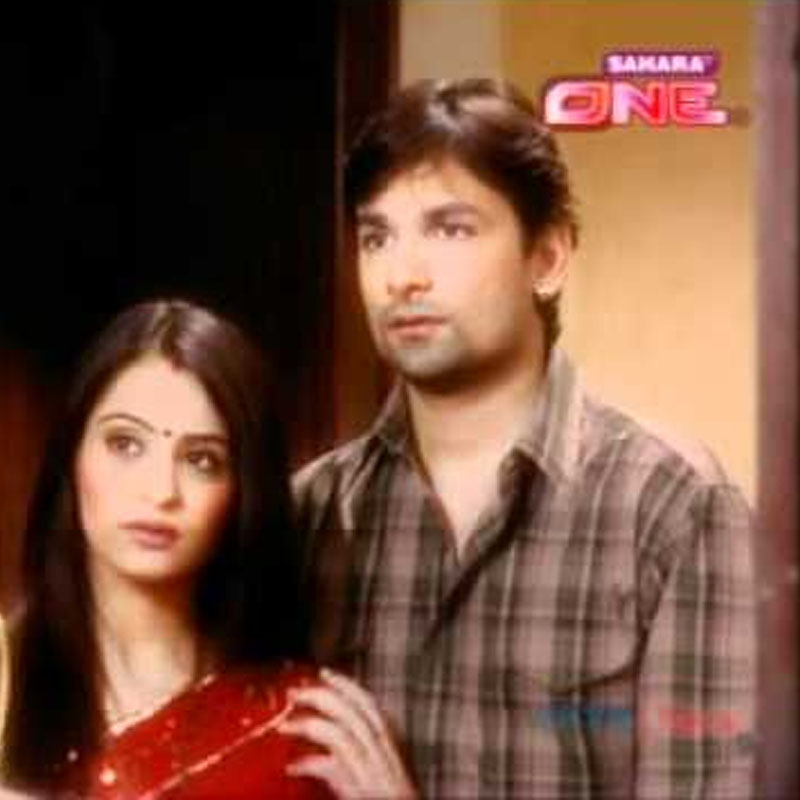
    MUMBAI: A bridegroom kidnapped for a marriage, a wedding held at gunpoint. That is the broad plotline of Ghar… Ek Sapnaa, Sahara One’s new show which launches 15 January at 10 pm.

    Produced by Ajai Sinha of Astitva Ek Prem Kahani fame, the show is superseding Comedy Champions, which is currently airing in the 10 pm slot. The new show will have its task cut out considering the fact that it would be competing against Star Plus’ Kahaani Ghar Ghar Ki, which has just got a makeover, Sony’s Bigg Boss and Zee TV’s Betiyaan Ghar Ki Laxmi.

    Commenting about the show, Sahara One programming head Kalyan Sundaram said, “It’s a family show at an important slot. Though everyone has a space and audience, we are confident of our content. Since it’s a family drama it can’t be completely different from a family soap but the USP is the treatment and with someone like Ajai Sinha you can sure keep high expectations.”

    The starcast of the show includes debutant Sayantani Ghosh as Kakul, Shammi, Alok Nath, Harsh Chhaya and Himani Shivpuri amongst others.

    The plot of Ghar… Ek Sapnaa revolves around the lead protagonist Kakul, daughter of Om Shankar a politico-business magnate of Bihar. Kakul’s family consists of her father, her elder sister Trisha and her brother-in-law, Sujit.

    At Kakul’s best friend Reena’s wedding, Samman, the bridegroom’s friend even though in a committed relationship with Vanshika, takes up a bet with his friends to flirt with Kakul and win her over. Unaware of the territory that he has treaded on, Samman promises undying love to Kakul who in turn falls in love with him almost immediately. Although Samman wants to break free from this situation, he is forced to marry Kakul and takes her home with him.

  • Star Plus prepares ground for ‘KBC’ arrival

    Star Plus prepares ground for ‘KBC’ arrival

    MUMBAI: Paving the way for King Khan to make his grand re-entry onto the small screen with Kaun Banega Crorepati (KBC), Star Plus is rejigging its week day prime time line up.

    In a strategic move, the channel has uprooted Karam Apnaa Apnaa from its well-ensconced 9:30 pm slot and placed it in the lower profile 8 pm slot, where it will take on rival Zee TV’s Banoo Main Teri Dulhaan, a show that is giving decent ratings returns to Subhash Chandra’s flagship channel.

    Speaking to Indiantelevision.com on the prime time strategy of Hindi entertainment’s lead network, Star India creative director Shailja Kejriwal asserts that Karam Apnaa Apnaa currently grabs the third top spot on the channel alongside Kyunki Saas Bhi Kabhi…… and Kahaani Ghar Ghar Ki and therefore, it is a good way to kick start prime time viewing on Star Plus.

    In sync with this, Star Plus’ Viraasat which the industry buzz has it is expected to go off air, has now been shifted to sibling Star One’s 8:30 pm slot. Ironically, this position may give way to its gradual demise as it competes with the heavyweight Kasautii Zindagii Kay on Star Plus.
    However, Kejriwal is optimistic about Viraasat and says, “Even if Viraasat carries one third of its audience to Star One, that will be great for the channel.”

    Stretching the prime time line up further, the channel will bring Star One’s Paraaya Dhan with all original episodes to Star Plus at 11:30 pm. Presently, repeats of the show air in the given time slot on the channel.

    Star Plus will have virtually no competition with sister channel Star One for the 9 to 10 pm duration of KBC as Sathi Re whose ratings are almost negligible, remains in its 9 pm slot. In the 9:30 pm position, what will air are repeat telecasts of Paraaya Dhan.

    All hopes that the channel had in the big budget sci-fi series Antariksh, seem to have been short lived as the show is being taken off air. Along with its poor performance, Kejriwal admitted that “it was also too expensive.”

    The rescheduling means that Star Plus has beefed up its week day line up to the extent that Karam Apnaa Apnaa will get the ball rolling from 8 pm, followed by Kasauti… while KBC is positioned at the peak of prime time viewing at 9 pm. This will be followed by the likes of Kahaani…., Kyunki…., Kahin To Hoga and Paraaya Dhan.

    All of these changes will come into effect with the launch date for KBC, 22 January.

    What’s left to be seen is whether season three of KBC with its new look and host can once again rewrite ratings records for Star Plus in the 9 to 10 pm slot and in the process stymie Zee’s resurgence which has been scripted on the back of Kasamh Se and Saath Phere.

  • Soaps – the violence within

    Soaps – the violence within

    Violence, subtle and physical, has permeated the soaps of the small screen, according to a recent study.

    In a monitoring study that spanned 30 episodes of various soaps on Star Plus, Sony and Zee in June 2002, the Delhi based Centre for Advocacy and Research found that there is a high presence of physical, verbal and psychological violence on screen. Most of this is directed at women. Marital discord, male female conflicts, male aggression and family honour are the reasons for the high quantity of violent acts on television, notes the study.

    During the seven day study, the CFAR viewers‘ panel also looked at regional language channels like Alpha Bengali, Alpha Gujarati, Asianet and Sun TV. In the monitored sample, the panel noted 10 scenes depicting domestic violence in which women were the victims and men the aggressors. The nature/act of violence was physical or verbal. However, the psychological impact of the violence was to a major extent borne by the female victims, the study avers.

    Whether marital discord, anger and frustration of the man in his professional life, a misunderstanding or the honour of the family, the women were always at the receiving end, notes the study. The relationship between the aggressor and the victim is seen as mostly marital or through marriage, but in a few instances, even a brother was an aggressor.

    The study also finds that women are often shown submitting to maltreatment and lacking the conviction to defend themselves. The ‘family court’, found the study, is a common occurrence. The woman is ‘accused’, judged and convicted by this ‘family court’ which consists of the woman’s in-laws. She has no recourse to any other agent, legal or otherwise.

    Although bigamy is illegal in India, it is often depicted – with the onus on the wives. It is dramatised in a sensational and voyeuristic manner, without any respect for or mention of the law.
    In many instances, male and female characters are forced into marriage against their wishes. This results in domestic violence or extra-marital affairs. As upholders of the family honour, women are always expected to place the family ahead of their personal aspirations, claims the study.

    Most of the viewers CFAR spoke to have said that a serial need not be violent in a bloody or in a destructive way without reason. Conflicts should be depicted in a ‘reasonable’ way and appropriate to the situation and not just to heighten the suspense and hook viewers. Violent situations are usually a way of creating excitement and expectations, viewers said.
    Citing examples, the study mentions Kasauti Zindagi Kay (Star Plus), in which Shivani, just married to Anupam, is slapped by him when she discovers a fraud he had committed. The new bride is shown howling when her brother visits her. The brother takes up the matter with her husband and her in-laws. But Shivani‘s in-laws don‘t intervene. Shivani folds her hands and pleads with her brother to leave.

    The CFAR study raises the point that while the wife is mistreated by her husband, she is made to apologise instead of being consoled or the husband being chastised for his behaviour. Such scenes show women as submissive to any maltreatment and lacking in the ability to stand up for their rights, the study says.
    In another episode of Kasauti Zindagi Kay, Kajol is threatened and emotionally blackmailed by her boyfriend as well as her family. The parents and her elder brother are against her alliance with the boy. When the elder brother catches her red-handed with her boy friend, he pulls her away angrily and takes her to home. She is brought to the ‘family court‘ where the brother screams at her and threatens her with dire consequences unless she behaves properly.

    Citing other similar cases, CFAR raises another issue – The ‘family court‘ is used in many serials like a “court martial”. The ‘accused‘ is judged and convicted by this ‘family court‘ which consists of her in-laws, without recourse to any other agent, legal or otherwise. Should such family courts be held and given the authority to judge an individual who has no one to fall back upon?

    In Sanjjhi (Zee TV), Amar Singh uses physical and verbal means to threaten both his wives and their families when the first one files a suit of bigamy against him while the second testifies against him. He taunts and threatens his first wife, Kanak, by reminding her of her inability to bear a child. CFAR in its study asks whether such violations of the law be depicted in such a dramatic, sensational and voyeuristic manner, without any respect or mention of the law, which clearly prohibits bigamy?
    In Hubahu (Sony TV), Aditi‘s husband roughly pushes her towards the door and asks her to leave the house because he feels that she is not allowing him physical intimacy. The study points out that though the serials did not project a lot of physical violence against women, there are many instances of extreme and repeated mental pressure, threats, screaming and shouting and anger directed towards women. Women were shown constantly under a lot of stress and anxiety, the panel felt.

    Tradition and societal pressures act as an aggressor in their own way, points out the study.

    Anamika in Kahaani Ghar Ghar Ki is shown to undergo tremendous mental and societal pressure in trying to decide between her role as a wife (which is to protect her husband at any cost) or to side with the truth (and thereby reveal his crime). At no point does any family member counsel her. In Kkusum, Kasauti Zindagi Kay, Tu Kahe Agar, the three leading women are shown to be under constant stress and mental pressure owing to either their husband‘s affair with other women or due to some familial problem. In Bhabhi, Tilak and Pushpa pretend she is his wife. In one scene, he pushes her towards the wall and warns her never to tease him.

    In Kasauti Zindagi Kay, Kamolika is under constant physiological stress because she suspects that her husband, Anurag, is still in love with the girl he wanted to marry in the first place.

    In all these instances and in other serials, the wife is placed under tremendous mental duress and even abuse because marriage is often founded on a misunderstanding or for some reason that is unacceptable to the man. Often her husband is in love with another woman and marries her under pressure from his family. What is supposed to be one of the happiest milestones in a woman‘s life, becomes a source of unhappiness and uncertainty and of future conflicts between the couple from the very first day of their marriage and justifies the husband‘s ill-treatment of the wife, the study notes.

    In Choti Maa..ek anokha bandhan (Zee Tv), Kasauti Zindagi Kay (Star Plus), the boyfriends of the female characters physically, verbally and psychologically carry out violence against them. Koyna in Choti Maa becomes the victim to physical abuse by her boyfriend who takes her to a pimp.

    In another example, an apparently progressive character who takes up cudgels for his sister in law against his own brother is also shown taking recourse in brute force. In Kahaani Ghar Ghar Ki (Star Plus), Om uses both verbal and psychological pressure along with his tough body language to force Anamika to reveal the truth about her husband raping a blind girl. She is reduced to hysteria in her pregnant state, and finally, breaks down. When she testifies in court, her husband Devan starts screaming at her. She cries and walks out of the courtroom all by herself. The CFAR study raises the pertinent issue of whether a family member be given the license to continuously pressurise or “torture” a woman on the justification that the ‘truth’ has to be established.

    Impacts –
    Several female viewers interviewed by CFAR observed that many of the so-called safe family serials, which hook the viewers with very identifiable situations and characters, have their share of problems. Not only is the depiction of men and women lopsided or one-dimensional, it is highly exaggerated, unrealistic and inconsistent, the study claims. Besides, some female characters are portrayed in an extremely unconvincing manner, especially when portraying a scheming, unscrupulous and dominating character. Men are portrayed in a highly negative manner too and such negative behaviour is often glorified.

    In many of these serials, extramarital affairs, bigamous relationships are shown as a matter of routine, and in some cases extremely casually. This gives children the impression that these are normal, acceptable or even desirable situations and expected adult behaviour, says the study. Mothers also found adverse impact on children’s lifestyles and their quality of life, and felt that children are getting increasingly prone to aggression. They constantly demand attention, exhibit severe mood swings and in some cases are prone to addictive habits. Finally, they behave in a highly precocious fashion, acting and behaving much older than they actually are, adopting adult postures and mannerisms. In most Indian homes, the mothers are at the receiving end of such behaviour.

    This presumes greater importance because research studies show that most of the children are hooked to adult programming. According to CFAR’s recent five-city study on Media Habits of Children, it was found that 50 per cent of the most favourite serials mentioned by the children in the age group of 6-12 years fell in the category of adult programming. Delhi topped the list of children viewing family drama with Shaktimaan (Doordarshan) the only exception.

    The study says that most soaps are exploiting reality to justify domestic violence – not normally condemned. Therefore, shown as ‘normal‘ within a family. The TV family is thus one in which violence is a day to day occurrence. No effort is made to correct this highly offensive and prejudicial behaviour. This justifies violence in real life and desensitises us to it and a future generation who will tend to believe that such personal liberties and violations are permissible in marriage and personal relationships, the study notes.

    Legal steps are seldom shown, the study notes. “Family courts” are held instead, in which might is the norm. Violations of individuals and their legal rights are openly shown. They allow a whole host of individual violations as if it is acceptable behaviour. People, including children, are shown eavesdropping, violating people’s privacy, inflicting physical and verbal violence, taking recourse to hate-filled speeches etc, as if it is their individual prerogative to abuse as long as the person you are abusing is within the family, the study observed.

    Finally, says the study, it gives men the power to resort to violent means to control their wives and teaches wives to submit to the violence in the larger interests of the family, which is at the core of these serials.

    The one week sample included –

    Serial   Number of episodes
       
    Kahaani Ghar Ghar Ki 5
       
    Kasauti Zindagi Kay 4
       
    Bhabhi 3
       
    Kkusum 4
       
    Saanjhi 1
       
    Kitne Kool Hai Hum 1
       
    Choti Maa 4
       
    Tu Kahe Agar 1
       
    Kyunki Saas Bhi Kabhi Bahu Thi 4
       
    Kuntee 2
       
    Hubahu 1