Tag: Kabaddi

  • How VOKE is helping Hotstar to bring 3D VR to Kabaddi

    How VOKE is helping Hotstar to bring 3D VR to Kabaddi

    MUMBAI: That India’s leading video streaming OTT player Hotstar is making its coverage of the World Kabaddi League available to viewers in 3D Virtual Reality(VR)  is known to many now. But what’s not known by most is who is behind making this is a reality. Well, it’s a Silicon Valley based company called VOKE, which has helped stream the NCAA Men’s Basketball Final Four, the CBS Morning Show and live streams of concerts, NBA, NFL and college football games, courtesy its live TrueVR technology. It is ranked as amongst the best in the live event VR space and its focus is on building the next generation of fan engagement for live sports and entertainment.

    “Star India is one of the most iconic media companies in the world and has been focused on transforming sports in India. This partnership will allow them to provide live, immersive virtual reality experiences to their users for the first time,” says VOKE co-founder & CEO Sankar Jayaram. The flexibility of our technology platform is unique and enables media companies to reach their audiences across a variety of mediums and deliver personalized VR experiences to all fans like never before.”

    Adds Hotstar CEO Ajit Mohan: “We owe our loyal and growing platform users the very best video experience in the world. Fans in India look to Hotstar to set the benchmark for video streaming. We are excited to collaborate with VOKE to bring a dramatic new live experience to sports fans.”

    The flexibility of VOKE’s platform is significant and it enables media companies to host the VR content on their own sites and branded applications instead of requiring that it be aggregated on the VOKE VR site. Hotstar users will be able access the TrueVR™ stream by selecting the Google Cardboard feature in Hotstar’s iOS and Android apps or by downloading the Hotstar Gear VR app from the Oculus Store. Highlights and video on demand content will be available through the same outlets for those who are unable to watch it live.

    http://www.indiantelevision.com/sites/drupal7.indiantelevision.co.in/files/styles/large/public/vokeger800x800_0.jpg?itok=splOyeGv
    The Voke Camera Pod

    VOKE’s live TrueVR™ stream for the Kabaddi World Cup will be available to Hotstar users on both Google Cardboard and Gear VR headsets. In addition, a personalized, 2D user-controlled experience will also be available for viewers without headsets on Hotstar.com or on the Hotstar app. It is the first time TrueVR™ content from a live event of this magnitude will be available on multiple headsets and mobile operating systems.

    Speaking to SportsVideoGroup in late August, Jayaram explaining the virtues of VOKE’s VR expertise had said: “So we put multiple pods on the field, and we allow users to choose where they want to be…. One, we can do a produced feed and take people where we think they might want to be. But we feel that, if a user really just wants to be sitting down by the players and coaches in VR, those are options and choices we want to give them. All of our cameras are completely synced, down to the frame level. Which means, when you want to do a replay or you pause one camera position, you can pick the action up from another camera at the exact same frame. Our cameras can go down to that level of detail if our viewers want to use it that way. So we provide full multi-POV, synchronized, DVR-capable streams, and that spans across VR, mobile, VOD, everything.”

    VOKE says that the Hotstar partnership will continue for more live sporting events going forward. That should be good news for immersive virtual reality sporting event lovers.

  • Exciting weekend of sporting activity on Star Sports

    Exciting weekend of sporting activity on Star Sports

    MUMBAI: Star Sports Pro Kabaddi Season 3 is going to conclude this Saturday with the grand finale slated to happen in Delhi while the Asia Cup will see the Men in Blue battle it out with Bangladesh in their backyard for Asian supremacy in cricket this Sunday on the Star Sports Network. Viewers will be exposed to a lot of exciting sports action this weekend.

    Over a month of prime-time Kabaddi action will come to a closure this weekend as the Indira Gandhi Indoor Stadium in New Delhi will crown the Champions of Star Sports Pro Kabaddi Season 3. The last five weeks have seen some of the best action that there is in a full body contact sport in India. The third season of Star Sports Pro Kabaddi has seen new teams come out  on top, while the winners of the previous seasons have found it tough to repeat the winning performances.

    The Asia Cup which is being played in a T20 format has seen India dominate the tournament so far. India came out successful against arch-rivals Pakistan during the league matches and will now go head to head with the home team, Bangladesh. 

  • Exciting weekend of sporting activity on Star Sports

    Exciting weekend of sporting activity on Star Sports

    MUMBAI: Star Sports Pro Kabaddi Season 3 is going to conclude this Saturday with the grand finale slated to happen in Delhi while the Asia Cup will see the Men in Blue battle it out with Bangladesh in their backyard for Asian supremacy in cricket this Sunday on the Star Sports Network. Viewers will be exposed to a lot of exciting sports action this weekend.

    Over a month of prime-time Kabaddi action will come to a closure this weekend as the Indira Gandhi Indoor Stadium in New Delhi will crown the Champions of Star Sports Pro Kabaddi Season 3. The last five weeks have seen some of the best action that there is in a full body contact sport in India. The third season of Star Sports Pro Kabaddi has seen new teams come out  on top, while the winners of the previous seasons have found it tough to repeat the winning performances.

    The Asia Cup which is being played in a T20 format has seen India dominate the tournament so far. India came out successful against arch-rivals Pakistan during the league matches and will now go head to head with the home team, Bangladesh. 

  • Star eyes $500 million revenue from entertainment & sports by 2018: John Nallen

    Star eyes $500 million revenue from entertainment & sports by 2018: John Nallen

    MUMBAI: Rupert Murdoch’s 21st Century Fox is relying heavily on its subsidiary Star to lead its international growth.


    Explaining how Star’s growing entertainment ad revenues makes it a key player in the company’s plans to focus internationally, 21st Century Fox chief financial officer (CFO) John Nallen said, “One of the top priorities, uniquely for us is international. We’ve got a particular focus on growth outside the US. We continue to harness the assets we have in Star, FIC (Fox International Channels) and in Sky but we continue to be opportunistic to the extent we can outside the US.”


    As was reported earlier by Indiantelevision.com, this falls in line with a recent Morgan Stanley report that valued Star TV at $11.2 billion, where $300 million is the network’s gross revenue from entertainment business as of June 2015.


    Given the growth rate, Nallen anticipates that number to reach $500 million by 2018. “We feel confident about the $500 million target for 2018,” he said.


    It may be recalled that earlier this year, 21st Century Fox CEO James Murdoch had said that Star India is likely to earn operating income of $1 billion by 2020.


    The growth, according to him, is coming from two factors – entertainment and sports. “The first is the continued growth of the entertainment business, which is the hallmark of the Star business. We get 23-24 per cent market share every night. It’s a market that is growing. In the last six months TV ad market grew 21 per cent, we over-indexed because of our strength,” said Nallen.


    While entertainment continues to be a source of revenue for Star, its sports section is doing equally well. Seeing the prospects the company had earlier made its biggest sports investment by launching six sports channels with Star, which paid off for the network as “an enormous viewing success.”


    Nallen, who was speaking on the company’s business strategy for the next couple of years, at an industry summit, also pointed out on the company’s strong focus on expanding its international reach and growth through Star TV. “Top opportunity continues to be international, led by Star, which clearly is going to lead a lot of our international growth,” he said.


    Calling its Indian subsidiary – Star India, an undervalued asset, Nallen pointed out the growth statistic predicted from Star, which rides on the network’s continued success rate in the entertainment section, unlike the parent company’s recent experience of the same in the US.


    “Our ad growth in the US is coming from news and sports, and not from entertainment. If you take our total revenue, roughly 30 per cent of it comes from advertising. Two thirds of that advertising total comes from news, sports and international. The place that we are focusing on and the place people feel more vulnerable is entertainment advertising in the US. That’s the rest of the one third left,” Nallen said.


    Additionally, Nallen also clarified that Fox has no plans of further incremental investment in Star this year. “Not much more investment (in Star). This year we grew the investment because we extended one of the sports franchises that we started, the local Kabaddi sport that has turned into a phenomenon in India. There is not a massive new incremental investment that we need for Star,” Nallen informed.

  • “Good ideas always find an investor, so there is no point compromising with the idea:” Ronnie Screwvala

    “Good ideas always find an investor, so there is no point compromising with the idea:” Ronnie Screwvala

    20 years back when the word entrepreneur was rarely pronounced correctly, a 19 year old man in the midst of great legacy businesses turned out to be a stand-out first generation entrepreneur, who fearlessly kept invading into undiscovered territories.


    After starting as a local cable operator, he went on to finding United Television Group (UTV), ventured into sports with Kabaddi and funded e-commerce enterprises like Lenskart and Zivame. While the world was witnessing catastrophes, he decided to turn philanthropist with the Swadesh Foundation. From Shanti on Doordarshan to Swadesh on the big screen, from Rang de Basanti to Dev Dhe has enumerable number of trophies in his cabinet.  


    The distinguished voyage that ignites million minds, the role model for aspiring entrepreneurs in India – Ronnie Screwvala in conversation with Indiantelevision.com’s Anirban Roy Choudhury, shares his priceless guidelines for young aspirants.         


    Excerpts:  


    What triggered you to pen Dream with Your Eyes Open?


    Entrepreneurship is a challenge and the perception that only people with huge initial capital can become an entrepreneur is a myth and that’s the message I wanted to convey and that’s where the book came into picture.


    Dream With Your Eyes Open is not an autobiography but a voyage that has both highs and lows, failures and success, encouragement and demotivation. Another reason behind penning down the book is to encourage aspirants to go for entrepreneurship passionately and not take it as a second option.


    What do you think is stopping India from becoming a global leader when it comes to entrepreneurship?


    20 years back when I started, people could hardly pronounce the word entrepreneurship. Even today, while on the one side, there are a fair amount of businesses, on the other, there is huge parental pressure of going and getting a good job. Entrepreneurship has always been plan B. But that doesn’t stand true.


    One can either go and get a good job or turn an entrepreneur – both are equally respectable. The most important reason for less growth is the fear of failure. In India, people don’t talk about this fear and if they do, they can’t handle it. For most people, failure means the end of the game… the fear that everything is over is what acts as an obstacle.


    The thought process needs to be that if you failed yesterday, you should see today as another day and move forward. When you have such a fear about failure, you don’t start. That is one of the reasons why India is ranked between 140 to 150 when it comes to entrepreneuring nations.


    How does an aspiring entrepreneur deal with the intriguing question of ‘How do I get funded’? Do you think in order to find that answer, the basic idea gets feeble or compromised?


    Everyone in India thinks that you need an investor to start a business and finding one is the biggest challenge. In my opinion, that’s not the procedure that you need to follow always. If we look at the entrepreneurs who are prospering today, all of them bootstrapped themselves on their own. Bootstrapping is a must when it comes to entrepreneurship. You have your idea and you should start executing it and only after you reach a particular level, should you go for an investor.


    Your success ratio goes up if you bootstrap first and then go for an investor. If you get an investor early on, you get spoilt. The entire work culture changes and half the time the investor runs the business that you are supposed to run. The hunger is much more when you are doing it on your own and hence if you have an idea, you should start executing it and after you have concept proofed it to yourself, you go for the investor. A good idea will always find an investor therefore there is no point compromising with the idea.


    Is stagnancy another reason behind the low rate of entrepreneurship growth in India? Do you think one should have the hunger of invading into new territories?


    It’s good that these questions are coming now because a few years back, no one thought about what happens after the substantial establishment of a business. In India, after a certain level we refrain from moving forward, get stagnant and eventually start downscaling.


    In business, downscaling begins the moment stagnancy sets in. So, one should always be open to venturing into new territories as entrepreneurship doesn’t mean earning a livelihood but generating employment. The more we explore, the more are our chances of succeeding.


    Do you think digital can give birth to a non-advertiser source of revenue model, which will be subscription based?


    If we see globally Google, which is the world’s number one company, has taken its platform YouTube and left it free. It runs on advertising. Facebook is also on advertising. If we look at it from that perspective, that’s where it’s going.


    Let’s face it, in two weeks’ time, a newly released movie is available on Tata Sky for Rs 75 but people are refraining from opting for that as there are pirated DVDs available for Rs 35. Piracy is a huge barrier of subscription based model and to counter piracy we need consumer behaviour to change, which is a slow process and will take time.


    Digital media is cost efficient. The capital investment is less when compared to the other mass medium platforms and hence there is a slim chance of having a subscription based revenue model. However, it will take time as there are bandwidth and technological issues that need to be sorted first. For now, I think advertising is going to be a long-term stay.


    Don’t you think an investor, after financing the concept, at some point of time starts regulating the strategic affairs?


    If you are a strong entrepreneur, you will never let anyone regulate you. I think there is a misconception that an investor comes in to regulate. Investors have two aspects: firstly, his risk capital is higher than most entrepreneurs because he is choosing one out of 999 and secondly, all investors get into a portfolio investment mode where they know out of 10, five will fail, three will somehow sustain and two will succeed. Who else in the entire cycle has got a risk of five failures out of 10? So, investors are seasoned veterans, who take their decision after enormous number of research and knowledge so that they put their money in right place. 


    Investors’ key is to back entrepreneurs with whatever they are doing and not regulate them. So it’s a misconception that an investor regulates. Yes, if things go wrong, an investor may get hyper and interfere with a perception that he can add value. It’s a myth that investors regulate a company.


    What’s your opinion on the Indian eco-system? Is there enough encouragement and support from the Government’s side for an aspiring entrepreneur?


    I don’t think it’s the government’s job to support. The thing that everyone is looking at is ease to do business. So the business environment has to be simplified by the government. When it comes to taxation, with 30 per cent tax we are one of the least taxed nations of the world. The tax structure in the UK and the US is higher than India. With the Goods and Service Tax (GST), it will come down to 16 per cent, which solves many problems. In the UK, value added tax (VAT) is at 17 per cent so there is no room for blaming the government.


    The reason why service tax was increased is to bring it closer to GST. The complication lies in the number of regulations and multiple-window clearances. The media is the least controlled in India. In the US, you have to be a citizen of the United States to be able to operate any digital or broadcast media, whereas in India anyone can operate an entertainment venture and hence when it comes to democracy and freedom, India beyond question beats the rest.


    Regulations make doing business complicated in India as there is no single body that deals with all the regulatory issues, which makes opening a business in 10 days impossible.


    Do you think it’s important to add entrepreneurship as one of the major aspect when it comes to academic upbringing of the youth in India?


    There are 10 million graduates coming out of college every year. Do we have jobs for all of them? The answer is a big no. The only way of tackling that problem is adding entrepreneurship in the curriculum as early as possible. I started at 19, so an early start is possible provided you think about it at an early stage. The manifestation should be there. The target should not be to get a job and then become an entrepreneur.


    Managers and presidents of big companies should think about where they will stand ten years down the line when there will be a hundred million skilled youth looking for jobs. Hence they should devote time into entrepreneurship, which will provide job to those skilled people.


    You are venturing in motorsport now. Can you throw some light on it?


    Well, yes I am venturing into motorsport. However, the report stating an investment of Rs 300 crore is incorrect. Nowadays, whatever you do, a zero gets added automatically. Here motor sports doesn’t mean cars. It caters to bikers in India, which is the largest bike selling nation of the world. The over 250cc category has grown at an incredibly high rate in last five years and we are looking at a tourism based sport. Currently, we are researching on the ten most exotic places in India, where on television one will enjoy India’s natural beauty along with skilled bikers. The plan is to make it a tourism cum sporting event.


    In the beginning, we will get a mix of Indian and international bikers, as the aim is to make it world class. Each team will have one Indian and one foreign biker for the first two years and after that we would look at making it a 100 per cent Indian event.


    From the first super-flop Dil Ke Jharoke Mein to the blockbuster entrepreneur writing his book, how will you describe the versatile voyage of yours?


    The opening four lines in my book is about the biggest failure of my life Dil Ke Jharoke Mein, which is what I started with. The concept behind starting the book with that was to convey that failure is just a part of life and not the end of the world.


    My journey so far has been to not stop after a failure but to keep moving on. Cable was different, UTV was different and sports is different. I have always rediscovered myself and for me that’s the way forward.
     

  • Varun Mathur quits Nimbus Sports; to partner ITW Sports for new venture

    Varun Mathur quits Nimbus Sports; to partner ITW Sports for new venture

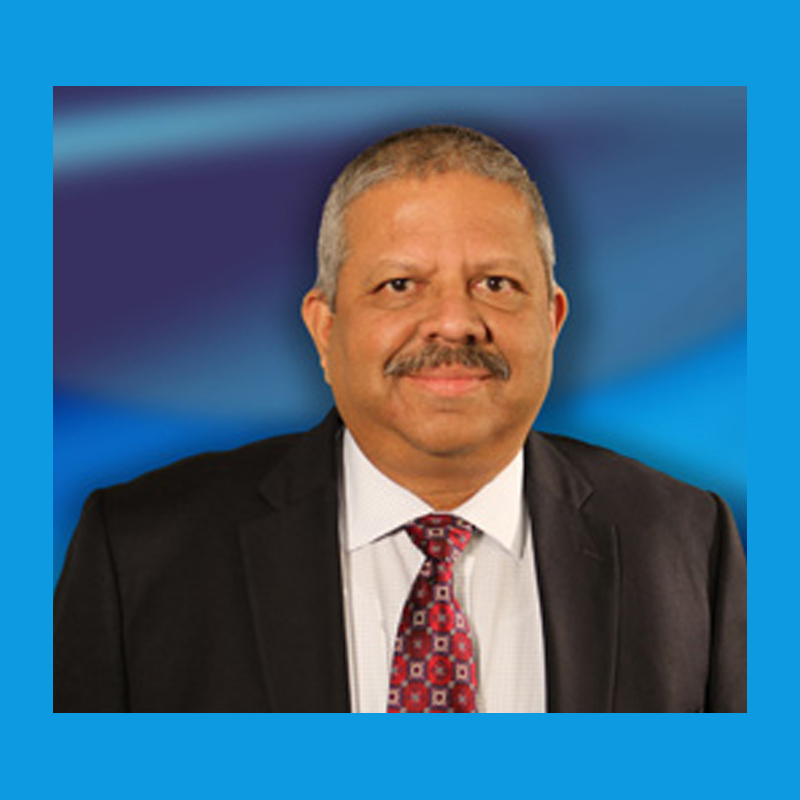
    MUMBAI: After close to two years with Nimbus Sport as its general manager, Varun Mathur has decided to take a big leap but within the confines of his expertise – sports management and marketing.


    Mathur will be partnering with ITW managing director and CEO Vikram Tanwar to lead the new initiative called ITW Sport+. 


    Speaking to Indiantelevision.com about his new venture, Mathur says, “I will be leading the new initiative as a shareholder and director.”


    Mathur will be based out of Delhi NCR.


    The new unit will be focussed on three key areas. The company will be involved with rights management in non-cricket sports like football, Formula 1 and tennis amongst others. It will also look at acquiring and managing digital rights of sports. Additionally, ITW Sport+ will also explore third party right management of athletes and sports celebrities in the sports ecosystem.


    “The focus will be on representation of football teams in the Indian Super League, various Kabaddi teams and sports consulting too,” informs Mathur. 


    Talking about the core thought behind the new initiative, he says, “Currently there is a huge empty space in the sports ecosystem for a large size sports management firm. There are many players who are doing smaller chunks of business but there is no large consolidated player. We want to change that element and are going to occupying that space.”


    As far a cricket is concerned, Mathur informs that ITW already has its presence there as it looks after most of the bilateral cricketing series rights.


    ITW, as a sports management company, specializes in consulting in sports rights acquisition and negotiation, licensing, concept development, in stadia branding among others. It also holds rights for international cricket.


    At Nimbus, Mathur was responsible for several key deals. These include bagging a XOLO (Lava Smartphone) for the EPL club, Liverpool FC and signing of ISL team Atletico De Kolkata with the telco as Aircel as its first principle sponsor.

  • World Kabaddi League features in top sporting properties in inaugural year

    World Kabaddi League features in top sporting properties in inaugural year

    MUMBAI: After its initial season, the Wave World Kabaddi League (WKL) attracted an aggregate reach of just over 101 million individuals as per TAM India in its very first edition placing it among the top five sporting properties in India, claim the organisers.


    This is both in terms of viewers as well as visibility to sponsoring brands. The league, which was telecast live on Sony Six, also garnered 1.5 million views on YouTube with 60 per cent of the views coming in from the diaspora in United States, Canada, UK and as far as Italy. Additionally an estimated 50 million reach was acquired through international feed in Pakistan, Middle East, Europe, US and Canada.


    WKL CEO Raman Raheja said, “We are overjoyed with the response to the WKL in its very first year. The idea of keeping the latter and final parts of the WKL in India, where the sport is extremely popular, also paid rich dividends in terms of TV exposure for the sponsors. We are now looking to a bigger event in the second edition.”


    Repucom, a research company that measures ROI for all sports across the world, gave an interesting comparison of WKL’s sponsored property exposure on TV as compared to other sports. Repucom India analyzed that the 86 matches played during the first season garnered as many as 143 hours of screen exposure, which translated into an hour and 40 minutes of exposure per match.


    The event as a whole received media value worth Rs 301,02,60,323 for 86 matches with an average worth of Rs 3,50,03,027 per match.  Wave Infratech’s media value was put at Rs 135,90,62,603 for all the matches at an average Rs 1,58,03,054 per match.


    Title sponsors, Wave Infratech, earned maximum visibility and ROI with 45 per cent of share compared to all the other sponsors exhibited during the event. Among other main properties, the static board earned 37 hours on screen exposure (18 per cent share compared to other sponsors) and the  Jersey front was the second leading property with 22 hours on screen exposure (19 per cent share compared to other sponsors).


    Repucom South Asia/India director and senior vice president- Joseph Eapen said, “We recommend that teams acquire more sponsors on the team apparels like jersey front, jersey back, jersey side, chest logo and trousers to cash the exposures and value from apparels.”


  • Kabaddi forms the subject of new feature film being released next month

    Kabaddi forms the subject of new feature film being released next month

    NEW DELHI: With Kabaddi getting tonnes of attention as a sports format in the country, Bollywood is now set to release a feature film on the game.


    Set to release on 7 November, Badlapur Boys will be produced by Karrm Movie. The movie revolves around about some boys of Badlapur village, who breathe and live Kabaddi and aspire to make a name out of the game, not only for themselves, but also for their village. However, the protagonist’s dream is slightly different and it binds the film right till the end. 


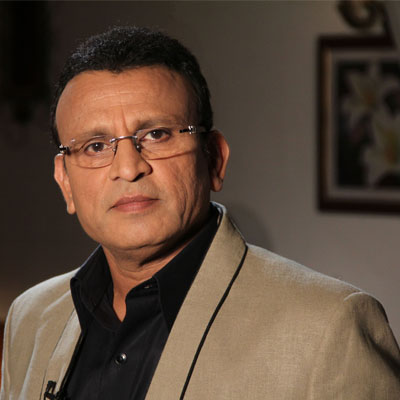
    Annu Kapoor plays the role of a Kabaddi coach in the film. The hero of the film, Nishshan, has acted in the film David and Subhash Ghai’s Cycle Kick, along with many other Malyalam movies. Badlapur Boys also stars Sharanya Mohan, who has acted in more than 16 South Indian movies as the main lead but this is her first Hindi film. 


    Although this is the directorial debut of the film’s director Shailesh Verma, he has written various daily soaps and movies, including Salman Khan starrer Veer. He is also planning to start his next movie right after the release of Badlapur Boys


    Actress Kishori Shahane plays the hero’s mother and Pooja Gupta, who had starred in Vicky Donor, Mickey Virus and Oh My God, is also a part of the film. Other artistes who worked in the movie are Boloram Das, Nitin Jadhav, Shashank Udaypurkar, Mazhar Khan, Ankit Sharma, Vineet, among many more. 


    Music of the film has been composed by Shamir Tandon and Sachin Gupta. Words to the melodies have been given by lyricist Sameer Anjaan, which have been sung by singers Sukhwinder Singh, Shaan, Mahalaxmi Iyer, Shreya Ghoshal, Javed Ali, Ritu Pathak. Choreography has been done by Saroj Khan.   


    Badlapur Boys is Karrm Movies’ first Hindi film. Their Marathi film Razakar is also ready to release. 

  • Dish TV leverages sports channels to push HD packs

    Dish TV leverages sports channels to push HD packs

    MUMBAI: With festive fervor just around the corner, India’s oldest DTH operator Dish TV has decided to make the most of the season. New packs have been introduced for north India with special variants for south India.


    A recent study done by Dish TV showed that HD was a big necessity and an increasing number of people were keen to take sports channels. “Even if multi screen viewing is on the rise, HD is going to be big. So we tweaked and introduced flexible packs. Sports is picking not just due to cricket but also events such as Asian Games, Olympics, Kabaddi and Football,” says Dish TV COO Salil Kapoor speaking to indiantelevision.com. Consumers have the choice to opt for HD packs with channels that may not be in the base SD pack.


    The operator has laid stress on sports in every level for SD packs. It has a total of 36 HD channels with several additions coming in after it got its additional transponder space early this year. Dish TV claims that it provides more sports content at every price point. The HD boost is also being backed by the uptake of HD TV sets during Diwali. The new packs have been introduced a month ago and Kapoor says that the growth has been ‘multifold’.


    While regional channels that are available in HD will be on Dish TV, its second brand Zing does not have an HD side to it. Kapoor says it would like to keep its HD audience to stay with Dish TV. The HD focus will be primarily in the metros. However, a plus point is that it provides the feature of inbuilt recorder in every HD STB, without any additional cost.


    The packs available are:


    Game on HD at Rs 125 (sports and Hindi entertainment)

    Life on HD at Rs 175 (English entertainment with sports and Hindi entertainment)

    Full on HD at Rs 200 (entertainment)

    Sports packs include:


    Maxi pack at Rs 275 (six sports channels)

    All sports at Rs 320 (maximum 11 sports channels)

    Platinum Sports at Rs 440 (English, Hindi, Sports, Lifestyle and Infotainment


    The HD channels include Ten HD, Six HD, Star Sports HD 1, Star Sports HD 2, Baby TV HD, AXN, Movies Now HD, Star Movies HD, Star World HD, WB HD, Zee Studio HD, Fox Crime, FX, Zee Café, Sony Pix HD, Life OK HD, Star Gold HD, Star Plus HD, Zee Cinema HD, Zee TV HD, Sony HD, &Pictures HD, Dish Box Office, Animal Planet HD World, Discovery HD World, NGC Wild HD, Nat Geo HD, Discovery Science, Nat Geo People HD, TLC HD World, Fox Life HD, NGC Music, M Tunes HD, Travel XP HD and ET Now.

  • When Kabaddi turned Pink!

    When Kabaddi turned Pink!

    Pink is the new colour of Kabaddi. The colour, associated with sensitivity, tenderness and femininity is definitely in stark contrast to the indigenous game which has its origins dating to the pre historic times. On 31 August,  when Jaipur Pink Panthers clawed U-Mumba during a nail biting finale of the Star Sports Pro Kabaddi League, the highly agile and contact sport was covered in Pink and announced its presence on the world stage.


    The Star Sports Pro Kabaddi League (PKL) which spanned 37 days and 60 matches, finally culminated at the National Sports Complex of India, Mumbai, the very same venue where the seeds of the game were first sown. While the Abhishek Bachchan-owned Jaipur Pink Panthers lifted the coveted trophy, the Ronnie Screwvala-owned U-Mumba team had to be content with the second spot.


    While many, including advertisers were skeptical whether the league would be able to generate audience’s interest both at the stadiums and on TV, the results are all out for the world to see. Not just male audiences, but women and children lapped up the game as they came in full gear supporting their respective teams with flags and merchandise. Families from Patna to Vizag, filled the stadiums with not just their presence but also their loud chants, enthusiasm, glee and even disappointment when their teams had to bid farewell. People connected to every raid taken by the 24 year old Jaipur Pink Panthers’ captain Maninder Singh. Players like him and U-Mumba captain Anup Kumar have a new-found fan base now. The last time when such enthusiasm was showcased was probably at the Wankhede stadium for India’s first love-Cricket.


    During the opening night 66 million Indians tuned in to watch the games on Star Sports and Star Gold claims the channel. On the micro blogging site Twitter, Star said it had generated conversations that were trending for nearly two days.


    No one but Star India, businessman Anand Mahindra and promoter Charu Sharma could have augured the path that Kabaddi has taken today. When Star India COO Sanjay Gupta earlier said that the sport would fit their objective of transforming the sports landscape in India, he was right. India seems to have found its second sport.


    The league proves that with a balanced mix of corporate backing, government support, telecast backing combined with international quality production values and celebrity endorsement, a lost game can draw renewed crowds to the stadium or tune in their TV sets. Therefore, it’s hardly a surprise that restaurants, bars and lounges had their customers asking for Kabaddi to witness the performance of 96 of the world’s best Kabaddi players. A few parents who complained that their kids were turning into couch potatoes are smiling, since their kids are now in the open playing the game.


    This has been driven by celebrities/owners of teams including Aamir Khan, Amitabh Bachchan, Shahrukh Khan, Sachin Tendulkar and Aishwarya Rai Bachchan who pledged their support to the games by being present at the venue.


    All in all, we eagerly wait to wear our favourite T-shirts at the next edition of the league beginning in March 2015 (hope the advertisers are listening!).