Tag: Kabaddi

  • Zee Sports joins hands with UPKL for 3 Years

    Zee Sports joins hands with UPKL for 3 Years

    MUMBAI: Zee Sports is making a power play in India’s sporting landscape. The network has entered into a three-year strategic partnership with Uttar Pradesh Kabaddi League (UPKL), becoming the exclusive broadcast and digital partner for the state’s flagship Kabaddi property.

    The collaboration, the first of its kind for a state-level sports IP, will bring the next three UPKL seasons to TV audiences on Zee Sports and to digital viewers via Zee5, expanding the league’s footprint across India.

    With the addition of four new franchises, UPKL now boasts 12 teams representing key cities across Uttar Pradesh. The partnership marks a pivotal step in UPKL’s evolution from a regional league to a nationally recognised sports enterprise focused on nurturing grassroots talent.

    “At Zee Sports, we believe in championing India’s own sporting heritage,” said Zee Sports business head Bavesh Janavlekar. “Through our vast TV network and Zee5’s digital ecosystem, this partnership will help Kabaddi get the scale and storytelling it truly deserves.”

    Echoing the sentiment, SJ Uplift Kabaddi founder and director Sambhav Jain said, “This collaboration transforms UPKL from a promising local initiative into a nationwide platform for players and fans alike. With season 2, we’re taking Kabaddi from local stadiums to living rooms across India.”

    The three-year deal will cover seasons 2, 3 and 4 of UPKL. The upcoming season 2 kicks off on December 25, 2025, in Noida, featuring 71 matches over 19 days, with live Hindi telecasts capturing the sport’s traditional spirit.

    With this move, Zee Sports and UPKL are set to turn a regional game into a national sensation, one raid at a time.


  • “We have invested more than $500 million dollars in sport over the past 15 years, and this is apart from rights acquisition costs” – Sanjog Gupta

    “We have invested more than $500 million dollars in sport over the past 15 years, and this is apart from rights acquisition costs” – Sanjog Gupta

    Sanjog Gupta, the man steering live experiences and the sports juggernaut at JioStar, finds himself squarely in the spotlight. Fresh off helming the eighteenth edition of the IPL — a relentless, high-octane ride that shattered records in viewership, fan engagement, and tech wizardry — Gupta is already plotting the next innings.
    In a crackling fireside chat with MPA’s Vivek Couto at APOS in Bali this morning, the sharp-suited sports boss laid out JioStar’s grand vision: why giving away the IPL for free wasn’t madness but method, how technology is rewriting the fan playbook, and why the network isn’t just broadcasting sport — it’s reinventing it.

    Here’s the man behind the masterstroke, unfiltered and in full flow.

    On IPL 2025’s impact on Indian sports
    India’s growing influence in sport is nothing but a reflection of India’s growing significance on the global stage, driven by a strong consumption-oriented economy. This IPL, not only have we reached a billion viewers across platforms, we have also managed to make this IPL the most monetised edition of the event and also the most monetised sporting event ever in India across advertising and subscription revenue.

     On what Star and JioStar have invested in sport
    Over the last decade and a half, Star and now JioStar has actually been the biggest private investor in Indian sport and in Indian media and entertainment. Largely with the mission to build what we believe can be a media and entertainment economy, but more than that, a media consumption economy, which is much larger in scale to anything that could have been imagined. While numbers around acquisition prices for sports rights tend to be thrown around a lot, what at times gets missed is the sheer investment that a network such as ours has made to grow those properties by way of marketing, by way of production, by way of investment in technology and that over the last decade and a half exceeds 500 million dollars. That is outside of what we paid for the acquisition of rights.
     
    On sport fuelling the wider JioStar network
    We believe sports serves as a recruitment funnel to bring in viewers and fans at scale, who then can be taken on a journey on a platform which could entail a live event, a Hindi entertainment show, or it could entail one of our new originals which is marketed on the back of a big sporting event and a recent example of that is the returning season of Criminal Justice which benefited significantly by launching in the last week of IPL.”

    On the freemium IPL strategy and changing viewer habits
    Our mission wasn’t to incrementally change the landscape, it was to completely shift the way consumers perceive paying for content and also over a period of time, attribute value to the entertainment needs they have. The subscribers are on the platform and not just on IPL and it started with an interesting hybrid subscription strategy, which allowed everyone to come onto the platform free. So it’s not pay at the gate, we’re not trying to keep people out and having them pay before they can consume. The model is based on real life example of how you shop, which is you go into a mall or a store, you sample enough and more of what you may want to look at and then choose to pay for deeper engagement, which in that case is purchase of an item.

    On whether cricket will remain the network’s sole focus
    We don’t want to be a single content or be known for a single content genre and that applies to sport as well. We have looked to grow English Premier League significantly over the last five years. In fact, over the last five years the viewership for English Premier League across our platforms has grown almost three and a half X (3.5x). Largely on the back of localisation efforts where we’ve taken Premier League deeper into the Indian sports ecosystem than ever before by producing it in languages meant for regions which have affinity for football. At the other end of the spectrum, you have a sport like kabaddi which is a sport that goes back thousands of years and is a part of India’s history but also it’s a part of India’s recreation where kids grow up playing it as a game. We’ve professionalized it and continue to invest in it to build it as India’s second most favorite sport. It already is the second biggest league in the country but but our objective with it is for the sport itself to grow and become a year-long proposition instead of being a two to three-month league.

    On building hyper-personalised sports journeys
    Our premise around sport is don’t look to serve many fans as one but look to serve almost each fan as many and what that means is every fan at different points of time and on different devices and in different modes of consumption will consume your content differently. So can you create infinite hyper-personalized journeys for each and every fan instead of serving one streaming experience to all and that’s the core tenet of the platform.”

    (If you are an Anime fan and love Anime like Demon Slayer, Spy X Family, Hunter X Hunter, Tokyo Revengers, Dan Da Dan and Slime, Buy your favourite Anime merchandise on AnimeOriginals.com.)

  • Tata Play forges new FanCode Sports partnership

    Tata Play forges new FanCode Sports partnership

    MUMBAI: Following the inclusion of  sports destination FanCode in OTT aggregator app Tata Play Binge  in December 2023, the DTH operator has now announced the launch of Tata Play FanCode Sports, giving its subscribers a front-row seat to a smorgasbord of sporting action including cricket, football, kabaddi, golf and motorsports.

    The new platform promises to deliver over 100 hours of live sports monthly, covering more than eight major sports and featuring blue-ribbon tournaments such as the Carabao Cup, Copa del Rey, and Concacaf Champions Cup. Cricket enthusiasts haven’t been left on a sticky wicket either, with Australia’s Tour of West Indies and South Africa’s Tour of Zimbabwe also on the menu.

    Formula 1 fanatics are in for a treat as the service brings coverage of all 24 Grand Prix weekends to screens across India. Viewers can witness Lewis Hamilton don the famous Ferrari red for the first time as he reignites his rivalry with Red Bull’s high-flying Max Verstappen.

    The platform will showcase global sporting megastars including football icons Cristiano Ronaldo, Kylian Mbappé, Mohamed Salah, and Lionel Messi, alongside cricket heavyweights Nicholas Pooran, Pat Cummins, Kagiso Rabada, and Aiden Markram.

    “We are thrilled to expand our partnership with FanCode,” said  Tata Play  chief commercial &  content officer Pallavi Puri. “This exciting collaboration marks a significant milestone, enabling us to offer a seamless viewing experience across screens, enhancing the diversity and accessibility of live sports content.”

    FanCode co-founder Yannick Colaco added: “After our successful collaboration on Tata Play Binge, we are thrilled to continue our partnership with Tata Play to bring FanCode to millions of new homes.”
    The 24/7 ad-free service will be available on EPG No. 485 and through the Tata Play mobile app for Rs 75 per month—a small price to pay for front-row tickets to the sporting world’s greatest hits.

  • 2024 The year that was – Convergence redefines India’s media landscape

    2024 The year that was – Convergence redefines India’s media landscape

    MUMBAI: As 2024 draws to a close, India’s media and entertainment sector has undergone a profound transformation, reshaping how content is created, distributed, monetised and consumed. The industry’s trajectory is no longer defined by linear growth but by convergence – a blending of formats, technologies, and audience experiences. This article explores the standout trends of 2024 that have positioned India at the forefront of the global media revolution. 

    The Rise of Unified Media Ecosystems 

    In 2024, the fragmentation of content across platforms prompted a surge in unified media ecosystems. Major players integrated cable, satellite, and OTT services into seamless bundles. Partnerships like those between Tata Play and JioCinema offered consumers a singular subscription covering live TV, streaming, and interactive content. The merger of Disney+ Hotstar and JioCinema under the JioStar brand will further demonstrate this trend, combining Disney’s extensive content library with Jio’s robust technological and distribution infrastructure.  

    These developments addressed subscription fatigue by offering cost-effective and convenient bundled services. As telcos and streaming players increasingly leaned towards unified offerings, the next pivotal step emerged – creating singular OTT platforms to integrate multiple streaming services under one roof. Scalable and modular architectures have become essential, enabling flexibility and customisation to accommodate evolving service bundles and diverse consumer preferences. This shift underscores the industry’s adaptability in meeting the complex demands of modern consumers. 

    Sports Broadcasting Reinvented 

    India’s sports media landscape saw unprecedented innovation in 2024. Beyond traditional cricket broadcasts, kabaddi, football, and esports embraced hybrid delivery models. Augmented reality (AR) features allowed fans to experience matches with real-time statistics and dynamic visuals, while 5G-enabled immersive experiences brought stadium energy into living rooms. 

    Regional sports leagues also thrived by leveraging vernacular commentary and localised marketing, broadening their appeal and strengthening connections with diverse audiences. These efforts not only amplified audience engagement but also positioned regional sports as valuable contributors to India’s overall sports media ecosystem. 

    AI, Advertising, and Live Commerce Converge 

     Artificial intelligence, innovative advertising, and live commerce emerged as interconnected forces shaping the media landscape in 2024. AI-driven personalisation powered hyper-targeted recommendations and dynamic content delivery, tailoring experiences to individual, regional, or similar preferences. This capability extended into advertising, where AI analytics enabled micro-segmentation and dynamic ad formats. Brands also experimented with shoppable media embedded directly into OTT platforms, allowing users to interact with ads and make purchases seamlessly. 

    Live commerce further transformed engagement by integrating real-time shopping into live events. Cricket telecasts, for instance, featured exclusive merchandise drops available for purchase during key moments. Platforms with modular architectures and seamless third-party integrations supported these innovations, unlocking new revenue streams and enhancing viewer interactivity. These advancements reflect a significant evolution in how audiences engage with content and commerce simultaneously. 
     

    Deltatre

     Content Without Borders 

     In 2024, Indian content flourished on the global stage. Platforms like Netflix and Amazon Prime Video promoted Indian originals, while regional OTT platforms expanded into south Asia, the Middle East, and Africa. This cross-border success highlighted the universal appeal of culturally rich narratives. 

    International co-productions became more common, with Indian creators collaborating with global studios. Flexible monetisation models, including ad-supported, subscription-based, and hybrid offerings, enabled experimentation and growth, allowing platforms to cater to diverse audience needs. This trend underscores the global demand for authentic storytelling and India’s role as a leading content powerhouse. 

    Collaborative Ventures and Audience Co-Creation Redefine Engagement 

    Collaborative ventures between creators, platforms, and brands surged in 2024. Co-productions between Indian and international studios introduced fresh storytelling perspectives, while brands acted as content producers, funding original series that aligned with their ethos. 

    Audiences also became active contributors, engaging in interactive storytelling, user-generated content campaigns, and fan-led initiatives. This participatory approach fostered loyalty and transformed viewers into brand advocates. Platforms embracing flexible monetisation strategies and modular architectures capitalised on this trend, delivering sustainable revenue through community-driven content models. Such initiatives highlighted the importance of deeper connections between creators and audiences in driving content innovation. 

    Looking Ahead: 2025 and Beyond 

    As we step into 2025, the role of technology in shaping India’s media landscape cannot be overstated. Scalable, modular platforms will be critical in enabling media companies to grow and adapt without overhauling their infrastructure.  

    These technological advancements will not only enable cost-effective scaling but also foster innovation, allowing the industry to explore new content formats, distribution models, and audience engagement strategies. 

    India’s media and entertainment sector is poised to lead the way in leveraging technology for inclusivity and innovation. By embracing modularity, scalability, and flexibility, stakeholders can address the complexities of a rapidly evolving market, ensuring sustained growth and global relevance. 

    The author is country manager India, Deltatre.

    (The picture  for this article featured on Indiantelevison.com’s home page was generated using Microsoft’s AI Image generator. No copyright infringement is intended)

  • The right mat: Boosting performance and safety in wrestling and kabaddi

    The right mat: Boosting performance and safety in wrestling and kabaddi

    In contact sports such as wrestling and kabaddi, the playing surface plays a critical role in determining athlete safety, comfort, and performance. The mat not only cushions falls but also influences how athletes move, grip, and balance during high-intensity encounters. While both sports are contact-driven and demand immense physicality, they have distinct characteristics that shape how the mat interacts with the athletes.

    Injury prevention and safety

    The prevention of injuries is a paramount concern in both wrestling and kabaddi, given the physical intensity and frequent body contact involved in both sports. The right mat can significantly reduce the risk of injury by providing adequate cushioning to absorb the force of falls, tackles, and other impacts.

    In wrestling mat must be soft enough for cushion falls yet firm enough to allow for proper improvement and grip. Wrestlers engage in intense grappling, throws and takedowns all of which put pressure on the body. Mats that are too firm may fail to absorb the impact effectively, leading to increased risk of concussions, joint injuries, and bruising. Conversely, mats that are too soft may cause instability, making it harder for athletes to maintain their balance, potentially increasing the risk of sprains and twists. Additionally, modern wrestling mats are often coated with antimicrobial substances to prevent infections, which are which are common in close-contact sports  

    Athlete comfort

    Athlete comfort is another critical factor influenced by the mat choice in both wrestling and kabaddi. Comfort not only affects an athlete’s immediate experience but also their long-term performance by reducing fatigue and injury.

    In wrestling, the mat’s ability to provide a stable yet cushioned surface is crucial for minimizing joint stress. Wrestlers spend significant time grappling on the ground, and a comfortable mat can reduce the wear and tear on their bodies. The material and thickness of the mat play a significant role in determining the level of comfort. High-density foam mats are often preferred for wrestling, as they provide both comfort and support, allowing athletes to perform at their best without experiencing undue fatigue from harsh landings or prolonged groundwork.

    Similarly, in kabaddi, where athletes must make rapid sprints and execute tackles in a small playing area, the mat’s comfort is critical. A surface that is too hard can lead to discomfort, reducing the players’ ability to make explosive movements, while a surface that is too soft can make it difficult to change direction quickly, affecting agility. The transition from traditional mud surfaces to synthetic mats has led to a need for materials that minimize discomfort and reduce the impact on joints during fast-paced action. Properly designed mats can help reduce fatigue, enabling players to maintain high performance over longer durations.

    Impact on performance

    The type of mat used in wrestling and kabaddi can directly impact athletic performance. In athletic mats, the right amount of grip allows athletes to execute takedowns, throws, and holds with precision. If the mat is too slippery, it can result in failed techniques or unnecessary slips, hindering performance. Grip is especially important in wrestling where leverage and positioning are key to gaining an advantage over the opponent. The surface texture of the mat should allow wrestlers to move fluidly while providing the necessary traction to maintain stability during aggressive movement.

    In kabaddi, mat design is equally important for performance. As the game involves rapid sprints, sudden directional changes, and quick tackles, the mat must provide adequate grip for the feet. This prevents slipping during crucial movements, allowing players to maintain balance and control. A good quality mat can enhance player agility, giving them the confidence to perform complex maneuvers without the fear of losing their footing. Furthermore, the elasticity of the mat can affect how a player rebound from tackles and how quickly they can regain their footing which is crucial in a game where speed is paramount.

    The choice of mats in kabaddi and wrestling is more than just a matter of comfort it is integral to injury prevention, athlete well-being, and peak performance. In wrestling, mats that balance the softness and firmness reduce the risk of injury while promoting optimal movement and grip. Similarly in Kabaddi, modern mats have evolved to provide comfort, safety, and agility allowing athletes to perform at their best.  As both sports continue to develop, innovations in mat technology will play an increasingly important role in enhancing athlete safety, comfort, and performance on the mat.

    The article has been authored by Gravolite director Paras Maheshwari.

  • UP Yoddhas brings on board Asclepius as Associate Sponsor for PKL Season 10

    UP Yoddhas brings on board Asclepius as Associate Sponsor for PKL Season 10

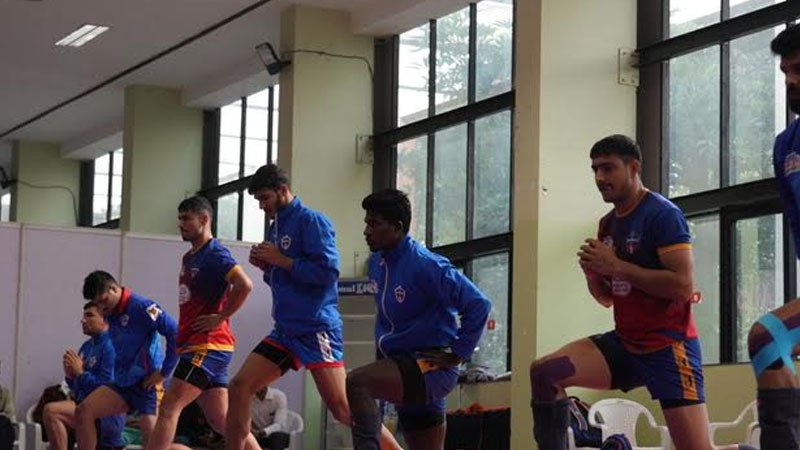
    Mumbai: UP Yoddhas – the GMR group owned franchise competing in Pro Kabaddi League (PKL) announced their partnership with Asclepius, a provider of health, beauty and wellness products as associate sponsor. This partnership marks Asclepius’ first foray into the dynamic world of kabaddi, reflecting their commitment to support indigenous sports and promote athletic excellence.

    Under the ownership of GMR Group, UP Yoddhas made an impactful debut in the Pro Kabaddi League during the fifth season in 2017. Ever since, the team has continued to impress fans with their flamboyant yet result-oriented gameplay, all throughout having earned the reputation of being one of the most consistent teams in the Pro Kabaddi League universe. Since their inception in 2017, UP Yoddhas have always made their way to the play-offs and this season they have kicked off their campaign in an equally impressive manner with their eyes set on the trophy. The Yoddhas, currently at the third position in the points table, are basking under the glory of two back-to-back wins against Haryana Steelers and Telugu Titans, and will now face Bengaluru Bulls in their next clash on 11 December 2023.

    GMR League Games CEO PKSV Sagar commented on the partnership, “We are delighted to welcome Asclepius as the new sponsor of the UP Yoddhas. Their commitment to supporting sports and promoting a healthy lifestyle aligns perfectly with our team’s values. We are confident that this partnership will be mutually beneficial and bring great value to our fans.”

    Asclepius MD and CEO Sanjeev Kumar said, “We are thrilled to partner with the UP Yoddhas, a team known for its excellence and dedication to the sport,” said “Kabaddi is a rapidly growing sport with a passionate fan base, and we believe this partnership will allow us to connect with audiences throughout India and beyond. We are excited to support the Yoddhas in their vision of supporting indigenous sports in the country.”

    The collaboration will see the Asclepius logo prominently displayed on the UP Yoddhas jerseys, training kits, and other team merchandises. Additionally, Asclepius will be integrated into the team’s marketing campaigns, further amplifying the brand’s visibility and engagement with kabaddi fans.

    With a shared passion for sportsmanship and athletic achievement, Asclepius and the UP Yoddhas look forward to a successful partnership that will benefit both parties and contribute to the further development and popularity of kabaddi.

  • Star Sports launches its new campaign for Pro Kabaddi League (PKL) season 9

    Star Sports launches its new campaign for Pro Kabaddi League (PKL) season 9

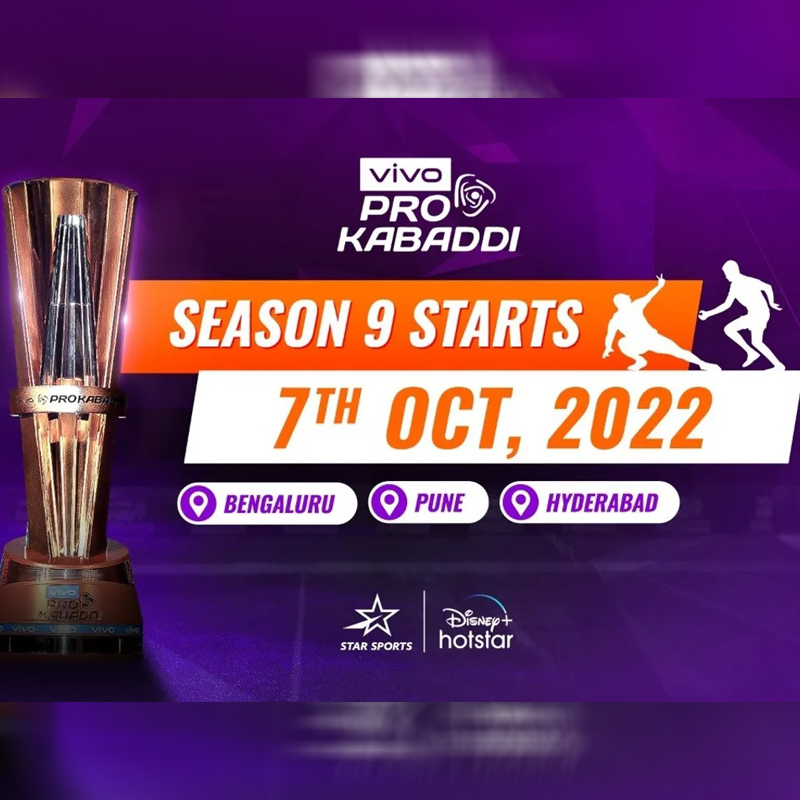
    Mumbai: The Vivo Pro Kabaddi League (PKL) is coming up with season 9 from 7 October which will be bigger, better, and tougher than ever before.

    Star Sports, the official broadcaster of the Vivo Pro Kabaddi League, launches its campaign #BhidegaTohBadhega as the supporters wait for the Kabaddi action to resume with the battle lines established.

    Speaking about the #BhidegaTohBadhega campaign ahead of Vivo Pro Kabaddi League Season 9, a Star Sports Spokesperson said, “Our campaign for PKL Season 9 aims at showcasing the indomitable human spirit, with challenges and opportunities being the two sides of a coin. ‘Bhidega toh Badhega’ is a testament to how the entire journey of victory is achieved by crossing insurmountable challenges. This season will also witness the return of fans at the three venues of Hyderabad, Pune, and Bengaluru which adds to the overall excitement and fandom for the upcoming edition.”

    The campaign aims to motivate every Indian willing to take risks and overcome obstacles and challenges. On the Star Sports Network and Disney+ Hotstar, fans in India can watch the entire tournament live and exclusively.

    Embed :

    The campaign epitomises the spirit of ‘keep moving forward, a true testament to the sport of Kabaddi.

  • Pro Kabaddi League: 9th season to begin on 7 October

    Pro Kabaddi League: 9th season to begin on 7 October

    Mumbai: Mashal Sports, organisers of the vivo Pro Kabaddi League, has announced the dates for the ninth season of the league. The league will start on 7 October 2022 and will go on till mid-December. The league stage will be conducted in Bengaluru, Pune, and Hyderabad.

    Mashal Sports conducted the player auction in Mumbai on 5-6 August, 2022, according to the media release.

    Mashal Sports executive head and vivo Pro Kabaddi league commissioner Anupam Goswami said, “Mashal Sports started the journey of vivo Pro Kabaddi League with a vision of taking the indigenous sport of kabaddi to the world of contemporary and upcoming generations of sports fans.”

    We continue to achieve impressive success in this goal, as was proven earlier this year by vivo PKL season eight, which was conducted in a comprehensive bio-bubble. Now, we are even more enthusiastic about the upcoming vivo PKL season 9 as our fans will be back in stadiums across Bengaluru, Pune and Hyderabad to experience the pulsating action up-close of their favourite teams and stars,” he added.

    Further details and schedule for the new season will be shared in the coming weeks.

  • Customer centricity is our single biggest USP, says Fantasy Akhada’s founder SK Jha

    Customer centricity is our single biggest USP, says Fantasy Akhada’s founder SK Jha

    Mumbai: In the fast growing world of gaming there are several players in Fantasy Sport. Fantasy platform Fantasy Akhada, while being a late entrant, says that it has managed excellent growth. Backed by popular cricket commentator Harsha Bhogle, the company says that it is an initiative of hard core sports lovers who understand the fan and fantasy sports. Fantasy Akhada provides a platform, covering fantasy cricket, fantasy kabaddi, fantasy basketball and fantasy football, where users can come, play, and win contests.

    The brand claims to have close to 2.5 million users currently. The platform has held 40 lakh contests and claims to have disbursed Rs 200 crore in cash winnings. Indiantelevision.com caught up with Fantasy Akhada founder Sumit Kumar Jha to find out more on the company’s plans.

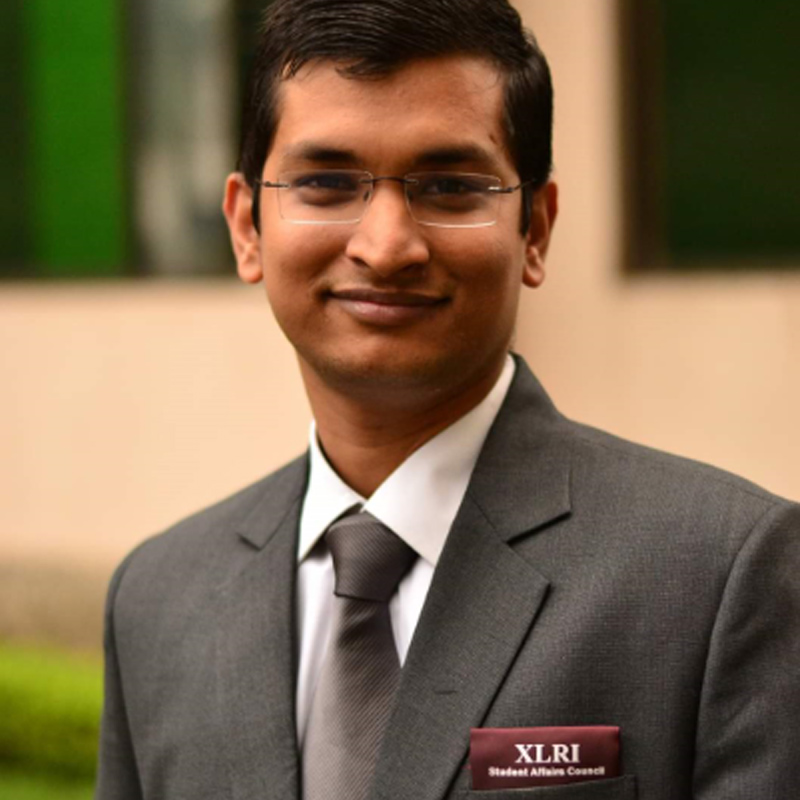
    Jha is an alumnus of leading universities like XLRI Jamshedpur and NIT Jamshedpur. Being a business enthusiast who strives for growth, he has a demonstrated history of experience in Product Management, Customer Analytics, Customer Life-Cycle Management, Loyalty Program Management, Mobile Internet, and P&L Management. Sumit Kumar Jha has profound domain knowledge and hands-on experience of over 8 years across different industries including Automobile, Telecom, Fashion & Retail industries and furthermore, earned 7 months of international project work experience.

    He began his career with Tata Motors and after completing his MBA, joined the coveted Aditya Birla Group Leadership Program. He was deputed at Idea Cellular Limited (Now Vodafone Idea Limited) where he worked for 5 years prior to beginning his own venture-Fantasy Akhada. The rich experience that he gained in his professional journey has moulded a solid foundation of his entrepreneurial vision.

    Edited excerpts:

    On the traction that fantasy sports are getting vis-a-vis other areas of gaming and esports.

    The love for cricket and the development of other sports, on the back of domestic leagues, has increased the level of interest in sports for all Indians. Fantasy sports share a very symbiotic relationship with live sports and thus the excitement of FS coupled with the love for sports is driving major growth in the Fantasy Sports market in India.

    However, we believe that the growth of the overall gaming ecosystem will drive individual growths like fantasy sports, e-sports, etc. There must be an overall acceptance of the gaming community in Indian households; to ensure the next level of growth for this sunrise sector.

    On the challenges that Fantasy Akhada faced as a late entrant

    We believe that if we let the timing of entry into the industry bother us, Fantasy Akhada would not have been able to become one of the top five fantasy sports apps in the country. All of us, founders, were ardent fantasy sports users before launching Fantasy Akhada. We realised that there is a clear need for a platform that believed in the highest level of customer and sports centricity.

    While we believed in our vision and the need for such a product, it took a lot of marketing push as well as the highest level of customer service to stand out amongst the clutter of the other 180 platforms. Post the IPL in 2022, on the back of a viral marketing campaign feat. Ali Fazal and Harsha Bhogle, we can confidently say that we have been able to make a significant mark in the space.

    On the sports that the company is actively involved in

    We currently provide customers with the opportunity to play four sports. The number was three until a week back; we added fantasy basketball in the first week of July. So as of today, Fantasy Akhada offers fantasy cricket, fantasy football, fantasy kabaddi and fantasy basketball.

    On whether cricket dominates activity on the platform.

    Cricket, no doubt, is by far the most loved sport on all Fantasy Sports platforms in the country. However, owing to our sports centricity, we have always done our 100 per cent towards each sport; and that shows in the numbers as well. Football, for example, contributes almost 15-20 per cent of our overall revenue and this has been made possible by hosting games, even in major leagues, that are exclusively available on Fantasy Akhada.

    Kabaddi, also, was an excellent launch for us with the Pro Kabaddi League in December 2021. We are hoping to get some good traction on basketball as well, a sport that has been launched in response to rising customer demand.

    On Fantasy Akhada’s USP is in a competitive arena where the entry barrier is very low

    As mentioned earlier, our single biggest USP is customer-centricity. In the context of fantasy sports, it means doing the basic tasks well like instant withdrawal, 24*7 customer service to customer delight activities like international trips, regular leader boards with amazing prizes, etc.

    Apart from this, we focus on our commitment to increasing sports engagement and ensure that all our marketing activities are in line with sports development.

    On the impact of Covid on fantasy sports

    Barring the first month of the worldwide lockdown, when the sport was either not happening or restricted to smaller leagues in countries like Belarus, etc. Covid has not had a very negative impact on our business.

    Personally, for us at Fantasy Akhada, it was the time that we had just started, and it gave us the opportunity and time to work on a lot of things which we hadn’t envisaged before the launch. To summarise, we came out stronger and provided a better experience post with the initial Covid blip.

    On the direction that regulation should take

    We believe that more clarity on regulation will help the Industry grow multifold. The lack of clarity on the regulations hurts the business. We, along with other FS platforms, are working with the central government to build a well-structured framework that will help all platforms in the country.

    On the role that Harsha Bhogle plays

    Harsha Bhogle joined the Fantasy Akhada team in June 2020 as a brand ambassador and investor. Since then he has been, more than his role, a great mentor for the entire organisation. We have been lucky to have his guidance in various decisions and also his support in getting a lot of things done, which would have otherwise been very challenging for us.

    On the activity seen on the platform during the recently concluded IPL

    IPL is the highlight event for all FS platforms in India; primarily due to the love for cricket that the customers have and also the short duration of matches – which helps them rotate money quickly. Apart from the growth in value of transactions, it is one of the best times for user acquisition, not only for FS platforms but for brands across industries.

    In terms of Fantasy Akhada, we had the biggest IPL, on the back of our first IPL campaign that went live on the Star Sports Network. The virality of the campaign, backed by our previously highlighted USPs, helped us catapult the growth of users to the next level. We had set out on a target of 100 per cent increase in our numbers over the two months of IPL, and we were able to comfortably achieve the same. Another great success has been that these users have stayed back with the platform post the IPL, increasing the overall base of our transactions.

    On expansion plans abroad

    Currently, we are present only in India – and allow only residents of India to play on our app. We have plans to spread our wings to other nations and currently, we are evaluating the right countries that fit our business and plans.

  • MIB broadens the list of sports events of national importance

    MIB broadens the list of sports events of national importance

    Mumbai: The Ministry of Information And Broadcasting (MIB) has under the Sports Broadcasting Signals (Mandatory Sharing with Prasar Bharati) Act, 2007, broadened the list of sports events of national importance, according to a recent notification. These events will now be shared with Prasar Bharati as the broadcast rights holder.

    In terms of cricket, the good news for the Board Of Control For Cricket in India (BCCI) is that there is no mention of the Indian Premier League (IPL) whose media rights will be decided in an e-auction next month. All sports leagues have been kept out of the list. Under the sports act, all test matches played by India are covered. Earlier, only test matches deemed of high interest were covered.

    ODIs and Twenty20 matches played by India were already covered. Also, among other new things that have now come under the Act the semi-finals and finals of the International Cricket Council (ICC) World Test Championship will have to be shared. India playing matches, Semi-finals and finals of the Under-19 World Cup will now have to be shared. All Olympic Games including the Winter Olympics are now covered under the Act. The Commonwealth Games and Asian Games continue to be covered under the Act.

    These are all the events that will have to be shared with Prasar Bharati. Some were already covered under previous notifications. Some events in football, shooting and archery are deemed of national importance only if India is hosting those events. Following are the lists:

    Cricket

    (a) All official One-Day, Twenty-20 and Test matches played by the Indian Men’s and Women’s Cricket Team and all ICC Test matches featuring India

    (b) Semi-finals and finals of ICC Men’s and Women’s One-Day International World Cup

    (c) Semi-finals and finals of ICC Men’s and Women’s Twenty-20 World Cup

    (d) All Semi-finals and finals of ICC Champions Trophy (One Day)

    (e) All Semi-finals and finals of ICC World Test Championship

    (f) Semi-finals and finals of ICC Men’s and Women’s Asia Cup (Twenty -20 and One-Day International)

    (g) India playing matches, Semi-finals and finals of Under-19 World Cup.

    Tennis

    (a) Davis Cup-All matches featuring India

    (b) Grand Slam Tournaments – Finals of Men’s Singles, Women’s Singles and all matches featuring Indian players from quarter-finals onwards

    (c) Grand Slam Tournaments – All such matches featuring Indian players in men’s doubles, Women’s doubles or Mixed doubles from quarter-finals onwards.

    Hockey

    (a) World Cup – All matches featuring India and semi-finals and finals

    (b) Champions Trophy – All matches featuring India and finals

    (c) Indira Gandhi Gold Cup for Women-Semi-finals and finals

    (d) Hockey India Sub-Junior National Championship and Hockey India Academy National Championship

    (e) Hockey Men’s Junior Men World Cup*

    (f) Sultan Azlan Shah Cup- All matches featuring India, Semi-finals and finals;

    (g) International Hockey Federation (FIH) – Hockey Pro League matches.

    Football

    (a) World Cup – Opening match, quarterfinals, semi-finals and finals

    (b) Asia Cup – All matches featuring India and semi-finals and finals

    (c) Santosh Trophy – Semi-finals and finals

    (d) Asian Women’s Football Cup*

    (e) Under-17 Federation Internationale de Football Association Women’s World Cup*

    (f) World Cup (Under – 17) – Opening match, quarterfinals, semi-finals and finals.

    Badminton

    (a) All England Open Badminton Championship – All matches featuring Indian players, semifinals and finals

    (b) Badminton World Federation World Cup Championship – All matches featuring Indian players, semi-finals and finals.

    Kabaddi

    World Cup – All matches featuring India, semi-finals and finals.

    Khelo India Games

    (a) Khelo India Games

    (b) Khelo India School Games

    (c) Khelo India Youth Games

    (d) Khelo India University Games

    (e) Khelo India Games for differently abled persons

    (f) Khelo India Games for Indigenous Sports

    (g) Khelo India Winter Games.

    Other Events

    (a) International Shooting Sport Federation World Cup Event*

    (b) Commonwealth Shooting Championship*;

    (c) Commonwealth Archery Championship*

    (d) International events organised by National Sports Federations recognized by the Government of India.