Tag: K Madhavan

  • Policymakers should create single national policy for M&E sector: K Madhavan

    Policymakers should create single national policy for M&E sector: K Madhavan

    Mumbai: Policymakers should create a single national policy for the media and entertainment sector, said CII national committee chairman and The Walt Disney Company and Star India country manager and president K Madhavan at the 10th edition of the CII Big Picture Summit on Wednesday. “Regulations like new tariff order (NTO) 1 and 2 did not address the interests of any stakeholders including consumers,” Madhavan stated.

    The event was attended by Trai chairman Dr PD Vaghela and ministry of information and broadcasting secretary Apurva Chandra. The summit was a gathering of stakeholders in the media and entertainment industry to achieve the goal of reaching $100 billion.

    In his speech, Madhavan noted that given the “power and influence” of the TV broadcast industry, it is essential that it be allowed to “freely flourish” with the power to “self-regulate.” “Self-regulatory bodies for both TV and digital are working extremely well in India, and have proved that they can effectively handle complaints and concerns without any interference from policymakers and regulators,” he said.

    He acknowledged Dr Vaghela for taking a keen interest to address the concerns of the industry on priority and hoped for a “positive and proactive” approach from the regulator going forward. Madhavan stressed the need for a national policy that could guide regulators for years to come and ensure that consumers, the industry, and all stakeholders find certainty and clarity in equal measure.

    The Indian media and entertainment industry is creating 2500 hours of original content each year for OTT and over 100,000 hours of content for television. The gaming industry caters to 420 million casual gamers and the AVGC sector provides high-quality, cost-effective content for the global market. The M&E industry also promotes India’s soft power across the world, in addition to directly and indirectly employing 4.5 million people. Ancillary industries like education, tourism, and even software are all boosted as the creative economy grows.

    Madhavan observed, “Ten years back, television had started migrating customers to digital, and HD channels were just being launched. There were barely 13 million broadband subscribers, and users spent only eight hours a month watching videos online. Today, we have about 800 million broadband internet users and 600 million smartphone users, and Indians watch over five hours of online video content a day compared to the global average of four hours a day. India is a digitally active country with a massive and diverse consumer base with a very high level of appetite for entertainment.”

    “Our film industry is eager to bounce back from the pandemic. CII, working alongside the Government of India, will seek to represent India at all the major film festivals in the upcoming year,” he concluded.

  • K Madhavan re-elected as IBDF president

    K Madhavan re-elected as IBDF president

    Mumbai: The Indian Broadcasting and Digital Foundation (IBDF), the apex body of television broadcasters and digital streaming platforms in the country, has re-elected The Walt Disney Company India and Star India country manager and president K Madhavan as its president for the second term after the 22nd annual general meeting of the company held on 22 October.

    “I am humbled by the trust and faith IBDF members have reposed in me to lead the foundation for a second term,” said Madhavan. “We are at an interesting crossroad where the combination of consumer, regulatory and technology trends is remodelling the media landscape and ecosystem. I hope to continue working with the government, industry, and other stakeholders for accelerating the growth of the broadcast and digital media sector in the country.”

    During the AGM, members of the foundation have re-elected the following members to the board of IBDF:

     TV Today Network chairman Aroon Purie.

     Prasar Bharati chief executive officer Shashi S Vempati.

     Viacom18 managing director Rahul Joshi.

     Star and Disney India president and head of network entertainment channels Kevin Vaz (representing Asianet Star Communications).

    The appointment of Sun Network managing director R Mahesh Kumar as a director on the board under casual vacancy has also been ratified by the members of the foundation.

    In the subsequent board meeting, the board also elected other office bearers as under:

     IBDF vice president (news and current affairs) – India TV chairman Rajat Sharma

     IBDF vice president (government and regulatory affairs) – Viacom18 managing director Rahul Joshi.

     IBDF vice president (sectoral growth) – Prasar Bharati chief executive officer Shashi Vempati.

     IBDF treasurer – Zee Entertainment president of content and international business Punit Misra.

  • Star & Disney India expands roles of Kevin Vaz, Gaurav Banerjee

    Star & Disney India expands roles of Kevin Vaz, Gaurav Banerjee

    Mumbai: Star & Disney India has expanded the roles of senior executives Kevin Vaz and Gaurav Banerjee. 

    Previously, head of kids, infotainment and regional entertainment channels, Vaz has been appointed as head of entertainment, a newly created role and will be responsible for the entire entertainment channel business. Banerjee, previously head of English and Hindi entertainment channels, has been appointed as head of content and will spearhead content for HSM entertainment channels and Disney+ Hotstar including regional content on the OTT platform.

    The new roles were announced by The Walt Disney Company India and Star India, country manager, K Madhavan in an internal memo to staff.

    Vaz’s remit will expand to include Star Plus, Star Bharat, Star Utsav, Hindi movies, and English cluster. Star Plus, GM, Sumanta Bose, Star Bharat, GM, Arpit Mankar and Star India, GM – Hindi films, Hemal Jhaveri will report to Vaz. Additionally, Star India’s executive vice president – ad sales, entertainment business, Arghya Chakravarty will have a dotted line reporting to Kevin for HSM ad sales.

    The content heads of all Hindi channels will report to Banerjee. Hemal Jhaveri will also have a dotted line reporting to Banerjee for digital movie rights. Apart from Jhaveri and Dhawal Gusain, all regional channel GMs will also have a dotted line reporting to Banerjee for Disney+ Hotstar content.

  • Indian M&E industry can reach $100 billion by 2030: K Madhavan

    Indian M&E industry can reach $100 billion by 2030: K Madhavan

    Mumbai: The Indian media and entertainment industry touched $19 billion in 2020 down from an expected $22 billion, but it’s poised to grow up to $100 billion by 2030, said The Walt Disney Company India and Star India, president, K Madhavan. This goal is ambitious and challenging but not impossible, he added.

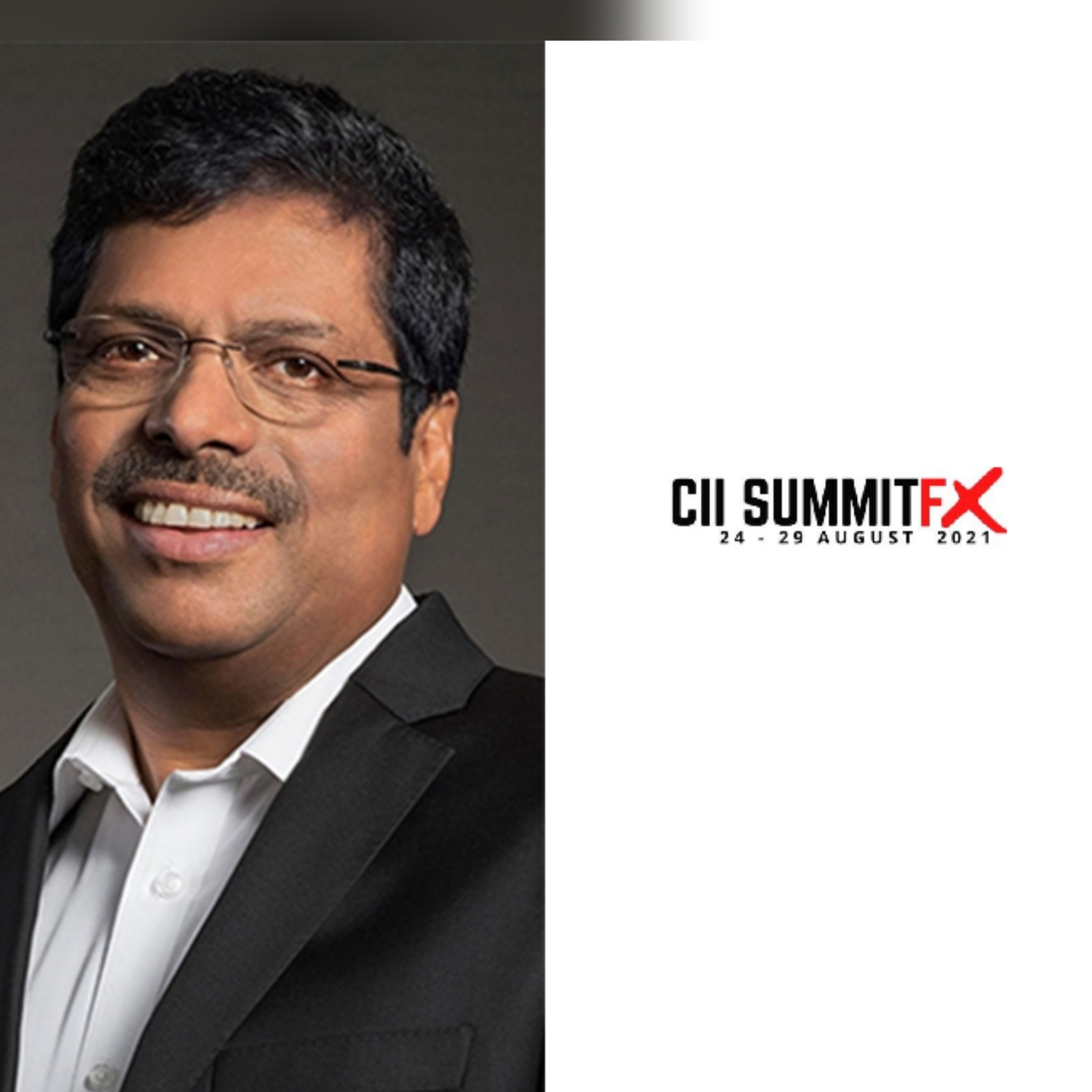
    Madhavan was speaking at the Confederation of Indian Industry (CII) SummitFX – Global AVGC and Immersive Media Summit, which began virtually on Tuesday. “The pandemic forced the M&E industry to adapt, but it is still growing and that is an encouraging sign. There have been changes in the habits of audiences, in the way content is produced and new and evolved methods of distribution”, said Madhavan, who is also the chairman of the CII National Committee on media and entertainment.

    Over 55-60 million Indians subscribed to video-on-demand services, more than doubling from the 23 million in 2019.The paid subscribers are likely to grow to 89 million by the end of 2021, and reach 150 to 160 million by the end of the decade, contended Madhavan.

    “The rise of digital subscription did not lead to a fall in TV viewing audience” he noted, adding that there are 300 million households out of which only 200 million are connected to TV. There are 120 million pay TV households.

    In a developed country, the media and entertainment industry generally contributes three per cent to the country’s GDP. In India, however, the contribution is one per cent. Also, customers in developed countries spend $7-10 for entertainment whereas in India it is less than $1. The pricing in India is very customer friendly, he noted.

    Speaking about the animation, visual effects, gaming and comics (AVGC) industry, he said, “The global market for AVGC industry is close to $260 billion and India’s share of that is less than one per cent i.e., $2.1 billion. The AVGC industry in India has the highest potential to grow and we should aim for a five per cent share of the global market with annualised growth at 25-30 per cent.”

    Similarly, the global gaming market is pegged at $160 billion worth more than music and movies combined. Online gaming in India has grown by leaps and bounds and last year there were 360 million gaming audiences and 17 million viewership of esports in India. “The gaming and esports industry are still in infancy and need freedom to grow without conflicting regulation. The Indian AVGC industry can be a global success story for India, the same as the IT revolution,” said Madhavan. “The emerging esports landscape is projected to grow at 36 per cent CAGR over the next few years.”

    The Star India president also charted a roadmap for India to capture five per cent of the global AVGC market. Currently, 65 per cent of India’s AVGC revenues come from exports. Madhavan emphasised that we need to create B2B opportunities in the country. Policymakers, regulators and industry must work together for ease of doing business. There should be convergence initiatives between technology and the creative sector.

    “There’s a huge demand for VFX and animation, globally and in India but we are not in a position to deliver” he said. To make this happen, job creation in this sector must increase by three to four times in the next four to five years. “We have 400,000 engineers graduating every year, but they need to be trained properly and brought into the content pipeline. There must be regional content creation and distribution hubs in Tier II and III cities.”

    “I’m sure this industry will thrive with innovation,” he summed up.

  • IBF ropes in Siddharth Jain as secretary general

    IBF ropes in Siddharth Jain as secretary general

    New Delhi : The Indian Broadcasting Foundation (IBF), the apex body of broadcasters, on Thursday appointed Siddharth Jain as its secretary general.

    An industry veteran, Jain’s career spans over three decades. Until 30 April, he was working with Turner International India Pvt. Ltd. as SVP and managing director – South Asia.

    Commenting on the appointment, IBF president, K. Madhavan said, “Siddharth has demonstrated great competency in nurturing efficient, talented cross border teams of industry experts and is highly adept in driving innovation to turn adversities into opportunities. Given his remarkable expertise in leadership and advocacy, business strategy, corporate governance and compliance, we are confident in his ability to steer the IBF on a path that helps realize the sector’s value chain to the optimum. I, along with the rest of the IBF members, welcome Siddharth and wish him the very best for his new role.”

    Jain is an accomplished enterprise business leader known for expertise in business strategy, revenue/profitability/EBITA growth, financial management, sales & marketing, business development, international brand launches & development, account management, strategic alliances & partnership development, relationship management, and corporate governance and compliance stated IBF in a release.

    Meanwhile, IBF is being renamed as Indian Broadcasting & Digital Foundation (IBDF), as it expands its purview to cover digital platforms to bring all digital (OTT) players under one roof. IBF is also in the process of setting up a separate subsidiary to facilitate the entry of OTT players.

    The subsidiary will be carrying out various activities for its member OTT players including handling the day-to-day activities of the industry-led Level-II appellate Self-Regulatory Body (SRB) called Digital Media Content Regulatory Council (DMCRC) for non-news digital OTT platforms, similar to Broadcast Content Complaint Council (BCCC).

  • Former SC judge Justice Vikramjit Sen appointed chairman of IBF’s new self-regulatory body

    Former SC judge Justice Vikramjit Sen appointed chairman of IBF’s new self-regulatory body

    New Delhi: Former Supreme Court judge Justice Vikramjit Sen was on Monday appointed as the chairman of the newly formed self-regulatory body – Digital Media Content Regulatory Council (DMCRC) formed by the Indian Broadcasting Foundation (IBF), the apex body of broadcasters.

    The industry-led self-regulatory body (SRB) for digital OTT platforms will work as a second-tier mechanism at the appellate level, quite similar to the Broadcast Content Complaint Council (BCCC), which IBF had implemented for the linear broadcasting sector in 2011. DMCRC was formed as per the mandate of the Information Technology (Intermediary Guidelines and Digital Media Ethics Code) Rules, 2021 that came into effect on 26 May, with active consultation amongst the creative industry fraternity.

    The newly formed Council constitutes prominent personalities from the media & entertainment industry and Online Curated Content Providers (OCCPs), with experience in IPR, programming, and content creation. Meanwhile, IBF will also be renamed as the Indian Broadcasting and Digital Foundation (IBDF) as it expands its purview to cover digital platforms to bring all digital (OTT) players under one roof. 

    A former supreme court judge, Justice (retd) Sen has practiced in all the courts in Delhi, although primarily in the high court of Delhi. He was elevated to the apex court on 24 December 2012. He was also appointed chairman of the Broadcast Content Complaints Council (BCCC)- a self-regulatory body for the non-news and current affairs television channels in India in 2017, said IBF in a statement on Monday.

    The other members of the council are national award-winning filmmaker Nikkhil Advani, Banijay Group CEO and founder Deepak Dhar,  prominent artist, filmmaker, and writer Ashwiny Iyer Tiwari and creative writer and innovative director, Tigmanshu Dhulia. The other two members from the OCCPs include Sony Pictures Pvt. Ltd, general counsel Ashok Nambisan, and Star and Disney India, chief regional counsel Mihir Rale and Disney India.

    Speaking on the appointment of the committee, IBF president, K. Madhavan said, “I am delighted that so many experts from the media and entertainment industry have come forward and accepted the invitation of IBDF to be part of the proposed self-regulatory body. I look forward to working with the Council whose mandate is to ensure freedom of expression of the Indian creative industry as well as help the discerning audience of the OTT platforms to have unhindered access to world-class and differentiated content. This is a historical and win-win moment for all the stakeholders i.e. the M&E industry, the policymakers, and the subscribers of the OTT platforms.”

  • IBF to be renamed as it plans to bring digital players under its ambit

    IBF to be renamed as it plans to bring digital players under its ambit

    KOLKATA:  The Indian Broadcasting Foundation (IBF), the apex body of broadcasters, is being renamed as Indian Broadcasting & Digital Foundation (IBDF), as it expands its purview to cover digital platforms to bring all digital (OTT) players under one roof. IBDF is in the process of forming a new wholly-owned subsidiary to handle all matters pertaining to digital media.

    IBDF will also form a self-regulatory body (SRB), as per the Information Technology (Intermediary Guidelines and Digital Media Ethics Code) Rules, 2021 as notified by the Government of India on 25 February 2021. 

    This industry-led SRB called Digital Media Content Regulatory Council (DMCRC) for digital OTT platforms, which is a second-tier mechanism at the appellate level is similar to Broadcast Content Complaint Council (BCCC), which IBF had successfully implemented for the linear broadcasting sector way back in 2011. 

    IBF president K Madhavan said: “We are pleased to extend our commitment of fostering an environment that is culturally adept, socially responsible and governance-bound to the fast-growing digital medium. The diversification will empower the Foundation to pursue growth opportunities for its members who run OTT services in the country, while ensuring they present a strong collective voice, both in the broadcast and digital sector under the combined body. We will continue to work arduously to create new benchmarks in line with the industry’s growth aspirations.”

    Over the years, IBF has played a key role in providing research-based policy and regulatory advocacy to the government to build a strong broadcasting sector which is the backbone of the Indian M&E sector.

    Today, with the emergence of new digital technical technologies, the Indian Broadcasting Foundation (IBF) is not only going to rechristen itself as Indian Broadcasting & Digital Foundation (IBDF) but will continue to proactively engage all the relevant stakeholders to introduce policy and regulatory certainties and strengthen self-regulatory mechanisms to help the Indian creative industry to produce world-class content which has received an overwhelming response from the global audience.

  • K Madhavan: From God’s own country to leading Walt Disney’s Indian mousehouse

    K Madhavan: From God’s own country to leading Walt Disney’s Indian mousehouse

    MUMBAI: When The Walt Disney Co international operations and direct-to-consumer chairman Rebecca Campbell was scouting for an executive to fill the big shoes of former Star India, Disney India and APAC head Uday Shankar, she did not have to look far. Though the announcement took some time a-coming, K Madhavan, country manager of Star & Disney India, was the obvious choice. As the overseer of the media conglomerate’s television and studios business in India, Madhavan had worked closely with Uday, until the latter departed in late 2020 to concentrate on an entrepreneurial venture with his former boss James Murdoch.

    An unassuming executive from Kerala, K Madhavan is known to be a hard core numbers man with an extremely razor sharp financial mind. He did well in academia as well; he holds a post graduate degree in commerce, and is a certified associate of the Indian Institute of Bankers. He cut his teeth as an investment banker, when he was roped in as a director to help turn around ailing Malayalam network Asianet in 1999. Within a year, he fortified his position and was elevated to MD & CEO of Asianet Communications.

    His keen understanding of what Malayalam viewers want to watch facilitated the growth of Asianet’s viewership and made it the favourite of those who live in God’s own country. The network was turned around and it soon became a dominant player in Kerala. He did this even as ownership of the network changed hands, more than once – from promoter Reji Menon to the-then BPL and now BJP top shot and venture financier Rajeev Chandrasekhar. In fact, K Madhavan, ended up owning a tidy piece of it as well, as he grew the network’s footprint in Kannada in concert with Chandrashekar as chairman.  

    Until, of course, it landed in the hands of News Corp supremo Rupert Murdoch’s Star TV in 2008. Star acquired a majority stake in Asianet’s general entertainment channels (separated from the news business) for a handsome $235 million and an assumption of $20 million in debt. Madhavan pocketed a neat sum for his efforts even as he was appointed as Star India’s south head in 2009.

    From thereon, there was no looking back. When Star India took control of Asianet, its portfolio consisted of Asianet and Asianet Plus (Malayalam GECs), Asianet Suvarna (a Kannada GEC) and Telugu channel Sitara. To that was added Star Vijay from the Star India network. Several other channels followed: Asianet Movies, Star Maa (through an acquisition of MAA Television network). Today, it has more than 13 pure play southern language channels, covering general entertainment, movies, in Malayalam, Kannada, Tamil and Telugu. Of course, Star India itself has many other regional language channels covering Marathi and Bengali. At the helm of this dizzying growth was Madhavan with Uday, and the Murdochs giving him total freedom. Observers today value the southern language business of Star at around $3 billion (valued at $1.33 billion in 2013 at the time of its acquisition by Star).

    When The Walt Disney Co acquired Twenty First Century Fox a couple of years ago for a massive $72 billion, along with it came all of its Indian assets including the southern language business. Uday, used to working in the maverick style of the Murdochs, quickly had K Madhavan hoicked as country manager of Star & Disney India, leading the media conglomerate’s television and studios business, while he was bumped upstairs to look after the APAC business and Hotstar directly.

    When Uday decided to turn entrepreneur in 2020, day to day operations were left in the hands of K Madhavan, who worked closely with Campbell at the worst of times when the media and entertainment industry – and  Star and Disney India – had to face lockdowns courtesy the pandemic and an acceleration towards digital video consumption. The way he steered the company impressed the Disney headquarters in Burbank.

    “A skilled leader with an extensive background in media, KM has taken our vast Star networks and local content production businesses to new heights,” said Campbell on his elevation. “I have seen first-hand how he has adeptly managed our India business, which has been and will continue to be critical to our global and regional strategy.”

    With the leadership issue for Star India and Disney India settled, it should lead to some clarity on the road ahead for the company which did an estimated top line in excess of $1.7 billion last year. K Madhavan will now be able to steer the network and make it future ready in a country where many homes have antiquated CRT TV sets, many have yet to buy one, while a small fraction have high-end 4K sets even as some are graduating to HD, and the young are increasingly consuming video content on their handsets.

    Like Uday, he has the respect and attention of Burbank, Disney's and Star India's senior leadership who hold his strategic decision making and vision for the group in high regard. Like Uday, he has an entrepreneural streak, combined with a strong systems approach which should bode well for him in an organisation which thrives because of its processes-driven environment. And of course his deep understanding of what the Indian video viewing consumer wants to watch. His success at Asianet bears testimony to that. The only difference: the canvas is larger and wider now and covers a swathe of demographics, languages and platforms, right from TV to movies to digital.

    To his advantage, K Madhavan has the track record and the wherewithal to take the right steps. After all, not every executive can make the transition from heading a small network in God’s own country to leading India’s largest media and entertainment network.
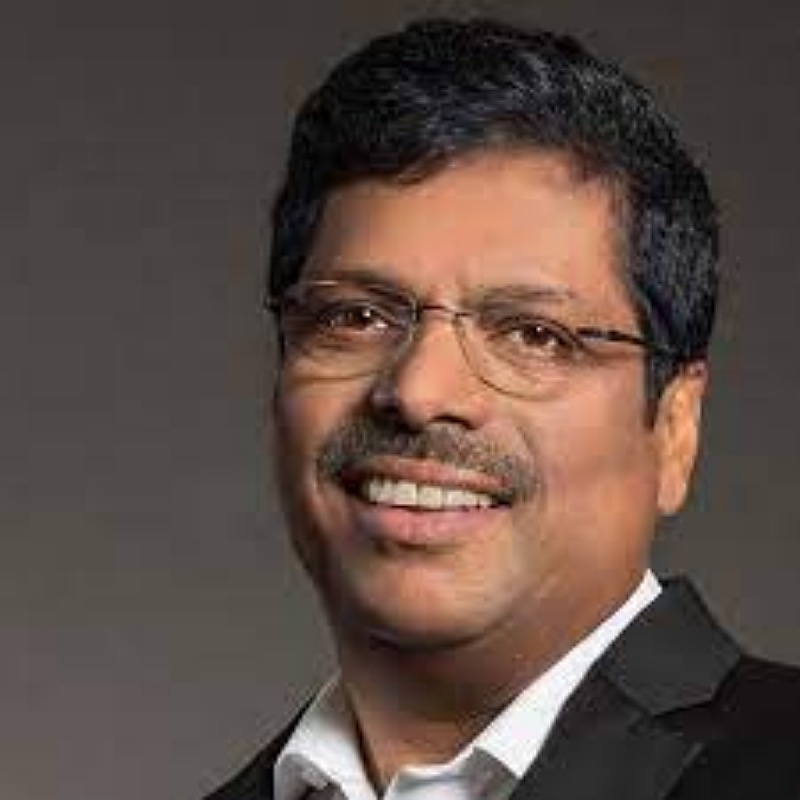
  • K Madhavan tapped as Walt Disney India & Star India president

    K Madhavan tapped as Walt Disney India & Star India president

    New Delhi: K Madhavan has been named president, the Walt Disney Company India and Star India, effective immediately. He takes on the mantle from Uday Shankar, who stepped down in October and exited the mouse house at the end of 2020.

    The announcement was made by The Walt Disney Company chairman international operations and direct-to-consumer Rebecca Campbell early on Wednesday.

    In this role, Madhavan will drive the strategy and growth of the company in India, with responsibility for the vast Disney, Star and Hotstar businesses and operations spanning across entertainment, sports and regional channels, and direct-to-consumer. This includes oversight of channel distribution and advertising sales, as well as a thriving local content production business which currently is responsible for the creation of 18,000 hours of original content across fiction, non-fiction, sports, and movies in eight languages.

    “For the past several months, I have had the pleasure of working directly with KM and have seen first-hand how he has adeptly managed our India business, which has been and will continue to be critical to our global and regional strategy,” said Campbell. “A skilled leader with an extensive background in media, KM has taken our vast Star networks and local content production businesses to new heights despite continued industry evolution and significant challenges due to the pandemic.”   

    “I am very proud to have the opportunity to lead the incredibly talented and passionate team we have in India, and to further build upon our strong portfolio of channels and high-quality programming that is a favourite with viewers across the region,” said Madhavan. “We have an exciting journey ahead of us. I am committed to continuing to move our business forward, working more closely together with colleagues across Disney to enhance our global and regional offerings.”

    Since 2019, Madhavan served as country manager of Star & Disney India, overseeing the media conglomerate’s television and studios business in India. He has been responsible for driving the growth of the business, focusing on innovation, and creating compelling content for consumers. 

    Madhavan joined Star India in 2009 as its south head. Under his leadership, the company built a thriving regional entertainment portfolio. Previously, he was the driving force behind Asianet’s growth as the undisputed leader in Malayalam with more than 50 per cent of market share, serving as MD and CEO in 2000-2008. Madhavan’s vision for the regional language network led the company to set benchmarks in quality programming in south India. Prior to his media career, he was in the banking and corporate finance sector. 

    Madhavan currently serves as president of the Indian Broadcasting Foundation (IBF) and as chairman of the National Committee of Media & Entertainment CII (Confederation of Indian Industry).  

  • Industry needs lighter touch on regulations to achieve its potential: K Madhavan, CII

    Industry needs lighter touch on regulations to achieve its potential: K Madhavan, CII

    NEW DELHI: The ninth edition of CII Big Picture Summit kickstarted today. The three day-long event will see several eminent industry leaders sharing their thoughts. These include BARC CEO Sunil Lulla, Roy Kapur Films MD Siddharth Roy Kapur, senior journalist and former advisor to the prime minister Pankaj Pachauri, Viacom18 Digital Ventures COO Gaurav Rakshit, Amazon Prime Video India country GM Gaurav Gandhi, and many others.

    There will be over 100 speakers, from both government and the industry. Some of the speakers are also joining the summit virtually from overseas. Sessions with state governments as well as with representatives of the regional entertainment industry will be hosted. The platform aims to give industry a chance to discuss what has worked, and what hasn’t – and how it can put India’s M&E sector on the global stage.

    A special curtain-raiser for the upcoming India International Film Festival in Goa in January 2021 will be presented by the ministry of information and broadcasting.

    The opening remarks for the event were delivered by CII national committee – media and entertainment chairman and MD Star & Disney India K Madhavan.

    He started by sharing his thoughts on how 2020 has taken a massive toll on the industry and how it is trying to fight back. “In my many years in the industry, disruption on this scale had never before been imagined. Content production was halted, live sports and events were cancelled, cinema halls and theatres were shut down. With a worldwide reduction in demand for services and major cuts in advertising spends – the pandemic enforced a long pause across the entire industry. However, the entire M&E industry came together to engage and entertain millions of viewers while they were homebound.”

    Madhavan stated how the entertainment consumption has surged across mediums such as television, gaming, and digital streaming platforms. TV and video streaming rose to a peak of 37 per cent higher than pre-lockdown levels.

    He also touched upon live sports making a stupendous comeback with the IPL 2020, lifting sentiments and the economy. “Not only was the IPL the biggest live cricketing tournament to be held during the pandemic, but it was also a beacon of hope and normalcy for the nation. The tournament broke all the previous records – with a 23 per cent increase in viewership over last year. The response from the fans and advertisers was heartening and it set a positive tone for the festive season. It acted as a game-changer for the sector and helped revive the media spends for the whole industry,” he added.

    He went on to talk about the film industry, and the innovations and breakthroughs it made to fight the crisis. “The film industry showed resilience and adapted to the ‘direct-to-digital’ model which helped launch new movies across digital streaming platforms. Cinema halls have taken longer to reopen, but I am confident that fans will soon be watching their favourite movies on the big screen, in safety.”

    The industry has what it takes to grow from the present $24 billion to $100 billion by 2030, but its potential is currently untapped in many ways, said Madhavan. “Pay TV is still at 120 million of the 300 million households in India, we only have 500 million smartphones in a country which has over 950 million mobile subscribers. The pandemic has driven customers to adopt technology as never before – as seen in the growth in e-commerce, online video, and digital gaming – and this can drive the sector to new heights.”

    To achieve this potential,  a lighter touch on regulation and a much simpler governance structure is needed in place, he stressed.

    “There are various kinds of restrictions that this sector is being subjected to although it has within it to make India truly atmanirbhar. We can increase our exports, increase the number of jobs being given to young talent, and most importantly, make India a global leader in content if policies are shaped as per the requirements of the industry,” Madhavan added.

    A CII report on the Big Picture Summit will also be released to present a panoramic view of the Indian media and entertainment industry – how it fared in 2020, what were the viewership trends, what was the impact of the pandemic on advertising, which medium got an edge, and going forward, what will be the role of Indian content in the global arena.