Tag: K Jayaraman

  • WWIL in drive to acquire LMOs

    WWIL in drive to acquire LMOs

    MUMBAI: Wire & Wireless India Ltd (WWIL), the cable outfit of Zee Network, is on a drive to acquire last mile operators. The company is offering to cable operators a valuation of Rs 2,000-3,000 per subscriber. While WWIL will be a 51 per cent partner, the balance 49 per cent will be with the operators.

    “We want to expand the size of our network. We are making proposals to operators with decent size where we become partners with 51 per cent,” says WWIL CEO Jagjit Kohli.

    WWIL has acquired control over 5 Star which operates in Andheri, a western suburb of Mumbai, adds Kolhi. “We have also poached a few operators from Incablenet in Andheri East and others from multi-system operators (MSOs) are going to join us.”

    WWIL, which doesn’t have a presence in South Mumbai, is also targeting operators in that area. The MSO has linked up optic fibre and is keen to start operations in this lucrative part of the Mumbai market. The government has notified south Mumbai as the area where CAS (conditional access system) will kick off on 1 January.

    WWIL is also planning to launch a headend-in-the-sky (HitS) platform and has expressed its intent to broadcasters. “We are going to do HITS. This will provide us a wider footprint and hasten the pace for digitisation in the country,” says Kohli.

    The buzz in the market is that WWIL is booking seven transponders on Thaicom 5 for the HITS operations. When queried on this, Kohli declined to comment.

    The problem with HITS, however, is that broadcasters are reluctant to get into agreement with MSOs for providing their channels due to fear of piracy.

    Even as WWIL sweetens its proposals to rope in last mile operators, it remains to be seen how big the impact will be in the cable TV industry. If migration from rival networks take place, it will set the pace for a fresh bout of price and dirty wars on the ground. As Hathway Cable & Datacom managing director and CEO K Jayaraman had told Indiantelevision.com earlier in an interview: “As far as poaching of operators go, it is an open ground. Cable companies who focus on good service and have capital to create capacity will turn out winners. Competition is not a one-way street.”

  • Hathway selects Magnaquest as SMS provider for digital pay TV operations

    Hathway selects Magnaquest as SMS provider for digital pay TV operations

    MUMBAI: Hathway Cable & Datacom is integrating its broadband and digital pay TV billing solutions. The multi-system operator (MSO) has selected MagnaQuest as its subscriber management system (SMS) provider for both the services.

    Earlier, when conditional access system (CAS) was to be implemented in 2003, Hathway had chosen Entriq (formerly known as Mindport as the SMS provider.

    Hathway was already using MagnaQuest’s MQSubscribe, a customer management and billing solution (CMB), for the past two years. “Eventually broadband, digital cable and voice services will converge. So we decided to deploy MQSubscribe for rolling out our digital pay TV services as well. We have been successfully using their billing solution for our broadband internet business for the past two years and found the system to be robust and scalable,” says Hathway Cable & Datacom MD and CEO K Jayaraman.

    Hathway Cable & Datacom will use MQSubscribe to handle subscriber information, billing, inventory and logistics management and customer care. MQSubscribe is seamlessly integrated with NDS CAS for automatic activation and deactivation of subscriptions.

    Says MagnaQuest CEO Vijay Debbad, “Apart from our domain expertise, solution flexibility and scalability, we believe it is our commitment and understanding of the Indian Pay TV industry that has enabled us to be chosen by Hathway Cable & Datacom.”

    MagnaQuest recently bagged a contract to manage the broadband and Voice over Internet Protocol (VoIP) billing services of Hyperia Ltd, Nigeria’s leading internet service provider.

  • CAS rollout: MSOs look to channel package tiers

    CAS rollout: MSOs look to channel package tiers

    MUMBAI: Multi-system operators (MSOs) have initiated talks with some broadcasters for providing their bouquet of pay channels at special rates in the conditional access system (CAS) regime. This would enable cable networks to tier various channel packages for consumers.

    The Telecom regulatory Authority of India (Trai) has fixed the a la carte pricing of pay chanels at a maximum of Rs 5 under CAS. The MSOs want broadcasters to price their bouquets below the average of Rs 5 per channel.

    “We are in a very nascent stage of discussions. Some of the broadcasters have moved the courts and are, in fact, waiting for the verdict. We expect to have more definite proposals within a fortnight,” says Hathway Cable & Datacom managing director and CEO K Jayaraman.

    The MSOs will tier different packages to make it price friendly for consumers. “We will be working out packages based on a combination of genres. This will be in addition to the a la carte pricing which, with a cap at Rs 5, is expected to be quite popular,” says Jayaraman.

    Adds IndusInd Media and Communications Ltd (IMCL) director-in charge Ravi Mansukhani: “Once the broadcasters give us their bouquet pricing, we can work out our own bundling which will offer choice to consumers and make it more attractive than the a la carte pricing.”

    The stumbling block to such negotiations at this stage, however, is a number of court cases filed by broadcasters questioning the Rs 5 cap fixed by the sector regulator. Broadcasters feel the regulated pricing is unfair and will hurt their subscription incomes.

    Hathway and IMCL, meanwhile, will soon kick-off CAS awareness campaigns jointly. The estimated spend: Rs 10 million. Hathway plans to spend an additional Rs 5 million in the first phase, says Jayaraman. Hathway has already started marketing its digital drive in bus shelters, radio and other mass media platforms.

    “We are also planning to invest independently through various marketing initiatives. This will be in addition to the joint campaigns where the spend could be Rs 10 million,” says Mansukhani.

    The MSOs have started offering digital set-top boxes (STBs) and cable at an advance deposit of Rs 250 in the CAS notified regions of south Mumbai, Delhi and Kolkata. Consumers will have to pay a rent of Rs 45 per month only after 1 January, the scheduled date for implementation of CAS. If they are not happy, they can discontinue the service.

    “We have started seeding 1,000 STBs a day since 1 November. We expect this to further pick up,” says Jayaraman. Hathway is aggressively pushing for digital cable in both Mumbai and Delhi.

    IMCL has been slow to push the STBs to its consumers. “Once the marketing campaign gathers momentum next week, we hope to seed 1,000 STBs a day. The offtake should further speed up as we go forward,” says Mansukhani.

  • ‘Trai has come up with the correct CAS economics’ : K Jayaraman – Hathway Cable & Datacom MD & CEO

    ‘Trai has come up with the correct CAS economics’ : K Jayaraman – Hathway Cable & Datacom MD & CEO

    The Telecom Regulatory Authority of India (Trai) has laid out a fertile ground for digital cable TV take off. The formula is simple: price everything low and large volumes will create a viable market dynamics.

    India has seen it in mobile phones. The lessons will repeat itself in the television industry. Despite the initial blip, the industry will correct itself and grow as at the centre of this pull of gravity rests the consumers.

    Broadcasters are not in tune with this logic. Their programming costs are rising. So why not let them have the freedom of pricing their products?

    The cable operators, along with the consumers, are in love with the a la carte pricing of pay chanels at a maximum of Rs 5. The multi-system operators (MSOs) feel that a new business model is being set.

    In an interview with indiantelevision.com‘s Sibabrata Das, Hathway Cable & Datacom managing director and CEO K Jayaraman argues how every stakeholder will eventually stand to gain. The a la carte pricing will make digital cable popular while the revenue share across the value chain has been “very accommodative.”

    Excerpts:

    Do you agree with what the Telecom Regulatory Authority of India (Trai) has fixed as the price and revenue share under conditional access system (Cas)?
    The regulator has come up with the correct economics. Consumers will have choice and at a real affordable cost. The a la carte pricing of channels at a maximum of Rs 5 in Cas areas will increase the penetration of set-top boxes (STBs) and drive in volumes. The revenue share allocation across the value chain is also very accommodative. Broadcasters will get 45 per cent share and have access to advertising revenues as well. While multi-system operators (MSOs) will have 30 per cent and carriage fee, local cable operators are also given a fair share with full revenue on the free-to-air (FTA) package and a 25 per cent share on pay channel revenues. Also, the government will get more tax revenues.

    Broadcasters complain that the maximum price of Rs 5 per channel is too low and doesn‘t take into account their high programming costs.
    When subscription becomes transparent, the rate has to be low. For digital technology to take off, we need such a price regulation. Let us face the reality: these are the consequences of a new environment and a change in business model. Besides, the price regulation is only for one year. Free market will prevail and price will be discovered eventually.

    With a la carte pricing, cable bills are expected to drop. How will falling ARPUs (average revenue per user) affect the cable companies?
    Nothing can be worse than the current model. But under Cas, we will, at least, have a legally sanctioned revenue, albeit lower. No doubt we will get a Hindu rate of return. But we will not have under-reporting of subscribers. We are happy that a proper business model is being set. Revenues Will grow once the business model settles. Everybody will be on the move. As consumers have choice, broadcasters will have to worry about pricing their channels correctly within a maximum of Rs 5. If they do that, then MSOs can also make money. We will have to focus on providing quality cable TV service. If we don‘t do that, we have competition from direct-to-home (DTH) service and will face threat of being wiped out.

    Cable companies will also have to subsidise the boxes. Do they have the resources to absorb subsidy costs and still scale up?
    All of us will have to be in investment mode because the business model is changing. The initial subsidy on each box will work out to Rs 1,500. This is the price we have to pay for a change in the business model. But this can be squared off once it settles down. The price of STBs will fall by 15-20 per cent with a surge in volumes. Cable companies will have to raise resources, either through debt or equity. For those who can‘t, survival will be tough. The telcos like Reliance Infocomm are waiting to step in. We should be prepared for a high volume, low margin game. Distribution, initially, is a volume business.

    Won‘t your traditional business from non CAS areas be a support?
    Yes, we will have other businesses to run: internet, non CAS placement fee, ad revenues from local cable channels. We will also have carriage fee from FTA channels in a CAS system. For cable companies to cover up their overhead and variable costs (STBs), they will have to do other related businesses.

    A la carte pricing will drive down our ARPUs. But we are happy that a proper business model is being set

    Like having a well-rounded revenue stream?
    If you are a composite cable company, you will survive. We will have to provide video, voice and data through a common pipe. Standalone players will have a tough time. We, for instance, are preparing to launch voice over internet protocol (VoIP) services by the last quarter of this year. Test runs are currently on. We are also be aggressively pushing digital cable TV in non CAS markets. We recently launched in Jalandhar, having rolled out our digital services earlier in New Delhi, Mumbai, Pune, Bangalore, and Hyderabad.

    Do you see DTH having a perceptional advantage over cable?
    DTH platform providers are well capitalised and have a more long term vision. Their ARPUs can also settle higher as they better their products. But they have a huge variable cost in occupying transponder space. Cable companies, in contrast, have already made the investments and have low operating costs. Of course, now they will have a variable cost towards procurement of boxes. But they have an existing relationship with customers and cable is two-way enabled. Digital cable can also offer more channels. Composite cable companies with focus on multiple revenue streams can effectively fight DTH.

    How are you planning to infuse capital to fund digitisation?
    We will raise Rs 1 billion as debt to fund the first phase of CAS The bulk of the investments will be towards subsidising the STBs. Funding will also be required in setting up VoIP and expanding broadband infrastructure.

    Is it a good time to acquire last mile operators?
    If cable companies have the resources, acquisition of last mile will make sense. In the CAS areas where you have an administered price regime for one year, the payback period will be longer. But once the price is market-based, then recovery will be faster as more channels come under the pay system and people start subscribing to them. Even in non CAS areas, acquisition will provide size upon which a digital platform can be built later. But in case of Hathway where we have limited resources, we would rather put the money in placing more STBs.

    Will Valuations of cable companies go up under CAS?
    CAS will bring some semblance of order into the business. But it is a long term roll out and needs cash flow. What is more important is that cable companies will attract capital, whether in the form of equity, debt or convertible bonds.

    Will there be a consolidation in the industry?
    Consolidation will happen wherever digitisation is required because of new technology and service requirements.

    Zee network‘s Wire & Wireless India Ltd (WWIL) is planning to launch a headend-in-the-sky (Hits) platform and has expressed intent to make inroads into south and western suburbs of Mumbai. Do you see territorial warfare among MSOs returning?
    Hits is right now viewed more as a fashion statement. We are delivering digital without having Hits. If it is necessary, then everybody will do it. As far as poaching of operators go, it is an open ground. Cable companies who focus on good service and have capital to create capacity will turn out winners. Competition is not a one-way street.

  • Hathway plans Rs 1 billion debt for CAS; VoIP launch by year-end

    MUMBAI: Rajan Raheja-promoted Hathway Cable & Datacom plans to raise Rs 1 billion as debt to fund the first phase of conditional access system (CAS). The multi-system operator (MSO) is also preparing to launch voice over internet protocol (VoIP) services by the last quarter of the year.

    “We will require an investment of Rs 1 billion for which we will be raising debt,” says Hathway Cable & Datacom CEO K Jayaraman.

    The bulk of the investments will be towards subsidising the digital set-top boxes (STBs). Funding will also be required in setting up VoIP and expanding broadband infrastructure. The company has tied up with telecom major Bharti for VoIP.

    “We are conducting test runs and expect to launch VoIP services by the year-end. MSOs will have to infuse capital in the changing business environment. On each STB, the subsidy works out to Rs 1,500,” says Jayaraman.

    The Telecom Regulatory Authority of India (Trai) has fixed the pricing of the boxes in the CAS areas. Cable TV service providers will have to offer digital STBs on a monthly rental scheme of Rs 30 and a refundable security deposit of Rs 999. There will be no payment for installation, activation charges, smart card/viewing card, repair and maintenance cost.

    The cost of the STBs including the smart card is around Rs 3,500. “Once we drive in volumes, the price of procuring these STBs should fall by 15-20 per cent,” says Jayaraman.

    Hathway will also be aggressively pushing digital cable TV in non CAS markets. The MSO launched its digital services in Jalandhar a few days back, having rolled it out earlier in New Delhi, Mumbai, Pune, Bangalore, and Hyderabad.

    “Starting with Jalandhar, we plan to roll out our digital services across Punjab over six months. In the first phase, 16 cities of Punjab will be connected by the end of this year,” Jayaraman says.

    The a la carte pricing of channels will increase the penetration of STBs in CAS areas, Jayaraman believes. “We expect a 80 per cent penetration if the broadcasters get the pricing right within a maximum of Rs 5 per channel,” he says.

  • HC sets 1 Jan ’07 deadline for CAS implementation

    HC sets 1 Jan ’07 deadline for CAS implementation

    NEW DELHI / MUMBAI: The many meanderings the CAS (conditional access system) story, which began in 2003 with a government notification, could well have reached its final denouement.

    The Delhi High Court today passed an order that makes it imperative on the government to ensure that the three metros of Mumbai, Kolkata and the Capital itself be fully “CAS delivered” on or before 1 January 2007.

    And making clear its resolve that there be no further delays in the matter, the court declared that all pending and any new issues related to CAS raised by the government would be taken up only after the CAS’ implementation deadline of 31 December 2006. It therefore set the next date of hearing on the matter for 10 January 2007.

    The court also recorded a commitment by the joint secretary broadcasting Baijendra Kumar in this regard. The government official’s commitments were taken on record by the court as part of an order passed on 10 March 2006, which had directed the government to implement CAS in Kolkata, Delhi and Mumbai within a month’s time.

    The government also assured the court today that a new notification on CAS would be issued by 31 July 2006.

    The government’s stand on the issue means that from 1 January 2007 all pay channels will have to pass through a set-top box (STB) on a mandatory basis or else they stand to be blacked out of all cable homes in the metros.

    Multi-system operators (MSOs) have welcomed the court’s decision as addressability would make the industry transparent on subscriber numbers. “Addressability will benefit the entire industry as well as the subscribers,” said Wire and Wireless India Ltd (WWIL) CEO Jagjit Kohli.

    Hathway Cable & Datacom CEO K Jayaraman feels this time round there is a lot of clarity on pricing, STBs and choice with a regulatory framework in place. The fear among consumers that CAS pricing would be the same or even more than what is prevailing on analogue cable is unfounded.

    “Addressable pricing is set in motion by the recent TDSAT (Telecom Disputes Settlement and Appellate Tribunal) ruling in the DTH (direct-to-home) case. If that is the trendsetter, broadcasters will have to make their content available on digital cable at half the price of what they are quoting on analogue systems. The customers, thus, do not have to worry about paying more for all the channels that they are getting now. And in any case, in a CAS regime they are select the channels they want to watch,” he said.

    Besides, MSOs are making available the STBs on rental scheme. “Customers will not be locked to the boxes and can move to other services. The regulatory framework is setting things in place,” he added.

    Commenting on the development, MSO Alliance chief Ashok Mansukhani said, “We are delighted by the outcome. CAS will enable the cable industry to deliver more choice to consumers at competitive prices.”

    The industry also feels that a five-month breathing period is a practical implementation schedule. But how ready are the MSOs? “WWIL is fully prepared to roll-out STBs not only in the notified areas but throughout the country,” Kohli said. It will be using Headend in the Sky (HITS) technology which will enable it to cover the entire country with a single Digital Headend. “Our value-added boxes will enable subscribers to browse internet, chat, send & receive e-mails, on their existing TV sets without the necessity of having a personal computer. STBs will also have full triple play features including facility for VOIP digital telephone lines using their existing telephone instruments,” he added.

    Among the other features being introduced by WWIL are movie on demand (MOD) /video on demand (VOD), pay per view (PPV), interactive games, smart card based real time payment solution and e-banking, the company said in an official release.

    MSOs and independent cable operators will have to work out commercial agreements with broadcasters including fixing of channel rates. Said SET Discovery Ltd president Anuj Gandhi, “Now the focus will be on MSOs to show their preparedness for CAS. We hope to be ready with our rates in the next three months. By setting 1 January as the deadline, we will have to compress the time frame a bit.”

    A clutch of MSOs had filed a petition in the Delhi HC in 2004 alleging that the government’s stand on CAS and keeping it in abeyance has resulted in heavy financial losses to the cable industry.

  • Hathway ready for the digital big fight

    Chief executive K Jayaraman is setting the tone for Hathway Cable & Datacom‘s duel in the digital era.Part of his aggressive ploy is to expand the network in newer markets through alliances with cable operators. His proposal to them: Hathway will invest and build the digital and broadband side of the business while allowing cable operators to retain earnings from their analogue operations and carriage fees.

    Jayaraman believes this will carry appeal to cable operators who do not have the financial resources to fight off competition from digital delivery platforms like direct-to-home (DTH). He is setting up a team to map out the growth potential in non Hathway areas.

    Jayaraman is also taking the acquisition route to widen Hathway‘s footprint. Local cable networks in Chandigarh, Mohali and Kanpur were gobbled up early this year to gain foothold in new territories, all northern prosperous markets where digital cable and broadband have potential to take off.

    Such buyouts, though, will be selective and limited. But coming after years of inaction, Hathway sees an opportunity in growing along with the digital market. “Competition from DTH is good as it will change the way cable TV has been functioning and open up the digital market. If cable TV can respond positively, it will increase our ARPU‘s (average revenue per user) and correct our business models,” says Jayaraman.

    Competition also means that Hathway will have to protect its own turf as DTH gets aggressive with full content and more service providers. With Tata Sky preparing for launch soon and Subhash Chandra‘s Dish TV recently sewing a deal with SET-Discovery for a whole host of channels including Sony TV, Max, Discovery and Ten Sports, the writing is on the wall: cable will have to move in fast to migrate its customers from analogue to digital.

    Jayaraman‘s initial task is to defend Hathway‘s direct points and the creamy customers of the local cable operators. “We will have to persuade our direct customers and the top-end subscribers of our local cable operators to opt for digital cable as they will form the main target for DTH service providers,” he says.

    So far, that has been an agonisingly slow process. Hathway has managed to deploy just under 50,000 digital set-top boxes (STBs), mainly in its direct points. The distribution chain has not been supportive and, as Jayaraman says, only one-fifth of the last mile operators (LMOs) have been co-operative.

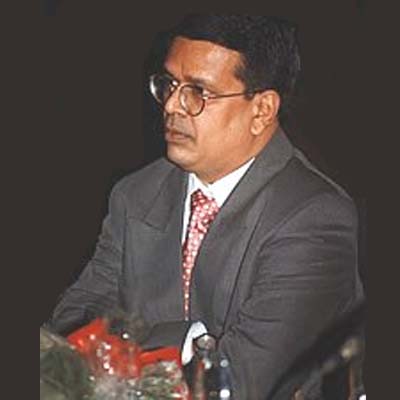
    Hathway Cable & Datacom chief executive K Jayaraman

    For energising the chain, Hathway is giving operators Rs 400 per digital STB. And on niche content, the multi-system operator (MSO) parts with a 50 per cent share on margins. Besides, operators who buy STBs on bulk are given discounts. “At the retail level, the LMOs will have to figure out what they want. It is in their interest to protect their networks,” says Jayaraman.

    But how does Hathway woo customers and make them switch from analogue to digital? One way is to offer bundled packages along with the cable internet services. The idea is to lock in customers with ARPUs over a longer period while driving sales of digital STBs.

    There are various schemes launched over a month-long period. Internet subscribers who have been sitting with Hathway for two years will be given the digital box free to use for a year. They will also have the option to buy the box for Rs 500 (box costs Rs 3375) but have to remain as Hathway‘s internet customer for the whole year.

    Boxes are available at Rs 1,000 for one-year-old customers. And for an existing internet subscriber who has not completed a year, the box is sold at Rs 2750 while Globus (retail store) coupon of Rs 500 is given along with a 20 per cent discount on Onkyo Home Theatres. New internet customers who subscribe to a minimum period of six months will have the option to buy the box for Rs 1000.

    “We have started all these initiatives for the last one month. We are rewarding our customers for their loyalty while locking them for a longer period. We feel bundling will help as DTH can‘t ptovide such services. We are in a unique position compared to the other MSOs as we have a substantial broadband subscriber base,” says Jayaraman.

    Hathway is backing up the price incentives with a dose of marketing, unprecedented in the Indian cable TV industry. Discount coupons, roadshows, FM radio stations, hoardings, interactive contests – all these media vehicles are being used to promote digital cable. And it has a staff of 70 people on sales and customer support for the digital services. “Our monthly ad spend is Rs 800000-100000. We are now selling 5,000 boxes a month which is still low, but there has been an improvement in offtake,” says Jayaraman.

    Tieing up with companies for discounts and co-branding is another exercise Hathway has started. “We are going to tie up with Citibank for a co-branded credit card which we will offer to our internet customers. For our digital cable, we are in talks with Onida for discount offers,” says Jayaraman.

    Lining up premium content is not a focus area. Hathway, though, has launched an ad-free dial-up interactive music channel I-TV through its digital services. The channel, which is currently available in Mumbai and Pune, will also be taken to other cities. Hathway has also introduced gaming on its digital services last month, for which it has selected NDS technology.

    Expanding the digital services to new cities is also part of Jayaraman‘s plans. After launching in Mumbai, Delhi, Bangalore, Hyderabad and Pune, Punjab will be the next stop.

    Hathway is creating another arsenal for its fight against DTH. Plans are on to launch VoIP (voice over internet protocol) services by the end of the fiscal. Having built a two-way infrastructure for broadband, this is a natural progression for the MSO. “We had tested for analogue telephony with Bharti but feel VoIP is a better route for us. VoIP test is going on in Mumbai. We plan to launch at least in two cities this fiscal. We can bundle cable TV, broadband and VoIP services to customers which will add to our revenue streams,” says Jayaraman.

    As the digital platforms gather force, nobody knows who will win the big fight. But, as Jayaraman says, cable will have to develop a well-rounded revenue stream if it has to survive the race.

  • ESS roots for subscription ramp up from cable ops ahead of soccer season

    ESS roots for subscription ramp up from cable ops ahead of soccer season

    MUMBAI: Riding on the Fifa World Cup wave, which kicks off next week in Germany, ESPN Star Sports (ESS) is asking for a substantial increase in the subscriber base from cable networks across the country.

    ESS is asking for a 20 to 30 per cent hike from the major networks. And, in smaller markets the channel is targetting an increase as high as 70 per cent from those networks which are terribly underdeclared.

    ESPN Software India VP sales and marketing Sricharan Iyengar says, “Our aim is to use the World Cup event reactivate in those networks where we are absent. We are looking for at least a 20 per cent growth in the subscription base from the major networks. In smaller markets we are looking at a raise from anything between 30 to 70 per cent.”

    Sources say that InCable has signed a deal allowing for a 20 per cent raise. On the other hand, Hathway CEO K Jayaraman, while declining to comment on any figures maintains that when the yearly contract was renewed with ESS in March, there was no undue pressure put on them by the broadcaster on acount of the Fifa World Cup.

    In addition to increasing subscription declarations ESS, this fiscal, is also targetting a 50 per cent growth in subscription revenue. That is because in addition to the Fifa World Cup, it will also air two cricket series involving India. One of them sees the Indian cricket team touring South Africa in December. Iyengar says, “We hope to achieve a 50 per cent growth in subscription revenue this fiscal. We are kicking this off with the World Cup”.

  • Three big MSOs work towards common pricing

    Three big MSOs work towards common pricing

    MUMBAI: The three big multi-system operators (MSOs) – Siticable, Hathway Cable & Datacom and Incablenet – are working on a common pricing on their digital cable TV service to make their offerings consumer friendly.

    On the digital set-top boxes (STBs), they are planning to offer a rental scheme of Re 1 a day at a refundable security deposit of Rs 999 once conditional access system (CAS) comes into place. Even without buying STBs, consumers can, thus, shift to digital cable by paying a nominal monthly rent.

    “The understanding among the three MSOs is to offer a common pricing to our subscribers so that there is no confusion in the market. We will be offering a rental plan of Re 1 a day. We also plan to extend this to our service packages as well,” says IndusInd Media & Communications Ltd (IMCL) director Ravi Mansukhani.

    Admits Hathway Cable & Datacom CEO K Jayaraman, “We have decided to work together. Unless we cooperate, the roll out of CAS won’t be smooth as there are forces working against it.”

    The three MSOs will focus on servicing their respective customers rather than be engaged in competition amongst themselves. Though Hathway and Siticable operators are in fight over certain territories in Delhi, these issues are expected to be sorted out.

    The MSOs will also try to unite their distributors and last mile operators (LMOs), but margins across the value chain will be decided only after broadcasters work out commercial agreements with them. They have already written to broadcasters and are awaiting their responses.

    The MSOs are making concerted efforts to clear out certain common perceptions on CAS like it not being consumer friendly. “The Bill was not enacted for the MSOs but for the consumers. The boxes will be available on rental schemes and the monthly subscription fees will fall as consumers can select the channels they want to pay for. Under the current system, the prices are artificially controlled and the consumer is subsidised,” Siticable CEO Jagjit Kohli said, while addressing a press conference today in Mumbai.

    Commenting on the competition from direct-to-home (DTH), Kohli said cable had the advantage of packaging channels according to local demand. “DTH has the constraint of transponder space while cable can offer more channels,” he said.

    Meanwhile, the Telecom Regulatory Authority of India (Trai) has called for a meeting at Delhi on Monday with the MSOs and the distributors to discuss on issues over CAS.

  • MSOs moot Re 1 a day rent scheme on STBs

    MSOs moot Re 1 a day rent scheme on STBs

    MUMBAI: The digital set-top box (STB) that will sit in consumer homes to receive pay channels will come cheap. Facing the threat of competition from direct-to-home (DTH) service providers, cable TV operators are preparing to enter the conditional access system (CAS) regime with an aggressive price plan.

    Multi-system operator Hathway Cable & Datacom has decided to introduce a rental scheme on its STBs with a fee as low as Re 1 a day. Incablenet is likely to follow suit but will be finalising its pricing on Monday, sources say.

    “We will be charging a rent of Re 1 per day on our boxes. Consumers will have to pay upfront Rs 999 as a refundable deposit,” Hathway Cable & Datacom CEO K Jayaraman tells Indiantelevision.com. Currently, the boxes are available for purchase at Rs 3,000 with no rental schemes.

    Even in Kolkata, Manthan Cable Network is considering a rental scheme of Rs 50 per month on an initial deposit of Rs 800-1,000. Competition can further drag down prices. “We are planning to charge a rent of Rs 50 per month on our STBs,” says Manthan director Gurmeet Singh.

    Cablecomm Services Pvt Ltd, another big operator in Kolkata, is also planning to structure its tariff plans for the CAS era.

    Siticable, which is the only MSO that has operations in the three metros of Delhi, Mumbai and Kolkata where CAS is going to be initially launched, could not be contacted for its comments. Chennai is the other city where CAS is already in place, but has seen slow uptake in demand.

    While broadcasters have expressed concern on the supply of boxes to seed the market at such short notice, cable networks have dismissed such fears as “being fictitious.” A phase-wise rollout of CAS in the three metros and an existing stockpile of STBs will make the transition smooth, operators say.

    “The industry has a stockpile of 800,000 boxes while estimates put the number of cable TV households in the notified areas of south Delhi and Mumbai for the first phase of rollout at over 600,000. Based on the demand, the boxes can be quickly replenished to keep the supply line flowing. It will take around one month to import the boxes,” says Jayaraman.

    Kolkata, where Hathway has no operations, has an estimated total of around 250,000 cable TV homes to be covered in the first zone CAS rollout. “We have a stock of 100,000 boxes and are offering 195 TV channels on our digital cable,” says Indian Cable Net CEO Amit Nag. Last year, Siticable acquired Indian Cable Net from the RPG Group to become the dominant MSO in Kolkata.

    Manthan, the largest operator in south Kolkata, has installed a digital headend and is in the process of putting its encryption system in place. “Kolkata Metropolitan Development Authority has around 1.8 million cable TV homes. The logistic cycles will be worked out,” says Singh.

    Mumbai and Delhi together have around seven million cable homes. “With CAS, we expect to give healthy competition to DTH. The ground will also get more organised and volumes, as they pick up, will drive down the cost of boxes,” says Atul Saraf, one of the founder-promoters of 7 Star.