Tag: K Jayaraman

  • Reliance Jio Media on track for Phase 1 of cable TV rollout between Jan – Mar 2016

    Reliance Jio Media on track for Phase 1 of cable TV rollout between Jan – Mar 2016

    MUMBAI: Reliance Jio Media, which acquired a pan-India multi system operator (MSO) licence from the Ministry of Information & Broadcasting (MIB) in June this year, is on track for the roll out of its cable television business across digital addressable system (DAS) in Phase 3 areas.


    Calling a recent report published as “misleading,” which stated that the company is going to  focus more on 4G and broadband,  as compared to digital television and distribution, a senior Reliance Jio official tells Indiantelevision.com, “MSO business is an integral part of our services and we are as focussed on it as we were from the very beginning.”


    Reliance Jio Media has already shortlisted the cities for the first round of MSO rollout. “We will start with 15 cities initially and eventually will reach out to more than 100 cities over the next three years. The first round of launch will take place anytime between January to March 2016,” the official informs.


    The MSO will offer both standard definiion (SD) and high definition (HD – incluing Ultra HD)  services to garner high average revenue per user (ARPU). “We will follow a model, which is sustainable in the long run. Having all the viewing experiences for consumers is an important factor and we won’t compromise with that,” added the official.


    “Headends, technological partnerships and other infrastructure deals have already been sealed with a few vendors and we will have everything sorted out before 31 December. We are in conversation with several LCOs for both broadband and cable partnerships. Post Diwali we will have the final round of discussion with LCOs for digital cable business,” said the official.


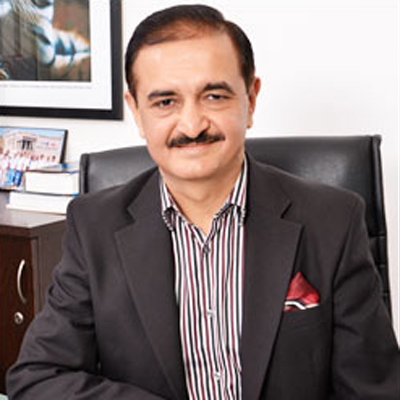
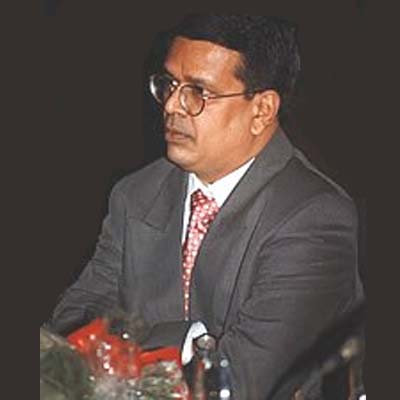
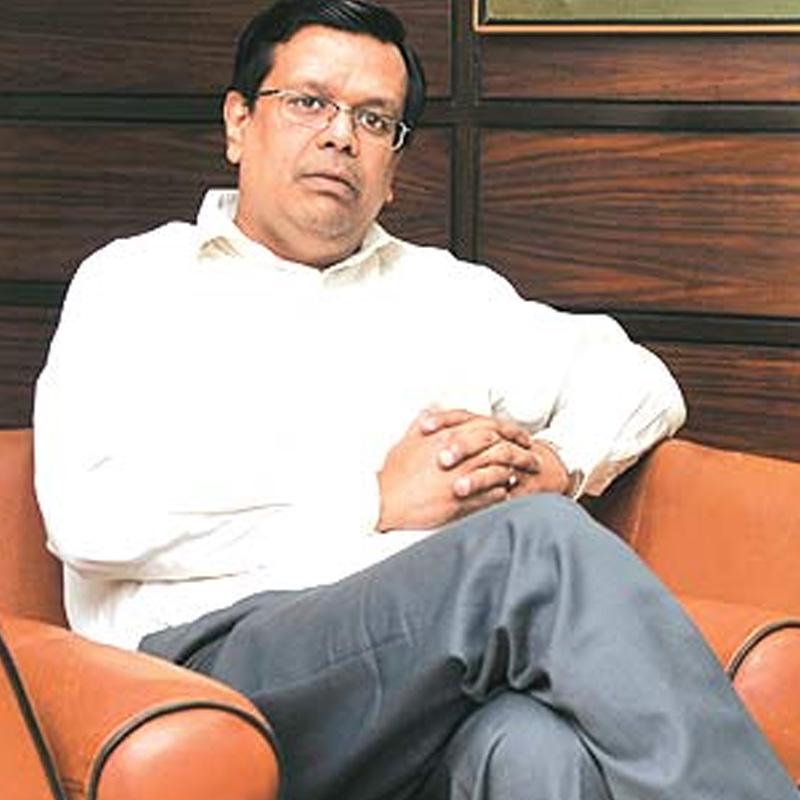
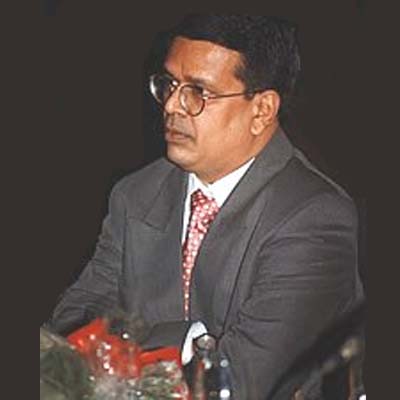
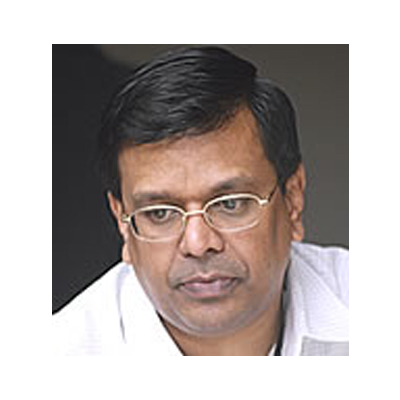
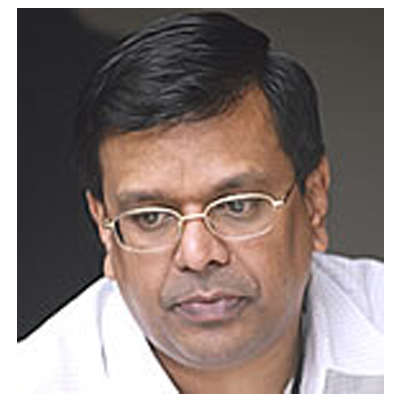
    Reliance Jio CEO K Jayaraman leads the company’s MSO business.


    A source from the industry opined, “The team that they’ve got in place has the muscle power to deal with any situation. I don’t think there is any lacklustre attitude towards the MSO business from the conglomerate.”


    Another senior official from a technological giant, on condition of anonymity said, “We have been working closely with Reliance Jio creating different products for them. We are actively pursuing our partnerships and have no information of a slow down or postponement of launch of distribution of cable TV.”

  • Reliance Jio appoints Amit Shah as senior vice president

    Reliance Jio appoints Amit Shah as senior vice president

    MUMBAI: Reliance Jio Media has appointed Amit Shah as the senior vice president – content carriage and Value added services (VAS) of the company.  


    Shah will report to Reliance Jio CEO K Jayaraman and will be looking after the content and carriage aspect of the business. 


    A source in the company informs Indiantelevision.com, “A series of veterans from the cable fraternity will be joining Jio as the launch date comes closer.”
     

    Earlier, Shah worked for two years as head content carriage and VAS for Videocon d2h. He was also associated with Hathway Cable & Datacom as GM accounts content and strategy.

  • MIB issues provisional MSO licence to Reliance Jio

    MIB issues provisional MSO licence to Reliance Jio

    MUMBAI: The wait is finally over for the Mukesh Ambani led Reliance Jio, as the company has finally got the provisional multi system operator (MSO) licence from the Information and Broadcasting Ministry (I&B). The licence was given on 17 June, 2015. 


    While I&B Ministry sources refused to comment on giving any such provisional licence, a source from the company confirmed the news saying, “We got the provisional MSO licence on 17 June.” 


    The telecom arm of Reliance Industries, Reliance Jio had applied for pan-India MSO licence in January 2015.


    This comes soon after the I&B Ministry decided to give provisional licence to MSOs who had applied for licences to operate in phase III. It can be recalled that in October 2014, the Ministry had decided to do away with the system of granting provisional licences and only giving permanent licences in order to ensure that only serious players entered the phase III and IV markets. 


    While, the Ministry had then said that it along with the Ministry of Home Affairs (MHA) will process the MSO security clearance within 90 days, the same has not been followed. This resulted in the I&B going back to granting provisional licences.


    Through a notice on 11 June, 2015, the Ministry accepted the delay in granting of security clearance by the MHA and so asked the close to 700 MSO licence applicants to file their application in an affidavit. Through the affidavit, the applicants had to commit that they have no criminal cases pending against them, and that they will shut down if they are refused security clearance. 


    “While we have got the provisional licence, now the MHA will come up with its guidelines, which we will need to follow to get the permanent licence. The reason that a provisional licence has been given is because the MHA was taking a lot of time to give security clearance,” said the source from the company.


    It can be noted that two of the pioneers of Indian cable TV sector: K Jayaraman and SN Sharma have already joined Reliance Jio and will be spearheading its business in the country.  


    Reliance Jio 4G rollout


    In its recent annual general meeting, Reliance Industries chairman and managing director Mukesh D Ambani informed that the ambitious 4G project will launch in December 2015 and that 2016-17 would be the first full year of commercial operations for Jio.


    After expending money to the tune of Rs 10,000 crore in acquiring spectrum rights across the country, the company is targeting to provide 4G services across India with an investment of more than Rs 70,000 crore.

  • Majority of MSOs await security clearance held up by Home Ministry

    Majority of MSOs await security clearance held up by Home Ministry

    NEW DELHI: Nine of the 13 multi-system operators (MSOs) who attended the last two open house meetings for MSOs in the Information and Broadcasting Ministry were told that their cases are awaiting security clearance by Home Ministry, even as the Ministry has now decided to consider the cases afresh.


    Reliance Jio Media’s representative was informed that details of Reliance Jio CEO K. Jayaraman were being sent to the Home Ministry.


    Others in the queue for Home Ministry who turned up in the meetings on 30 March and 7 April are Seven Star, Infinite Television & Telecom, K Net, GTPL Hathway, Shirdi Sai Digital, Sahyog Telelink, Om Systems and Subhodhaya Communication.


    The cases of Subhodhaya Communication, Technobile System, Akshaya Diginet Cable, Technobile Systems and Bhaskar Cable Network have also been held up for other reasons including policy decisions.

  • SN Sharma joins Reliance Jio

    SN Sharma joins Reliance Jio

    MUMBAI: It was a shocker when the news of multi system operator (MSO) Den Networks CEO SN Sharma quitting the company broke. Now, after months of speculation about his next move, Sharma has made the decision.


    The man credited with creating one of the biggest MSO network, Den Networks, will now be looking into the day to day operations of Reliance Jio. Confirming the news to Indiantelevision.com, Sharma said, “Yes, I have joined Reliance Jio.”


    Reporting into Reliance Jio CEO K. Jayaraman, Sharma will be an integral part of the top management. 


    Sharma joined office starting 23 February but whether he will continue operating from Delhi, will be decided at a later stage.


    With Reliance Jio awaiting approvals for the pan India MSO licence, the company is rapidly strengthening its team. 


    During his stint at Den Networks, Sharma’s vision of growth through consolidation and digitisation had laid the foundation for the company. He also spearheaded Den Networks’ rapid growth with his visionary leadership and execution abilities. He was also the driving force behind taking the company into the digital era.


    He has nearly three decades of experience during which he has been associated with the electronic media industry for over 20 years.

  • Jayaraman to head Zee’s distribution and placement business

    Jayaraman to head Zee’s distribution and placement business

    MUMBAI: Former Hathway Cable & Datacom managing director and CEO K Jayaraman is joining Zee Group as head of distribution and placement business. He will also guide and anchor all such roles across the businesses of the Zee group which requires his specialisation.

    Designated as president, Jayaraman will take over his new role from 12 March and will report directly to Zee Entertainment Enterprises Ltd MD and CEO Punit Goenka.

    He can also advise and guide the directors on the board of Media Pro to maximise the revenue for the distribution company. Media Po is a joint venture between Star Den and Zee Turner.

    “He will be responsible to the promoters of the group in updating and providing necessary heads up on various issues of the domain. He will hold hand and provide all kind of support to the CEO of Siticable business, without getting involved on day to day affairs of the business,” Goenka wrote in an internal note.

    Deepti Verma, who has been leading the initiatives so far, will report to Jayaraman.

    A Chartered Accountant and with more than 15 years experience in the media distribution industry, Jayaram had resigned from Hathway after Jagdish Kumar took over as MD and CEO of the company. Jayaraman was made vice chairman of Hathway, a post he did not accept.

  • Digitisation: Hathway needs Rs 3 bn in 2nd phase; no plans to dilute equity

    Digitisation: Hathway needs Rs 3 bn in 2nd phase; no plans to dilute equity

    MUMBAI: Hathway Cable & Datacom plans to invest Rs 3 billion for the second phase of digitisation as it details a requirement of around 3.5 million set-top boxes (STBs) to place in consumer homes across the cities where its cable TV service is available.

    Hathway will not need to raise equity financing and will fund the second phase through a mix of debt and vendor financing.

    “We are under no pressure to raise equity financing and have adequate headroom for getting additional debt. We also have vendor financing facilities. Of the total investments that we make, 70 per cent will be through vendor financing,” Hathway Cable & Datacom managing director and CEO K Jayaraman tells Indiantelevision.com.

    Hathway’s net debt stands at Rs 4.60 billion, including Rs 1 billion of vendor credit.

    The multi-system operator (MSO) has already seeded 1.5 million STBs in the 22 cities that fall under the next round of digitisation. The government has mandated 31 March 2013 as the deadline for digitisation in 38 cities, but industry experts feel an extension would be granted for a limited period.

    “Our preliminary estimate is that we would have a demand for five million STBs. We have already deployed 1.5 million boxes,” says Jayaraman.
    Hathway expects to deploy 2.5 million STBS in the first phase of digitisation where it operates in three of the four metros. While in Mumbai and Delhi it operates directly, in Kolkata it has a presence through its joint venture company Gujarat Telelinks Pvt Ltd (GTPL). GTPL, in which Hathway has 50 per cent stake, acquired majority stake in Kolkata Cable and Broadband Pariseva.

    “We have already seeded 1.7 million STBs in the three metros. We have set an internal target of 2-2.5 million boxes as we see a rising demand,” elaborates Jayaraman.

    Hathway spent Rs 1.20 billon on capital expenditure in the first half of this fiscal. For the three-month period ended 30 September, Hathway narrowed its net loss to Rs 17.84 million against Rs 158.71 in the trailing quarter. Revenue fell three per cent to 1.32 billion from Rs 1.36 billion in the first quarter.

  • ‘Digitisation will not spur irrational price war as the Santa Clauses are broke’ : Hathway Cable & Datacom MD and CEO K Jayaraman

    ‘Digitisation will not spur irrational price war as the Santa Clauses are broke’ : Hathway Cable & Datacom MD and CEO K Jayaraman

    Hathway Cable & Datacom has an ambitious investment plan of Rs 10 billion as India opens up to digitisation across the country.


    In the first phase, India’s leading multi-system operator (MSO) plans to invest Rs 1.75 billion even as it expects DTH to take away 10-15 per cent of its cable TV subscribers in the two lucrative markets of Delhi and Mumbai.


    Sitting on a cash pile of Rs 2 billion, Hathway will not source equity finance at this stage. Though net losses will drag on for a long period in a digital environment, the MSO hopes to regain its old valuations if it manages to successfully implement the early phase of digitisation.


    Even as carriage revenue will shrink, Hathway’s endeavour will be to have an Ebitda of 20-25 per cent right from the start of mandated digitisation.


    In an interview with Indiantelevision.com’s Sibabrata Das, Hathway Cable & Datacom MD & CEO K Jayaraman talks about how no cable or direct-to-home company is in financial health to launch an irrational price war. He also elaborates on the MSO’s digitisation gameplan.


    Excerpts:


    DTH companies have made rapid progress in recent years. How is Hathway Cable & Datacom prepared to exploit the first phase of digitisation?
    We plan to invest Rs 1.75 billion in the first phase. This will include Rs 200 million towards marketing in Mumbai and Delhi over the next 6-8 months. It is the first time that we are splurging on media campaigns.

    Are you comfortably placed on the funding part or you plan to raise fresh capital?
    We have a cash pile of Rs 2 billion. We will not source equity finance at this stage. We are comfortably placed and will manage with bank debt and vendor credit.

    Will you need funding in the second stage?
    We will see when we reach there. We have already digitised around two million homes. We will need to digitise our remaining 6-8 million existing homes (including multiple TVs). Our funding requirement will be Rs 10 billion as we need to subsidise the set-top box (STB) cost and make further investment in infrastructure.

    Hathway was selling at Rs 500 a STB to its customers in voluntary digitisation. Will you further subsidise the boxes in a mandated digitisation environment?
    We are looking at charging Rs 750-790 a STB (including taxes) as the rupee has depreciated against the dollar.

    “LCOs will get a revenue share of 30-35%. They will gain from 2nd TV homes, operational efficiencies and Vas. Distributors will get a 5% rev share. They will also get a 30% share in carriage revenues”

    But DTH could go aggressive and there could be a price war situation?
    We won’t sell below this even if there is a price war. We do not have the financial resources to further subsidise the boxes.


    We, however, feel that no player is in a position to indulge in an irrational price war. Nobody in cable can do so. DTH will fight for market share on the basis of perception and brand. All the Santa Clauses are broke.

    Are you expecting a migration to DTH?
    We expect DTH to take away 10-15 per cent of our cable TV subscribers in the two lucrative markets of Delhi and Mumbai. But we see a surge in second TV homes. Besides, we will launch three packages – lower, middle and top-end. In all the packages, we will have a price advantage. Also, we will have more channels on offer than DTH because of our bandthwidth superiority.

    Will the supply of STBs be impacted due to a sudden rise in demand?
    We have ordered 1.3 million digital STBs and signed a letter of intent for another 0.5 million. We estimate our subscriber universe to be 1.5 million in Mumbai and Delhi. About 20 per cent of this will be second TV sets.


    We also have a presence in Kolkata through our joint venture company, Gujarat Telelinks Pvt. Ltd (GTPL), which acquired a 51 per cent stake in Kolkata Cable and Broadband Pariseva. We expect to at least seed 400,000 boxes there.


    We have already seeded 250,000 STBs on a voluntary basis in Delhi and Mumbai.

    Crucial to the whole implementation of digitisation is the appeasement of the local cable operator (LCO). Have you fixed the revenue share terms with them?
    The LCOs will get a revenue share of 30-35 per cent. There will be a loss of revenue for them but they will make up to some extent with the second TV homes, where they don’t usually charge anything from the subscriber. Besides, they will gain from operational efficiencies and will discover new homes in a digital environment. Also, there will be a revenue share for them from value-added-services (Vas). So they should reasonably settle with us.


    The distributors will get a five per cent revenue share. They will also get a 30 per cent share in carriage revenues. In Mumbai, we are comfortable with the distributors. There may be some issues in Delhi but we will manage to strike a smooth bond with them.

    Why haven’t the MSOs sat down together and decided on a common share for the LCOs who control the last mile to the consumer?
    That would attract the Competition Commission of India. But in any other form, we will make efforts to drive consensus up. We don’t want any fissure surfacing among the stakeholders. We can’t afford to derail DAS (Digital Addressable System).

    Do you expect carriage revenue to shrink considerably?
    We expect it to shrink by 30 per cent in the digital environment. This can even go up to 50 per cent. But we will be somewhat compensated by a reduction in content cost.

    How?
    We will do fixed fee deals with broadcasters and believe content cost in a digital scenario will fall in the region of 35 per cent. We are close to sealing deals with two big broadcasting companies.


    Even sports channels should allow us to price reasonably; customers should take it round-the-year. Otherwise, we will offer it on a-la-carte basis to consumers.

    Analysts predict that net losses of MSOs will drag on till at least 2016 in a digital environment?
    We can’t predict now. But Hathway aims to stay Ebitda positive. We expect our Ebitda to be at least in the 20-25 per cent range. We know it will be difficult at the early stage of digitisation but our endeavour will be towards achieving that range from the start.

    Hathway had fixed it IPO price band at 240-265 and the scrip is now quoting at Rs 116 per share. When will the valuation be regained?
    We will regain good valuations if we manage to seed the boxes. Investors are bothered about that and not about net profitability at this stage.

    Do you expect the second phase to be tougher for you?
    For Hathway, the ride in the second phase could be even smoother as we have already got a large population of digital subscribers on a voluntary basis in some of these major cities like Bangalore and Hyderabad. Our digital penetration in some of these cities is as high as 60 per cent. In Gujarat we have seeded 150,000 (out of our
    estimated current subscriber universe of 220,000) STBs, in Hyderabad we have 350,000 (out of 800,000) and in Bangalore we have a digital population of 275,000 (out of 400,000).


    And in Jaipur, Indore and Bhopal, we have a digital penetration of 40 per cent out of our current subscriber base. In Phase II, we are far ahead.

    Will you follow the acquisition route?
    We will not pursue acquisitions and will prefer to conserve capital for digitisation. We will not do any more analogue consolidation. It is bad to add analogue weight in the current circumstances. Our focus will be on digitsation.


    Post digitisation, we may be interested in acquisition in some of these cities. But it should come at the right price.

    Are you looking at launching value-added services?
    We will tie up with either Ericsson or Cisco for Video-on Demand (VoD) services. We will decide in March whom to partner with. We have launched HD services and also bundled it with our broadband offering. We hope it will enhance our average revenue per user (ARPU). We have 2000 HD subscribers. Given that we get Star bouquet on HD and spend on marketing, we expect HD to eventually account for 10 per cent of our subscriber base.

    Are you bullish on your broadband growth?
    Yes, that gives us an advantage over DTH. We are also ahead of the other big MSOs so far as broadband goes. We will be bundling broadband with digital cable to offer better value to the consumers. The broadband homes passed stand at 1.7 million and our actual subscribers are 400,000.

  • ‘Cable TV sector sees rapid consolidation and new competition in 2008’ : Hathway Cable & Datacom MD & CEO K Jayaraman

    ‘Cable TV sector sees rapid consolidation and new competition in 2008’ : Hathway Cable & Datacom MD & CEO K Jayaraman

    Cable TV companies have attracted private equity funding and used it for consolidation and digitalisation. But tight liquidity credit markets, intense competition to woo local cable operators, and rise in cost structures present a challenging 2009, says Hathway Cable & Datacom MD & CEO K Jayaraman

    2008 marked the emergence of new multi-system operators (MSOs) with pan India ambitions. This resulted in intense competition to woo the local cable operators. The year also marked subtantial private equity/mezannine funding to some of the existing and new MSOs. Some estimates say that the combined inflows during the year could have reached about Rs 7 billion.

    The substantial equity inflows resulted in furthering rapid consolidation of the industry with the independent cable operators (ICOs) partnering or entering into joint ventures with the larger MSOs. In fact some estimates put that almost 40 per cent of the total C&S (cable & satellite) homes could be the cumulative universe under the umbrella of the larger MSOs.

    A welcome fall out of the rapid consolidation and equity flow was the intensive pace of digital cable tv roll out. Incremental voluntary digital cable during the year could have touched one million, based on rough estimates.

    But this was again restricted to selective MSOs. Customers who opted for digital cable enjoyed 150 plus channels at the same price as of analogue. The digital boxes were also subsidised deeply by the MSOs. Digital cable was able to effectively combat the competition from satellite despite the latter companies having huge funding and high decibal advertisements. While the fob prices of cable digital boxes fell, the gain was lost due to 20 per cent rupee depreciation during the year.

    The year also saw spiraling salary costs in the cable TV companies, with each one outdoing the other, even as subscription income lagged. The raged optimism arising out of projected placement fees and new capital infusion fuelled the salary costs and other overheads too.

    Sadly towards the last quarter of the calendar year due to a combination of global meltdown and zero liquidity in the Indian banking system, the companies were sent scurrying for cover and control over these costs. While it may not be easy to cut these fixed costs, the situation can result in further profitability pressure for unorthodox business models in the year 2009.

    The intense competition to woo the local cable operators (LCOs) sucked a lot of funding and, therefore, the roll out of value added services like broadband through cable etc suffered, barring a few whose inherent business model comprise these services too.

    While the year saw rapid consolidation and new competition, sadly the core subscription business was forgotten. Subscription income from LCOs have dipped for the industry as a whole, except for business model where last mile also co-existed, as the chase for territory and placement fees gained predominance. Business models and enterprise valuations were being built around these non-conventional parameters. Cost structures increased rapidly including pay channel costs even as the LCOs dodged the MSOs.

    The last quarter meltdown and liquidity crisis, coupled with slowing down of advertisement income for the channels, did send ominous signals to the MSOs with non conventional parameters. Pressure had started building rather quickly, but the difficult signs are being ignored.

    Overall, the year ended on a sombre mood with a more challenging year 2009 in the offing.

  • Hathway implements Oracle E-Business Suite

    Hathway implements Oracle E-Business Suite

    MUMBAI: Hathway Cable & Datacom has implemented Oracle 11i E-Business Suit as its ERP applications in order to manage data of different lines of its businesses. The multi-system operate offers services in areas of cable TV, broadband and cable channels.

    Covered in the first phase were the purchase, stores and inventory, accounts and finance functions. This went live from 18 January. In the next phase, which will start shortly, the ERP solutions will involve the human resources, marketing and sales functions.

    Hathway has engaged the services of Satyam Computer Services for the implementation of this project.

    “Our business processes are ready and in line with Oracle’s integrated solutions which will tightly integrate the various functions, business processes, key stakeholders and employees across the organisation through this ERP solution,” said Hathway Cable & Datacom MD and CEO K Jayaraman.

    In April 2006, Hathway decided to implement Oracle Applications 11i E-Business Suite This was to run on HP servers using Red Hat Enterprise Linux 4.0 Advanced Server and Oracle 10g database on the Sun server platform.

    “The implementation of this ERP solution is expected to provide better visibility on our transactions and inventory. This will improve our customer delivery performance, reduce inventory and process cycle while bringing down operating costs. The solution is also expected to better cost of compliance and resource utilization through standardized processes, and improve customer service with better controls,” said Jayaraman.