Tag: JV

  • Intelsat, JSAT form JV to launch new satellite for APAC

    Intelsat, JSAT form JV to launch new satellite for APAC

    MUMBAI: Intelsat S.A. and Sky Perfect JSAT Corporation have signed an agreement to form a joint venture that will launch a new satellite with optimised C-band and high throughput Ku-band capacity to satisfy the growing mobility and broadband connectivity demands in the Asia-Pacific region.


    To be known as Horizons 3e, the satellite is based on the Intelsat EpicNG high throughput design which, upon launch, will complete the global footprint of the Intelsat EpicNG next generation platform. The satellite will be stationed at the 169 degrees East orbital location with a launch expected in the second half of 2018.


    Building upon a successful alliance between the two operators, the Horizons 3e satellite marks the fourth satellite to be owned jointly by JSAT and Intelsat, following Horizons-1 (launched in 2003); Horizons-2 (launched in 2007) and Intelsat 15/JCSAT-85 (launched in 2009).


    With the most advanced digital payload on a commercial satellite, bandwidth flexibility and power portability, Horizons 3e will bring high performance, improved economics and simple access to the aeronautical and maritime mobility, cellular backhaul, corporate enterprise and government customers operating in the region.


    “Today marks another milestone in our long history of collaboration with JSAT. With Horizons 3e, we will introduce the Intelsat EpicNG platform to the Asia-Pacific region, completing our global high throughput footprint and enhancing our IntelsatOne Flex service platform. The scalability, power and flexibility of Intelsat EpicNG will provide commercial and governmental aeronautical and maritime services with unprecedented seamless, contiguous broadband coverage over the most widely trafficked routes from the Atlantic to the Pacific.  In addition, the higher performance and improved economics of Intelsat EpicNG will enable fixed and mobile network operators to expand their networks and provide much needed broadband connectivity to the more remote communities of the region,” said Intelsat CEO Stephen Spengler.


    JSAT president and CEO Shinji Takada added, “Horizons 3e is a significant project for both Intelsat and JSAT. This new state-of-art satellite will lead to the expansion of our next generation business in the Asia and Pacific region utilising the HTS technology. Satellite communications demands for the region will definitely continue to grow and the project is essential for us to uptake of the growth demand for the region.”


    The formation of the JSAT/Intelsat venture features equal ownership of the satellite, which will be constructed over a 2.5 year period.  Given the business construct, the program will not be considered part of Intelsat’s capital expenditure program

  • MSM to hold majority stake in JV with BBC for Sony BBC Earth launch

    MSM to hold majority stake in JV with BBC for Sony BBC Earth launch

    MUMBAI: Multi Screen Media (MSM) has entered into a joint venture with BBC Worldwide to bring BBC Earth to India. MSM will be a majority stakeholder in the JV partnership. 


    Called, Sony BBC Earth, the premium factual channel for Indian audiences, will broadcast in HD and will be available in Hindi, English and Tamil across India.


    While BBC Worldwide will draw on its programming catalogue, MSM has years of experience in programming and in operating and distributing television content under the Sony brand name.


    It may be recalled that in April this year, the two companies has announced their intention to jointly launch BBC Earth in India.


    The JV between MSM and BBC Worldwide and the launch of Sony BBC Earth is subject to necessary regulatory approvals in India.


    In order to scale up the JV with BBC Worldwide, MSM will be putting together a new team, which will handle the programming, marketing, operations as well as sales and distribution of Sony BBC Earth.


    MSM chief executive officer NP Singh said, “Sony BBC Earth is a joint venture between MSM and BBC Worldwide; with MSM owning the majority stake. This partnership with BBC Worldwide gives us an unparalleled edge in distributing factual programming to viewers across MSM’s network in India and to sharing with them, some of the best television content ever.”


    “Sony BBC Earth will combine information and entertainment in real surroundings and audiences that crave the virgin thrill and adventure of exploring natural environments, demystifying science and rewriting history will find it difficult to meander away from this channel. We are confident that within a short span of time, this new channel will carve its own distinct positioning in the minds of the discerning Indian viewer,” he added.


    BBC Worldwide Global Markets president Paul Dempsey added, “This is a pioneering model for us. By working with a respected local partner of the calibre of MSM we can bring BBC Earth’s world class content to a new audience who we know have a huge appetite for premium factual programming.”

  • TS Panesar joins Hathway

    TS Panesar joins Hathway

    MUMBAI: TS Panesar, who recently quit Star India as EVP distribution has joined Hathway Cable & Datacom as head-video business.  

    Confirming the news to indiantelevision.com, Panesar, who had a few options to choose from, says, “Distribution has a long way to go and with Hathway leading the way, I think it’s a sector with a bright future.”

    As for the plans for the multi system operator (MSO) Panesar, who joined the company on 8 December, says it’s too early to comment.

    Hathway which has two verticals: broadband and video, created the new portfolio for head-video starting today. “Yes, Panesar has joined Hathway to head the video segment. In his new role he will look after carriage, subscription and placement,” informs Hathway Cable & Datacom MD and CEO Jagdish Kumar.   

    “He will help us grow the video business,” adds Kumar.

    Panesar had been entrusted with the responsibility of handling distribution for national DTH and digital addressable systems (DAS) earlier this year when the JV between Star and Zee- MediaPro was broken. He was earlier ESPN Software India VP for affiliate sales.


  • WPP agencies Bates Asia and CHI form JV

    MUMBAI: Bates Asia and CHI & Partners, both WPP group’s integrated media agencies, have formed a 50:50 joint venture company Bates CHI & Partners. The joint venture will function as a ‘new model’ network with deep roots in Asia and world-class creative credentials.

    The new network will have 16 offices across the globe with one each in London and New York and 14 in Asian countries. It will create a strong offering for clients wanting to marry world-class creativity and strategic skills with deep local insights.

    Johnny Hornby will lead the joint venture globally while David Mayo will run operations in Asia in his role as Bates CHI & Partners CEO. The company’s name Bates CHI & Partners will be used in Asia while the London and New York offices will retain CHI & Partners. Ogilvy & Mather Asia Pacific planning director Mark Sinnock will join the agency as chief strategy officer for Asia.

    WPP owns 100 per cent of Bates Asia and 49.9 per cent of CHI & Partners.

    Bates CHI will give western clients direct access to strong market capabilities across Asia’s fastest growing economies while at the same time, Asian brands wishing to break into Europe and USA will benefit from local knowledge, world-class creativity and a dedicated agency network.

    CHI & Partners founding partner Johnny Hornby said, “The joint venture brings together Bates, the agency that invented the Unique Selling Proposition back in the 1940s, with CHI, the creators of ‘the big idea’, its modern equivalent. This new model network will use our big ideas process to put together bespoke multi-disciplined teams from a variety of disciplines and geographies. It will be a nimbler, faster, more modern alternative to the big networks.”

    Bates CEO David Mayo said, “It’s a compelling proposition. Clients all over the world – just like the consumers they serve – are increasingly leaning towards more bespoke solutions developed from a wider menu of talent and skills which by definition don‘t all live in the same place anymore. At the same time they demand geographical spread in order to reach multiple, connected audiences. The new Bates CHI & Partners forms a global network with access to some of the best tools and skills available anywhere.”

    Bates was acquired by WPP in 2003 and later merged with the agency 141 to form Bates 141. Last year though, it was rebranded to drop the 141 from its name. Bates Asia’s global clients include Unilever, Indonesia and Diageo, while CHI & Partners handles Lexus and Samsung globally.

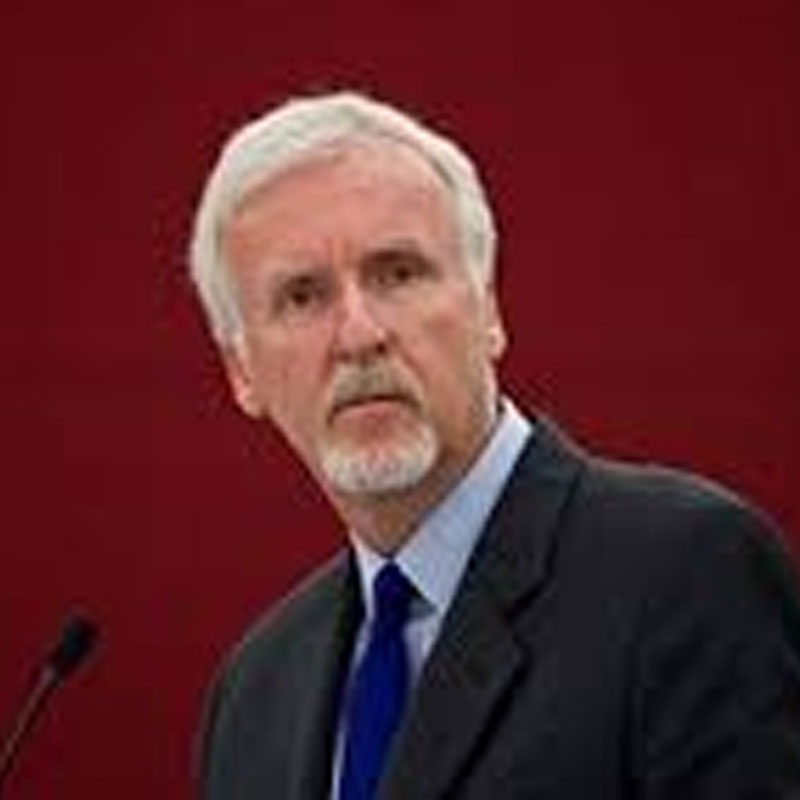
  • James Cameron in JV in China for developing 3D

    James Cameron in JV in China for developing 3D

    MUMBAI: Filmmaker James Cameron has entered into a joint venture in China for developing and expanding the technology in the country.
    The filmmaker‘s Cameron/Pace Group (CPG), that specialises in 3D technology, has partnered with two Chinese firms from the city of Tianjin, Tianjin High-Tech Holding and Tianjin North Group, it is learnt.
    “The future of entertainment is 3D and we believe that the future of 3D is right here in China,” said Cameron in a statement adding that he was in the Chinese capital not as a director but as a businessman.
    The noted director, who is convinced that the transition of the film industry from 2D to 3D is inevitable, believes that “China is the most fertile soil to plant that seed”.
    “We are here to make movies better by working with film-makers here in China,” said Cameron. “We are here to give them the tools and the techniques to make the transition from 2D to 3D,” he added.
    Cameron hopes to take advantage of a box-office explosion in China, where the film industry is booming and the number of cinema halls is on the rise, potentially offering one of the most lucrative markets in the world.
    Cameron‘s Titanic and Avatar, incidentally, broke all records in China.

  • ‘India is witnessing a sporting revolution’ : IMG Reliance COO Ashu Jindal

    ‘India is witnessing a sporting revolution’ : IMG Reliance COO Ashu Jindal


    Last year in a bid to increase its presence in the sports world, Reliance formed a JV with IMG. The aim of the JV, called IMG Reliance, is to among other things create and operate major sports and entertainment assets in the country.


    The JV has done deals with different organisations including the Basketball Federation of India (BFI).


    It is also taking the Aircel Chennai Open tennis event to the next level. Indiantelevision.com‘s Ashwin Pinto caught up with IMG Reliance COO Ashu Jindal to find out more on the JV‘s plans.


    Excerpts:


    What is the vision for the JV in terms of the impact you see it having on the sports landscape?
    India is a sport-loving nation and we are keen on developing and promoting different sports in the country.


    In the recent past, the Indian market has witnessed the rise of some of the world‘s strongest sports brands. As India‘s sports landscape grows, we are looking at bringing several successful sports properties to India in addition to creating newer ones tailored to fit the country‘s specific requirements. We will continue to build on the strong foundation and brand equity that India enjoys.

    Which are the sports that IMG Reliance is focussing on developing and what are the various strategies being followed?
    IMG Reliance will create and operate a variety of sports assets in the country.


    As you might know, we have signed a 30-year partnership with the Basketball Federation of India (BFI) to develop basketball. The BFI has granted IMG Reliance commercial rights, including sponsorship, advertising, broadcasting, merchandising, film, video and data, intellectual property, franchising and new league rights.


    We have also signed a 15-year partnership with the All India Football Federation (AIFF). We aim to restructure, overhaul, improve, popularise and promote the game of football throughout India, from the grassroots to the professional level.

    What challenges does the economic slowdown pose for you?
    India is currently witnessing a sporting revolution of sorts. Even though the sector might still not have exclusive industry status, the country‘s most powerful business houses seem to have understood the benefits of investing in Indian sports.


    The success of the Indian Premier League and more recently the inaugural Indian Formula 1 Grand Prix illustrate the fact that the sports sector will continue to mature. Growth in the media and entertainment industry is expected to be at 14 per cent until 2015, and the entertainment and recreation arenas, including sport will be the greatest beneficiaries.


    Organising world class sporting events is IMG Reliance‘s core competency and I am certain that the businesses we operate in will continue to enjoy success in the presence or absence of a slowdown.

    On the tennis front, how has IMG Reliance grown the Aircel Chennai Open?
    As an organisation, we‘ve done our best to combine our domain expertise with unrivalled experience in promoting, commercialising, operating and distributing large-scale events.


    The support of the government of Tamil Nadu, Tamil Nadu Tennis Association and the All India Tennis Association since the tournament‘s inception has been invaluable. In many ways, the Aircel Chennai Open has been successful thanks to a combination of our global and local strengths. We are proud to have been associated with it since its inception and hosted the likes of Rafael Nadal, Boris Becker, Carlos Moya, Richard Krajicek, Patrick Rafter, Yvgeny Kafelnikov, Byron Black and India‘s own Leander Paes and Mahesh Bhupathi.


    The fact that the number of spectators attending the tournament in the first round has gone up each year is evidence of the event‘s growing popularity. Chennai‘s tennis fans have given the tournament their unstinting support. Hardly surprising that the world‘s best players love going there because the fans they play in front of are knowledgeable and immensely committed to the game.

    Increasingly corporations are moving towards the concept of ‘triple bottom line‘ which is comprised of people, planet and profit

    You have seen some tennis events including a WTA one in India close. What are the challenges involved in keeping a tournament financially viable?
    Being the largest independent promoter of events and representative of tennis players does not help unless the country you operate in loves the game. Without a doubt, we‘ve done our best to see tennis growing into one of the most popular sports in the city and state.


    With the people supporting our efforts, we have a dedicated and experienced team of individuals, both globally and nationally, who work on events like the Aircel Chennai Open.

    We are confident that any event planned professionally and executed well will continue to attract sponsorship and advertising. In addition, the Indian markets and populace are now opening up to accept and enjoy non-cricket sports, a fact that is making the growth of events like the Aircel Chennai Open easier.

    Has it been harder this year to find sponsors given the economic slowdown?
    India has been growing at a robust rate of over eight per cent over the past five years and is expected to grow at over seven per cent for the next decade.


    All signs point to a market that is ready and eagerly waiting for additional sports to enter the mainstream, thus making the process of finding sponsors easier. Positive developments such as these, apart from the rising stock of Indian sportspersons and emergence of Indian team owners and organisers on the world sporting scene, have led several exciting new sports events being organised in India.


    For Aircel Chennai Open 2012 too, we are very pleased to have Nature Valley, Parle Hide and Seek, Ricoh among others as first-time sponsors in addition to many of the others continuing their sponsorships. It is but safe to presume that the scope for marketing can only grow wider.

    How is the Aircel event perceived by viewers in India and abroad vis-a-vis other ATP events?
    The Aircel Chennai Open is the longest running tennis event in the country thanks to its popularity among both viewers and tennis stars that look forward to being a part of it year after year.


    It has grown to become South Asia‘s premier ATP World Tour event and come a long way since Leander Paes and Mahesh Bhupathi won the first edition doubles title in 1996. Though there is still a lot of room for improvement, we stand firm in our resolve to develop the event into one of the world‘s leading tennis championships.

    Is tennis finding more acceptance from advertisers looking at targeting affluent audiences?
    As a sport, tennis is garnering more and more attention from diverse fronts, especially with increasing high-intensity competition and the participation of some of the world‘s top players.


    Advertisers from India and abroad are looking at this as an opportunity to build effective marketing programs, bring their brand into India or take it abroad, and in the process engage with affluent and global sports fan bases around the world.

    What are the different ways in which sponsors leverage the Aircel Chennai Open?
    Tennis is one of the few global sports that India has doing very well off-late, not only has the sport grown in stature, it has given rise to a number of stars who enjoy celebrity status. Besides that, the Aircel Chennai Open which is in its 17th year has grown to become a marquee ATP event in South Asia which attracts some of the best known and emerging players from across the world.


    The sport is a very interesting mix of athleticism and glamour, both of which offer a host of opportunities for partners and sponsors, this, besides the regular benefits of branding and visibility in the media. The tournament takes place every year in the first week of January. It offers brands a platform for launching new products. And owing to the timing of the tournament, the overseas players usually reach around the last week of December, just after Christmas and before new year, so brands associated with the event can use this festive period for a lot of hospitality and entertainment relates activities.


    We have come up with a concept of ‘Market Square‘, this is a commercial area within the stadium premises where partners can showcase their offerings and get a captive audience who visit the stadium through the tournament. This apart, depending on the nature of sponsorship, the brands can get time from celebrity players for promotional activities.

    In terms of ROI how does tennis compare to other sports?
    According to recent numbers from Tam Sports, tennis is the fourth most watched non-cricket sport in India after soccer, wrestling and motorsports.


    So, while on the surface this may not seem the most attractive proposition for a brand to be associated with tennis, the fact of the matter is that the other three sports do not have much participation from India and neither does much action taking place here with the only exception being the Indian Grand Prix.


    As against that, tennis in India is growing by leaps and bounds, not only do we have the honour of hosting South Asia‘s only ATP event (2012 will be the 17th edition), Indian players are carving a niche for themselves in world tennis – Mahesh Bhupathi, Leander Paes and Rohan Bopanna feature among the top 15 doubles players in the world and Somdev Devvarman is one of the most promising stars in the singles arena. From a brand‘s or an investor‘s perspective, a good mix of on-ground opportunities and emerging stars offer a world of opportunities to spread the word, and from that point of view, tennis does offer a bigger bang for the buck!

    What does the deal with the AIFF encompass and what is it worth?
    IMG Reliance separately signed a 15-year partnership with the All India Football Federation (AIFF), the governing body for football (soccer) in India. IMG Reliance, in cooperation with the AIFF, will radically restructure, overhaul, improve, popularize and promote the game of football throughout India, from the grassroots to the professional level.


    This agreement grants IMG Reliance all commercial rights to football across all football properties controlled by AIFF including but not limited to the national teams and all current and future professional leagues. It is valued at Rs. 700 crores for a period of 15 years.

    How do you see television viewership of AIFF and the Aircel Chennai open growing?
    There is no denying that television has a major hand in transforming sports into a profitable business. For many years, sporting events have given advertisers around the world a phenomenal opportunity to showcase their brands to an international audience.


    In India too, football and tennis are among the most popular sports, and television audiences continue to grow at a steady pace.

    Are advertisers now more receptive to non cricket sports compared to five years back?
    As is the case that was highlighted earlier, India is going through a phase where non-cricket sports are gaining more and more importance. Much has changed in the last five years, and sporting events are being marketed as extravaganzas like no other. In a scenario like this, advertisers are eager to use sporting platforms in India.

    There is a lot of talk that companies often use sports apart from cricket for CSR rather than looking at an ROI. Do you agree with this?
    The relationship between CSR and corporate reporting (ROI being one element of reporting) has evolved and come a long way from what it used to be until a few years back.


    Increasingly corporations are moving towards the concept of ‘triple bottom line‘ which is comprised of ‘people, planet and profit‘, with people meaning the development the society within which a corporation functions. Given this, a lot of companies are now putting money into sports and development of sports at the grassroots level which could be considered a contribution towards the welfare of the society.


    So if this were to be seen from the point-of-view of the new reporting framework, this investment would be contributing directly towards the bottom line of the organisation. However, even in the traditional view of ROI, the sports sponsorship market is evolving and with so many options for sponsorship, firms are now recognising the benefit to their brands in associating with world class, professionally managed sports events in India, in all sports.

    Are you looking at cricket at all?
    As an organisation, our areas of expertise are diverse and wide ranging. We are always open to developing new opportunities in different sporting disciplines and cricket is no exception. We‘ve worked with the world‘s top cricketing nations including India, where the game will always rate highly in the hearts of sports fans. We continue to look at exciting prospects in the future.

  • ‘Fiction will help us scale up’: Endemol India managing director Deepak Dhar

    ‘Fiction will help us scale up’: Endemol India managing director Deepak Dhar

     For Endemol India, it has been a roller coaster ride. The international content creator has established itself as a leader in the reality TV genre and has expanded into other strands of content. Now the gameplan is to speed up on the fiction front.


    Endemol, which produced 1400 hours of content in 2010, is planning to scale up in several verticals including regional language, sports and food and lifestyle programming. The company recently formed a JV with Rhiti Sports, the company which manages Indian skipper MS Dhoni, for sports formats.


    In an interview with Indiantelevision.com’s Ashwin Pinto, Endemol India managing director Deepak Dhar talks about the company’s growth plans.


    Excerpts:


    What progress did Endemol make in India last year?


    The progress has been 360 degrees. Initially, we were known for reality. Now it is not the only thing; we are known for other strands of non fiction also.


    We have an array of fiction shows. We have moved into regional as well with Bengali and Southern language content. We have also gained from being in the Hindi general entertainment channel (GEC) space.


    How does India compare to other Asian markets?

    It is growing. The entire world is looking at us. Our parent is looking at what India can do. We did over 1400 hours of production last year. We have done well if you look at the state of our productions or business development. We have had double digit growth.

    Could you shed light on how you are scaling up the fiction business?

    We are seeing ideas that can be exploited in the Hindi GEC space. They can also go into the regional space, south, Bengali, Marathi. We are looking at slots that need newer storytellung. We are meeting with our broadcast partners to see what the synergies are.


    We do a lot of non fiction and format work. In terms of scaling up, growth will come from fiction.

    We will be making two to three announcements in the next few weeks.

    What kind of shows are you looking at?


    We are not focussing only comedy or only drama or only thriller. We are known for 360 degree entertainment solutions. Anything that fits the household will be our focus.

    Are you looking at forming JVs with local production houses?


    We are constantly analysing it. Now we are largely focussing on organic growth. We will look at inorganic growth, but at this point of time there is nothing serious.

    Now we are largely focussing on organic growth. We will look at inorganic growth, but at this point of time there is nothing serious

    In terms of margins, how are you faring?


    Margins are always tough in this country, espcially in the broadcast and production sector. In our formats and even our fiction business, we have kept a healthy balance in our margins due to product efficiencies. In a year, we do around nine non fiction shows.

    But in the fiction space aren’t margins squeezed?


    They are squeezed but again for us the emphasis is great storytelling. We want to be happy with the stories being told and we will manage the margins. Comedy has its own space. In drama, emotions are integral to the Indian psyche. That will never go out of fashion.

    How do you manage costs?


    It is a challenge. Broadcasters are always looking to push costs down without the quality falling. Broadcasters, though, understand that to have a quality product the margins must be healthy. The production house must be given some breathing space.


    Non fiction shows have a larger budget. You get a bang for 13-26 weeks and that is it. With fiction it is like running a marathon. You need to have the stamina to push the idea and engage the audience.

    Balaji to some extent has lost dominance which has created a gap. How are ou tapping this?


    We have already tapped into this. We are doing three fiction shows at this point of time. We will be adding two more within a month or so. We have stepped into this opportunity. We also look at the competition and what is on the horizon.


    Fiction is where the horizon is. The margins can improve in this genre. People will look at us as an Indian producer and not just as a format producer. We will focus largely on fiction.

    Indian production houses are known for doing one kind of show. We are not like that. We do things from ‘songs and dancing’ to reality and action-based shows.

    How were you able to broadbase youreself into fiction?


    This has to do with the team. We have Gadgi and Kartik as the creative and business heads. They lend credibility and experience to Endemol’s fiction slate. We believe that if you have the right talent on board, then the right discussions start flowing out.


    Geet has worked. Mili Ye at one point really worked. But the story ran its cycle. These stories have been channel drivers for Star One and Star Plus; they will help us consolidate our next line of fiction.

    In the non fiction area, you entered the food genre with two shows. What scope do you see in the lifestyle space?


    Lifestyle is a niche space. However, we do not want to leave any space untapped. The opportunity might seem small. But an opportunity needs to be seen.


    Documentary and speciality channels are growing in popularity in the West. You will see the same trend happening here. A new spate of speciality channels from science and technology to crime and thriller to food are bound to come in. This is a new space we will be busy with this year.

    Is the approach here different from how you look at other areas like formats?


    Yes! In lifestyle you will have to create original ideas; it is not about replicating an idea from the US. We don’t want to simply pick up a format. it has to fit into an opportunity.

    The local version of Wipeout launches tomorrow. Has the format been changed in any way?


    Not really. You will see the same thing. It will be extremely engaging, funny and competitive. It is the new next breed of reality shows that we will roll out on Indian television. We want to push trends and get trends into the country.

    What trends are we seeing abroad in the format space?


    A lot of game shows are doing well at this point. 1vs 100, Million Pound drop Aare two big game shows. We are bringing them to India.


    Deal Or No Deal has done well. We produced 300 episodes of this on the Sun Network. We did five seasons back to back for them.


    You will see us pushing a lot of gameshows going forward. Howwever, reality will always be the flavour of the season. People like to watch others in pressure cooker scenarios. This is the spectrum of ideas you will see.


    We are also looking to bring in State of Panic to India. Circus Of The Celebrities is another one. It is an engaging, high end primetime experience. The common thread is people being pushed into pressure cooker situations; in others pure true human emotions are glorified on primetime television. As long as the emotions are true, it will help some of these format shows stand.


    We are also doing things in the ad funded space. Rin Mera Star Superstar, Fair And Lovely Choo Lo Aasman have done well for us. This is what I mean by having a 360 degree approach. We are pushing ideas in this space. We need top keep a balance between the needs of a broadcaster and an advertiser. You do not want an advertiser funded show to look like one. You have to do something that has been well thought through and engages.

    What is the gameplan to tackle the South market?


    We will take our big ticket gameshows there. We are also taking reality shows there.


    Currently the South is a growing part of our business. This year we will add a few more fundamental blocks to make it stand on its own.


    We are concentrating on the Tamil and Telugu markets. We producing a lot in the Malayalam space as well.

    What balance are you looking at between fiction and non fiction content?
     
     
    We want it to be 50:50. We are on track to achieve this. We have been the market leader in the non fiction space. The challenge is to see how we can fast track our business and sales. We are adding new pieces like sports into our business. This will bring in new challenges as every business has its own dynamic. We have a good tab on the competition.

    How did the tie up with Rhiti Sports come about?


    We have been exploring this in terms of doing things in the sports space. We want formats like The Match, Next Great Champ. We are looking at basketball, football, boxing, cricket. Rhiti Sports with their credibility will help us monetise the formats across sports broadcasting and GECs as well.


    The sports genre is not tapped in terms of formats. Sports formats are consumed a lot by the youth, kids and women. We have a rich library of content in the sports format space.

    You used to do a Call TV initiative with ETV. How did that fare?


    It was a good experience. In the interactive TV space, we do a lot internationally. There was a need to create a low cost game show. We produced Break The Bank. The market size, though, is small. The telecom industry versus the content industry faces its own set of challenges. So we did not push it too hard.
     
    Are you looking at new media?
     
    Yes! We do a lot of content for the mobile internationally. With 3G coming in, we are keen to tap this space. We have formats tailored for the mobile like small comedy interstitials. The youth love to sample something really fast. They are restless. They don’t only want content on the television. A lot of discussions are going on globally regarding how to cater to the mobile audience.
     
    Where do you see Endemol five years from now?
     
    When we came in four years ago, the idea was to Indianise the Endemol brand. Now we want to localise and regionalise the Endemol brand. We want to adapt our content to a lot of regional markets.
  • ‘PPC plans to pump in Rs 5 billion over three years’ : Shailendra Singh – Percept Holdings joint MD

    ‘PPC plans to pump in Rs 5 billion over three years’ : Shailendra Singh – Percept Holdings joint MD

    These are busy times for Percept Holdings as it plans to build a strong growth engine in the entertainment space. The company has a war chest of Rs 5 billion and 17 movie projects are in pipeline. Talks are also on with Rupert Murdoch’s estranged heir Lachlan Murdoch to sell 30-40 stake in Percept Picture Company.


    Murdoch has already entered into a JV to form Percept Talent Management. Percept is also looking at scaling up its sports marketing business.


    In an interview with Indiantelevision.com’s Sibabrata Das and Ashwin Pinto, Percept Holdings joint MD Shailendra Singh elaborates on his ambition to become one of the top Bollywood studios in India.


    Excerpts:

    Percept has identified entertainment as an important growth engine. Inside entertainment, is it mainly movies?
    In communications, the margins now are pretty tight and competitive. We will continue to give it due attention as it is our bread-and-butter. But we want to also build strong pillars in media and entertainment. We have done on ground events, live shows and celebrity endorsements for the last so many years. We realise that we now have to be aggressive in the movie space as we spot dynamic changes in the marketplace.

    How much is Percept Picture Company (PPC) planning to invest in the venture?
    We are planning to pump in Rs 5 billion over three years. We have already lined up 17 projects and our investment over the next one year will be in the region of Rs 2 billion.

    Will Lachlan Murdoch pick up a stake to support PPC’s growth plans ?
    We are in talks to sell 30-40 per cent stake to Lachlan Murdoch. There is a strong possibility of an association as we share a strategic fit. We have already entered into a 50:50 joint venture with his company Illyria Pty Ltd (Australia) to launch a new initiative in the business of talent management. We believe Murdoch can provide a lot of strategic inputs. Historically, we have always been with partners for strategic rather than pure funding reasons.

    What is the brand of movies that PPC will be making?
    We make movies for all audiences and our ultimate goal is that in 2010 the consumer should identify our films as a PPC film. We want to catch everybody – from a six-year to a 60-year-old adult. That is because we make clean films. We have made a conscious effort that our films should not expose cleavages. India is a traditional society and we have to maintain our values.

    Which is why you have made movies like Hanuman for the kids?
    We have such a large kids population and yet we haven’t put our focus on kids films. So we made Makdee. Hanuman has the drama, romance and climax to succeed – and it did! We are now making a sequel to Hanuman.


    Our kids have been growing up on Disney and Hollywood. Is that fair? We have our own mythology, superheroes. PPC plans to come up with two animation films soon. Hanuman’s sequel returns and will be released in November 2007. The second is an international film that will be released in summer 2008.

    Have you locked up with different directors for multiple movies so that you can widen the slate of your offerings?
    We created challenging cinema not just for the kids but also for the metro urban audience. We made MP3, Corporate. We have also touched rural viewers and made movies like Malaamaal Weekly. There is a lot of strategic thinking that goes into filmmaking and it comes from the long years that we have spent towards understanding the consumer. Our relationship with firms like Airtel and Hero Honda among others, have helped us achieve this.

    Percept has been involved in 18 completed films that include Page 3, Corporate, Malamaal Weekly, Home Delivery, Traffic Signal and Hanuman. And the directors we have locked in for multiple movies include Nagesh Kukunoor, Priyadarshan and Madhur Bhandarkar. We lay a lot of focus on directors rather than on stars.

    The perception in the industry is that you hijacked Sahara’s movie business?
    Not really. We made our first film eight years ago called Pyaar Mein Kabhie Kabhie with newcomers. Then we made a movie called Makdee. We made Phir Milenge independently and then gave it to Sahara. When we were involved in the management of running Sahara One, anything that we did on the content side we gave it to Sahara. Even today, we are keen to offer Sahara the rights to movies like Hanuman (sequel) and Malaamaal Weekly (sequel) if they want it.

    But Sahara was left with no contracts with directors?
    Madhur Bhandarkar came to us because he shared a comfortable relationship with us. That is how this industry works. Sahara One’s movie business received a setback as they lost key people in the organisation to TV 18. And let me reinforce this again; we continue to enjoy a strong relationship with Sahara as an agency. They have been our client for over 13 years.

    Do you stick your neck out and make the cinema you believe in?
    There is a huge demand for quality and niche cinema. This is
    risky, but it also helps build a brand. The advantage we have is that we also own P9, an in-house marketing company. And we are not shy of partnering with our competition at this stage. We, for instance, had Adlabs distribute a movie for us. We know that we are playing a tricky game but this is the only way we can produce 12-14 films a year. It is crucial that we are successful at this stage. The ultimate aim is to own the entire value chain.

    Which is why you acquired Spiderman3 to spruce up your distribution?
    We had been waiting for the right product to launch our distribution business; Spiderman3 was obviously the most appropriate. Initially we will be concentrating on Hollywood films as we believe that there is a huge untapped market for them in India but in due course we will start pursuing Bollywood film distribution as an independent business vertical.


    The decision is completely demand driven. We believe that while all other aspects of cinema like production, marketing and even exhibition have seen radical changes in recent years, the distribution business continues to be as it was and we are confident that we will be able to make a big difference in this area. The unprecedented success of Spiderman3 is proof that effective distribution can really help create super success.


    Currently we have allocated well over $10 million for infrastructure development and acquisition of content for Hollywood and Bollywood distribution. We will be targeting all big Hollywood releases in the year.

    Are you getting into home video?
    We will be launching our home video label by late 2007. It will include all our films but we will be pursuing others as well. We are developing our plans at the moment but there is a likelihood that this could be an acquisition or a joint venture.


    The pricing today is competitive. We will keep our DVDs probably in the Rs 60 region. But our plan is to provide some value add; we will give more than a movie. And we are trying to provide a total solution. We recently bought two animation films and a South Indian film for a 360 degree distribution on all platforms. This shows that we have arrived as a brand. It is my dream that PPC will be that kind of a studio where people will see value in the knowledge that we carry as opposed to production details.

    Independent producers will not survive by making two films a year. Getting critical mass fast is the order of the day

    Are you planning to produce regional movies?
    We are in the process of setting up a joint venture with one of South India’s largest and most respected studios and that will give us an entry into the south Indian film industry which produces almost as many films as Bollywood.

    Since Sahara contracted you to run their entertainment business for a particular period of time, hasn’t this fuelled your ambition to get into the broadcasting space?
    Owning a channel is not on the radar. It is a tough business and needs years before it can turn profitable. We want to make content for broadcasters and, if asked, help run a channel. We want to be experts at creating content for all platforms whether it is TV, mobile, cinema. We have just launched our mobile content division.

    Is it fair to say that on the TV content side you haven’t made much progress?
    We were running Sahara One as management consultants.
    In the process, we produced television shows and launched a television division for ourselves. Due to our selfish interests, we only focused on supplying content for Sahara One. This included Shobhaa De’s chat and India’s first live game show. We did six shows for Sahara One. We also outsourced to other production houses.

    How has the experience with Sahara One helped you capitalize on the opportunity?
    For us, it was like taking a diploma course at Harvard. Our first task was to build a broadcasting image which was upwardly mobile and young. We changed the name of the channel, its look and logo. We then had to create content that the consumers wanted. This was tough as the channel was carrying a hangover of the past of Sahara Manoranjan.


    The second stage was to appropriately monetise the current library. We had to clean up several film contracts that were done before we took over. We had to do a lot of fire fighting.


    After that, we began a new era. We brought into our basket several films like Page Three. Sahara only lost money on Home Delivery.


    We also strategically launched Filmy and we created a unique space in a market where there was already a clutter of three other Hindi movie channels (Zee Cinema, Max, Star Gold with B4U not making much impact).

    The common opinion is that Percept gained at the cost of Sahara?
    The market cap of Sahara One has gone up after we took charge. Investors also came in.

    How do you plan to make a mark in the TV content business?
    We are getting back as far as TV content is concerned. The market thought that we are an in-house production company for Sahara. We had to change that perception. It took us some time to do that.


    To go big we need to get into formats. In India, we think of big ideas and execute small. We are trying to create formats that we can produce here and then get it exported globally.

    Do you see a studio system emerging?
    Absolutely. You will have six top studios including Yash Raj Films, Adlabs, UTV and PPC. You need the muscle to play the game. Independent producers will not survive by making two films a year. Getting critical mass fast is the order of the day.

    In the field of sports marketing, do you see any alternate emerging to cricket?
    There is no true second sport challenging cricket. I am confident that the sponsors, media and fans will bring cricket back.


    The issue is that when the World Cup debacle took place, people wondered if they should support other disciplines. Is putting all the eggs in one basket good for business? That thinking did happen. The BCCI should have had a chat with the sponsors to sort out the issues concerning the future of cricket.

    With stars like Sachin, Saurav, Dravid and Kumble probably retiring at the same time, how will it affect money coming in from sponsors?
    You create the next level. As brand marketers, that is what we do. You create Dhoni, Yuvraj Singh. The fans and marketers create the next level with the help of new talent that is seen as being cool.


    When we thought that Shah Rukh was God, Hritik came into the picture. Clients need to have brand consultants who will tell them that there is an age and a time to position yourselves in a certain manner.

    Are you looking at sports marketing for other sports?
    We are looking at soccer and baseball. We have identified four corporates and we are talking to them about the benefits of being associated with these sports. It is a tough task as the federations do not want it. The facilities at the stadiums are awful.

    Why baseball?
    Baseball is about a ball and bat. It is an American sport and we have a hangover for all things American. It is a throw ball sport and anyone can do it. The challenge is to make it commercially successful. We have bought some rights. We are looking at a 10-15 year programme which is interesting. We can play baseball in existing cricket stadiums at night. Infrastructure is not an issue.

    What are the expansion plans for Percept Talent Management (PTM) after Lachlan Murdoch has bought a stake in the company?
    PTM is the talent management wing of Percept Holdings. PTM will identify, acquire raw talent, and give them the much needed professional edge required to catapult their career into the big league. PTM will ensure that they provide effective and efficient turnkey solutions to their talents. I see huge potential for this business going forward. We will leverage the great depth of talent resident in India and abroad through this partnership with Lachlan Murdoch.

    How do you see yourself creating an entertainment empire? Will it rest on movie as the backbone?
    Entertainment is not just Bollywood. Cricket and Bollywood are huge in India. But there is so much more happening with the advanced technology these days – gaming, mobiles, retail, exhibitions etc. We will look at various opportunities based on our consumer research and feedback and look to providing services at various touch points. For example, Percept Holdings plans to bring a unique Bollywood experience (cafe, rides, Bollywood tours, 3D gaming booth etc) for Indian filmbuffs. We’ll offer a slice of what Brand Bollywood could be like in a 50,000-100,000 square feet area in Mumbai. We also have a separate vertical at PDM called PDM-Entertainment which will create and IPR new entertainment properties for clients.