Tag: Juniper Research

  • Whatsapp message boom rings alarm bells for mobile operators

    Whatsapp message boom rings alarm bells for mobile operators

    MUMBAI: Looks like Whatsapp is about to have the last word quite literally. A new study by Juniper Research predicts that over-the-top (OTT) business messaging will leap from 390 billion messages in 2025 to more than 560 billion by 2027, powered by WhatsApp’s cutthroat pricing play.

    Juniper’s latest A2P & Business Messaging Market 2025–2030 report finds that Whatsapp’s authentication rates 50 to 90 per cent lower than traditional A2P SMS one-time passcodes are helping it corner a sizeable slice of the enterprise communication pie. With prices this low, businesses are flocking to Whatsapp for their verification and alert needs, edging telecom operators out of the conversation.

    “By first securing authentication traffic, Whatsapp is laying the groundwork to move into higher-value business messaging,” said Juniper Research senior research analyst Molly Gatford. “Once enterprises are onboarded for authentication, WhatsApp must upsell to marketing use cases, where termination fees are far higher and the real revenue opportunity lies.”

    That’s not good news for mobile network operators, who are already losing ground in the lucrative business messaging arena. Juniper Research warns that if operators don’t adapt, OTT platforms could completely dominate enterprise communication in just a few years.

    The report suggests that to keep up, operators must rethink their pricing strategy moving from flat SMS rates to use case-based pricing across SMS and RCS (Rich Communication Services). This, analysts say, will help enterprises understand the added value of RCS and prevent further migration to OTT channels.

    To pull this off, telcos will need to partner with technology providers capable of using AI-driven tools and behavioural analysis to classify messages by use case at scale ensuring fair and accurate billing. “By adopting a use case-based pricing strategy that is consistent across SMS and RCS, operators will enable enterprises to better assess RCS’s added value over SMS,” Gatford explained.

    Juniper’s new market suite offers one of the most detailed assessments yet of the A2P and business messaging landscape, with over 146,000 datapoints across 61 countries. And the big takeaway? The future of business messaging may not be in your inbox, it’s already in your Whatsapp chats.


  • Satellite broadband set to skyrocket to Rs 20 billion by 2030

    Satellite broadband set to skyrocket to Rs 20 billion by 2030

    MUMBAI: It’s not just rockets taking off satellite broadband revenues are too. A new study by global tech strategist Juniper Research predicts that fixed satellite broadband revenue will double from 10 billion dollars in 2025 to 20 billion dollars by 2030, fuelled by rapid advances in Low Earth Orbit (LEO) technology.

    LEO constellations are helping satellite providers slash latency and launch costs, making once-premium connectivity more accessible and efficient. Fixed satellite broadband, defined as internet delivered via a stationary satellite dish or terminal, is poised for its biggest leap yet and it’s the developing markets leading the charge.

    “Historically, fixed satellite broadband has been limited to affluent regions, such as North America. But emerging markets like India and Indonesia are now driving the next wave of growth,” said Juniper Research senior research analyst Alex Webb. He added that rising demand for reliable, high-speed broadband among consumers and enterprises in these regions will be the key catalyst.

    To seize this opportunity, Juniper Research advises satellite players to join forces with mobile network operators, internet service providers, and other communication service providers (CSPs). Such alliances can help accelerate market entry by leveraging existing billing systems, distribution networks, and customer trust.

    As the global race for connectivity intensifies, satellite broadband appears ready for liftoff, one orbit closer to bridging the world’s digital divide.

  • Subscription economy will balloon to $1.2 trillion by 2030 as consumers drown in services

    Subscription economy will balloon to $1.2 trillion by 2030 as consumers drown in services

    HAMPSHIRE: The subscription economy is heading for $1.2 trillion by 2030, up 67 per cent from $722 billion this year, according to Juniper Research. But consumers are growing weary of endless monthly bills, and providers face a reckoning: deliver distinctive value or watch customers bail.

    Digital video services will dominate, accounting for over a third of global subscription spending by 2030. But the fastest-growing category is mobility-as-a-service, where users subscribe to access multimodal transport. That market will explode by 540 per cent between 2025 and 2030.

    The growth masks a brewing crisis. Simply mixing adverts with subscription fees whilst raising prices is not a long-term solution, warns Juniper Research fintech research vice-president Nick Maynard. “As consumers grow increasingly weary of endless subscriptions, providers must deliver distinctive value to maintain growth. Simply relying on hybrid models risks alienating already fatigued customers.”

    The fix, according to Juniper, is bundling and flexible management. Combining subscriptions into bundles allows users to make informed decisions with a single view. Add flexible management options and users feel more empowered—which increases satisfaction and reduces churn.

    “Managing subscriptions can be a challenge for consumers, particularly as the number of subscriptions increases,” said Maynard. “We have seen many bank and fintech apps focus on subscription management as a key issue for users. Therefore, subscription providers must look at bundling and flexible management to ease the user experience, or they will lose control of subscription management to third parties.”

    The warning comes as banks and fintech firms increasingly position themselves as subscription gatekeepers, offering tools that let users track, manage and cancel services from a single dashboard. If subscription providers don’t simplify the experience themselves, they risk ceding control to intermediaries.

    Juniper’s study analysed over 71,500 datapoints across 61 countries over five years, making it the most comprehensive assessment of the subscription economy to date. The research includes a competitor leaderboard and examination of future market opportunities.

  • eSports viewers to cross 800 mn globally by ’22; India’s share minor

    eSports viewers to cross 800 mn globally by ’22; India’s share minor

    MUMBAI: In a new research, the UK-based Juniper Research has forecasted that unique viewers of eSports (competitive playing of video games) and Let’s Plays content (tutorials and talk-throughs of game content) will reach 858 million by 2022, up from 630 million this year with the Indian sub-continent too being a minority contributor.

    The largest driver and most significant revenue source of the eSports industry has been the use of advertising and sponsorship deals.

    Juniper said that advertising spend will dominate in terms of revenues and spend (accounting for 50 per cent in 2022), with this currently the preferred monetisation strategy. As more non-endemic advertisers come on board, this will only strengthen with a greater number of brands seeking to take advantage of a rapidly growing audience, the report explained.

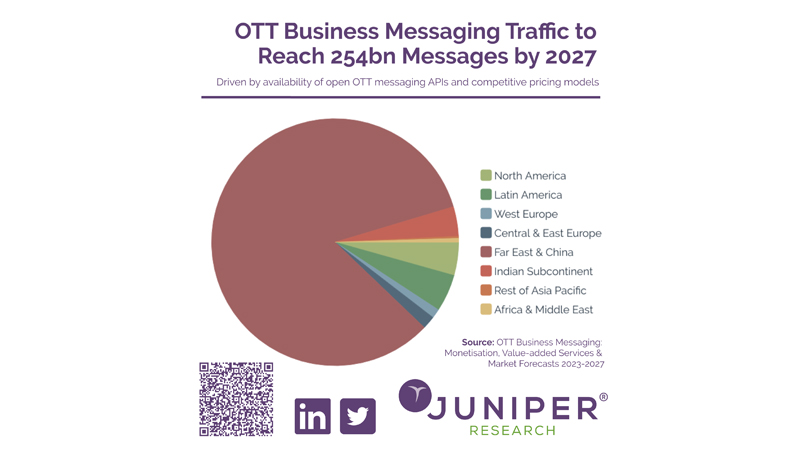
    The unique viewers forcast has been split by eight key regions, which include North America, Latin America, West Europe, Central and East Europe, Far East and China, the Indian sub-continent, Rest of Asia Pacific and Africa & Middle east. The region which contributes the biggest is Far East and China.

    Juniper Research provides research and analytical services to the global hi-tech communications sector, providing consultancy, analyst reports and industry commentary.

    The report highlighted that instead of having sponsorships from more traditional players in the market such as NVIDIA, the past year has seen increased prevalence of non-endemic advertisers, including brands such as Lynx, Gazprom, Visa, Xfinity, T-Mobile, Taco Bell and Mountain Dew. Juniper believed that this has grown purely due to the audience size and scale seen at major tournaments.

    “While some brands show links to traditional gaming culture, i.e food and drink brands, others are more commonly associated with traditional sports sponsorship, ie Gazprom, and their branching into eSports shows belief that this will also become a major sporting industry,” the report stated, adding, “The issue is that eSports has been a volatile industry for a number of years, having previously had periods of growth and interest. In the mid 2000s, for example, where hype spiked, before furore around the market died down, only to be rejuvenated from 2010 onwards.”

    public://pie.jpg

    Meanwhile, eSports arrived in the Indian sub-continent later than other western countries and also regions in Asia like China. However, it has been announced as a medal event in 2022 Asian Games, which is a testimony to its rapid growth in this part of the world.

    Indiantelevision.com’s research shows that U Cypher promoted the first multi-gaming platform on TV for eSports competitions in India. It comes under U Sport, which is founded by media tycoon-turned-angel-investor Ronnie Screwvala and his partner Supratik Sen.

    U Cypher’s ambition is to present a platform to talented gamers that helps them achieve their maximum potential as well as shape their careers in e-Sports leagues.

    When Indiantelevision.com spoke to eSports experts in India, one of them said, “The combined eSports and gaming market is estimated to be Rs 3,900 crore with more than 2,000 teams consistently participating in tournaments across India and abroad with over 500 million players worldwide. The industry has a number of major tournaments throughout the year with viewership in the tens of millions.”

  • YouTube, FB to corner major ad spend globally over 5 years

    YouTube, FB to corner major ad spend globally over 5 years

    NEW DELHI: New data from UK-based Juniper Research has found that advertising spend on FVoD (free video on demand) content, such as media on YouTube and Facebook, will surge over the next five years reaching $37 billion by 2022. This is up from an estimated $16 billion in 2017.

    In addition, unique users of such content will reach just under 4.5 billion globally by 2022 as the appetite for free video media continues its expanse, a statement from Juniper Research said on Tuesday.
     
    The new research, Digital TV & Video: Network and OTT Strategies 2017-2022, found that leading FVoD provider YouTube, which sees over 1 billion hours watched per day, will face increasing competition from social media platforms. It observed that the delivery of live video content via social media channels will be one of the growth areas for 2018 as users increase the volume of live broadcast content posted to these platforms. Such examples include Instagram, which has over 800 million monthly active users, and Snapchat which has 178 million daily active users.

    Said research author Lauren Foye, “This content will increasingly be of interest to advertisers, especially in view of Facebook’s monthly active user base of over two billion people. The company has launched an app and website ‘Facebook for Creators’ to help users refine video content and generate viewership.”

    Juniper found that this will aid growth in content consumption, with data usage from OTT content surpassing 840 exabytes by 2022, the equivalent of 129 billion hours of 4K streaming.
     
    Recent changes to YouTube’s Partner Programme means that it will only accept channels with more than 1,000 subscribers and 4,000 viewing hours acquired across a year to its shared advertising revenue programme, the research highlighted. This change in strategy results from increased advertiser pressure following several high-profile, offensive, video posts by users.
    Nevertheless, Juniper forecasts YouTube to account for almost a quarter of all FVoD adspend by 2022.

    Juniper Research provides research and analytical services to the global hi-tech communications sector, giving consultancy, analyst reports and industry commentary.

    Also Read :

    We are seeing consumption in languages & low-connectivity areas, says Facebook India’s Saurabh Doshi

    Health & beauty YouTube’s fastest growing vertical in 2017 for India

    Apple commits $4.2 bn for original content

    News Corp’s new ad network takes on Facebook, Google

  • Mobile gaming to rise in next two years

    Mobile gaming to rise in next two years

    NEW DELHI: The mobile gaming market is likely to generate revenue of $28 billion by 2016 – a growth of over 38 per cent on the 2014 figure.


    A report from Juniper Research issued on 18 June, ‘Mobile & Handheld Games: Discover, Monetise, Advertise 2014–2019’, found that rising disposable income levels accompanying increased smartphone adoption will spur increased in-game purchasing revenues across Latin American, Eastern European and Southeast Asian regions.


    The Juniper website also stated that tablet users will spend more on in-game purchases and generate more revenues per device than smartphone users. The enhanced performance and graphical capabilities of tablet games is resulting in accelerated migration from traditional portable gaming devices.


    The report also said the approach of the developers of these games had shifted from bulk acquisition to unique players, with the domination of casual gamers playing free-to-play games.

  • Mobile entertainment market could hit $ 77 billion by 2011

    Mobile entertainment market could hit $ 77 billion by 2011

    MUMBAI: Juniper Research predicts that the mobile entertainment market is set for a new era of rapid growth as 3G environments become more commonplace, applications built for mobile predominate and more users in the mass market exploit the mobile phone as a multifunctional communications and entertainment device.

    The value of the mobile entertainment market, including music, games, TV, sports and infotainment, gambling and adult content is forecast to increase from $17.3 billion in 2006 to nearly $77 billion by 2011, driven by mobile TV, video rich applications and a buoyant Asian market. This may be rapid growth but there are still a number of barriers.

    Juniper Research Mobile Entertainment Series principal author commented,” The face of mobile entertainment is expected to change significantly over the next five years as next generation mobile services continue to be rolled out around the globe and take up steadily increases. As 3G services become commonplace, sophisticated mobile entertainment products and services can reach the mass market and provide the sort of anywhere anytime entertainment that has been predicted for some time, but not really delivered.”

    However, he added a note of caution, “Whilst the potential to generate dramatically increased revenues is certainly there, many uncertainties affecting sections of the market still exist and could put a break on growth – the development of legislative environments for mobile gambling and adult content, and the success of broadcast mobile TV trials currently underway or planned, are just two examples.”

    Dramatic changes in service delivery are forecast, but some aspects of market structure will not change. The Asia Pacific region currently provides the largest market for Mobile Entertainment services and contributes over 40% of global revenues. Despite more rapid growth in North America and in developing markets, the Asia Pacific region is forecast to retain its leadership through to 2011, when it will still contribute 37% of global revenues.

  • Mobile video to boost sports services market: Juniper report

    Mobile video to boost sports services market: Juniper report

    MUMBAI: The increasing influence of mobile video enabled on 3G networks will drive the uptake of many mobile sports, leisure and information services over the next five years, says Juniper Research.

    The global market for sports, leisure and information content (infotainment) is set to grow from its 2006 value of just under $4.2 billion to $9.5 billion by 2011. The largest geographic market is forecast to be in Europe, which is expected to account for 40 per cent of revenues over the 2006 to 2011 period, with Asia Pacific contributing 33 per cent and the rapidly growing US market 18 per cent.

    The Asia Pacific region, according to the Juniper Research report, would generate the most infotainment traffic over the period, but higher price levels would make Europe the largest revenue generator.

    The report’s author Bruce Gibson said, “video has the potential to transform the user experience of many infotainment services, provided the video quality is good enough. The continued roll-out of 3G services globally will provide the platform for the development of high quality video content based services.”

    Types of services that will particularly benefit from enhanced video capability will include sports services, services based around TV shows and celebrities, traffic update services, news services and community applications with user generated content. Growth in sports services and services with user generated content should be particularly strong.

    Gibson adds, “Sports services are getting repeated boosts by high profile global and regional sporting events. 2008 will be a significant year in market growth with Uefa Euro 2008 and the Beijing Olympics. However the need to acquire mobile sports rights is keeping sports service prices high and these services require high quality and timely content.

    “On the other hand community applications with user generated content have relatively low cost content acquisition and minimise much of the complexity of content acquisition and updating. We see growth opportunities in both market sectors for very different reasons.”

  • Mobile sports content & services to reach $3.8bn by 2011

    Mobile sports content & services to reach $3.8bn by 2011

    MUMBAI : Mobile sports information and entertainment services are expected to take an increasing share of the global mobile sports, leisure and information content (infotainment) market over the next five years.

    According to Juniper Research the global market for mobile sports content and services will grow from just over $1 billion in 2006 to $3.8 billion in 2011 at an average annual growth rate of 27 per cent. This is out of a total sports, leisure and information content market worth just under $4.2 billion in 2006 and growing to $9.5 billion in 2011. Over the whole period 2006 to 2011 mobile sport, leisure and information content and services is expected to generate a cumulative revenue stream of over $42 billion. 40 per cent of this is expected to come from the European market, 33 per cent from Asia Pacific and 18 per cent from a rapidly growing North American marke.

    The key market drivers will be:
    *the increasing availability of 3G services and support for high quality video;
    *the globalisation of sport personalities and club support;
    *improved flow of digital sports rights for mobile distribution.

    Bruce Gibson, research director at Juniper Research said, “These drivers apply to many types of leisure and information content, but none more so than sports content. There is a great opportunity for content owners, application service providers and operators to exploit sport content over the mobile channel in innovative ways, now that the technology barriers are diminishing”. However he goes on to issue a warning – “This will only happen if everyone in the value chain pays attention to detail. End user experience in some markets of mobile sports content services built around the 2006 Fifa World Cup, has not been consistently good. Many new users of sports services have been disappointed with the quality of the deliverable and may never buy again. First impressions count for a lot and particularly with time sensitive content like goal alerts and replays, the first experience has to be good to generate repeat business.”

    Sports, leisure and information is a vast area and comprises many different types of content and mobile service, from celebrity wallpapers, mobile comics and video “mobisodes” to financial information services, child tracking and personal navigation services. Those applications and services that will show fastest growth over the next few years will be those that develop the most added value from advanced network technologies and those that can move from “presenting facts” to “providing entertainment”. Community applications with a high amount of graphic user generated content will be particularly successful as they have the added advantage of low cost content acquisition, the report says.

    Mobile TV might not be quite there as yet but now looks poised to take off – after many false starts – in the same way broadband internet was roughly five years ago.