Tag: Jubilee Plus

  • “I don’t believe half-baked shows are accepted by viewers”: Aditya Singh Contiloe Films

    “I don’t believe half-baked shows are accepted by viewers”: Aditya Singh Contiloe Films

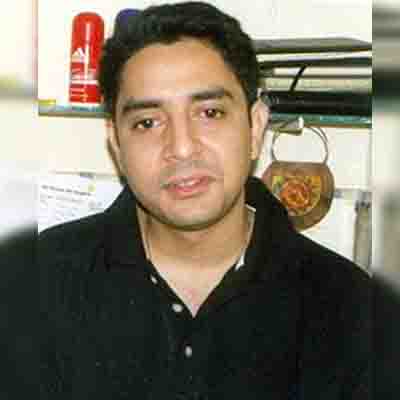
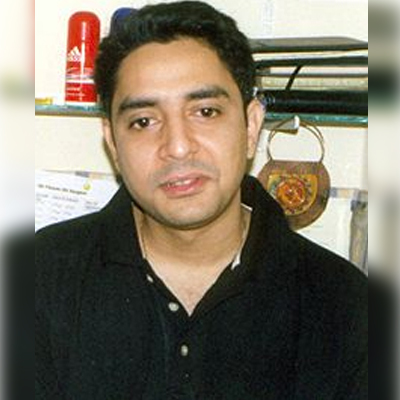
    When Aditya Singh and brother Abhimanyu started their production house Contiloe Films Private Ltd in 1996, all they had was a vision in mind. For the first three years, the duo made serials for Doordarshan. Today, Contiloe has carved a niche for itself with serials like Krishna Arjun (earlier called Krishna Sharma CA), Rahen Na Rahen Hum, Sshhh… Koi Hai and Kashmeer on Star Plus.

    Together, Aditya and Abhimanyu have a agreement – while Aditya is involved in conceiving and developing concepts and marketing them to the channel, Abhimanyu takes over the production and the actual execution of projects.

    However, of late, the duo admit they are broadening their horizons. Abhimanyu is getting more involved with the creatives and Aditya is focusing on evolving the company’s future plans for growth, including recruitments.

    Indiantelevision.com’s Vickey Lalwani spent some quality time with Aditya to understand his views on various aspects of the television industry and his plans for the future. Excerpts from the interview:

    How do you view the progress of Contiloe Films?
    We are going as per plan. We have consolidated our company and have made a mark. Sometimes, however, one cannot achieve all that one has planned to. There are various fluctuations in the market besides changes in the dimensions of entertainment. All said and done, it’s been a satisfying experience.

    ‘Krishna Arjun’ was earlier titled ‘Krishna Sharma CA’. Were you disappointed that the original comedy show, intended to tackle real life issues, did not work?
    When Krishna Sharma CA started off, we planned to take up social causes on the lines of the popular Priya Tendulkar serial Rajni.

    But there was no question of disappointment, when it didn’t work out – we were confident that we could turn it around. Actually, we were running out of issues. So we modified it into a show which would cater to kids. Fortunately, Star Plus supported the show in its new avatar. And we succeeded in making it more entertaining and gripping.

    You seem to have a special equation with Star. Any reasons for that?
    We sit with ideas, we build upon them – we do everything to make the programmes better. Because we know we need to sustain the viewers’ interest. We need to ensure that the TRPs don’t drop.

    Today, television is all about the support a subject gets in terms of budget for execution and promotion. It’s essential that the production house and channel understand each other’s needs, thrash out their differences, meet on common ground and pour in the creative inputs collectively. It’s so comfortable and stimulating if the producer and the broadcaster are on the same level.

    We don’t want innovations and inventions to take a backseat. It’s very easy to do five daily soaps without doing justice to any of the projects. I don’t believe half-baked shows are accepted by the viewers.

    “Comedy requires tremendous skill in terms of writing and language. It is a very special genre, especially in India
    A still from Krishna Arjun

    You started working with DD Metro. Currently, why don’t you have any show on Doordarshan?
    For the last four to five years, DD has been trying to figure out which direction to take. Anyway, we don’t want to spread too broadly and lose control of all the good work we have done. When the time is right, we might work with DD. Not immediately.

    Why did ‘Kashmeer’ stop abruptly?
    Kashmeer was supposed to have about 18-20 episodes. But around the13th episode, we realised that the show was getting very sensitive. So we veered a bit and kept the track going with the focus on the love angle. But after some editing, the serial was complete in 17 episodes.

    Would you take up production of another serial on a sensitive issue like that of ‘Kashmeer’ again?
    Why not? I think we handled it pretty well.

    ‘Krishna Arjun CA’ started off as a comedy but later changed tracks. Even generally, soaps are more in number than sitcoms, on any channel. Why this trend?
    Soaps are perhaps the easiest to make. Comedy requires a tremendous amount of skill in terms of writing and language. It is a very special genre, especially in India. What might be funny for a Punjabi might not be funny for a Bengali and vice versa.

    Do you intend making soaps?
    Yes, that’s a part of our agenda in our forthcoming round of programming. We’ll try our very best to be different. But don’t expect a total turnabout. The backdrop would be different from other soaps but the focus and thrust can’t go beyond emotion and drama. One thing I can say, we’ll definitely make it more interesting and pacy; we won’t let the show drag unnecessarily.

    Other plans?
    We plan to make documentaries for the international market. Also, I see good scope in making short films which could initially be released in theatres, followed by a television telecast after a period of time. I am not ruling that out for Contiloe Films. But yes, short films would need a lot of content. At the end, I see myself producing a movie.

    Do you plan to produce telefilms?
    Not as yet. Telefilms are not happening. Makers are looking at compelling viewership, which is difficult for telefilms to generate. We have to go by the current market trend. Right now, television is happening.

    But as and when the time is right, we would certainly indulge in making telefilms. The phase of telefilms will come back. But nobody can tell when exactly would that be.


    A still from ‘Kashmeer’
    “Producers, who deliver on quality and don’t maximise profits by cutting costs, don’t suffer. You can’t keep a good man down; you can’t trample on good work

    What are the disappointments, if any, that you have felt along the way as a TV producer?
    None as yet. I know people complain about the formation of lobbies by certain production houses which get all the work from various channels. But then, doesn’t the channel have the right to trust people who have delivered well and in time?

    Producers, who deliver on quality and don’t maximise profits by cutting costs, don’t generally suffer. You can’t keep a good man down; you can’t trample on good work.

    Are film based shows (like ‘Jubilee Plus’) more profitable propositions than soaps?
    Difficult to say. Because we haven’t ventured into soaps as yet. We haven’t sat and worked it out in detail.

    Last year, you had told indiantelevision.com in an interview: “I foresee a great scope for news-based programming, which I plan to get into in a big way”. Any progress on that front?
    As a company, we look at short-term gains, middle-term gains as well as long-term gains. To me, news-based programming figures as a medium and a long-term gain…

    As for venturing into news shows, I am ready if I am supported by my broadcaster. If I get a broadcaster like Star who pays me well, never delays my payment and compensates me for something that I have shot but they couldn’t telecast, then why not?

    Do you believe in TRPs?
    Certainly. It’s a very scientific method.

    Your views on CAS…
    If implemented in a slow and sure phase, it would help. The concept is good. But if implemented at gunpoint, it wouldn’t make sense.

    Distribution in India is a major problem. Nothing happens overnight. But I fear that when CAS is implemented, many lower-middle class viewers will be forced to opt out of the pay channel packages due to money constraints. The effects could be more traumatic than we can imagine. People have become so dependent on television now that I wonder what they would do without most channels!

    Post-CAS, do you think production quality will suffer, especially if channels start granting lesser funds than before?
    Maybe, but in that case, you can’t blame the channel either. Channels are doing their business. Which businessman can ignore a loss? However, in such a case, producers may even start raising the quality of their content in order to get noticed.
    You are partnering with Cinevistaas for post-production facilities. But you had said earlier that you would be setting up your own post-production house.
    We have a very comfortable working relationship with Cinevistaas. Presently, we are doing Sshhh… Koi Hai as a joint venture with them. Our other shows on air- Krishna Arjun, Jubilee Plus etc are being done independently by us. We have also set up our own post-production unit.
    Are women producers more successful on Indian television?
    This is a recent trend and has to do with the women-centric soaps on television, of late. But I wouldn’t read much into it.
  • “I see great scope for news based programming ” : Aditya Singh

    “I see great scope for news based programming ” : Aditya Singh

    Till recently, Aditya and Abhimanyu Singh were known more as siblings of film actor Chandrachur Singh. No more. Today, they have carved a niche for themselves as successful TV producers, with a successful suspense series Shhh Koi Hai… in their kitty. Their latest offering Krishna Sharma, C.A, also on Star Plus, is a comedy tackling real life issues. The producer duo is also creating two film based shows – Jubilee Plus and Rahe Na Rahe Hum, the latter being anchored by Javed Akhtar.

    In a candid interview with indiantelevision.com correspondent Amar, Aditya Singh speaks of his company’s plans and holds forth on several issues confronting TV producers today. Excerpts:

    How did you start your innings as producer?
    I was always fascinated by the medium. It was in 1994-95 that I made my debut as executive producer on a serial calledAlbeli on DD Metro, which was produced by my aunt. She was the one who actually gave me the idea that I could be a producer as well. Soon thereafter, I teamed up with my brother to produce our first serial called Aakhen on DD Metro.

    Which subjects do like to tackle as a producer?
    I am open to programmes of any genre. In fact, as a producer I enjoy the challenge of understanding the emergence of a new genre and being a trend-setter. We’re really happy with the way Sssshh Koi Hai… has shaped up over the last few months. But rather than churning out something similar we have gone for a comedy- Krishna Sharma, C.A. We plan to follow this up with a love story, which we plan to shoot abroad extensively.

    Your last two ventures have been co-productions with Cinevistaas. Do you have any special association with Cinevistaas?
    One of the partners in Cinevistaas, Uday Singh, is well known to us and that’s how the idea of a co-production came about. We look after the creatives, pre-production, casting and the production design. Cinevistaas helps us in post-production, the special effects in particular. Consequently, both stand to gain immensely from this arrangement. Earlier, we had some wonderful concepts, but because of a lack of proper post-production facilities, our costs were shooting up. Of course, we will be setting up our own post-production unit; but as of now, Cinevistaas helps us in this area.

    How do you choose a channel for your show?
    Essentially, I look at three factors – the channel’s involvement with the product right from the stage the concept is conceived, the target audience reached by the channel and our rapport and experience with the channel.

    ‘As a producer, I enjoy the challenge of understanding the emergence of a new genre and being a trend-setter.’
    ______

    A still from Shhh…koi hai

    Would you consider a completely new channel to air your show?
    We did receive a couple of proposals from MAK TV but I don’t see the need or the inducement to go ahead with it – one, because we have our hands full at the moment and two, because even the other concepts that we are working on are being worked on with the involvement of reputed channels. I don’t want to take on more work than we can do justice to, but having said that there are no apprehensions as far as a new channel is concerned.

    Who would you rate among your favourite directors?
    Suraj Rao, Pawan Kaul and Sourabh Narang are some of my favourite directors on television. All of them have been personally involved with the scripting of the episodes of Shhh Koi Hai… which they have directed for us. I also admire a director from Hyderabad, Manikya, who has recently joined us as the creative director of our company, Contiloe Films.

    Who are your favourite writers?
    Atul Tiwari, Sameer Modi, Brijesh Jairaman and the writer duo, Arshad and Imtiyaz. They have done most of the writing for us.

    Have you ever felt hassled by channel executive producers?
    No, not at all. Most of the work we have done has been with Star and the executive producers, apart from being involved right from the time a concept is born, have been very co-operative and understanding. I can’t think of a situation where they have been unreasonable.

    What are your sources of funding?
    We rotate our profits from on-going projects into new projects and also avail of credit options. We haven’t yet availed of institutional finance but do plan to in the future.

    With your existing infrastructure, how many projects can you take up simultaneously?
    The number of projects is not a problem. We already have four programmes on air. There are eight other concepts we are working on right now, including a couple for small budget movies. Given the unpredictability involved in the medium, you never know which of these projects might suddenly take off. So, we are prepared to have many more projects on air but ideally we would like to a go a wee bit slow because when too many projects take off simultaneously, it becomes difficult to maintain quality.


    A scene from the newly started Krishna Sharma, CA
    ‘Doesn’t a channel have the right to trust people who have delivered as far as quality is concerned?’

    India is probably the only country where producers are not entitled to a share of the channel revenue even after forfeiting their rights over the programme. What do you feel about the issue?
    I feel that’s okay, because here the cable operator does not give the broadcaster the kind of revenues he does in other countries. But gradually, the cable operator’s pie in the channel’s revenues will increase and that would probably improve the situation.

    Why are women producers more successful on Indian TV – Ektaa Kapoor, Aruna Irani, Neena Gupta, to name a few?
    Well, this is a recent trend and has to do with the dominance of women centric soaps in the last few years. But I wouldn’t read much into it. Cinevistaas, UTV and Creative Eye are hugely successful production houses without a woman heading them.

    How do you divide professional responsibilities with your brother Abhimanyu?
    I am more involved with conceiving and developing concepts and marketing them to the channels. Abhimanyu takes over the production and the actual execution of these projects. Of late, however, Abhimanyu is getting more involved with the creatives while I focus on evolving the company’s future plans for growth including recruitments, because getting the right people is a pivotal issue as far as our growth plans are concerned.

    What is your production set-up like?
    We have a CEO heading the company, two creative directors, at least one executive producer on a show (could be two depending on the show) and a full-fledged production unit of our own. We are hiring competent professionals for budgeting and finance because this would be a key area for us. Post- production is one area where we have to depend on others currently but in the next month or so, we will have our own editing studio as well.

    Do you find the current television industry situation positive or disappointing?
    I would say it’s very positive. I know people complain of the formation of lobbies of certain production houses that are getting all the work from the TV channels. But then, doesn’t the channel have the right to trust people who have delivered as far as quality is concerned? Producers who have delivered on quality and not maximised profits by cutting costs are not the ones who have suffered.

    What is your vision for Contiloe Films?
    As of now, our thrust has not been so much on soaps because practically everyone is into them. We’ve concentrated instead on alternative programming like film based shows and these have done quite well. In the future, I foresee a great scope for news-based programming, which we plan to get into in a big way. But at the same time, we would take up soaps in a limited and well-planned way. We are also lining up a couple of small budget films, as these have a good profit potential. Five years down the line, I see Contiloe Films developing into a reliable and esteemed content providing house well diversified into TV, films and music.