Tag: JS Mathur

  • K. Sanjay Murthy new MIB jt secy broadcasting

    K. Sanjay Murthy new MIB jt secy broadcasting

    NEW DELHI: There’s change at the top at India’s ministry of information & broadcasting (MIB) in Shastri Bhawan. Joint secretary (films) K. Sanjay Murthy – who was holding additional charge of the broadcasting section along with another joint secretary Mihir Kumar Singh – was officially given complete charge of broadcasting on 29 August. He has taken over the work that was being handled by R. Jaya.

    As joint secretary films and he had made his mark with the initiatives he had taken which had benefited the Indian film community.

    Additionally, director (films) Anshu Sinha has been promoted as joint secretary (films). Earlier reports were that she would be replacing R. Jaya in the broadcasting section.

    Finally, Jayashree Mukherjee – from the Maharashtra IAS cadre – who was appointed as additional secretary mid-July has moved into her Shastri Bhawan office 20 days ago. A mild spoken lady, she replaced special secretary JS Mathur who was promoted as secretary Panchayati Raj.

    Both Mukherjee and Murthy have been given charge during challenging times. The countdown for the fourth phase of DAS has begun with the sunset date being 31 December 2016. Additionally, even phase III is stuck in the analogue mode courtesy a flurry of cases which have been filed in various courts.

  • K. Sanjay Murthy new MIB jt secy broadcasting

    K. Sanjay Murthy new MIB jt secy broadcasting

    NEW DELHI: There’s change at the top at India’s ministry of information & broadcasting (MIB) in Shastri Bhawan. Joint secretary (films) K. Sanjay Murthy – who was holding additional charge of the broadcasting section along with another joint secretary Mihir Kumar Singh – was officially given complete charge of broadcasting on 29 August. He has taken over the work that was being handled by R. Jaya.

    As joint secretary films and he had made his mark with the initiatives he had taken which had benefited the Indian film community.

    Additionally, director (films) Anshu Sinha has been promoted as joint secretary (films). Earlier reports were that she would be replacing R. Jaya in the broadcasting section.

    Finally, Jayashree Mukherjee – from the Maharashtra IAS cadre – who was appointed as additional secretary mid-July has moved into her Shastri Bhawan office 20 days ago. A mild spoken lady, she replaced special secretary JS Mathur who was promoted as secretary Panchayati Raj.

    Both Mukherjee and Murthy have been given charge during challenging times. The countdown for the fourth phase of DAS has begun with the sunset date being 31 December 2016. Additionally, even phase III is stuck in the analogue mode courtesy a flurry of cases which have been filed in various courts.

  • DAS Phase III: Govt claims 75% STB seeding; MSOs claim 50% across India

    DAS Phase III: Govt claims 75% STB seeding; MSOs claim 50% across India

    NEW DELHI: Even as the Government claimed total success in the switchover to Phase III of Cable TV Digitisation from today (1 January, 2016), there were reports from various multi system operators (MSOs) in different parts of the country who complained of shortage of set top boxes (STBs).
     
    An MSO in a city that came under Phase II in Madhya Pradesh told Indiantelevision.com that he had received frantic calls from some MSOs wanting STBs.
     
    Similarly, an LCO in Mumbai said that he had received similar calls from other parts of Maharashtra. He claimed that there was just around 50 per cent seeding across the country.
     
    The Hyderabad High Court has already extended the Digital Addressable System (DAS) deadline for two months in Andhra Pradesh and Telengana.
     
    Meanwhile, the 13th meeting of the Task Force was told on 30 December that more than 75 per cent seeding of STBs had been acomplished.
     
    Describing the progress as “very positive,” an official release today noted that seeding has taken place in most of the notified urban areas with STBs, while the seeding-dark area were only around 400 out of more than 6000 urban areas, many of which had population below 1000 while the rest were in areas having population of less than 5000. 
     
    The seeding figures as shared in the meeting indicated a high level of seeding in the country, to the extent of more than 75 per cent, excluding Tamil Nadu where certain legal matters have restricted the process of digitisation. This figure was expected to be higher when all the registered MSOs provide their final figures. 

    Broadcasters were advised to ensure that no analogue signals are transmitted in Phase III areas after 31 December but without affecting analogue signals in Phase IV areas. 

    It was unanimously decided at the meeting presided over by Special Secretary J S Mathur that looking to the positive outcome of the Digitisation Phase III exercise and the fact that the notification for the cut-off date for phase III was issued more than a year ago, there was absolutely no requirement for extension of the cut-off date. 

     
    The Task Force, where Joint Secretary (Broadcasting) R Jaya and Adviser Yogendra Pal were present, noted that various awareness campaigns, Task Force and MSO sub-group meetings and orientation workshops for the state and district Nodal officers have been held during this period. A multilingual toll free helpline (1800 180 4343) has also been made operational.
  • JS Mathur promoted as special secretary in I&B Ministry

    JS Mathur promoted as special secretary in I&B Ministry

    NEW DELHI: Senior Indian Administrative Service (IAS) officer Jitendra Shankar Mathur has been promoted as Special Secretary in the Information and Broadcasting Ministry.


    Mathur was until now serving as additional secretary in the same Ministry and was also heading the Task Force for the Digital Addressable System (DAS) for the final two phases. He was also overseeing the auction of the first stage of FM Phase III.


    An officer from Madhya Pradesh cadre in the 1982 batch, Mathur now joins the Selection Grade.


    His tenure on deputation to the Centre ends on 30 October this year.


    The post of special secretary is often referred to as officer-in-waiting for appointment as secretary in the Union Government.

  • Regional Units  set up  to implement DAS; broadcasters ask MSOs for analogue rates till Dec

    Regional Units set up to implement DAS; broadcasters ask MSOs for analogue rates till Dec

    NEW DELHI: Twelve Regional Units (RUs) are being set up for implementation of Digital Addressable System (DAS) in Phase Ill areas.


    At the ninth meeting of the DAS Task Force earlier this month, Information and Broadcasting (I&B) Ministry joint secretary (broadcasting) R Jaya said these RUs will hold workshops on digitisation where all issues shall be discussed with the District Nodal officers nominated by State Governments.


    The remark came when a representative of local cable operators (LCO) from Assam said multi-system operators (MSO) are stopping signals to LCOs without any reason and the local authorised officers do not take cognisance of any violation of the provisions of the Cable TV Act. He added that there is no redressal mechanism for violations of Cable Act at State level and the cable operators do not have the means to file cases in Telecom Disputes Settlement and Arbitration Tribunal (TDSAT).


    Additional secretary J S Mathur, who chaired the meeting on 7 July, said time was fast running out and impressed on all stakeholders to ensure progress and timely completion of digitisation by the cutoff date.


    The Telecom Regulatory Authority of India’s (TRAI) GS Kesarwani was given the task to ask broadcasters to get details of MSOs who were intending to wait till September 2015 before sending requests to broadcasters for agreements in Phase III areas.


    On the other hand, Mathur said that the endeavour on the MSOs’ part should be to start using indigenously manufactured set-top-boxes (STBs) in their network.


    Kesarwani informed of a review meeting that was held by TRAI on the progress of signing inter-connect agreements for Phase Ill areas with broadcasters and MSOs. He said that three broadcasters namely Star India, Multi Screen Media (MSM) and TV18 – informed TRAI that they had received 55 requests from MSOs so far out of which they have signed commercial deals with two MSOs, whereas deals with 11 MSOs were in advance stages of negotiation.


    Kesarwani also urged MSOs who had not received any response to their requests from broadcasters, to inform TRAI.


    Saying that the Headend-in-the-Sky (HITS) operations were also covered under DAS regulations, Kesarwani asked HITS operators to apprise TRAI if no response was received from broadcasters to their requests for interconnect agreements.


    Apprehending that there may be some gap areas or MSO deficient areas, Jaya asked Indian Broadcasting Foundation (IBF) representatives to get details of these areas from broadcasters and intimate the same to the Ministry.


    Meanwhile even as they admitted some progress, representatives of national MSOs said  that broadcasters were asking for seeding plans and other data. However, MSOs were not in a position to provide this at this stage. They said channel pricing in Phase III areas was the main hurdle in signing of interconnect agreements. Some of them said that a few broadcasters had proposed agreements on analogue rates till December 2015 and others on reference inter-connect order rates.


    Even according to the TRAI, pricing can be different for different markets, they said.


    A representative of Siticable Networks said, “According to an analysis of urban areas carried out by us, it may not be feasible for any operator to carry out digitisation in urban areas having only a few hundred TV households. Even broadcasters are insisting on analogue agreements at present.”


    According to an IBF representative, broadcasters had entered into agreements with five regional MSOs. He said, “Broadcasters have filed an appeal in the Supreme Court challenging the TDSAT judgment on the tariff orders issued by TRAI.”


    On the issue of STBs, a representative of Consumer Electronics and Appliances Manufacturers Association (CEAMA ) said that no major orders were received by the industry so far from MSOs. On the other hand, while Siticable and Hathway officials said they were in talks with indigenous STB manufacturers, officials of direct-to-home (DTH) companies said that they had procured about three million STBs from Videocon.


    The meeting was attended by around 35 persons including some senior Ministry officials and some representatives from state governments.

  • TRAI asks MSOs to devise rational channel rates for phase III

    TRAI asks MSOs to devise rational channel rates for phase III

    MUMBAI: Close to 61 multi system operators (MSOs) have approached the broadcaster for signing of interconnect agreements. The statistics were revealed at the eighth task force meeting by the Telecom Regulatory Authority of India (TRAI) advisor Sunil Kumar Singhal.


    Of these, according to the report received by Singhal, while the broadcasters have given their replies to the MSOs, the memorandum of understanding (MoU) is yet to be signed. The TRAI through its meetings with the MSOs and broadcasters, has identified four core issues relating to interconnect agreements. These are:


    1. While the MSOs are expressing interest for getting signals from broadcasters, they are being asked for more information, which is taking time. “Now with the intervention of TRAI, broadcasters have formalized their formats and have placed them on their websites so that all MSOs can submit requests at one go and the agreement signed,” informed Singhal.


    2. The distributors of several broadcasters in a state are also MSOs and that has led to conflict of interest with the MSOs. “We have been able to address this by seeking the details of the core team of the broadcasters to be approached for getting the signals and the broadcasters have provided such details also on their websites,” he said.


    3. The third point was related to pending dispute between MSOs in DAS areas which are both old as well as new. “These disputes need to be resolved mutually as TRAI would not intervene in such disputes,” he opined.


    4. There are differences between MSOs and broadcasters on the rate of channels.   “The larger MSOs are in negotiations with broadcasters to finalise the prices and it is indicated that they will be in a position to finalise them by mid June,” he said.


    Meanwhile, TRAI has asked the MSOs to devise means to have rational rates for phase III areas, as the rates for phase I and II cannot be workable in the remaining phases.


    The TRAI advisor also informed the task force meeting that there was confusion between both MSOs and broadcasters which related to the modus operandi for entering into agreements during the transition period.  The TRAI advisor said that the MSOs and broadcasters were business entities who should know how to communicate with each other in order to expedite and facilitate their business interests. The TRAI has asked the stakeholders to not repeat the mistakes of phase I and II by deploying pre-activated STBs.


    The representative of the MSOs, during the meeting said that whatever be the rate declared by broadcasters, TRAI should come out with a non-discriminative clause which should not push packages but allow the channels to be on a-la-carte basis. “We have been insisting on a-la-carte and not bundling of channels and any delay in the implementation of DAS will result in losses to both MSOs and broadcasters,” informed the TRAI advisor.


    According to a MSO representative, the packaging of channels should be monitored by TRAI. “The LCOs should be trained to spread DAS amongst the consumers as they are close to the consumers and can speedup this process,” opined the MSO representative.


    Information and Broadcasting Ministry (I&B) additional secretary JS Mathur, who was also chairing the meeting said that the publicity campaign for the cutoff date for phase III should start now.


    According to Siti Cable Network’s Anil Malhotra, while the target rate of seeding set top boxes (STBs) requires to be around 2 to 3 lakh per day, the present rate of seeding is about 20-30 thousand boxes which is way short and logistic support has to be planned out in order to step-up the pace of seeding.


    During the meeting, a representative from BIS raised the issue of hacking of STBs and said that a request has been received from some broadcasters to strengthen the BIS Standard of STBs.

  • DAS Phase III: Status report

    DAS Phase III: Status report

    MUMBAI: It was in September 2014 when the then Information and Broadcasting Minister Prakash Javadekar extended the deadline for completion of phase III of cable TV digitization. Not only did Javadekar extend the deadline, but also set separate deadlines for phase III and IV, which initially were supposed to be completed in the same time frame.


    So, while the deadline for phase III was set to be December 2015, phase IV could be completed by December 2016.


    Notwithstanding these developments, it should be noted that interconnect agreements between multi system operators (MSOs) and last mile owners (LMOs) are not in place for phase I and II cities even now. Moreover, close to 700 MSOs interested in phase III areas have not yet been given the license to operate.


    With no announcement about the new Telecom Regulatory Authority of India (TRAI) chairman, the huge number of litigations between broadcasters, MSOs and LMOs pending in several High Courts and with the Telecom Disputes Settlement and Arbitration Tribunal (TDSAT), there looms a big question mark on the timely completion of Digital Addressable System (DAS) for phase III.


    Maharashtra Cable Operators Federation president Arvind Prabhoo says that not more than five per cent of the cable TV homes falling in the phase III universe would have been digitized.


    “The government will have to step in if they want the deadline to be met. The government needs to incentivize cable operators by coming up with a cable modernization fund, which could be set at Rs 500 per subscriber. This can be recovered by the government in the next two years through GST,” he said.


    Prabhoo also points out that close to nine crore cable TV households in the phase III areas need to be digitized. “If the government sets incentive of Rs 500 per subscriber, we are looking at a modernization fund of only Rs 4500 crore for the whole ‘Digital India’ campaign. I am sure it is not asking for much,” he added.


    MSO Hathway Cable & Datacom along with its various subsidiaries has already seeded 50 per cent of its universe. Speaking toIndiantelevision.com on the issues affecting the smooth rollout of digitization in phase III, Hathway MD & CEO Jagdish Kumar Pillai said, “The biggest issue is getting content agreements executed at reasonable costs. The government is doing excellent work in facilitating this process.”


    The government on its part has been taking steps like holding not just task force meetings, but also consumer outreach programmes to ensure that the deadline for phase III is met. “We should be thankful to the government for taking a pro-active role in organising task force meetings and also meeting with and between stakeholders. Now it is up to the industry to step up and make it happen,” added Pillai.


    A source in TRAI tells this website that there will be no extension in the deadline for phase III. “The government may help facilitate the process, but there is no question of any more extension,” the source said adding that the consumer today is prepared to pay, and the broadcaster is going all out to publicise its digitised platforms. “So if there is any delay from LCOs or MSOs, the consumer will find other ways of going digital, which could be moving to HITS or DTH platform,” the source said.


    Speaking about signing off interconnect agreements, the TRAI official informed, “In the last task force meeting, stakeholders were asked to enter into interconnection agreements by June, and if they do not do so, they will be the one to lose. However, if requested, the government may give some more time.”


    Concurring with the TRAI official, a broadcaster, on condition of anonymity said, “I agree that there has been a slow start, but it is now picking up pace. There is some amount of progress in signing of contracts.”


    The broadcaster is also of the opinion that while 100 per cent of the phase III universe will not be digitized in the given deadline, it doesn’t call for any extension. “Both MIB and the TRAI are closely monitoring the stakeholders through the task force meetings,” he said.


    According to the broadcaster, close to 20 million set top boxes (STB) in phase III would have been seeded so far. “Digitisation has been happening for long. Even in phase III, the MSOs were giving digital but non-addressable boxes and now they are switching to addressable boxes and simultaneously activating the addressable feature of the earlier boxes. So, in terms of seeding of addressable boxes, it could be only five – six per cent, but the actual number is much higher,” he added.


    With only six months left for completion of digitization of phase III, the MIB has decided to give provisional registration to those MSOs who had applied for the license for phase III. For the same, the Ministry asked applicants to file their applications in an affidavit, which wants MSOs to commit that they have no criminal cases pending against them, and that they will shut down if they are refused security clearance by the Ministry of Home Affairs.


    MIB additional secretary JS Mathur said, “There is no reason for any extension of dates for completion of phase III. Work is proceeding as per schedule.”


    While the regulators have been taking all steps possible to ensure timely completion of phase III, the stakeholders do not seem to have learnt their lesson from phase I and II. Now how much of the DAS phase III area will be digitized till December 2015, only time will tell.

  • TRAI asks MSOs, b’casters to sign MoU on interconnect agreements in phase III

    TRAI asks MSOs, b’casters to sign MoU on interconnect agreements in phase III

    MUMBAI: The Telecom Regulatory Authority of India (TRAI) has given time till 30 April, 2015 to both broadcasters and multi system operators (MSOs) to enter into a memorandum of understanding (MoU) with regards to interconnect agreements in phase III of digital addressable system (DAS) areas.  


    During the seventh task force meeting for successful completion of phase III and IV of digitization, a representative from TRAI informed that in case the broadcasters and MSOs fail to reach any agreement, the Authority will intervene in the matter, as per regulations. “While broadcasters were asked to give report every fortnight, the same has not started coming,” said the TRAI representative.  


    The representative also mentioned that in the transition period both analogue as well as digital signals can be provided by the MSOs in phase III areas. “As per the regulations digital signal can be provided in areas undergoing transition without waiting for the cutoff date,” he added.


    The meeting was convened under the chairmanship of Information and Broadcasting Ministry additional secretary JS Mathur, who said, “While there has been some progress on the issue of interconnect agreements for phase III areas but there are still many areas which need to be addressed by broadcasters.”


    During the meeting, an IndusInd Media and Communication Limited (IMCL) representative said that while they had sent interconnect requests to all broadcasters, as per the TRAI directive, they had received response from only one broadcaster, while Siti Cable was still awaiting a response from all. A Siti Cable representative said, “Broadcasters are filing cases of piracy against MSOs if they start providing digital signal in the phase III areas.”


    MSOs pointed out that the situation is critical and TRAI must take immediate necessary action to resolve the issue. MSOs also want the entertainment tax, levied by State Governments, rationalised.


    Representatives of broadcasters said that they would approach TRAI for clarification on the interconnect agreements to be signed for the transition period. “No such issues of interconnect agreements were raised during phase I and phase II of digitisation and the set top boxes (STBs) were still seeded. Why are these issues being raised now?” questioned broadcasters.


    Broadcasters also raised concerns on the HITS (Headends In The Sky) platform of delivery with regard to addressability although it is mentioned that it is addressable from the day one. Broadcasters also opined that DAS regulations should apply from the date MSOs take digital signal.


    According to Mathur, consumers have the right to know what they have to pay for the digital signal and so, it is imperative that broadcasters and MSOs work out agreements between them without further loss of time. He added, “Channel package rates have to be in public domain. Broadcasters must now finalise all issues with MSOs so as to have a lead time of implementation.”


    While the universe for phase I and II was extremely limited, phase III has to cover all the urban areas of the country. This would thus require exhaustive planning along with suitable investments. “Both broadcasters and MSOs must now finalise their agreements and inform TRAI within the stipulated time period of 30 April,” said Mathur, while suggesting that TRAI should convene a meeting soon after the time period it has given for finalising the action plan for smooth and timely transition.


    Mathur also expressed dissatisfaction over the public awareness campaign for digitisation in phase III areas carried out by the stakeholders so far. He asked all stakeholders and particularly the broadcasters to start the publicity campaign forthwith.


    While the Ministry is still awaiting data on carriage fee and subscription revenue from both the Indian Broadcasting Foundation (IBF) and the News Broadcasters Association (NBA), an NBA representative assured that it will be sent before the next meeting.


    Mathur also enquired about the initiatives being taken by MSOs for using indigenously manufactured STBs. Responding to this, an MSO representatives said that the dialogue with indigenous STB manufacturers was on.


    Consumer Electronics and Appliances Manufacturers Association (CEAMA) representative informed that they had fruitful discussions with some MSOs in which they made some financing offers to MSOs for the supply of STBs.


    Representative of CEAMA further added that they were now facing a major competition from the suppliers of ASEAN countries since the government, as per the ASEAN agreement signed in 2009, has reduced the import duty on STBs imported from ASEAN countries to two per cent only against 10 per cent from other countries. He said, “MSOs may neglect local STB manufacturers and start importing from ASEAN countries, but this will be against ‘Make in India’ initiative of the Government.”


    Meanwhile a CEAMA representative requested the I&B Ministry to look into the issue, while informing that they were also in the process of writing to the Ministry of Commerce about this development. In order to know the use of indigenously manufactured STBs, Mathur directed that the information on utilisation of domestically manufactured STBs may also be sought from all MSOs along with the seeding plans.

  • FICCI Frames: The roadmap for success in broadcasting

    FICCI Frames: The roadmap for success in broadcasting

    MUMBAI: In its three decades of existence, the promising broadcast narrative in India continues to be challenged on issues such as transparency, pricing, taxation, consumer choice and lack of a coherent regulatory and policy framework.


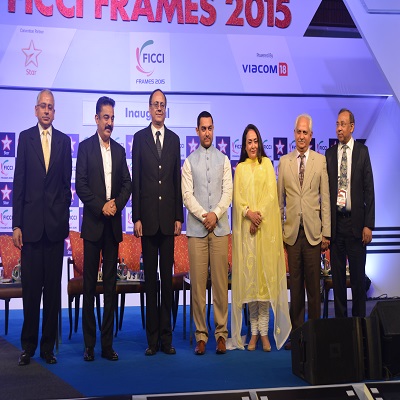
    To find a solution to these and similar questions, a panel anchored by media analyst, author and columnist Vanita Kohli Khandekar highlighted a session on the Future of Vision 2020 – laying a transformative roadmap for Indian broadcasting. The panelists stressed issues for unlocking value in Indian broadcasting on the first day of the FICCI Frames convention held on 25 March in Mumbai.


    Speakers who shared their opinion and views were I&B Ministry additional secretary JS Mathur, TRAI principal advisor SK Gupta, BBC Global News CEO Jim Egan, Siti Cable CEO VD Wadhwa, Star India COO Sanjay Gupta, Tata Sky CEO Harit Nagpal, Viacom 18 Group CEO Sudhanshu Vats and Discovery Networks Asia-Pacific south Asia and southeast Asia GM and executive VP Rahul Johri.


    According to Wadhwa, in order for the media and entertainment sector to grow, digitisation should be completed. “Digitisation must be completed and that will bring in transparency. Secondly, we need to work together to see how can we monetise the business far better.”


    It may be recalled that in phase I and II of digitisation, average revenue per user (ARPU) had witnessed a significant jump in places where people were consuming cable broadband. In response to that, Nagpal said, “We can either have monopolies or regulations but one has regulation where there are monopolies. I believe that I am digging my own grave if I am not serving my customers and as a regulator, we need to make sure that he is getting adequate infrastructure to do his job well.”


    Sharing his views on the media and entertainment sector, Star’s Gupta said that today the industry size is close to Rs 30,000 crore and the big challenge going forward will be on how to make it a Rs 300,000 crore industry. Gupta opined that the one fundamental issue that plagues the industry is that they have regulated the industry from a wrong perspective. “You need to get the capital to invest high, while creating innovation for consumers. That’s how industries have grown. However, that is the challenge for the M&E industry.”


    When on the one hand broadcasters believe that regulation is not required, on the other hand TRAI’s Gupta had a different opinion. “If regulation is not required then what is required? Is it that we are required to keep quiet on the customer front if they are not getting any choice?” he questioned.


    He went on to add that the country has 30 million DTH customers, 30 million DAS customers and 10 million addressable systems. However, the question was how many consumers have the choice of individual channels? “If I ask a consumer if he/she is watching all the channels given to them, the answer will be a big no. Therefore the price can be deregulated and total selection of the channel should be given to the consumer at the desired price. And for this to happen certain broad guidelines should be created and this should be done soon.”


    Picking up points from Sanjay and S K Gupta, Vats said that in order to drive the size of the pie, pricing is the difficult thing. “If we focus on the price of the analogue cable, in some way, we are constraining the ‘X’ to increase and my request is that if we become open to it, we will allow the ‘Y’ to increase. The moment we allow the ‘Y’ to increase, I think we will define the problem collectively better between LMOs, MSOs, broadcasters etc.”


    Vats was of the view that competition needs to be encouraged, even though there is enough competition in the media and entertainment industry. “Competition itself will ensure that we are reaching out to every possible Indian, outside India as well. It happens in every industry, why has it not happened here?”  A firm believer of  a free market, Vats is confident that it will drive the industry and take it to the next level.

  • India could have 1000 radio FM channels by 2016: JS Mathur

    India could have 1000 radio FM channels by 2016: JS Mathur

    MUMBAI: By the year 2016, India could have close to 1000 radio FM channels. Speaking at the FICCI Frames 2015 convention in Mumbai, Information and Broadcasting Ministry additional secretary JS Mathur said, “It is an exciting time for the radio industry. The FM radio expansion in the country, which has also got the nod of the government of India, will see the first batch of phase III e-auction very soon. This will be covering 69 cities and 135 channels.”


    Mathur added that while it is was exciting time for the industry, but with that also comes challenges. “The new government needs to meet these challenges and meet them in best possible manner,” he said.


    During his address, he agreed that there were issues of content diversification as also of newer business and revenue models. “For the new government under Prime Minister Narendra Modi, these are exciting times as there are things, which have started rolling out, while the others that have been proposed, needs to be rolled out,” he opined.


    He said that while the digitisation of phase I and II has been completed, the rollout of phase III and IV will digitise the entire country. “It is a major step forward. There is a lot at stake for all the stakeholders, which includes the broadcaster, the consumer and the platform providers. Everyone will have to ensure that the consumer gets the best product, while every stakeholder gets his due,” said Mathur.


    While congratulating the media for the great work, Mathur emphasized the role of the media as well. “Media can play an important role in spreading awareness about critical issues amongst consumers,” he opined.


    Mathur concluded by showing hope in the new government. “The Narendra Modi led government is prompt in ensuring that the M&E sector grows,” he concluded.