Tag: journalists

  • Online media professionals write to Smriti Irani expressing regulation concerns

    Online media professionals write to Smriti Irani expressing regulation concerns

    MUMBAI: A group of more than 100 journalists and other professionals related to online media have written to the information and broadcasting minister Smriti Irani to express their concerns over the ministry’s proposal to extend traditional broadcasting rules and restrictions to the internet. The journalists include veterans of the industry such as Raghav Bahl, MK Venu, Madhu Trehan, Nalini Singh, Paranjoy Guha Thakurta, Shivam Vij, Sanjay Pugalia, Aniruddha Bahal and Raman Kirpal, as well as younger generation media entrepreneurs like Dhanya Rajendran (The News Minute), Seema Mustafa (The Citizen), Ritu Kapur (The Quint), Tanmay Bhat (All India Bakchod) and Bharat Nayak (The Logical Indian).

    In their letter, the journalists and media professionals expressed concerns that bringing legacy media structures—such as licensing and content regulation—could have a drastic impact on a medium that is widely credited with making the media and information landscape more open and democratic across the world. “Internet-based media, by its very nature, promotes broader democratic values globally and cannot be dealt with in the way national governments try to regulate or control traditional media,” said MK Venu, founding editor at The Wire, a new-generation, online-only publication. “Internet-based media and global media aggregators like Facebook, Google have changed the content and distribution landscape in ways that national governments cannot easily control. Nor should they try to. It is a free democratic space and must remain as such,” he added.

    Geeta Seshu, a journalist and a media analyst with a keen interest in freedom of expression issues, too called on the government to embrace the change the spirit of freedom brought about by the internet in media and communication sectors. “Today, digital media in India is evolving into a space, which allows for access to information, untrammelled by traditional gate-keeping structures and despite infrastructural limitations such as low broadband speeds or poor internet penetration,” she said. She expressed disappointment at the government’s attempt to ‘regulate’ online media by setting up a committee comprising mostly of government officials. “This committee hardly reflects the complexities of online media, much less represent all its practitioners,” she said. “Its mandate to regulate the dissemination of information smacks of the most alarming attempts to censor a burgeoning medium. It is ironic that one of the terms of this committee is to examine international standards when India is hailed for taking a strong and unequivocal stand on net neutrality,” she added.

    Raghav Bahl, founder of Network18 and Quintillion Media, urged the government to look at the approach taken by other democracies in dealing with issues of online content. “Any hasty action by the government will likely result in overreach,” he said. “Therefore, we believe that the starting point for the government should be to study the global best practices for online content regulation. Many advanced democracies have already debated this and come up with good frameworks that ensure free speech and transparent regulation. No need to reinvent the wheel,” he added. 

    Journalist Madhu Trehan, the co-founder of NewsLaundry, one of the earliest digital news ventures, warned about the far-reaching impact that interfering with the citizens’ freedom of expression, online or offline, can have. “Regulating the internet is a tricky thing. Its impact is enormous and far reaching,” said Trehan. “The proposal to regulate (and its need at all) must be a consultative process in the most open and transparent way.” Seema Mustafa, founder editor of The Citizen, a news and current affairs website, warned that chances of ‘online content regulation’ being used for suppression of opinions critical of the government remain very high.
    The journalists organised themselves using social media, particularly WhatsApp, spontaneously after news broke that the government had set up a committee to come up with a regulatory structure for online media “on the lines applicable to print and electronic media”. Over 100 journalists and professionals, including those from dozens of online organisations, signed the petition. A website, https://onlinefreedomfoundation.org, has also been set up to allow ordinary citizens to oppose the move to regulate online content.
     

  • Indian Railways target four-fold increase in advertising revenue: Railway Budget 16-17

    Indian Railways target four-fold increase in advertising revenue: Railway Budget 16-17

    MUMBAI: Aiming to tap newer areas for generating revenue, Railway minister Suresh Prabhu expressed his intention to heavily explore the potential of Indian Railways in generating more advertising revenue, with a target to multiply earnings by almost four times.

    While presenting the Railway Budget 2016 – 2017, Prabhu said, “We have vast physical infrastructure that facilitates exploitation through advertising. We intend to give special focus to exploring advertising potential on trains, stations and land adjacent to tracks of big stations.”

    “We will use customer interfacing assets to earn advertising revenue. Evolve models for revenue potential in 20 stations over the next three months to target ad revenue and improve earnings from advertising by more than four times than the current ad revenue,” added Prabhu.

    To further optimise the service’s potential for advertising revenues, Prabhu also announced the introduction of display screens. “We are soon introducing 20,000 high tech display screens across 2000 stations as rail display network for real time information to passengers and also unlock advertising potential,” Prabhu asserted.

    “Railway has typically focused on increasing revenues on tariff hikes,” Prabhu had stated at the beginning of his budget address at the Rajya Sabha.

    Stressing the need to increase Indian Railways’ revenue through non-tariff resources and methods at the beginning of his address at the Rajya Sabha, Prabhu also shared his plans to capitalise on the heavy digital traffic on the IRCTC website by engaging in e-commerce activities. “Railway has typically focused on increasing revenues on tariff hikes. IRCTC also has potential to exploit e commerce activities due to the large number of hits,” Prabhu shared.

    The minister also announced a special concession for journalists on ticket tariff. “For our journalist friends we will allow e-booking of tickets on concessional passes,” said Prabhu, later adding in jest, “Hoping that they will cover it better.”

  • Indian Railways target four-fold increase in advertising revenue: Railway Budget 16-17

    Indian Railways target four-fold increase in advertising revenue: Railway Budget 16-17

    MUMBAI: Aiming to tap newer areas for generating revenue, Railway minister Suresh Prabhu expressed his intention to heavily explore the potential of Indian Railways in generating more advertising revenue, with a target to multiply earnings by almost four times.

    While presenting the Railway Budget 2016 – 2017, Prabhu said, “We have vast physical infrastructure that facilitates exploitation through advertising. We intend to give special focus to exploring advertising potential on trains, stations and land adjacent to tracks of big stations.”

    “We will use customer interfacing assets to earn advertising revenue. Evolve models for revenue potential in 20 stations over the next three months to target ad revenue and improve earnings from advertising by more than four times than the current ad revenue,” added Prabhu.

    To further optimise the service’s potential for advertising revenues, Prabhu also announced the introduction of display screens. “We are soon introducing 20,000 high tech display screens across 2000 stations as rail display network for real time information to passengers and also unlock advertising potential,” Prabhu asserted.

    “Railway has typically focused on increasing revenues on tariff hikes,” Prabhu had stated at the beginning of his budget address at the Rajya Sabha.

    Stressing the need to increase Indian Railways’ revenue through non-tariff resources and methods at the beginning of his address at the Rajya Sabha, Prabhu also shared his plans to capitalise on the heavy digital traffic on the IRCTC website by engaging in e-commerce activities. “Railway has typically focused on increasing revenues on tariff hikes. IRCTC also has potential to exploit e commerce activities due to the large number of hits,” Prabhu shared.

    The minister also announced a special concession for journalists on ticket tariff. “For our journalist friends we will allow e-booking of tickets on concessional passes,” said Prabhu, later adding in jest, “Hoping that they will cover it better.”

  • World’s press roots for greater protections for journalists

    World’s press roots for greater protections for journalists

    NEW DELHI: Noting the ‘tragic statistics’ that show 1127 journalists have been killed in the line of duty since 1992, the Board of the World Association of Newspapers and News Publishers (WAN-IFRA) has called for greater protections for journalists, and for journalists’ safety to be given higher priority by governments, international institutions, and the media industry itself.


    The Board also acknowledged that over 50 per cent of these deaths involved journalists working in print media, and that in the vast majority of instances, those killed were local journalists.


    The Board of WAN-IFRA denounced the impunity that surrounded the murder of journalists and urged stronger multilateral efforts to punish those who target journalists as a means of deterrent against future crimes. It also noted that in more than 90 per cent of cases, no one is brought to justice.


    Calling upon governments and the media fraternity gloabally, the Board asked them to actively support the United Nations Plan of Action on the Safety of Journalists and the Issue of Impunity and encouraged media support organisations to work more closely with media companies to address the gaps in training, equipment and expertise that could contribute to reducing dangers.


    The Board of WAN-IFRA also called for greater solidarity within the news industry to propose solutions that improve safety and protection for all journalists, and to work together to support media professionals working in unstable and unsafe environments as a means of strengthening press freedom worldwide.

  • NBA condemns assault on mediapersons in Hissar, wants action against policemen

    NBA condemns assault on mediapersons in Hissar, wants action against policemen

    NEW DELHI: The News Broadcasters Association (NBA) vehemently condemned the brutal assault by policemen on journalists and cameramen who were covering the police action outside the ashram of self-styled godman Baba Rampal in Hissar, Haryana on 18 November.


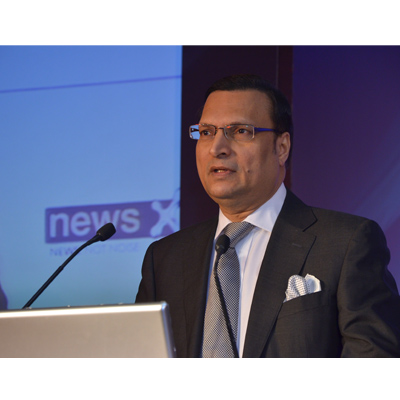
    In a press statement today, NBA president Rajat Sharma said: “This was a frontal attack on the freedom of the press. The whole nation was watching on television as policemen in ‘khaki’ were openly beating up journalists and cameramen who were merely doing their job of reporting. Policemen in uniform deliberately damaged expensive TV cameras and cellphones belonging to news channels and reporters, in full view of their senior officials.”

     
    The NBA president has urged the Chief Minister of Haryana to ensure that action be taken immediately against the men in uniform who ordered and carried out the unprovoked attacks on journalists and cameramen.  


    “The NBA clearly wishes to put it on record that such a naked show of unbridled ‘khaki’ power is unacceptable under any canon of democracy. The powers-that-be must understand that the journalists were only carrying out their lawful duty of disseminating information to the people even as events were unfolding right in front of their eyes.


    “For over two weeks now, the nation has been watching the spectacle of a state police looking completely helpless in arresting a self-styled godman hidden by his goons in his ashram and producing him before the Hon’ble High Court. On the contrary, the police today unleashed its power on helpless journalists doing their lawful duty.


    “The NBA considers this attack a blot on the face of democracy, and an assault on the fundamental right to freedom of speech and expression as enshrined in the Constitution,” Sharma said.


    “The Chief Minister must take exemplary action against the culprits to ensure that such shameful incidents are not repeated in future,” added Sharma.


    Meanwhile, the Delhi Union of Journalists (DUJ) also strongly condemned the beating up of journalists and camerapersons who were covering the clashes between the police and supporters of controversial godman Rampal.


    It said it had been reported that while some journalists have been injured, camera and equipment of photo journalists have been damaged or broken. Even DGP S N Vashisht, confronted with evidence, had to concede a journalist was beaten up and that he will investigate the matter.


    The DUJ calls for the institution of a high level enquiry to probe the beatings of journalists. While demanding immediate compensation for those who have suffered injuries and damage to their equipment, the DUJ reiterates its demand that a compensation and insurance cover be put in place for media persons who while covering such conflicts have to face various hazardous tasks.


    The DUJ would also like to state that no one is above the law. The use of women and children as protective shields and exposing them to grave risks is highly condemnable and cannot be tolerated.


  • NBA condemns attack on journalists and camerapersons in Chennai

    NBA condemns attack on journalists and camerapersons in Chennai

    MUMBAI: The News Broadcasters Association (NBA) has condemned the attacked on Times Now and Headlines Today by the Dravida Munetra Kazhagam (DMK) cadre in Chennai on 18 May.


    Cameramen and journalists of the two channels were attacked while they were covering the news of DMK leader Stalin’s resignation. According to TV reports, cameras and video footages were damaged.  One cameraperson has also been admitted with severe injuries.


    NBA president KVL Narayan Rao called it a “cowardly attack meant to intimidate journalists carrying out their work in disseminating news and information, a service that is essential for any democratic society.” He urged Tamil Nadu chief minister J Jayalalithaa to ensure that journalists were allowed to perform their duties in a free and fearless manner.


    He also requested that the state authorities would take action against the culprit(s) to ensure such incidents are not repeated.

  • Laadli Awards appreciates the work of media towards women empowerment

    Laadli Awards appreciates the work of media towards women empowerment

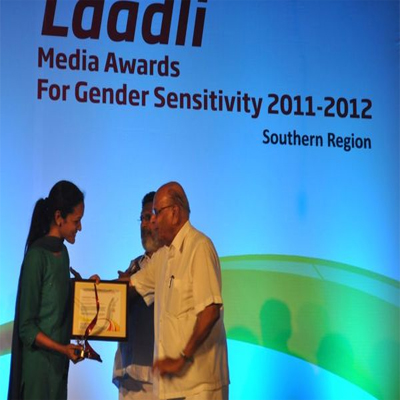
    MUMBAI: The fifth edition of the Laadli National Media Awards for Gender Sensitivity 2012 -13 for honoring media and advertising professionals was held on 13 December.


    The Awards that were instituted in 2007, as part of the media advocacy efforts under the Laadli girl-child campaign, felicitates, acknowledges, recognises and encourages media, journalists and advertising professionals to keep working on gender issues and to draw the attention of the public to their positive efforts in the media with regard to gender sensitive reportage.  


    Speaking at the event on Friday, High Court Judge, Justice Chandra Kumar said priority must be given to girl’s education. “The future of mankind depends upon the attitude towards women.” He said the authorities should ensure that there was no discrimination between boys and girls. Kumar later gave away the awards to winners from the southern and eastern regions.


    United Nations Population Fund State Programme Officer, Maharashtra, Anuja Gulati regretted that gender inequality pervaded every sphere of life. However, she appreciated the way stories in the media on women were well-balanced and researched as she recalled the way the Nirbhaya incident had been reported.


    Laadli Awards director AL Sarada said thanks to the media attention, there had indeed been a change in the way people perceived women. However, much more needed to be done, she said adding that a media monitoring commission would be formed soon.

  • News channels eye elections

    News channels eye elections

    MUMBAI: Back in the eighties, veteran journalists Dr Prannoy Roy and Vinod Dua took the nation by storm when they co-anchored the first-ever election analyses programs on the then sole television channel, Doordarshan.


    Nearly three decades and the cable and satellite TV explosion later, journalists and news television channels of all hues continue to romance the elections with the same (if not greater) fervour.


    With ongoing elections in four states in North India and one in the North East, and general elections due in the first half of 2014, there couldn’t have been a better time for news channels to engage in a bit of one-upmanship with respect to news and programs around the polls. Indiantelevison.com takes a look…


    India News is airing a campaign called Kissa Kursi Ka showcasing ground events across Madhya Pradesh, Chattisgarh, Rajasthan and Delhi. Citizens are part of the live debates on this program.


    Urdu news channel, Aalami Samay, features a show called Mukhyamantri ke paanch saal which looks at the five years of Members of Parliament and what they’ve done towards roadways, power supply, safety and security among other causes. Another show titled Aapke numainde..unke wade assesses whether these MPs have succeeded in keeping the promises they made before getting elected to office.


    ABP News is well known for its show, Kaun Banega Mukhyamantri while India TV is looking at building a strong team under the supervision of QW Naqvi, who has newly joined the channel as editorial director, to make their coverage of this election a talking point for the general elections coming up next year. “These assembly elections are a build-up to the general elections in 2014; the focus is on capturing viewership now and to be their first choice for news coverage, analyses and insights on elections right till the general elections,” says India TV MD and CEO Ritu Dhawan.
        

    Elections are a bonanza of sorts for news channels, which expect viewership to head north during that time. For instance, India News and Aalami Samay expect their viewership to go up by 15- 20 per cent while ABP is confident of garnering an almost 50-100 per cent increase, largely due to the main shots slated for prime time viewing although election programming is scheduled for the whole day right through the elections.


    India News and News X plan live election coverage from 43 locations, including 16 live OB vans and 16 live units. “Elections are like festivals for every news channel,” says India News and News X CEO R K Arora.

    Not only are elections significant in grabbing eyeballs, they are also important for news channels to make their mark. “Elections should not only be seen as an eyeball prospect, but also as an area where media can contribute in the process of nation building,” says Dhawan.


    While News Nation CEO Shailesh Kumar says: “This poll will also reflect the mood of the nation and take of the people at a crucial juncture when two big leaders (Narendra Modi and Rahul Gandhi) are being projected as the future of this country. A very decisive poll, which has the capacity to shape the geo-political contours of the nation.”


    Advertisers too are part of this gold (read election) rush. For India TV, advertisers come in the categories including Automobile, Cement, Hosiery, Food processing and FMCG.


    Says Dhawan: “The rule ‘Eyeball:Price’ is definitely applicable.”, India News and News X have got on boards brands such as Mircrosoft, Renault, Mahindra, Tata Motors, Idea cellular, Honda Motorcycles, Godrej and Whirlpool on their lists.


    With channels eyeing elections as a good ‘squeeze’ in terms of viewers and advertisers, most of them have also planned exit polls at the end of the elections.


    Coming to the anchors, be it a Deepak Chaurasia or Rajat Sharma or any of your favourite hosts, they are all busy trying to get the best news bytes from specialists, politicians and the public to grab the most number of eyeballs.

  • Govt: No proposal to include electronic media under Wage Board

    Govt: No proposal to include electronic media under Wage Board

    NEW DELHI: The government has categorically said there is no proposal at present to include all journalists in electronic media under the Wage Board.


    Minister of State for Labour & Employment Kodikunnil Suresh clarified in Parliament that journalists from the electronic media are not covered under the Wage Board for journalists.


    The Ministry administers the Working Journalists and Other Newspaper Employees (Conditions of Service) and Miscellaneous Provisions Act, 1955 for the purpose of fixing/revising rates of wages and for regulating service conditions of Working Journalists and Non-Journalist Newspaper Employees only.


    Currently, the matter relating to Wage Boards for Journalists in pending in the Supreme Court.

  • Journalists need to hold power to account: Boaden

    Journalists need to hold power to account: Boaden

    MUMBAI: “If the BBC is weak, or lacking in confidence, or isn‘t sure about its editorial judgments and methods, then it runs the risk of being pushed around…of losing its independence in all but name.”

    The cautionary note has come from BBC News director Helen Boaden.  
         
      Elaborating on the task of newsmen, Boaden has said that the journalist‘s job is to hold power to account – to shine light in dark places. But they can only do so if they have the courage of their convictions – if they have done their journalism properly – and if they are properly able to weigh up the consequences of their actions.

    Speaking on ‘Value of Journalism’ at The BBC College of Journalism and POLIS international conference, Boaden said that people are surrounded by more sources of news on more platforms than any previous generation could have imagined. But in a sea of information, opinion, misinformation and sometimes downright lies, it‘s vital to know which news you can trust.

    “So for all the innovations that have changed the broadcasting environment so rapidly, the principles – for us – are the same. It‘s important to do the right thing – whatever the pressure. That way, you build your reputation for independence and impartiality,” she added.

    Last year, the BBC News channel had record audiences for many major news stories. It recorded the highest reach of any UK news channel – 7.4 million – on the day that Gordon Brown resigned and David Cameron became prime minister. The day after the general election, 7 million watched, and 6.9 million watched the rescue of the Chilean miners. More recently, on 11 March, the channel reached a new record of 8.5 million for the Japanese earthquake. On the same day, the BBC website, too, had record traffic internationally with 15.8m unique users.

    “Our ratings for trust, impartiality and independence have also continued to rise over the last three years. There‘s a direct connection between these sets of figures. As the perception of trust and impartiality increases, so do our audiences. The BBC Trust has shown that impartiality is an important factor in the audience determining its choice of broadcast news provider,” Boaden said.

    In a major survey published last year, Ofcom found that 91 per cent of people thought it was important or very important that “news in general is impartial”. So if partisan reporting is allowed under a new Communications Act – and there are detailed arguments for and against – then the BBC will do everything it can to maintain and strengthen its tradition of impartial journalism.

    “But that means we must be strong enough, and fair and honest enough, to admit mistakes when we have made them. To hold those in power to account we have to be accountable ourselves,” Boaden noted.

    That‘s why the other side of this story is how the UK pubcaster handles complaints about its journalism. “Complaints come in all shapes and sizes. We must be strong enough not to cave in to those who complain of a red menace – as they did in the 30s – or that we are being unpatriotic in holding Fifa to account We should be confident enough to say to all our audiences – not just those in positions of power – we stand by our programmes,” she added.

    But at the same time, the coverage should be sensitive enough to be able to recognise where complaints have validity.

    Boaden offered an example. When Israeli commandos boarded a boat called the Mavi Marmara, which was bound for Gaza, in a raid that left 9 people dead last year, Panorama mounted a brave, thorough and forensic examination of what went wrong. After the programme – which was called “Death on the Med” – the BBC received 2,000 calls, letters or e-mails, three-quarters of them critical. The pubcaster estimated that a quarter of those who contacted the news outfit were part of a lobby group, using wording recommended by a particular website. In the end, however, it‘s not the volume of complaints that counts – wearying though it may be for editors – but their validity.

    Subsequently 19 complaints, raising 51 substantive points, were put to the complaints process. In this case, the Trust took pains to praise the programme as “an original, insightful and well-researched piece of journalism.” It stressed its impartiality and accuracy.

    But three points were upheld by the Trust – two relating to breaches of the BBC‘s editorial guidelines regarding accuracy and one on impartiality.

    “We apologised for the mistakes, and accepted the praise. And that, I think, is how it should be. Saying sorry should not be seen as a sign of weakness. Nor should it be seen as such by our opponents who invariably take delight in a BBC apology,” said Boaden.

    “We must be independent in our journalism, but independent-minded enough to recognise our own faults, where they exist – without anyone assuming that we are caving in to political pressure, or being pushed around. Indeed, it should be seen as a sign of institutional health – that an organisation not only stands up for its journalism, but holds up its hands if it gets things wrong – whatever the status of the complainant,” she added.

    Striking a balance between allowing all-comers to complain and making the process unduly restrictive is very hard. It means the system can be preyed on by interest groups, or individuals with an obsessive interest, or those with the time and resources to pursue an agenda of their own. Sometimes, when people complain about a lack of impartiality, they are simply trying to impose their version of the truth on the BBC. “It can be difficult for us, or unpleasant,” she said.

    Understandably, in these circumstances, editors would rather be doing the job, than answering complaints about the job. It can be time-consuming, and costly. But it can only be right that everyone is equal in the eyes of the complaints system. The alternative might be an organisation which holds power to account without being properly accountable itself.

    “So that the confidence which we need as journalists becomes arrogance. A form of pride which, inevitably, will lead to a fall. We need confidence – and we need accountability. We need systems that work in order to ensure that our journalism is robust.”

    She noted that all politicians, of whatever party, embrace the BBC‘s independence in theory – but have occasional difficulties in practice, especially when they are in power. That means it‘s important to do the right thing – whatever the pressure.

    “That way, you build your reputation for independence and impartiality. To hold power to account – we have to tell the truth as we see it, to the people who need it, independent of government and commercial interests. But we must do so freely and fairly, and in a genuine spirit of inquiry. And if you ask the questions of those in power – you must be prepared to answer them – and to acknowledge your own mistakes.

    Not only does it go with the territory. It‘s a vital part of the landscape.”