Tag: journalist

  • Financial Express managing editor Sunil Jain succumbs to Covid

    Financial Express managing editor Sunil Jain succumbs to Covid

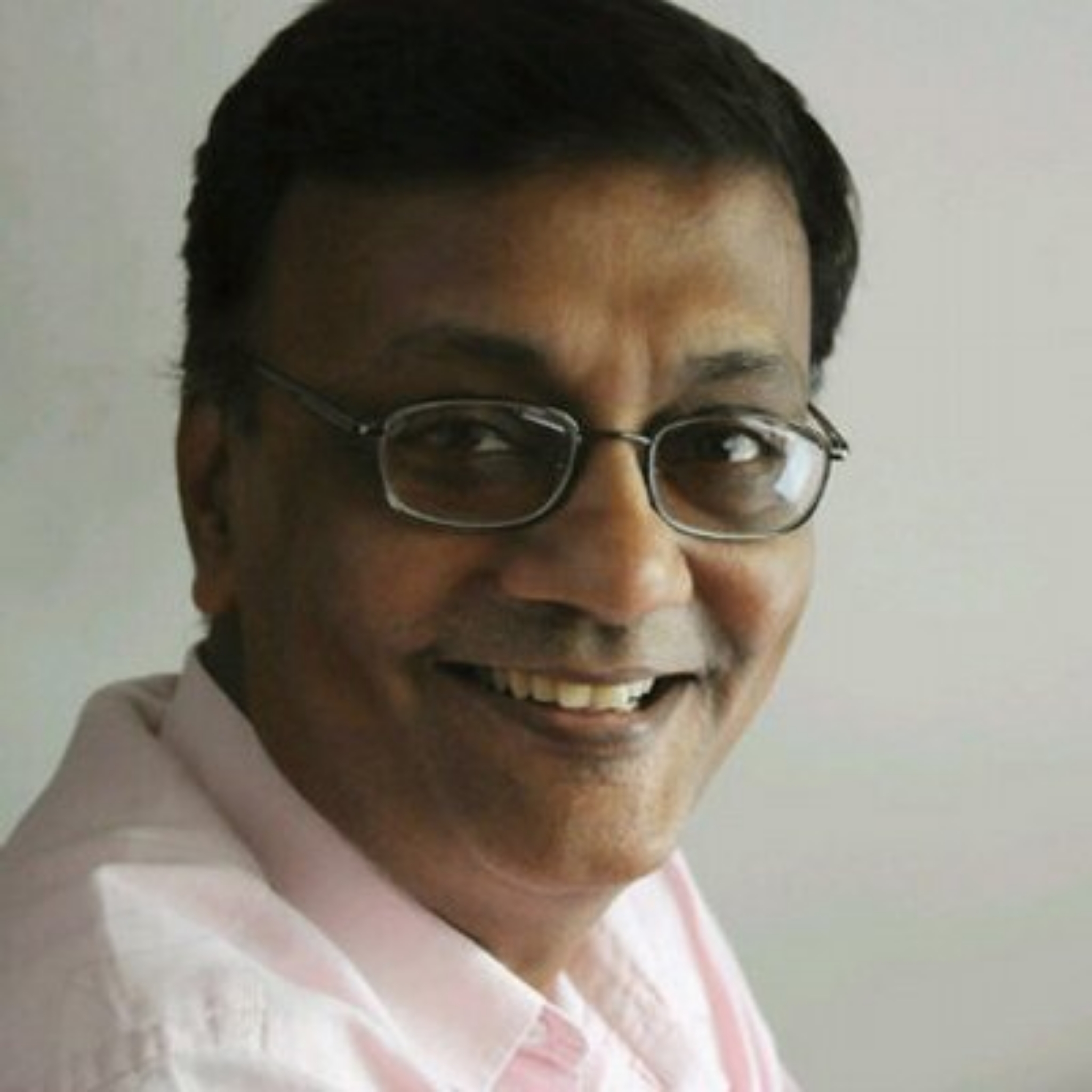
    New Delhi: The ferocious second wave of Covid-19 continues to take a heavy toll on the news industry. Sunil Jain, managing editor of Financial Express passed away on Saturday after battling with post-Covid complications. He was 58. 

    “My brother, Sunil Jain, passed away this evening after post-Covid complications. He suffered a cardiac arrest earlier in the day but was revived, and finally passed after another cardiac arrest around 8.30 p.m. The doctors and all medical staff at AIIMS did their best and more. I thank you for standing by us in this dark hour,” his sister Sandhya Jain said in a statement. 

    A senior journalist with over three decades of experience, Jain started his journalistic career as a reporter in India Today magazine in 1991 and went on to become the magazine’s business editor. He then moved on to head the business and economy coverage for The Indian Express. Six years later, he joined Business Standard. He returned to the Express Group in 2010 as assistant editor of The Financial Express. 

    His sudden demise has left the news media world in a state of shock, with several friends, colleagues, and prominent personages expressing their grief over demise on social media. “Your Express family will miss you,” said The Indian Express’ executive editor Anant Goenka.

    President Ramnath Kovind took to Twitter to condole the senior journalist’s demise. “Sunil Jain was an editor known for his candour and forthright views. It was a treat to read his columns. After his untimely demise, his absence will be deeply felt in the world of journalism. My condolences to his family and friends,” he said in a tweet.

    “You left us too soon, Sunil Jain. I will miss reading your columns and hearing your frank as well as insightful views on diverse matters. You leave behind an inspiring range of work. Journalism is poorer today, with your sad demise. Condolences to family and friends. Om Shanti” said Prime minister Narendra Modi in a tweet.

    Several  Union ministers including the minister of Information and Broadcasting, Prakash Javadekar, Finance minister Nirmala Sitharaman, and Railways minister Piyush Goyal also paid tributes. 

    Hundreds of journalists have lost their lives in the catastrophe that has ravaged the country. India now accounts for half of all global new infections. On Saturday, India recorded 3.26 lakh Covid-19 cases and lost 3,890 lives that pushed the death toll to 2.6 lakhs. 

  • Rajya Sabha TV sr anchor journalist Girish Nikam passes away

    Rajya Sabha TV sr anchor journalist Girish Nikam passes away

    MUMBAI: This was his last tweet. “I think the I&B Ministry should upload the video which was considered by the Inter-ministerial c’tee recommending the #Ban on #NDTVIndia”. Sadly, senior journalist and consultant/anchor at Rajya Sabha TV (RStv)  Girish Nikam did not get to see the progress of the saga NDTV-ministry of information & broadcasting. Nikam died earlier today following a massive heart attack.

    He felt uneasy after filming a show today and was rushed to Ram Manohar Lohia hospital in New Delhi where he breathed his last.

    Amongst the shows he used to host on Rajya Sabha TV was one called The Big Picture.

    The 59 year old had a long career spanning Star of Mysore in Mysuru, Indian Express, Bengaluru, Eenadu, India Today, Deccan Chronicle and News Today.

    His body is to be flown to Bengaluru for his last rites.

    Nikam had a MA in Social work, Criminology and correctional administration, apart from a BA in Journalism.

    Among those who condoled his  passing away include:

    Rajdeep Sardesai: “Veteran journalist Girish Nikam passes away almost literally on the job. Died soon after recording a show for RS tv. RIP”

    Venkaiah Naidu: “Visited mortal remains of Shri Girish Nikam. Doctors said he suffered a massive heart attack and they couldn’t revive him. Very sad.  Saddened by d sudden demise of Shri Girish Nikam. Known him 4 many years right frm early ETV days. My condolences to d bereaved family. RIP. ”

    Prasar Bharati chairman A.S. Suryaprakash said that Nikam was an extremely versatile mediaperson who traversed the worlds of print, television and social media.

    Also read :- Bye Bye, Girish

  • Rajya Sabha TV sr anchor journalist Girish Nikam passes away

    Rajya Sabha TV sr anchor journalist Girish Nikam passes away

    MUMBAI: This was his last tweet. “I think the I&B Ministry should upload the video which was considered by the Inter-ministerial c’tee recommending the #Ban on #NDTVIndia”. Sadly, senior journalist and consultant/anchor at Rajya Sabha TV (RStv)  Girish Nikam did not get to see the progress of the saga NDTV-ministry of information & broadcasting. Nikam died earlier today following a massive heart attack.

    He felt uneasy after filming a show today and was rushed to Ram Manohar Lohia hospital in New Delhi where he breathed his last.

    Amongst the shows he used to host on Rajya Sabha TV was one called The Big Picture.

    The 59 year old had a long career spanning Star of Mysore in Mysuru, Indian Express, Bengaluru, Eenadu, India Today, Deccan Chronicle and News Today.

    His body is to be flown to Bengaluru for his last rites.

    Nikam had a MA in Social work, Criminology and correctional administration, apart from a BA in Journalism.

    Among those who condoled his  passing away include:

    Rajdeep Sardesai: “Veteran journalist Girish Nikam passes away almost literally on the job. Died soon after recording a show for RS tv. RIP”

    Venkaiah Naidu: “Visited mortal remains of Shri Girish Nikam. Doctors said he suffered a massive heart attack and they couldn’t revive him. Very sad.  Saddened by d sudden demise of Shri Girish Nikam. Known him 4 many years right frm early ETV days. My condolences to d bereaved family. RIP. ”

    Prasar Bharati chairman A.S. Suryaprakash said that Nikam was an extremely versatile mediaperson who traversed the worlds of print, television and social media.

    Also read :- Bye Bye, Girish

  • JNU’s Kanhiaya Kumar & the role of television news

    JNU’s Kanhiaya Kumar & the role of television news

    MUMBAI: “Where the mind is without fear and the head is held high

    Where knowledge is free

    Where the world has not been broken up into fragments

    By narrow domestic walls

    Where words come out from the depth of truth

    Where tireless striving stretches its arms towards perfection

    Where the clear stream of reason has not lost its way

    Into the dreary desert sand of dead habit

    Where the mind is led forward by thee

    Into ever-widening thought and action

    Into that heaven of freedom, my Father, let my country awake.”

    Given the perilous times that we are living in today, no words  resonate more aptly than these lines penned by Rabindranath Tagore more than a hundred years ago.

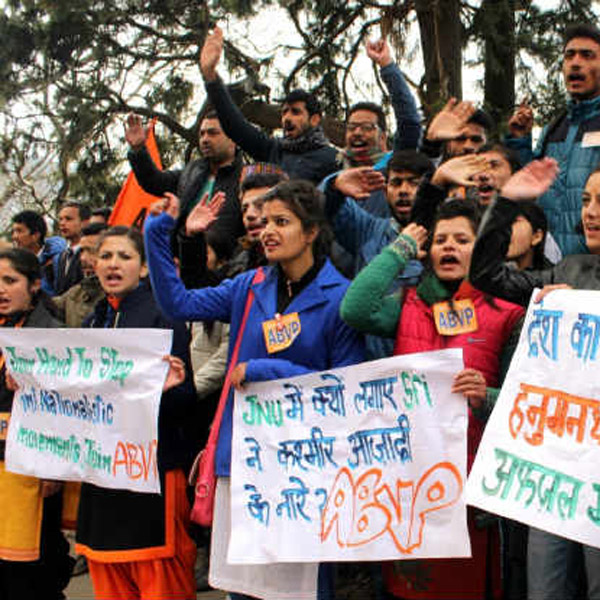
    Over the past one week, the country has witnessed debates, discussions and dialogues galore after the incident that happened in the Patiala Court on 15 February. That was the fateful afternoon when lawyers condemned students, journalists and cameramen who were present in court. That was the day when Jawaharlal Nehru University (JNU) Students Union president Kanhaiya Kumar, who had been arrested on charges of sedition for allegedly raising anti-India slogans, was supposed to be produced in front of the judge.

    With no journalist being spared by the ‘judges,’ the police force opted to be mere watchers turning a blind eye to what was happening. Anyone who didn’t look like a lawyer was beaten up. This action not only spurred anger across the nation but also marked 16 February as a Black Day wherein journalists displayed solidarity against what had happened in the high profile court complex. Hundreds of journalists decided to walk from the Press Club of India to the Supreme Court at noon on Tuesday to protest against the violence that took place.

    The event also saw some students allegedly raising anti-India slogans. NDTV CEO Vikram Chandra told indiantelevision.com that the unfortunate incidents on that day were deplorable. 

    Said he:  “I strongly oppose the slogan shouting that happened. It was highly inappropriate and shameful. Also, such reactions from the lawyers is disgraceful.”

    Then came claims, claims and more claims. Every news channel talked about the video that came out showing students chanting anti-Indian slogans, which celebrated Afzal Guru. While on the one hand, news channels kept airing the video of the attack by lawyers, on the other a few opted to take a stand on bigger issues of the events that unfolded at JNU. While some covered the attacks by lawyers, some covered the student protests at JNU. Diverse opinions and viewpoints bombarded newswatchers at home. 

    Such incidents make us question the basic right of freedom of expression laid down in Section 19 of the Indian Constitution. In the light of what happened, the lawyers completely mishandled and misinterpreted this basic right. 

    And in this constant tug-of-war between one side or the other, we saw some TV reporters and anchors going overboard and taking it out against each other in public.

    We watched as Times Now editor-in-chief Arnab Goswami conducted his routine debate session, bashing the students and disregarding what had happened. And the vociferous senior journalist has faced much criticism for the way he portrayed the event. 

    What’s more, Goswami has faced flak from senior journalists like NDTV’s Ravish Kumar and India Today Television’s Rajdeep Sardesai, who directly took him on because of his take on the entire issue. Goswami got fiery with the liberals asking them if such sloganeering or glorifying a terrorist as a martyr is freedom of speech or sedition, to speak the language of separatists? He ran out of “patience” while discussing this entire incident when one of the students Omar Khalid interrupted him in his prime time show The Newshour.

    NDTV senior journalist Ravish Kumar voiced his views on nationalism and what its connection is with our democracy. Kumar, in a blank black screen video with only subtitles, fired direct salvos against some anchors including Goswami. Starting with lines like: “In the name of debate, the everyday noise and shouting is either bringing you to light or taking you to darkness. You too must have been wondering.” 

    With just a dark and empty background sprinkled generously with impactful words, strong ideas and an eye-ball grabbing narration, he talked about the way in which TV debates are shaping up today. 

    He said, “Our job is not to provoke or incite, but simply ask; ask questions to those in power. But TV anchors don’t do that, intentionally so, and they shout. Is this how you speak at home, to your family, to your sister, to your wife?” he asked, adding, “Do we get accountability by screaming on television?”

    On the other hand, Sardesai came out with a blog titled: ‘I’m anti national,’ where he tried to convey an important point, and that was to stop dividing people in the name of nationalism. 

    “Yes, I am anti-national because I believe in an expanded definition of the right to free speech as spelt out in Article 19 of the Constitution,” are his exact words from the blog. He opined that the right to dissent is a fundamental right. “People cannot and should not take the law into their own hands. I don’t know yet whether the slogans that were raised were from the students or someone else,” he added.

    Video clips all over the Internet and social media have depicted students yelling out slogans like, Bharat ki barbaadi tak jang rahegi, Afzal Guru Zindabad, Pakistan Zindabad. However, the authenticity of these very videos is still shrouded in doubt. 

    To add to all this comes the shocking news about a Zee News producer Vishwa Deepak resigning from the news channel as a sign of disgust on the alleged biased coverage of the JNU protests and the sedition charges against the students’ union leader.

    He was reportedly a part of the team that produced a show on the night of 9 February, when alleged anti-India slogans were raised at the JNU campus. Deepak stated that the channel had broadcast a video of students raising slogans with a caption that said ‘Pakistan Zindabad’ while no such sloganeering was done and this could be easily figured out from the crowd and the darkness at that time.

    Of course media houses went to town carrying  his resignation letter in its entirety or excerpts from it, rubbing their hands in glee as it gave them fodder to denigrate the Hindi news channel as a handmaiden of the Modi sarkar. 

    Zee News has condemned and denied Vishwa Deepak’s statement saying that he was not associated with the coverage of the JNU crisis. It added that it has submitted the raw footage of the students sloganeering to the Delhi police and is awaiting the latter’s analysis to vindicate its stand. Additionally, it has stated it has no affiliations with any political parties. 

    CNN-IBN senior journalist Bhupendra Chaubey on his part has asked the nation’s journalists to be more vigilant. Said he: “It’s time that all the top editors and anchors across the industry should start looking at the reasons behind so much of hatred and negativity on social media. We should all be careful about what we are putting up on TV in-front of the nation.”

    With so much happening all around the world, it looks like a powder keg situation is brewing. With every passing day unveiling a new façade of the issue, the journalists and the media houses have to be fearless and honest so as to empower the citizens who rely on the Fourth Estate for credible information. 

    Freedom of speech and expression is a sovereign and democratic right of every Indian citizen irrespective of  caste, community, colour and creed. 

    But what if somebody is using the constitutional offering to sabotage harmony and arouse a polarised scenario? Who draws the line? 

    Self regulation based on conscience, morals and ethics seems to be not working, but is a regulatory body constructed under government diktat, a safer option?

    On the other hand, the Press in India has more freedom as compared to many other countries. But how is it helping the nation? If Goswami says no, then Barkha Dutt will contradict with a yes. If Zee News says galat (wrong), Aaj Tak will say sahi (correct). Even as journalists are marching on the road and news channels are resorting to visual effects, is anyone thinking on what the repercussions this will have on the millions following them? Certainly not!

    The Father of the nation Mahatma Gandhi rightly said, “The true function of journalism is to educate the public mind, not to stock it with wanted and unwanted impressions.” 

    That sagacious advice has been dust-binned by today’s trigger happy media. Decibel is the new decorum and views are all that is left in news, and TV ratings are all that matter. It remains to be seen, how long this craftsmanship can continue.

    ’Tis the time to really ponder over where we, as a country are going from hereon…
  • JNU’s Kanhiaya Kumar & the role of television news

    JNU’s Kanhiaya Kumar & the role of television news

    MUMBAI: “Where the mind is without fear and the head is held high

    Where knowledge is free

    Where the world has not been broken up into fragments

    By narrow domestic walls

    Where words come out from the depth of truth

    Where tireless striving stretches its arms towards perfection

    Where the clear stream of reason has not lost its way

    Into the dreary desert sand of dead habit

    Where the mind is led forward by thee

    Into ever-widening thought and action

    Into that heaven of freedom, my Father, let my country awake.”

    Given the perilous times that we are living in today, no words  resonate more aptly than these lines penned by Rabindranath Tagore more than a hundred years ago.

    Over the past one week, the country has witnessed debates, discussions and dialogues galore after the incident that happened in the Patiala Court on 15 February. That was the fateful afternoon when lawyers condemned students, journalists and cameramen who were present in court. That was the day when Jawaharlal Nehru University (JNU) Students Union president Kanhaiya Kumar, who had been arrested on charges of sedition for allegedly raising anti-India slogans, was supposed to be produced in front of the judge.

    With no journalist being spared by the ‘judges,’ the police force opted to be mere watchers turning a blind eye to what was happening. Anyone who didn’t look like a lawyer was beaten up. This action not only spurred anger across the nation but also marked 16 February as a Black Day wherein journalists displayed solidarity against what had happened in the high profile court complex. Hundreds of journalists decided to walk from the Press Club of India to the Supreme Court at noon on Tuesday to protest against the violence that took place.

    The event also saw some students allegedly raising anti-India slogans. NDTV CEO Vikram Chandra told indiantelevision.com that the unfortunate incidents on that day were deplorable. 

    Said he:  “I strongly oppose the slogan shouting that happened. It was highly inappropriate and shameful. Also, such reactions from the lawyers is disgraceful.”

    Then came claims, claims and more claims. Every news channel talked about the video that came out showing students chanting anti-Indian slogans, which celebrated Afzal Guru. While on the one hand, news channels kept airing the video of the attack by lawyers, on the other a few opted to take a stand on bigger issues of the events that unfolded at JNU. While some covered the attacks by lawyers, some covered the student protests at JNU. Diverse opinions and viewpoints bombarded newswatchers at home. 

    Such incidents make us question the basic right of freedom of expression laid down in Section 19 of the Indian Constitution. In the light of what happened, the lawyers completely mishandled and misinterpreted this basic right. 

    And in this constant tug-of-war between one side or the other, we saw some TV reporters and anchors going overboard and taking it out against each other in public.

    We watched as Times Now editor-in-chief Arnab Goswami conducted his routine debate session, bashing the students and disregarding what had happened. And the vociferous senior journalist has faced much criticism for the way he portrayed the event. 

    What’s more, Goswami has faced flak from senior journalists like NDTV’s Ravish Kumar and India Today Television’s Rajdeep Sardesai, who directly took him on because of his take on the entire issue. Goswami got fiery with the liberals asking them if such sloganeering or glorifying a terrorist as a martyr is freedom of speech or sedition, to speak the language of separatists? He ran out of “patience” while discussing this entire incident when one of the students Omar Khalid interrupted him in his prime time show The Newshour.

    NDTV senior journalist Ravish Kumar voiced his views on nationalism and what its connection is with our democracy. Kumar, in a blank black screen video with only subtitles, fired direct salvos against some anchors including Goswami. Starting with lines like: “In the name of debate, the everyday noise and shouting is either bringing you to light or taking you to darkness. You too must have been wondering.” 

    With just a dark and empty background sprinkled generously with impactful words, strong ideas and an eye-ball grabbing narration, he talked about the way in which TV debates are shaping up today. 

    He said, “Our job is not to provoke or incite, but simply ask; ask questions to those in power. But TV anchors don’t do that, intentionally so, and they shout. Is this how you speak at home, to your family, to your sister, to your wife?” he asked, adding, “Do we get accountability by screaming on television?”

    On the other hand, Sardesai came out with a blog titled: ‘I’m anti national,’ where he tried to convey an important point, and that was to stop dividing people in the name of nationalism. 

    “Yes, I am anti-national because I believe in an expanded definition of the right to free speech as spelt out in Article 19 of the Constitution,” are his exact words from the blog. He opined that the right to dissent is a fundamental right. “People cannot and should not take the law into their own hands. I don’t know yet whether the slogans that were raised were from the students or someone else,” he added.

    Video clips all over the Internet and social media have depicted students yelling out slogans like, Bharat ki barbaadi tak jang rahegi, Afzal Guru Zindabad, Pakistan Zindabad. However, the authenticity of these very videos is still shrouded in doubt. 

    To add to all this comes the shocking news about a Zee News producer Vishwa Deepak resigning from the news channel as a sign of disgust on the alleged biased coverage of the JNU protests and the sedition charges against the students’ union leader.

    He was reportedly a part of the team that produced a show on the night of 9 February, when alleged anti-India slogans were raised at the JNU campus. Deepak stated that the channel had broadcast a video of students raising slogans with a caption that said ‘Pakistan Zindabad’ while no such sloganeering was done and this could be easily figured out from the crowd and the darkness at that time.

    Of course media houses went to town carrying  his resignation letter in its entirety or excerpts from it, rubbing their hands in glee as it gave them fodder to denigrate the Hindi news channel as a handmaiden of the Modi sarkar. 

    Zee News has condemned and denied Vishwa Deepak’s statement saying that he was not associated with the coverage of the JNU crisis. It added that it has submitted the raw footage of the students sloganeering to the Delhi police and is awaiting the latter’s analysis to vindicate its stand. Additionally, it has stated it has no affiliations with any political parties. 

    CNN-IBN senior journalist Bhupendra Chaubey on his part has asked the nation’s journalists to be more vigilant. Said he: “It’s time that all the top editors and anchors across the industry should start looking at the reasons behind so much of hatred and negativity on social media. We should all be careful about what we are putting up on TV in-front of the nation.”

    With so much happening all around the world, it looks like a powder keg situation is brewing. With every passing day unveiling a new façade of the issue, the journalists and the media houses have to be fearless and honest so as to empower the citizens who rely on the Fourth Estate for credible information. 

    Freedom of speech and expression is a sovereign and democratic right of every Indian citizen irrespective of  caste, community, colour and creed. 

    But what if somebody is using the constitutional offering to sabotage harmony and arouse a polarised scenario? Who draws the line? 

    Self regulation based on conscience, morals and ethics seems to be not working, but is a regulatory body constructed under government diktat, a safer option?

    On the other hand, the Press in India has more freedom as compared to many other countries. But how is it helping the nation? If Goswami says no, then Barkha Dutt will contradict with a yes. If Zee News says galat (wrong), Aaj Tak will say sahi (correct). Even as journalists are marching on the road and news channels are resorting to visual effects, is anyone thinking on what the repercussions this will have on the millions following them? Certainly not!

    The Father of the nation Mahatma Gandhi rightly said, “The true function of journalism is to educate the public mind, not to stock it with wanted and unwanted impressions.” 

    That sagacious advice has been dust-binned by today’s trigger happy media. Decibel is the new decorum and views are all that is left in news, and TV ratings are all that matter. It remains to be seen, how long this craftsmanship can continue.

    ’Tis the time to really ponder over where we, as a country are going from hereon…
  • 220 journalists in jail around the world: CPJ

    220 journalists in jail around the world: CPJ

    MUMBAI: The Committee to Protect Journalists (CPJ) has identified that 220 journalists are in jail around the world in 2014. This is an increase of nine from last year’s tally.

    The committee mentioned that the tally marks the second-highest number of journalists in jail since CPJ began taking an annual census of imprisoned journalists in 1990, and highlights a resurgence of authoritarian governments in countries such as China, Ethiopia, Burma, and Egypt.

    “China’s use of anti-state charges and Iran’s revolving door policy in imprisoning reporters, bloggers, editors, and photographers earned the two countries the dubious distinction of being the world’s worst and second worst jailers of journalists, respectively,” says the report.

    The list of the top 10 worst jailers of journalists was rounded out by Eritrea, Ethiopia, Vietnam, Syria, Egypt, Burma, Azerbaijan, and Turkey.

    In recent years, journalist jailings in the Americas have become increasingly rare, with one documented in each 2012 and 2013. This year, the region has two: a Cuban blogger was sentenced to five years in prison in retaliation for his critical blog, and in Mexico, an independent journalist and activist for Mayan causes has been charged with sedition.

    The report goes on the point out that 20 per cent, or 45, of the journalists imprisoned globally are being held with no charge disclosed. Also, online journalists accounted for more than half, or 119, of the imprisoned journalists.

    CPJ believes that journalists should not be imprisoned for doing their jobs. The organisation has sent letters expressing its serious concerns to each country that has imprisoned a journalist. In the past year, CPJ advocacy led to the early release of at least 41 imprisoned journalists worldwide.


  • Former Prasar Bharati chairman and veteran journalist MV Kamath is no more

    Former Prasar Bharati chairman and veteran journalist MV Kamath is no more

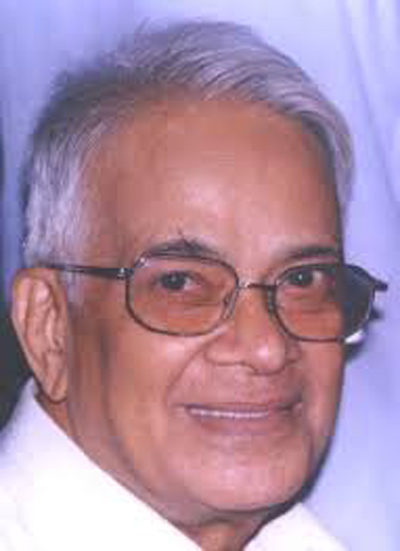
    NEW DELHI: Former chairman of Prasar Bharati and veteran journalist MV Kamath died this morning after a brief illness at the age of 93.


    A Padma Bhushan awardee, Kamath was also the former Editor of The Illustrated Weekly of India. Kamath served as the Washington correspondent of The Times of India and as editor of The Sunday Times. He also worked for the Press Trust of India.


    After beginning his career as a chemist, Kamath joined journalism as a reporter with the Free Press Journal in Mumbai. He was the president of Bombay Union of Journalists in 1953.


    Born in Udupi on 7 September 1921, Kamath completed his early education in Manipal. He graduated in B Sc.


    A prolific writer, he wrote several books including Narendra Modi – The Architect of a Modern State (2009) with co-author Kalindi Randeri and Reporter at Large (2002). Other books included one on the Pursuit of Excellence.


    Kamath was the honorary director of the Manipal School of Communications since its inception in 1997. He was a board member of Manipal University.


  • Zee TV is the only gainer in Week 48

    Zee TV is the only gainer in Week 48

    MUMBAI: As the alleged rape case involving Tehelka founder Tarun Tejpal and a female journalist working with the magazine unfolded last week, the focus of Indian television viewers seem to have shifted from the general entertainment channels to the news channels.

    Otherwise there’s no reason for almost all the general entertainment channels (GECs) to witness a drop in its ratings in the week 48 of TAM TV ratings. It was just Zee TV that has gained with 448,553 GVTs (433,447), though it maintains its third position in the chart. Star Plus continues to lead with 548,331 GVTs (560,497) followed by Colors that has registered 478,534 GVTs (513,415).

    Life OK continues to be at number four with 334,327 GVTs (335,013), Sab TV with 269,269 GVTs (308,133) is at number five. Sony continues to be at number six with 238,987 GVTs (269,332). Sahara One is still lagging behind and is at the bottom of the ratings list with 33,691 GVTs (30,429).

    Coming back to the chart topper, Star Plus, its most popular and loved show in the prime-time slot seems to be losing out on viewers. This time Diya Aur Baati Hum has registered only 11,449 TVTs (12,298). Yeh Rishta Kya Kehlata Hai, another popular offering from the channel too registered 7,329 TVTs (7,863). Even the viewership of Pyar Ka Dard Hai went down as it scored 6,661 TVTs (7,351). However, Sath Nibhana Saathiya managed enough to balance it out. The show registered 8,683 TVTs (8,290). The epic series Mahabharat too notched up and scored 7,170 TVTs (6,835). And surprisingly, the ratings of Saraswati Chandra too went up. It registered 5,367 TVTs (5,071). The ratings of popular celebrity dance reality show, Nach Baliye, however didn’t witness much change and registered 4,267 TVTs (4,736).

    Colors longest running and the most popular fiction series, Balika Vadhu generated 6,513 TVTs (6,684), while Madhubala – Ek Ishq Ek Junoon scored 4,329 TVTs (4,749). Uttaran that has been on-air on the channel since quite some time now also witnessed a significant rise and rated 4,031 TVTs (3,645). However, Comedy Nights with Kapil that has been tickling the funny bones of the audience and has been really popular seems to have lost its charm this week and has witnessed a drop with 7,851 TVTs (8,464). The international series 24 starring Anil Kapoor has also failed to click with the audience and has registered 2,797 TVTs (3,058 TVTs). The unfolding romance and drama in the celebrity-reality show Bigg Boss too hasn’t worked too well for the channel as even that has lost out on viewers. Bigg Boss registered 5,102 TVTs (5,491).

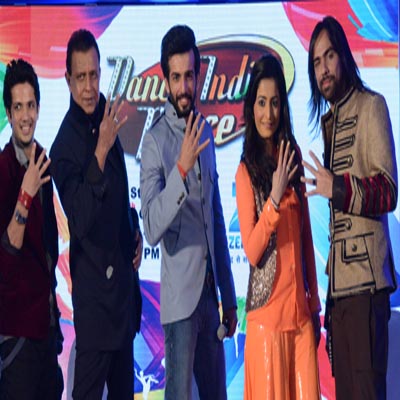
    For Zee TV, its period drama Jodha Akbar seems to have worked well. The ratings of the show notched up taking its tally to 10,182 TVTs (9,801). Its sitcom Bh se Bhade too managed enough viewers and scored 2,079 TVTs (1,650). Even the ratings of Qubool Hai registered 5,862 TVTs (5,830). The ratings of Pavitra Rishta and Do Dil Bandhe Ek Dori Se escalated as well with 5,468 TVTs (5,043) and 5,369 TVTs (5,019) respectively. Its popular dance reality show, Dance India Dance 4, however witnessed a drop and scored 4,323 TVTs (4,666) during the weekend.

    Fourth placed, Life OK witnessed a slight rise in its popular mythological series Mahadev and managed 3,312 TVTs (3,212). Even its new horror series Khauff Begins fared well in the first week with 2,539 TVTs. The ratings of Ek Boond Ishq and Do Dil Ek Jaan remained stable with 2,833 TVTs (2,834) and 1,491 TVTs (1,494) respectively. Crime-based show Shapath witnessed a huge drop and generated 3,055 TVTs (4,057). Crime-based show Savdhaan India scored 3,024 TVTs (3,035). Tumhari Paakhi managed to grab enough eye balls to take its TVT to 2,183 TVTs (1,877).

    Sab’s fiction show, Taarak Mehta Ka Ooltah Chashmah that has been keeping viewers in splits since last few years, has lost viewership it seems as it registered just 7,647 TVTs (8,856). Even Chidiya Ghar saw a significant drop and generated 2,935 TVTs (3,479). Lapataganj saw a slight dip as well and generated 1,769 TVTs (1,921). Baalveer registered 2,643 TVTs (3,293).

    Almost all the shows on Sony witnessed a drop in its ratings. Even its longest running crime series CID that has been really popular with the viewers witnessed a drop with 4,600 TVTs (5,254). Even Crime Patrol managed just 2,964 TVTs (3,255). The channel’s historical show Maharana Pratap recorded 2,733 TVTs (3,054), while quiz show KBC witnessed a drop and registered 3,248 TVTs (3,738). Other fiction shows either maintained a stable position or dipped marginally during the week. Its horror flick, Bhoot Aaya doesn’t seem to entice viewers as it registered only 1,423 TVTs (1,662).

    In the movie channel genre, Zee Cinema reported 253,575 GVTs (197,512); Star Gold registered 181,167 GVTs (178,122) and Movies OK scored 133,805 GVTs (127,470). On the other hand, &pictures witnessed a huge drop and scored 81,291 GVTs (112,609), Zee Anmol registered 55,524 GVTs (46,088) and Max scored 129,948 GVTs (200,508).

    While all the GECs have maintained a stable position this week with only Zee TV gaining few extra points, let’s see what’s in store for the channels in the coming weeks.

  • “There’s a lot of mileage in pay TV news”

    “There’s a lot of mileage in pay TV news”

    As the country sheds tears over  onion prices, cringes about the skyrocketing cost of LPG, cribs for a better system in place for tackling the ever-growing crime incidents and hopes for the 2014 general elections to change things, the news channels are gearing up to catch all the action live. 

    And when all the international and domestic news channels are at it, why should the Beeb – the world’s biggest pubcaster that reaches over 360 million households globally; 12 per cent of which are from India – miss a chance to report on the political battle of the world’s so-called largest democracy? 

    BBC Global News CEO Jim Egan, who was in Mumbai to launch its India Direct series, reveals that the channel is looking at grabbing more eyeballs during the election season. The channel plans to scale up the coverage on India in the coming months.

     
    And he gave some time to Indiantelevision.com’s Vishaka Chakrapani on the sidelines of the launch, to talk about the BBC World News’ India gameplan, its global digital push wherein it aims to melt the barriers between broadcast and online news. Egan emphasised that India is an important market for BBC in terms of pay TV and digital advertising. Excerpts from the interview:

    What is the benefit of investing in the news business in India?

    When I say investment I’m not talking about corporate investment, it’s about editorial investment. It’s been a good year for us in India. Digitisation has been broadly good for us and we are seeing our household penetration increase. 

    What is the growth in reach that you have experienced due to digitisation?

    It has grown steadily in single digit millions and has reached 30 million now, which means one in four homes. Digitisation is moving at a different pace in different parts of India. We would like to be bigger but we are addressing a relatively niche population in the English language and thus we are never going to be a mainstream news channel in the country.

     
    With so many international channels making a mark in India, how will BBC World News differentiate itself and stay on top?

    We are looking at doing product and editorial investments to the extent we can afford it. Other operators are well resourced such as CCTV in China is well financed, so is Al Jazeera. If we are going to get into a spending arms race, BBC won’t be able to get there. We will capitalise on our reputation and emphasise on being different. Being successful is not about spending a lot as some qualities cannot just be bought.

    Why has the industry been hit with a bout of layoffs happening across the world?

    The last five to 10 years have been very difficult for journalism. It’s coming to terms with internet and digitisation. In  print, it has been a very difficult time, but not so much in India. A lot of broadcast journalism has been buffeted by the internet, particularly in international news. You see lots of retrenchment and people closing bureaus. BBC is slightly different because we have both public and commercial funding that has helped us expand and maintain ourselves. We are swimming against the tide but we are doing it deliberately because we think having a well funded and well resourced international network of correspondents is what success is about.  

    What about the entry of many international news channels in the market? Could that also be a reason that’s leading to increased competition?

    There’s been a bit of fragmentation but I don’t see demand for news going down. Demand for news is going in different directions. But as long as you are prepared from the editorial and corporate points, there’s good business to be made. It’s just at slightly different places these days.  

    We would like to be bigger but we are addressing a relatively niche population in the English language and thus we are never going to be a mainstream news channel in the country…

    In the future, would having multilingual skills be an important criteria for journalists?

    That’s an interesting one. I don’t think we would hire someone just because they can speak many languages but the ability to broadcast and write digital content in those languages is something we are seeking to develop and nurture. We are going to have a dedicated Asian edition of our website with front page stories about India and China. There will be global programmes to improve the profile and output of bilingual journalists such as the ones in India. We are producing more relevant and easier to find content for our websites.  

    How important is India on a global scale for BBC World News?

    India has been and will be important for us. There is huge digital consumption that is growing in the mobile sector here. India is the fourth biggest market in terms of traffic, the first three being the US, Australia and Canada in that order. We need a big English speaking market to do well for us, and I’m leaving the UK out of this. One thing particularly exciting about India is that in the other markets digital penetration is nearing saturation point but in India there is a lot of room for growth in the mobile sector.

    In the recent years, the budget of BBC has been cut by 20 per cent. Does that affect the investment?

    The 20 per cent cut is due to TV licence fee being frozen for a period of five years, taking inflation into account. Internationally, we are funded through advertisements while domestically we are run by public money which is an involuntary payment of about $200 a year. We have the challenge and the freedom to earn commercial revenues. 

     
    Original content on mobile is what people seem to be asking for. Is that something you are looking to cash on?

    We are not doing that in mobile because on this platform the key for us is about following news from screen to screen. It’s about trying to make news consumption something that people can take with them with their screens and stay up to date on their mobile phones. That’s the editorial idea. The product idea is to get more video content on mobile. One line growing more steeply than mobile is ‘video on mobile’ as people’s devices become better, internet packs get cheaper and network availability becomes more reliable.  From the commercial point of view, it is working with the advertising community for digital. 

    How big is mobile advertising given that mobile marketing forms a relatively small part of the marketing budgets in India?

    I don’t think mobile marketing in India is necessarily small compared to other countries. In most countries, mobile advertising has lagged behind mobile consumption of media. That’s another area where you are seeing rapid change and the amount of money we are generating from mobile globally has come a long way in the last four months. India is one of the biggest growth markets for mobile apart from sub Saharan Africa where mobile device consumption is also increasing.

      
    Do you see threat from OTT in the country?

    When I’m in India I haven’t till date heard people worrying about OTT. TV adoption is still growing as well as pay TV penetration, although not so drastically. Too many people have written of TV news as something people want to consume and as well as pay for. But I think there’s quite a lot of mileage left in pay TV news.  

    How do you deal with carriage fees in the country?

    I’m glad to say we don’t pay for carriage but we rather earn from it. I wouldn’t say we haven’t had a problem with it but it’s been a business policy. We don’t think we should have to pay people to carry us. We are very proud of the quality of BBC World News. Our business policy is often questioned.

     When do we get to see BBC HD TV in India?

    One of the new features of the new office in London is its native HD transmission from glass to glass, ie camera to screen. In a number of markets in Asia we are introducing BBC World News in HD. We would love to launch in HD here but we don’t have any active discussions underway. The markets in the world where we are present in HD, like Singapore, have given us good feedback and we believe HD would be a good value addition to our distributors.


    We will capitalise on our reputation and emphasise on being different. Being successful is not about spending a lot as some qualities cannot just be bought…

     Looking at a possibility if FDI norms are eased in India, do you see a Hindi news channel from BBC?

    I don’t think we will set up a corporate vehicle here to be honest. We have a Hindi show called Global India on ETV so it is a content supply set of arrangement. We’d like to be bigger in Hindi and other languages but I don’t see us making a corporate investment in the Hindi news business.

    Do you see the possibility of a JV in India?

    We were examining a possibility of doing a JV in the Hindi language but it didn’t work out due to issues such as FDI regulations and MIB stipulation around editorial. The concept of editorial content is very hard to share.

    There is also a financial reason. We are not in a position to make capital investment into a JV that will be successful and have an impact in one of the world’s highly contested news landscape. We are never going to be better at covering Indian news than the Indian news providers themselves.

    We will cover Indian news to show them globally but not try to outdo the local competition. That is something that you cannot do because it is an extremely dangerous and expensive game. 

    Will we see BBC World News going regional?

    We always talk about relevance more than presence. Although we won’t be a part of the Indian domestic news landscape, we want to be relevant to audiences here. There are financial limitations to such a prospect too. We can’t tailor everything for 100 different markets around the world. So, instead we always think from our broadcast centres as to where is the peak audience at that point of time that will view the channel. 

    How many Indian advertisers do you have and how have they been doing lately?

    We have about 10-20 advertisers from India such as Karnataka tourism, Bharati Airtel, Micromax and airlines who want to reach an international audience through TV as well as online. Our Europe market was hit badly due to recession but Asia stayed better. However, this year has seen a slowdown from our Indian advertisers.

  • ‘Zoom Review Show’ completes 200 episodes

    ‘Zoom Review Show’ completes 200 episodes

    MUMBAI: Zoom, the Indian glamour and entertainment channel is high on the heels again. The channel which recently, crossed an unprecedented five million likes on Facebook has added one more success to its tale. The channels’ ‘Zoom Review Show’ crossed the 200 episode milestone on 20 September.

    Hosted by journalist and noted Bollywood expert Omar Qureshi, the show was launched in 2009. This most viewed movie review show on TV now has also become the longest running one.

    Talking about the success, Zoom TV editor-in-chief Omar Qureshi said: “It’s gratifying to reach the daunting milestone of 200 episodes of a weekly show. But all thanks to an amazing audience and a supportive industry who’ve been open to sometime not-so-flattering reviews, since fairness has been the benchmark set. We have always endeavored to give the first complete review and keep the viewing public in mind. And it’s gratifying that the people have given a ‘thumbs up’ to a continually top rated show. Here’s thanking all and cheers to another double century.”

    The show focuses on the regular movie-goer, who is keen on knowing if a movie is value for money or not. The star-cast of the movie, their performances, its musical score, item numbers, most impactful scenes, interesting or funny screenplay, the quality of its visuals – are some of the many factors that come together in determining the movie’s entertainment value. Rather than just giving a critical discourse about a movie, the show sets things into perspective by breaking down the movie for the audience around these aspects and gives a very relatable and believable analysis.

    The programme looks beyond Bollywood releases and also reviews the big Hollywood releases of the week. Acknowledging the importance of music in a Bollywood flick, it also features a dedicated section where the music of upcoming releases is reviewed.

    The completion of 200 episodes got the Bollywood fraternity congratulating the team on its success. Actor Ileana D’cruz said, “I congratulate Omar Qureshi and ‘The Zoom Review Show’ on its 200 episode.”

    Sonakshi Sinha in a message sent to all Zoom viewers said, “It is the one show where I get my reviews and the honest ones, so keep watching!”

    Ajay Devgn in his signature light-hearted style quipped to Omar, “It’s been 200 episodes of ‘Zoom Review Show’ and nobody’s killed you yet. So you’re living through it and I hope you keep surviving. You do a great job; just give a few more stars to my films.”